Get accurate results in your research with our Monoclonal Antibodies, which are specially made to target exactly what you require for your research, and will produce consistent, reliable performance in lab tests.
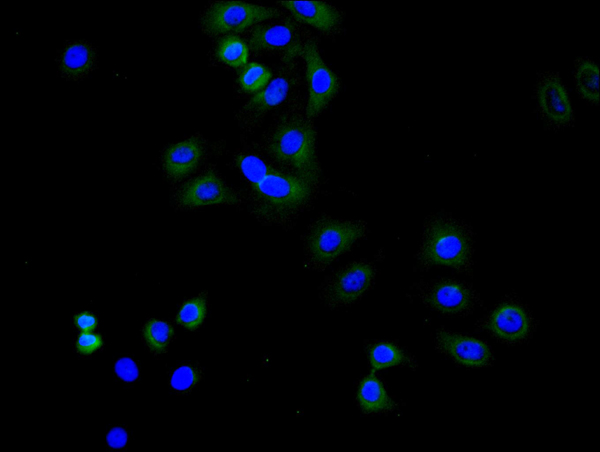
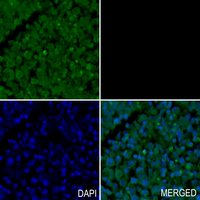
ICC (Immunocytochemistry) (Confocal imaging of paraffin-embedded Mouse intestine tissue using CD66a/CEACAM1 Rabbit PolymAb® (AAA28579, dilution 1:4000) followed by a further incubation with Cy3 Goat Anti-Rabbit IgG (H+L) (AS007, dilution 1:500) (Red). DAPI was used for nuclear staining (Blue). High pressure antigen retrieval performed with 0.01M Citrate Buffer (pH 6.0) prior to IF staining. Objective: 40x.)
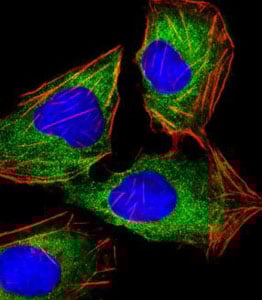
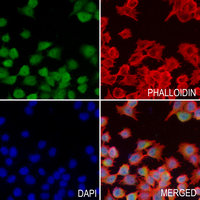
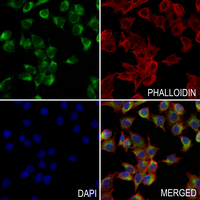
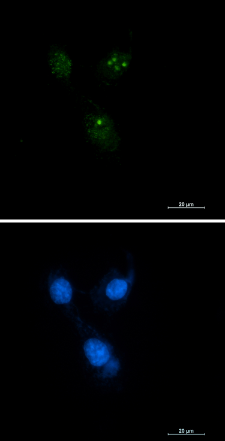
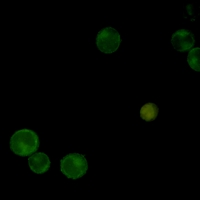
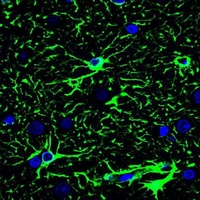
ICC (Immunocytochemistry) (Confocal imaging of SK-MEL-28 cells using CD66a/CEACAM1 Rabbit PolymAb® (AAA28579, dilution 1:4000) followed by a further incubation with Cy3 Goat Anti-Rabbit IgG (H+L) (AS007, dilution 1:500) (Red). The cells were counterstained with ?-Tubulin Mouse mAb (AC012, dilution 1:400) followed by incubation with ABflo® 488-conjugated Goat Anti-Mouse IgG (H+L) Ab (AS076, dilution 1:500) (Green). DAPI was used for nuclear staining (Blue). Objective: 100x.)
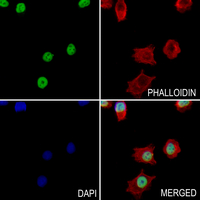
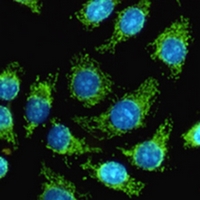
ICC (Immunocytochemistry) (Confocal imaging of Hep G2 cells using CD66a/CEACAM1 Rabbit PolymAb® (AAA28579, dilution 1:4000) followed by a further incubation with Cy3 Goat Anti-Rabbit IgG (H+L) (AS007, dilution 1:500) (Red). The cells were counterstained with ?-Tubulin Mouse mAb (AC012, dilution 1:400) followed by incubation with ABflo® 488-conjugated Goat Anti-Mouse IgG (H+L) Ab (AS076, dilution 1:500) (Green). DAPI was used for nuclear staining (Blue). Objective: 100x.)
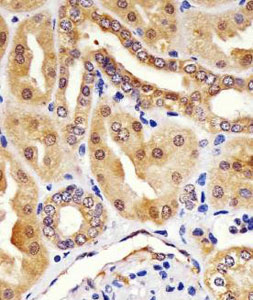
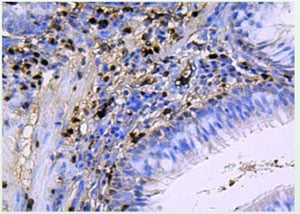
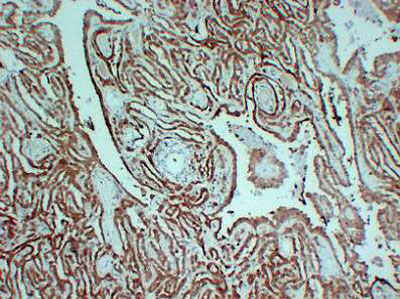
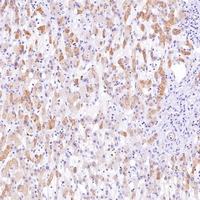
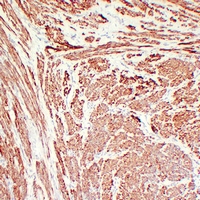
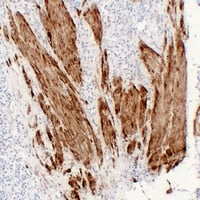
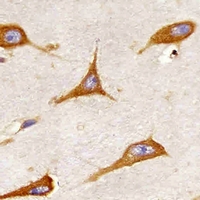
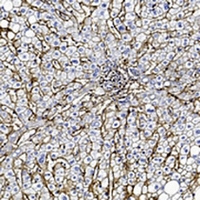
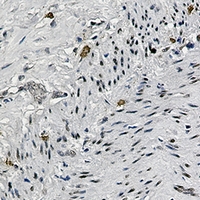
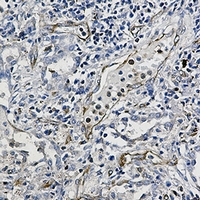
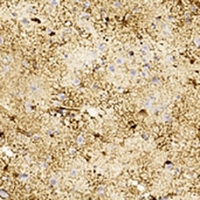
IHC (Immunohistochemistry) (Immunohistochemistry analysis of paraffin-embedded Human esophagus tissue using CD66a/CEACAM1 Rabbit PolymAb® (AAA28579) at a dilution of 1:8000 (40x lens). High pressure antigen retrieval performed with 0.01M Tris-EDTA Buffer (pH 9.0) prior to IHC staining.)
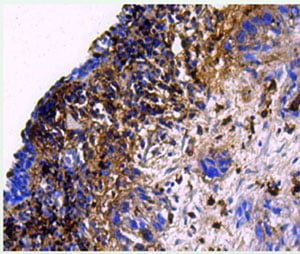
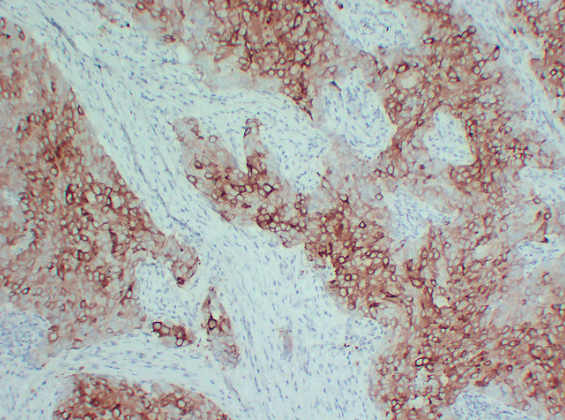
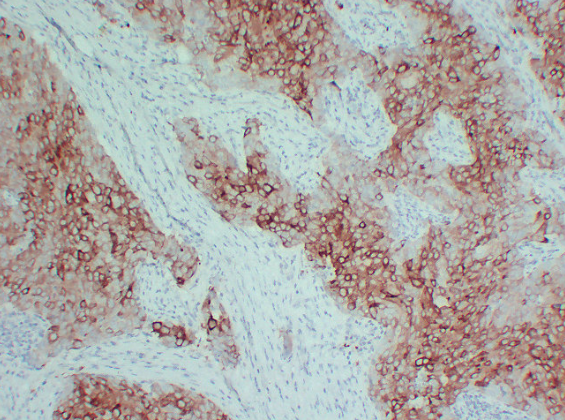
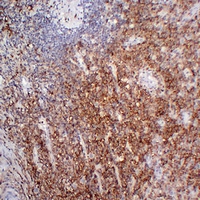
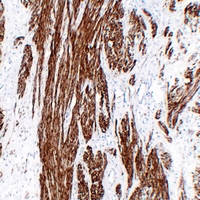
IHC (Immunohistochemistry) (Immunohistochemistry analysis of paraffin-embedded Human colon carcinoma tissue using CD66a/CEACAM1 Rabbit PolymAb® (AAA28579) at a dilution of 1:8000 (40x lens). High pressure antigen retrieval performed with 0.01M Tris-EDTA Buffer (pH 9.0) prior to IHC staining.)
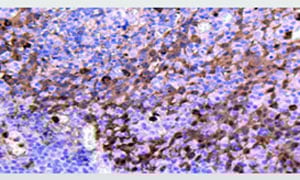
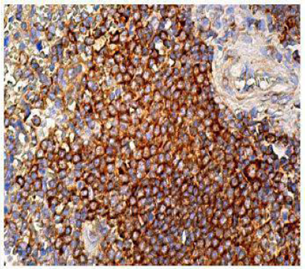
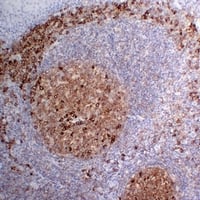
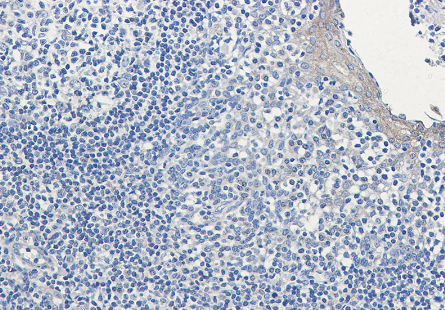
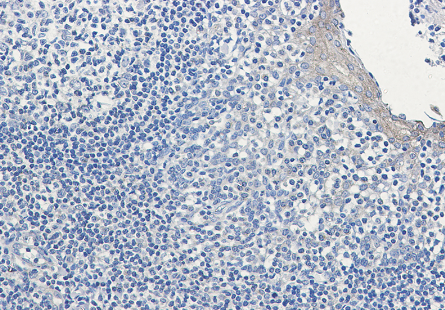
IHC (Immunohistochemistry) (Immunohistochemistry analysis of paraffin-embedded Human tonsil tissue using CD66a/CEACAM1 Rabbit PolymAb® (AAA28579) at a dilution of 1:8000 (40x lens). High pressure antigen retrieval performed with 0.01M Tris-EDTA Buffer (pH 9.0) prior to IHC staining.)
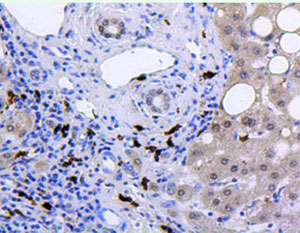
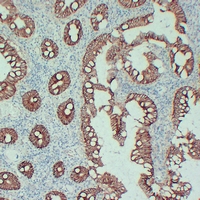
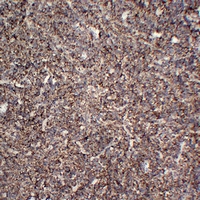
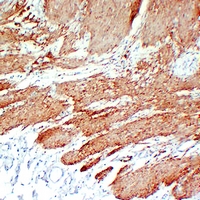
IHC (Immunohistochemistry) (Immunohistochemistry analysis of paraffin-embedded Mouse colon tissue using CD66a/CEACAM1 Rabbit PolymAb® (AAA28579) at a dilution of 1:8000 (40x lens). High pressure antigen retrieval performed with 0.01M Tris-EDTA Buffer (pH 9.0) prior to IHC staining.)
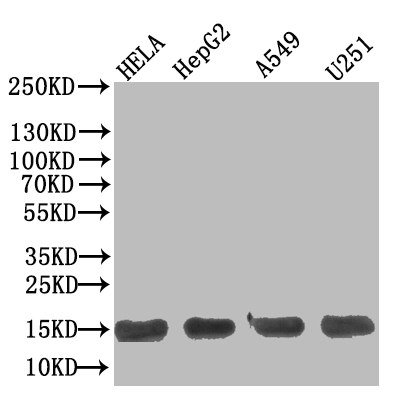
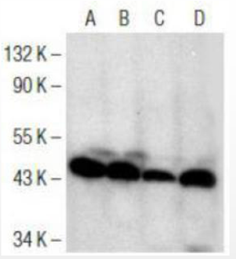
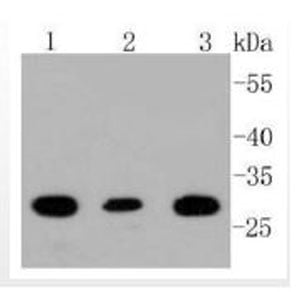
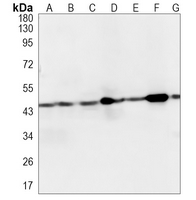
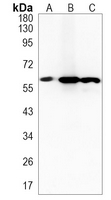
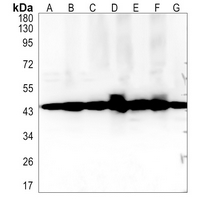
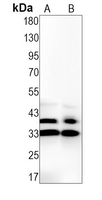
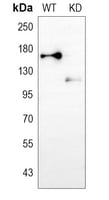
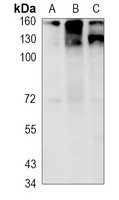
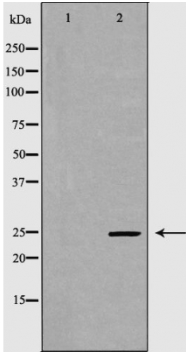
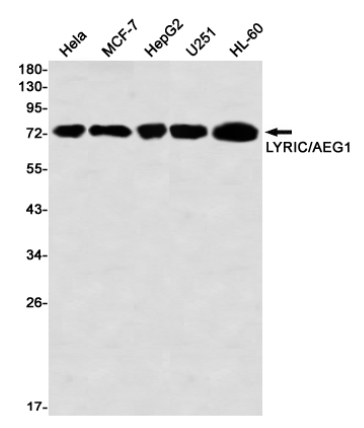
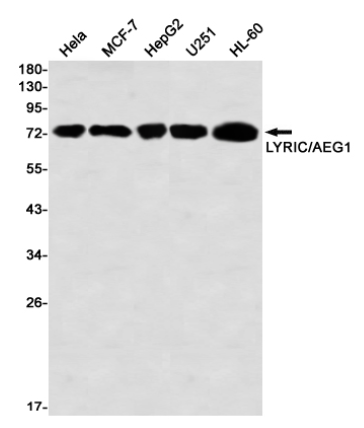
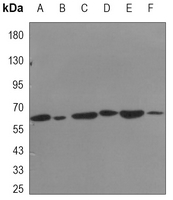
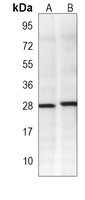
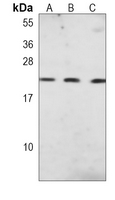
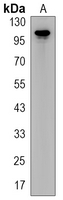
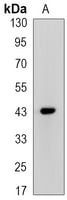
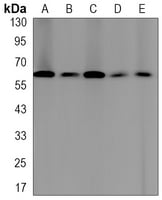
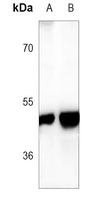
WB (Western Blot) (Western blot analysis of various lysates using CD66a/CEACAM1 Rabbit PolymAb® (AAA28579) at 1:3000 dilution incubated overnight at 4?.Secondary antibody: HRP-conjugated Goat anti-Rabbit IgG (H+L) (AS014) at 1:10000 dilution.Lysates/proteins: 25 ug per lane.Blocking buffer: 3% nonfat dry milk in TBST.Detection: ECL Basic Kit (RM00020).Negative control (NC): HeLaExposure time: 30s.)
Application Data (Mouse anti Human CD14 antibody, clone Tük4 used to identify bovine monocytes in the skin and subcutaneous tissue of adjuvant injected calves by immunofluorescence.Image caption:Cellular recruitment to skin and subcutaneous tissues. (A) HE stained sections of skin with subcutaneous tissue from the side injected with adjuvant and the contralateral side, at 24 h post-injection. Scale bars: 200 ?m. (B) Enlargement of outlined areas in A, as indicated. Scale bars: 20 ?m. (C) Immunofluorescent labeling of subcutaneous tissue on the injected side with antibody against CD14 (green). Scale bar: 20 ?m.From: Lund H, Boysen P, Åkesson CP, Lewandowska-Sabat AM and Storset AK (2016)Transient Migration of Large Numbers of CD14++ CD16+ Monocytes to the Draining Lymph Node after Onset of Inflammation.Front. Immunol. 7:322.This is from an open access article distributed under the terms of the Creative Commons Attribution License.)
Application Data (Mouse anti Human CD14 antibody clone Tük4 used to evaluate CD14 expression on canine monocytes by flow cytometry.Image caption:CD11b+CD14+MHCII? cells demonstrate ability to suppressive T cell proliferation. (A) CD11b+CD14+MHCII? cells were sorted from peripheral blood sample of an osteosarcoma dog (B) and co-cultured with healthy dog PBMCs in the presence of mitogen for 72 hs. Non-stimulated PBMCs were used as negative control and PBMCs co-cultured with healthy PMNs were used to control for the effect of adding cells to the assay. Proliferative responses were measured by 3H-thymidine incorporation. CPM, counts per minute. The experiment was performed in triplicate. Mean ± SEM are shown.)
Application Data (Mouse anti Human CD14 antibody clone Tük4 used to evaluate CD14 expression on canine monocytes by flow cytometry.Image caption:Immunophenotyping gating strategy and morphological analysis for MDSC identification in peripheral blood of dogs. PBMCs from healthy dogs and dogs with cancer were stained for the myeloid marker CD11b, monocytic marker CD14 and MHC II. (A) Representative flow cytometric analysis of forward and side scatter and gated CD11b+CD14?MHCII? cells from dogs with advanced or metastatic tumors compared to dogs with early stage non-metastatic tumors and healthy control dogs. Plots are representative of dog with advanced metastatic hemangiosarcoma (top), early stage bladder transitional cell carcinoma (middle) and a healthy dog. (B) FACS sorted CD11b+CD14?MHCII? cells were stained with diff-quick for cell morphology evaluation. A representative example of polymorphonuclear granulocyte morphology of CD11b+CD14?MHCII? cells is shown at 63× magnification.From: Goulart MR, Pluhar GE, Ohlfest JR (2012)Identification of Myeloid Derived Suppressor Cells in Dogs with Naturally Occurring Cancer.PLoS ONE 7(3): e33274.This is from an open access article distributed under the terms of the Creative Commons Attribution License.)
Application Data (Mouse anti Human CD14 antibody clone Tük4 used to evaluate CD14 expression on canine monocytes by flow cytometry.Image caption:CD11b+CD14?MHCII? cells suppress T cell proliferation. Facs sorted CD11b+CD14?MHCII? cells isolated from a dog with osteosarcoma or healthy PBMCs were co-incubated with mitogen-stimulated CD4+ and CD8+ T cells isolated from a healthy dog for 72 hs. No stimulated cells were used as negative control. Proliferative responses were measured by 3H-thymidine incorporation from experiments performed in triplicate. CPM, counts per minute. Mean ± SEM are shown.From: Goulart MR, Pluhar GE, Ohlfest JR (2012)Identification of Myeloid Derived Suppressor Cells in Dogs with Naturally Occurring Cancer.PLoS ONE 7(3): e33274.This is from an open access article distributed under the terms of the Creative Commons Attribution License.)
Application Data (Phycoerythrin conjugated Mouse anti Human CD14 antibody, clone Tük4 used for the evaluation of CD14 expression on bovine monocytes by flow cytometry.Image caption:Gating strategy utilized for flow cytometric analysis of bovine peripheral blood leukocytes showing representative data from one animal. After gating on viable (propidium-iodide-negative) cells (A), cell doublets were excluded by SSC-A and SSC-H gating (B). Bovine mononuclear cells (MNC) and granulocytes (PMN) were gated based on their forward and side scatter characteristics and their percentages were calculated (C). Three-color immunofluorescence of bovine MNC with mAbs to CD172a, CD14 and CD16 defines three monocyte subsets in peripheral blood. Viable mononuclear cells, based on forward and side scatter characteristics, were gated on CD172a-positive cells (D). Dot plots of CD14 and CD16 expression display classical monocytes (CD14+CD16?, upper left), intermediate monocytes (CD14+CD16+, upper right) and nonclassical monocytes (CD14?CD16+, lower right) (E)From: Pomeroy B, Sipka A, Hussen J, Eger M, Schukken Y, Schuberth HJ.Counts of bovine monocyte subsets prior to calving are predictive for postpartum occurrence of mastitis and metritis.Vet Res. 2017 Feb 21;48(1):13.This is from an open access article distributed under the terms of the Creative Commons Attribution License.)
Application Data (Sandwich ELISA analysis of Human CD14 binding using Mouse anti CD14 antibody, clone MEM-18 as a capture reagent and biotinylated Mouse anti Human CD14 antibody, clone Tük4 as a detection reagent with purified CD14 as antigen for generation of the standard curve. Detection is by HRP conjugated streptavidin. Microtitre plate is read at O.D. 450 nm on the Microplate Absorbance Reader . Serum samples diluted 1:200 and 1:400 are shown green and red respectively, while plasma samples also diluted 1:200 and 1:400 are blue and orange respectively)
Application Data (Figure A. Alexa Fluor 488 conjugated Mouse anti Human CD9 and RPE conjugated Mouse IgG2a isotype control . Figure B. Alexa Fluor 488 conjugated Mouse anti Human CD9 and RPE conjugated Mouse anti Human CD14 . All experiments performed on red cell lysed human blood gated on myeloid cells. Data acquired on the ZE5 cell analyzer)
Application Data (Figure A. FITC conjugated Mouse anti Human CD31 and Alexa Fluor647 conjugated Mouse IgG2a isotype contol. Figure B. FITC conjugated Mouse anti Human CD31 and Alexa Fluor647 conjugated Mouse CD14 . All experiments performed on human peripheral blood mononuclear cells in the presence of human SeroBlock)
Application Data (Figure A. APC conjugated Mouse anti Human CD63 and FITC conjugated Mouse IgG2a isotype control . Figure B. APC conjugated Mouse anti Human CD63 and FITC conjugated Mouse anti Human CD14 . All experiments performed on human blood gated on live, single mononuclear cells in the presence of 10% human serum. Data acquired on the ZE5 Cell Analyzer)
Application Data (Figure A. FITC conjugated Mouse anti Human CD63 and Amethyst Orange conjugated Mouse IgG2a isotype control . Figure B. FITC conjugated Mouse anti Human CD63 and Amethyst Orange conjugated Mouse anti Human CD14 . All experiments performed on human blood gated on live single mononuclear cells, in the presence of 10% human serum. Data acquired on the ZE5 Cell Analyzer)
Purified IgG prepared by affinity chromatography on Protein A from tissue culture supernatant.
Pricing
IHC (Immunohistochemistry) (Immunohistochemistry: Human Tonsil (FFPE) stained with Mouse anti- Ganglioside (GD2) (Cat# AAA14078) at 1:200 for 10 min @ RT. Staining of formalin-fixed tissue requires boiling tissue sections in 10 mM Citrate Buffer, pH 6.0 for 10 min followed by cooling at RT for 20 min.)
FCM (Flow Cytometry) (Figure 1. Elisa plate pre-coated by 2 ug/ml (100ul/well) SARS-CoV-2 RBD protein can bind Rabbit Anti-SARS-CoV-2 RBD monoclonal antibody ( clone:DM35) in a linear range of 0.19-200 ng/ml.)
ELISA (Figure 1. Elisa plate pre-coated by 2 ug/ml (100ul/well) SARS-CoV-2 RBD protein can bind Rabbit Anti-SARS-CoV-2 RBD monoclonal antibody ( clone:DM35) in a linear range of 0.19-200 ng/ml.)
Application Data (Staining of mouse peritoneal macrophages with Rat anti Mouse Beta-glucan Receptor: FITC)
Application Data (Staining of mouse peripheral blood monocytes with Rat anti Mouse Beta-glucan Receptor)
Application Data (Immunoperoxidase staining of a mouse lymph node cryosection with Rat anti Mouse Dectin-1 antibody, clone 2A11 followed by horseradish peroxidase conjugated Goat anti Rat IgG antibody . Medium power)
Application Data (Staining of mouse peripheral blood granulocytes with Rat anti Mouse Beta-glucan Receptor:Biotin)
Application Data (Immunoperoxidase staining of a mouse lymph node cryosection with Rat anti Mouse Dectin-1 antibody, clone 2A11 followed by horseradish peroxidase conjugated Goat anti Rat IgG antibody . Low power)
Application Data (Immunoperoxidase staining of a mouse lymph node cryosection with Rat anti Mouse Dectin-1 antibody, clone 2A11 followed by horseradish peroxidase conjugated Goat anti Rat IgG antibody . High power)
Application Data (Immunoperoxidase staining of a mouse skin cryosection with Rat anti Mouse Dectin-1 antibody, clone 2A11 followed by horseradish peroxidase conjugated Goat anti Rat IgG antibody . Low power)
Application Data (Staining of mouse peripheral blood granulocytes with Rat anti Mouse Beta-glucan Receptor:FITC)
Application Data (Staining of mouse peripheral blood granulocytes with Rat anti Mouse Beta-glucan Receptor: RPE)
Application Data (Published customer image: Ex vivo recognition of yeast particles and live fungi by inflammatory cells. A) Representative flow-cytometric analysis, gated on Ly-6G+ neutrophils, after coincubation of BIOgel-elicited inflammatory cells from wild type or dectin-1-deficient (Clec7a-/-) 129S6/SvEv interaction with serum-opsonized or non-opsonized zymosan. Positive staining for the A405-labelled zymosan identifies the neutrophils that are associated zymosan and only these cells exhibit conversion of APF, the ROS reporter. B) Representsative flow-cytometric analysis of CD11b and dectin-1 expression by inflammatory neutrophils and monocyte/M˜. Data represents specific receptor staining (shaded histograms) and isotype control staining (bold lines). Data representative of 2 independent experiments and consistent with previous experiments with thioglycollate. C) Inflammatory cells were loaded with APF and then incubated with serum-opsonized or non-opsonized A405-labelled zymosan or Pacific Orange-labelled C. albicans for 15 minutes. After this time the association of the inflammatory cells with zymosan was measured by flow-cytometry (upper panels) and in those cells that were interacting with zymosan the evidence for fluorescent conversion of APF was also quantified (lower panels). Data is derived from three independent experiments and the data derived from the use of dectin-1-deficient cells is shown relative to wild type cells (100%) as mean+/-95% confidence interval (raw representative data from one of the 3 independent experiments are shown in the Figure S1). The impact of complement osponization (˜C') and the use of different fungal particle used (˜F') were assessed by Two-way ANOVA (˜I' = Interaction statistic). Samples in which the 95% confidence intervals do not overlap with the mean wildtype are specific indicated with a # symbol. Differences in impairment of response observed with dectin-1-deficient cells were further analysed by Bonferroni post-tests. P values derived from individual Bonferroni post-tests are indicated with bracketed pairs of samples.From: McDonald JU, Rosas M, Brown GD, Jones SA, Taylor PR (2012) Differential Dependencies of Monocytes and Neutrophils on Dectin-1, Dectin-2 and Complement for the Recognition of Fungal Particles in Inflammation. PLoS ONE 7(9): e45781.)
IHC (Immunohistochemistry) (Immunochemical staining of human SPP1 in human hepatoma with rabbit monoclonal antibody (1:2000, formalin-fixed paraffin embedded sections).)
IHC (Immunohistochemistry) (Immunochemical staining of human SPP1 in human kidney with rabbit monoclonal antibody (1:2000, formalin-fixed paraffin embedded sections).)
FCM (Flow Cytometry) (Flow cytometric analysis of purified anti-human Spp1 on U937 cells. U937 cells were treated according to manufacturer's manual (BD Pharmingen'), and stained with Purified Rabbit anti-Spp1 (Bold line hisgram), To demonstrate specificity of staining the binding of anti-human Spp1 (10352-R001) was blocked by the preincubation of the purified antibody with molar excess of recombinant human Spp1 (5 ug,) for 1 hour (dashed line hisgram), then stained with a FITC-conjugated second step antibody.)
ICC (Immunocytochemistry) (Confocal imaging of Mouse retina tissue using PSD95 Rabbit PolymAb® (A7889-PM, dilution 1:200) followed by a further incubation with Cy3 Goat Anti-Rabbit IgG (H+L) (AS007, dilution 1:500) (Red). DAPI was used for nuclear staining (Blue). antigen retrieval performed with 0.01M Citrate Buffer (pH 6.0) prior to IF staining. Objective: 40x.)
ICC (Immunocytochemistry) (Confocal imaging of Rat retina tissue using PSD95 Rabbit PolymAb® (A7889-PM, dilution 1:200) followed by a further incubation with Cy3 Goat Anti-Rabbit IgG (H+L) (AS007, dilution 1:500) (Red). DAPI was used for nuclear staining (Blue). antigen retrieval performed with 0.01M Citrate Buffer (pH 6.0) prior to IF staining. Objective: 40x.)
IHC (Immunohistochemistry) (Immunohistochemistry analysis of paraffin-embedded Mouse brain tissue using PSD95 Rabbit PolymAb® (AAA28609) at a dilution of 1:800 (40x lens). High pressure antigen retrieval performed with 0.01M Tris-EDTA Buffer (pH 9.0) prior to IHC staining.)
IHC (Immunohistochemistry) (Immunohistochemistry analysis of paraffin-embedded Rat brain tissue using PSD95 Rabbit PolymAb® (AAA28609) at a dilution of 1:800 (40x lens). High pressure antigen retrieval performed with 0.01M Tris-EDTA Buffer (pH 9.0) prior to IHC staining.)
WB (Western Blot) (Western blot analysis of lysates from Rat brain using PSD95 Rabbit PolymAb® (AAA28609) at 1:3000 dilution incubated overnight at 4?.Secondary antibody: HRP-conjugated Goat anti-Rabbit IgG (H+L) (AS014) at 1:10000 dilution.Lysates/proteins: 25 ug per lane.Blocking buffer: 3% nonfat dry milk in TBST.Detection: ECL Basic Kit (RM00020).Exposure time: 30s.)
WB (Western Blot) (Western blot analysis of lysates from Mouse brain using PSD95 Rabbit PolymAb® (AAA28609) at 1:3000 dilution incubated overnight at 4?.Secondary antibody: HRP-conjugated Goat anti-Rabbit IgG (H+L) (AS014) at 1:10000 dilution.Lysates/proteins: 25 ug per lane.Blocking buffer: 3% nonfat dry milk in TBST.Detection: ECL Basic Kit (RM00020).Exposure time: 90s.)
IHC (Immunohistchemistry) (Immunohistochemistry analysis of paraffin-embedded Human brain tissue using [KO Validated] STAT3 Rabbit mAb (AAA28509) at a dilution of 1:200 (40x lens). High pressure antigen retrieval was performed with 0.01 M citrate buffer (pH 6.0) prior to IHC staining.)
IHC (Immunohistochemistry) (Immunohistochemistry analysis of paraffin-embedded Human thyroid cancer tissue using [KO Validated] STAT3 Rabbit mAb (AAA28509) at a dilution of 1:200 (40x lens). High pressure antigen retrieval was performed with 0.01 M citrate buffer (pH 6.0) prior to IHC staining.)
IHC (Immunohistochemistry) (Immunohistochemistry analysis of paraffin-embedded Human breast tissue using [KO Validated] STAT3 Rabbit mAb (AAA28509) at a dilution of 1:200 (40x lens). High pressure antigen retrieval was performed with 0.01 M citrate buffer (pH 6.0) prior to IHC staining.)
WB (Western Blot) (Western blot analysis of lysates from Mouse liver using [KO Validated] STAT3 Rabbit mAb (AAA28509) at 1:3000 dilution incubated overnight at 4?.Secondary antibody: HRP-conjugated Goat anti-Rabbit IgG (H+L) (AS014) at 1:10000 dilution.Lysates/proteins: 25 ug per lane.Blocking buffer: 3% nonfat dry milk in TBST.Detection: ECL Basic Kit (RM00020).Exposure time: 60s.)
WB (Western Blot) (Western blot analysis of lysates from A549 cells using [KO Validated] STAT3 Rabbit mAb (AAA28509) at 1:3000 dilution incubated overnight at 4?.Secondary antibody: HRP-conjugated Goat anti-Rabbit IgG (H+L) (AS014) at 1:10000 dilution.Lysates/proteins: 25 ug per lane.Blocking buffer: 3% nonfat dry milk in TBST.Detection: ECL Basic Kit (RM00020).Exposure time: 30s.)
WB (Western Blot) (Western blot analysis of lysates from wild type (WT) and STAT3 knockout (KO) HeLa cells using [KO Validated] STAT3 Rabbit mAb (AAA28509) at 1:3000 dilution incubated overnight at 4?.Secondary antibody: HRP-conjugated Goat anti-Rabbit IgG (H+L) (AS014) at 1:10000 dilution.Lysates/proteins: 25 ug per lane.Blocking buffer: 3% nonfat dry milk in TBST.Detection: ECL Basic Kit (RM00020).Exposure time: 30s.)
IF (Immunofluorescence) (Fig.7. Immunofluorescence analysis of rat liver tissue. 1, Histone H3 Monoclonal Antibody (2D10) (red) was diluted at 1:200 (4°C, overnight). 2, Cy3 Labeled secondary antibody was diluted at 1:300 (room temperature, 50min). 3, Picture B: DAPI (blue) 10min. Picture A: Target. Picture B: DAPI. Picture C: merge of A+B.)
IF (Immunofluorescence) (Fig.6. Immunofluorescence analysis of mouse liver tissue. 1, Histone H3 Monoclonal Antibody (2D10) (red) was diluted at 1:200 (4°C, overnight). 2, Cy3 Labeled secondary antibody was diluted at 1:300 (room temperature, 50min). 3, Picture B: DAPI (blue) 10min. Picture A: Target. Picture B: DAPI. Picture C: merge of A+B.)
IF (Immunofluorescence) (Fig.5. Immunofluorescence analysis of human liver cancer tissue. 1, Histone H3 Monoclonal Antibody (2D10) (red) was diluted at 1:200 (4°C, overnight). 2, Cy3 Labeled secondary antibody was diluted at 1:300 (room temperature, 50min). 3, Picture B: DAPI (blue) 10min. Picture A: Target. Picture B: DAPI. Picture C: merge of A+B.)
IHC (Immunohistochemistry) (Fig.4. Immunohistochemical analysis of paraffin-embedded rat testis tissue. 1, Histone H3 Monoclonal Antibody (2D10) was diluted at 1:200 (4°C, overnight). 2, Sodium citrate pH 6.0 was used for antibody retrieval (>98°C, 20min). 3, secondary antibody was diluted at 1:200 (room temperature, 30min). Negative control was used by secondary antibody only.)
IHC (Immunohistochemistry) (Fig.3. Immunohistochemical analysis of paraffin-embedded mouse testis tissue. 1, Histone H3 Monoclonal Antibody (2D10) was diluted at 1:200 (4°C, overnight). 2, Sodium citrate pH 6.0 was used for antibody retrieval (>98°C, 20min). 3, secondary antibody was diluted at 1:200 (room temperature, 30min). Negative control was used by secondary antibody only.)
IHC (Immunohistochemistry) (Fig.2. Immunohistochemical analysis of paraffin-embedded human uterus tissue. 1, Histone H3 Monoclonal Antibody (2D10) was diluted at 1:200 (4°C, overnight). 2, Sodium citrate pH 6.0 was used for antibody retrieval (>98°C, 20min). 3, secondary antibody was diluted at 1:200 (room temperature, 30min). Negative control was used by secondary antibody only.)
WB (Western Blot) (Fig.1. Western blot analysis of 1) Hela, 2) Raw, 3) mouse brain tissue, 4) rat brain tissue, diluted at 1:5000.)
FCM (Flow Cytometry) (Overlay histogram showing Ntera-2 cells stained with CSB-MA018403A0m (red line) at 1:100. The cells were incubated in 1x PBS /10% normal goat serum to block non-specific protein-protein interactions followed by primary antibody for 1 h at 4 degree C. The secondary antibody used was FITC goat anti-mouse IgG(H+L) at 1/200 dilution for 1 h at 4 degree C. Isotype control antibody (green line) was used under the same conditions. Acquisition of >10,000 events was performed.)
FCM (Flow Cytometry) (Overlay histogram showing A549 cells stained with CSB-MA018403A0m (red line) at 1:100. The cells were incubated in 1x PBS /10% normal goat serum to block non-specific protein-protein interactions followed by primary antibody for 1 h at 4 degree C. The secondary antibody used was FITC goat anti-mouse IgG(H+L) at 1/200 dilution for 1 h at 4 degree C. Isotype control antibody (green line) was used under the same conditions. Acquisition of >10,000 events was performed.)
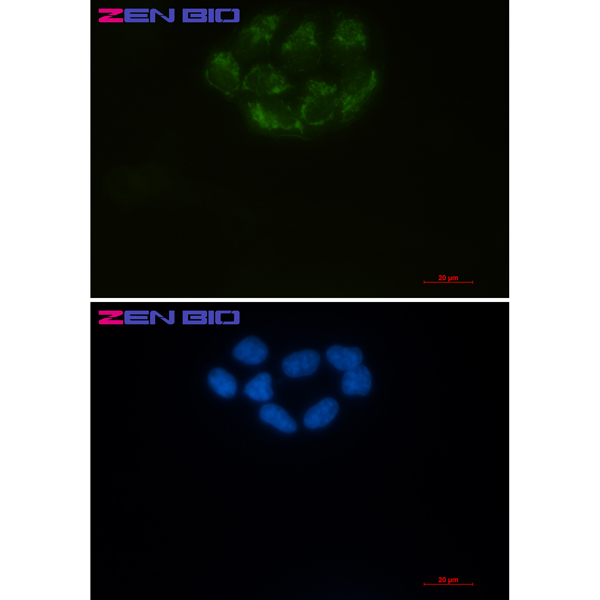
IF (Immunofluorescence) (Immunofluorescence staining of Ntera-2 cells with CSB-MA018403A0m at 1:100, counter-stained with DAPI. The cells were blocked in 10% normal Goat Serum and then incubated with the primary antibody overnight at 4 degree C. The secondary antibody was Alexa Fluor 488-congugated AffiniPure Goat Anti-Mouse IgG(H+L).)
IF (Immunofluorescence) (Immunofluorescence staining of A549 cells with CSB-MA018403A0m at 1:100, counter-stained with DAPI. The cells were blocked in 10% normal Goat Serum and then incubated with the primary antibody overnight at 4 degree C. The secondary antibody was Alexa Fluor 488-congugated AffiniPure Goat Anti-Mouse IgG(H+L).)
IHC (Immunohistchemistry) (IHC image of CSB-MA018403A0m diluted at 1:100 and staining in paraffin-embedded human endometrial cancer performed on a Leica BondTM system. After dewaxing and hydration, antigen retrieval was mediated by high pressure in a citrate buffer (pH 6.0). Section was blocked with 10% normal goat serum 30min at RT. Then primary antibody (1% BSA) was incubated at 4 degree C overnight. The primary is detected by a biotinylated secondary antibody and visualized using an HRP conjugated SP system.)
IHC (Immunohistochemistry) (IHC image of CSB-MA018403A0m diluted at 1:100 and staining in paraffin-embedded human colon cancer performed on a Leica BondTM system. After dewaxing and hydration, antigen retrieval was mediated by high pressure in a citrate buffer (pH 6.0). Section was blocked with 10% normal goat serum 30min at RT. Then primary antibody (1% BSA) was incubated at 4 degree C overnight. The primary is detected by a biotinylated secondary antibody and visualized using an HRP conjugated SP system.)
IHC (Immunohistochemistry) (IHC image of CSB-MA018403A0m diluted at 1:100 and staining in paraffin-embedded human testis tissue performed on a Leica BondTM system. After dewaxing and hydration, antigen retrieval was mediated by high pressure in a citrate buffer (pH 6.0). Section was blocked with 10% normal goat serum 30min at RT. Then primary antibody (1% BSA) was incubated at 4 degree C overnight. The primary is detected by a biotinylated secondary antibody and visualized using an HRP conjugated SP system.)
IHC (Immunohistochemistry) (IHC image of CSB-MA018403A0m diluted at 1:100 and staining in paraffin-embedded human lung cancer performed on a Leica BondTM system. After dewaxing and hydration, antigen retrieval was mediated by high pressure in a citrate buffer (pH 6.0). Section was blocked with 10% normal goat serum 30min at RT. Then primary antibody (1% BSA) was incubated at 4 degree C overnight. The primary is detected by a biotinylated secondary antibody and visualized using an HRP conjugated SP system.)
WB (Western Blot) (Western BlotPositive WB detected in: Mouse brain tissue, Rat brain tissueAll lanes: OCT4 antibody at 1:1000, 1:5000, 1:8000SecondaryGoat polyclonal to Mouse IgG at 1/10000 dilutionPredicted band size: 39, 31 kDaObserved band size: 39 kDa)
WB (Western Blot) (Western BlotPositive WB detected in: HepG2 whole cell lysateAll lanes: OCT4 antibody at 1:500SecondaryGoat polyclonal to Mouse IgG at 1/10000 dilutionPredicted band size: 39, 31 kDaObserved band size: 39 kDa)
IHC (Immunohistchemistry) (Immunohistochemistry analysis of paraffin-embedded Rat brain using AIF1/IBA1 Rabbit PolymAb® (AAA28552) at dilution of 1:800 (40x lens). High pressure antigen retrieval performed with 0.01M Citrate Bufferr (pH 6.0) prior to IHC staining.)
IHC (Immunohistochemistry) (Immunohistochemistry analysis of paraffin-embedded Mouse brain using AIF1/IBA1 Rabbit PolymAb® (AAA28552) at dilution of 1:800 (40x lens). High pressure antigen retrieval performed with 0.01M Citrate Bufferr (pH 6.0) prior to IHC staining.)
IHC (Immunohistochemistry) (Immunohistochemistry analysis of paraffin-embedded Human tonsil using AIF1/IBA1 Rabbit PolymAb® (AAA28552) at dilution of 1:800 (40x lens). High pressure antigen retrieval performed with 0.01M Citrate Bufferr (pH 6.0) prior to IHC staining.)
IHC (Immunohistochemistry) (Immunohistochemistry analysis of paraffin-embedded Human lung using AIF1/IBA1 Rabbit PolymAb® (AAA28552) at dilution of 1:800 (40x lens). High pressure antigen retrieval performed with 0.01M Citrate Bufferr (pH 6.0) prior to IHC staining.)
IHC (Immunohistochemistry) (Immunohistochemistry analysis of paraffin-embedded Human brain using AIF1/IBA1 Rabbit PolymAb® (AAA28552) at dilution of 1:800 (40x lens). High pressure antigen retrieval performed with 0.01M Citrate Bufferr (pH 6.0) prior to IHC staining.)
WB (Western Blot) (Western blot analysis of various lysates, using AIF1/IBA1 Rabbit PolymAb® (AAA28552) at 1:1000 dilution.Secondary antibody: HRP-conjugated Goat anti-Rabbit IgG (H+L) (AS014) at 1:10000 dilution.Lysates/proteins: 25ug per lane.Blocking buffer: 3% nonfat dry milk in TBST.Detection: ECL Enhanced Kit (RM00021).Exposure time: 120s.)
ICC (Immunocytochemistry) (Confocal imaging of TF-1 cells using CD11b Rabbit PolymAb® (AAA28592, dilution 1:200) followed by a further incubation with Cy3 Goat Anti-Rabbit IgG (H+L) (AS007, dilution 1:500) (Red). DAPI was used for nuclear staining (Blue). Objective: 100x.)
ICC (Immunocytochemistry) (Confocal imaging of RAW 264.7 cells using CD11b Rabbit PolymAb® (AAA28592, dilution 1:200) followed by a further incubation with Cy3 Goat Anti-Rabbit IgG (H+L) (AS007, dilution 1:500) (Red). DAPI was used for nuclear staining (Blue). Objective: 100x.)
IHC (Immunohistochemistry) (Immunohistochemistry analysis of paraffin-embedded Human colon tissue using CD11b Rabbit PolymAb® (AAA28592) at a dilution of 1:400 (40x lens). High pressure antigen retrieval performed with 0.01M Tris-EDTA Buffer (pH 9.0) prior to IHC staining.)
IHC (Immunohistchemistry) (Immunohistochemistry analysis of paraffin-embedded Human esophagus tissue using CD11b Rabbit PolymAb® (AAA28592) at a dilution of 1:400 (40x lens). High pressure antigen retrieval performed with 0.01M Tris-EDTA Buffer (pH 9.0) prior to IHC staining.)
IHC (Immunohistochemistry) (Immunohistochemistry analysis of paraffin-embedded Human esophagus tissue using CD11b Rabbit PolymAb® (AAA28592) at a dilution of 1:400 (40x lens). High pressure antigen retrieval performed with 0.01M Tris-EDTA Buffer (pH 9.0) prior to IHC staining.)
IHC (Immunohistochemistry) (Immunohistochemistry analysis of paraffin-embedded Human colon tissue using CD11b Rabbit PolymAb® (AAA28592) at a dilution of 1:400 (40x lens). High pressure antigen retrieval performed with 0.01M Tris-EDTA Buffer (pH 9.0) prior to IHC staining.)
WB (Western Blot) (Western blot analysis of lysates from Rat spleen using CD11b Rabbit PolymAb® (AAA28592) at 1:1000 dilution incubated overnight at 4?.Secondary antibody: HRP-conjugated Goat anti-Rabbit IgG (H+L) (AS014) at 1:10000 dilution.Lysates/proteins: 25 ug per lane.Blocking buffer: 3% nonfat dry milk in TBST.Detection: ECL Basic Kit (RM00020).Exposure time: 90s.)
WB (Western Blot) (Western blot analysis of various lysates using CD11b Rabbit PolymAb® (AAA28592) at 1:1000 dilution incubated overnight at 4?.Secondary antibody: HRP-conjugated Goat anti-Rabbit IgG (H+L) (AS014) at 1:10000 dilution.Lysates/proteins: 25 ug per lane.Blocking buffer: 3% nonfat dry milk in TBST.Detection: ECL Basic Kit (RM00020).Negative control (NC): C2C12Exposure time: 1s.)
WB (Western Blot) (Western blot analysis of various lysates using CD11b Rabbit PolymAb® (AAA28592) at 1:1000 dilution incubated overnight at 4?.Secondary antibody: HRP-conjugated Goat anti-Rabbit IgG (H+L) (AS014) at 1:10000 dilution.Lysates/proteins: 25 ug per lane.Blocking buffer: 3% nonfat dry milk in TBST.Detection: ECL Basic Kit (RM00020).Negative control (NC): JurkatExposure time: 30s.)
Application Data (HKT288 induced OVCAR3 Luciferase activity was evaluated using huCD16a(V158)-NF-AT-Jurkat Reporter Cell. The EC50 was approximately 0.6792 nM.)
Application Data (The endocytosis ratio HKT288 by Hu-CDH6-HEK293(A6) increased with the increase of antibody concentration, and the Internalization Rate (%) reached 93% at antibody concentration of 2 nM.)
FCM (Flow Cytometry) (Human CDH6 HEK293(A6) cells were stained with Anti-CDH6 / K-Cadherin Reference Antibody (HKT288) and negative control protein respectively, washed and then followed by PE and analyzed with FACS, EC71=0.08624 ug/mL)
Application Data (Immobilized Cyno CDH6 His at 2 ug/mL can bind Anti-CDH6 / K-Cadherin Reference Antibody (HKT288), EC50=0.006944 ug/mL.)
Application Data (The purity of Anti-CDH6 / K-Cadherin Reference Antibody (HKT288)is more than 97.93% ,determined by SEC-HPLC.)
SDS-PAGE (Anti-CDH6 / K-Cadherin Reference Antibody (HKT288) on SDS-PAGE under reducing (R) condition. The gel was stained with Coomassie Blue. The purity of the protein is greater than 95%)
Application Data (Staining of mouse spleen with Hamster anti Mouse CD81: Alexa Fluor 488)
Application Data (Published customer image: Blockade of the mevalonate pathway increases CD9 and CD81. (A) RAW264.7 cells were untreated (-) or treated for 48 h with 50 ng/ml TSA (+) in the absence (-) or presence of 50 uM theophylline or 0.5 uM fluvastatin (Fluv) (+). The cells were lysed, and levels of CD9 and CD81 were examined by immunoblotting. Anti-actin blots show that comparable amounts of protein were loaded in each lane. (B) The mevalonate pathway and inhibitors. n-BP, nitrogenous bisphosphonate. (C) RAW264.7 cells were cultured for 24 h in the presence of indicated concentrations of fluvastatin, simvastatin (Simv), zoledronate (Zol), or risedronate (Ris). Levels of CD9 and CD81 were examined by immunoblotting. (D) RAW264.7 cells were cultured for 24 h in the absence (V, vehicle alone) or presence of mevalonate (Mev), farnesyl pyrophosphate (FPP), squalene (Squ), or geranylgeranyl pyrophosphate (GGPP). Although the actin level in the GGPP lane appears to be lower, an equal amount of protein was loaded. (E) RAW264.7 cells were cultured for 24 h in the absence (V) or presence of fluvastatin, zoledronate, farnesyl transferase inhibitor (FTI), or geranylgeranyl transferase inhibitor (GGTI). (F) RAW264.7 cells were untreated (-) or treated with fluvastatin (+) in the absence (V) or presence of mevalonate, FPP, squalene, or GGPP. (G) RAW264.7 cells were untreated (-) or treated with zoledronate (+) in the absence (V) or presence of mevalonate, FPP, squalene, or GGPP. (H) RAW264.7 cells were untreated (-) or treated with fluvastatin (+) in the absence (V) or presence of mevalonate, FPP, squalene, or GGPP and stimulated for 15 min with 0.1 ug/ml LPS (+). The cells were lysed, and levels of I?Ba were examined by immunoblotting. (I) RAW264.7 cells were cultured for 24 h in the indicated concentrations of HA1077. Levels of CD9 and CD81 were examined by immunoblotting.From: Jin Y, Tachibana I, Takeda Y, He P, Kang S, et al. (2013) Statins Decrease Lung Inflammation in Mice by Upregulating Tetraspanin CD9 in Macrophages. PLoS ONE 8(9): e73706.)
Application Data (Published customer image: Screening of a drug library for agents that upregulate CD9 or CD81 in RAW264.7 macrophages. (A) RAW264.7 cells were cultured for 24 h in the absence (V, vehicle alone) and presence of each drug (10 uM). The cells were lysed, and levels of CD9 and CD81 were examined by immunoblotting. Blots of results with fluvastatin (Fluv) and simvastatin (Simv) are shown. Anti-actin blots show that comparable amounts of protein were loaded in each lane. (B) After testing 1,165 drugs, levels of CD9 and CD81 relative to actin were quantified by densitometry. Fold changes of the expression levels compared with vehicle alone were calculated and plotted. Drugs that increased the level of either CD9 or CD81 more than 1.5-fold compared with vehicle alone were regarded as positive. Correlation between fold changes in CD9 and CD81 levels was analyzed using Pearson's correlation coefficient. (C) RAW264.7 cells were cultured in the absence (V) or presence of multiple statins (10 uM) and levels of CD9 and CD81 were examined by immunoblotting. The statins are arranged in order of decreasing lipophilicity. Ceri, cerivastatin; Simv, simvastatin; Fluv, fluvastatin; Ator, atorvastatin; Rosu, rosuvastatin; Prav, pravastatin. (D) RAW264.7 cells were cultured in the absence (shaded histograms) or presence (10 uM) of fluvastatin (open red histograms) and simvastatin (open blue histograms). Surface levels of CD9, CD63, CD81, and the integrin beta1 subunit were analyzed by flow cytometry.From: Jin Y, Tachibana I, Takeda Y, He P, Kang S, et al. (2013) Statins Decrease Lung Inflammation in Mice by Upregulating Tetraspanin CD9 in Macrophages. PLoS ONE 8(9): e73706.)
Application Data (Published customer image: Density fractionation of EVs. The figure shows sucrose gradients of EVs preparations from MLP29 (A) and RH (B). Aliquots of these fractions were used for RNA extraction and protein extraction; the most abundant transcripts were found in the fractions containing typical exosomal markers (Tsg101 or Aip1). RH preparations showed more diversity, with vesicle populations fractionating at different densities.From: Royo F, Schlangen K, Palomo L, Gonzalez E, Conde-Vancells J, et al. (2013) Transcriptome of Extracellular Vesicles Released by Hepatocytes. PLoS ONE 8(7): e68693.)
Application Data (Published customer image: The anti-inflammatory effects of statins are CD9-dependent. (A) BMDMs from WT mice were cultured for 24 h in the absence (-) or presence of 3 uM fluvastatin (Fluv) (+), and unstimulated (-) or stimulated for 24 h with 1 ug/ml LPS (+). The cells were lysed, and levels of CD9 and CD81 were examined by immunoblotting. Anti-actin blots show that comparable amounts of protein were loaded in each lane. (B) BMDMs from WT and CD9 KO mice were cultured in the absence or presence of the indicated concentrations of fluvastatin, and stimulated for 18 h with 10 ug/ml LPS (+). Activities of MMP-9 in culture supernatants were analyzed by gelatin zymography. (C) BMDMs from WT and CD9 KO mice were cultured in the absence (vehicle) or presence of 10 uM fluvastatin or simvastatin (Simv), and unstimulated (-) or stimulated for 18 h with 1 ug/ml LPS (+). Concentrations of TNF-a in culture supernatants were measured by ELISA. Each bar represents the mean +/- SEM. ?P < 0.05; ? ? P < 0.01.From: Jin Y, Tachibana I, Takeda Y, He P, Kang S, et al. (2013) Statins Decrease Lung Inflammation in Mice by Upregulating Tetraspanin CD9 in Macrophages. PLoS ONE 8(9): e73706.)
Application Data (Published customer image: Statins transfer CD14 from lipid rafts into CD9-enriched microdomains. (A) RAW264.7 cells were stimulated with 0.1 ug/ml LPS and, after the indicated times, the cells were lysed and protein levels were examined by immunoblotting. Anti-actin blots show that comparable amounts of protein were loaded in each lane. (B) RAW264.7 cells were untreated (-) or cultured for 24 h in the absence (-) or presence of 5 uM fluvastatin (Fluv) or simvastatin (Simv) (+) and stimulated for 2 h with 1 ug/ml LPS (+). Proteins in whole-cell lysate (WCL) and CD14 protein in immunoprecipitates (IP) with anti-TLR4 Ab were immunoblotted (IB). (C) RAW264.7 cells were treated as in B. Lysates of untreated (C, control) cultures or LPS-stimulated cultures in the absence (L) or presence of fluvastatin (FL) or simvastatin (SL) were fractionated by sucrose density gradients, and protein distributions were visualized by immunoblotting. The intensities of blots were quantified by densitometry, and percentages of density units of light membrane (LM) fractions are displayed to the right of the blots. Data shown are from one representative of three similar experiments. (D) Immunoblots of CD9 and CD81 proteins in whole-cell lysates and in immunoprecipitates with control IgG or anti-CD14 mAb. (E) Immunoblots of CD9 and CD81 proteins in whole-cell lysates and in immunoprecipitates with control IgG or anti-CD14 mAb from pooled LM fractions (4 and 5) and dense (D) fractions (9 and 10). In the presence of statins, more CD14/CD9 complexes were formed in dense fractions (arrowheads).From: Jin Y, Tachibana I, Takeda Y, He P, Kang S, et al. (2013) Statins Decrease Lung Inflammation in Mice by Upregulating Tetraspanin CD9 in Macrophages. PLoS ONE 8(9): e73706.)
Application Data (Published customer image: Fluvastatin and simvastatin increase CD9 and CD81 levels in RAW264.7 cells.(A) RAW264.7 cells were cultured for 24 h in the absence or presence of increasing concentrations of fluvastatin (Fluv) or simvastatin (Simv). The cells were lysed, and levels of CD9, CD63, and CD81 were examined by immunoblotting. Anti-actin blots show that comparable amounts of protein were loaded in each lane. (B) RAW264.7 cells were untreated (-) or cultured in the absence or presence of increasing concentrations of fluvastatin or simvastatin and stimulated for 24 h with 0.1 ug/ml LPS (+). Levels of CD9, CD63, and CD81 were examined by immunoblotting. Note that LPS downregulates CD9 and CD81 in the absence of statins (arrowheads). (C) RAW264.7 cells were cultured in the absence (-) or presence of 3 uM fluvastatin (+), and unstimulated (-) or stimulated for 24 h with 1 ug/ml LPS (+). mRNA levels of CD9 and CD81 were examined by reverse transcription PCR. GAPDH is an internal loading control. (D) RAW264.7 cells were cultured in the absence or presence of fluvastatin, and unstimulated or stimulated with LPS. Control (Cont) was an untreated culture. mRNA levels of CD9 and CD81 were examined by real-time PCR. Data shown are from one representative of three similar experiments. (E) Human monocytic THP-1 cells were treated for 4 h with 1 ug/ml phorbol 12-myristate 13-acetate, allowed to attach to a plate, and then cultured in the absence or presence of increasing concentrations of simvastatin. Levels of CD9, CD63, and CD81 were examined by immunoblotting. (F) Mouse 3T3 fibroblasts were cultured in the absence or presence of increasing concentrations of simvastatin. Levels of CD9, CD63, and CD81 were examined by immunoblotting.From: Jin Y, Tachibana I, Takeda Y, He P, Kang S, et al. (2013) Statins Decrease Lung Inflammation in Mice by Upregulating Tetraspanin CD9 in Macrophages. PLoS ONE 8(9): e73706.)
Application Data (Staining of mouse spleen cells with Hamster anti Mouse CD81:FITC)
Application Data (Staining of mouse spleen with Hamster anti Mouse CD81: Alexa Fluor 647)
Application Data (Published customer image: gamma delta T cells are the primary source of IL-17 during B. abortus infection. C57BL/6 mice were infected i.p. with 5x10⁴ CFUs of B. abortus 2308, and two weeks later gamma delta T cells (>95% purity) and an enriched TCRalphabeta (~55% CD4+, 25% CD8+) cell fraction were isolated from the spleens of infected mice. Cells were stimulated with 500 ng/ml ionomycin and 50 ng/ml PMA for three days, and cell-free supernatants from triplicate wells were assayed for cytokine production via ELISA. The mean +/- SD is shown; * P)
Application Data (Published customer image: B. abortus infection does not induce IL-17 or IFN- gamma production by gamma delta T cells. A. Splenocytes from na¯ve or B. abortus-infected mice (7 dpi) were stimulated overnight with PMA/Ionomycin and brefeldin A was added for the last 3 h of culture. Following surface staining, cells were permeabilized and stained for intracellular IL-17 or IFN-?. Top panel, the proportion of IL-17 producing gamma delta T cells was determined following gating on lymphocytes. Second panel from top, cells were gated on CD4+ (CD3+) T cells and assayed for IL-17 production. Third panel from top, cells were gated on gamma delta T cells (CD3+/TCR gamma delta +) and assayed for IFN- gamma production. Bottom panel, cells were gated on CD4+ (CD3+) T cells and assayed for IFN- gamma production. Depicted is the mean +/- SD of 5 mice/group and is representative of two independent experiments. B. gamma delta T cells were sorted from na¯ve or B. abortus-infected (7 dpi) mice and stimulated for 72 h with PMA/Ionomycin. Cytokine levels in supernatant were determined by ELISA. Depicted is the mean +/- SD of triplicate wells. *P)
Application Data (Published customer image: Bovine gamma delta T cells impair B. abortus replication in autologous macrophages via IFN- gamma . A. -F. Bovine macrophages were infected with B. abortus (30 bacteria:1 macrophage) and then fresh media or media containing autologous gamma delta T cells were added to infected macrophages. A., C., E. Macrophage colonization (triplicate wells/treatment) was monitored over time. *P)
Application Data (Published customer image: gamma delta T cells require TNF-alpha to protect against B. abortus infection. C57BL/6 mice treated with anti-TCR gamma delta mAb or hamster IgG on day -1 and day 3 post-infection with 5x10⁴ CFUs of B. abortus 2308. Some mice were also neutralized of their TNF-alpha on days -1 and 3. Seven days after infection, A. splenic weights and B. extent of brucellae colonization were determined. The mean +/- SEM of 10 mice/group is depicted; *P)
Application Data (Published customer image: IFN-gamma response (log10 scale) in mesenteric lymph nodes, Peyer's Patches, popliteal LN and PBMC against GRA7, TLA and MIC3 in function of time.From: Verhelst D, De Craeye S, Entrican G, Dorny P, Cox E. Parasite distribution and associated immune response during the acute phase of Toxoplasma gondii infection in sheep. BMC Vet Res. 2014 Dec 16;10(1):293.)
Application Data (Published customer image: Identification of recombinant antibodies with specificity for bIL-2. PBMC from a cow naturally infected with M. bovis were cultured in the presence of PPD-B to allow screening of candidate bIL-2 by ICS flow cytometry. Panel A shows the histogram gating strategy used to interrogate responses in singlet, live CD4+ lymphocytes. Panel B shows the measurement of detectable IL-2 and/or IFN- gamma within the CD4+ population for each of 6 candidate IL-2 antibody clones. The clone number is shown in the top left corner of each histogram and the percentage of CD4+ cell in which co-expression of IFN- gamma and IL-2 could be detected is shown in the top right of each histogram. Data are representative of 1 of 2 independent experiments.From: Whelan AO, Villarreal-Ramos B, Vordermeier HM, Hogarth PJ (2011) Development of an Antibody to Bovine IL-2 Reveals Multifunctional CD4 TEM Cells in Cattle Naturally Infected with Bovine Tuberculosis. PLoS ONE 6(12): e29194.)
Application Data (Staining of New Zealand Black mouse peripheral blood granulocytes with Rat anti Mouse Ly-6B.2 conjugated to FITC Data)
Application Data (Published originator image Intact spleen segments from infected animals were fixed in paraformaldehyde, embedded in OCT, sectioned, and stained with various antibodies for the infiltration of macrophages (FA-11), polymorphonuclear neutrophils, and activated monocytes (7/4Ag) and activated macrophages (MHC-II), as described in the text. All data are representative of at least three individual experiments.From: Plüddemann A, Hoe JC, Makepeace K, Moxon ER, Gordon S (2009) The Macrophage Scavenger Receptor A Is Host-Protective in Experimental Meningococcal Septicaemia. PLoS Pathog 5(2): e1000297.)
Application Data (Published customer image: F4/80 and CD11b+ cells infiltrating the iris after the intracameral injection of antigen also express Ly6C, 7/4 (Ly 6B) and CD45. Preparations of na¯ve iris cells and cells recovered after an intracameral injection of antigen were stained with anti- F4/80 and (A) Ly6C and 7/4 (B) show a characteristic CD45 peak C) Ly6Glo or negative, CD115, CD49b+, CD62Llo. The figures are representative of 2 experiments. All the isotype controls in the histograms are shown as shaded.From: Pais R, Bhowmick S, Chattopadhyay S, Lemire Y, Sharafieh R, et al. (2012) An Intracameral Injection of Antigen Induces In Situ Chemokines and Cytokines Required for the Generation of Circulating Immunoregulatory Monocytes. PLoS ONE 7(8): e43182.)
Application Data (Published customer image: Renal inflammatory changes in Ntn1+/- mice following ischemia. Ntn1+/- mice and their respective age-, weight-, and gender-matched littermate controls (Ntn1+/+) were subjected to 30 minutes of left renal artery ischemia. (A -D) Neutrophil staining. Arrows indicate neutrophils (magnification 400x). (E) Quantification of neutrophil tissue accumulation by measurement of myeloperoxidase (MPO). (F) TNF-a and (G) interleukin-6 (IL-6) and (H) interleukin-10 (IL-10) were assessed by real-time RT-PCR from renal tissues. Data were calculated relative to beta-actin and are expressed as fold change compared to sham-operated animals without ischemia (-I). Data are representative of four to six independent experiments for each experimental condition (mean +/- SD).From: Grenz A, Dalton JH, Bauerle JD, Badulak A, Ridyard D, et al. (2011) Partial Netrin-1 Deficiency Aggravates Acute Kidney Injury. PLoS ONE 6(5): e14812.)
Application Data (Published customer image: 166 mM H2O2 increased neutrophil infiltration in day 1 and 6 wounds. Fluorescence intensity of the neodermis was quantified using ImageJ. The area quantified is outlined with the dashed line. Results shown are mean +/- S.E.M, n = 6-7. A representative section from each treatment is shown. ES - Eschar; HE - Hyper-proliferating epidermis; ND - neodermis.*p)
Application Data (Published customer image: Effect of atorvastatin on platelet and neutrophil infiltration after reperfusion. The infiltration of platelets (upper panel) and neutrophils (lower panel) were evaluated by immunohistochemistry in the 4 chimeric groups that received 40 min of LAD occlusion and 60 min of reperfusion. Platelets and neutrophils were found predominantly in the ischemic area in B6/B6 chimeras. Atorvastatin reduced both platelet and neutrophil infiltration in B6/B6 and B6/KO chimeras, but not in KO/B6 chimeras.From: Tian Y, Linden J, French BA, Yang Z (2014) Atorvastatin at Reperfusion Reduces Myocardial Infarct Size in Mice by Activating eNOS in Bone Marrow-Derived Cells. PLoS ONE 9(12): e114375.)
Application Data (Published customer image: Peri-incisional infiltration of neutrophils, immunohistochemical appearance. Hind paw skin from incised mice was processed for the identification of neutrophils. Panel A displays an H&E stained section of plantar hind paw skin demonstrating a predominantly dermal cellular infiltrate 2 hours after incision. The dermal and epidermal layers are labeled. Panel B displays the appearance of non-incised hind paw skin stained with a neutrophil-specific antibody. Panel C displays a micrograph taken of incised skin stained for neutrophils 2 hours after incision. Note the abundance of darkly staining infiltrating neutrophils in the dermis of this section compared to that displayed in panel B. The scale bar in panel C is 150 um in length. All micrographs were taken using 200x magnification.From: Clark JD, Shi X, Li X, Qiao Y, Liang D, Angst MS, Yeomans DC. Morphine reduces local cytokine expression and neutrophil infiltration after incision. Mol Pain. 2007 Oct 2;3:28.)
Application Data (Published customer image: Confocal neutrophil-cytokine double labeling experiments using incised skin. For these studies skin from the wound edges was harvested 2 hours after incision. After sectioning, the tissue was exposed to anti-neutrophil and anti-IL-1beta antibodies followed by the application of CY3 (green fluorescence, neutrophils, panel A) and FITC (red, IL-1beta, panel B) conjugated secondary antibodies. Panel C presents the merged image with arrows pointing to several strongly double labeling cells. The scale bar in panel C is 50 um in length. These micrographs were taken of dermal tissue under 630x magnification.From: Clark JD, Shi X, Li X, Qiao Y, Liang D, Angst MS, Yeomans DC. Morphine reduces local cytokine expression and neutrophil infiltration after incision. Mol Pain. 2007 Oct 2;3:28.)
Application Data (PE conjugatedMouse anti Human CD169 antibody, clone 7-239 used to block CD169 function on myeloid cells.Image caption:Siglec-1 mediates HIV-1 uptake into a storage compartment and enhances HIV-1 trans-infection specially in IFN?-treated monocytes and DCs. A. Uptake of HIV-1NL4–3 by different myeloid cells exposed to IFN?. Cells were cultured with HIV-1 to measure p24Gag by ELISA. Mean values and SEM from four experiments include cells from 12 donors. B. Fold change in HIV-1NL4–3 uptake of cells treated with bafilomycin A1 compared to untreated cells. Mean values and SEM include cells from three donors. C. Relative uptake of HIV-1NL4–3 by IFN?-treated myeloid cells pre-incubated with the indicated mAbs. Values are normalized to the level of HIV-1 uptake by mock-treated cells (set at 100%). Mean values and SEM from two experiments include cells from six donors. D. Confocal microscopy analysis of different IFN?-treated myeloid cells pulsed with HIV-1Cherry and stained for Siglec-1 (Alexa 488), HLA-DR (Alexa 647) and DAPI. (Top) Representative viral pattern for each kind of myeloid cell analyzed, showing maximum fluorescence intensity of four channels. (Bottom) Percentage of myeloid cells with distinct viral patterns: random distribution, polarized accumulation, and sac-like compartment formation, as illustrated in the left drawing. Mean values of 50 cells from two different donors are shown. E. HIV-1 transmission from IFN?-treated myeloid cells to a luciferase reporter CD4+ cell line. HIV-1 infection was determined by induced luciferase activity in relative light units (RLUs). Mean values and SEM from four experiments include cells from 12 donors. F. Relative HIV-1 transmission from IFN?-treated myeloid cells pre-incubated with the indicated mAbs. Values are normalized to the level of HIV-1 trans-infected by mock-treated cells. Mean values and SEM from two experiments include cells from six donors. Statistical differences were assessed with a paired t test in A and E, and with a one sample t-test in B, C and F.From: Pino M, Erkizia I, Benet S, Erikson E, Fernández-Figueras MT, Guerrero D, Dalmau J, Ouchi D, Rausell A, Ciuffi A, Keppler OT, Telenti A, Kräusslich HG, Martinez-Picado J, Izquierdo-Useros N.HIV-1 immune activation induces Siglec-1 expression and enhances viral trans-infection in blood and tissue myeloid cells.Retrovirology. 2015 May 7;12:37.This image is from an open access article distributed under the terms of the Creative Commons Attribution License.)
Application Data (PE conjugated Mouse anti CD169 antibody, clone 7-239 used for the evaluation of CD169 expression on myeloid cell populations by flow cytometry. Mouse anti Human CD169 antibody, clone 7-239 used to block CD169 function on myeliod cells.Image caption:Siglec-1 mediates HIV-1 capture by IFN?-treated myeloid cells. A. Representative profiles of Siglec-1 staining in distinct myeloid cells cultured with or without 1000 U/ml of IFN? and assessed by FACS. Staining of matched-isotype control is also shown. The mean fold increase in fluorescence after IFN&apha; treatment of cells derived from three donors is shown in red numbers. B. Mean number of Siglec-1 antibody binding sites per cell displayed by different myeloid cells exposed to 1000 U/ml of IFN? for 48 h and assessed by quantitative FACS analysis. Data show mean values and SEM from four experiments including cells from 12 donors. C. Comparative binding of HIV-1NL4–3 to different myeloid cells ly exposed to 1000 U/ml of IFN? for 48 h. Cells were cultured with HIV-1NL4–3 for 4 h at 4°C, washed and lysed to measure p24Gag by ELISA. Data show mean values and SEM from two experiments including cells from six donors. D. Relative binding of HIV-1NL4–3 by different IFN?-treated myeloid cells that had been pre-incubated with 10 ug/ml of the indicated mAbs before HIV-1 exposure for 4 h at 4°C as described in C. To compare the effect of the mAbs in different myeloid cells, values were normalized to the level of HIV-1 binding by mock-treated cells (set to 100%). Data show mean values and SEM from two experiments including cells from six donors. Statistical differences were assessed with a paired t test in B and C, and with a one sample t-test in D.From: Pino M, Erkizia I, Benet S, Erikson E, Fernández-Figueras MT, Guerrero D, Dalmau J, Ouchi D, Rausell A, Ciuffi A, Keppler OT, Telenti A, Kräusslich HG, Martinez-Picado J, Izquierdo-Useros N.HIV-1 immune activation induces Siglec-1 expression and enhances viral trans-infection in blood and tissue myeloid cells.Retrovirology. 2015 May 7;12:37.This image is from an open access article distributed under the terms of the Creative Commons Attribution License.)
Application Data (Mouse anti Human CD169 antibody, clone 7-239 used for the evaluation of CD169 expression by monocyte-derived macrophages by western blotting.Image caption:Siglec-1 RNAi interference and competitive inhibition by a GM3 glycan mimetic inhibits HIV-1 VLP internalization by MDMs.(A) MDMs were transfected with 60 nM control or Siglec-1 siRNA on day 8 after plating. Cell lysates were harvested and analyzed by Western blotting for Siglec-1 and actin expression. (B) MDMs were transfected with either control or Siglec-1 siRNA and 5 days later incubated with 400 ng of HIV-1 Gag-EGFP VLPs for 2 hr. Cells were washed and cell lysate p24 concentration determined by ELISA. (C) MDMs were pre-treated at RT with lactose or 3’-sialyllactose for 1 hour. Subsequently, MDMs were incubated with 400 ng of HIV-1 Gag-EGFP VLPs in the presence of compound for an additional hour. MDMs were then washed, cell lysates harvested and cell-associated p24 measured by ELISA. Error bars represent standard deviation; asterisks depict significant differences as measured by unpaired t-test.From: Hammonds JE, Beeman N, Ding L, Takushi S, Francis AC, Wang J-J, et al. (2017)Siglec-1 initiates formation of the virus-containing compartment and enhances macrophage-to-T cell transmission of HIV-1.PLoS Pathog 13(1): e1006181.This image is from an open access article distributed under the terms of the Creative Commons Attribution License.)
Application Data (Mouse anti Human CD169 antibody, clone 7-239 used for the evaluation of CD169 expression by monocyte-derived macrophages by immunofluorescence.Image caption:Time course of HIV-1 Gag-EGFP internalization within MDMs and colocalization with Siglec-1.(A-D) 400 ng of sucrose-purified HIV-1 Gag-EGFP VLPs were added to MDM cultures and allowed to attach and be internalized from 10’ to 6 hours. At the indicated times, MDMs were washed, fixed in 4% PFA and immunostained with Siglec-1 (red, mAb clone 7–239) and DAPI co-stained. Shown are cells representative of the populations examined at each timepoint. Size bars = 10?m.From: Hammonds JE, Beeman N, Ding L, Takushi S, Francis AC, Wang J-J, et al. (2017)Siglec-1 initiates formation of the virus-containing compartment and enhances macrophage-to-T cell transmission of HIV-1.PLoS Pathog 13(1): e1006181.This image is from an open access article distributed under the terms of the Creative Commons Attribution License.)
Application Data (Mouse anti Human CD169 antibody, clone 7-239 used for the evaluation of CD169 expression by monocyte-derived macrophages following exposure to ? interferon immunofluorescence.Image caption:Siglec-1 expression by MDMs is enhanced via IFN exposure and leads to VLP internalization.(E) Sucrose purified, HIV-1 Gag-EGFP VLPs treated with neuraminidase (NA) or untreated (F) were added to mature GM-CSF derived MDM cultures on day 8 for 6 hours. Cells were then washed, fixed, immunostained for Siglec-1 (red) and DAPI co-stained. Size bar = 21?m for (E) and 15?m for (F).From: Hammonds JE, Beeman N, Ding L, Takushi S, Francis AC, Wang J-J, et al. (2017)Siglec-1 initiates formation of the virus-containing compartment and enhances macrophage-to-T cell transmission of HIV-1.PLoS Pathog 13(1): e1006181.This image is from an open access article distributed under the terms of the Creative Commons Attribution License.)
Application Data (Mouse anti Human CD169 antibody, clone 7-239 used for the evaluation of CD169 expression by monocyte-derived macrophages following exposure to ? interferon using flow cytometry and western blottingImage caption:Siglec-1 expression by MDMs is enhanced via IFN exposure and leads to VLP internalization.(A) Representative Siglec-1 and tetherin surface expression of GM-CSF matured MDMs together with 24 h IFN alpha stimulation (1000 U/ml). (B) Western blot of Siglec-1 and actin upon incubation with increasing amounts of IFN alpha in GM-CSF derived MDMs. (C) Enhanced capture of HIV-1 Gag-EGFP VLPs by MDMs stimulated with 1000 U/ml IFN alpha as measured by p24 ELISA. (D) MDMs were incubated with 400 ng of sucrose-purified HIV-1 Gag-EGFP VLPs either treated with 1.0 U/ul neuraminidase, untreated or from 293T cultured in the presence of 10 ?M PDMP. Cell-associated HIV-1 p24 was quantified by ELISA.From: Hammonds JE, Beeman N, Ding L, Takushi S, Francis AC, Wang J-J, et al. (2017)Siglec-1 initiates formation of the virus-containing compartment and enhances macrophage-to-T cell transmission of HIV-1.PLoS Pathog 13(1): e1006181.This image is from an open access article distributed under the terms of the Creative Commons Attribution License.)
Application Data (Surface Staining of buffy coat differentiated monocytes by Mouse anti Human CD169:RPE)
Application Data (Staining of mouse spleen with Hamster anti Mouse CD81: Alexa Fluor 488)
Application Data (Published customer image: Blockade of the mevalonate pathway increases CD9 and CD81. (A) RAW264.7 cells were untreated (-) or treated for 48 h with 50 ng/ml TSA (+) in the absence (-) or presence of 50 uM theophylline or 0.5 uM fluvastatin (Fluv) (+). The cells were lysed, and levels of CD9 and CD81 were examined by immunoblotting. Anti-actin blots show that comparable amounts of protein were loaded in each lane. (B) The mevalonate pathway and inhibitors. n-BP, nitrogenous bisphosphonate. (C) RAW264.7 cells were cultured for 24 h in the presence of indicated concentrations of fluvastatin, simvastatin (Simv), zoledronate (Zol), or risedronate (Ris). Levels of CD9 and CD81 were examined by immunoblotting. (D) RAW264.7 cells were cultured for 24 h in the absence (V, vehicle alone) or presence of mevalonate (Mev), farnesyl pyrophosphate (FPP), squalene (Squ), or geranylgeranyl pyrophosphate (GGPP). Although the actin level in the GGPP lane appears to be lower, an equal amount of protein was loaded. (E) RAW264.7 cells were cultured for 24 h in the absence (V) or presence of fluvastatin, zoledronate, farnesyl transferase inhibitor (FTI), or geranylgeranyl transferase inhibitor (GGTI). (F) RAW264.7 cells were untreated (-) or treated with fluvastatin (+) in the absence (V) or presence of mevalonate, FPP, squalene, or GGPP. (G) RAW264.7 cells were untreated (-) or treated with zoledronate (+) in the absence (V) or presence of mevalonate, FPP, squalene, or GGPP. (H) RAW264.7 cells were untreated (-) or treated with fluvastatin (+) in the absence (V) or presence of mevalonate, FPP, squalene, or GGPP and stimulated for 15 min with 0.1 ug/ml LPS (+). The cells were lysed, and levels of I?Ba were examined by immunoblotting. (I) RAW264.7 cells were cultured for 24 h in the indicated concentrations of HA1077. Levels of CD9 and CD81 were examined by immunoblotting.From: Jin Y, Tachibana I, Takeda Y, He P, Kang S, et al. (2013) Statins Decrease Lung Inflammation in Mice by Upregulating Tetraspanin CD9 in Macrophages. PLoS ONE 8(9): e73706.)
Application Data (Published customer image: Screening of a drug library for agents that upregulate CD9 or CD81 in RAW264.7 macrophages. (A) RAW264.7 cells were cultured for 24 h in the absence (V, vehicle alone) and presence of each drug (10 uM). The cells were lysed, and levels of CD9 and CD81 were examined by immunoblotting. Blots of results with fluvastatin (Fluv) and simvastatin (Simv) are shown. Anti-actin blots show that comparable amounts of protein were loaded in each lane. (B) After testing 1,165 drugs, levels of CD9 and CD81 relative to actin were quantified by densitometry. Fold changes of the expression levels compared with vehicle alone were calculated and plotted. Drugs that increased the level of either CD9 or CD81 more than 1.5-fold compared with vehicle alone were regarded as positive. Correlation between fold changes in CD9 and CD81 levels was analyzed using Pearson's correlation coefficient. (C) RAW264.7 cells were cultured in the absence (V) or presence of multiple statins (10 uM) and levels of CD9 and CD81 were examined by immunoblotting. The statins are arranged in order of decreasing lipophilicity. Ceri, cerivastatin; Simv, simvastatin; Fluv, fluvastatin; Ator, atorvastatin; Rosu, rosuvastatin; Prav, pravastatin. (D) RAW264.7 cells were cultured in the absence (shaded histograms) or presence (10 uM) of fluvastatin (open red histograms) and simvastatin (open blue histograms). Surface levels of CD9, CD63, CD81, and the integrin beta1 subunit were analyzed by flow cytometry.From: Jin Y, Tachibana I, Takeda Y, He P, Kang S, et al. (2013) Statins Decrease Lung Inflammation in Mice by Upregulating Tetraspanin CD9 in Macrophages. PLoS ONE 8(9): e73706.)
Application Data (Published customer image: Density fractionation of EVs. The figure shows sucrose gradients of EVs preparations from MLP29 (A) and RH (B). Aliquots of these fractions were used for RNA extraction and protein extraction; the most abundant transcripts were found in the fractions containing typical exosomal markers (Tsg101 or Aip1). RH preparations showed more diversity, with vesicle populations fractionating at different densities.From: Royo F, Schlangen K, Palomo L, Gonzalez E, Conde-Vancells J, et al. (2013) Transcriptome of Extracellular Vesicles Released by Hepatocytes. PLoS ONE 8(7): e68693.)
Application Data (Published customer image: The anti-inflammatory effects of statins are CD9-dependent. (A) BMDMs from WT mice were cultured for 24 h in the absence (-) or presence of 3 uM fluvastatin (Fluv) (+), and unstimulated (-) or stimulated for 24 h with 1 ug/ml LPS (+). The cells were lysed, and levels of CD9 and CD81 were examined by immunoblotting. Anti-actin blots show that comparable amounts of protein were loaded in each lane. (B) BMDMs from WT and CD9 KO mice were cultured in the absence or presence of the indicated concentrations of fluvastatin, and stimulated for 18 h with 10 ug/ml LPS (+). Activities of MMP-9 in culture supernatants were analyzed by gelatin zymography. (C) BMDMs from WT and CD9 KO mice were cultured in the absence (vehicle) or presence of 10 uM fluvastatin or simvastatin (Simv), and unstimulated (-) or stimulated for 18 h with 1 ug/ml LPS (+). Concentrations of TNF-a in culture supernatants were measured by ELISA. Each bar represents the mean +/- SEM. ?P < 0.05; ? ? P < 0.01.From: Jin Y, Tachibana I, Takeda Y, He P, Kang S, et al. (2013) Statins Decrease Lung Inflammation in Mice by Upregulating Tetraspanin CD9 in Macrophages. PLoS ONE 8(9): e73706.)
Application Data (Published customer image: Statins transfer CD14 from lipid rafts into CD9-enriched microdomains. (A) RAW264.7 cells were stimulated with 0.1 ug/ml LPS and, after the indicated times, the cells were lysed and protein levels were examined by immunoblotting. Anti-actin blots show that comparable amounts of protein were loaded in each lane. (B) RAW264.7 cells were untreated (-) or cultured for 24 h in the absence (-) or presence of 5 uM fluvastatin (Fluv) or simvastatin (Simv) (+) and stimulated for 2 h with 1 ug/ml LPS (+). Proteins in whole-cell lysate (WCL) and CD14 protein in immunoprecipitates (IP) with anti-TLR4 Ab were immunoblotted (IB). (C) RAW264.7 cells were treated as in B. Lysates of untreated (C, control) cultures or LPS-stimulated cultures in the absence (L) or presence of fluvastatin (FL) or simvastatin (SL) were fractionated by sucrose density gradients, and protein distributions were visualized by immunoblotting. The intensities of blots were quantified by densitometry, and percentages of density units of light membrane (LM) fractions are displayed to the right of the blots. Data shown are from one representative of three similar experiments. (D) Immunoblots of CD9 and CD81 proteins in whole-cell lysates and in immunoprecipitates with control IgG or anti-CD14 mAb. (E) Immunoblots of CD9 and CD81 proteins in whole-cell lysates and in immunoprecipitates with control IgG or anti-CD14 mAb from pooled LM fractions (4 and 5) and dense (D) fractions (9 and 10). In the presence of statins, more CD14/CD9 complexes were formed in dense fractions (arrowheads).From: Jin Y, Tachibana I, Takeda Y, He P, Kang S, et al. (2013) Statins Decrease Lung Inflammation in Mice by Upregulating Tetraspanin CD9 in Macrophages. PLoS ONE 8(9): e73706.)
Application Data (Published customer image: Fluvastatin and simvastatin increase CD9 and CD81 levels in RAW264.7 cells.(A) RAW264.7 cells were cultured for 24 h in the absence or presence of increasing concentrations of fluvastatin (Fluv) or simvastatin (Simv). The cells were lysed, and levels of CD9, CD63, and CD81 were examined by immunoblotting. Anti-actin blots show that comparable amounts of protein were loaded in each lane. (B) RAW264.7 cells were untreated (-) or cultured in the absence or presence of increasing concentrations of fluvastatin or simvastatin and stimulated for 24 h with 0.1 ug/ml LPS (+). Levels of CD9, CD63, and CD81 were examined by immunoblotting. Note that LPS downregulates CD9 and CD81 in the absence of statins (arrowheads). (C) RAW264.7 cells were cultured in the absence (-) or presence of 3 uM fluvastatin (+), and unstimulated (-) or stimulated for 24 h with 1 ug/ml LPS (+). mRNA levels of CD9 and CD81 were examined by reverse transcription PCR. GAPDH is an internal loading control. (D) RAW264.7 cells were cultured in the absence or presence of fluvastatin, and unstimulated or stimulated with LPS. Control (Cont) was an untreated culture. mRNA levels of CD9 and CD81 were examined by real-time PCR. Data shown are from one representative of three similar experiments. (E) Human monocytic THP-1 cells were treated for 4 h with 1 ug/ml phorbol 12-myristate 13-acetate, allowed to attach to a plate, and then cultured in the absence or presence of increasing concentrations of simvastatin. Levels of CD9, CD63, and CD81 were examined by immunoblotting. (F) Mouse 3T3 fibroblasts were cultured in the absence or presence of increasing concentrations of simvastatin. Levels of CD9, CD63, and CD81 were examined by immunoblotting.From: Jin Y, Tachibana I, Takeda Y, He P, Kang S, et al. (2013) Statins Decrease Lung Inflammation in Mice by Upregulating Tetraspanin CD9 in Macrophages. PLoS ONE 8(9): e73706.)
Application Data (Staining of mouse spleen cells with Hamster anti Mouse CD81:FITC)
Application Data (Staining of mouse spleen with Hamster anti Mouse CD81: Alexa Fluor 647)
IHC (Immunohistchemistry) (Immunohistochemical analysis of paraffin-embedded breast cancer tissues using GPC3 mouse mAb with DAB staining.)
FCM (Flow Cytometry) (Flow cytometric analysis of Jurkat cells using GPC3 mouse mAb (green) and negative control (red).)
IHC (Immunohistochemistry) (Immunohistochemical analysis of paraffin-embedded liver cancer tissues using GPC3 mouse mAb with DAB staining.)
IF (Immunofluorescence) (Immunofluorescence analysis of HeLa cells using GPC3 mouse mAb (green). Blue: DRAQ5 fluorescent DNA dye. Red: Actin filaments have been labeled with Alexa Fluor-555 phalloidin.)
WB (Western Blot) (Western blot analysis using GPC3 mAb against human GPC3 (AA: please inquire) recombinant protein. (Expected MW is 28.5 kDa))
WB (Western Blot) (Western blot analysis using GPC3 mouse mAb against HepG2 (1), HEK293 (2), Jurkat (3), SK-N-SH (4), PC-12 (5), F9 (6)and Mouse liver (7) cell lysate.)
WB (Western Blot) (Fig.8 Western blot analysis of Hela, GAPDH Monoclonal Antibody (2B5) was diluted at 1:10000 (25°C, 3h).)
WB (Western Blot) (Fig.7 Western blot analysis of Pig muscle tissue, GAPDH Monoclonal Antibody (2B5) was diluted at 1:10000 (25°C, 3h).)
IF (Immunofluorescence) (Fig.6. Immunofluorescence analysis of mouse liver tissue. 1, GAPDH Monoclonal Antibody (2B5) (red) was diluted at 1:400 (4°C, overnight). Picture A: Target. Picture B: DAPI. Picture C: merge of A+B.)
IF (Immunofluorescence) (Fig.5. Immunofluorescence analysis of human colon tissue. 1, GAPDH Monoclonal Antibody (2B5) (red) was diluted at 1:400 (4°C, overnight). Picture A: Target. Picture B: DAPI. Picture C: merge of A+B.)
IHC (Immunohistochemistry) (Fig.4. Immunohistochemical analysis of paraffin-embedded rat kidney tissue. 1, GAPDH Monoclonal Antibody (2B5) was diluted at 1:400 (4°C, overnight). Negative control was used by secondary antibody only.)
IHC (Immunohistochemistry) (Fig.3. Immunohistochemical analysis of paraffin-embedded mouse heart tissue. 1, GAPDH Monoclonal Antibody (2B5) was diluted at 1:400 (4°C, overnight). Negative control was used by secondary antibody only.)
IHC (Immunohistochemistry) (Fig.2. Immunohistochemical analysis of paraffin-embedded human colon tissue. 1, GAPDH Monoclonal Antibody (2B5) was diluted at 1:400 (4°C, overnight). Negative control was used by secondary antibody only.)
WB (Western Blot) (Fig.1. Western blot analysis of Hela (1), rat brain (2), rabbit muscle(3), sheep muscle(4), and mouse brain (5), diluted at 1:10000.)
Application Data (Published customer image: gamma delta T cells are the primary source of IL-17 during B. abortus infection. C57BL/6 mice were infected i.p. with 5x10⁴ CFUs of B. abortus 2308, and two weeks later gamma delta T cells (>95% purity) and an enriched TCRalphabeta (~55% CD4+, 25% CD8+) cell fraction were isolated from the spleens of infected mice. Cells were stimulated with 500 ng/ml ionomycin and 50 ng/ml PMA for three days, and cell-free supernatants from triplicate wells were assayed for cytokine production via ELISA. The mean +/- SD is shown; * P)
Application Data (Published customer image: B. abortus infection does not induce IL-17 or IFN- gamma production by gamma delta T cells. A. Splenocytes from na¯ve or B. abortus-infected mice (7 dpi) were stimulated overnight with PMA/Ionomycin and brefeldin A was added for the last 3 h of culture. Following surface staining, cells were permeabilized and stained for intracellular IL-17 or IFN-?. Top panel, the proportion of IL-17 producing gamma delta T cells was determined following gating on lymphocytes. Second panel from top, cells were gated on CD4+ (CD3+) T cells and assayed for IL-17 production. Third panel from top, cells were gated on gamma delta T cells (CD3+/TCR gamma delta +) and assayed for IFN- gamma production. Bottom panel, cells were gated on CD4+ (CD3+) T cells and assayed for IFN- gamma production. Depicted is the mean +/- SD of 5 mice/group and is representative of two independent experiments. B. gamma delta T cells were sorted from na¯ve or B. abortus-infected (7 dpi) mice and stimulated for 72 h with PMA/Ionomycin. Cytokine levels in supernatant were determined by ELISA. Depicted is the mean +/- SD of triplicate wells. *P)
Application Data (Published customer image: Bovine gamma delta T cells impair B. abortus replication in autologous macrophages via IFN- gamma . A. -F. Bovine macrophages were infected with B. abortus (30 bacteria:1 macrophage) and then fresh media or media containing autologous gamma delta T cells were added to infected macrophages. A., C., E. Macrophage colonization (triplicate wells/treatment) was monitored over time. *P)
Application Data (Published customer image: gamma delta T cells require TNF-alpha to protect against B. abortus infection. C57BL/6 mice treated with anti-TCR gamma delta mAb or hamster IgG on day -1 and day 3 post-infection with 5x10⁴ CFUs of B. abortus 2308. Some mice were also neutralized of their TNF-alpha on days -1 and 3. Seven days after infection, A. splenic weights and B. extent of brucellae colonization were determined. The mean +/- SEM of 10 mice/group is depicted; *P)
Application Data (Published customer image: IFN-gamma response (log10 scale) in mesenteric lymph nodes, Peyer's Patches, popliteal LN and PBMC against GRA7, TLA and MIC3 in function of time.From: Verhelst D, De Craeye S, Entrican G, Dorny P, Cox E. Parasite distribution and associated immune response during the acute phase of Toxoplasma gondii infection in sheep. BMC Vet Res. 2014 Dec 16;10(1):293.)
Application Data (Published customer image: Identification of recombinant antibodies with specificity for bIL-2. PBMC from a cow naturally infected with M. bovis were cultured in the presence of PPD-B to allow screening of candidate bIL-2 by ICS flow cytometry. Panel A shows the histogram gating strategy used to interrogate responses in singlet, live CD4+ lymphocytes. Panel B shows the measurement of detectable IL-2 and/or IFN- gamma within the CD4+ population for each of 6 candidate IL-2 antibody clones. The clone number is shown in the top left corner of each histogram and the percentage of CD4+ cell in which co-expression of IFN- gamma and IL-2 could be detected is shown in the top right of each histogram. Data are representative of 1 of 2 independent experiments.From: Whelan AO, Villarreal-Ramos B, Vordermeier HM, Hogarth PJ (2011) Development of an Antibody to Bovine IL-2 Reveals Multifunctional CD4 TEM Cells in Cattle Naturally Infected with Bovine Tuberculosis. PLoS ONE 6(12): e29194.)
Application Data (Staining of mouse spleen cells with Rat anti Mouse CD3 Epsilon (T3): APC)
Application Data (Staining of mouse peripheral blood lymphocytes with Rat anti Mouse CD3 Epsilon (T3): endotoxin low)
Application Data (Immunoperoxidase staining of Mouse lymph node cryosection with Rat anti Mouse CD3 antibody, clone KT3 followed by horseradish peroxidase conjugated Goat anti Rat IgG as a detection reagent. Low power)
Application Data (Immunoperoxidase staining of Mouse spleen cryosection with Rat anti Mouse CD3 antibody, clone KT3 followed by horseradish peroxidase conjugated Goat anti Rat IgG as a detection reagent. Medium power)
Application Data (Immunoperoxidase staining of Mouse lymph node cryosection with Rat anti Mouse CD3 antibody, clone KT3 followed by horseradish peroxidase conjugated Goat anti Rat IgG as a detection reagent. Low power)
Application Data (Immunoperoxidase staining of Mouse spleen cryosection with Rat anti Mouse CD3 antibody, clone KT3 followed by horseradish peroxidase conjugated Goat anti Rat IgG as a detection reagent. Low power)
Application Data (Immunoperoxidase staining of Mouse lymph node cryosection with Rat anti Mouse CD3 antibody, clone KT3 followed by horseradish peroxidase conjugated Goat anti Rat IgG as a detection reagent. Low power)
Application Data (Staining of mouse spleen with Rat anti Mouse CD3 Epsilon (T3): RPE - Alexa Fluor 750)
Application Data (Staining of mouse spleen cells with Rat anti Mouse CD3 Epsilon (T3):RPE)
Application Data (Staining of mouse spleen with Rat anti Mouse CD3 Epsilon (T3): RPE - Alexa Fluor 647)
Application Data (Published customer image: Effect of clustered ephrin-A1-Fc on vascular formation in the rat striatum. Clustered ephrin-A1-Fc was injected into the lesioned side of the lateral ventricle in the unilaterally lesioned rats. Brains taken 6 weeks after injection were sectioned coronally and stained for GFAP (green) and RECA-1 (red) and with DAPI (nuclei; blue). The rectangular insets are shown in Fig. 8B. Scale bar: 100 um.From: Jing X, Miwa H, Sawada T, Nakanishi I, Kondo T, et al. (2012) Ephrin-A1-Mediated Dopaminergic Neurogenesis and Angiogenesis in a Rat Model of Parkinson's Disease. PLoS ONE 7(2): e32019.)
Application Data (Published customer image: Transduction of AdV-eGFP/AdV-ZFP-VEGF into the spinal cord. (A) Photomicrographs showing a transverse section of rat spinal cord obtained adjacent to the injury site 10 days after spinal cord injury and AdV-eGFP injection. eGFP signal was detected in both the gray matter and white matter. (B) High-power (63X) confocal images show that the AdV-eGFP vector (green) transfected neurons (NeuN), astrocytes (GFAP), oligodendrocytes (CC1) and endothelial cells (RECA-1). Cells have been counter-stained with DAPI (blue) as nuclear marker. (C) Bar graph displays quantification of transduced cell types +/- SEM, as identified by the cell-specific markers NeuN, GFAP, RECA-1 and CC1. (D) Evaluation of AdV-ZFP-VEGF gene transfer. Western blot showed that the NF?B p65 rabbit polyclonal antibody recognizes the p65 activation domain in the AdV-ZFP-VEGF treated animals. The higher molecular weight bands are endogenous NF?Bp65 fragments, which are also recognized by the antibody; however, these bands are present in both the control and treatment groups. The lower band (arrow) corresponds to the AdV-ZFP-VEGF and was only present in the treated animals. Lower panel shows actin expression as a protein control. Scale bar: 1000 um for A; 100 um for B.From: Figley SA, Liu Y, Karadimas SK, Satkunendrarajah K, Fettes P, et al. (2014) Delayed Administration of a Bio-Engineered Zinc-Finger VEGF-A Gene Therapy Is Neuroprotective and Attenuates Allodynia Following Traumatic Spinal Cord Injury. PLoS ONE 9(5): e96137.)
Application Data (Published customer image:Endothelial cell number and capillary length post radiation. (A) Representative images of sections from the corpus callosum immunostained for rat endothelial cell antigen (RECA) at various time points post radiation. RECA expression declines immediately post radiation but is restored and maintained through 15 months. Stereological estimates of the number of capillary segments in the cortex (B) and corpus callosum (C) and of capillary length in both regions (D, E). (*** p)
Application Data (Published customer image: Pyruvate reduces R/M hypoglycemia-induced cortical blood vessel loss. (A) Bright field photomicrographs from coronal sections of cortex demonstrate loss of blood vessels at three days after R/M hypoglycemia by RECA-1 (rat endothelial cell antigen 1) staining. Panels show the progression of blood vessel changes in the parietal (PT Ctx) and perirhinal (PRh Ctx) cortex. After R/M hypoglycemia, blood vessels showed decreased density compared to sham-operated rats. Intraperitoneal injection of pyruvate as an adjuvant to glucose at ten minutes after R/M hypoglycemia reduced blood vessel disappearance. Scale bar = 100 um. (B) Graph represents the % area of RECA-1 immunoreactivity in the parietal and perirhinal cortex. Data are means +/- s.e.m., n=5-6 from each group, *P)
Application Data (Published customer image: AdV-ZFP-VEGF results in increased vessel counts and angiogenesis. (A) Left panel: Illustration of the area of spinal cord areas used for RECA-1 counting (2 grey matter areas, 2 white matter areas). (B) Representative sections taken 2 mm rostral to the epicenter from a AdV-ZFP-VEGF treated and AdV-eGFP control animal respectively immunostained with RECA-1 at 10 days after SCI; scale 100 um. An increased number of vessels were observed in the AdV-ZFP-VEGF treated group. (C) Bar graph illustrating the RECA-1 positive cell counts 10 days after SCI. AdV-ZFP-VEGF administration resulted in a significant increase in vascular counts (2 mm and 4 mm away from the epicenter) as compared with the control group. (D) Representative confocal image from an ADV-ZFP-VEGF treated animal at 5 days post-injury. Image was taken at 2 mm rostral from the epicenter, and shows double-labeled cells. Cells were stained for endothelial cells (RECA-1, green) and proliferation (Ki67, red). Scale bar = 50 um (30 um for magnified panel). (E) Angiogenesis was assessed by quantifying Ki67/RECA-1 co-labeled vessels. Data is presented at the percentage of RECA-1+ vessels that were also Ki67+, with an overall average increase of 10% vascular proliferation observed in the animals receiving AdV-ZFP-VEGF administration. All data are presented as mean +/- SEM, and was analyzed by Two-way ANOVA (Holm-Sidak post-hoc). Angiogenesis data were analyzed by performing an arcsine transformation of the values, prior to Two-way ANOVA and post-hoc testing. *p)
Application Data (Published customer image:Representative patterns of RECA-1 staining in rat hippocampus. (a) Microvessels in control (PBS) injected rat hippocampus (left panel) and microvessels in Abeta1-42-injected hippocampus (right panel). Scale bar is for 70um. (b) Bar graph for the number of microvessels/mm2 (n = 5 each). (c) Bar graph for microvessel length (n = 5 each). *P = 0.05 for Abeta1-42 versus PBS.From: Jantaratnotai N, Ryu JK, Schwab C, McGeer PL, McLarnon JG. Comparison of Vascular Perturbations in an Abeta-Injected Animal Model and in AD Brain. Int J Alzheimers Dis. 2011;2011:918280.)
Application Data (Published customer image:Morphology of microvessels stained with RECA-1 in Abeta 1-42-injected hippocampus. Panels show morphological features including fragments, looping microvessels, and vessels with knob-like and uneven diameters. The scale bar represents 40?um.From: Jantaratnotai N, Ryu JK, Schwab C, McGeer PL, McLarnon JG. Comparison of Vascular Perturbations in an Abeta-Injected Animal Model and in AD Brain. Int J Alzheimers Dis. 2011;2011:918280.)
Application Data (Published customer image: ChABC and GF treatments attenuate the proliferation of microglia/macrophages and promote the generation of new endothelial cells after SCI. (A -D) Representative confocal images of BrdU+/NG2+ macrophages/microglia marked with Iba-1 in the injured spinal cord (arrows). (E -F) Under baseline SCI condition, macrophages/microglia comprised about 25% and 17% of BrdU+/NG2+ cells in rostral and caudal points to the injury center, respectively. After treatment with ChABC and/or GFs, we found a reduction in the number of BrdU+/NG2+/IbA-1+ cells that was statistically significant for ChABC and ChABC+GFs treatment groups relative to the vehicle group. (G -J) Representative confocal images show newly generated endothelial cells marked by Reca-1 and NG2 among BrdU+ cells. Reca-1 positive endothelial cells comprised a subpopulation of proliferating NG2+ cells after SCI (J). (K -L) Quantification of BrdU+/NG2+/Reca-1+ cells showed a significant number of newly generated endothelial cells after treatment with ChABC and/or GFs at both rostral and caudal points to the injury center compared to the vehicle group. *p)
Application Data (Published customer image: Effect of clustered ephrin-A1-Fc on vascular formation in the rat striatum. (A) Distribution of BrdU(+) endothelial cells. Brain of the unilaterally lesioned rats 6 weeks after infusion of clustered ephrin-A1-Fc were sectioned coronally and stained for BrdU and Rat Endothelial Cell Antigen-1 (RECA-1). Numbers of the BrdU(+) cells and BrdU(+)&RECA-1(+) cells were counted as describe in the Materials and Methods. Total numbers of BrdU(+) cells in 8 animals are shown on the top, and percentages of RECA-1(+) cells among BrdU(+) cells are shown on the bottom. Error bars represent SD. *p)
Application Data (Published customer image:hADSCs led to the appearance of perivascular spaces in between endothelial and astrocytic basement membranes one week after injection. A -D) Confocal images of horizontal sections immunostained with anti-pan-laminin antibody (red) one week after injury. Note that in DMEM animals (A,B) there is no separation between the two membranes whereas in hADSCs -treated animals (C,D) these membranes are separated (arrows in D). E) Confocal images of a horizontal section immunostained with anti-pan-laminin (green) and RECA-1(red). F -F) Confocal imagens of sequential optical sections immunostained with anti-pan-laminin (green) and DAPI (blue) showing the extravasation of cells from the blood vessels. Bars: C, F = 50 um B, D, E = 25 um.From: Menezes K, Nascimento MA, Gon§alves JP, Cruz AS, Lopes DV, et al. (2014) Human Mesenchymal Cells from Adipose Tissue Deposit Laminin and Promote Regeneration of Injured Spinal Cord in Rats. PLoS ONE 9(5): e96020.)
Application Data (Immunoperoxidase staining of a human tonsil cryosection with Mouse anti Human CD163 antibody, clone EDHu-1 followed by the Histar detection system . Low power)
Application Data (Immunoperoxidase staining of a human tonsil cryosection with Mouse anti Human CD163 antibody, clone EDHu-1 followed by the Histar detection system . High power)
Application Data (Published customer image: Massive activation and productive infection of microglia in CD4-depleted RMs. (a) ISH showing the levels of SIV vRNA+ cells in brain from a representative SIV-uninfected control (top), SIV-infected control (middle) and CD4-depleted SIV-infected (bottom) animal. The amount of SIV vRNA+ cells was markedly higher in CD4-depleted animals than in controls. (b) Immunofluorescence staining for CD163 (left panels), HLA-DR (middle panels) and proliferating cell nuclear antigen (PCNA; right panels) in the parenchyma of one representative SIV-uninfected control (top), one SIV-infected control (middle) and one SIV-infected CD4-depleted (bottom) RM. Nuclei are stained in green; markers of interest in red. (c) Quantitative analyses showing the number of cells per mm2 of tissue that stained positively for the markers of interest. Increased expression of CD163, HLA-DR and PCNA was found in CD4-depleted animals (orange square; n = 4) when compared to both groups of controls (SIV- open circle, n = 3; SIV+ closed circle, n = 3). (d) Single and combined staining for IBA-1 (green), CD163 (blue), and SIV-vRNA (red) in the brain of one representative SIV-infected CD4 depleted RM. The box on the right is a magnification of a microglial cell (IBA-1+) that expresses CD163 and is productively infected (SIV vRNA+).From: Micci L, Alvarez X, Iriele RI, Ortiz AM, Ryan ES, et al. (2014) CD4 Depletion in SIV-Infected Macaques Results in Macrophage and Microglia Infection with Rapid Turnover of Infected Cells. PLoS Pathog 10(10): e1004467.)
Application Data (Published customer image: Massive SIV infection of LN and intestinal macrophages in CD4-depleted RMs. (a) Immunofluorescence staining for T cell (CD3; blue) and macrophage (CD68 and/or CD163; green) lineage markers combined with in situ hybridization for SIV vRNA (red) in the LN isolated at day 42 post-infection from one representative undepleted control (left) and one CD4-depleted RM. The vast majority of SIV vRNA+ cells express CD3 in undepleted control but express CD68/CD163 in CD4-depleted RM. (b) The same staining is shown for colon (top) and jejunum (bottom) tissues in two representative CD4-depleted animals. (c) Quantitative image analysis of LN and mucosal tissues showing the fraction of SIV vRNA+ cells that express CD3 or CD68/CD163 in CD4-depleted (n = 12; the 8 animals in this study plus the 4 in Ortiz et al 2011) or undepleted control RMs (n = 6; two SIVmac251 infected animals belonging to a different study were added as controls). (d) Relative abundance of SIV vRNA+ in productively infected T cells and macrophages, determined by measuring the volumetric sum of the SIV vRNA+ intensity integration values in situ from confocal images collected under identical laser settings, is shown in four CD4-depleted RMs. Macrophages on average have higher per cell SIV vRNA+ content compared to CD4+ T cells within the same host. Statistical analyses were determined by Mann-Whitney test.From: Micci L, Alvarez X, Iriele RI, Ortiz AM, Ryan ES, et al. (2014) CD4 Depletion in SIV-Infected Macaques Results in Macrophage and Microglia Infection with Rapid Turnover of Infected Cells. PLoS Pathog 10(10): e1004467.)
Application Data (Published customer image:Immunofluorescence analysis of myocardial HO-1 and CD163 expression. Surgical non-treated (NT) control animals showed minimal HO-1 (green) expression in resident CD163+ perivascular macrophages (red) (A -C). Sporadic HO-1 expression (white arrow) localized to CD163+ cells observed with Hb alone (D -F). With LPS alone, CD163+ infiltrates and perivascular macrophages showed minimal HO-1 expression (white arrowhead) (G -I). Increased HO-1 expression localized to CD163+ infiltrates and perivascular macrophages observed with LPS + Hb (white arrows) (J -L,M -O). Hp reduces HO-1 expression in CD163+ infiltrates and perivascular cells (P -R,S -U). Nuclei were counterstained with Hoechst 33342 (blue). Scale bar = 10 um.From: Baek JH, Zhang X, Williams MC, Schaer DJ, Buehler PW, D'Agnillo F. Extracellular Hb enhances cardiac toxicity in endotoxemic guinea pigs: protective role of haptoglobin. Toxins (Basel). 2014 Mar 31;6(4):1244-59.)
Application Data (Published customer image: Rasmussen's encephalitis. (A) Areas of active encephalitis and cortical scarring highlighted with increased numbers of HLADR-positive microglia/macrophages, as well as interstitial rod-like CD163-positive microglia cells (inset). (B) On adjacent sections, labelling with pS6 235/236 showed a similar distribution of cellular labelling as well as with pS6 240/244 (C). (D) pS6 240/244 highlighted many of the enlarged dysmorphic neurones in RE cases, as confirmed with co-labelling with neurofilaments (inset). (E) pS6 236/26 demonstrated labelling of smaller glial cells as well as (F) bipolar rod shape cells. Double labelling studies in RE cases confirmed the majority of pS6 labelled cells were not GFAP-positive astroglia (G) but co-labelled with populations of iba1-positive cells (microglial marker) (H), nestin and doublecortin (inset) (I) positive cells. Bar in A, B, C equivalent to approximately 100 microns, in d approximately 50 microns and E, F, G, H, I approximately 30 microns.From: Liu J, Reeves C, Michalak Z, Coppola A, Diehl B, Sisodiya SM, Thom M. Evidence for mTOR pathway activation in a spectrum of epilepsy-associated pathologies. Acta Neuropathol Commun. 2014 Jul 8;2:71.)
Application Data (Published customer image: Tumor-promoting phenotype of the myeloid clusters. IHC staining demonstrating the expression of CD163, IL-6, IL-10, VEGF-A, MMP-9, SDF-1 and Bcl-xL by the myeloid cells associated with anthracosis. For each protein, representative images showing positive and negative staining areas were selected from the same slide. The quantification was performed by analyzing random images of myeloid cluster areas associated with anthracosis and other areas (10 images for each group) from 10 patients. Two-tailed Student's t-test was used for statistical analysis. Shown are means +/- SEM, *** P)
Application Data (Published customer image: Morphologic and phenotypic characterization of porcine alveolar macrophage cells (PAM) by flow cytometry using SWC3, SWC1, CD163, CD14, CD16, MHCII and DC-sign staining. This figure is a representative of three independent experiments.From: Seeboth J, Solinhac R, Oswald IP, Guzylack-Piriou L. The fungal T-2 toxin alters the activation of primary macrophages induced by TLR-agonists resulting in a decrease of the inflammatory response in the pig. Vet Res. 2012 Apr 24;43:35..)
Application Data (Immunofluorescence staining of a human tonsil cryosection with Mouse anti Human CD163 antibody, clone EDHu-1, red in A and Mouse anti Human CD21 antibody, clone LB21 , green in B. C is the merged image with nuclei counterstained blue using DAPI. Low power)
Application Data (Immunofluorescence staining of a human tonsil cryosection with Mouse anti Human CD163 antibody, clone EDHu-1, red in A and Mouse anti Human CD21 antibody, clone LB21 , green in B. C is the merged image with nuclei counterstained blue using DAPI. High power)
Application Data (Staining of New Zealand Black mouse peripheral blood granulocytes with Rat anti Mouse Ly-6B.2 conjugated to FITC Data)
Application Data (Published customer image: F4/80 and CD11b+ cells infiltrating the iris after the intracameral injection of antigen also express Ly6C, 7/4 (Ly 6B) and CD45. Preparations of na¯ve iris cells and cells recovered after an intracameral injection of antigen were stained with anti- F4/80 and (A) Ly6C and 7/4 (B) show a characteristic CD45 peak C) Ly6Glo or negative, CD115, CD49b+, CD62Llo. The figures are representative of 2 experiments. All the isotype controls in the histograms are shown as shaded.From: Pais R, Bhowmick S, Chattopadhyay S, Lemire Y, Sharafieh R, et al. (2012) An Intracameral Injection of Antigen Induces In Situ Chemokines and Cytokines Required for the Generation of Circulating Immunoregulatory Monocytes. PLoS ONE 7(8): e43182.)
Application Data (Published customer image: Renal inflammatory changes in Ntn1+/- mice following ischemia. Ntn1+/- mice and their respective age-, weight-, and gender-matched littermate controls (Ntn1+/+) were subjected to 30 minutes of left renal artery ischemia. (A -D) Neutrophil staining. Arrows indicate neutrophils (magnification 400x). (E) Quantification of neutrophil tissue accumulation by measurement of myeloperoxidase (MPO). (F) TNF-a and (G) interleukin-6 (IL-6) and (H) interleukin-10 (IL-10) were assessed by real-time RT-PCR from renal tissues. Data were calculated relative to beta-actin and are expressed as fold change compared to sham-operated animals without ischemia (-I). Data are representative of four to six independent experiments for each experimental condition (mean +/- SD).From: Grenz A, Dalton JH, Bauerle JD, Badulak A, Ridyard D, et al. (2011) Partial Netrin-1 Deficiency Aggravates Acute Kidney Injury. PLoS ONE 6(5): e14812.)
Application Data (Published customer image: 166 mM H2O2 increased neutrophil infiltration in day 1 and 6 wounds. Fluorescence intensity of the neodermis was quantified using ImageJ. The area quantified is outlined with the dashed line. Results shown are mean +/- S.E.M, n = 6-7. A representative section from each treatment is shown. ES - Eschar; HE - Hyper-proliferating epidermis; ND - neodermis.*p)
Application Data (Published customer image: Effect of atorvastatin on platelet and neutrophil infiltration after reperfusion. The infiltration of platelets (upper panel) and neutrophils (lower panel) were evaluated by immunohistochemistry in the 4 chimeric groups that received 40 min of LAD occlusion and 60 min of reperfusion. Platelets and neutrophils were found predominantly in the ischemic area in B6/B6 chimeras. Atorvastatin reduced both platelet and neutrophil infiltration in B6/B6 and B6/KO chimeras, but not in KO/B6 chimeras.From: Tian Y, Linden J, French BA, Yang Z (2014) Atorvastatin at Reperfusion Reduces Myocardial Infarct Size in Mice by Activating eNOS in Bone Marrow-Derived Cells. PLoS ONE 9(12): e114375.)
Application Data (Published customer image: Peri-incisional infiltration of neutrophils, immunohistochemical appearance. Hind paw skin from incised mice was processed for the identification of neutrophils. Panel A displays an H&E stained section of plantar hind paw skin demonstrating a predominantly dermal cellular infiltrate 2 hours after incision. The dermal and epidermal layers are labeled. Panel B displays the appearance of non-incised hind paw skin stained with a neutrophil-specific antibody. Panel C displays a micrograph taken of incised skin stained for neutrophils 2 hours after incision. Note the abundance of darkly staining infiltrating neutrophils in the dermis of this section compared to that displayed in panel B. The scale bar in panel C is 150 um in length. All micrographs were taken using 200x magnification.From: Clark JD, Shi X, Li X, Qiao Y, Liang D, Angst MS, Yeomans DC. Morphine reduces local cytokine expression and neutrophil infiltration after incision. Mol Pain. 2007 Oct 2;3:28.)
Application Data (Published customer image: Confocal neutrophil-cytokine double labeling experiments using incised skin. For these studies skin from the wound edges was harvested 2 hours after incision. After sectioning, the tissue was exposed to anti-neutrophil and anti-IL-1beta antibodies followed by the application of CY3 (green fluorescence, neutrophils, panel A) and FITC (red, IL-1beta, panel B) conjugated secondary antibodies. Panel C presents the merged image with arrows pointing to several strongly double labeling cells. The scale bar in panel C is 50 um in length. These micrographs were taken of dermal tissue under 630x magnification.From: Clark JD, Shi X, Li X, Qiao Y, Liang D, Angst MS, Yeomans DC. Morphine reduces local cytokine expression and neutrophil infiltration after incision. Mol Pain. 2007 Oct 2;3:28.)
Application Data (Staining of New Zealand Black mouse peripheral blood granulocytes with Rat anti Mouse Ly-6B.2 conjugated to FITC AAA12191)
Application Data (Staining of mouse peripheral blood granulocytes with Rat anti Mouse Ly-6B.2 Data)
Application Data (Published originator image Intact spleen segments from infected animals were fixed in paraformaldehyde, embedded in OCT, sectioned, and stained with various antibodies for the infiltration of macrophages (FA-11), polymorphonuclear neutrophils, and activated monocytes (7/4Ag) and activated macrophages (MHC-II), as described in the text. All data are representative of at least three individual experiments.From: Plüddemann A, Hoe JC, Makepeace K, Moxon ER, Gordon S (2009) The Macrophage Scavenger Receptor A Is Host-Protective in Experimental Meningococcal Septicaemia. PLoS Pathog 5(2): e1000297.)
Application Data (Published customer image: F4/80 and CD11b+ cells infiltrating the iris after the intracameral injection of antigen also express Ly6C, 7/4 (Ly 6B) and CD45. Preparations of na¯ve iris cells and cells recovered after an intracameral injection of antigen were stained with anti- F4/80 and (A) Ly6C and 7/4 (B) show a characteristic CD45 peak C) Ly6Glo or negative, CD115, CD49b+, CD62Llo. The figures are representative of 2 experiments. All the isotype controls in the histograms are shown as shaded.From: Pais R, Bhowmick S, Chattopadhyay S, Lemire Y, Sharafieh R, et al. (2012) An Intracameral Injection of Antigen Induces In Situ Chemokines and Cytokines Required for the Generation of Circulating Immunoregulatory Monocytes. PLoS ONE 7(8): e43182.)
Application Data (Published customer image: Renal inflammatory changes in Ntn1+/- mice following ischemia. Ntn1+/- mice and their respective age-, weight-, and gender-matched littermate controls (Ntn1+/+) were subjected to 30 minutes of left renal artery ischemia. (A -D) Neutrophil staining. Arrows indicate neutrophils (magnification 400x). (E) Quantification of neutrophil tissue accumulation by measurement of myeloperoxidase (MPO). (F) TNF-a and (G) interleukin-6 (IL-6) and (H) interleukin-10 (IL-10) were assessed by real-time RT-PCR from renal tissues. Data were calculated relative to beta-actin and are expressed as fold change compared to sham-operated animals without ischemia (-I). Data are representative of four to six independent experiments for each experimental condition (mean +/- SD).From: Grenz A, Dalton JH, Bauerle JD, Badulak A, Ridyard D, et al. (2011) Partial Netrin-1 Deficiency Aggravates Acute Kidney Injury. PLoS ONE 6(5): e14812.)
Application Data (Published customer image: 166 mM H2O2 increased neutrophil infiltration in day 1 and 6 wounds. Fluorescence intensity of the neodermis was quantified using ImageJ. The area quantified is outlined with the dashed line. Results shown are mean +/- S.E.M, n = 6-7. A representative section from each treatment is shown. ES - Eschar; HE - Hyper-proliferating epidermis; ND - neodermis.*p)
Application Data (Published customer image: Effect of atorvastatin on platelet and neutrophil infiltration after reperfusion. The infiltration of platelets (upper panel) and neutrophils (lower panel) were evaluated by immunohistochemistry in the 4 chimeric groups that received 40 min of LAD occlusion and 60 min of reperfusion. Platelets and neutrophils were found predominantly in the ischemic area in B6/B6 chimeras. Atorvastatin reduced both platelet and neutrophil infiltration in B6/B6 and B6/KO chimeras, but not in KO/B6 chimeras.From: Tian Y, Linden J, French BA, Yang Z (2014) Atorvastatin at Reperfusion Reduces Myocardial Infarct Size in Mice by Activating eNOS in Bone Marrow-Derived Cells. PLoS ONE 9(12): e114375.)
Application Data (Published customer image: Peri-incisional infiltration of neutrophils, immunohistochemical appearance. Hind paw skin from incised mice was processed for the identification of neutrophils. Panel A displays an H&E stained section of plantar hind paw skin demonstrating a predominantly dermal cellular infiltrate 2 hours after incision. The dermal and epidermal layers are labeled. Panel B displays the appearance of non-incised hind paw skin stained with a neutrophil-specific antibody. Panel C displays a micrograph taken of incised skin stained for neutrophils 2 hours after incision. Note the abundance of darkly staining infiltrating neutrophils in the dermis of this section compared to that displayed in panel B. The scale bar in panel C is 150 um in length. All micrographs were taken using 200x magnification.From: Clark JD, Shi X, Li X, Qiao Y, Liang D, Angst MS, Yeomans DC. Morphine reduces local cytokine expression and neutrophil infiltration after incision. Mol Pain. 2007 Oct 2;3:28.)
Application Data (Published customer image: Confocal neutrophil-cytokine double labeling experiments using incised skin. For these studies skin from the wound edges was harvested 2 hours after incision. After sectioning, the tissue was exposed to anti-neutrophil and anti-IL-1beta antibodies followed by the application of CY3 (green fluorescence, neutrophils, panel A) and FITC (red, IL-1beta, panel B) conjugated secondary antibodies. Panel C presents the merged image with arrows pointing to several strongly double labeling cells. The scale bar in panel C is 50 um in length. These micrographs were taken of dermal tissue under 630x magnification.From: Clark JD, Shi X, Li X, Qiao Y, Liang D, Angst MS, Yeomans DC. Morphine reduces local cytokine expression and neutrophil infiltration after incision. Mol Pain. 2007 Oct 2;3:28.)
IF (Immunofluorescence) (Immunofluorescence Analysis of PFA-fixed MCF-7 cells stained with Nucleolin Mouse Monoclonal Antibody (NCL/902) followed by Goat anti-Mouse IgG-CF488 (Green). Membrane is stained with Phalloidin-CF640)
FCM (Flow Cytometry) (Flow Cytometry of Human Nucleolin Ag on Jurkat cells. Grey: Isotype Control; Green: FITC-labeled; Purple: APC-Labeled; Turquoise: AF700 Labeled Nucleolin Mouse Monoclonal Antibody (NCL/902).)
IF (Immunofluorescence) (Immunofluorescence Analysis of PFA-fixed K562 cells stained with Nucleolin Mouse Monoclonal Antibody (NCL/902) followed by Goat anti-Mouse IgG-CF488 (Green). Membrane is stained with Phalloidin-CF640.)
IF (Immunofluorescence) (Immunofluorescence Analysis of HeLa cells stained with CF647R labeled Nucleolin Mouse Monoclonal Antibody (NCL/902)(Green) Blue: DAPI.)
IF (Immunofluorescence) (HeLa cells stained with AF488 labeled Nucleolin Mouse Monoclonal Antibody (NCL/902) Green: AF488-labeled Ab. Blue: DAPI.)
FCM (Flow Cytometry) (Flow Cytometry of Human Nucleolin Ag on 293T cells. Black: cells alone; Grey: Isotype Control; Green: AF488-labeled Nucleolin Mouse Monoclonal Antibody (NCL/902).)
IHC (Immunohistchemistry) (Formalin-fixed, paraffin-embedded human Ovarian carcinoma stained with Nucleolin Mouse Monoclonal Antibody (NCL/902).)
IHC (Immunohistochemistry) (Formalin-fixed, paraffin-embedded human Bladder carcinoma stained with Nucleolin Mouse Monoclonal Antibody (NCL/902).)
IHC (Immunohistochemistry) (Formalin-fixed, paraffin-embedded human Uterus stained with Nucleolin Mouse Monoclonal Antibody (NCL/902).)
IHC (Immunohistochemistry) (Formalin-fixed, paraffin-embedded human Skin stained with Nucleolin Mouse Monoclonal Antibody (NCL/902).)
IHC (Immunohistochemistry) (Formalin-fixed, paraffin-embedded human Tonsil stained with Nucleolin Mouse Monoclonal Antibody (NCL/902).)
WB (Western Blot) (Western Blot of A431 Cell Lysate using Nucleolin Mouse Monoclonal Antibody (NCL/902))
WB (Western Blot) (STK33 monoclonal antibody, Western Blot analysis of STK33 expression in HeLa.)
WB (Western Blot) (Western blot analysis of STK33 over-expressed 293 cell line, cotransfected with STK33 Validated Chimera RNAi (Lane 2) or non-transfected control (Lane 1). Blot probed with STK33 monoclonal antibody. GAPDH (36.1kD) used as specificity and loading control.)
IP (Immunoprecipitation) (Immunoprecipitation of STK33 transfected lysate using STK33 monoclonal antibody and Protein A Magnetic Bead, and immunoblotted with STK33 rabbit polyclonal antibody.)
IF (Immunofluorescence) (Immunofluorescence of monoclonal antibody to STK33 on HeLa cell. [antibody concentration 25ug/ml].)
WB (Western Blot) (Western Blot analysis of STK33 expression in transfected 293T cell line by STK33 monoclonal antibody. Lane 1: STK33 transfected lysate (57.9kD). Lane 2: Non-transfected lysate.)
WB (Western Blot) (Western Blot detection against Immunogen (82.65kD).)
IP (Immunoprecipitation) (Immunoprecipitation analysis using Mouse Anti-VPS35 Monoclonal Antibody, Clone 10A8. Tissue: embryonic fibroblast. Species: Mouse. Primary Antibody: Mouse Anti-VPS35 Monoclonal Antibody. Three amounts of (3, 1 and 0.3 ug) were non-covalently coupled to 10uL of A/G sepharose beads for 1 hour at 4 degree C and next incubated with 250ug of MEF lysate for 2 hours at 4 degree C.)
IP (Immunoprecipitation) (Immunoprecipitation analysis using Mouse Anti-VPS35 Monoclonal Antibody, Clone 10A8. Tissue: A549 cells. Species: Human. Primary Antibody: Mouse Anti-VPS35 Monoclonal Antibody. Three amounts of (3, 1 and 0.3 ug) were non-covalently coupled to 10uL of A/G sepharose beads for 1 hour at 4 degree C and next incubated with 250ug of A549 lysate for 2 hours at 4 degree C.)
Application Data
WB (Western Blot) (Western Blot analysis of Human, Mouse A549, MEF showing detection of VPS35 protein using Mouse Anti-VPS35 Monoclonal Antibody, Clone 10A8. Lane 1: Molecular Weight Ladder. Lane 2: VPS35 KO A549 cells. Lane 3: mouse embryonic fibroblast cells.. Load: 8 ug each A549 and MEF. Primary Antibody: Mouse Anti-VPS35 Monoclonal Antibody at 1:5 (tissue culture supernatant). Secondary Antibody: Donkey anti-mouse IRDye 800CW at 1:25000 in TBS-T.)
IP (Immunoprecipitation) (Co-Immunoprecipitation analysis of known interactors of VPS35 using Mouse Anti-VPS35 Monoclonal Antibody, Clone 10A8. Tissue: A549 cells. Species: Human. Primary Antibody: Mouse Anti-VPS35 Monoclonal Antibody.)
IP (Immunoprecipitation) (Immunoprecipitation analysis using Mouse Anti-VPS35 Monoclonal Antibody, Clone 10A8. Tissue: A549 cells. Species: Human. Primary Antibody: Mouse Anti-VPS35 Monoclonal Antibody. 500 uL cell culture supernatants were incubated with 10 uL of Protein A/G resin beads for 1 hour at 4 degree C. clone 10A8 depletes VPS35 from the A549 cell extract..)
ICC (Immunocytochemistry) (Immunocytochemistry/Immunofluorescence analysis using Mouse Anti-VPS35 Monoclonal Antibody, Clone 10A8. Tissue: A549 cells. Species: Human. Primary Antibody: Mouse Anti-VPS35 Monoclonal Antibody at 1:5 (tissue culture supernatant). Secondary Antibody: Donkey anti-mouse: Alexa Fluor 594 at 1:4000 in 0.2% BSA PBS. Counterstain: DAPI. Localization: Vesicles. A) VPS35 KO A549 cells B) WT A549 cells. Courtesy of: Dario Alessi Lab, University of Dundee.)
IHC (Immunohistchemistry) (Immunohistochemical analysis of paraffin-embedded Rat-lung tissue. 1,NFkB p65 Monoclonal Antibody(5G6) was diluted at 1:200(4C,overnight). 2, Sodium citrate pH 6.0 was used for antibody retrieval(>98C,20min). 3,Secondary antibody was diluted at 1:200(room tempeRature, 30min). Negative control was used by secondary antibody only.)
IHC (Immunohistochemistry) (Immunohistochemical analysis of paraffin-embedded Human-Appendix tissue. 1,NFkB p65 Monoclonal Antibody(5G6) was diluted at 1:200(4C,overnight). 2, Sodium citrate pH 6.0 was used for antibody retrieval(>98C,20min). 3,Secondary antibody was diluted at 1:200(room tempeRature, 30min). Negative control was used by secondary antibody only.)
IF (Immunofluorescence) (Immunofluorescence analysis of Human-appendix tissue. 1,NFkB p65 Monoclonal Antibody(5G6)(red) was diluted at 1:200(4C,overnight). 2, Cy3 labled Secondary antibody was diluted at 1:300(room temperature, 50min).3, Picture B: DAPI(blue) 10min. Picture A:Target. Picture B: DAPI. Picture C: merge of A+B)
Application Data (Input: Hela Cell Lysate 2¡¢IP product: IP dilute 1:200 Western blot analysis: primary antibody (AAA29642): 1:2,000 Secondary antibody: Goat anti-Mouse IgG, Light chain specific, 1:5,000)
IF (Immunofluorescence) (IF analysis of Hela with (AAA29642) (Left) and DAPI (Right) diluted at 1:100.)
WB (Western Blot) (Western blot analysis of 1) Hela, 2) Rat Heart Tissue, 3) Mouse Spleen Tissue, using (AAA29642) diluted at 1:2000.)
Application Data (Staining of New Zealand Black mouse peripheral blood granulocytes with Rat anti Mouse Ly-6B.2 conjugated to FITC Data)
Application Data (Published originator image Intact spleen segments from infected animals were fixed in paraformaldehyde, embedded in OCT, sectioned, and stained with various antibodies for the infiltration of macrophages (FA-11), polymorphonuclear neutrophils, and activated monocytes (7/4Ag) and activated macrophages (MHC-II), as described in the text. All data are representative of at least three individual experiments.From: Plüddemann A, Hoe JC, Makepeace K, Moxon ER, Gordon S (2009) The Macrophage Scavenger Receptor A Is Host-Protective in Experimental Meningococcal Septicaemia. PLoS Pathog 5(2): e1000297.)
Application Data (Published customer image: F4/80 and CD11b+ cells infiltrating the iris after the intracameral injection of antigen also express Ly6C, 7/4 (Ly 6B) and CD45. Preparations of na¯ve iris cells and cells recovered after an intracameral injection of antigen were stained with anti- F4/80 and (A) Ly6C and 7/4 (B) show a characteristic CD45 peak C) Ly6Glo or negative, CD115, CD49b+, CD62Llo. The figures are representative of 2 experiments. All the isotype controls in the histograms are shown as shaded.From: Pais R, Bhowmick S, Chattopadhyay S, Lemire Y, Sharafieh R, et al. (2012) An Intracameral Injection of Antigen Induces In Situ Chemokines and Cytokines Required for the Generation of Circulating Immunoregulatory Monocytes. PLoS ONE 7(8): e43182.)
Application Data (Published customer image: Renal inflammatory changes in Ntn1+/- mice following ischemia. Ntn1+/- mice and their respective age-, weight-, and gender-matched littermate controls (Ntn1+/+) were subjected to 30 minutes of left renal artery ischemia. (A -D) Neutrophil staining. Arrows indicate neutrophils (magnification 400x). (E) Quantification of neutrophil tissue accumulation by measurement of myeloperoxidase (MPO). (F) TNF-a and (G) interleukin-6 (IL-6) and (H) interleukin-10 (IL-10) were assessed by real-time RT-PCR from renal tissues. Data were calculated relative to beta-actin and are expressed as fold change compared to sham-operated animals without ischemia (-I). Data are representative of four to six independent experiments for each experimental condition (mean +/- SD).From: Grenz A, Dalton JH, Bauerle JD, Badulak A, Ridyard D, et al. (2011) Partial Netrin-1 Deficiency Aggravates Acute Kidney Injury. PLoS ONE 6(5): e14812.)
Application Data (Published customer image: 166 mM H2O2 increased neutrophil infiltration in day 1 and 6 wounds. Fluorescence intensity of the neodermis was quantified using ImageJ. The area quantified is outlined with the dashed line. Results shown are mean +/- S.E.M, n = 6-7. A representative section from each treatment is shown. ES - Eschar; HE - Hyper-proliferating epidermis; ND - neodermis.*p)
Application Data (Published customer image: Effect of atorvastatin on platelet and neutrophil infiltration after reperfusion. The infiltration of platelets (upper panel) and neutrophils (lower panel) were evaluated by immunohistochemistry in the 4 chimeric groups that received 40 min of LAD occlusion and 60 min of reperfusion. Platelets and neutrophils were found predominantly in the ischemic area in B6/B6 chimeras. Atorvastatin reduced both platelet and neutrophil infiltration in B6/B6 and B6/KO chimeras, but not in KO/B6 chimeras.From: Tian Y, Linden J, French BA, Yang Z (2014) Atorvastatin at Reperfusion Reduces Myocardial Infarct Size in Mice by Activating eNOS in Bone Marrow-Derived Cells. PLoS ONE 9(12): e114375.)
Application Data (Published customer image: Peri-incisional infiltration of neutrophils, immunohistochemical appearance. Hind paw skin from incised mice was processed for the identification of neutrophils. Panel A displays an H&E stained section of plantar hind paw skin demonstrating a predominantly dermal cellular infiltrate 2 hours after incision. The dermal and epidermal layers are labeled. Panel B displays the appearance of non-incised hind paw skin stained with a neutrophil-specific antibody. Panel C displays a micrograph taken of incised skin stained for neutrophils 2 hours after incision. Note the abundance of darkly staining infiltrating neutrophils in the dermis of this section compared to that displayed in panel B. The scale bar in panel C is 150 um in length. All micrographs were taken using 200x magnification.From: Clark JD, Shi X, Li X, Qiao Y, Liang D, Angst MS, Yeomans DC. Morphine reduces local cytokine expression and neutrophil infiltration after incision. Mol Pain. 2007 Oct 2;3:28.)
Application Data (Published customer image: Confocal neutrophil-cytokine double labeling experiments using incised skin. For these studies skin from the wound edges was harvested 2 hours after incision. After sectioning, the tissue was exposed to anti-neutrophil and anti-IL-1beta antibodies followed by the application of CY3 (green fluorescence, neutrophils, panel A) and FITC (red, IL-1beta, panel B) conjugated secondary antibodies. Panel C presents the merged image with arrows pointing to several strongly double labeling cells. The scale bar in panel C is 50 um in length. These micrographs were taken of dermal tissue under 630x magnification.From: Clark JD, Shi X, Li X, Qiao Y, Liang D, Angst MS, Yeomans DC. Morphine reduces local cytokine expression and neutrophil infiltration after incision. Mol Pain. 2007 Oct 2;3:28.)
Application Data (Immunoperoxidase staining of human tonsil cryosection using Mouse anti Human CD1a antibody followed by HISTAR detection system. Medium power)
Application Data (Immunofluorescence staining of human tonsil cryosection using Mouse anti Human CD1a antibody and Mouse anti Human CD21 . C is the merged image. Low power)
Application Data (Staining of MOLT 4 cells with Mouse anti Human CD1a)
Application Data (Staining of MOLT 4 cells with Mouse anti Human CD1a:RPE)
Application Data (Immunofluorescence staining of human tonsil cryosection using Mouse anti Human CD1a antibody and Mouse anti Human CD21 . C is the merged image. High power)
Application Data (Immunoperoxidase staining of human tonsil cryosection using Mouse anti Human CD1a antibody followed by HISTAR detection system. Low power)
Application Data (Immunoperoxidase staining of human tonsil cryosection using Mouse anti Human CD1a antibody followed by HISTAR detection system. High power)
Application Data (Staining of MOLT 4 cells with Mouse anti Human CD1a:FITC)
Application Data (Immunofluorescence staining of human tonsil cryosection using Mouse anti Human CD1a antibody and Mouse anti Human CD21 . C is the merged image. Medium power)
Application Data (Published customer image: CLR expression on various DC subsets present in the endometrium. (a) Langerin positive cells were mainly detected within the luminal and glandular epithelium. Positive co-localization (yellow) was detected with Langerin+ cells (green) and (b) CD1a (red) and (c) CD11c (red). (d) Double-positive cells (yellow) expressing Langerin+ (green) and CD4+ (red) cells were also detected within CD4+ lymphoid aggregates. (e) DC-SIGN and (f) MR were detected in the lamina superficialis, just beneath the luminal epithelium (I: minimum distance of cell body to endometrial lumen: 49 um and 40 um, respectively). Both (g) DC-SIGN (green) and (h) MR(green) were co-expressed (yellow) on CD68+ cells (red) as well as (i and j, respectively) CD11c+ cells (red). Neither (k) DC-SIGN (red) nor (l) MR (red) were expressed on CD1a+ (green) cells. Scale bars: a: 500 um; b -d: 25 um; e -l: 100 um.From: Kaldensj¶ T, Petersson P, Tolf A, Morgan G, Broliden K, et al. (2011) Detection of Intraepithelial and Stromal Langerin and CCR5 Positive Cells in the Human Endometrium: Potential Targets for HIV Infection. PLoS ONE 6(6): e21344.)
Application Data (Analysis of Protein Array containing >19,000 full-length human proteins using MSH6 Mouse Monoclonal Antibody (MSH6/3086) Z- and S- Score: The Z-score represents the strength of a signal that a monoclonal antibody (MAb) (in combination with a fluorescently-tagged anti-IgG secondary antibody) produces when binding to a particular protein on the HuProtTM array. Z-scores are described in units of standard deviations (SD’s) above the mean value of all signals generated on that array. If targets on HuProtTM are arranged in descending order of the Z-score, the S-score is the difference (also in units of SD’s) between the Z-score. S-score therefore represents the relative target specificity of a MAb to its intended target. A MAb is considered to specific to its intended target, if the MAb has an S-score of at least 2.5. For example, if a MAb binds to protein X with a Z-score of 43 and to protein Y with a Z-score of 14, then the S-score for the binding of that MAb to protein X is equal to 29.)
WB (Western Blot) (Western Blot Analysis of HCT116 cell lysate using MSH6 Mouse Monoclonal Antibody (MSH6/3086).)
SDS-PAGE (SDS-PAGE Analysis Purified MSH6 Mouse Monoclonal Antibody (MSH6/3086). Confirmation of Purity and Integrity of Antibody.)
FCM (Flow Cytometry) (Flow Cytometric Analysis of PFA-fixed MCF-7 cells using MSH6 Mouse Monoclonal Antibody (MSH6/3086) followed by goat anti-Mouse IgG-CF488 (Blue); Isotype Control (Red).)
IF (Immunofluorescence) (Immunofluorescence staining of PFA-fixed MCF-7 cells with MSH6 Mouse Monoclonal Antibody (MSH6/3086) followed by goat anti-Mouse IgG-CF488 (Green). Nuclei are labeled with Reddot (Red).)
IHC (Immunohistochemistry) (Formalin-fixed, paraffin-embedded human Colon Carcinoma stained with MSH6 Mouse Monoclonal Antibody (MSH6/3086).)
IHC (Immunohistochemistry) (Formalin-fixed, paraffin-embedded human Small Intestine stained with MSH6 Mouse Monoclonal Antibody (MSH6/3086).)
IP (Immunoprecipitation) (Immunoprecipitation analysis using Mouse Anti-VPS35 Monoclonal Antibody, Clone 11H10. Tissue: embryonic fibroblast. Species: Mouse. Primary Antibody: Mouse Anti-VPS35 Monoclonal Antibody. Three amounts of (3, 1 and 0.3 ug) were non-covalently coupled to 10uL of A/G sepharose beads for 1 hour at 4 degree C and next incubated with 250ug of MEF lysate for 2 hours at 4 degree C.)
IP (Immunoprecipitation) (Immunoprecipitation analysis using Mouse Anti-VPS35 Monoclonal Antibody, Clone 11H10. Tissue: A549 cells. Species: Human. Primary Antibody: Mouse Anti-VPS35 Monoclonal Antibody. Three amounts of (3, 1 and 0.3 ug) were non-covalently coupled to 10uL of A/G sepharose beads for 1 hour at 4 degree C and next incubated with 250ug of A549 lysate for 2 hours at 4 degree C.)
WB (Western Blot) (Western Blot analysis of Human SH-SY5Y showing detection of VPS35 protein using Mouse Anti-VPS35 Monoclonal Antibody, Clone 11H10. Lane 1: Molecular Weight Ladder. Lane 2: SH-SY5Y (10 ug). Load: 10 ug. Block: 5% Skim Milk powder in TBST. Primary Antibody: Mouse Anti-VPS35 Monoclonal Antibody at 1:1000 for 2 hours at RT with shaking. Secondary Antibody: Goat anti-mouse IgG:HRP at 1:4000 for 1 hour at RT with shaking. Color Development: Chemiluminescent for HRP (Moss) for 5 min in RT.)
WB (Western Blot) (Western Blot analysis of Human, Mouse A549, MEF showing detection of VPS35 protein using Mouse Anti-VPS35 Monoclonal Antibody, Clone 11H10. Lane 1: Molecular Weight Ladder. Lane 2: VPS35 KO A549 cells. Lane 3: mouse embryonic fibroblast cells.. Load: 8 ug each A549 and MEF. Primary Antibody: Mouse Anti-VPS35 Monoclonal Antibody at 1:5 (tissue culture supernatant). Secondary Antibody: Donkey anti-mouse IRDye 800CW at 1:25000 in TBS-T.)
IP (Immunoprecipitation) (Co-Immunoprecipitation analysis of known interactors of VPS35 using Mouse Anti-VPS35 Monoclonal Antibody, Clone 11H10. Tissue: A549 cells. Species: Human. Primary Antibody: Mouse Anti-VPS35 Monoclonal Antibody.)
IP (Immunoprecipitation) (Immunoprecipitation analysis using Mouse Anti-VPS35 Monoclonal Antibody, Clone 11H10. Tissue: A549 cells. Species: Human. Primary Antibody: Mouse Anti-VPS35 Monoclonal Antibody. 500 uL cell culture supernatants were incubated with 10 uL of Protein A/G resin beads for 1 hour at 4 degree C. clone 11H10 depletes VPS35 from the A549 cell extract..)
IF (Immunofluorescence) (Immunofluorescent analysis using the Antibody at 1:50 dilution)
IF (Immunofluorescence) (Immunofluorescent analysis using the Antibody at 1:50 dilution.)
IHC (Immunohistchemistry) (Immunohistochemical analysis of paraffin-embedded mouse testis tissue using anti-MGEA5 antibody. Counter stained with hematoxylin.)
IHC (Immunohistochemistry) (Immunohistochemical analysis of paraffin-embedded human pancreas tissue using anti-MGEA5 antibody. Counter stained with hematoxylin.)
IHC (Immunohistochemistry) (Immunohistochemical analysis of paraffin-embedded human tonsil tissue using anti-MGEA5 antibody. Counter stained with hematoxylin.)
WB (Western Blot) (Western blot analysis of MGEA5 expression in JAR cell lysate.)
WB (Western Blot) (All lanes use the Antibody at 1:500 dilution for 1 hour at room temperature.)
WB (Western Blot) (Western blot analysis of MGEA5 on PC-3M and SH-SY-5Y cell lysates using anti-MGEA5 antibody at 1/500 dilution.)
FCM (Flow Cytometry) (Flow cytometric analysis of SH-SY-5Y cells with Tyrosine Hydroxylase antibody at 1/50 dilution (red) compared with an unlabelled control (cells without incubation with primary antibody; black). Alexa Fluor 488-conjugated goat anti rabbit IgG was use as the secondary antibody)
ICC (Immunocytochemistry) (ICC staining Tyrosine Hydroxylase in SH-SY-5Y cells (green). The nuclear counter stain is DAPI (blue). Cells were fixed in paraformaldehyde, permeabilised with 0.25% Triton X100/PBS.)
ICC (Immunocytochemistry) (ICC staining Tyrosine Hydroxylase in N2A cells (green). The nuclear counter stain is DAPI (blue). Cells were fixed in paraformaldehyde, permeabilised with 0.25% Triton X100/PBS.)
IHC (Immunohistochemistry) (Immunohistochemical analysis of paraffin-embedded mouse brain tissue using anti-Tyrosine Hydroxylase antibody. Counter stained with hematoxylin.)
IHC (Immunohistochemistry) (Immunohistochemical analysis of paraffin-embedded rat brain tissue using anti-Tyrosine Hydroxylase antibody. Counter stained with hematoxylin.)
WB (Western Blot) (Western blot analysis of Tyrosine Hydroxylase on different lysates using anti-Tyrosine Hydroxylase antibody at 1/50, 000 dilution. Positive control: Lane 1: PC-12 Lane 2: Mouse brain)
IHC (Immunohistochemistry) (Immunohistochemistry analysis of paraffin-embedded Mouse kidney tissue using GC1q R/C1QBP Rabbit mAb (AAA28455) at a dilution of 1:200 (40x lens). High pressure antigen retrieval was performed with 0.01 M citrate buffer (pH 6.0) prior to IHC staining.)
IHC (Immunohistchemistry) (Immunohistochemistry analysis of paraffin-embedded Human colon tissue using GC1q R/C1QBP Rabbit mAb (AAA28455) at a dilution of 1:200 (40x lens). High pressure antigen retrieval was performed with 0.01 M citrate buffer (pH 6.0) prior to IHC staining.)
IHC (Immunohistochemistry) (Immunohistochemistry analysis of paraffin-embedded Rat kidney tissue using GC1q R/C1QBP Rabbit mAb (AAA28455) at a dilution of 1:200 (40x lens). High pressure antigen retrieval was performed with 0.01 M citrate buffer (pH 6.0) prior to IHC staining.)
IHC (Immunohistochemistry) (Immunohistochemistry analysis of paraffin-embedded Human colon carcinoma tissue using GC1q R/C1QBP Rabbit mAb (AAA28455) at a dilution of 1:200 (40x lens). High pressure antigen retrieval was performed with 0.01 M citrate buffer (pH 6.0) prior to IHC staining.)
IHC (Immunohistochemistry) (Immunohistochemistry analysis of paraffin-embedded Human liver tissue using GC1q R/C1QBP Rabbit mAb (AAA28455) at a dilution of 1:200 (40x lens). High pressure antigen retrieval was performed with 0.01 M citrate buffer (pH 6.0) prior to IHC staining.)
IHC (Immunohistochemistry) (Immunohistochemistry analysis of paraffin-embedded Human thyroid cancer tissue using GC1q R/C1QBP Rabbit mAb (AAA28455) at a dilution of 1:200 (40x lens). High pressure antigen retrieval was performed with 0.01 M citrate buffer (pH 6.0) prior to IHC staining.)
WB (Western Blot) (Western blot analysis of various lysates using GC1q R/C1QBP Rabbit mAb (AAA28455) at 1:1000 dilution.Secondary antibody: HRP-conjugated Goat anti-Rabbit IgG (H+L) (AS014) at 1:10000 dilution.Lysates/proteins: 25ug per lane.Blocking buffer: 3% nonfat dry milk in TBST.Detection: ECL Basic Kit (RM00020).Exposure time: 10s.)
Monoclonal antibodies are specialized laboratory-produced proteins developed for binding to specific biological antigens or other molecular targets. Since they come from a single cell (or clone), they are especially consistent and accurate in the data they are involved in producing.
This type of antibody material has been shown to be a powerful tool in finding and subsequently destroying harmful cells in an organism, such as those found in cancers or various autoimmune diseases. This makes them excellent aids in medical testing and research, which is why they are so widely used.
AAA Biotech offers a comprehensive range of high-quality monoclonal antibodies that perform effectively in various laboratory tests, including (amongst others) ELISA, western blotting, immunohistochemistry, and flow cytometry. All of the products in our catalog are thoroughly quality tested to make sure that they are reliable and will consistently perform well in your research.
What Are The Uses of Monoclonal Antibodies
Monoclonal antibodies are used in many lab tests, including (amongst others) ELISA, western blotting, immunohistochemistry, and flow cytometry.
ELISA is a test that helps detect a specific substance/analyte in a sample. It uses antibodies (often monoclonal) bound to a solid surface (such as the well of a microplate) to “capture” the substance/analyte in the sample and immobilize it so that the detection antibody component can then bind to it and produce a signal, which can then be measured.
Western blotting identifies specific proteins in a sample. The sample is first separated on a gel, and then antibodies are applied that will typically bind to the target, which will all be localized to a single band in a lane.
Immunohistochemistry helps locate specific proteins in cells or tissue samples using antibodies.
Flow cytometry looks at and sorts cells. It uses antibodies that are conjugated to reporter molecules called “fluorophores”, which, under special lights, emit light themselves, which can then be measured by a detector instrument.
How Monoclonal Antibodies Are Used as Medicine?
Please note that all of the products listed in AAA Biotech’s catalog are strictly for research-use only (RUO).
Monoclonal antibodies can also be used as therapeutic/medical treatments, particularly in the context of cancers. They are designed to find and bind to specific cells or proteins, helping the immune system recognize and attack the cancer. These treatments work in different ways, such as:
Radioimmunotherapy attaches a small amount of radioactive molecule to the antibody, so it delivers the radiation directly to the cancer cells that the antibody is specifically binding to.
Antibody-directed enzyme prodrug therapy uses antibodies that are specifically bound to special enzymes. These enzymes activate a harmless drug in the body and turn it into a cancer-killing drug only near the cancer cells—this helps avoid harming healthy cells.
Immunoliposomes are tiny “bubbles” filled with medicine/drug and coated with antibodies. They carry the drug straight to the cancer cells.
Why Buy Monoclonal Antibodies From Us?
At AAA Biotech, we provide high-performance monoclonal antibodies designed to support a wide range of research needs.
1. Validated for Versatile Applications
The antibodies in our catalog are extensively validated and compatible with multiple techniques, including (but not limited to) ELISA, flow cytometry (FC), immunocytochemistry (ICC), immunofluorescence (IF), immunohistochemistry (IHC), immunoprecipitation (IP), and western blotting (WB).
2. Wide Selection & Specialized Options
We offer antibodies for common and rare species, that are available in various conjugated forms, and also in recombinant formats. Essentially, there is almost anything one might need to meet their experimental model’s requirements.
3. High-Quality Proteins
Our proteins meet high purity standards—90% or more as confirmed by SDS-PAGE. Many are available with tags like His, Flag, GST, or MBP, and we also supply native and biologically active proteins for functional studies.
Frequently Asked Questions
1. Are your monoclonal antibodies validated for specific applications?
Yes, our antibodies are tested and validated for use in methods such as ELISA, western blot, IHC, flow cytometry, and more. Refer to specific product pages or datasheets for individual product information.
2. How do I choose the right monoclonal antibody for my application?
Review the product details directly for application validation, species reactivity, and target information. You may also contact our support team at any time for help.
3. How quickly can I receive my order?
Most orders are processed and shipped within 1–3 business days, depending on product availability and your shipping location.
Submit a Question
Please complete the form below and a representative will contact you as soon as possible.
Request more Information
Please complete the form below and a representative will contact you as soon as possible.
Request a Manual
Please complete the form below and a representative will contact you as soon as possible.
Request a Quote
Please complete the form below and a representative will contact you as soon as possible.