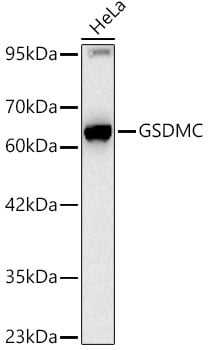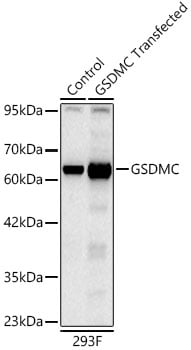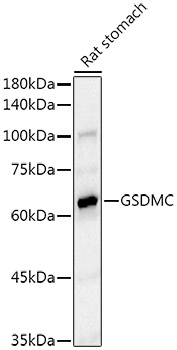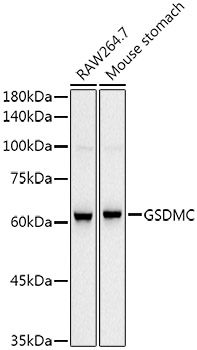
Get accurate results in your research with our Monoclonal Antibodies, which are specially made to target exactly what you require for your research, and will produce consistent, reliable performance in lab tests.
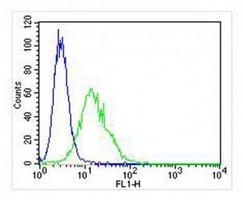
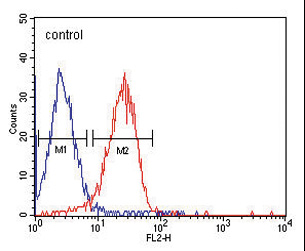
FCM (Flow Cytometry) (Flow cytometric analysis of K562 cells with Wilms Tumor Protein antibody at 1/50 dilution (red) compared with an unlabelled control (cells without incubation with primary antibody; black). Alexa Fluor 488-conjugated goat anti rabbit IgG was used as the secondary antibody.)
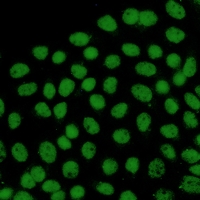
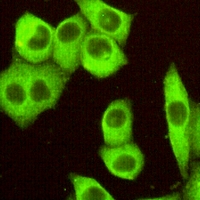
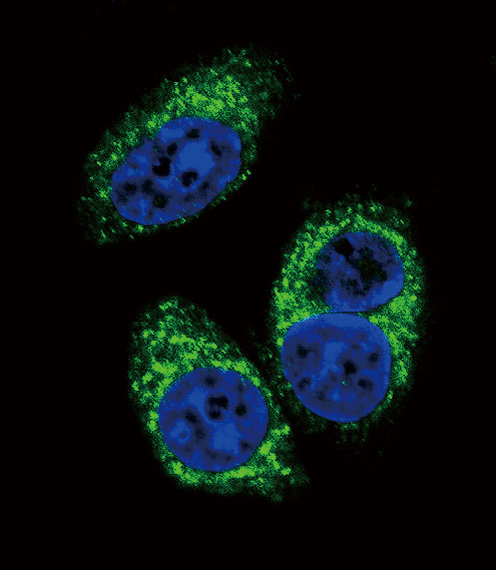
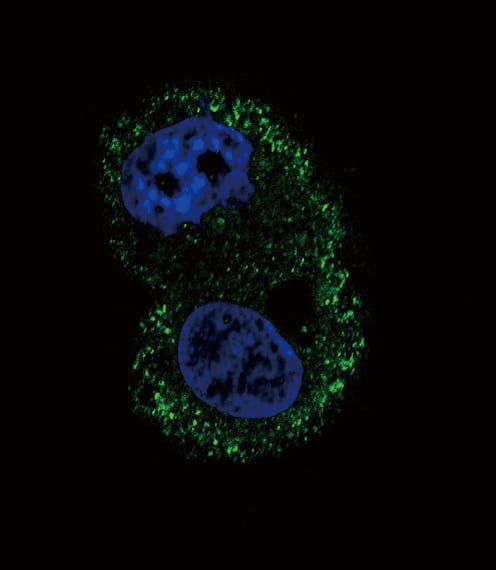
ICC (Immunocytochemistry) (ICC staining Wilms Tumor Protein in PC-3M cells (green). The nuclear counter stain is DAPI (blue). Cells were fixed in paraformaldehyde, permeabilised with 0.25% Triton X100/PBS.)
ICC (Immunocytochemistry) (ICC staining Wilms Tumor Protein in LO2 cells (green). The nuclear counter stain is DAPI (blue). Cells were fixed in paraformaldehyde, permeabilised with 0.25% Triton X100/PBS.)
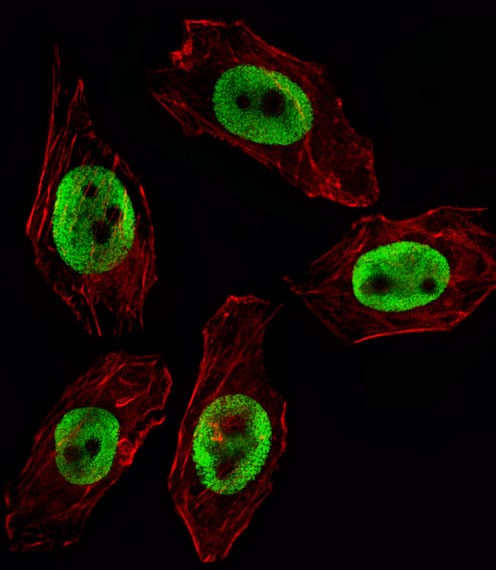
ICC (Immunocytochemistry) (ICC staining Wilms Tumor Protein in Hela cells (green). The nuclear counter stain is DAPI (blue). Cells were fixed in paraformaldehyde, permeabilised with 0.25% Triton X100/PBS.)
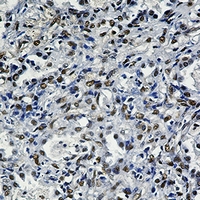
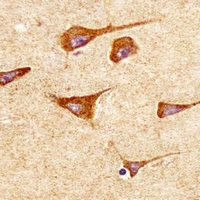
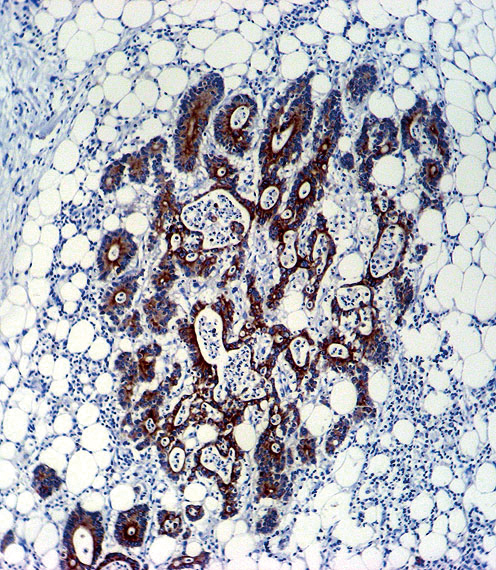
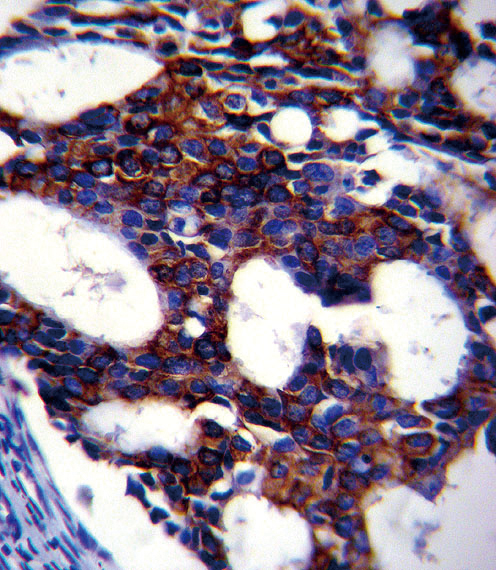
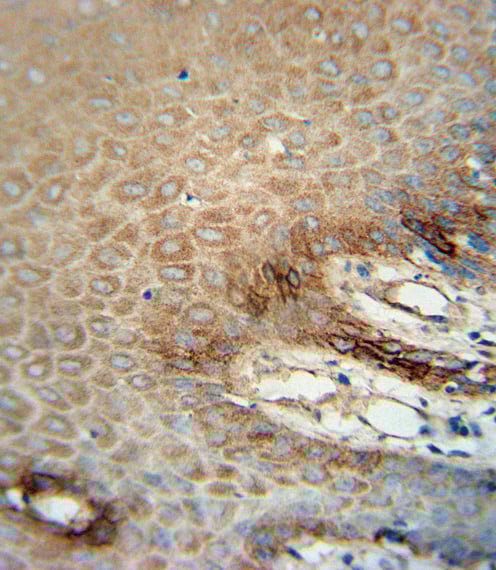
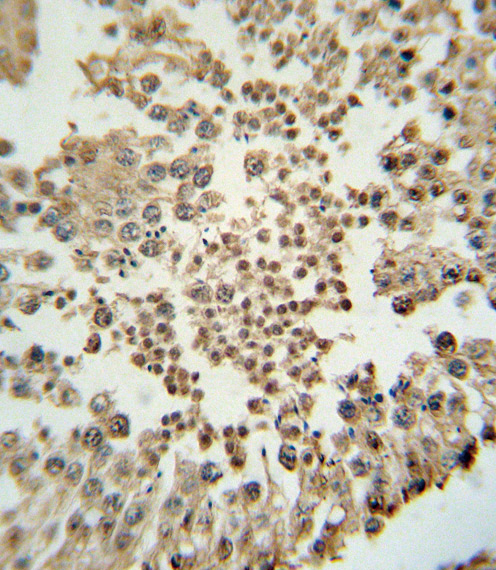
IHC (Immunohistochemistry) (Immunohistochemical analysis of paraffin-embedded mouse kidney, using Wilms Tumor Protein Antibody.)
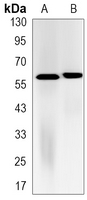
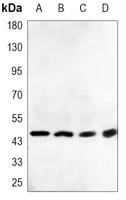
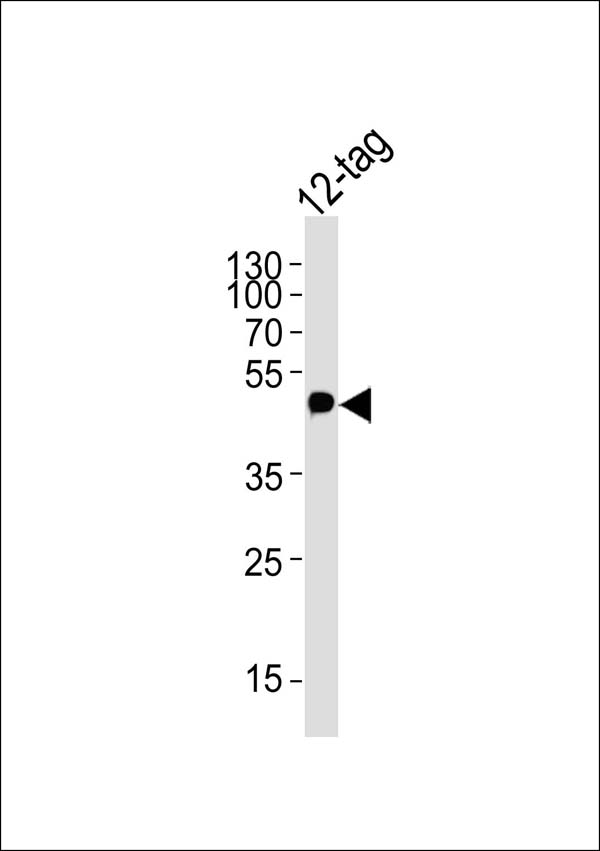
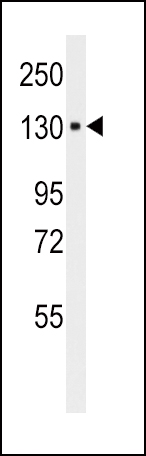
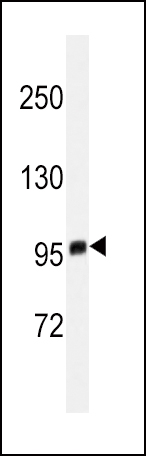
WB (Western Blot) (All lanes use the Antibody at 1:1K dilution for 1 hour at room temperature.)
WB (Western Blot) (Western blot analysis of WT1 expression in K562 cell lysate.)
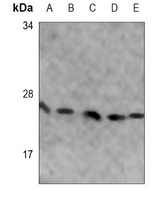
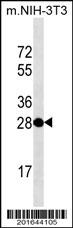
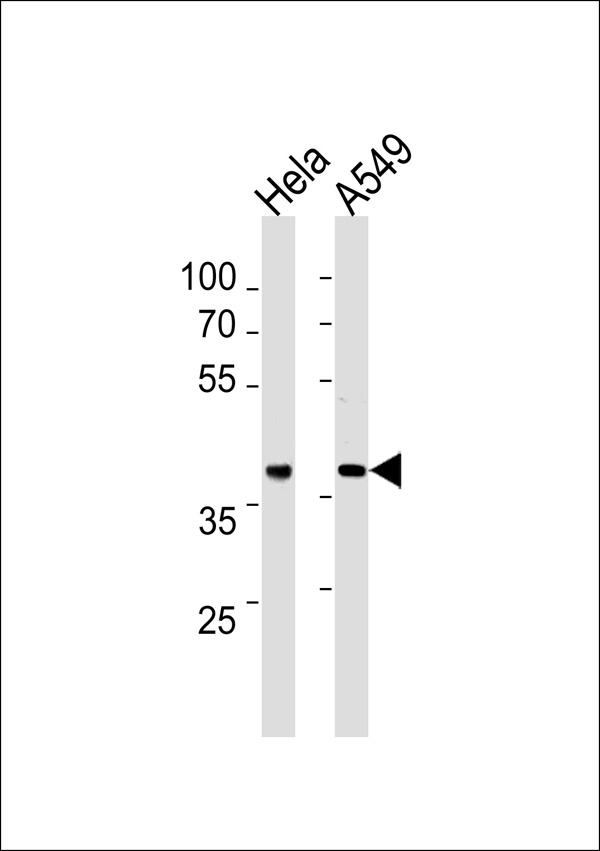
WB (Western Blot) (All lanes use the Antibody at 1:1K dilution for 1 hour at room temperature.)
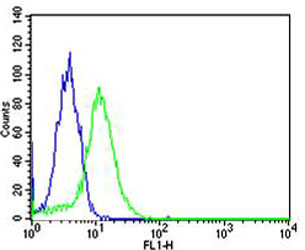
FCM (Flow Cytometry) (Flow cytometric analysis of Hela cells with GLUT1 antibody at 1/50 dilution (blue) compared with an unlabelled control (cells without incubation with primary antibody.)
IF (Immunofluorescence) (Immunofluorescent analysis of HepG2 cells, using GLUT1 Antibody)
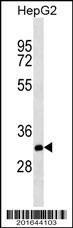
WB (Western Blot) (Western blot analysis of GLUT1 expression in HepG2 lysate (AAA11692).)
IHC (Immunohistochemistry) (Immunohistochemical analysis of paraffin-embedded human cervix cancer, using GLUT1 Antibody(AAA11692))
Application Data (Published customer image: gamma delta T cells are the primary source of IL-17 during B. abortus infection. C57BL/6 mice were infected i.p. with 5x10⁴ CFUs of B. abortus 2308, and two weeks later gamma delta T cells (>95% purity) and an enriched TCRalphabeta (~55% CD4+, 25% CD8+) cell fraction were isolated from the spleens of infected mice. Cells were stimulated with 500 ng/ml ionomycin and 50 ng/ml PMA for three days, and cell-free supernatants from triplicate wells were assayed for cytokine production via ELISA. The mean +/- SD is shown; * P)
Application Data (Published customer image: B. abortus infection does not induce IL-17 or IFN- gamma production by gamma delta T cells. A. Splenocytes from na¯ve or B. abortus-infected mice (7 dpi) were stimulated overnight with PMA/Ionomycin and brefeldin A was added for the last 3 h of culture. Following surface staining, cells were permeabilized and stained for intracellular IL-17 or IFN-?. Top panel, the proportion of IL-17 producing gamma delta T cells was determined following gating on lymphocytes. Second panel from top, cells were gated on CD4+ (CD3+) T cells and assayed for IL-17 production. Third panel from top, cells were gated on gamma delta T cells (CD3+/TCR gamma delta +) and assayed for IFN- gamma production. Bottom panel, cells were gated on CD4+ (CD3+) T cells and assayed for IFN- gamma production. Depicted is the mean +/- SD of 5 mice/group and is representative of two independent experiments. B. gamma delta T cells were sorted from na¯ve or B. abortus-infected (7 dpi) mice and stimulated for 72 h with PMA/Ionomycin. Cytokine levels in supernatant were determined by ELISA. Depicted is the mean +/- SD of triplicate wells. *P)
Application Data (Published customer image: Bovine gamma delta T cells impair B. abortus replication in autologous macrophages via IFN- gamma . A. -F. Bovine macrophages were infected with B. abortus (30 bacteria:1 macrophage) and then fresh media or media containing autologous gamma delta T cells were added to infected macrophages. A., C., E. Macrophage colonization (triplicate wells/treatment) was monitored over time. *P)
Application Data (Published customer image: gamma delta T cells require TNF-alpha to protect against B. abortus infection. C57BL/6 mice treated with anti-TCR gamma delta mAb or hamster IgG on day -1 and day 3 post-infection with 5x10⁴ CFUs of B. abortus 2308. Some mice were also neutralized of their TNF-alpha on days -1 and 3. Seven days after infection, A. splenic weights and B. extent of brucellae colonization were determined. The mean +/- SEM of 10 mice/group is depicted; *P)
Application Data (Published customer image: IFN-gamma response (log10 scale) in mesenteric lymph nodes, Peyer's Patches, popliteal LN and PBMC against GRA7, TLA and MIC3 in function of time.From: Verhelst D, De Craeye S, Entrican G, Dorny P, Cox E. Parasite distribution and associated immune response during the acute phase of Toxoplasma gondii infection in sheep. BMC Vet Res. 2014 Dec 16;10(1):293.)
Application Data (Published customer image: Identification of recombinant antibodies with specificity for bIL-2. PBMC from a cow naturally infected with M. bovis were cultured in the presence of PPD-B to allow screening of candidate bIL-2 by ICS flow cytometry. Panel A shows the histogram gating strategy used to interrogate responses in singlet, live CD4+ lymphocytes. Panel B shows the measurement of detectable IL-2 and/or IFN- gamma within the CD4+ population for each of 6 candidate IL-2 antibody clones. The clone number is shown in the top left corner of each histogram and the percentage of CD4+ cell in which co-expression of IFN- gamma and IL-2 could be detected is shown in the top right of each histogram. Data are representative of 1 of 2 independent experiments.From: Whelan AO, Villarreal-Ramos B, Vordermeier HM, Hogarth PJ (2011) Development of an Antibody to Bovine IL-2 Reveals Multifunctional CD4 TEM Cells in Cattle Naturally Infected with Bovine Tuberculosis. PLoS ONE 6(12): e29194.)
FCM (Flow Cytometry) (Cell Surface flow analysis of hCD73 in PBMC (Lymphocytes) using 0.2µg/106 cells of CD73 clone (ABM40E2). Green represents isotype control; red represents anti-hCD73 antibody. Goat anti-mouse PE conjugated secondary antibody was used.)
IHC (Immunohistochemistry) (Immunohistochemical analysis of CD73 in human spleen using CD73 antibody (Clone: ABM40E2) at 5 ug/ml.)
IHC (Immunohistochemistry) (Immunohistochemical analysis of CD73 in renal cell carcinoma using CD73 antibody (Clone: ABM40E2) at 5 ug/ml.)
IHC (Immunohistochemistry) (Immunohistochemical analysis of CD73 in human liver using CD73 antibody (Clone: ABM40E2) at 5 ug/ml.)
IHC (Immunohistochemistry) (Immunohistochemical analysis of CD73 in endomatrium carcinoma using CD73 antibody (Clone: ABM40E2) at 5 ug/ml.)
WB (Western Blot) (Expression analysis of CD73. Anti- CD73 antibody (Clone: ABM40E2) was tested at 2 ug/ml on human liver lysate.)
Application Data (Staining of mouse peritoneal macrophages with Rat anti Mouse Beta-glucan Receptor: FITC)
Application Data (Staining of mouse peripheral blood monocytes with Rat anti Mouse Beta-glucan Receptor)
Application Data (Immunoperoxidase staining of a mouse lymph node cryosection with Rat anti Mouse Dectin-1 antibody, clone 2A11 followed by horseradish peroxidase conjugated Goat anti Rat IgG antibody . Medium power)
Application Data (Staining of mouse peripheral blood granulocytes with Rat anti Mouse Beta-glucan Receptor:Biotin)
Application Data (Immunoperoxidase staining of a mouse lymph node cryosection with Rat anti Mouse Dectin-1 antibody, clone 2A11 followed by horseradish peroxidase conjugated Goat anti Rat IgG antibody . Low power)
Application Data (Immunoperoxidase staining of a mouse lymph node cryosection with Rat anti Mouse Dectin-1 antibody, clone 2A11 followed by horseradish peroxidase conjugated Goat anti Rat IgG antibody . High power)
Application Data (Immunoperoxidase staining of a mouse skin cryosection with Rat anti Mouse Dectin-1 antibody, clone 2A11 followed by horseradish peroxidase conjugated Goat anti Rat IgG antibody . Low power)
Application Data (Staining of mouse peripheral blood granulocytes with Rat anti Mouse Beta-glucan Receptor:FITC)
Application Data (Staining of mouse peripheral blood granulocytes with Rat anti Mouse Beta-glucan Receptor: RPE)
Application Data (Published customer image: Ex vivo recognition of yeast particles and live fungi by inflammatory cells. A) Representative flow-cytometric analysis, gated on Ly-6G+ neutrophils, after coincubation of BIOgel-elicited inflammatory cells from wild type or dectin-1-deficient (Clec7a-/-) 129S6/SvEv interaction with serum-opsonized or non-opsonized zymosan. Positive staining for the A405-labelled zymosan identifies the neutrophils that are associated zymosan and only these cells exhibit conversion of APF, the ROS reporter. B) Representsative flow-cytometric analysis of CD11b and dectin-1 expression by inflammatory neutrophils and monocyte/M˜. Data represents specific receptor staining (shaded histograms) and isotype control staining (bold lines). Data representative of 2 independent experiments and consistent with previous experiments with thioglycollate. C) Inflammatory cells were loaded with APF and then incubated with serum-opsonized or non-opsonized A405-labelled zymosan or Pacific Orange-labelled C. albicans for 15 minutes. After this time the association of the inflammatory cells with zymosan was measured by flow-cytometry (upper panels) and in those cells that were interacting with zymosan the evidence for fluorescent conversion of APF was also quantified (lower panels). Data is derived from three independent experiments and the data derived from the use of dectin-1-deficient cells is shown relative to wild type cells (100%) as mean+/-95% confidence interval (raw representative data from one of the 3 independent experiments are shown in the Figure S1). The impact of complement osponization (˜C') and the use of different fungal particle used (˜F') were assessed by Two-way ANOVA (˜I' = Interaction statistic). Samples in which the 95% confidence intervals do not overlap with the mean wildtype are specific indicated with a # symbol. Differences in impairment of response observed with dectin-1-deficient cells were further analysed by Bonferroni post-tests. P values derived from individual Bonferroni post-tests are indicated with bracketed pairs of samples.From: McDonald JU, Rosas M, Brown GD, Jones SA, Taylor PR (2012) Differential Dependencies of Monocytes and Neutrophils on Dectin-1, Dectin-2 and Complement for the Recognition of Fungal Particles in Inflammation. PLoS ONE 7(9): e45781.)
Application Data (Staining of New Zealand Black mouse peripheral blood granulocytes with Rat anti Mouse Ly-6B.2 conjugated to FITC Data)
Application Data (Published originator image Intact spleen segments from infected animals were fixed in paraformaldehyde, embedded in OCT, sectioned, and stained with various antibodies for the infiltration of macrophages (FA-11), polymorphonuclear neutrophils, and activated monocytes (7/4Ag) and activated macrophages (MHC-II), as described in the text. All data are representative of at least three individual experiments.From: Plüddemann A, Hoe JC, Makepeace K, Moxon ER, Gordon S (2009) The Macrophage Scavenger Receptor A Is Host-Protective in Experimental Meningococcal Septicaemia. PLoS Pathog 5(2): e1000297.)
Application Data (Published customer image: F4/80 and CD11b+ cells infiltrating the iris after the intracameral injection of antigen also express Ly6C, 7/4 (Ly 6B) and CD45. Preparations of na¯ve iris cells and cells recovered after an intracameral injection of antigen were stained with anti- F4/80 and (A) Ly6C and 7/4 (B) show a characteristic CD45 peak C) Ly6Glo or negative, CD115, CD49b+, CD62Llo. The figures are representative of 2 experiments. All the isotype controls in the histograms are shown as shaded.From: Pais R, Bhowmick S, Chattopadhyay S, Lemire Y, Sharafieh R, et al. (2012) An Intracameral Injection of Antigen Induces In Situ Chemokines and Cytokines Required for the Generation of Circulating Immunoregulatory Monocytes. PLoS ONE 7(8): e43182.)
Application Data (Published customer image: Renal inflammatory changes in Ntn1+/- mice following ischemia. Ntn1+/- mice and their respective age-, weight-, and gender-matched littermate controls (Ntn1+/+) were subjected to 30 minutes of left renal artery ischemia. (A -D) Neutrophil staining. Arrows indicate neutrophils (magnification 400x). (E) Quantification of neutrophil tissue accumulation by measurement of myeloperoxidase (MPO). (F) TNF-a and (G) interleukin-6 (IL-6) and (H) interleukin-10 (IL-10) were assessed by real-time RT-PCR from renal tissues. Data were calculated relative to beta-actin and are expressed as fold change compared to sham-operated animals without ischemia (-I). Data are representative of four to six independent experiments for each experimental condition (mean +/- SD).From: Grenz A, Dalton JH, Bauerle JD, Badulak A, Ridyard D, et al. (2011) Partial Netrin-1 Deficiency Aggravates Acute Kidney Injury. PLoS ONE 6(5): e14812.)
Application Data (Published customer image: 166 mM H2O2 increased neutrophil infiltration in day 1 and 6 wounds. Fluorescence intensity of the neodermis was quantified using ImageJ. The area quantified is outlined with the dashed line. Results shown are mean +/- S.E.M, n = 6-7. A representative section from each treatment is shown. ES - Eschar; HE - Hyper-proliferating epidermis; ND - neodermis.*p)
Application Data (Published customer image: Effect of atorvastatin on platelet and neutrophil infiltration after reperfusion. The infiltration of platelets (upper panel) and neutrophils (lower panel) were evaluated by immunohistochemistry in the 4 chimeric groups that received 40 min of LAD occlusion and 60 min of reperfusion. Platelets and neutrophils were found predominantly in the ischemic area in B6/B6 chimeras. Atorvastatin reduced both platelet and neutrophil infiltration in B6/B6 and B6/KO chimeras, but not in KO/B6 chimeras.From: Tian Y, Linden J, French BA, Yang Z (2014) Atorvastatin at Reperfusion Reduces Myocardial Infarct Size in Mice by Activating eNOS in Bone Marrow-Derived Cells. PLoS ONE 9(12): e114375.)
Application Data (Published customer image: Peri-incisional infiltration of neutrophils, immunohistochemical appearance. Hind paw skin from incised mice was processed for the identification of neutrophils. Panel A displays an H&E stained section of plantar hind paw skin demonstrating a predominantly dermal cellular infiltrate 2 hours after incision. The dermal and epidermal layers are labeled. Panel B displays the appearance of non-incised hind paw skin stained with a neutrophil-specific antibody. Panel C displays a micrograph taken of incised skin stained for neutrophils 2 hours after incision. Note the abundance of darkly staining infiltrating neutrophils in the dermis of this section compared to that displayed in panel B. The scale bar in panel C is 150 um in length. All micrographs were taken using 200x magnification.From: Clark JD, Shi X, Li X, Qiao Y, Liang D, Angst MS, Yeomans DC. Morphine reduces local cytokine expression and neutrophil infiltration after incision. Mol Pain. 2007 Oct 2;3:28.)
Application Data (Published customer image: Confocal neutrophil-cytokine double labeling experiments using incised skin. For these studies skin from the wound edges was harvested 2 hours after incision. After sectioning, the tissue was exposed to anti-neutrophil and anti-IL-1beta antibodies followed by the application of CY3 (green fluorescence, neutrophils, panel A) and FITC (red, IL-1beta, panel B) conjugated secondary antibodies. Panel C presents the merged image with arrows pointing to several strongly double labeling cells. The scale bar in panel C is 50 um in length. These micrographs were taken of dermal tissue under 630x magnification.From: Clark JD, Shi X, Li X, Qiao Y, Liang D, Angst MS, Yeomans DC. Morphine reduces local cytokine expression and neutrophil infiltration after incision. Mol Pain. 2007 Oct 2;3:28.)
Application Data (Staining of New Zealand Black mouse peripheral blood granulocytes with Rat anti Mouse Ly-6B.2 conjugated to FITC Data)
Application Data (Published originator image Intact spleen segments from infected animals were fixed in paraformaldehyde, embedded in OCT, sectioned, and stained with various antibodies for the infiltration of macrophages (FA-11), polymorphonuclear neutrophils, and activated monocytes (7/4Ag) and activated macrophages (MHC-II), as described in the text. All data are representative of at least three individual experiments.From: Plüddemann A, Hoe JC, Makepeace K, Moxon ER, Gordon S (2009) The Macrophage Scavenger Receptor A Is Host-Protective in Experimental Meningococcal Septicaemia. PLoS Pathog 5(2): e1000297.)
Application Data (Published customer image: F4/80 and CD11b+ cells infiltrating the iris after the intracameral injection of antigen also express Ly6C, 7/4 (Ly 6B) and CD45. Preparations of na¯ve iris cells and cells recovered after an intracameral injection of antigen were stained with anti- F4/80 and (A) Ly6C and 7/4 (B) show a characteristic CD45 peak C) Ly6Glo or negative, CD115, CD49b+, CD62Llo. The figures are representative of 2 experiments. All the isotype controls in the histograms are shown as shaded.From: Pais R, Bhowmick S, Chattopadhyay S, Lemire Y, Sharafieh R, et al. (2012) An Intracameral Injection of Antigen Induces In Situ Chemokines and Cytokines Required for the Generation of Circulating Immunoregulatory Monocytes. PLoS ONE 7(8): e43182.)
Application Data (Published customer image: Renal inflammatory changes in Ntn1+/- mice following ischemia. Ntn1+/- mice and their respective age-, weight-, and gender-matched littermate controls (Ntn1+/+) were subjected to 30 minutes of left renal artery ischemia. (A -D) Neutrophil staining. Arrows indicate neutrophils (magnification 400x). (E) Quantification of neutrophil tissue accumulation by measurement of myeloperoxidase (MPO). (F) TNF-a and (G) interleukin-6 (IL-6) and (H) interleukin-10 (IL-10) were assessed by real-time RT-PCR from renal tissues. Data were calculated relative to beta-actin and are expressed as fold change compared to sham-operated animals without ischemia (-I). Data are representative of four to six independent experiments for each experimental condition (mean +/- SD).From: Grenz A, Dalton JH, Bauerle JD, Badulak A, Ridyard D, et al. (2011) Partial Netrin-1 Deficiency Aggravates Acute Kidney Injury. PLoS ONE 6(5): e14812.)
Application Data (Published customer image: 166 mM H2O2 increased neutrophil infiltration in day 1 and 6 wounds. Fluorescence intensity of the neodermis was quantified using ImageJ. The area quantified is outlined with the dashed line. Results shown are mean +/- S.E.M, n = 6-7. A representative section from each treatment is shown. ES - Eschar; HE - Hyper-proliferating epidermis; ND - neodermis.*p)
Application Data (Published customer image: Effect of atorvastatin on platelet and neutrophil infiltration after reperfusion. The infiltration of platelets (upper panel) and neutrophils (lower panel) were evaluated by immunohistochemistry in the 4 chimeric groups that received 40 min of LAD occlusion and 60 min of reperfusion. Platelets and neutrophils were found predominantly in the ischemic area in B6/B6 chimeras. Atorvastatin reduced both platelet and neutrophil infiltration in B6/B6 and B6/KO chimeras, but not in KO/B6 chimeras.From: Tian Y, Linden J, French BA, Yang Z (2014) Atorvastatin at Reperfusion Reduces Myocardial Infarct Size in Mice by Activating eNOS in Bone Marrow-Derived Cells. PLoS ONE 9(12): e114375.)
Application Data (Published customer image: Peri-incisional infiltration of neutrophils, immunohistochemical appearance. Hind paw skin from incised mice was processed for the identification of neutrophils. Panel A displays an H&E stained section of plantar hind paw skin demonstrating a predominantly dermal cellular infiltrate 2 hours after incision. The dermal and epidermal layers are labeled. Panel B displays the appearance of non-incised hind paw skin stained with a neutrophil-specific antibody. Panel C displays a micrograph taken of incised skin stained for neutrophils 2 hours after incision. Note the abundance of darkly staining infiltrating neutrophils in the dermis of this section compared to that displayed in panel B. The scale bar in panel C is 150 um in length. All micrographs were taken using 200x magnification.From: Clark JD, Shi X, Li X, Qiao Y, Liang D, Angst MS, Yeomans DC. Morphine reduces local cytokine expression and neutrophil infiltration after incision. Mol Pain. 2007 Oct 2;3:28.)
Application Data (Published customer image: Confocal neutrophil-cytokine double labeling experiments using incised skin. For these studies skin from the wound edges was harvested 2 hours after incision. After sectioning, the tissue was exposed to anti-neutrophil and anti-IL-1beta antibodies followed by the application of CY3 (green fluorescence, neutrophils, panel A) and FITC (red, IL-1beta, panel B) conjugated secondary antibodies. Panel C presents the merged image with arrows pointing to several strongly double labeling cells. The scale bar in panel C is 50 um in length. These micrographs were taken of dermal tissue under 630x magnification.From: Clark JD, Shi X, Li X, Qiao Y, Liang D, Angst MS, Yeomans DC. Morphine reduces local cytokine expression and neutrophil infiltration after incision. Mol Pain. 2007 Oct 2;3:28.)
FCM (Flow Cytometry) (Overlay histogram showing Hela cells stained with AAA27016 (red line) at 1:150. The cells were incubated in 1x PBS /10% normal goat serum to block non-specific protein-protein interactions followed by primary antibody for 1 h at 4 degree C. The secondary antibody used was FITC goat anti-mouse IgG(H+L) at 1/200 dilution for 1 h at 4 degree C. Isotype control antibody (green line) was used under the same conditions. Acquisition of >10,000 events was performed.)
FCM (Flow Cytometry) (Overlay histogram showing A549 cells stained with AAA27016 (red line) at 1:150. The cells were incubated in 1x PBS /10% normal goat serum to block non-specific protein-protein interactions followed by primary antibody for 1 h at 4 degree C. The secondary antibody used was FITC goat anti-mouse IgG(H+L) at 1/200 dilution for 1 h at 4 degree C. Isotype control antibody (green line) was used under the same conditions. Acquisition of >10,000 events was performed.)
Application Data (Overlay histogram showing 293 cells stained with AAA27016 (red line) at 1:150. The cells were incubated in 1x PBS /10% normal goat serum to block non-specific protein-protein interactions followed by primary antibody for 1 h at 4 degree C. The secondary antibody used was FITC goat anti-mouse IgG(H+L) at 1/200 dilution for 1 h at 4 degree C. Isotype control antibody (green line) was used under the same conditions. Acquisition of >10,000 events was performed.)
IF (Immunofluorescence) (Immunofluorescence staining of Hela cells with AAA27016 at 1:100, counter-stained with DAPI. The cells were blocked in 10% normal Goat Serum and then incubated with the primary antibody overnight at 4 degree C. The secondary antibody was Alexa Fluor 488-congugated AffiniPure Goat Anti-Mouse IgG(H+L).)
IF (Immunofluorescence) (Immunofluorescence staining of A549 cells with AAA27016 at 1:100, counter-stained with DAPI. The cells were blocked in 10% normal Goat Serum and then incubated with the primary antibody overnight at 4 degree C. The secondary antibody was Alexa Fluor 488-congugated AffiniPure Goat Anti-Mouse IgG(H+L).)
IF (Immunofluorescence) (Immunofluorescence staining of 293 cells with AAA27016 at 1:100, counter-stained with DAPI. The cells were blocked in 10% normal Goat Serum and then incubated with the primary antibody overnight at 4 degree C. The secondary antibody was Alexa Fluor 488-congugated AffiniPure Goat Anti-Mouse IgG(H+L).)
IHC (Immunohistochemistry) (IHC image of AAA27016 diluted at 1:100 and staining in paraffin-embedded human colon cancer performed on a Leica BondTM system. After dewaxing and hydration, antigen retrieval was mediated by high pressure in a citrate buffer (pH 6.0). Section was blocked with 10% normal goat serum 30min at RT. Then primary antibody (1% BSA) was incubated at 4 degree C overnight. The primary is detected by a biotinylated secondary antibody and visualized using an HRP conjugated SP system.)
IHC (Immunohistochemistry) (IHC image of AAA27016 diluted at 1:100 and staining in paraffin-embedded human tonsil tissue performed on a Leica BondTM system. After dewaxing and hydration, antigen retrieval was mediated by high pressure in a citrate buffer (pH 6.0). Section was blocked with 10% normal goat serum 30min at RT. Then primary antibody (1% BSA) was incubated at 4 degree C overnight. The primary is detected by a biotinylated secondary antibody and visualized using an HRP conjugated SP system.)
WB (Western Blot) (Western BlotPositive WB detected in: Hela whole cell lysateAll lanes: PD-L1 antibody at 1:1000, 1:2000, 1:4000SecondaryGoat polyclonal to Mouse IgG at 1/10000 dilutionPredicted band size: 34, 21 kDaObserved band size: 55 kDa)
WB (Western Blot) (Western BlotPositive WB detected in: A549 whole cell lysate, PC-3 whole cell lysate, HepG2 whole cell lysate, MCF-7 whole cell lysate, Hela whole cell lysateAll lanes: PD-L1 antibody at 1:2500SecondaryGoat polyclonal to Mouse IgG at 1/10000 dilutionPredicted band size: 34, 21 kDaObserved band size: 55 kDa)
FCM (Flow Cytometry) (Overlay histogram showing HepG2 cells stained with AAA27041 (red line) at 1:100. The cells were incubated in 1x PBS /10% normal goat serum to block non-specific protein-protein interactions followed by primary antibody for 1 h at 4 degree C. The secondary antibody used was FITC goat anti-mouse IgG(H+L) at 1/200 dilution for 1 h at 4 degree C. Isotype control antibody (green line) was used under the same conditions. Acquisition of >10,000 events was performed.)
FCM (Flow Cytometry) (Overlay histogram showing Hela cells stained with AAA27041 (red line) at 1:100. The cells were incubated in 1x PBS /10% normal goat serum to block non-specific protein-protein interactions followed by primary antibody for 1 h at 4 degree C. The secondary antibody used was FITC goat anti-mouse IgG(H+L) at 1/200 dilution for 1 h at 4 degree C. Isotype control antibody (green line) was used under the same conditions. Acquisition of >10,000 events was performed.)
IP (Immunoprecipitation) (Immunoprecipitating PKM in Hela whole cell lysateLane 1: Mouse control IgG instead of AAA27041 in Hela whole cell lysate.Lane 2: AAA27041 (1ul) + Hela whole cell lysate (500ug)Lane 3: Hela whole cell lysate (10ug)For western blotting, the blot was detected with AAA27041 at 1:2000, and a HRP-conjugated Protein G antibody was used as the secondary antibody at 1:2000)
IF (Immunofluorescence) (Immunofluorescence staining of HepG2 cells with AAA27041 at 1:230, counter-stained with DAPI. The cells were blocked in 10% normal Goat Serum and then incubated with the primary antibody overnight at 4 degree C. The secondary antibody was Alexa Fluor 488-congugated AffiniPure Goat Anti-Mouse IgG(H+L).)
IF (Immunofluorescence) (Immunofluorescence staining of Hela cells with AAA27041 at 1:230, counter-stained with DAPI. The cells were blocked in 10% normal Goat Serum and then incubated with the primary antibody overnight at 4 degree C. The secondary antibody was Alexa Fluor 488-congugated AffiniPure Goat Anti-Mouse IgG(H+L).)
IF (Immunofluorescence) (Immunofluorescence staining of A549 cells with AAA27041 at 1:230, counter-stained with DAPI. The cells were blocked in 10% normal Goat Serum and then incubated with the primary antibody overnight at 4 degree C. The secondary antibody was Alexa Fluor 488-congugated AffiniPure Goat Anti-Mouse IgG(H+L).)
IHC (Immunohistochemistry) (IHC image of AAA27041 diluted at 1:400 and staining in paraffin-embedded human kidney tissue performed on a Leica BondTM system. After dewaxing and hydration, antigen retrieval was mediated by high pressure in a citrate buffer (pH 6.0). Section was blocked with 10% normal goat serum 30min at RT. Then primary antibody (1% BSA) was incubated at 4 degree C overnight. The primary is detected by a biotinylated secondary antibody and visualized using an HRP conjugated SP system.)
IHC (Immunohistochemistry) (IHC image of AAA27041 diluted at 1:400 and staining in paraffin-embedded human lung cancer tissue performed on a Leica BondTM system. After dewaxing and hydration, antigen retrieval was mediated by high pressure in a citrate buffer (pH 6.0). Section was blocked with 10% normal goat serum 30min at RT. Then primary antibody (1% BSA) was incubated at 4 degree C overnight. The primary is detected by a biotinylated secondary antibody and visualized using an HRP conjugated SP system.)
IHC (Immunohistchemistry) (IHC image of AAA27041 diluted at 1:400 and staining in paraffin-embedded human lung cancer tissue performed on a Leica BondTM system. After dewaxing and hydration, antigen retrieval was mediated by high pressure in a citrate buffer (pH 6.0). Section was blocked with 10% normal goat serum 30min at RT. Then primary antibody (1% BSA) was incubated at 4 degree C overnight. The primary is detected by a biotinylated secondary antibody and visualized using an HRP conjugated SP system.)
IHC (Immunohistochemistry) (IHC image of AAA27041 diluted at 1:400 and staining in paraffin-embedded human tonsil tissue performed on a Leica BondTM system. After dewaxing and hydration, antigen retrieval was mediated by high pressure in a citrate buffer (pH 6.0). Section was blocked with 10% normal goat serum 30min at RT. Then primary antibody (1% BSA) was incubated at 4 degree C overnight. The primary is detected by a biotinylated secondary antibody and visualized using an HRP conjugated SP system.)
IHC (Immunohistchemistry) (IHC image of AAA27041 diluted at 1:400 and staining in paraffin-embedded human tonsil tissue performed on a Leica BondTM system. After dewaxing and hydration, antigen retrieval was mediated by high pressure in a citrate buffer (pH 6.0). Section was blocked with 10% normal goat serum 30min at RT. Then primary antibody (1% BSA) was incubated at 4 degree C overnight. The primary is detected by a biotinylated secondary antibody and visualized using an HRP conjugated SP system.)
WB (Western Blot) (Western Blot: Positive WB detected in: MCF-7 whole cell lysateAll lanes: PKM antibody at 1:4000, 1:8000, 1:16000, 1:32000, 1:64000, 1:128000, 1:256000Secondary: Goat polyclonal to Mouse IgG at 1/10000 dilutionPredicted band size: 58 kDaObserved band size: 58 KDaExposure time: 5min)
WB (Western Blot) (Western Blot: Positive WB detected in: MCF-7 whole cell lysate at 40µg, 20µg, 10µg, 5µg, 2.5µg, 1.25µg, 0.625µg, 0.3125µgAll lanes: PKM antibody at 1:4000Secondary: Goat polyclonal to Mouse IgG at 1/10000 dilutionPredicted band size: 58 kDaObserved band size: 58 KDaExposure time: 5min)
WB (Western Blot) (Western Blot: Positive WB detected in: Rat Heart tissue, Rat Spleen tissue, Rat Brain tissueAll lanes: PKM antibody at 1:4000Secondary: Goat polyclonal to Mouse IgG at 1/10000 dilutionPredicted band size: 55-60 kDaObserved band size: 55-60 kDa)
WB (Western Blot) (Western Blot: Positive WB detected in: Mouse Heart tissue, Mouse Brain tissue, Mouse Skeletal Muscle tissueAll lanes: PKM antibody at 1:4000Secondary: Goat polyclonal to Mouse IgG at 1/10000 dilutionPredicted band size: 58 kDaObserved band size: 58 KDa)
WB (Western Blot) (Western Blot: Positive WB detected in: Hela whole cell lysate, MCF-7 whole cell lysate, Jurkat whole cell lysate, NIH/3T3 whole cell lysateAll lanes: PKM antibody at 1:4000Secondary: Goat polyclonal to Mouse IgG at 1/10000 dilutionPredicted band size: 58 kDaObserved band size: 58 KDaExposure time: 1min)
IP (Immunoprecipitation) (Immunoprecipitation analysis of 600 ug extracts of Mouse heart using 3 ug ATP5A1 antibody (AAA28451). Western blot was performed from the immunoprecipitate using ATP5A1 antibody (AAA28451) at a dilution of 1:1000.)
IHC (Immunohistochemistry) (Immunohistochemistry analysis of paraffin-embedded Rat liver tissue using ATP5A1 Rabbit mAb (AAA28451) at dilution of 1:200 (40x lens). High pressure antigen retrieval performed with 0.01M Citrate Bufferr (pH 6.0) prior to IHC staining.)
IHC (Immunohistochemistry) (Immunohistochemistry analysis of paraffin-embedded Human thyroid cancer tissue using ATP5A1 Rabbit mAb (AAA28451) at dilution of 1:200 (40x lens). High pressure antigen retrieval performed with 0.01M Citrate Bufferr (pH 6.0) prior to IHC staining.)
IHC (Immunohistchemistry) (Immunohistochemistry analysis of paraffin-embedded Human lung squamous carcinoma tissue using ATP5A1 Rabbit mAb (AAA28451) at dilution of 1:200 (40x lens). High pressure antigen retrieval performed with 0.01M Citrate Bufferr (pH 6.0) prior to IHC staining.)
IHC (Immunohistochemistry) (Immunohistochemistry analysis of paraffin-embedded Human liver cancer tissue using ATP5A1 Rabbit mAb (AAA28451) at dilution of 1:200 (40x lens). High pressure antigen retrieval performed with 0.01M Citrate Bufferr (pH 6.0) prior to IHC staining.)
IHC (Immunohistochemistry) (Immunohistochemistry analysis of paraffin-embedded Human kidney tissue using ATP5A1 Rabbit mAb (AAA28451) at dilution of 1:200 (40x lens). High pressure antigen retrieval performed with 0.01M Citrate Bufferr (pH 6.0) prior to IHC staining.)
IHC (Immunohistchemistry) (Immunohistochemistry analysis of paraffin-embedded Human colon carcinoma tissue using ATP5A1 Rabbit mAb (AAA28451) at dilution of 1:200 (40x lens). High pressure antigen retrieval performed with 0.01M Citrate Bufferr (pH 6.0) prior to IHC staining.)
ICC (Immunocytochemistry) (Confocal imaging of HeLa cells using ATP5A1 Rabbit mAb (AAA28451, dilution 1:200) followed by a further incubation with Cy3 Goat Anti-Rabbit IgG (H+L) (AS007, dilution 1:500) (Red). The cells were counterstained with ?-Tubulin Mouse mAb (AC012, dilution 1:400) followed by incubation with ABflo® 488-conjugated Goat Anti-Mouse IgG (H+L) Ab (AS076, dilution 1:500) (Green). DAPI was used for nuclear staining (Blue). Objective: 100x.)
ICC (Immunocytochemistry) (Confocal imaging of paraffin-embedded Mouse brain tissue using ATP5A1 Rabbit mAb (AAA28451, dilution 1:200) followed by a further incubation with Cy3 Goat Anti-Rabbit IgG (H+L) (AS007, dilution 1:500) (Red). DAPI was used for nuclear staining (Blue). Objective: 40x. Perform microwave antigen retrieval with 0.01 M citrate buffer (pH 6.0) prior to IF staining.)
ICC (Immunocytochemistry) (Confocal imaging of paraffin-embedded Rat brain tissue using ATP5A1 Rabbit mAb (AAA28451, dilution 1:200) followed by a further incubation with Cy3 Goat Anti-Rabbit IgG (H+L) (AS007, dilution 1:500) (Red). DAPI was used for nuclear staining (Blue). Objective: 40x. Perform microwave antigen retrieval with 0.01 M citrate buffer (pH 6.0) prior to IF staining.)
ICC (Immunocytochemistry) (Confocal imaging of NIH/3T3 cells using ATP5A1 Rabbit mAb (AAA28451, dilution 1:200) followed by a further incubation with Cy3 Goat Anti-Rabbit IgG (H+L) (AS007, dilution 1:500) (Red). The cells were counterstained with ?-Tubulin Mouse mAb (AC012, dilution 1:400) followed by incubation with ABflo® 488-conjugated Goat Anti-Mouse IgG (H+L) Ab (AS076, dilution 1:500) (Green). DAPI was used for nuclear staining (Blue). Objective: 100x.)
WB (Western Blot) (Western blot analysis of various lysates using ATP5A1 Rabbit mAb (AAA28451) at 1?1000 dilution.Secondary antibody: HRP-conjugated Goat anti-Rabbit IgG (H+L) (AS014) at 1:10000 dilution.Lysates/proteins: 25ug per lane.Blocking buffer: 3% nonfat dry milk in TBST.Detection: ECL Basic Kit (RM00020).Exposure time: 1s.)
ICC (Immunocytochemistry) (Confocal imaging of C6 cells using Aurora B Rabbit mAb (AAA28505, dilution 1:800) followed by a further incubation with Cy3 Goat Anti-Rabbit IgG (H+L) (AS007, dilution 1:500) (Red). The cells were counterstained with ?-Tubulin Mouse mAb (AC012, dilution 1:400) followed by incubation with ABflo® 488-conjugated Goat Anti-Mouse IgG (H+L) Ab (AS076, dilution 1:500) (Green). DAPI was used for nuclear staining (Blue). Objective: 100x.)
ICC (Immunocytochemistry) (Confocal imaging of NIH/3T3 cells using Aurora B Rabbit mAb (AAA28505, dilution 1:800) followed by a further incubation with Cy3 Goat Anti-Rabbit IgG (H+L) (AS007, dilution 1:500) (Red). The cells were counterstained with ?-Tubulin Mouse mAb (AC012, dilution 1:400) followed by incubation with ABflo® 488-conjugated Goat Anti-Mouse IgG (H+L) Ab (AS076, dilution 1:500) (Green). DAPI was used for nuclear staining (Blue). Objective: 100x.)
ICC (Immunocytochemistry) (Confocal imaging of A-431 cells using Aurora B Rabbit mAb (AAA28505, dilution 1:800) followed by a further incubation with Cy3 Goat Anti-Rabbit IgG (H+L) (AS007, dilution 1:500) (Red). The cells were counterstained with ?-Tubulin Mouse mAb (AC012, dilution 1:400) followed by incubation with ABflo® 488-conjugated Goat Anti-Mouse IgG (H+L) Ab (AS076, dilution 1:500) (Green). DAPI was used for nuclear staining (Blue). Objective: 100x.)
ICC (Immunocytochemistry) (Confocal imaging of HeLa cells using Aurora B Rabbit mAb (AAA28505, dilution 1:800) followed by a further incubation with Cy3 Goat Anti-Rabbit IgG (H+L) (AS007, dilution 1:500) (Red). The cells were counterstained with ?-Tubulin Mouse mAb (AC012, dilution 1:400) followed by incubation with ABflo® 488-conjugated Goat Anti-Mouse IgG (H+L) Ab (AS076, dilution 1:500) (Green). DAPI was used for nuclear staining (Blue). Objective: 100x.)
IHC (Immunohistochemistry) (Immunohistochemistry analysis of paraffin-embedded Rat spleen tissue using Aurora B Rabbit mAb (AAA28505) at a dilution of 1:500 (40x lens). High pressure antigen retrieval performed with 0.01M Citrate Bufferr (pH 6.0) prior to IHC staining.)
IHC (Immunohistochemistry) (Immunohistochemistry analysis of paraffin-embedded Mouse spleen tissue using Aurora B Rabbit mAb (AAA28505) at a dilution of 1:500 (40x lens). High pressure antigen retrieval performed with 0.01M Citrate Bufferr (pH 6.0) prior to IHC staining.)
WB (Western Blot) (Western blot analysis of various lysates using Aurora B Rabbit mAb (AAA28505) at 1:1000 dilution.Secondary antibody: HRP-conjugated Goat anti-Rabbit IgG (H+L) (AS014) at 1:10000 dilution.Lysates/proteins: 25ug per lane.Blocking buffer: 3% nonfat dry milk in TBST.Detection: ECL Basic Kit (RM00020).Exposure time: 3min.)
IHC (Immunohistchemistry) (Immunohistochemistry analysis of paraffin-embedded Rat kidney tissue using ERp29 Rabbit mAb (AAA28530) at a dilution of 1:1000 (40x lens). High pressure antigen retrieval was performed with 0.01 M citrate buffer (pH 6.0) prior to IHC staining.)
IHC (Immunohistochemistry) (Immunohistochemistry analysis of paraffin-embedded Human liver tissue using ERp29 Rabbit mAb (AAA28530) at a dilution of 1:1000 (40x lens). High pressure antigen retrieval was performed with 0.01 M citrate buffer (pH 6.0) prior to IHC staining.)
IHC (Immunohistochemistry) (Immunohistochemistry analysis of paraffin-embedded Human colon carcinoma tissue using ERp29 Rabbit mAb (AAA28530) at a dilution of 1:1000 (40x lens). High pressure antigen retrieval was performed with 0.01 M citrate buffer (pH 6.0) prior to IHC staining.)
IHC (Immunohistochemistry) (Immunohistochemistry analysis of paraffin-embedded Human breast cancer tissue using ERp29 Rabbit mAb (AAA28530) at a dilution of 1:1000 (40x lens). High pressure antigen retrieval was performed with 0.01 M citrate buffer (pH 6.0) prior to IHC staining.)
IHC (Immunohistochemistry) (Immunohistochemistry analysis of paraffin-embedded Mouse brain tissue using ERp29 Rabbit mAb (AAA28530) at a dilution of 1:1000 (40x lens). High pressure antigen retrieval was performed with 0.01 M citrate buffer (pH 6.0) prior to IHC staining.)
WB (Western Blot) (Western blot analysis of various lysates using ERp29 Rabbit mAb (AAA28530) at 1:1000 dilution.Secondary antibody: HRP-conjugated Goat anti-Rabbit IgG (H+L) (AS014) at 1:10000 dilution.Lysates/proteins: 25ug per lane.Blocking buffer: 3% nonfat dry milk in TBST.Detection: ECL Basic Kit (RM00020).Exposure time: 180s.)
IHC (Immunohistochemistry) (The human kidney tissue stained with Mouse GLEPP-1 monoclonal antibody (AAA14075) at 1:100 using AEC chromogen. (Note: formalin-fixed, paraffin-embedded sections need 15 minutes heat-induced epitope retrieval in 10 mM citrate buffer, pH 6.0, and 30 minutes incubation at room temperature with the primary antiibody).)
Application Data (Published customer image: Mouse anti V5 tag antibody, clone SV5-Pk1 used for the detection of V5 tagged WEEV_nsP3 protein by western blotting and immunofluorescenceImage caption: WEEV nsP3 interaction with host IKKbeta. A) U87MGs were transfected in a 6-well plate with 5 ug of pUC19 and WEEV_nsP3_HA for 24 hours. Cell lysates were resolved using SDS-PAGE and subsequently immunoblotted with V5 antibody and beta-actin served as a loading control. B) U87MGs were transfected with WEEV_nsP3_V5; cells were fixed after 24 hours and stained with antibodies against the endogenous IKKbeta and the V5 tag. Cells were incubated with appropriate secondary Alexa Fluor antibodies and the nuclei stained with DAPI. Co-localization of IKKbeta with WEEV_nsP3_V5 (yellow) was observed as shown by the arrows. B) Panels E -H serve as an example of transfected cells in a given field of view that show co-localization of IKKbeta and WEEV_nsP3_V5 24 hours post transfection. Panels I-L represent magnified images of other cells showing co-localization of IKKbeta and WEEV_nsP3_V5. Panel M is a magnified image of panel L. The co-localization was confirmed by Z-stack analysis. Co-localization was calculated to be approximately in 61% of cells (163 cells were counted of which 44% demonstrated expression of nsP3. Of those cells that expressed nsP3, 61% showed co-localization of both proteins). Images were taken using Nikon Eclipse TE2000-U at 60x magnification and are representative of 2 independent experiments.From: Amaya M, Voss K, Sampey G, Senina S, de la Fuente C, et al. (2014) The Role of IKKbeta in Venezuelan Equine Encephalitis Virus Infection. PLoS ONE 9(2): e86745.)
Application Data (Published customer image: Mouse anti V5 tag antibody, clone SV5-Pk1 used for the detection of V5 tagged Rho GTPase-activating protein 28 protein by western blotting and immunofluorescenceImage caption:Arhgap28-V5 inhibits RhoA activation and stress fiber formation in SaOS-2 cells. SaOS-2 cells were transfected with empty vector or Arhgap28-V5. A. The expression of Arhgap28-V5 was confirmed by western blotting using an antibody to V5. B. Effect of Arhgap28-V5 expression on the basal activity of RhoA (n = 5), Rac1 (n = 3) and Cdc42 (n = 3). Bars show SEM. * indicates significant difference found, p)
Application Data (Published customer image: Mouse anti V5 Tag antibody, clone SV5-Pk1used for immunoprecipitation of V5 tagged RNF11 proteinImage caption:Dynamic associations of RNF11 with both A20 and Itch in primary neurons. N2A cells transduced with V5-RNF11 lentivirus (N2A V5-RNF11) and transfected with DYKDDDDK-A20 were harvested for immunoprecipitation (IP) with V5 antibody (A) or harvested for IP with DYKDDDDK antibody (B). Proteins were resolved by SDS-PAGE and immunoblotted with anti-A20 and RNF11. In parallel, pull-down assays with V5 antibody (C) or with Itch antibody (D) from N2A V5-RNF11 cell lysates were resolved by SDS-PAGE. Immunoprecipitates and lysates were immunoblotted with anti-Itch and RNF11. (E) and (H) Murine primary cortical neurons were stimulated with 10?ng/ml TNF-a for 0 or 30 minutes and harvested for IP with RNF11 antibody. Control IP experiments were performed with antibody omitted. Proteins were resolved by SDS-PAGE and immunoblotted with anti-A20, Itch, RNF11 and actin. (F), (G), (I) and (J) ImageJ software was used to quantify the densitometry of the immunoprecipitated bands relative to the 0-minutes time point. Each input sample's immunoreactivity was used as a loading control. All IPs are representative of at least three independent experiments. *P?)
Application Data (Published customer image: Mouse anti V5 tag antibody, clone SV5-Pk1 used for detection of V5 tagged podocin protein by western blottingImage caption:The podocin short isoform is N-glycosylated. A) PNGase-F treatment removes the double band from the short isoform in DRM fraction 7. Lysates from Figure 3 were subjected to treatment with PNGase-F and immunoblotted and detected with anti-V5 antibody. B) N to S mutation of the N-glycosylation consensus motif completely abrogates the formation of a double band. The asparagine at position 287 corresponds to amino acid 355 in the full-length protein. HEK293T cells were transfected with V5-tagged Podocin (short isoform or short isoform N287S, respectively) and lysates were immunoblotted and detected with anti-V5 antibody.From: V¶lker LA, Schurek EM, Rinschen MM, Tax J, Schutte BA, Lamkemeyer T, Ungrue D, Schermer B, Benzing T, H¶hne M. Characterization of a short isoform of the kidney protein podocin in human kidney. BMC Nephrol. 2013 May 6;14:102.)
Application Data (V5 tagged protein detected with Mouse anti V5-Tag)
Application Data (Published customer image: Mouse anti V5 tag antibody, clone SV5-Pk1 used for detection of V5 tagged podocin protein by western blottingImage caption:The podocin short isoform interacts with known podocyte proteins. CD2AP, TRPC6, neprin and NEPH1 co-precipitate with both podocin isoforms (FL, full length (canoncical isoform); SI, short isoform). DYKDDDDK- and V5-tagged proteins were expressed in HEK293T cells and precipitated with anti-DYKDDDDK antibody as indicated. Western blot analysis was performed with a V5 specific antibody. Expression levels of DYKDDDDK.podocin constructs in the lysates are shown below.From: V¶lker LA, Schurek EM, Rinschen MM, Tax J, Schutte BA, Lamkemeyer T, Ungrue D, Schermer B, Benzing T, H¶hne M. Characterization of a short isoform of the kidney protein podocin in human kidney. BMC Nephrol. 2013 May 6;14:102.)
Application Data (Published customer image: Mouse anti V5 tag antibody, clone SV5-Pk1 used for detection of V5 tagged REDD1 protein by western blotting.Image caption:REDD1 is not regulated by Cullin E3 Ubiquitin ligases. (A,B) Untransfected (A) or REDD1-V5 pcDNA3 (0.3 ug) transfected (B) HEK293 cells stably expressing tetracycline inducible dnUbc12-HA were induced with 1 ug/ml tetracycline for 24 hours (A,B) or treated with 3 uM MLN4924 (A) or 20 uM MG-132 (A,B) for 8 hours followed by cell lysis. (C,D) Untransfected HEK293 (C) or HEK293 transfected with REDD1-V5 pcDNA3 (0.3 ug) (D) were pre-treated with 3 uM MLN4924 followed by cycloheximide (40 uM) treatment and cell lysis at the indicated time points. (E) HEK293 cells stably expressing tetracycline inducible dnUbc12-HA were induced with 1 ug/ml tetracycline for 24 hours followed by cycloheximide (40 uM) treatment and cell lysis at the indicated time points.From: Tan CY, Hagen T (2013) mTORC1 Dependent Regulation of REDD1 Protein Stability. PLoS ONE 8(5): e63970.)
Application Data (Published customer image: Mouse anti V5 tag antibody, clone SV5-Pk1 used for the detection of V5 tagged HIVA peptide by western blottingImage caption:Construction of the BCG.HIVACAT vaccine strain. (A) A synthetic GC-rich HIVA gene was fused to the region encoding the 19-kDa lipoprotein signal sequence and inserted into the episomal pJH222 E Coli-mycobacterium shuttle plasmid. This plasmid contains kanamycin resistance (aph) and complementing lysA genes and an E Coli origin of replication (oriE). In addition, pJH222 contained the mycobacterial origin of replication (oriM). The BALB/c mouse T-cell and MAb Pk epitopes used in this work are depicted. P a-Ag, M. tuberculosis a-antigen promoter; PHSP60, heat shock protein 60 gene promoter. The aph gene was removed by SpeI digestion and the lacO sequence was inserted and transformed into E Coli DH1lacdapD strain. (B) Immunodot of BCG.HIVACAT lysates. Dot 1: BCG wild type (negative control); Dot 2, 3, 4 and 5: clone 3, clone 7, clone 9 and clone 10 of BCG.HIVACAT; Dot 6: BCG.HIVA222 (positive control). HIVA peptide was detected using the anti-Pk MAb followed by horseradish peroxidase-Goat-anti-Mouse and enhanced chemiluminescence (ECL) detection. (C) In vivo plasmid stability of BCG.HIVACAT harboring pJH222.HIVACAT. Mice were injected s.c. with 105 cfu of BCG.HIVACAT and boosted i.m. with 106 pfu of MVA.HIVA, spleens were homogenized 20 weeks after BCG inoculation and the recovered rBCG colonies were tested for the presence of the HIVA DNA coding sequence by PCR. Lanes 1 to 6: Six rBCG colonies were recovered in the non-lysine supplemented plate; lane 7: Molecular weight marker; lane 8: Plasmid DNA positive control; lane 9: Distilled water (negative control).From: Saubi N, Mbewe-Mvula A, Gea-Mallorqui E, Rosario M, Gatell JM, et al. (2012) Pre-Clinical Development of BCG.HIVACAT, an Antibiotic-Free Selection Strain, for HIV-TB Pediatric Vaccine Vectored by Lysine Auxotroph of BCG. PLoS ONE 7(8): e42559.)
Application Data (Published customer image: Mouse anti V5 Tag antibody, clone SV5-Pk1used for immunoprecipitation of V5 tagged RNF11 proteinImage caption:Myristoylation mutant of RNF11 is unable to associate with Itch. SH-SY5Y shRNA-RNF11 cells were transfected with shRNA-resistant RNF11 constructs or vector. Coimmunoprecipitation experiments using V5 antibody were performed 24 hours after transfection. Immunoprecipitates and lysates were resolved by SDS-PAGE and immunoblotted with anti-A20, Itch, RNF11 or actin. Blots are representative of three independent experiments. From: Pranski EL, Dalal NV, Herskowitz JH, Orr AL, Roesch LA, Fritz JJ, Heilman C, Lah JJ, Levey AI, Betarbet RS. Neuronal RING finger protein 11 (RNF11) regulates canonical NF-?B signaling. J Neuroinflammation. 2012 Apr 16;9:67. doi: 10.1186/1742-2094-9-67.)
Application Data (Published customer image: Mouse anti V5 tag antibody, clone SV5-Pk1 used for detection of V5 tagged REDD1 protein by western blotting.Image caption:REDD1 is not degraded by Cul4a or phosphorylated by GSK3beta at Thr 23 and Thr25. (A) HEK293 cells were transfected with empty vector or tetracycline inducible dnCul4a-V5 pcDNA4/TO (1 ug) and Cul4A-V5 pcDNA3 (0.03 ug) followed by tetracycline (1 ug/ml) induction for 24 hours and cell lysis. (B) HEK293 cells were transfected with 0.5 ug Cul4a-V5 pcDNA3 for 15 hours followed by transfection of 20 nM control or Cul4a siRNAs to determine siRNAs efficiency. (C) HEK293 cells were transfected with 20 nM control or Cul4a siRNAs for 3 days followed by cell lysis. (D) REDD1-V5 pcDNA3 wild type, T23A T25A or T23D T25D plasmids (0.4 ug) were transfected in HEK293 cells for 3 days and treated with 20 uM MG-132 for 6 hours followed by cell lysis. (E) HEK293 cells were treated with 30 mM LiCl or GSK3 inhibitor IX (5 uM or 10 uM) for 20 hours followed by cell lysis. (F) HEK293 cells were co-transfected with 0.2 ug REDD1-V5 pcDNA3 and 0.3 ug GSK3beta pcDNA3 or empty pcDNA3 for 3 days followed by MG-132 (20 uM) treatment for 6 hours followed by cell lysis. (G) HEK293 cells were transfected with 3 ug DYKDDDDK-REDD1 or DYKDDDDK-FRAT1 for 3 days followed by cell lysis and DYKDDDDK immunoprecipitation. In vitro phosphorylation of REDD1 and FRAT1 was carried out as described in Materials and Methods..From: Tan CY, Hagen T (2013) mTORC1 Dependent Regulation of REDD1 Protein Stability. PLoS ONE 8(5): e63970.)
Application Data (Staining of human peripheral blood monocytes with Mouse anti Human CD14:RPE)
Application Data (Staining of human peripheral blood monocytes with Mouse anti Human CD14:APC)
Application Data (Staining of human peripheral blood monocytes with Mouse anti Human CD14:Alexa Fluor 647)
Application Data (Staining of human peripheral blood monocytes with Mouse anti Human CD14:Biotin)
Application Data (Sandwich ELISA analysis of Human CD14 binding using Mouse anti CD14 antibody, clone MEM-18 as a capture reagent and biotinylated Mouse anti Human CD14 antibody, clone UCHM1 as a detection reagent with purified CD14 as antigen for generation of the standard curve. Detection is by HRP conjugated streptavidin. Microtitre plate is read at O.D. 450 nm on the iMark Microplate Absorbance Reader . Serum samples diluted 1:200 and 1:400 are shown green and red respectively, while plasma samples also diluted 1:200 and 1:400 are blue and orange respectively)
Application Data (Staining of human peripheral blood monocytes with Mouse anti Human CD14:FITC)
Application Data (Staining of human peripheral blood monocytes with Mouse anti Human CD14-IgG:Endotoxin Low)
IHC (Immunohistochemistry) (Immunohistochemistry of paraffin-embedded human spleen tissue slide using SLAMF6 Monoclonal Antibody at dilution of 1:200.)
IP (Immunoprecipitation) (Immunoprecipitation analysis of 300 ug extracts of HeLa cells using 3 ug Smad2 antibody (AAA28489). Western blot was performed from the immunoprecipitate using Smad2 antibody (AAA28489) at a dilution of 1:1000.)
ICC (Immunocytochemistry) (Confocal imaging of HeLa cells using [KD Validated] Smad2 Rabbit mAb (AAA28489, dilution 1:100) followed by a further incubation with Cy3 Goat Anti-Rabbit IgG (H+L) (AS007,dilution 1:500) (Red). The cells were counterstained with ?-Tubulin Mouse mAb (AC012, dilution 1:400) followed by incubation with ABflo® 488-conjugated Goat Anti-Mouse IgG (H+L) Ab (AS076, dilution 1:500) (Green). DAPI was used for nuclear staining (Blue). Objective: 100x.)
IF (Immunofluorescence) (Immunofluorescence analysis of NIH/3T3 cells using [KD Validated] Smad2 Rabbit mAb (AAA28489) at dilution of 1:100 (40x lens). Secondary antibody: Cy3-conjugated Goat anti-Rabbit IgG (H+L) (AS007) at 1:500 dilution. Blue: DAPI for nuclear staining.)
WB (Western Blot) (Western blot analysis of lysates from Rat lung, using [KD Validated] Smad2 Rabbit mAb (AAA28489) at 1:1000 dilution.Secondary antibody: HRP-conjugated Goat anti-Rabbit IgG (H+L) (AS014) at 1:10000 dilution.Lysates/proteins: 25ug per lane.Blocking buffer: 3% nonfat dry milk in TBST.Detection: ECL Basic Kit (RM00020).Exposure time: 3min.)
WB (Western Blot) (Western blot analysis of various lysates using [KD Validated] Smad2 Rabbit mAb (AAA28489) at 1:1000 dilution.Secondary antibody: HRP-conjugated Goat anti-Rabbit IgG (H+L) (AS014) at 1:10000 dilution.Lysates/proteins: 25ug per lane.Blocking buffer: 3% nonfat dry milk in TBST.Detection: ECL Basic Kit (RM00020).Exposure time: 90s.)
WB (Western Blot) (Western blot analysis of lysates from wild type (WT) and Smad2 knockdown (KD) HeLa cells, using [KD Validated] Smad2 Rabbit mAb (AAA28489) at 1:1000 dilution.Secondary antibody: HRP-conjugated Goat anti-Rabbit IgG (H+L) (AS014) at 1:10000 dilution.Lysates/proteins: 25ug per lane.Blocking buffer: 3% nonfat dry milk in TBST.Detection: ECL Basic Kit (RM00020).Exposure time: 60s.)
IHC (Immunohistochemistry) (Immunohistochemistry analysis of paraffin-embedded Mouse colon tissue using PI3 Kinase p85 alpha/beta Rabbit PolymAb® (AAA28560) at a dilution of 1:200 (40x lens). High pressure antigen retrieval was performed with 0.01 M citrate buffer (pH 6.0) prior to IHC staining.)
IHC (Immunohistchemistry) (Immunohistochemistry analysis of paraffin-embedded Human colon tissue using PI3 Kinase p85 alpha/beta Rabbit PolymAb® (AAA28560) at a dilution of 1:200 (40x lens). High pressure antigen retrieval was performed with 0.01 M citrate buffer (pH 6.0) prior to IHC staining.)
IHC (Immunohistochemistry) (Immunohistochemistry analysis of paraffin-embedded Human spleen tissue using PI3 Kinase p85 alpha/beta Rabbit PolymAb® (AAA28560) at a dilution of 1:200 (40x lens). High pressure antigen retrieval was performed with 0.01 M citrate buffer (pH 6.0) prior to IHC staining.)
IHC (Immunohistochemistry) (Immunohistochemistry analysis of paraffin-embedded Rat spleen tissue using PI3 Kinase p85 alpha/beta Rabbit PolymAb® (AAA28560) at a dilution of 1:200 (40x lens). High pressure antigen retrieval was performed with 0.01 M citrate buffer (pH 6.0) prior to IHC staining.)
IHC (Immunohistochemistry) (Immunohistochemistry analysis of paraffin-embedded Rat colon tissue using PI3 Kinase p85 alpha/beta Rabbit PolymAb® (AAA28560) at a dilution of 1:200 (40x lens). High pressure antigen retrieval was performed with 0.01 M citrate buffer (pH 6.0) prior to IHC staining.)
WB (Western Blot) (Western blot analysis of lysates from Rat lung, using PI3 Kinase p85 alpha/beta Rabbit PolymAb® (AAA28560) at 1:1000 dilution.Secondary antibody: HRP-conjugated Goat anti-Rabbit IgG (H+L) (AS014) at 1:10000 dilution.Lysates/proteins: 25ug per lane.Blocking buffer: 3% nonfat dry milk in TBST.Detection: ECL Enhanced Kit (RM00021).Exposure time: 60s.)
WB (Western Blot) (Western blot analysis of various lysates, using PI3 Kinase p85 alpha/beta Rabbit PolymAb® (AAA28560) at 1:1000 dilution.Secondary antibody: HRP-conjugated Goat anti-Rabbit IgG (H+L) (AS014) at 1:10000 dilution.Lysates/proteins: 25ug per lane.Blocking buffer: 3% nonfat dry milk in TBST.Detection: ECL Basic Kit (RM00020).Exposure time: 180s.)
IHC (Immunohistchemistry) (Immunohistochemistry analysis of paraffin-embedded Human colon tissue using TAZ Rabbit PolymAb® (AAA28582) at a dilution of 1:200 (40x lens). High pressure antigen retrieval performed with 0.01M Tris-EDTA Buffer(pH 9.0) prior to IHC staining.)
IHC (Immunohistochemistry) (Immunohistochemistry analysis of paraffin-embedded Human breast cancer tissue using TAZ Rabbit PolymAb® (AAA28582) at a dilution of 1:200 (40x lens). High pressure antigen retrieval performed with 0.01M Tris-EDTA Buffer(pH 9.0) prior to IHC staining.)
IHC (Immunohistochemistry) (Immunohistochemistry analysis of paraffin-embedded Human pancreas tissue using TAZ Rabbit PolymAb® (AAA28582) at a dilution of 1:200 (40x lens). High pressure antigen retrieval performed with 0.01M Tris-EDTA Buffer(pH 9.0) prior to IHC staining.)
IHC (Immunohistochemistry) (Immunohistochemistry analysis of paraffin-embedded Mouse lung tissue using TAZ Rabbit PolymAb® (AAA28582) at a dilution of 1:200 (40x lens). High pressure antigen retrieval performed with 0.01M Tris-EDTA Buffer(pH 9.0) prior to IHC staining.)
IHC (Immunohistochemistry) (Immunohistochemistry analysis of paraffin-embedded Rat lung tissue using TAZ Rabbit PolymAb® (AAA28582) at a dilution of 1:200 (40x lens). High pressure antigen retrieval performed with 0.01M Tris-EDTA Buffer(pH 9.0) prior to IHC staining.)
WB (Western Blot) (Western blot analysis of lysates from HeLa cells using TAZ Rabbit PolymAb® (AAA28582)at 1:3000 dilution incubated overnight at 4?.Secondary antibody: HRP-conjugated Goat anti-Rabbit IgG (H+L) (AS014) at 1:10000 dilution.Lysates/proteins: 25 ug per lane.Blocking buffer: 3% nonfat dry milk in TBST.Detection: ECL Basic Kit (RM00020).Exposure time: 45s.)
IP (Immunoprecipitation) (Immunoprecipitation analysis of 300 ug extracts of HepG2 cells using 3 ug ACSL4 antibody (AAA28542). Western blot was performed from the immunoprecipitate using ACSL4 antibody (AAA28542) at a dilution of 1:1000.)
ICC (Immunocytochemistry) (Confocal imaging of Hep G2 cells using ACSL4 Rabbit mAb (AAA28542, dilution 1:200) followed by a further incubation with Cy3 Goat Anti-Rabbit IgG (H+L) (AS007, dilution 1:500) (Red). The cells were counterstained with ?-Tubulin Mouse mAb (AC012, dilution 1:400) followed by incubation with ABflo® 488-conjugated Goat Anti-Mouse IgG (H+L) Ab (AS076, dilution 1:500) (Green). DAPI was used for nuclear staining (Blue). Objective: 100x.)
IHC (Immunohistchemistry) (Immunohistochemistry analysis of paraffin-embedded Rat brain using ACSL4 Rabbit mAb (AAA28542) at dilution of 1:200 (40x lens). High pressure antigen retrieval performed with 0.01M Citrate Bufferr (pH 6.0) prior to IHC staining.)
IHC (Immunohistochemistry) (Immunohistochemistry analysis of paraffin-embedded Human liver cancer using ACSL4 Rabbit mAb (AAA28542) at dilution of 1:200 (40x lens). High pressure antigen retrieval performed with 0.01M Citrate Bufferr (pH 6.0) prior to IHC staining.)
IHC (Immunohistochemistry) (Immunohistochemistry analysis of paraffin-embedded Human kidney using ACSL4 Rabbit mAb (AAA28542) at dilution of 1:200 (40x lens). High pressure antigen retrieval performed with 0.01M Citrate Bufferr (pH 6.0) prior to IHC staining.)
IHC (Immunohistochemistry) (Immunohistochemistry analysis of paraffin-embedded Human colon carcinoma using ACSL4 Rabbit mAb (AAA28542) at dilution of 1:200 (40x lens). High pressure antigen retrieval performed with 0.01M Citrate Bufferr (pH 6.0) prior to IHC staining.)
WB (Western Blot) (Western blot analysis of lysates from Rat liver using ACSL4 Rabbit mAb (AAA28542) at 1:58000 dilution incubated overnight at 4?.Secondary antibody: HRP-conjugated Goat anti-Rabbit IgG (H+L) (AS014) at 1:10000 dilution.Lysates/proteins: 25 ug per lane.Blocking buffer: 3% nonfat dry milk in TBST.Detection: ECL Basic Kit (RM00020).Exposure time: 20s.)
WB (Western Blot) (Western blot analysis of various lysates using ACSL4 Rabbit mAb (AAA28542) at 1:58000 dilution incubated overnight at 4?.Secondary antibody: HRP-conjugated Goat anti-Rabbit IgG (H+L) (AS014) at 1:10000 dilution.Lysates/proteins: 25 ug per lane.Blocking buffer: 3% nonfat dry milk in TBST.Detection: ECL Basic Kit (RM00020).Exposure time: 45s.)
ICC (Immunocytochemistry) (Confocal imaging of paraffin-embedded Human tonsil tissue using IL18 Rabbit PolymAb® (AAA28566, dilution 1:200) followed by a further incubation with Cy3 Goat Anti-Rabbit IgG (H+L) (AS007, dilution 1:500) (Red). DAPI was used for nuclear staining (Blue). High pressure antigen retrieval performed with 0.01M Citrate Buffer (pH 6.0) prior to IF staining. Objective: 40x.)
IHC (Immunohistochemistry) (Immunohistochemistry analysis of paraffin-embedded Human tonsil tissue using IL18 Rabbit PolymAb® (AAA28566) at a dilution of 1:200 (40x lens). High pressure antigen retrieval was performed with 0.01 M citrate buffer (pH 6.0) prior to IHC staining.)
ICC (Immunocytochemistry) (Confocal imaging of PC-12 cells using IL18 Rabbit PolymAb® (AAA28566,dilution 1:200) followed by a further incubation with Cy3 Goat Anti-Rabbit IgG (H+L) (AS007,dilution 1:500)(Red).The cells were counterstained with ?-Tubulin Mouse mAb (AC012, dilution 1:400) followed by incubation with ABflo® 488-conjugated Goat Anti-Mouse IgG (H+L) Ab (AS076, dilution 1:500) (Green).DAPI was used for nuclear staining (Blue). Objective: 100x.)
ICC (Immunocytochemistry) (Confocal imaging of NIH/3T3 cells using IL18 Rabbit PolymAb® (AAA28566,dilution 1:200) followed by a further incubation with Cy3 Goat Anti-Rabbit IgG (H+L) (AS007,dilution 1:500)(Red).The cells were counterstained with ?-Tubulin Mouse mAb (AC012, dilution 1:400) followed by incubation with ABflo® 488-conjugated Goat Anti-Mouse IgG (H+L) Ab (AS076, dilution 1:500) (Green).DAPI was used for nuclear staining (Blue). Objective: 100x.)
WB (Western Blot) (Western blot analysis of various lysates using IL18 Rabbit PolymAb® (AAA28566) at 1:1000 dilution. Secondary antibody: HRP-conjugated Goat anti-Rabbit IgG (H+L) (AS014) at 1:10000 dilution. Lysates / proteins: 25 ug per lane. Blocking buffer: 3 % nonfat dry milk in TBST. Detection: ECL Basic Kit (RM00020). Exposure time: 10s.)
WB (Western Blot) (Western blot analysis of lysates from Rat spleen using IL18 Rabbit PolymAb® (AAA28566) at 1:1000 dilution.Secondary antibody: HRP-conjugated Goat anti-Rabbit IgG (H+L) (AS014) at 1:10000 dilution.Lysates/proteins: 25 ug per lane.Blocking buffer: 3% nonfat dry milk in TBST.Detection: ECL Basic Kit (RM00020).Exposure time: 45s.)
ICC (Immunocytochemistry) (Confocal imaging of paraffin-embedded Mouse spleen tissue using [KO Validated] Ki67 Rabbit PolymAb® (AAA28593, dilution 1:200) followed by a further incubation with Cy3 Goat Anti-Rabbit IgG (H+L) (AS007, dilution 1:500) (Red). DAPI was used for nuclear staining (Blue). High pressure antigen retrieval performed with 0.01M Citrate Buffer (pH 6.0) prior to IF staining. Objective: 40x.)
ICC (Immunocytochemistry) (Confocal imaging of PC-12 cells using [KO Validated] Ki67 Rabbit PolymAb® (AAA28593, dilution 1:200) followed by a further incubation with Cy3 Goat Anti-Rabbit IgG (H+L) (AS007, dilution 1:500) (Red). The cells were counterstained with ?-Tubulin Mouse mAb (AC012, dilution 1:400) followed by incubation with ABflo® 488-conjugated Goat Anti-Mouse IgG (H+L) Ab (AS076, dilution 1:500) (Green). DAPI was used for nuclear staining (Blue). Objective: 100x.)
ICC (Immunocytochemistry) (Confocal imaging of HeLa cells using [KO Validated] Ki67 Rabbit PolymAb® (AAA28593, dilution 1:200) followed by a further incubation with Cy3 Goat Anti-Rabbit IgG (H+L) (AS007, dilution 1:500) (Red). The cells were counterstained with ?-Tubulin Mouse mAb (AC012, dilution 1:400) followed by incubation with ABflo® 488-conjugated Goat Anti-Mouse IgG (H+L) Ab (AS076, dilution 1:500) (Green). DAPI was used for nuclear staining (Blue). Objective: 100x.)
ICC (Immunocytochemistry) (Confocal imaging of A-431 cells using [KO Validated] Ki67 Rabbit PolymAb® (AAA28593, dilution 1:200) followed by a further incubation with Cy3 Goat Anti-Rabbit IgG (H+L) (AS007, dilution 1:500) (Red). The cells were counterstained with ?-Tubulin Mouse mAb (AC012, dilution 1:400) followed by incubation with ABflo® 488-conjugated Goat Anti-Mouse IgG (H+L) Ab (AS076, dilution 1:500) (Green). DAPI was used for nuclear staining (Blue). Objective: 100x.)
ICC (Immunocytochemistry) (Confocal imaging of C2C12 cells using [KO Validated] Ki67 Rabbit PolymAb® (AAA28593, dilution 1:200) followed by a further incubation with Cy3 Goat Anti-Rabbit IgG (H+L) (AS007, dilution 1:500) (Red). The cells were counterstained with ?-Tubulin Mouse mAb (AC012, dilution 1:400) followed by incubation with ABflo® 488-conjugated Goat Anti-Mouse IgG (H+L) Ab (AS076, dilution 1:500) (Green). DAPI was used for nuclear staining (Blue). Objective: 100x.)
IHC (Immunohistochemistry) (Immunohistochemistry analysis of paraffin-embedded Rat spleen tissue using [KO Validated] Ki67 Rabbit PolymAb® (AAA28593) at a dilution of 1:1000 (40x lens). High pressure antigen retrieval performed with 0.01M Tris-EDTA Buffer (pH 9.0) prior to IHC staining.)
IHC (Immunohistochemistry) (Immunohistochemistry analysis of paraffin-embedded Rat colon tissue using [KO Validated] Ki67 Rabbit PolymAb® (AAA28593) at a dilution of 1:1000 (40x lens). High pressure antigen retrieval performed with 0.01M Tris-EDTA Buffer (pH 9.0) prior to IHC staining.)
IHC (Immunohistchemistry) (Immunohistochemistry analysis of paraffin-embedded Mouse colon tissue using [KO Validated] Ki67 Rabbit PolymAb® (AAA28593) at a dilution of 1:1000 (40x lens). High pressure antigen retrieval performed with 0.01M Tris-EDTA Buffer (pH 9.0) prior to IHC staining.)
IHC (Immunohistochemistry) (Immunohistochemistry analysis of paraffin-embedded Human tonsil tissue using [KO Validated] Ki67 Rabbit PolymAb® (AAA28593) at a dilution of 1:1000 (40x lens). High pressure antigen retrieval performed with 0.01M Tris-EDTA Buffer (pH 9.0) prior to IHC staining.)
IHC (Immunohistochemistry) (Immunohistochemistry analysis of paraffin-embedded Human colon carcinoma tissue using [KO Validated] Ki67 Rabbit PolymAb® (AAA28593) at a dilution of 1:1000 (40x lens). High pressure antigen retrieval performed with 0.01M Tris-EDTA Buffer (pH 9.0) prior to IHC staining.)
IHC (Immunohistochemistry) (Immunohistochemistry analysis of paraffin-embedded Human esophagus tissue using [KO Validated] Ki67 Rabbit PolymAb® (AAA28593) at a dilution of 1:1000 (40x lens). High pressure antigen retrieval performed with 0.01M Tris-EDTA Buffer (pH 9.0) prior to IHC staining.)
WB (Western Blot) (Western blot analysis of lysates from RAW264.7 cells using [KO Validated] Ki67 Rabbit PolymAb® (AAA28593) at 1:1000 dilution incubated overnight at 4?.Secondary antibody: HRP-conjugated Goat anti-Rabbit IgG (H+L) (AS014) at 1:10000 dilution.Lysates/proteins: 25 ug per lane.Blocking buffer: 3% nonfat dry milk in TBST.Detection: ECL Basic Kit (RM00020).Exposure time: 5s.)
WB (Western Blot) (Western blot analysis of lysates from wild type (WT) and Ki67 knockout (KO) HeLa cells using [KO Validated] Ki67 Rabbit PolymAb® (AAA28593) at 1:1000 dilution incubated overnight at 4?. HeLa cells and Ki67 knockout (KO) HeLa cells were treated by Nocodazole (1 ug/mL) at 37? for 24 hours.Secondary antibody: HRP-conjugated Goat anti-Rabbit IgG (H+L) (AS014) at 1:10000 dilution.Lysates/proteins: 30 ug per lane.Blocking buffer: 3% nonfat dry milk in TBST.Detection: ECL Basic Kit (RM00020).Exposure time: 10s.)
ICC (Immunocytochemistry) (Confocal imaging of U-2 OS cells using [KO Validated] Lamin A/C Mouse mAb (AAA28596, dilution 1:200) followed by a further incubation with ABflo® 488-conjugated Goat Anti-Mouse IgG (H+L) Ab (AS076, dilution 1:500) (Green). DAPI was used for nuclear staining (Blue). Objective: 100x.)
ICC (Immunocytochemistry) (Confocal imaging of NIH/3T3 cells using [KO Validated] Lamin A/C Mouse mAb (AAA28596, dilution 1:200) followed by a further incubation with ABflo® 488-conjugated Goat Anti-Mouse IgG (H+L) Ab (AS076, dilution 1:500) (Green). DAPI was used for nuclear staining (Blue). Objective: 100x.)
IHC (Immunohistochemistry) (Immunohistochemistry analysis of paraffin-embedded Rat kidney tissue using [KO Validated] Lamin A/C Mouse mAb (AAA28596) at a dilution of 1:10000 (40x lens). High pressure antigen retrieval performed with 0.01M Tris-EDTA Buffer(pH 9.0) prior to IHC staining.)
IHC (Immunohistchemistry) (Immunohistochemistry analysis of paraffin-embedded Mouse colon tissue using [KO Validated] Lamin A/C Mouse mAb (AAA28596) at a dilution of 1:10000 (40x lens). High pressure antigen retrieval performed with 0.01M Tris-EDTA Buffer(pH 9.0) prior to IHC staining.)
IHC (Immunohistochemistry) (Immunohistochemistry analysis of paraffin-embedded Mouse brain tissue using [KO Validated] Lamin A/C Mouse mAb (AAA28596) at a dilution of 1:10000 (40x lens). High pressure antigen retrieval performed with 0.01M Tris-EDTA Buffer(pH 9.0) prior to IHC staining.)
IHC (Immunohistochemistry) (Immunohistochemistry analysis of paraffin-embedded Human esophagus tissue using [KO Validated] Lamin A/C Mouse mAb (AAA28596) at a dilution of 1:10000 (40x lens). High pressure antigen retrieval performed with 0.01M Tris-EDTA Buffer(pH 9.0) prior to IHC staining.)
IHC (Immunohistochemistry) (Immunohistochemistry analysis of paraffin-embedded Human colon carcinoma tissue using [KO Validated] Lamin A/C Mouse mAb (AAA28596) at a dilution of 1:10000 (40x lens). High pressure antigen retrieval performed with 0.01M Tris-EDTA Buffer(pH 9.0) prior to IHC staining.)
WB (Western Blot) (Western blot analysis of lysates from wild type (WT) and Lamin A/C knockout (KO) 293T cells using [KO Validated] Lamin A/C Mouse mAb (AAA28596) at 1:10000 dilution incubated overnight at 4?.Secondary antibody: HRP Goat Anti-Mouse IgG (H+L) antibody (AS003) at 1:10000 dilution.Lysates/proteins: 25 ug per lane.Blocking buffer: 3% nonfat dry milk in TBST.Detection: ECL Basic Kit (RM00020).Exposure time: 90s.)
WB (Western Blot) (Western blot analysis of various lysates using [KO Validated] Lamin A/C Mouse mAb (AAA28596) at 1:10000 dilution incubated overnight at 4?.Secondary antibody: HRP Goat Anti-Mouse IgG (H+L) antibody (AS003) at 1:10000 dilution.Lysates/proteins: 25 ug per lane.Blocking buffer: 3% nonfat dry milk in TBST.Detection: ECL Basic Kit (RM00020).Exposure time: 45s.)
IF (Immunofluorescence) (Immunofluorescence analysis of NIH-3T3 cells using PKC delta Rabbit mAb (AAA28608) at dilution of 1:100 (40x lens). Secondary antibody: Cy3-conjugated Goat anti-Rabbit IgG (H+L) (AS007) at 1:500 dilution. Blue: DAPI for nuclear staining.)
IHC (Immunohistchemistry) (Immunohistochemistry analysis of paraffin-embedded Mouse testis tissue using PKC delta Rabbit mAb (AAA28608) at a dilution of 1:200 (40x lens). High pressure antigen retrieval was performed with 0.01 M citrate buffer (pH 6.0) prior to IHC staining.)
IHC (Immunohistochemistry) (Immunohistochemistry analysis of paraffin-embedded Mouse brain tissue using PKC delta Rabbit mAb (AAA28608) at a dilution of 1:200 (40x lens). High pressure antigen retrieval was performed with 0.01 M citrate buffer (pH 6.0) prior to IHC staining.)
IHC (Immunohistochemistry) (Immunohistochemistry analysis of paraffin-embedded Human thyroid tissue using PKC delta Rabbit mAb (AAA28608) at a dilution of 1:200 (40x lens). High pressure antigen retrieval was performed with 0.01 M citrate buffer (pH 6.0) prior to IHC staining.)
IHC (Immunohistochemistry) (Immunohistochemistry analysis of paraffin-embedded Mouse colon tissue using PKC delta Rabbit mAb (AAA28608) at a dilution of 1:200 (40x lens). High pressure antigen retrieval was performed with 0.01 M citrate buffer (pH 6.0) prior to IHC staining.)
IHC (Immunohistochemistry) (Immunohistochemistry analysis of paraffin-embedded Human spleen tissue using PKC delta Rabbit mAb (AAA28608) at a dilution of 1:200 (40x lens). High pressure antigen retrieval was performed with 0.01 M citrate buffer (pH 6.0) prior to IHC staining.)
WB (Western Blot) (Western blot analysis of various lysates using PKC delta Rabbit mAb (AAA28608) at 1:1000 dilution.Secondary antibody: HRP-conjugated Goat anti-Rabbit IgG (H+L) (AS014) at 1:10000 dilution.Lysates/proteins: 25ug per lane.Blocking buffer: 3% nonfat dry milk in TBST.Detection: ECL Basic Kit (RM00020).Exposure time: 3min.)
IP (Immunoprecipitation) (Immunoprecipitation analysis using Mouse Anti-VPS35 Monoclonal Antibody, Clone 5A9. Tissue: embryonic fibroblast. Species: Mouse. Primary Antibody: Mouse Anti-VPS35 Monoclonal Antibody. Three amounts of (3, 1 and 0.3 ug) were non-covalently coupled to 10uL of A/G sepharose beads for 1 hour at 4 degree C and next incubated with 250ug of MEF lysate for 2 hours at 4 degree C.)
IP (Immunoprecipitation) (Immunoprecipitation analysis using Mouse Anti-VPS35 Monoclonal Antibody, Clone 5A9. Tissue: A549 cells. Species: Human. Primary Antibody: Mouse Anti-VPS35 Monoclonal Antibody. Three amounts of (3, 1 and 0.3 ug) were non-covalently coupled to 10uL of A/G sepharose beads for 1 hour at 4 degree C and next incubated with 250ug of A549 lysate for 2 hours at 4 degree C.)
WB (Western Blot) (Western Blot analysis of Human SH-SY5Y showing detection of VPS35 protein using Mouse Anti-VPS35 Monoclonal Antibody, Clone 5A9. Lane 1: Molecular Weight Ladder. Lane 2: SH-SY5Y (10 ug). Load: 10 ug. Block: 5% Skim Milk powder in TBST. Primary Antibody: Mouse Anti-VPS35 Monoclonal Antibody at 1:1000 for 2 hours at RT with shaking. Secondary Antibody: Goat anti-mouse IgG:HRP at 1:4000 for 1 hour at RT with shaking. Color Development: Chemiluminescent for HRP (Moss) for 5 min in RT.)
WB (Western Blot) (Western Blot analysis of Human, Mouse A549, MEF showing detection of VPS35 protein using Mouse Anti-VPS35 Monoclonal Antibody, Clone 5A9. Lane 1: Molecular Weight Ladder. Lane 2: VPS35 KO A549 cells. Lane 3: mouse embryonic fibroblast cells.. Load: 8 ug each A549 and MEF. Primary Antibody: Mouse Anti-VPS35 Monoclonal Antibody at 1:5 (tissue culture supernatant). Secondary Antibody: Donkey anti-mouse IRDye 800CW at 1:25000 in TBS-T.)
IP (Immunoprecipitation) (Co-Immunoprecipitation analysis of known interactors of VPS35 using Mouse Anti-VPS35 Monoclonal Antibody, Clone 5A9. Tissue: A549 cells. Species: Human. Primary Antibody: Mouse Anti-VPS35 Monoclonal Antibody.)
IP (Immunoprecipitation) (Immunoprecipitation analysis using Mouse Anti-VPS35 Monoclonal Antibody, Clone 5A9. Tissue: A549 cells. Species: Human. Primary Antibody: Mouse Anti-VPS35 Monoclonal Antibody. 500 uL cell culture supernatants were incubated with 10 uL of Protein A/G resin beads for 1 hour at 4 degree C. clone 5A9 depletes VPS35 from the A549 cell extract..)
ICC (Immunocytochemistry) (Immunocytochemistry/Immunofluorescence analysis using Mouse Anti-VPS35 Monoclonal Antibody, Clone 5A9. Tissue: A549 cells. Species: Human. Primary Antibody: Mouse Anti-VPS35 Monoclonal Antibody at 1:5 (tissue culture supernatant). Secondary Antibody: Donkey anti-mouse: Alexa Fluor 594 at 1:4000 in 0.2% BSA PBS. Counterstain: DAPI. Localization: Vesicles. A) VPS35 KO A549 cells B) WT A549 cells. Courtesy of: Dario Alessi Lab, University of Dundee.)
Application Data (Published customer image: Mouse anti V5 tag antibody, clone SV5-Pk1 used for the detection of V5 tagged WEEV_nsP3 protein by western blotting and immunofluorescenceImage caption: WEEV nsP3 interaction with host IKKbeta. A) U87MGs were transfected in a 6-well plate with 5 ug of pUC19 and WEEV_nsP3_HA for 24 hours. Cell lysates were resolved using SDS-PAGE and subsequently immunoblotted with V5 antibody and beta-actin served as a loading control. B) U87MGs were transfected with WEEV_nsP3_V5; cells were fixed after 24 hours and stained with antibodies against the endogenous IKKbeta and the V5 tag. Cells were incubated with appropriate secondary Alexa Fluor antibodies and the nuclei stained with DAPI. Co-localization of IKKbeta with WEEV_nsP3_V5 (yellow) was observed as shown by the arrows. B) Panels E -H serve as an example of transfected cells in a given field of view that show co-localization of IKKbeta and WEEV_nsP3_V5 24 hours post transfection. Panels I-L represent magnified images of other cells showing co-localization of IKKbeta and WEEV_nsP3_V5. Panel M is a magnified image of panel L. The co-localization was confirmed by Z-stack analysis. Co-localization was calculated to be approximately in 61% of cells (163 cells were counted of which 44% demonstrated expression of nsP3. Of those cells that expressed nsP3, 61% showed co-localization of both proteins). Images were taken using Nikon Eclipse TE2000-U at 60x magnification and are representative of 2 independent experiments.From: Amaya M, Voss K, Sampey G, Senina S, de la Fuente C, et al. (2014) The Role of IKKbeta in Venezuelan Equine Encephalitis Virus Infection. PLoS ONE 9(2): e86745.)
Application Data (Published customer image: Mouse anti V5 tag antibody, clone SV5-Pk1 used for the detection of V5 tagged Rho GTPase-activating protein 28 protein by western blotting and immunofluorescenceImage caption:Arhgap28-V5 inhibits RhoA activation and stress fiber formation in SaOS-2 cells. SaOS-2 cells were transfected with empty vector or Arhgap28-V5. A. The expression of Arhgap28-V5 was confirmed by western blotting using an antibody to V5. B. Effect of Arhgap28-V5 expression on the basal activity of RhoA (n = 5), Rac1 (n = 3) and Cdc42 (n = 3). Bars show SEM. * indicates significant difference found, p)
Application Data (Published customer image: Mouse anti V5 Tag antibody, clone SV5-Pk1used for immunoprecipitation of V5 tagged RNF11 proteinImage caption:Dynamic associations of RNF11 with both A20 and Itch in primary neurons. N2A cells transduced with V5-RNF11 lentivirus (N2A V5-RNF11) and transfected with DYKDDDDK-A20 were harvested for immunoprecipitation (IP) with V5 antibody (A) or harvested for IP with DYKDDDDK antibody (B). Proteins were resolved by SDS-PAGE and immunoblotted with anti-A20 and RNF11. In parallel, pull-down assays with V5 antibody (C) or with Itch antibody (D) from N2A V5-RNF11 cell lysates were resolved by SDS-PAGE. Immunoprecipitates and lysates were immunoblotted with anti-Itch and RNF11. (E) and (H) Murine primary cortical neurons were stimulated with 10?ng/ml TNF-a for 0 or 30 minutes and harvested for IP with RNF11 antibody. Control IP experiments were performed with antibody omitted. Proteins were resolved by SDS-PAGE and immunoblotted with anti-A20, Itch, RNF11 and actin. (F), (G), (I) and (J) ImageJ software was used to quantify the densitometry of the immunoprecipitated bands relative to the 0-minutes time point. Each input sample's immunoreactivity was used as a loading control. All IPs are representative of at least three independent experiments. *P?)
Application Data (Published customer image: Mouse anti V5 tag antibody, clone SV5-Pk1 used for detection of V5 tagged podocin protein by western blottingImage caption:The podocin short isoform is N-glycosylated. A) PNGase-F treatment removes the double band from the short isoform in DRM fraction 7. Lysates from Figure 3 were subjected to treatment with PNGase-F and immunoblotted and detected with anti-V5 antibody. B) N to S mutation of the N-glycosylation consensus motif completely abrogates the formation of a double band. The asparagine at position 287 corresponds to amino acid 355 in the full-length protein. HEK293T cells were transfected with V5-tagged Podocin (short isoform or short isoform N287S, respectively) and lysates were immunoblotted and detected with anti-V5 antibody.From: V¶lker LA, Schurek EM, Rinschen MM, Tax J, Schutte BA, Lamkemeyer T, Ungrue D, Schermer B, Benzing T, H¶hne M. Characterization of a short isoform of the kidney protein podocin in human kidney. BMC Nephrol. 2013 May 6;14:102.)
Application Data (V5 tagged protein detected with Mouse anti V5-Tag)
Application Data (Published customer image: Mouse anti V5 tag antibody, clone SV5-Pk1 used for detection of V5 tagged podocin protein by western blottingImage caption:The podocin short isoform interacts with known podocyte proteins. CD2AP, TRPC6, neprin and NEPH1 co-precipitate with both podocin isoforms (FL, full length (canoncical isoform); SI, short isoform). DYKDDDDK- and V5-tagged proteins were expressed in HEK293T cells and precipitated with anti-DYKDDDDK antibody as indicated. Western blot analysis was performed with a V5 specific antibody. Expression levels of DYKDDDDK.podocin constructs in the lysates are shown below.From: V¶lker LA, Schurek EM, Rinschen MM, Tax J, Schutte BA, Lamkemeyer T, Ungrue D, Schermer B, Benzing T, H¶hne M. Characterization of a short isoform of the kidney protein podocin in human kidney. BMC Nephrol. 2013 May 6;14:102.)
Application Data (Published customer image: Mouse anti V5 tag antibody, clone SV5-Pk1 used for detection of V5 tagged REDD1 protein by western blotting.Image caption:REDD1 is not regulated by Cullin E3 Ubiquitin ligases. (A,B) Untransfected (A) or REDD1-V5 pcDNA3 (0.3 ug) transfected (B) HEK293 cells stably expressing tetracycline inducible dnUbc12-HA were induced with 1 ug/ml tetracycline for 24 hours (A,B) or treated with 3 uM MLN4924 (A) or 20 uM MG-132 (A,B) for 8 hours followed by cell lysis. (C,D) Untransfected HEK293 (C) or HEK293 transfected with REDD1-V5 pcDNA3 (0.3 ug) (D) were pre-treated with 3 uM MLN4924 followed by cycloheximide (40 uM) treatment and cell lysis at the indicated time points. (E) HEK293 cells stably expressing tetracycline inducible dnUbc12-HA were induced with 1 ug/ml tetracycline for 24 hours followed by cycloheximide (40 uM) treatment and cell lysis at the indicated time points.From: Tan CY, Hagen T (2013) mTORC1 Dependent Regulation of REDD1 Protein Stability. PLoS ONE 8(5): e63970.)
Application Data (Published customer image: Mouse anti V5 tag antibody, clone SV5-Pk1 used for the detection of V5 tagged HIVA peptide by western blottingImage caption:Construction of the BCG.HIVACAT vaccine strain. (A) A synthetic GC-rich HIVA gene was fused to the region encoding the 19-kDa lipoprotein signal sequence and inserted into the episomal pJH222 E Coli-mycobacterium shuttle plasmid. This plasmid contains kanamycin resistance (aph) and complementing lysA genes and an E Coli origin of replication (oriE). In addition, pJH222 contained the mycobacterial origin of replication (oriM). The BALB/c mouse T-cell and MAb Pk epitopes used in this work are depicted. P a-Ag, M. tuberculosis a-antigen promoter; PHSP60, heat shock protein 60 gene promoter. The aph gene was removed by SpeI digestion and the lacO sequence was inserted and transformed into E Coli DH1lacdapD strain. (B) Immunodot of BCG.HIVACAT lysates. Dot 1: BCG wild type (negative control); Dot 2, 3, 4 and 5: clone 3, clone 7, clone 9 and clone 10 of BCG.HIVACAT; Dot 6: BCG.HIVA222 (positive control). HIVA peptide was detected using the anti-Pk MAb followed by horseradish peroxidase-Goat-anti-Mouse and enhanced chemiluminescence (ECL) detection. (C) In vivo plasmid stability of BCG.HIVACAT harboring pJH222.HIVACAT. Mice were injected s.c. with 105 cfu of BCG.HIVACAT and boosted i.m. with 106 pfu of MVA.HIVA, spleens were homogenized 20 weeks after BCG inoculation and the recovered rBCG colonies were tested for the presence of the HIVA DNA coding sequence by PCR. Lanes 1 to 6: Six rBCG colonies were recovered in the non-lysine supplemented plate; lane 7: Molecular weight marker; lane 8: Plasmid DNA positive control; lane 9: Distilled water (negative control).From: Saubi N, Mbewe-Mvula A, Gea-Mallorqui E, Rosario M, Gatell JM, et al. (2012) Pre-Clinical Development of BCG.HIVACAT, an Antibiotic-Free Selection Strain, for HIV-TB Pediatric Vaccine Vectored by Lysine Auxotroph of BCG. PLoS ONE 7(8): e42559.)
Application Data (Published customer image: Mouse anti V5 Tag antibody, clone SV5-Pk1used for immunoprecipitation of V5 tagged RNF11 proteinImage caption:Myristoylation mutant of RNF11 is unable to associate with Itch. SH-SY5Y shRNA-RNF11 cells were transfected with shRNA-resistant RNF11 constructs or vector. Coimmunoprecipitation experiments using V5 antibody were performed 24 hours after transfection. Immunoprecipitates and lysates were resolved by SDS-PAGE and immunoblotted with anti-A20, Itch, RNF11 or actin. Blots are representative of three independent experiments. From: Pranski EL, Dalal NV, Herskowitz JH, Orr AL, Roesch LA, Fritz JJ, Heilman C, Lah JJ, Levey AI, Betarbet RS. Neuronal RING finger protein 11 (RNF11) regulates canonical NF-?B signaling. J Neuroinflammation. 2012 Apr 16;9:67. doi: 10.1186/1742-2094-9-67.)
Application Data (Published customer image: Mouse anti V5 tag antibody, clone SV5-Pk1 used for detection of V5 tagged REDD1 protein by western blotting.Image caption:REDD1 is not degraded by Cul4a or phosphorylated by GSK3beta at Thr 23 and Thr25. (A) HEK293 cells were transfected with empty vector or tetracycline inducible dnCul4a-V5 pcDNA4/TO (1 ug) and Cul4A-V5 pcDNA3 (0.03 ug) followed by tetracycline (1 ug/ml) induction for 24 hours and cell lysis. (B) HEK293 cells were transfected with 0.5 ug Cul4a-V5 pcDNA3 for 15 hours followed by transfection of 20 nM control or Cul4a siRNAs to determine siRNAs efficiency. (C) HEK293 cells were transfected with 20 nM control or Cul4a siRNAs for 3 days followed by cell lysis. (D) REDD1-V5 pcDNA3 wild type, T23A T25A or T23D T25D plasmids (0.4 ug) were transfected in HEK293 cells for 3 days and treated with 20 uM MG-132 for 6 hours followed by cell lysis. (E) HEK293 cells were treated with 30 mM LiCl or GSK3 inhibitor IX (5 uM or 10 uM) for 20 hours followed by cell lysis. (F) HEK293 cells were co-transfected with 0.2 ug REDD1-V5 pcDNA3 and 0.3 ug GSK3beta pcDNA3 or empty pcDNA3 for 3 days followed by MG-132 (20 uM) treatment for 6 hours followed by cell lysis. (G) HEK293 cells were transfected with 3 ug DYKDDDDK-REDD1 or DYKDDDDK-FRAT1 for 3 days followed by cell lysis and DYKDDDDK immunoprecipitation. In vitro phosphorylation of REDD1 and FRAT1 was carried out as described in Materials and Methods..From: Tan CY, Hagen T (2013) mTORC1 Dependent Regulation of REDD1 Protein Stability. PLoS ONE 8(5): e63970.)
IF (Immunofluorescence) (Figure 2. Indirect immunofluorescence staining of human kidney tissue section with (diluted 1:1000), showing the specific pattern of vimentin in the mesenchymal cell types, such as fibroblasts in the connective tissue, podocytes, and endothelial cells in blood vessels. As expected, no reactivity is seen in the epithelial cell compartment.)
WB (Western Blot) (Figure 10. Western blotting result showing the specific reactivity with the 57kDa protein band of vimentin in both the mouse (3T3 mouse fibroblasts; left lane) and human (normal human dermal fibroblasts; right lane) cell extracts.)
IF (Immunofluorescence) (Figure 3. Indirect immunofluorescence staining of human kidney tissue section with (diluted 1:1000), showing the specific pattern of vimentin in the mesenchymal cell types, such as fibroblasts in the connective tissue, podocytes, and endothelial cells in blood vessels. As expected, no reactivity is seen in the epithelial cell compartment.)
IHC (Immunohistochemistry) (Figure 4. Immunostaining of human paraffin embedded tissue section of placenta with (diluted 1:200), showing the specific pattern of vimentin in the mesenchymal cell types, such as fibroblasts in the connective tissue, and endothelial cells in blood vessels. As expected, no reactivity is seen in the epithelial cell compartment.)
IHC (Immunohistochemistry) (Figure 5. Immunostaining of human paraffin embedded tissue section of testis with (diluted 1:200), showing the specific pattern of vimentin in the mesenchymal cell types, such as fibroblasts in the connective tissue, endothelial cells in blood vessels and Sertoli cells.)
IHC (Immunohistchemistry) (Figure 6. Immunostaining of human paraffin embedded tissue sections of human colon with (diluted 1:200), showing the specific pattern of vimentin in the mesenchymal cell types, such as fibroblasts in the connective tissue, and endothelial cells in blood vessels. As expected, no reactivity is seen in the epithelial cell compartment.)
IHC (Immunohistochemistry) (Figure 7. Immunostaining of human paraffin embedded tissue sections of human kidney with (diluted 1:200), showing the specific pattern of vimentin in the mesenchymal cell types, such as fibroblasts in the connective tissue, and podocytes. As expected, no reactivity is seen in the epithelial cell compartment.)
IHC (Immunohistochemistry) (Figure 8. Immunostaining of human paraffin embedded tissue sections of human small intestine with (diluted 1:200), showing the specific pattern of vimentin in the mesenchymal cell types, such as fibroblasts in the connective tissue. As expected, no reactivity is seen in the epithelial cell compartment.)
IHC (Immunohistochemistry) (Figure 9. Immunostaining of human paraffin embedded tissue sections of human spleen with (diluted 1:200), showing the specific pattern of vimentin in the mesenchymal cell types.)
SDS-PAGE (Figure 11. Non-reduced and reduced SDS-PAGE of showing its purity.)
IF (Immunofluorescence) (Figure 1. Indirect immunofluorescence staining of normal human dermal fibroblasts in tissue culture with (diluted 1:100), showing the specific cytoskeletal pattern of vimentin intermediate filaments.)
Application Data (Analysis of Protein Array containing more than 19,000 full-length human proteins using Ki67 Mouse Monoclonal Antibody (MKI67/2466). Z- and S- Score: The Z-score represents the strength of a signal that a monoclonal antibody (MAb) (in combination with a fluorescently-tagged anti-IgG secondary antibody) produces when binding to a particular protein on the HuProtTM array. Z-scores are described in units of standard deviations (SD's) above the mean value of all signals generated on that array. If targets on HuProtTM are arranged in descending order of the Z-score, the S-score is the difference (also in units of SD's) between the Z-score. S-score therefore represents the relative target specificity of a MAb to its intended target. A MAb is considered to specific to its intended target, if the MAb has an S-score of at least 2.5. For example, if a MAb binds to protein X with a Z-score of 43 and to protein Y with a Z-score of 14, then the S-score for the binding of that MAb to protein X is equal to 29.)
FCM (Flow Cytometry) (Flow Cytometric Analysis of HeLa Cells using Ki67 Mouse Monoclonal Antibody (MKI67/2466). Goat anti-mouse IgG-CF488 (Blue); Isotype Control (Red).)
IHC (Immunohistochemistry) (Formalin-fixed, paraffin-embedded human Tonsil stained with Ki67 Mouse Monoclonal Antibody (MKI67/2466).)
SDS-PAGE (SDS-PAGE Analysis Purified Ki67 Mouse Monoclonal Antibody (MKI67/2466). Confirmation of Purity and Integrity of Antibody.)
IF (Immunofluorescence) (Confocal Immunofluorescence image of HeLa cells using Ki67 Mouse Monoclonal Antibody (MKI67/2466) Green (CF488) and Phalloidin (Purple) is used to label the membranes)
IHC (Immunohistochemistry) (Formalin-fixed, paraffin-embedded human Tonsil stained with Ki67 Mouse Monoclonal Antibody (MKI67/2466).)
IF (Immunofluorescence) (Immunofluorescence analysis of Hela cell. 1.E2F-1 Polyclonal Antibody(red) was diluted at 1:200(4 degree overnight). HER2 Monoclonal Antibody(11H9)(green) was diluted at 1:200(4 degree overnight). 2. Goat Anti Rabbit Alexa Fluor 594 was diluted at 1:1000(room temperature. 50min). Goat Anti Mouse Alexa Fluor 488 was diluted at 1:1000(room temperature. 50min).)
IHC (Immunohistochemistry) (Immunohistochemical analysis of paraffin-embedded Rat-kidney tissue. 1.HER2 Monoclonal Antibody(11H9) was diluted at 1:200(4 degree C.overnight). 2. Sodium citrate pH 6.0 was used for antibody retrieval(>98 degree C.20min). 3.Secondary antibody was diluted at 1:200(room temperature. 30min). Negative control was used by secondary antibody only.)
IHC (Immunohistochemistry) (Immunohistochemical analysis of paraffin-embedded Mouse-testis tissue. 1.HER2 Monoclonal Antibody(11H9) was diluted at 1:200(4 degree C.overnight). 2. Sodium citrate pH 6.0 was used for antibody retrieval(>98 degree C.20min). 3.Secondary antibody was diluted at 1:200(room temperature. 30min). Negative control was used by secondary antibody only.)
IHC (Immunohistchemistry) (Immunohistochemical analysis of paraffin-embedded Human-Tonsil tissue. 1.HER2 Monoclonal Antibody(11H9) was diluted at 1:200(4 degree C.overnight). 2. Sodium citrate pH 6.0 was used for antibody retrieval(>98 degree C.20min). 3.Secondary antibody was diluted at 1:200(room temperature. 30min). Negative control was used by secondary antibody only.)
IHC (Immunohistochemistry) (IHC staining of human breast cancer tissue. diluted at 1:200.)
Application Data (Song. Xiaoping. et al. "A novel multi-target inhibitor harboring selectivity of inhibiting egfr T790M sparing wild-type EGFR." American journal of cancer research 7.9 (2017): 1884.)
WB (Western Blot) (Western blot analysis of lysates from 1) Hela. 2) A431.3) MCF-7 cells. ?Green? primary antibody was diluted at 1:1000. 4 degree over night. secondary antibodywas diluted at 1:10000. 37 degree 1hour. ?Red? Actin ? Polyclonal Antibody antibody was diluted at 1:5000 as loading control. 4 degree over night.secondary antibodywas diluted at 1:10000. 37 degree 1hour.)
WB (Western Blot) (Western blot analysis of lysates from 1) Hela. 2) A431.3) MCF-7 cells. (Green) primary antibody was diluted at 1:1000. 4 degree over night. secondary antibodywas diluted at 1:10000. 37 degree 1hour. (Red) Actin ? Polyclonal Antibody antibody was diluted at 1:5000 as loading control. 4 degree over night.secondary antibodywas diluted at 1:10000. 37 degree 1hour.)
WB (Western Blot) (Western blot analysis of 1) Hela. 2) Mouse Brain. diluted at 1:4000.)
Application Data (Published customer image: Mouse anti Human CD105 antibody, clone SN6 used for flow cytometry.Image caption:Phenotype change from HLA-A2+/CD11b+/CD105- to HLA-A2+/CD11b-/CD105+ on endothelium-adherent blood monocyte-derived cells with increase in size and granularity during co-culture. HLA-A2+ PBMCs (1x10⁶ cells/well) were incubated for 2 h (Day 0) with HLA-A2- HUVECs, after which the non-adherent cells were removed by washing. The cell layers were analysed by three-colour flow cytometry staining for HLA-A2, CD11b and CD105 on (A) Day 1 and (B) Day 2. These plots were gated for HLA-A2+ cells. Forward scatter/side scatter dot plots gated for HLA-A2+ cells on Day 0 (C) and Day 2 (D) was shown. These are representative of 2 individual experiments.From: Tso C, Rye K-A, Barter P (2012) Phenotypic and Functional Changes in Blood Monocytes Following Adherence to Endothelium. PLoS ONE 7(5): e37091.)
Application Data (Staining of KG1 cells with Mouse anti Human CD105:FITC)
Application Data (Published customer image: Mouse anti Human CD105 antibody, clone SN6 used for flow cytometry.Image caption:Endothelial adherence of blood monocytes. PBMCs were isolated from HLA-A2+ donors and incubated with HLA-A2- HUVECs (1x10⁶ cells/well) for 2 h, after which the non-adherent PBMCs were removed by washing. The co-cultured cell layers were immediately analysed with dual-colour flow cytometry for HLA-A2 and (A) CD34, (B) CD14, (C) CD11b, (D) CD16, (E) CD105 and (F) CD144 expression. Representative plots from 4 -6 individual experiments are shown. (G) Two parameters dot plot showing typical isotype controls.From: Tso C, Rye K-A, Barter P (2012) Phenotypic and Functional Changes in Blood Monocytes Following Adherence to Endothelium. PLoS ONE 7(5): e37091.)
Application Data (Published customer image: Mouse anti Human CD105 antibody, clone SN6 used for flow cytometry on brain microvascular endothelial cellsImage caption:Characterization and functional features of human and murine BMVECs. (A) Phase contrast micrographs of confluent monolayers of human (left image) and murine (right image) BMVECs. BMVECs present the typical œcobblestone appearance. Scale bar, 100 um and 200 um for human BMVECs and murine BMVECs. B) Human (left image) and murine (right image) BMVECs showed a clear cytoplasmic staining for CD31. Scale bar, 50 um. C) Human (left image) and murine (right image) cells displayed an intense positive immunofluorescence for vWf. Scale bar, 50 um. D) Flow cytometric analysis of BMVECs. Human BMVECs resulted positive (gray histograms) for CD31 (left graph), CD105, CD146 (left gaph), UEA-1 staining; murine BMVECs resulted positive for CD31 (right graph), CD34, CD146 (right graph) and Tie-2 staining. White histograms represent the isotype controls of each antibody. E) Capillary tube-like structure produced by human (left image) and murine (right image) BMVECs, 7 h after plating onto Matrigel. Scale bar, 100 um. F) LDL-uptake assay on human (left image) and murine (right image) BMVECs. Scale bar, 50 um. G) Human (left image) and murine (right image) BMVECs were labelled for GLUT-1. Scale bar, 50 um. H) Immunofluorescence for eNOS in human (left image) and murine (right image) BMVECs. Scale bar, 50 um. All nuclei were counterstained with DAPI (blue). One representative of three independent experiments performed in blind is shown for each figure.From: Navone SE, Marfia G, Nava S, Invernici G, Cristini S, Balbi S, Sangiorgi S, Ciusani E, Bosutti A, Alessandri G, Slevin M, Parati EA. Human and mouse brain-derived endothelial cells require high levels of growth factors medium for their isolation, in vitro maintenance and survival. Vasc Cell. 2013 May 14;5(1):10.)
Application Data (Published customer image: Mouse anti Human CD105 antibody, clone SN6 used for flow cytometry.Image caption:Increased expression of CD105 and CD144 in the endothelium-adherent monocytes during co-culture. HLA-A2+ PBMCs (1x10⁶ cells/well) were incubated for 2 h (Day 0) with HLA-A2- HUVECs, after which the non-adherent cells were removed by washing. The cell layers were maintained in co-culture up to Day 6, then assessed by dual-colour flow cytometry for HLA-A2 and (A) CD105 and (B) CD144 expression on Day 3 of co-culture. Representative plots from 4 -7 individual experiments are shown. The increase in CD105 from Day 0 to Day 6 (C) and CD144 expression from Day 0 to Day 6 (D) is also shown.From: Tso C, Rye K-A, Barter P (2012) Phenotypic and Functional Changes in Blood Monocytes Following Adherence to Endothelium. PLoS ONE 7(5): e37091.)
Application Data (Staining of KG1 cells with Mouse anti Human CD105RPE)
Application Data (Staining of human peripheral blood monocytes with Mouse anti Human CD105:Alexa Fluor 647)
Application Data (Staining of KG1 cells with Mouse anti Human CD105)
Application Data (Published customer image: Mouse anti Human CD105 antibody, clone SN6 used for flow cytometry.Image caption:Expression of endothelial antigens in endothelium-adherent monocytes in co-culture with HCAECs.HLA-A2+ PBMCs (1x10⁶ cells/well) were incubated for 2 h (Day 0) with HLA-A2- HCAECs, after which the non-adherent cells were removed by washing. The cell layers were analysed by dual-colour flow cytometry for HLA-A2 and (A) CD105, (B) eNOS and (C) VEGFR2 expression on Day 2 of co-culture.From: Tso C, Rye K-A, Barter P (2012) Phenotypic and Functional Changes in Blood Monocytes Following Adherence to Endothelium. PLoS ONE 7(5): e37091.)
Application Data (Staining of human peripheral blood monocytes with Mouse anti Human CD105:Alexa Fluor 488)
WB (Western Blot) (Western blot analysis of PD-L1. Anti-PD-L1 antibody (Clone: ABM4E54) was tested at 2 ug/ml on h Spleen lysate.)
IHC (Immunohistochemistry) (Immunohistochemical analysis of PD-L1 in Human Lung Cancer tissue using PD-L1 antibody (Clone: ABM4E54).)
WB (Western Blot) (Western blot analysis of PD-L1. Anti-PD-L1 antibody (Clone: ABM4E54) was tested at 0.5 ug/ml on (1) HepG2, (2) SKBR3, (3) A431, (4) THP1, (5) NCCIT, (6) PC3, (7) PANC-1, (8) U87 and (9) KATO-111 lysates.)
IHC (Immunohistochemistry) (Immunohistochemical analysis of PD-L1 in Human Tonsil tissue using PD-L1 antibody (Clone: ABM4E54) at 5 ug/ml.)
WB (Western Blot) (Western blot analysis of PD-L1. Anti-PD-L1 antibody (Clone: ABM4E54) was tested at 2 ug/ml on (1) A549, (2) MCF-7, (3) 293, (4) HCT-116, (5) Saos2 and (6) Hela lysates.)
WB (Western Blot) (Western blot analysis of PD-L1. Anti-PD-L1 antibody (Clone: ABM4E54) was tested at 0.5 ug/ml on Recombinat lysates.)
IHC (Immunohistochemistry) (Immunohistochemical analysis of PD-L1 in Hodkin's Lymphoma tissue using PDL1 antibody (Clone: ABM4E54) at 5 ug/ml.)
FCM (Flow Cytometry) (Cell Surface FLOW analysis of PD-L1 in PHA treated human PBMC using 1 ug of PD-L1 antibody (Clone:ABM4E54). Green represents isotype control; red represents anti-PD-L1 antibody. Goat anti-mouse PE conjugate was used as secondary antibody.)
IS (Immunostaining) (Immunostaining of cultured E20 rat cortical neurons and glia stained with anti-nestin antibody (AAA14229, red, 1:500) and anti-MAP2 antibody (, green, 1:500). The blue is Hoechst staining for nuclear DNA. The nestin antibody labels developing astrocytes and neuronal stem cells in a clearly filamentous fashion, while the MAP2 antibody stains dendrites and perikarya of mature neurons.)
IF (Immunofluorescence) (Immunofluorescence staining of PFA-fixed HePG2 cells using Tumor Necrosis Factor (TNF alpha) Mouse Monoclonal Antibody (TNF706) followed by goat anti-mouse IgG-CF488 (green). Nuclei stained with RedDot.)
IHC (Immunohistochemistry) (Formalin-fixed, paraffin-embedded rat pancreas stained with TNF alpha Mouse Monoclonal Antibody (TNF706).)
IHC (Immunohistochemistry) (Formalin paraffin-embedded human Erdheim Chester disease (also known as polyostotic sclerosing histiocytosis) stained with TNF alpha Monoclonal Antibody (TNF706).)
IP (Immunoprecipitation) (Immunoprecipitation analysis using Mouse Anti-VPS35 Monoclonal Antibody, Clone 7E4. Tissue: embryonic fibroblast. Species: Mouse. Primary Antibody: Mouse Anti-VPS35 Monoclonal Antibody. Three amounts (3, 1 and 0.3 ug) were non-covalently coupled to 10uL of A/G sepharose beads for 1 hour at 4 degree C and next incubated with 250ug of MEF lysate for 2 hours at 4 degree C.)
IP (Immunoprecipitation) (Immunoprecipitation analysis using Mouse Anti-VPS35 Monoclonal Antibody, Clone 7E4. Tissue: A549 cells. Species: Human. Primary Antibody: Mouse Anti-VPS35 Monoclonal Antibody. Three amounts (3, 1 and 0.3 ug) were non-covalently coupled to 10uL of A/G sepharose beads for 1 hour at 4 degree C and next incubated with 250ug of A549 lysate for 2 hours at 4 degree C.)
WB (Western Blot) (Western Blot analysis of Human SH-SY5Y lysates showing detection of 91.7 kDa VPS35 protein using Mouse Anti-VPS35 Monoclonal Antibody, Clone 7E4. Lane 1: Molecular Weight Ladder. Lane 2: SH-SY5Y. Load: 10 ug. Block: 5% Skim Milk powder in TBST. Primary Antibody: Mouse Anti-VPS35 Monoclonal Antibody at 1:1000 for 2 hours at RT with shaking. Secondary Antibody: Goat anti-mouse IgG:HRP at 1:4000 for 1 hour at RT with shaking. Color Development: Chemiluminescent for HRP (Moss) for 5 min in RT. Predicted/Observed Size: 91.7 kDa.)
WB (Western Blot) (Western Blot analysis of Human, Mouse A549, MEF showing detection of VPS35 protein using Mouse Anti-VPS35 Monoclonal Antibody, Clone 7E4. Lane 1: Molecular Weight Ladder. Lane 2: VPS35 KO A549 cells. Lane 3: mouse embryonic fibroblast cells.. Load: 8 ug each A549 and MEF. Primary Antibody: Mouse Anti-VPS35 Monoclonal Antibody at 1:5 (tissue culture supernatant). Secondary Antibody: Donkey anti-mouse IRDye 800CW at 1:25000 in TBS-T.)
IP (Immunoprecipitation) (Co-Immunoprecipitation analysis of known interactors of VPS35 using Mouse Anti-VPS35 Monoclonal Antibody, Clone 7E4. Tissue: A549 cells. Species: Human. Primary Antibody: Mouse Anti-VPS35 Monoclonal Antibody.)
IP (Immunoprecipitation) (Immunoprecipitation analysis using Mouse Anti-VPS35 Monoclonal Antibody, Clone 7E4. Tissue: A549 cells. Species: Human. Primary Antibody: Mouse Anti-VPS35 Monoclonal Antibody. 500 uL cell culture supernatants were incubated with 10 uL of Protein A/G resin beads for 1 hour at 4 degree C. clone 7E4 depletes virtually all of the VPS35 from the A549 cell extract..)
ICC (Immunocytochemistry) (Immunocytochemistry/Immunofluorescence analysis using Mouse Anti-VPS35 Monoclonal Antibody, Clone 7E4. Tissue: A549 cells. Species: Human. Primary Antibody: Mouse Anti-VPS35 Monoclonal Antibody at 1:5 (tissue culture supernatant). Secondary Antibody: Donkey anti-mouse: Alexa Fluor 594 at 1:4000 in 0.2% BSA PBS. Counterstain: DAPI. Localization: Vesicles. A) VPS35 KO A549 cells B) WT A549 cells. Courtesy of: Dario Alessi Lab, University of Dundee.)
Western Blot, Immunocytochemistry, Immunofluorescence, Immunoprecipitation
Purity
Protein G Purified
Pricing
What are Monoclonal Antibodies?
Monoclonal antibodies are specialized laboratory-produced proteins developed for binding to specific biological antigens or other molecular targets. Since they come from a single cell (or clone), they are especially consistent and accurate in the data they are involved in producing.
This type of antibody material has been shown to be a powerful tool in finding and subsequently destroying harmful cells in an organism, such as those found in cancers or various autoimmune diseases. This makes them excellent aids in medical testing and research, which is why they are so widely used.
AAA Biotech offers a comprehensive range of high-quality monoclonal antibodies that perform effectively in various laboratory tests, including (amongst others) ELISA, western blotting, immunohistochemistry, and flow cytometry. All of the products in our catalog are thoroughly quality tested to make sure that they are reliable and will consistently perform well in your research.
What Are The Uses of Monoclonal Antibodies
Monoclonal antibodies are used in many lab tests, including (amongst others) ELISA, western blotting, immunohistochemistry, and flow cytometry.
ELISA is a test that helps detect a specific substance/analyte in a sample. It uses antibodies (often monoclonal) bound to a solid surface (such as the well of a microplate) to “capture” the substance/analyte in the sample and immobilize it so that the detection antibody component can then bind to it and produce a signal, which can then be measured.
Western blotting identifies specific proteins in a sample. The sample is first separated on a gel, and then antibodies are applied that will typically bind to the target, which will all be localized to a single band in a lane.
Immunohistochemistry helps locate specific proteins in cells or tissue samples using antibodies.
Flow cytometry looks at and sorts cells. It uses antibodies that are conjugated to reporter molecules called “fluorophores”, which, under special lights, emit light themselves, which can then be measured by a detector instrument.
How Monoclonal Antibodies Are Used as Medicine?
Please note that all of the products listed in AAA Biotech’s catalog are strictly for research-use only (RUO).
Monoclonal antibodies can also be used as therapeutic/medical treatments, particularly in the context of cancers. They are designed to find and bind to specific cells or proteins, helping the immune system recognize and attack the cancer. These treatments work in different ways, such as:
Radioimmunotherapy attaches a small amount of radioactive molecule to the antibody, so it delivers the radiation directly to the cancer cells that the antibody is specifically binding to.
Antibody-directed enzyme prodrug therapy uses antibodies that are specifically bound to special enzymes. These enzymes activate a harmless drug in the body and turn it into a cancer-killing drug only near the cancer cells—this helps avoid harming healthy cells.
Immunoliposomes are tiny “bubbles” filled with medicine/drug and coated with antibodies. They carry the drug straight to the cancer cells.
Why Buy Monoclonal Antibodies From Us?
At AAA Biotech, we provide high-performance monoclonal antibodies designed to support a wide range of research needs.
1. Validated for Versatile Applications
The antibodies in our catalog are extensively validated and compatible with multiple techniques, including (but not limited to) ELISA, flow cytometry (FC), immunocytochemistry (ICC), immunofluorescence (IF), immunohistochemistry (IHC), immunoprecipitation (IP), and western blotting (WB).
2. Wide Selection & Specialized Options
We offer antibodies for common and rare species, that are available in various conjugated forms, and also in recombinant formats. Essentially, there is almost anything one might need to meet their experimental model’s requirements.
3. High-Quality Proteins
Our proteins meet high purity standards—90% or more as confirmed by SDS-PAGE. Many are available with tags like His, Flag, GST, or MBP, and we also supply native and biologically active proteins for functional studies.
Frequently Asked Questions
1. Are your monoclonal antibodies validated for specific applications?
Yes, our antibodies are tested and validated for use in methods such as ELISA, western blot, IHC, flow cytometry, and more. Refer to specific product pages or datasheets for individual product information.
2. How do I choose the right monoclonal antibody for my application?
Review the product details directly for application validation, species reactivity, and target information. You may also contact our support team at any time for help.
3. How quickly can I receive my order?
Most orders are processed and shipped within 1–3 business days, depending on product availability and your shipping location.
Submit a Question
Please complete the form below and a representative will contact you as soon as possible.
Request more Information
Please complete the form below and a representative will contact you as soon as possible.
Request a Manual
Please complete the form below and a representative will contact you as soon as possible.
Request a Quote
Please complete the form below and a representative will contact you as soon as possible.