
Filters
▼Clonality
▼Type
▼Reactivity
▼Gene Name
▼Isotype
▼Host
▼Application
▼Clone
▼Secondary Antibodies
At AAA Biotech also known as AAA Bio or AAABio, we provide a vast collection of high-quality, purified, conjugated and unconjugated secondary antibodies to use in various applications, such as Western Blotting, Flow Cytometry, Cell Imaging, or CUT & Tag.
Our secondary antibodies are available with a wide range of labels—such as HRP, AP, FITC, and biotin—to match your detection system and enhance signal sensitivity. Each antibody is rigorously tested to ensure high specificity and minimal cross-reactivity, delivering reliable performance across multiple species and assay types.
Viewing 300-350 of 583 product results
Rabbit anti Mouse IgA (Fc specific), Polyclonal Secondary Antibody (Cat# AAA77586)
IgG (H&L), Secondary Antibody (Cat# AAA79061)
Cross Reactivity: Based on IEP, no reactivity is observed to:
non-immunoglobulin mouse serum immunoglobulins
Human IgG or serum proteins
Affinity purified using solid phase Mouse IgG.
Mouse Anti-Human IgG2 (gamma 2 chain specific), Monoclonal Secondary Antibody (Cat# AAA78726)
Donkey anti Sheep IgG (H + L) (FITC), Secondary Antibody (Cat# AAA75525)
Biotin Conjugated Mouse Anti-rabbit IgG, Polyclonal Secondary Antibody (Cat# AAA45607)
Mouse anti Human IgG (Fc), Secondary Antibody (Cat# AAA74359)
Reacts with the Fc portion of the heavy chain of all subclasses of human IgG as demonstrated by ELISA. May also react with igG from other species.
Goat anti Human IgG (heavy and light chains), Polyclonal Secondary Antibody (Cat# AAA77541)
Goat Anti-Mouse IgG1, Secondary Antibody (Cat# AAA78640)
Mouse Anti-Human IgG (gamma chain specific), Monoclonal Secondary Antibody (Cat# AAA78715)
Mouse Anti-Human IgG4 (gamma 4 chain specific), Monoclonal Secondary Antibody (Cat# AAA78733)
Goat Anti-Canine IgG (H+L), Polyclonal Secondary Antibody (Cat# AAA78833)
Rat anti IgG1 Heavy Chain (allotype IgK-1a), Secondary Antibody (Cat# AAA74608)
Mouse Anti-Human IgG3 (gamma 3 chain specific), Monoclonal Secondary Antibody (Cat# AAA78738)
Donkey Anti-Mouse IgG (H+L), Polyclonal Secondary Antibody (Cat# AAA78858)
Goat Anti-Mouse IgG Heavy and Light Chain Antibody, Alkaline Phosphatase Conjugated, Secondary Antibody (Cat# AAA47965)
IgG, Secondary Antibody (Cat# AAA81724)
Sheep anti Human IgD (Fc specific), Polyclonal Secondary Antibody (Cat# AAA77578)
Kappa Chain, Secondary Antibody (Cat# AAA75151)
IgG, Fc Specific, Secondary Antibody (Cat# AAA47969)
Rabbit anti Duck IgG (heavy and light chains), Polyclonal Secondary Antibody (Cat# AAA77542)
Goat anti Dog IgA (Fc specific), Polyclonal Secondary Antibody (Cat# AAA77574)
Rabbit anti Rat IgM (HRP), Secondary Antibody (Cat# AAA75491)
Mouse anti Goat IgG (H + L) (HRP), Secondary Antibody (Cat# AAA75547)
Also reacts with the light chains of other goat immunoglobulins.
Minimal cross-reaction to Human, Mouse and Rabbit Serum Proteins.
IgY, Polyclonal Secondary Antibody (Cat# AAA76972)
Rat Anti-Mouse IgG3 (gamma 3 chain specific), Monoclonal Secondary Antibody (Cat# AAA78657)
Goat F(ab')2 Anti-Human kappa (kappa chain specific), Polyclonal Secondary Antibody (Cat# AAA78803)
Rabbit F(ab')2 Anti-Sheep IgG (H+L), Polyclonal Secondary Antibody (Cat# AAA78827)
Goat Anti-Mouse IgM+IgG+IgA(H+L), Polyclonal Secondary Antibody (Cat# AAA78761)
Goat Anti-Human IgG (gamma chain specific), Polyclonal Secondary Antibody (Cat# AAA78794)
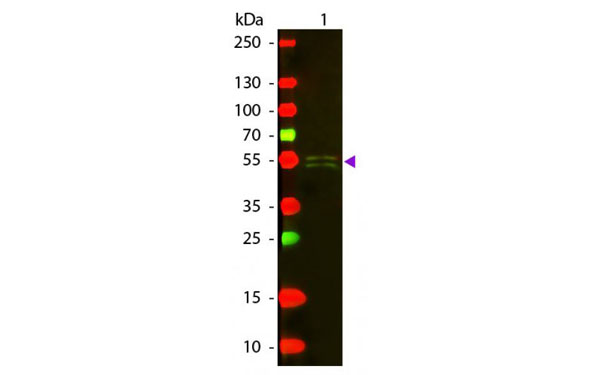
Rabbit anti Mouse IgG1 (Texas Red), Secondary Antibody (Cat# AAA75492)
HRP Conjugated Goat Anti-mouse IgG, Polyclonal Secondary Antibody (Cat# AAA45605)
IgG+IgM+IgA, Polyclonal Secondary Antibody (Cat# AAA312912)
Goat anti Chicken IgM (Fc specific), Polyclonal Secondary Antibody (Cat# AAA77551)
Rabbit anti Sheep IgM (Fc specific), Polyclonal Secondary Antibody (Cat# AAA77579)
Goat Anti-Human IgG Heavy and Light Chain, Secondary Antibody (Cat# AAA47964)
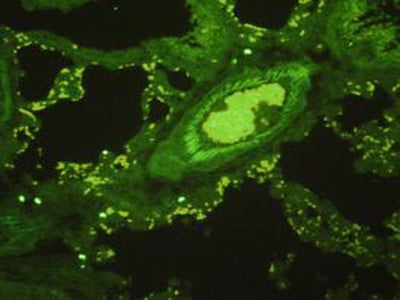
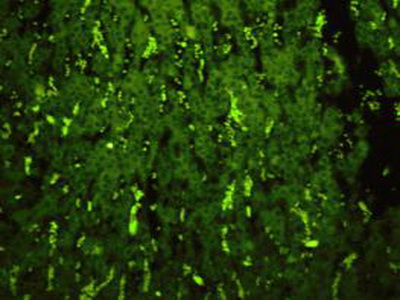
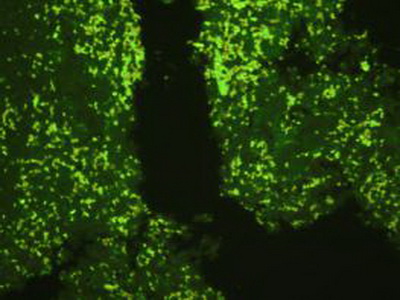
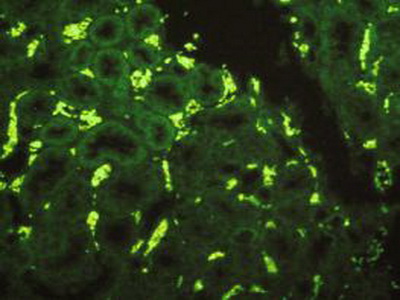
IgG, Polyclonal Secondary Antibody (Cat# AAA146595)
F(ab')2 IgM, Polyclonal Secondary Antibody (Cat# AAA213714)
IgY, Polyclonal Secondary Antibody (Cat# AAA312908)
Goat anti Monkey IgA (Fc specific), Polyclonal Secondary Antibody (Cat# AAA77602)
Goat Anti-Rabbit IgM (u heavy chain specific), Polyclonal Secondary Antibody (Cat# AAA78818)
Donkey Anti-Mouse IgG (H+L), Polyclonal Secondary Antibody (Cat# AAA78857)
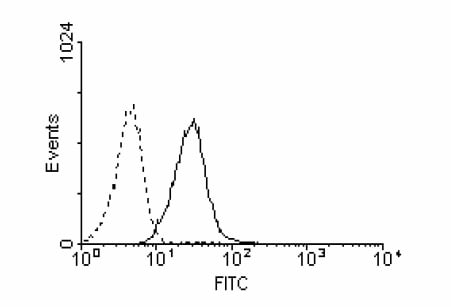
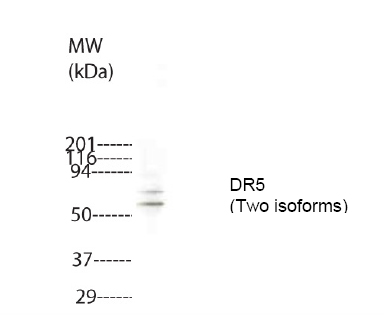
Rabbit Anti-Human DR5 (TRAIL-R2), Polyclonal Secondary Antibody (Cat# AAA78866)
Biotin Conjugated Goat Anti-human IgM, Polyclonal Secondary Antibody (Cat# AAA45617)
Goat anti Human IgG (HRP), Secondary Antibody (Cat# AAA75482)
IgY (H&L), Secondary Antibody (Cat# AAA79078)
Affinity purified using solid phase Turkey IgY.
Goat F(ab')2 Anti-Human IgM (u chain specific), Polyclonal Secondary Antibody (Cat# AAA78790)
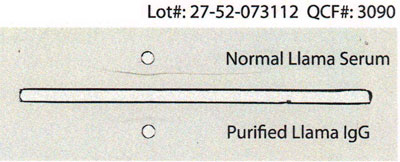
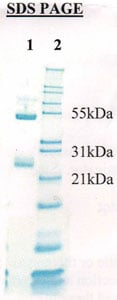
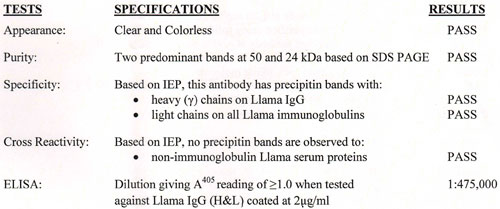
IgG (H&L), Secondary Antibody (Cat# AAA79055)
Cross Reactivity: Based on IEP, no reactivity is observed to non-immunoglobulin llama serum immunoglobulins
Affinity purified using solid phase Llama IgG.
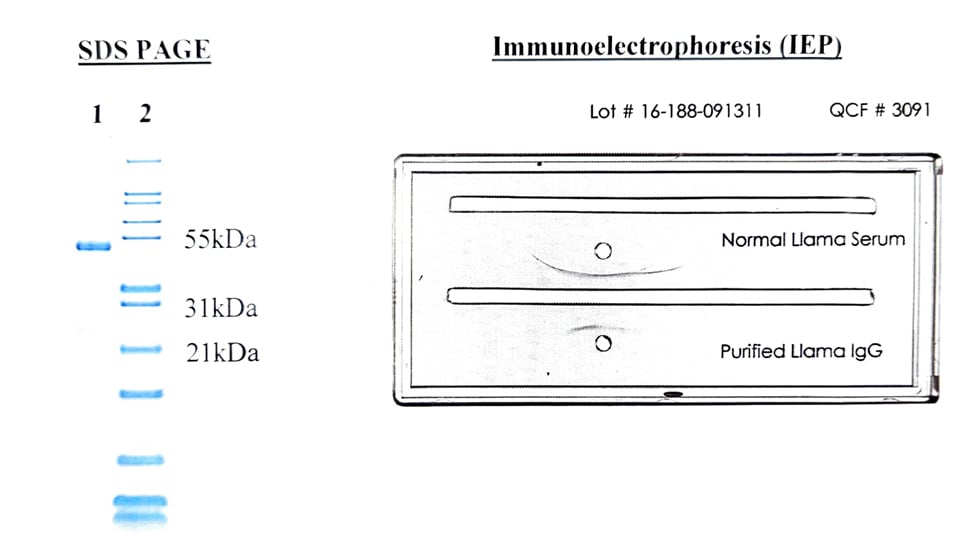
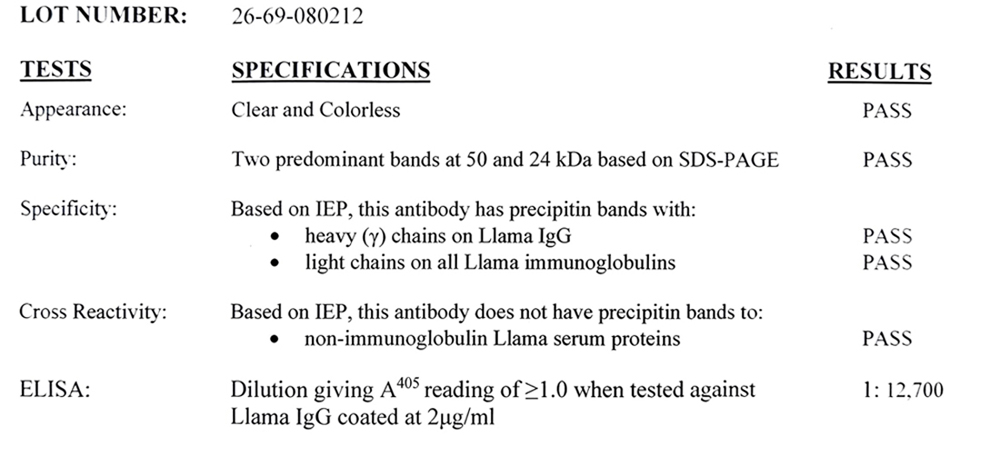
IgG (H&L), Secondary Antibody (Cat# AAA79058)
Cross Reactivity: Based on IEP, no reactivity is observed to non-immunoglobulin llama serum immunoglobulins
Affinity purified using solid phase Llama IgG.
Goat anti Mouse IgG (Fab'2) (FITC), Secondary Antibody (Cat# AAA75543)
Donkey Anti-Rat IgG (H+L), Polyclonal Secondary Antibody (Cat# AAA78863)
What Are Secondary Antibodies?
Secondary antibodies are immunoglobulins that bind to primary antibodies, which are directly bound to the target antigen (learn more in our guide to antigens, functions, and types). They are conjugated with either an enzyme, fluorophore, or biotin, and they are almost always only targeting the constant region (Fc) of the primary antibody. As a result, this amplifies the signal in various assays and helps researchers detect, quantify, and visualize specific antigens in a complex biological sample.
Key Applications of Secondary Antibodies
- Western blotting for protein detection and quantification.
- ELISA (Enzyme-Linked Immunosorbent Assay) for antigen-antibody interaction studies and quantification.
- Immunohistochemistry (IHC) and immunofluorescence imaging for tissue and cell analysis.
- Flow cytometry for cell surface and intracellular marker detection.
- Immunoprecipitation (IP) and chromatin immunoprecipitation (ChIP) assays.
- Signal amplification in various immunoassays.
- Multiplex assays using fluorophore-conjugated secondary antibodies.
These applications are commonly performed using different antibody formats, including recombinant antibodies and phospho antibodies, depending on the experimental requirements.
Advantages of Using Secondary Antibodies
-
High sensitivity
Multiple secondary antibodies can bind to a single primary antibody and amplify the signal. This is especially useful for detecting antigens even if they are in low concentrations.
-
Increased flexibility in assay design
Secondary antibodies come pre-conjugated with labels, such as enzymes, fluorophores, biotin, and more. This provides researchers with flexibility to use in multiple applications. They also support multiplexing for the simultaneous detection of multiple targets.
-
Cost-effective
Since the Fc domain remains constant within the same animal class, only one type of secondary antibody is needed to bind many types of primary antibodies, such as monoclonal antibodies and polyclonal antibodies. This reduces the cost of labeling multiple primary antibodies.
-
Better signal-to-noise ratio
Secondary antibodies minimize the background noise. As a result, they provide clearer and more accurate results.
-
Versatility
A single species- and isotype-specific secondary antibody can be used with any compatible primary antibody. This can help streamline reagent inventory and reduce cost and preparation time.
-
Easier detection
Unlike primary antibodies, secondary antibodies’ main characteristic is that they will almost always be partnered with a component that can be used for detection. This can make detection and visualization easy.
Why Buy Secondary Antibodies from AAA Biotech?
- Highly Validated: Most of our secondary antibodies are thoroughly tested to ensure they work reliably across different experiments.
- Versatile Applications: Our secondary antibodies can be used in a wide range of research techniques, including (but not limited to) immunocytochemistry (ICC), ELISA, immunofluorescence (IF), immunohistochemistry (IHC), flow cytometry (FC), immunoprecipitation (IP), and Western blotting (WB).
- Support for Rare Species: We offer secondary antibodies specifically designed for rare or less common species—something many other suppliers don’t provide.
- Affordable Prices: Our secondary antibodies are available at competitive prices to support all research budgets.
- Quick and Convenient Ordering: Simple online ordering process with responsive customer support.
- Privacy: We respect your privacy and ensure your information is protected at every step of the ordering process, and in all other communication with our team members.
Please note that all of the products listed in AAA Biotech’s also known as AAA Bio or AAABio catalog are strictly for research-use only (RUO).
FAQ
1. Can I reuse a secondary antibody?
Not recommended for critical experiments, as reusing may compromise sensitivity and specificity.
2. What is the difference between primary and secondary antibodies?
Primary antibodies bind directly to the antigen. Secondary antibodies bind to the primary and are usually labeled for detection.
3. How long do secondary antibodies last?
When stored properly (usually at –20°C or 4°C, depending on formulation), they can last for years. Always refer to the product datasheet.
4. What happens if you use too much secondary antibody?
Excess can increase background noise, leading to a poor signal-to-noise ratio. Titrate to find the optimal concentration.
5. Can secondary antibodies be monoclonal?
Yes. While many are polyclonal, monoclonal secondary antibodies are available for consistent batch-to-batch performance.
6. How to find secondary antibodies?
Use our catalog filters to search by host species, conjugate type, target species, and application.
7. How to store secondary antibodies?
Store at recommended temperatures away from light. Avoid repeated freeze-thaw cycles.