Get accurate results in your research with our Monoclonal Antibodies, which are specially made to target exactly what you require for your research, and will produce consistent, reliable performance in lab tests.
Application Data (Staining of human peripheral blood monocytes with Mouse anti Human CD14:RPE)
Application Data (Staining of human peripheral blood monocytes with Mouse anti Human CD14:APC)
Application Data (Staining of human peripheral blood monocytes with Mouse anti Human CD14:Alexa Fluor 647)
Application Data (Staining of human peripheral blood monocytes with Mouse anti Human CD14:Biotin)
Application Data (Sandwich ELISA analysis of Human CD14 binding using Mouse anti CD14 antibody, clone MEM-18 as a capture reagent and biotinylated Mouse anti Human CD14 antibody, clone UCHM1 as a detection reagent with purified CD14 as antigen for generation of the standard curve. Detection is by HRP conjugated streptavidin. Microtitre plate is read at O.D. 450 nm on the iMark Microplate Absorbance Reader . Serum samples diluted 1:200 and 1:400 are shown green and red respectively, while plasma samples also diluted 1:200 and 1:400 are blue and orange respectively)
Application Data (Staining of human peripheral blood monocytes with Mouse anti Human CD14:FITC)
Application Data (Staining of human peripheral blood monocytes with Mouse anti Human CD14-IgG:Endotoxin Low)
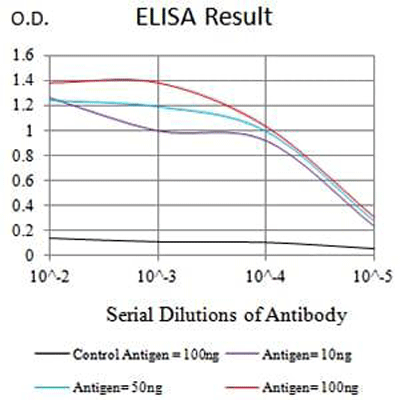
ELISA (Control Antigen (100 ng); Purple line: Antigen(10ng); Blue line: Antigen (50 ng); Red line: Antigen (100ng).)
IF (Immunofluorescence) (Immunofluorescence analysis of HepG2 cellsusing NRCAM mouse mAb (green). Blue: DRAQ5 fluorescent DNA dye. Red: Actin filaments have been labeled with Alexa Fluor-555 phalloidin.)
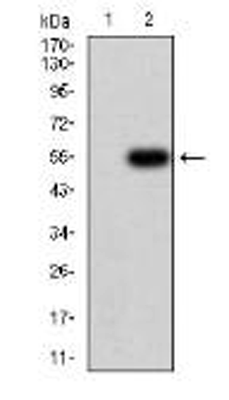
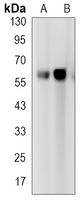
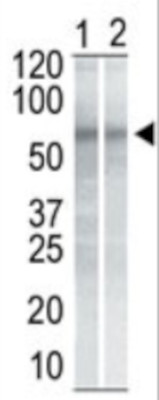
WB (Western Blot) (Western blot analysis using NRCAM mAb against HEK293 (1) and NRCAM (AA: 1192-1255)-hIgGFc transfected HEK293 (2) cell lysate.)
Application Data (Staining of human peripheral blood granulocytes with CD18: Alexa Fluor 647)
Application Data (Published customer image: Mouse anti Human CD18 antibody, clone YFC118.3 used for immunofluorescence studies using formalin fixed paraffin embedded material following antigen retrieval with citrate buffer at pH6.0Image caption:Subretinal MPs accumulate on the retinal pigment epithelium in AMDA -D Confocal microscopy of IBA-1 (green staining) immunohistochemistry of RPE flatmounts (RPE autofluorescence visible as orange due to its autofluorescence in the red and green channel) from a healthy donor (A), a geographic atrophy lesion (B), and large drusen (C and D). (A, B, D): orthogonal Z-stack projection; (C): oblique Z-stack projection and dissecting microscope appearance of postmortem large drusen after removal of the overlaying retina (inset). E -G Double-labeling on the subretinal side of the retina (to avoid masking by RPE autofluorescence) of IBA-1+ (E, green fluorescence) and CD18 (F, red fluorescence; G, merge). H. Orthogonal and lateral Z-stack of a subretinal IBA-1+ (green fluorescence) MPs adjacent to the RPE (orange autofluorescence) in the vicinity of a large drusen.Data information: Controls omitting the primary antibody showed no staining apart from the autofluorescence. AZ: atrophic zone; LD: large drusen. Scale bar: 50 um (A -D); 10 um (E -H).From: Levy O, Calippe B, Lavalette S, Hu SJ, Raoul W, Dominguez E, Housset M, Paques M, Sahel JA, Bemelmans AP, Combadiere C, Guillonneau X, Sennlaub F. Apolipoprotein E promotes subretinal mononuclear phagocyte survival and chronic inflammation in age-related macular degeneration. EMBO Mol Med. 2015 Jan 20. pii: e201404524.)
Application Data (Staining of human peripheral blood granulocytes with Rat anti Human CD18:FITC)
Application Data (Staining of human peripheral blood lymphocytes with Rat anti Human CD18)
Application Data (Staining of human peripheral blood lymphocytes with Rat anti Human CD18:Biotin)
Application Data (Staining of human peripheral blood granulocytes with Rat anti Human CD18:RPE)
Application Data (Published customer image: Rat anti Human CD18 antibody,clone YFC118.3 used for flow cytometryImage caption: LFA-1 activation analyses by Flow Cytometry. (A) Profiles of CD11a, CD18 activation epitope (CD18act, representing œhigh affinity conformation) and CD18 (CD18tot) expression by Teff and Treg#1 cells pre-incubated or not with indicated antibodies. Anti-CD28 and anti-CTLA-4 were used at 10 ug/ml. (B) Histograms of Mean Fluorescent Intensity (MFI) of CD11a, CD18act and CD18tot expressed on Teff and Treg#1 cells. Ratio CD18act MFI: CD18tot was established to analyze LFA-1 high affinity conformation in indicated conditions. Data are representative of more than three different experiments. Filled gray, negative control; Red line, Teff and Treg cells alone; Green line, cells with APC; Blue line, cells with APC and anti-CD28; and Black line: cells with APC, anti-CD28 and anti-CTLA-4.From: Dilek N, Poirier N, Hulin P, Coulon F, Mary C, et al. (2013) Targeting CD28, CTLA-4 and PD-L1 Costimulation Differentially Controls Immune Synapses and Function of Human Regulatory and Conventional T-Cells. PLoS ONE 8(12): e83139.)
Application Data (Published customer image: R-phycoerythrin conjugated Rat anti Mouse CD18 antibody, clone YFC118.3 used for flow cytometryImage caption:The levels of CD11b and CD18 fall dramatically following incubation with Leishmania under serum dependent (SD) culture conditions. Peritoneal macrophages were selected based on forward- versus side-scatter parameters as described in Materials and Methods and Figure 1 using flow cytometry. A) Isotype control with macrophages showing delineation of the M1 marker based on the negative population. B and C represent expression of CD18 (B) or CD11b (C) before incubation with Leishmania. D and E represent expression of CD18 (D) or CD11b (E) after association with Leishmania in a SD assay. In all cases the percent positive cells within the M1 marker are identified. This Figure is a representative diagram of 4 experiments with similar findings.From: Gonçalves R, Vieira ER, Melo MN, Gollob KJ, Mosser DM, Tafuri WL. A sensitive flow cytometric methodology for studying the binding of L. chagasi to canine peritoneal macrophages. BMC Infect Dis. 2005 May 24;5:39.)
FCM (Flow Cytometry) (Overlay Peak curve showing Jurkat cells stained with AAA28073 (red line) with 1 ?g/well (10 ?g/mL, 100 ?L/well). Then 10% normal goat serum was Incubated to block non-specific protein-protein interactions followed by the antibody (1µg/1*106cells) for 45 min at 4°C. The secondary antibody used was FITC-conjugated Goat Anti-Mouse IgG(H+L) at 1/200 dilution for 35 min at 4°C. Isotype control antibody (green line) was mouse IgG1 (1µg/1*106cells) used under the same conditions.Acquisition of >10,000 events was performed.)
FCM (Flow Cytometry) (Overlay Peak curve showing Hela cells stained with AAA28073 (red line) with 1 ?g/well (10 ?g/mL, 100 ?L/well). Then 10% normal goat serum was Incubated to block non-specific protein-protein interactions followed by the antibody (1µg/1*106cells) for 45 min at 4°C. The secondary antibody used was FITC-conjugated Goat Anti-Mouse IgG(H+L) at 1/200 dilution for 35 min at 4°C. Isotype control antibody (green line) was mouse IgG1 (1µg/1*106cells) used under the same conditions.Acquisition of >10,000 events was performed.)
IF (Immunofluorescence) (Immunofluorescence staining of Hela cells with AAA28073 at 1:150, counter-stained with DAPI. The cells were fixed in 4% formaldehyde and blocked in 10% normal Goat Serum. The cells were incubated with the antibody overnight at 4°C. Nuclear DNA was labeled in blue with DAPI. The secondary antibody was FITC-conjugated AffiniPure Goat Anti-Mouse IgG (H+L).)
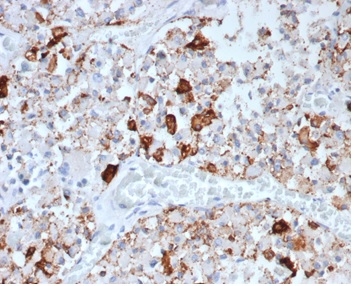
IHC (Immunohistchemistry) (IHC image of AAA28073 diluted at 1:200 and staining in paraffin-embedded human stomach tissue performed on a Leica BondTM system. After dewaxing and hydration, antigen retrieval was mediated by high pressure in a citrate buffer (pH 6.0). Section was blocked with 10% normal goat serum 30min at RT. Then primary antibody (1% BSA) was incubated at 4°C overnight. The primary is detected by a Goat anti-mouse polymer IgG labeled by HRP and visualized using 0.05% DAB.)
IHC (Immunohistochemistry) (IHC image of AAA28073 diluted at 1:200 and staining in paraffin-embedded human placenta tissue performed on a Leica BondTM system. After dewaxing and hydration, antigen retrieval was mediated by high pressure in a citrate buffer (pH 6.0). Section was blocked with 10% normal goat serum 30min at RT. Then primary antibody (1% BSA) was incubated at 4°C overnight. The primary is detected by a Goat anti-mouse polymer IgG labeled by HRP and visualized using 0.05% DAB.)
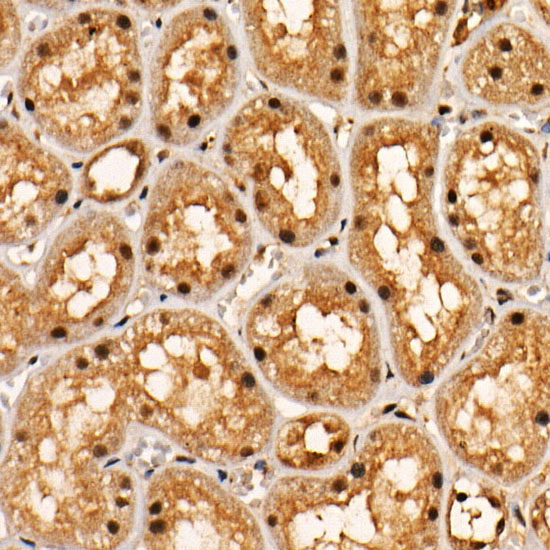
IHC (Immunohistochemistry) (IHC image of AAA28073 diluted at 1:200 and staining in paraffin-embedded human kidney tissue performed on a Leica BondTM system. After dewaxing and hydration, antigen retrieval was mediated by high pressure in a citrate buffer (pH 6.0). Section was blocked with 10% normal goat serum 30min at RT. Then primary antibody (1% BSA) was incubated at 4°C overnight. The primary is detected by a Goat anti-mouse polymer IgG labeled by HRP and visualized using 0.05% DAB.)
IHC (Immunohistochemistry) (IHC image of AAA28073 diluted at 1:200 and staining in paraffin-embedded human testis tissue performed on a Leica BondTM system. After dewaxing and hydration, antigen retrieval was mediated by high pressure in a citrate buffer (pH 6.0). Section was blocked with 10% normal goat serum 30min at RT. Then primary antibody (1% BSA) was incubated at 4°C overnight. The primary is detected by a Goat anti-mouse polymer IgG labeled by HRP and visualized using 0.05% DAB.)
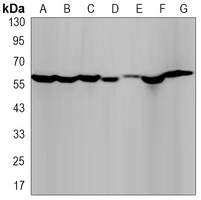
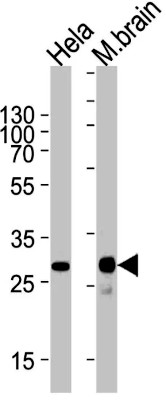
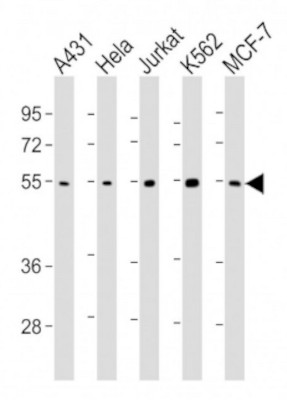
WB (Western Blot) (Western BlotPositive WB detected in: HepG2 whole cell lysate, ntera2 whole cell lysate, A549 whole cell lysate, U251 whole cell lysate All lanes: CD147 antibody at 1:1000SecondaryGoat polyclonal to mouse IgG at 1/50000 dilutionPredicted band size: 42, 29, 23, 19 KDaObserved band size: 35, 50-60 KDa)
ELISA (The Binding Activity of CD147 with Anti-CD147 recombinant AntibodyActivity: Measured by its binding ability in a functional ELISA. Immobilized Human CD147 at 2 ?g/ml can bind Anti-CD147 recombinant Antibody, the EC50 is 21.95-33.12 ng/ml.)
PTBP1 (Polypyrimidine Tract-binding Protein 1, PTB, Heterogeneous Nuclear Ribonucleoprotein I, hnRNP I, 57kD RNA-binding Protein PPTB-1, MGC10830, MGC8461) (AP)
Application Data (Staining of human peripheral blood granulocytes with CD18: Alexa Fluor 647 (AAA11986A647))
Application Data (Published customer image: Mouse anti Human CD18 antibody, clone YFC118.3 used for immunofluorescence studies using formalin fixed paraffin embedded material following antigen retrieval with citrate buffer at pH6.0Image caption:Subretinal MPs accumulate on the retinal pigment epithelium in AMDA -D Confocal microscopy of IBA-1 (green staining) immunohistochemistry of RPE flatmounts (RPE autofluorescence visible as orange due to its autofluorescence in the red and green channel) from a healthy donor (A), a geographic atrophy lesion (B), and large drusen (C and D). (A, B, D): orthogonal Z-stack projection; (C): oblique Z-stack projection and dissecting microscope appearance of postmortem large drusen after removal of the overlaying retina (inset). E -G Double-labeling on the subretinal side of the retina (to avoid masking by RPE autofluorescence) of IBA-1+ (E, green fluorescence) and CD18 (F, red fluorescence; G, merge). H. Orthogonal and lateral Z-stack of a subretinal IBA-1+ (green fluorescence) MPs adjacent to the RPE (orange autofluorescence) in the vicinity of a large drusen.Data information: Controls omitting the primary antibody showed no staining apart from the autofluorescence. AZ: atrophic zone; LD: large drusen. Scale bar: 50 um (A -D); 10 um (E -H).From: Levy O, Calippe B, Lavalette S, Hu SJ, Raoul W, Dominguez E, Housset M, Paques M, Sahel JA, Bemelmans AP, Combadiere C, Guillonneau X, Sennlaub F. Apolipoprotein E promotes subretinal mononuclear phagocyte survival and chronic inflammation in age-related macular degeneration. EMBO Mol Med. 2015 Jan 20. pii: e201404524.)
Application Data (Staining of human peripheral blood granulocytes with Rat anti Human CD18:FITC)
Application Data (Staining of human peripheral blood lymphocytes with Rat anti Human CD18)
Application Data (Staining of human peripheral blood lymphocytes with Rat anti Human CD18:Biotin)
Application Data (Staining of human peripheral blood granulocytes with Rat anti Human CD18:RPE)
Application Data (Published customer image: Rat anti Human CD18 antibody,clone YFC118.3 used for flow cytometryImage caption: LFA-1 activation analyses by Flow Cytometry. (A) Profiles of CD11a, CD18 activation epitope (CD18act, representing œhigh affinity conformation) and CD18 (CD18tot) expression by Teff and Treg#1 cells pre-incubated or not with indicated antibodies. Anti-CD28 and anti-CTLA-4 were used at 10 ug/ml. (B) Histograms of Mean Fluorescent Intensity (MFI) of CD11a, CD18act and CD18tot expressed on Teff and Treg#1 cells. Ratio CD18act MFI: CD18tot was established to analyze LFA-1 high affinity conformation in indicated conditions. Data are representative of more than three different experiments. Filled gray, negative control; Red line, Teff and Treg cells alone; Green line, cells with APC; Blue line, cells with APC and anti-CD28; and Black line: cells with APC, anti-CD28 and anti-CTLA-4.From: Dilek N, Poirier N, Hulin P, Coulon F, Mary C, et al. (2013) Targeting CD28, CTLA-4 and PD-L1 Costimulation Differentially Controls Immune Synapses and Function of Human Regulatory and Conventional T-Cells. PLoS ONE 8(12): e83139.)
Application Data (Published customer image: R-phycoerythrin conjugated Rat anti Mouse CD18 antibody, clone YFC118.3 used for flow cytometryImage caption:The levels of CD11b and CD18 fall dramatically following incubation with Leishmania under serum dependent (SD) culture conditions. Peritoneal macrophages were selected based on forward- versus side-scatter parameters as described in Materials and Methods and Figure 1 using flow cytometry. A) Isotype control with macrophages showing delineation of the M1 marker based on the negative population. B and C represent expression of CD18 (B) or CD11b (C) before incubation with Leishmania. D and E represent expression of CD18 (D) or CD11b (E) after association with Leishmania in a SD assay. In all cases the percent positive cells within the M1 marker are identified. This Figure is a representative diagram of 4 experiments with similar findings.From: Gonçalves R, Vieira ER, Melo MN, Gollob KJ, Mosser DM, Tafuri WL. A sensitive flow cytometric methodology for studying the binding of L. chagasi to canine peritoneal macrophages. BMC Infect Dis. 2005 May 24;5:39.)
Application Data (Immunofluorescence staining of mouse lymph node cryosection with Rat anti Mouse CD11b, clone 5C6 , green in A and Rat anti Mouse CD8, clone YTS105.18 , red in B. C is the merged image with nuclei counterstained blue using DAPI. High power)
Application Data (Immunofluorescence staining of mouse lymph node cryosection with Rat anti Mouse CD11b, clone 5C6 , green in A and Rat anti Mouse CD8, clone YTS105.18 , red in B. C is the merged image with nuclei counterstained blue using DAPI. Low power)
Application Data (Published customer image: The effect of NKG2D-blocking antibody on NKG2D-positive CD8+T cells and CD8+T cell accumulation in tumors. 4T-1 tumor -bearing mice were subjected to one of two treatments: Dox plus IL-12 plus control IgG or Dox plus IL-12 plus NKG2D-blocking antibody (n = 3 per treatment). (A) NKG2D expression in CD8+T cells was determined as described for Figure 1 (n.s., not significant). (B) The presence of NKG2D/CD8 -positive cells in tumor sections after the indicated treatments were determined as described for Figure 3.From: CD8+T cell-specific induction of NKG2D receptor by doxorubicin plus interleukin-12 and its contribution to CD8+T cell accumulation in tumors. Hu J, Zhu S, Xia X, Zhang L, Kleinerman ES, Li S. Mol Cancer. 2014 Feb 24;13:34.)
Application Data (immunofluorescence staining of mouse lymph node cryosection with Rat anti Mouse Ly-6B.2 antibody, clone 7/4 , green in A and Rat anti Mouse CD8 antibody, clone YTS105.18 , red in B. C is the merged image with nuclei counterstained blue using DAPI. High power)
Application Data (Immunofluorescence staining of mouse lymph node cryosection using Rat anti Mouse CD11b antibody , green in A and Rat anti Mouse CD8 antibody , red in B, Merged image in C)
Application Data (Immunoperoxidase staining of Mouse lymph node cryosection using Rat anti Mouse CD8alpha antibody followed by horseradish peroxidase conjugated Goat anti Rat IgG for detection. Low power)
Application Data (Staining of mouse spleen cells with Rat anti Mouse CD8)
Application Data (Immunofluorescence staining of a mouse lymph node cryosection with Rat anti mouse CD19, clone 6D5 , green in A and Rat anti Mouse CD8 , red in B. Merged image in C wih nuclei counterstained blue using DAPI. Low power)
Application Data (Published customer image: NKG2D-dependent infiltration of CD8+T cells into tumors. Tumors were collected from mice that had received one of the four standard treatments: control DNA, Dox plus control DNA, IL-12, Dox plus IL-12 (n = 3 per treatment group). (A) Infiltration of NKG2D-positive cells into tumors. Northern blot analysis was performed to detect NKG2D expression in tumors. Ribosomal RNA was used to confirm equal loading among samples. (B) NKG2D/CD8 -positive cells in tumor sections by treatment received. Frozen tumor sections were stained with biotin anti-mouse NKG2D, anti-mouse CD8, or corresponding isotype control antibodies, then with streptavidin-conjugated Alexa fluor 594 or Alexa fluor 488 secondary antibodies. Data shown are representative of three independent experiments. The scale bar is equivalent to 100 um.From: CD8+T cell-specific induction of NKG2D receptor by doxorubicin plus interleukin-12 and its contribution to CD8+T cell accumulation in tumors. Hu J, Zhu S, Xia X, Zhang L, Kleinerman ES, Li S. Mol Cancer. 2014 Feb 24;13:34.)
FCM (Flow Cytometry) (Flow cytometry analysis of LIGHT overexpressing HEK293 cells using LIGHT antibody and control mouse IgG antibody at 10 μg/ml. Blue: Untransfected HEK293 cells. Yellow: LIGHT overexpressing HEK293 cells.)
IHC (Immunohistochemistry) (Immunohistochemistry of LIGHT in human lymphoma tissue with LIGHT antibody at 5 μg/mL.)
IF (Immunofluorescence) (Immunofluorescence of LIGHT in human lymphoma tissue with LIGHT antibody at 20 μg/mL.Green: LIGHT Antibody [7B9E12]Blue: DAPI staining)
IF (Immunofluorescence) (Immunofluorescence of LIGHT in transfected HEK293 cells with LIGHT antibody at 2 μg/mL.Green: LIGHT Antibody [7B9E12]Blue: DAPI staining)
ICC (Immunocytochemistry) (Immunocytochemistry of LIGHT in transfected HEK293 cells with LIGHT antibody at 1 μg/mL. Lower left: Immunocytochemistry in transfected HEK293 cells with control mouse IgG antibody at 1 μg/mL.)
WB (Western Blot) (Western blot analysis of LIGHT in overexpressing HEK293 cells with LIGHT antibody at 0.5 and 1 μg/ml)
Western Blot, Immunohistochemistry, Immunocytochemistry, Immunofluorescence, Flow Cytometry
Purity
Protein A purified
Pricing
FCM (Flow Cytometry) (Flow cytometric analysis of Human LILRB1(CD85j) expression on human peripheral blood monocytes. Cells were stained with PE-conjugated Mouse anti-Human LILRB1(CD85j). The histogram were derived from gated events with the forward and side light-scatter characteristics of viable monocytes.Flow Cytometry was performed on a BD FC Calibur flow cytometry system.)
WB (Western Blot) (Detection of CBLB by Western blot.Samples: Whole cell lysate from human HeLa (H, 25 ug) and mouse NIH3T3 (M, 25 ug) cells. [Lot No. 246C5a-1] Predicted molecular weight: 109 kDa)
Quality Control (Arrow indicates the region of immunized recombinant protein carrying 50-200 amino acids.)
Application Data (Western blot analysis of immunized recombinant protein, using anti-CBLB monoclonal antibody.)
ICC (Immunocytochemistry) (Immunostaining analysis in HeLa cells. HeLa cells were fixed with 4% paraformaldehyde and permeabilized with 0.1% Triton X-100 in PBS. The cells were immunostained with anti-TNPO3 mAb.)
WB (Western Blot) (Detection of TNPO3 by Western blot.Samples: Whole cell lysate from human HEK293 (H, 25 ug), mouse NIH3T3 (M, 25 ug) and rat F2408 (R, 25 ug) cells. [Lot No. 3152C2a-1]Predicted molecular weight: 104 kDa)
Quality Control (Arrow indicates the region of immunized recombinant protein carrying 50-200 amino acids.)
Quality Control (Western blot analysis of immunized recombinant protein, using anti-TNPO3 monoclonal antibody.)
Application Data (Figure 3. Flow cytometry analysis of antigen binding of anti-human CD47 mAb(AAA11712). (A) AAA11712 does not bind to CHO-S cells that do not express CD47.(B) A clear peak shift of AAA11712 was seen compared to the control when incubated with CD47-expressing 8226 cells, indicating strong binding of AAA11712 to CD47. Antibodies were incubated at 5 ug mL.)
Application Data (Figure 2. Jurkat cell line were surface stained with anti-CD47 (AAA11712) (Blue histogram) and isotype control (Red histogram) 1 ug/ml followed by Alexa 488-conjugated Goat anti-Human IgG secondary antibody.)
Application Data (Figure 1. ELISA plate pre-coated by 1 ?g/ml (100 ?l/well) Human CD47, mFc-His tagged protein can bind Anti-CD47?magrolimab biosimilar?IgG1? AAA11712 in a linear range of 3.2-16.0 ng/ml.)
Application Data (Figure 3. Flow cytometry analysis of antigen binding of anti-human CD47 mAb(AAA11712). (A) AAA11712 does not bind to CHO-S cells that do not express CD47.(B) A clear peak shift of AAA11712 was seen compared to the control when incubated with CD47-expressing 8226 cells, indicating strong binding of AAA11712 to CD47. Antibodies were incubated at 5 ug mL.)
Application Data (Figure 2. Jurkat cell line were surface stained with anti-CD47 (AAA11712) (Blue histogram) and isotype control (Red histogram) 1 ug/ml followed by Alexa 488-conjugated Goat anti-Human IgG secondary antibody.)
Application Data (Figure 1. ELISA plate pre-coated by 1 ?g/ml (100 ?l/well) Human CD47, mFc-His tagged protein can bind Anti-CD47?magrolimab biosimilar?IgG1? AAA11712 in a linear range of 3.2-16.0 ng/ml.)
TAB1 (TGF-beta-activated Kinase 1 and MAP3K7-binding Protein 1, Mitogen-activated Protein Kinase Kinase Kinase 7-interacting Protein 1, TGF-beta-activated Kinase 1-binding Protein 1, TAK1-binding Protein 1, MAP3K7IP1) (AP)
Gene Names
TAB1; 3'-Tab1; MAP3K7IP1
Reactivity
Human, Rat
Applications
Western Blot
Purity
Purified by Protein A Affinity Chromatography.
Pricing
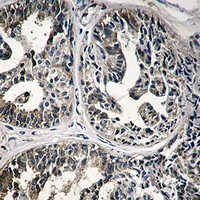
IHC (Immunohistochemistry) (Anti-GDF15 antibody IHC of human placenta. Immunohistochemistry of formalin-fixed, paraffin-embedded tissue after heat-induced antigen retrieval. Antibody dilution 10 ug/ml.)
FCM (Flow Cytometry) (Flow cytometry analysis of LIGHT overexpressing HEK293 cells using LIGHT antibody and control mouse IgG antibody at 10 μg/ml. Blue: Untransfected HEK293 cells. Yellow: LIGHT overexpressing HEK293 cells.)
IHC (Immunohistochemistry) (Immunohistochemistry of LIGHT in human lymphoma tissue with LIGHT antibody at 5 μg/mL.)
IF (Immunofluorescence) (Immunofluorescence of LIGHT in human lymphoma tissue with LIGHT antibody at 20 μg/mL.Green: LIGHT Antibody [7B9F12]Blue: DAPI staining)
IF (Immunofluorescence) (Immunofluorescence of LIGHT in transfected HEK293 cells with LIGHT antibody at 2 μg/mL.Green: LIGHT Antibody [7B9F12]Blue: DAPI staining)
ICC (Immunocytochemistry) (Immunocytochemistry of LIGHT in transfected HEK293 cells with LIGHT antibody at 1 μg/mL. Lower left: Immunocytochemistry in transfected HEK293 cells with control mouse IgG antibody at 1 μg/mL.)
WB (Western Blot) (Western blot analysis of LIGHT in overexpressing HEK293 cells with LIGHT antibody at 0.5 and 1 μg/ml)
SDS-PAGE (SDS-PAGE analysis of Prod.(AAA14516): Lane 1: MW marker, Lane 2: 1µg , Lane 3: 2µg BCMA (mouse) monoclonal antibody (Vicky-2), integrity of antibody is shown as both light chain and heavy chain are present.)
WB (Western Blot) (Western blot analysis of BCMA: Lane 1: MW marker, Lane 2: Mouse BCMA Recombinant Protein.)
ACBD3 (Golgi Resident Protein GCP60, Acyl-CoA-binding Domain-containing Protein 3, Golgi Complex-associated Protein 1, GOCAP1, Golgi Phosphoprotein 1, GOLPH1, PBR- and PKA-associated Protein 7, Peripheral Benzodiazepine Receptor-associated Protein PAP7, G
Application Data (Immunofluorescence staining of a mouse lymph node cryosection with Rat anti MouseCD19 antibody, clone 6D5 , green in A and Rat anti Mlouse CD8 antibody, clone YTS105.18 , red in B. Merged image in C with nuclei counterstained blue using DAPI. Low power)
Application Data (Staining of mouse spleen cells with Rat anti Mouse CD19:RPE-Alexa Fluor 750)
Application Data (Immunofluorescence staining of a mouse lymph node cryosection with Rat anti MouseCD19 antibody, clone 6D5 , green in A and Rat anti Mlouse CD8 antibody, clone YTS105.18 , red in B. Merged image in C with nuclei counterstained blue using DAPI. High power)
Application Data (Immunoperoxidase staining of a murine lymph node with Rat anti Mouse CD19 antibody, clone 6D5 forllowerd by horseradish peroxidase conjugated Goat anti Rat IgG . Low power)
Application Data (Staining of mouse spleen cells with Rat anti Mouse CD19)
Application Data (Immunoperoxidase staining of a murine lymph node with Rat anti Mouse CD19 antibody, clone 6D5 forllowerd by horseradish peroxidase conjugated Goat anti Rat IgG . High power)
Application Data (Staining of mouse spleen cells with Rat anti Mouse CD19:APC)
Application Data (Staining of mouse spleen cells with Rat anti Mouse CD19:FITC)
Application Data (Staining of mouse spleen cells with Rat anti Mouse CD19:RPE-Alexa Fluor 647)
Application Data (Staining of mouse spleen cells with Rat anti Mouse CD19:RPE)
Application Data (Cell surface staining of PBMC using anti-CD16, clone B73.1 antibody. Green histogram: Isotype control. Red histogram: anti-CD16 antibody. Goat anti-mouse PE was used as secondary antibody. 0.5 ug antibody was used.)
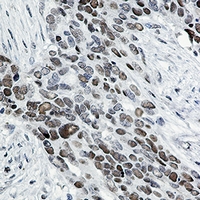
IHC (Immunohistochemistry) (Paraffin embedded sections of human urothelium were incubated with anti-human Hsp90 (1:100)for 2 hours at room temperature. Antigen retrieval was performed in 0.1M sodium citrate buffer and detectedusing Diaminobenzidine (DAB))
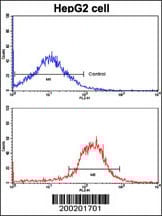
FCM (Flow Cytometry) (Flow cytometry analysis of HSP90in HepG2cell line,staining at 2-5ug for 1x10⁶cellsredline). The secondary antibody used goat anti-mouse IgGAlexa fluor 488 conjugate. Isotype control antibody was mouse IgG(black line).)
WB (Western Blot) (The Recombinant Human HSP90 (50ng) and Cell lysates(40ug) were resolved by SDS-PAGE, transferred to PVDF membrane and probed with anti-human HSP90antibody (1:1000). Proteins were visualized using a goat anti-mouse secondary antibody conjugated to HRP and an ECL detection systemLane 1. : Hsp90 recombinant protein Lane 2. : 293T cell lysate Lane 3. : HeLa cell lysate Lane 4. : HepG2 cell lysate)
FCM (Flow Cytometry) (Flow cytometric analysis of Hela cells with MUC16 antibody at 1/50 dilution (red) compared with an unlabelled control (cells without incubation with primary antibody; black). Alexa Fluor 488-conjugated goat anti rabbit IgG was used as the secondary antibody)
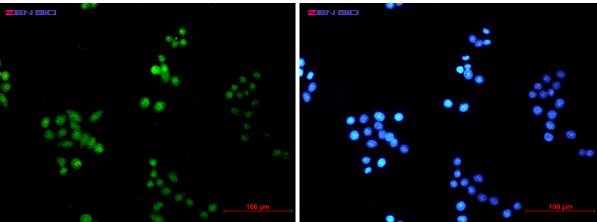
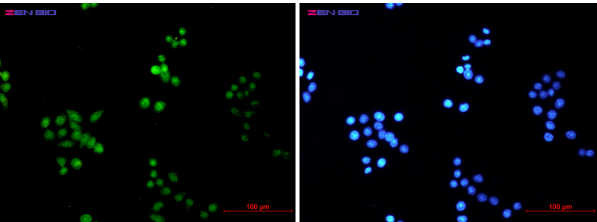
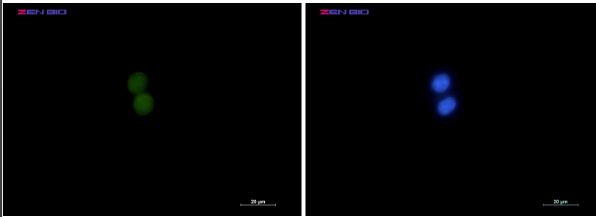
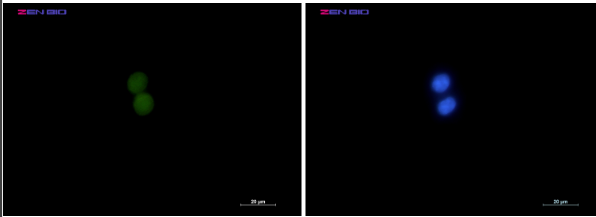
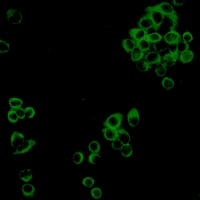
ICC (Immunocytochemistry) (ICC staining MUC16 in SKOV-3 cells (green). The nuclear counter stain is DAPI (blue). Cells were fixed in paraformaldehyde, permeabilised with 0.25% Triton X100/PBS.)
ICC (Immunocytochemistry) (ICC staining MUC16 in HepG2 cells (green). The nuclear counter stain is DAPI (blue). Cells were fixed in paraformaldehyde, permeabilised with 0.25% Triton X100/PBS.)
ICC (Immunocytochemistry) (ICC staining MUC16 in Hela cells (green). The nuclear counter stain is DAPI (blue). Cells were fixed in paraformaldehyde, permeabilised with 0.25% Triton X100/PBS.)
Western Blot, Immunocytochemistry, Immunofluorescence, Flow Cytometry
Purity
ProA affinity purified
Pricing
Application Data (N.D.= Not Determined; IHC = Immuno histochemistry; F = Frozen sections; P = Paraffin sections; IF = Immuno Fluorescence; FC = Flow Cytometry; FS = Functional Studies; IA = Immuno Assays; IP = Immuno Precipitation; W = Western blot)
Immunohistochemistry, Immunoprecipitation, Western Blot
Purity
Purified by Protein A Affinity Chromatography.
Pricing
What are Monoclonal Antibodies?
Monoclonal antibodies are specialized laboratory-produced proteins developed for binding to specific biological antigens or other molecular targets. Since they come from a single cell (or clone), they are especially consistent and accurate in the data they are involved in producing.
This type of antibody material has been shown to be a powerful tool in finding and subsequently destroying harmful cells in an organism, such as those found in cancers or various autoimmune diseases. This makes them excellent aids in medical testing and research, which is why they are so widely used.
AAA Biotech offers a comprehensive range of high-quality monoclonal antibodies that perform effectively in various laboratory tests, including (amongst others) ELISA, western blotting, immunohistochemistry, and flow cytometry. All of the products in our catalog are thoroughly quality tested to make sure that they are reliable and will consistently perform well in your research.
What Are The Uses of Monoclonal Antibodies
Monoclonal antibodies are used in many lab tests, including (amongst others) ELISA, western blotting, immunohistochemistry, and flow cytometry.
ELISA is a test that helps detect a specific substance/analyte in a sample. It uses antibodies (often monoclonal) bound to a solid surface (such as the well of a microplate) to “capture” the substance/analyte in the sample and immobilize it so that the detection antibody component can then bind to it and produce a signal, which can then be measured.
Western blotting identifies specific proteins in a sample. The sample is first separated on a gel, and then antibodies are applied that will typically bind to the target, which will all be localized to a single band in a lane.
Immunohistochemistry helps locate specific proteins in cells or tissue samples using antibodies.
Flow cytometry looks at and sorts cells. It uses antibodies that are conjugated to reporter molecules called “fluorophores”, which, under special lights, emit light themselves, which can then be measured by a detector instrument.
How Monoclonal Antibodies Are Used as Medicine?
Please note that all of the products listed in AAA Biotech’s catalog are strictly for research-use only (RUO).
Monoclonal antibodies can also be used as therapeutic/medical treatments, particularly in the context of cancers. They are designed to find and bind to specific cells or proteins, helping the immune system recognize and attack the cancer. These treatments work in different ways, such as:
Radioimmunotherapy attaches a small amount of radioactive molecule to the antibody, so it delivers the radiation directly to the cancer cells that the antibody is specifically binding to.
Antibody-directed enzyme prodrug therapy uses antibodies that are specifically bound to special enzymes. These enzymes activate a harmless drug in the body and turn it into a cancer-killing drug only near the cancer cells—this helps avoid harming healthy cells.
Immunoliposomes are tiny “bubbles” filled with medicine/drug and coated with antibodies. They carry the drug straight to the cancer cells.
Why Buy Monoclonal Antibodies From Us?
At AAA Biotech, we provide high-performance monoclonal antibodies designed to support a wide range of research needs.
1. Validated for Versatile Applications
The antibodies in our catalog are extensively validated and compatible with multiple techniques, including (but not limited to) ELISA, flow cytometry (FC), immunocytochemistry (ICC), immunofluorescence (IF), immunohistochemistry (IHC), immunoprecipitation (IP), and western blotting (WB).
2. Wide Selection & Specialized Options
We offer antibodies for common and rare species, that are available in various conjugated forms, and also in recombinant formats. Essentially, there is almost anything one might need to meet their experimental model’s requirements.
3. High-Quality Proteins
Our proteins meet high purity standards—90% or more as confirmed by SDS-PAGE. Many are available with tags like His, Flag, GST, or MBP, and we also supply native and biologically active proteins for functional studies.
Frequently Asked Questions
1. Are your monoclonal antibodies validated for specific applications?
Yes, our antibodies are tested and validated for use in methods such as ELISA, western blot, IHC, flow cytometry, and more. Refer to specific product pages or datasheets for individual product information.
2. How do I choose the right monoclonal antibody for my application?
Review the product details directly for application validation, species reactivity, and target information. You may also contact our support team at any time for help.
3. How quickly can I receive my order?
Most orders are processed and shipped within 1–3 business days, depending on product availability and your shipping location.
Submit a Question
Please complete the form below and a representative will contact you as soon as possible.
Request more Information
Please complete the form below and a representative will contact you as soon as possible.
Request a Manual
Please complete the form below and a representative will contact you as soon as possible.
Request a Quote
Please complete the form below and a representative will contact you as soon as possible.