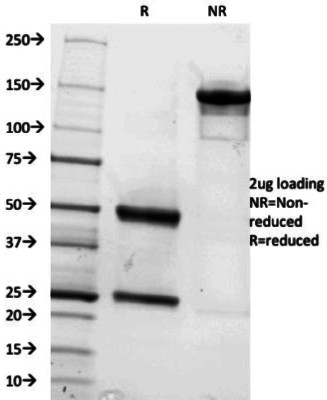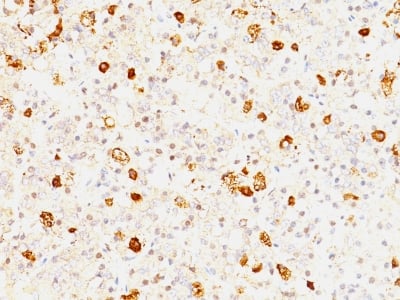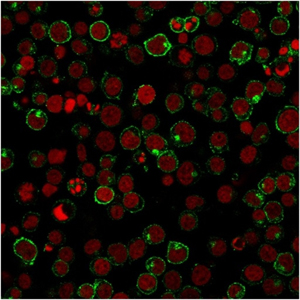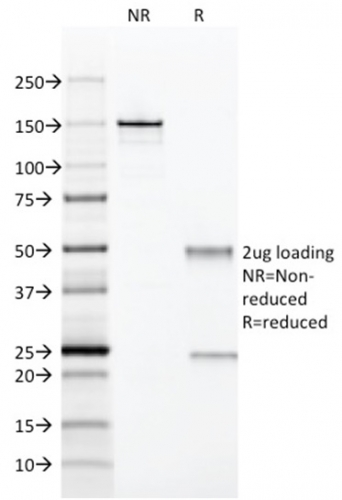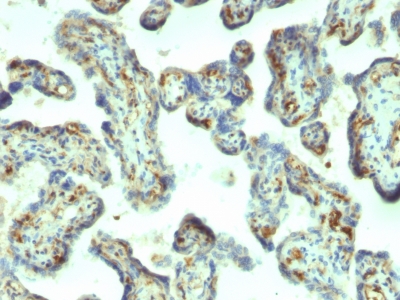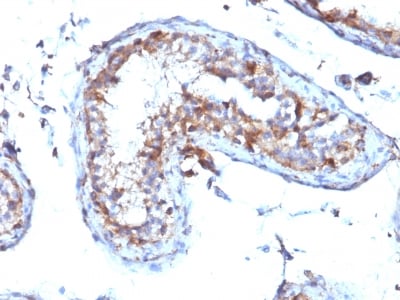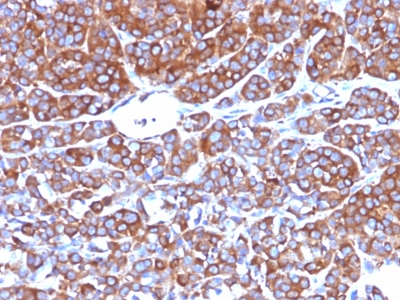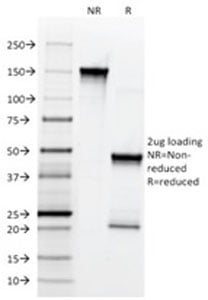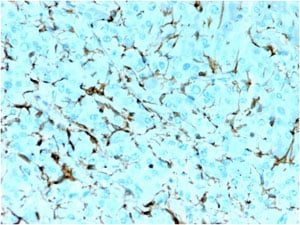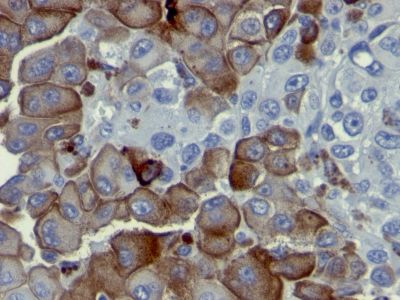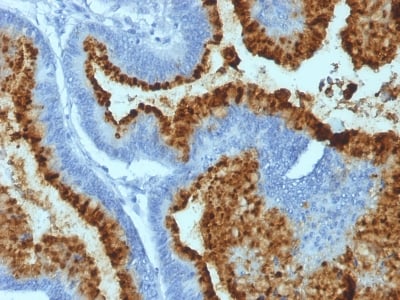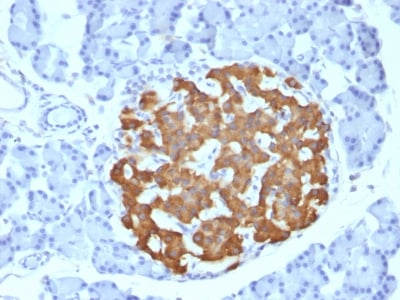
Get accurate results in your research with our Monoclonal Antibodies, which are specially made to target exactly what you require for your research, and will produce consistent, reliable performance in lab tests.
WB (Western Blot) (Western Blot detection against Immunogen (37.84kD).)
WB (Western Blot) (Western blot analysis of ASNA1 over-expressed 293 cell line, cotransfected with ASNA1 Validated Chimera RNAi (Lane 2) or non-transfected control (Lane 1). Blot probed with ASNA1 monoclonal antibody. GAPDH (36.1kD) used as specificity and loading control.)
Application Data (Detection limit for recombinant GST tagged ASNA1 is ~0.03ng/ml as a capture antibody.)
IF (Immunofluorescence) (Immunofluorescence of monoclonal antibody to ASNA1 on HeLa cell. [antibody concentration 10ug/ml].)
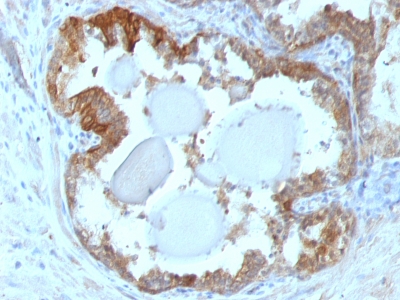
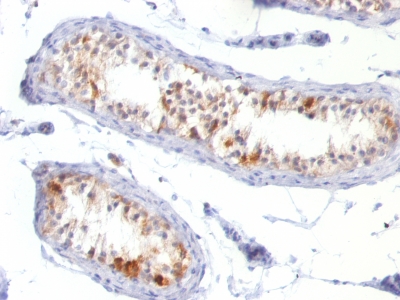
IHC (Immunohistochemistry) (Immunoperoxidase of monoclonal antibody to ASNA1 on formalin-fixed paraffin-embedded human testis. [antibody concentration 0.5ug/ml])
WB (Western Blot) (Western Blot analysis of ASNA1 expression in transfected 293T cell line by ASNA1 monoclonal antibody. Lane 1: ASNA1 transfected lysate (38.8kD). Lane 2: Non-transfected lysate.)
WB (Western Blot) (ASNA1 monoclonal antibody. Western Blot analysis of ASNA1 expression in PC-12.)
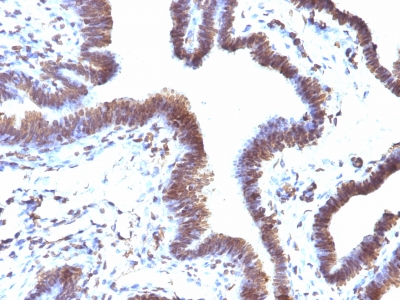
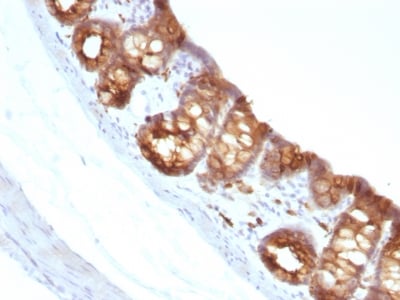
IHC (Immunohistchemistry) (Immunoperoxidase of monoclonal antibody to TAF11 on formalin-fixed paraffin-embedded human small Intestine. [antibody concentration 1.2 ug/ml])
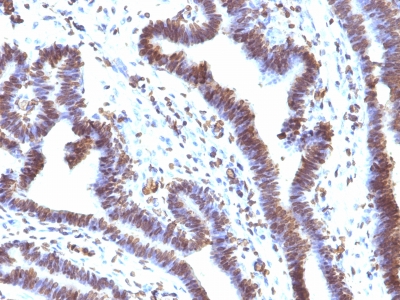
IHC (Immunohistochemistry) (Immunoperoxidase of monoclonal antibody to TAF11 on formalin-fixed paraffin-embedded human small Intestine. [antibody concentration 1.2 ug/ml])
Application Data (Detection limit for recombinant GST tagged TAF11 is approximately 0.1ng/ml as a capture antibody.)
IF (Immunofluorescence) (Immunofluorescence of monoclonal antibody to TAF11 on HeLa cell. [antibody concentration 10 ug/ml])
WB (Western Blot) (TAF11 monoclonal antibody (M06), clone 3G6 Western Blot analysis of TAF11 expression in Hela S3 NE.)
WB (Western Blot) (AKT2 monoclonal antibody (M06), clone X1. Western Blot analysis of AKT2 expression in PC-12.)
WB (Western Blot) (AKT2 monoclonal antibody (M06), clone X1. Western Blot analysis of AKT2 expression in NIH/3T3.)
IHC (Immunohistochemistry) (Immunoperoxidase of monoclonal antibody to AKT2 on formalin-fixed paraffin-embedded human small Intestine. [antibody concentration 3 ug/ml])
Application Data (Detection limit for recombinant GST tagged AKT2 is approximately 1ng/ml as a capture antibody.)
WB (Western Blot) (AKT2 monoclonal antibody (M06), clone X1 Western Blot analysis of AKT2 expression in Jurkat (Cat # L017V1).)
SDS-PAGE (Various whole cell lysates were separated by 12% SDS-PAGE, and the membrane was blotted with anti-CK7 (ABT319)antibody. The HRP-conjugated Goat anti-M)
ICC (Immunocytochemistry) (ICC staining NUR77 in NIH-3T3 cells (green). The nuclear counter stain is DAPI (blue). Cells were fixed in paraformaldehyde, permeabilised with 0.25% Triton X100/PBS.)
ICC (Immunocytochemistry) (ICC staining NUR77 in Hela cells (green). The nuclear counter stain is DAPI (blue). Cells were fixed in paraformaldehyde, permeabilised with 0.25% Triton X100/PBS.)
ICC (Immunocytochemistry) (ICC staining NUR77 in HepG2 cells (green). The nuclear counter stain is DAPI (blue). Cells were fixed in paraformaldehyde, permeabilised with 0.25% Triton X100/PBS.)
IHC (Immunohistchemistry) (Immunohistochemical analysis of paraffin-embedded mouse ovarian using anti-NUR77 antibody. Counter stained with hematoxylin.)
IHC (Immunohistochemistry) (Immunohistochemical analysis of paraffin-embedded mouse testis tissue using anti-NUR77 antibody. Counter stained with hematoxylin.)
IHC (Immunohistochemistry) (Immunohistochemical analysis of paraffin-embedded human breast tissue using anti-NUR77 antibody. Counter stained with hematoxylin.)
IHC (Immunohistochemistry) (Immunohistochemical analysis of paraffin-embedded human colon cancer tissue using anti-NUR77 antibody. Counter stained with hematoxylin.)
IHC (Immunohistochemistry) (Immunohistochemical analysis of paraffin-embedded human liver tissue using anti-NUR77 antibody. Counter stained with hematoxylin.)
WB (Western Blot) (Western blot analysis of NUR77 on rat brain cells lysates using anti-NUR77 antibody at 1/500 dilution.)
FCM (Flow Cytometry) (Flow cytometric analysis of LOVO cells with Nectin 2 antibody at 1/100 dilution (purple) compared with an unlabelled control (cells without incubation with primary antibody; yellow). Alexa Fluor 488-conjugated goat anti-rabbit IgG was used as the secondary antibody.)
ICC (Immunocytochemistry) (ICC staining Nectin 2 in LOVO cells (green). The nuclear counter stain is DAPI (blue). Cells were fixed in paraformaldehyde, permeabilised with 0.25% Triton X100/PBS.)
ICC (Immunocytochemistry) (ICC staining Nectin 2 in MCF-7 cells (green). The nuclear counter stain is DAPI (blue). Cells were fixed in paraformaldehyde, permeabilised with 0.25% Triton X100/PBS.)
IHC (Immunohistochemistry) (Immunohistochemical analysis of paraffin-embedded rat testis tissue using anti-Nectin 2 antibody. Counter stained with hematoxylin.)
IHC (Immunohistochemistry) (Immunohistochemical analysis of paraffin-embedded mouse testis tissue using anti-Nectin 2 antibody. Counter stained with hematoxylin.)
IHC (Immunohistochemistry) (Immunohistochemical analysis of paraffin-embedded human liver cancer tissue using anti-Nectin 2 antibody. Counter stained with hematoxylin.)
WB (Western Blot) (Western blot analysis of Nectin 2 on K562 (1), MCF-7 (2) and SK-OV-3 (3) cells lysates using anti-Nectin 2 antibody at 1/500 dilution.)
ICC (Immunocytochemistry) (ICC staining CD34 in SH-SY-5Y cells (green). The nuclear counter stain is DAPI (blue). Cells were fixed in paraformaldehyde, permeabilised with 0.25% Triton X100/PBS.)
ICC (Immunocytochemistry) (ICC staining CD34 in HUVEC cells (green). The nuclear counter stain is DAPI (blue). Cells were fixed in paraformaldehyde, permeabilised with 0.25% Triton X100/PBS.)
ICC (Immunocytochemistry) (ICC staining CD34 in A549 cells (green). The nuclear counter stain is DAPI (blue). Cells were fixed in paraformaldehyde, permeabilised with 0.25% Triton X100/PBS.)
IHC (Immunohistochemistry) (Immunohistochemical analysis of paraffin-embedded mouse kidney tissue using anti-CD34 antibody. Counter stained with hematoxylin.)
IHC (Immunohistochemistry) (Immunohistochemical analysis of paraffin-embedded human kidney tissue using anti-CD34 antibody. Counter stained with hematoxylin.)
IHC (Immunohistochemistry) (Immunohistochemical analysis of paraffin-embedded human tonsil tissue using anti-CD34 antibody. Counter stained with hematoxylin.)
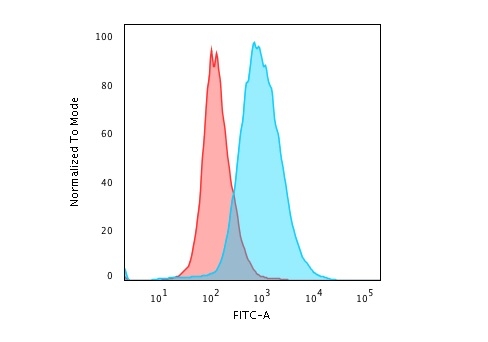
FCM (Flow Cytometry) (Flow cytometry of Jurkat cells, using anti-BSG antibody, (Red), compared to a nonspecific negative control antibody, (Blue).)
FCM (Flow Cytometry) (Flow cytometry of HeLa cells, using anti-BSG antibody, (Red), compared to a nonspecific negative control antibody, (Blue).)
WB (Western Blot) (Western blot of extracts (35 ug) from 9 different cell lines by using anti-BSG monoclonal antibody.)
WB (Western Blot) (HEK293T cells were transfected with the pCMV6-ENTRY control (Left lane) or pCMV6-ENTRY BSG (Right lane) cDNA for 48 hrs and lysed. Equivalent amounts of cell lysates (5 ug per lane) were separated by SDS-PAGE and immunoblotted with anti-BSG.)
IF (Immunofluorescence) (Immunofluorescent staining of HeLa cells using anti-BSG mouse monoclonal antibody.)
WB (Western Blot) (EIF2S2 monoclonal antibody. Western Blot analysis of EIF2S2 expression in HeLa.)
WB (Western Blot) (EIF2S2 monoclonal antibody. Western Blot analysis of EIF2S2 expression in PC-12.)
Application Data (Detection limit for recombinant GST tagged EIF2S2 is 0.3ng/ml as a capture antibody.)
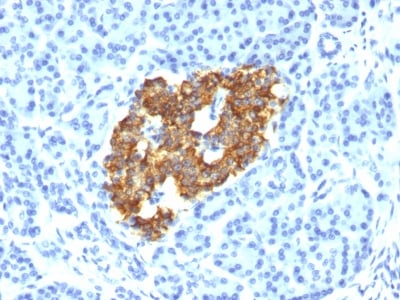
IHC (Immunohistochemistry) (Immunoperoxidase of monoclonal antibody to EIF2S2 on formalin-fixed paraffin-embedded human pancreatic cancer. [antibody concentration 3ug/ml].)
WB (Western Blot) (Western Blot analysis of EIF2S2 expression in transfected 293T cell line by EIF2S2 monoclonal antibody. Lane 1: EIF2S2 transfected lysate (38.4kD). Lane 2: Non-transfected lysate.)
WB (Western Blot) (EIF2S2 monoclonal antibody. Western Blot analysis of EIF2S2 expression in NIH/3T3.)
WB (Western Blot) (EIF2S2 monoclonal antibody. Western Blot analysis of EIF2S2 expression in Raw 264.7.)
Application Data (Detection limit for 123091 is ~0.03ng/ml as a capture antibody.)
IF (Immunofluorescence) (Immunofluorescence to AHR on HeLa cell using 123091 (10ug/ml).)
IP (Immunoprecipitation) (Immunoprecipitation of AHR transfected lysate using 123091 and Protein A Magnetic Bead and immunoblotted with AHR rabbit polyclonal antibody.)
WB (Western Blot) (Western Blot analysis of AHR over-expressed 293 cell line, cotransfected with AHR Validated Chimera RNAi (Lane 2) or non-transfected control (Lane 1). Blot probed with 123091. GAPDH (36.1kD) used as specificity and loading control.)
WB (Western Blot) (Western Blot detection against immunogen (36.74kD).)
WB (Western Blot) (CDC2 monoclonal antibody (M04), clone 8F1. Western Blot analysis of CDC2 expression in PC-12.)
WB (Western Blot) (CDC2 monoclonal antibody (M04), clone 8F1. Western Blot analysis of CDC2 expression in NIH/3T3.)
Application Data (Detection limit for recombinant GST tagged CDC2 is approximately 0.1ng/ml as a capture antibody.)
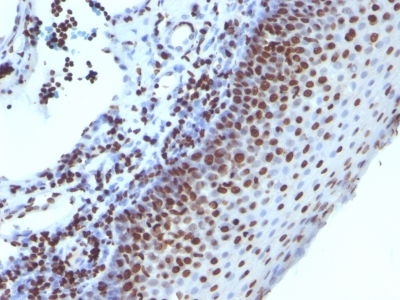
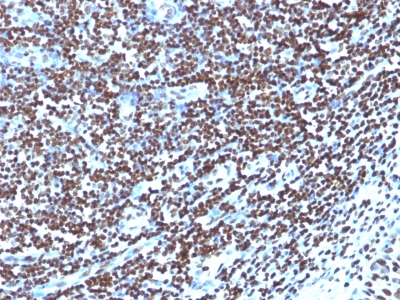
IHC (Immunohistochemistry) (Immunoperoxidase of monoclonal antibody to CDC2 on formalin-fixed paraffin-embedded human tonsil. [antibody concentration 1.5 ug/ml])
WB (Western Blot) (CDC2 monoclonal antibody (M04), clone 8F1 Western Blot analysis of CDC2 expression in Hela S3 NE.)
WB (Western Blot) (Western Blot analysis of IRF2 expression in transfected 293T cell line by IRF2 monoclonal antibody. Lane 1: IRF2 transfected lysate (39.4kD). Lane 2: Non-transfected lysate.)
Application Data (Detection limit for is ~0.1ng/ml as a capture antibody.)
IF (Immunofluorescence) (Immunofluorescence in HeLa cells using (10ug/ml).)
IHC (Immunohistochemistry) (Immunoperoxidase in formalin-fixed paraffin-embedded human leiomyosarcoma usign (3ug/ml).)
WB (Western Blot) (Western Blot analysis of IRF2 expression in Hela NE using.)
WB (Western Blot) (Western Blot detection against Immunogen (36.74kD).)
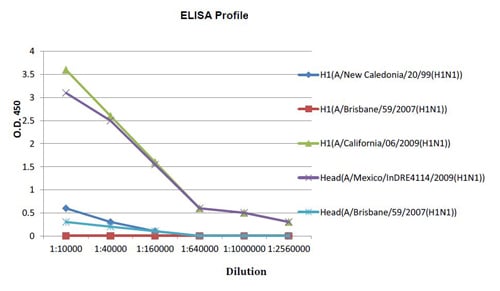
ELISA (Titration curve analysis of LAG-3 mAbs to detect recombinant LAG-3 in ELISA with AAA11018 and antibodies at decreasing concentrations.)
FCM (Flow Cytometry) (Flow cytometry analysis of LAG-3 over expressing HEK293 cells using LAG-3 antibody at 1 ug/ml.Blue: untransfected HEK293 cells.Yellow: LAG-3 over expressing HEK293 cells.)
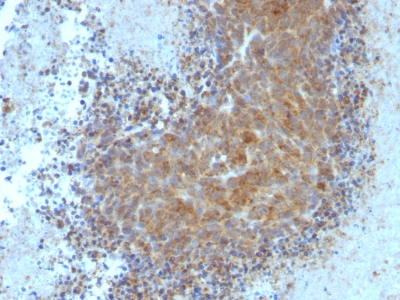
IHC (Immunohistochemistry) (Immunohistochemistry of LAG-3 in human lymphoma tissue using LAG-3 Antibody and control mouse IgG (corner box) at 5 ug/ml.)
IF (Immunofluorescence) (Immunofluorescence of LAG-3 in over human spleen tissue using LAG-3 Antibody at 10 ug/ml.Green: LAG3 Antibody [6B12] (AAA11018)Blue: DAPI staining)
IF (Immunofluorescence) (Immunofluorescence of LAG-3 in over expressing HEK293 cells using LAG-3 Antibody at 2 ug/ml.Green: LAG3 Antibody [6B12] (AAA11018)Blue: DAPI staining)
WB (Western Blot) (ASB9 monoclonal antibody, Western Blot analysis of ASB9 expression in HepG2.)
Application Data (Detection limit for recombinant GST tagged ASB9 is ~0.1ng/ml as a capture antibody.)
IP (Immunoprecipitation) (Immunoprecipitation of ASB9 transfected lysate using ASB9 monoclonal antibody and Protein A Magnetic Bead and immunoblotted with ASB9 rabbit polyclonal antibody.)
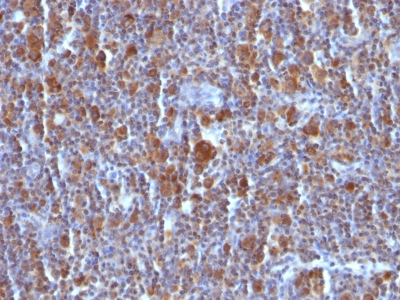
IHC (Immunohistochemistry) (Immunoperoxidase of monoclonal antibody to ASB9 on formalin-fixed paraffin-embedded human lymphoma tissue. [antibody concentration 3ug/ml])
WB (Western Blot) (Western Blot analysis of ASB9 expression in transfected 293T cell line by ASB9 monoclonal antibody. Lane 1: ASB9 transfected lysate (31.9kD). Lane 2: Non-transfected lysate.)
WB (Western Blot) (Western Blot detection against Immunogen (53.83kD).)
Application Data (Detection limit for recombinant GST tagged NR3C1 is ~0.1ng/ml as a capture antibody.)
IF (Immunofluorescence) (Immunofluorescence of monoclonal antibody to NR3C1 on HeLa cell. [antibody concentration 10ug/ml].)
WB (Western Blot) (Western Blot analysis of NR3C1 expression in transfected 293T cell line by NR3C1 monoclonal antibody. Lane 1: NR3C1 transfected lysate (85.7kD). Lane 2: Non-transfected lysate.)
WB (Western Blot) (NR3C1 monoclonal antibody, Western Blot analysis of NR3C1 expression in HeLa NE.)
WB (Western Blot) (NR3C1 monoclonal antibody. Western Blot analysis of NR3C1 expression in HeLa.)
WB (Western Blot) (Western Blot detection against Immunogen (35.53kD).)
WB (Western Blot) (TRIM28 monoclonal antibody Western Blot analysis of TRIM28 expression in Hela NE)
WB (Western Blot) (TRIM28 monoclonal antibody Western Blot analysis of TRIM28 expression in PC-12)
WB (Western Blot) (Western blot analysis of TRIM28 over-expressed 293 cell line, cotransfected with TRIM28 Validated Chimera RNAi (Lane 2) or non-transfected control (Lane 1). Blot probed with TRIM28 monoclonal antibody GAPDH (36.1kD) used as specificity and loading control.)
IF (Immunofluorescence) (Immunofluorescence of monoclonal antibody to TRIM28 on HeLa cell. [antibody concentration 10ug/ml])
IHC (Immunohistochemistry) (Immunoperoxidase of monoclonal antibody to TRIM28 on formalin-fixed paraffin-embedded human small Intestine. [antibody concentration 3ug/ml])
WB (Western Blot) (Western Blot analysis of TRIM28 expression in transfected 293T cell line by TRIM28 monoclonal antibody Lane 1: TRIM28 transfected lysate (88.5kD). Lane 2: Non-transfected lysate)
WB (Western Blot) (Western Blot detection against Immunogen (41.69kD).)
KAP-1 (Transcription Intermediary Factor 1-beta, TIF1-beta, E3 SUMO-protein Ligase TRIM28, KRAB-associated Protein 1, KRAB-interacting Protein 1, KRIP-1, Nuclear Corepressor KAP-1, RING Finger Protein 96, Tripartite Motif-containing Protein 28, TRIM28, KA
WB (Western Blot) (SP1 monoclonal antibody (M01), clone 4H6. Western Blot analysis of SP1 expression in Hela S3 NE.)
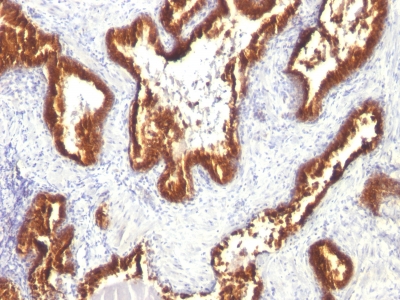
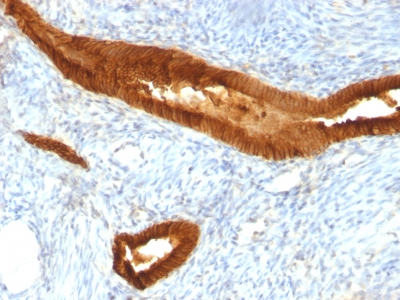
IHC (Immunohistochemistry) (Immunoperoxidase of monoclonal antibody to SP1 on formalin-fixed paraffin-embedded human endometrium. [antibody concentration 1 ~ 10 ug/ml])
WB (Western Blot) (SP1 monoclonal antibody (M01), clone 4H6 Western Blot analysis of SP1 expression in IMR-32.)
IF (Immunofluorescence) (Immunofluorescence of monoclonal antibody to SP1 on HeLa cell. [antibody concentration 10 ug/ml])
WB (Western Blot) (Western Blot analysis of FTL expression in transfected 293T cell line by FTL monoclonal antibody (M16), clone X1.Lane 1: FTL transfected lysate (20 KDa).Lane 2: Non-transfected lysate.)
WB (Western Blot) (Western blot analysis of FTL over-expressed 293 cell line, cotransfected with FTL Validated Chimera RNAi (Lane 2) or non-transfected control (Lane 1). Blot probed with FTL monoclonal antibody (M16), clone X1. GAPDH (36.1 kDa) used as specificity and loading control.)
Application Data (Detection limit for recombinant GST tagged FTL is approximately 0.03ng/ml as a capture antibody.)
WB (Western Blot) (FTL monoclonal antibody (M16), clone X1 Western Blot analysis of FTL expression in K-562 (Cat # L009V1).)
IF (Immunofluorescence) (Immunofluorescence of monoclonal antibody to FTL on HeLa cell. [antibody concentration 10 ug/ml])
FCM (Flow Cytometry) (Flow cytometric analysis of HL-60 cells with GEF H1 antibody at 1/100 dilution (yellow) compared with an unlabelled control (cells without incubation with primary antibody; purple).Alexa Fluor 488-conjugated goat anti-rabbit IgG was used as the secondary antibody.)
ICC (Immunocytochemistry) (ICC staining GEF H1 in HUVEC cells (green). The nuclear counter stain is DAPI (blue). Cells were fixed in paraformaldehyde, permeabilised with 0.25% Triton X100/PBS.)
ICC (Immunocytochemistry) (ICC staining GEF H1 in SH-SY-5Y cells (green). The nuclear counter stain is DAPI (blue). Cells were fixed in paraformaldehyde, permeabilised with 0.25% Triton X100/PBS.)
IHC (Immunohistochemistry) (Immunohistochemical analysis of paraffin-embedded rat brain tissue using anti-GEF H1 antibody. Counter stained with hematoxylin.)
IHC (Immunohistochemistry) (Immunohistochemical analysis of paraffin-embedded mouse testis tissue using anti-GEF H1 antibody. Counter stained with hematoxylin.)
IHC (Immunohistochemistry) (Immunohistochemical analysis of paraffin-embedded human tonsil tissue using anti-GEF H1 antibody. Counter stained with hematoxylin.)
WB (Western Blot) (Western blot analysis of GEF H1 on 293T and A431 cells lysates using anti-GEF H1 antibody at 1/500 dilution.)
FCM (Flow Cytometry) (Flow cytometric analysis of N2A cells with Choline Acetyltransferase antibody at 1/50 dilution (red) compared with an unlabelled control (cells without incubation with primary antibody; black). Alexa Fluor 488-conjugated goat anti rabbit IgG was used as the secondary antibody.)
ICC (Immunocytochemistry) (ICC staining Choline Acetyltransferase in SH-SY5Y cells (green). The nuclear counter stain is DAPI (blue). Cells were fixed in paraformaldehyde, permeabilised with 0.25% Triton X100/PBS.)
ICC (Immunocytochemistry) (ICC staining Choline Acetyltransferase in N2A cells (green). The nuclear counter stain is DAPI (blue). Cells were fixed in paraformaldehyde, permeabilised with 0.25% Triton X100/PBS.)
ICC (Immunocytochemistry) (ICC staining Cho Line Acetyltransferase in Hela cells (green). The nuclear counter stain is DAPI (blue). Cells were fixed in paraformaldehyde, permeabilised with 0.25% Triton X100/PBS.)
IHC (Immunohistochemistry) (Immunohistochemical analysis of paraffin-embedded rat stomach tissue using anti- Choline Acetyltransferase antibody. Counter stained with hematoxylin.)
IHC (Immunohistochemistry) (Immunohistochemical analysis of paraffin-embedded mouse brain tissue using anti- Choline Acetyltransferase antibody. Counter stained with hematoxylin.)
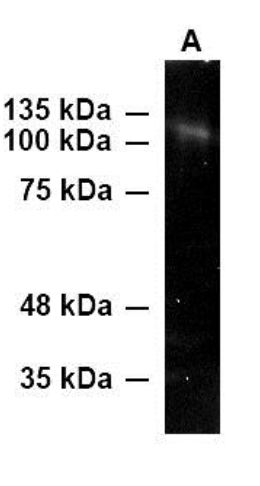
SDS-PAGE (Whole cell lysates were separated by 12% SDS-PAGE, and the membrane was blotted with anti-Claudin 4(ABT-CLD4) antibody. The HRP-conjugated Goat anti-M)
WB (Western Blot) (Western blot analysis of Claudin 4Antibody at 1:1000 dilution.)
WB (Western Blot) (Detection of mouse FOX2/RBM9 by western blot. Samples: Whole cell lysate (50 ug) from NIH 3T3 and CT26 cells prepared using NETN lysis buffer. Antibody: Rabbit anti-FOX2/RBM9 recombinant monoclonal antibody (AAA23868 lot 1) used at 1:1000. Secondary: HRP-conjugated goat anti-rabbit IgG . Detection: Chemiluminescence with an exposure time of 75 seconds. Lower Panel: Rabbit anti-Actin recombinant monoclonal antibody .)
WB (Western Blot) (Detection of human FOX2/RBM9 by western blot. Samples: Whole cell lysate (50 ug) from HEK293T, HeLa, Hep-G2, and U2OS cells prepared using NETN lysis buffer. Antibody: Rabbit anti-FOX2/RBM9 recombinant monoclonal antibody (AAA23868 lot 1) used at 1:1000. Secondary: HRP-conjugated goat anti-rabbit IgG . Detection: Chemiluminescence with an exposure time of 3 minutes. Lower Panel: Rabbit anti-Actin recombinant monoclonal antibody .)
IP (Immunoprecipitation) (Detection of human FOX2/RBM9 by western blot of immunoprecipitates. Samples: Whole cell lysate (1.0 mg per IP reaction; 20% of IP loaded) from HEK293T cells prepared using NETN lysis buffer. Antibodies: Rabbit anti-FOX2/RBM9 recombinant monoclonal antibody (AAA23868 lot 1) used for IP at 20 ul/mg lysate. FOX2/RBM9 was also immunoprecipitated by an antibody against a different epitope of FOX2/RBM9 (BL2440) and a polyclonal antibody against the same epitope of FOX2/RBM9 . For blotting immunoprecipitated FOX2/RBM9, AAA23868 was used at 1:1000. Detection: Chemiluminescence with an exposure time of 30 seconds.)
IHC (Immunohistchemistry) (Detection of mouse FOX2/RBM9 by immunohistochemistry. Sample: FFPE section of RENCA Tumor. Antibody: Rabbit anti-FOX2/RBM9 recombinant monoclonal antibody (AAA23868-1). Secondary: HRP-conjugated goat anti-rabbit IgG .)
IHC (Immunohistochemistry) (Detection of human FOX2/RBM9 by immunohistochemistry. Sample: FFPE section of breast carcinoma. Antibody: Rabbit anti-FOX2/RBM9 recombinant monoclonal antibody (AAA23868-1). Secondary: HRP-conjugated goat anti-rabbit IgG .)
ICC (Immunocytochemistry) (Detection of mouse FOX2/RBM9 by immunocytochemistry. Sample: FFPE section of NIH 3T3 cells. Antibody: Rabbit anti-FOX2/RBM9 recombinant monoclonal antibody (AAA23868-1). Secondary: HRP-conjugated goat anti-rabbit IgG .)
ICC (Immunocytochemistry) (Detection of human FOX2/RBM9 by immunocytochemistry. Sample: FFPE section of GaMG cells. Antibody: Rabbit anti-FOX2/RBM9 recombinant monoclonal antibody (AAA23868-1). Secondary: HRP-conjugated goat anti-rabbit IgG .)
FCM (Flow Cytometry) (Detection of mouse FOX2/RBM9 (shaded) in EL4 cells by flow cytometry. Antibody: Rabbit anti-FOX2/RBM9 recombinant monoclonal antibody (AAA23868) or isotype control (unshaded). Secondary: DyLight 650-conjugated goat anti-rabbit IgG .)
FCM (Flow Cytometry) (Detection of human FOX2/RBM9 (shaded) in Jurkat cells by flow cytometry. Antibody: Rabbit anti-FOX2/RBM9 recombinant monoclonal antibody (AAA23868) or isotype control (unshaded). Secondary: DyLight 650-conjugated goat anti-rabbit IgG .)
WB (Western Blot) (Western blot analysis of NDN over-expressed 293 cell line, cotransfected with NDN Validated Chimera RNAi (Lane 2) or non-transfected control (Lane 1). Blot probed with NDN monoclonal antibody. GAPDH (36.1kD) used as specificity and loading control.)
Application Data (Detection limit for recombinant GST tagged NDN is ~0.03ng/ml as a capture antibody.)
IF (Immunofluorescence) (Immunofluorescence of monoclonal antibody to NDN on HeLa cell. [antibody concentration 10ug/ml])
IHC (Immunohistochemistry) (Immunoperoxidase of monoclonal antibody to NDN on formalin-fixed paraffin-embedded human colon. [antibody concentration 1.5ug/ml])
WB (Western Blot) (Western Blot analysis of NDN expression in transfected 293T cell line by NDN monoclonal antibody. Lane 1: NDN transfected lysate (36.1kD). Lane 2: Non-transfected lysate.)
WB (Western Blot) (NDN monoclonal antibody Western Blot analysis of NDN expression in HL-60.)
WB (Western Blot) (Western Blot detection against Immunogen (37.11kD).)
WB (Western Blot) (AKAP8 monoclonal antibody (Western Blot analysis of AKAP8 expression in HeLa NE)
IP (Immunoprecipitation) (Immunoprecipitation of AKAP8 transfected lysate using AKAP8 monoclonal antibody and Protein A Magnetic Bead, and immunoblotted with AKAP8 monoclonal antibody.)
IF (Immunofluorescence) (Immunofluorescence of monoclonal antibody to AKAP8 on HeLa cell. [antibody concentration 10ug/ml])
IHC (Immunohistochemistry) (Immunoperoxidase of monoclonal antibody to AKAP8 on formalin-fixed paraffin-embedded human pancreas. [antibody concentration 3ug/ml])
WB (Western Blot) (Western Blot analysis of AKAP8 expression in transfected 293T cell line by AKAP8 monoclonal antibody Lane 1: AKAP8 transfected lysate (76.2kD). Lane 2: Non-transfected lysate.)
WB (Western Blot) (Western Blot detection against Immunogen (38.43kD).)
WB (Western Blot) (Western Blot analysis of NQO1 expression in transfected 293T cell line by NQO1 monoclonal antibody. Lane 1: NQO1 transfected lysate (30.9kD). Lane 2: Non-transfected lysate.)
WB (Western Blot) (Western Blot analysis of NQO1 expression in HepG2.)
WB (Western Blot) (Western blot analysis of NQO1 over-expressed 293 cell line, cotransfected with NQO1 Validated Chimera RNAi (Lane 2) or non-transfected control (Lane 1). Blot probed with NQO1 monoclonal antibody. GAPDH (36.1kD) used as specificity and loading control.)
Application Data (Detection limit for recombinant GST tagged NQO1 is ~0.3ng/ml as a capture antibody)
IP (Immunoprecipitation) (Immunoprecipitation of NQO1 transfected lysate using NQO1 monoclonal antibody and Protein A Magnetic Bead, and immunoblotted with NQO1 rabbit polyclonal antibody.)
IF (Immunofluorescence) (Immunofluorescence of monoclonal antibody to NQO1 on HepG2 cell. [antibody concentration 10ug/ml])
WB (Western Blot) (Western Blot detection against Immunogen (55.88kD).)
Application Data (Proximity Ligation Analysis of protein-protein interactions between PDGFRB and PLCG1. Mahlavu cells were stained with anti-PDGFRB rabbit purified polyclonal 1:600 and anti-PLCG1 mouse monoclonal antibody 1:100. Each red dot represents the detection of protein-protein interaction complex, and nuclei were counterstained with DAPI (blue).)
Application Data (Proximity Ligation Analysis of protein-protein interactions between HCK and PLCG1. Huh7 cells were stained with anti-HCK rabbit purified polyclonal 1:1200 and anti-PLCG1 mouse monoclonal antibody 1:50. Each red dot represents the detection of protein-protein interaction complex, and nuclei were counterstained with DAPI (blue).)
Application Data (Proximity Ligation Analysis of protein-protein interactions between PTK2 and PLCG1 HeLa cells were stained with PTK2 rabbit purified polyclonal 1:1200 and PLCG1 mouse monoclonal antibody 1:50. Each red dot represents the detection of protein-protein interaction complex, and nuclei were counterstained with DAPI (blue).)
Application Data (Detection limit for recombinant GST tagged PLCG1 is ~0.1ng/ml as a capture antibody.)
IF (Immunofluorescence) (Immunofluorescence of monoclonal antibody to PLCG1 on HeLa cell. [antibody concentration 40ug/ml].)
WB (Western Blot) (PLCG1 monoclonal antibody. Western Blot analysis of PLCG1 expression in Hela NE.)
WB (Western Blot) (Western Blot detection against Immunogen (36.74kD).)
WB (Western Blot) (CA1 monoclonal antibody, Western Blot analysis of CA1 expression in HeLa.)
Application Data (Detection limit for recombinant GST tagged CA1 is ~0.03ng/ml as a capture antibody.)
IP (Immunoprecipitation) (Immunoprecipitation of CA1 transfected lysate using 124177 and Protein A Magnetic Bead and immunoblotted with CA1 rabbit polyclonal antibody.)
WB (Western Blot) (Western Blot analysis of CA1 expression in transfected 293T cell line using 124177. Lane 1: CA1 transfected lysate (28.9kD). Lane 2: Non-transfected lysate.)
WB (Western Blot) (Western Blot analysis of CA1 expression in human spleen using 124177)
WB (Western Blot) (Western Blot detection against Immunogen (54.45kD), using 124177.)
WB (Western Blot) (HSPA1B monoclonal antibody Western Blot analysis of HSPA1B expression in Raw 264.7.)
WB (Western Blot) (HSPA1B monoclonal antibody Western Blot analysis of HSPA1B expression in NIH/3T3)
Application Data (Proximity Ligation Analysis (PLA) of protein-protein interactions between TP53 and HSPA1B. HeLa cells were stained with TP53 rabbit purified polyclonal 1:1200 and HSPA1B mouse monoclonal antibody 1:50. Signals were detected 30 Detection Kit 613 (red), and nuclei were counterstained with DAPI (blue). Each red dot represents the detection of protein-protein interaction complex.)
Application Data (Detection limit for recombinant GST tagged HSPA1B is ~0.03ng/ml as a capture antibody.)
IF (Immunofluorescence) (Immunofluorescence of monoclonal antibody to HSPA1B on HeLa cell. [antibody concentration 10ug/ml])
IHC (Immunohistochemistry) (Immunoperoxidase of monoclonal antibody to HSPA1B on formalin-fixed paraffin-embedded human testis. [antibody concentration 6ug/ml])
WB (Western Blot) (Western Blot detection against Immunogen (34.65kD).)
IHC (Immunohistchemistry) (Immunoperoxidase of monoclonal antibody to TAF11 on formalin-fixed paraffin-embedded human small Intestine. [antibody concentration 1.2 ug/ml])
IHC (Immunohistochemistry) (Immunoperoxidase of monoclonal antibody to TAF11 on formalin-fixed paraffin-embedded human small Intestine. [antibody concentration 1.2 ug/ml])
Application Data (Detection limit for recombinant GST tagged TAF11 is approximately 0.1ng/ml as a capture antibody.)
IF (Immunofluorescence) (Immunofluorescence of monoclonal antibody to TAF11 on HeLa cell. [antibody concentration 10 ug/ml])
WB (Western Blot) (TAF11 monoclonal antibody (M06), clone 3G6 Western Blot analysis of TAF11 expression in Hela S3 NE (Cat # L013V3).)
Application Data (Published customer image: Representative images of the inflammatory changes in the facial nucleus during axonal regeneration, one week following facial nerve transaction. a, b: CD11b immunoreactivity for microglia is increased in the axotomized facial nucleus, and microglia enwrap the facial motor neurons, e.g. at arrows. The regenerating neurons were retrogradely labelled with fluorogold. c, d: CD6- positive T-cells accumulated in the injured motor nucleus (arrows). They had little cytoplasm but dense nuclei (c) and were sometimes clustered around neurons retrogradely labelled with fluorogold (d). The scale bar in (a) also applies to (b) and that in (c) also applies to (d).From: Shokouhi et al. BMC Neuroscience 2010 11:13.)
Application Data (Published customer image: CD11b immunoreactive (red) microglia in the motor cortex following cervical corticospinal tract injury. Representative images of motor cortex - a, b: one week (deconvolved images); c, d: two weeks following corticospinal tract injury. The corticospinal neurons were retrogradely labelled with fluorogold applied to the spinal cord at the time of injury. There is little sign of microglial activation. The inset in (c) shows a CD6-positive T-cell in the motor cortex, but no accumulation of such cells was detected.From: Shokouhi BN, Wong BZ, Siddiqui S, Lieberman AR, Campbell G, Tohyama K, Anderson PN. Microglial responses around intrinsic CNS neurons are correlated with axonal regeneration. BMC Neurosci. 2010 Feb 5;11:13.)
Application Data (Staining of rat peritoneal macrophages with Mouse anti Rat CD11b)
Application Data (Published customer image: Microglia in the red nucleus (a-d and inset) and motor cortex (e, f) 4 weeks after nerve graft implantation into the rubrospinal tract and cervical dorsal columns respectively. Neurons with regenerating axons were retrogradely labelled with fluorogold. Microglia established close contacts with regenerating rubrospinal neurons (arrows), which also expressed ATF3 (inset). No retrogradely labelled corticospinal neurons were detected (e and f) and there was no microglial activation in the motor cortex. (a-c) are non-deconvolved and (d-f plus inset) are deconvolved images. The scale bar in (a) also applies to (b).From: Shokouhi BN, Wong BZ, Siddiqui S, Lieberman AR, Campbell G, Tohyama K, Anderson PN. Microglial responses around intrinsic CNS neurons are correlated with axonal regeneration. BMC Neurosci. 2010 Feb 5;11:13.)
Application Data (Immunoperoxidase staining of rat lymph node cryosection with Mouse anti Rat CD11b antibody followed by horseradish peroxidase conjugated Goat anti Mouse IgG2a as a detection reagent. High power)
Application Data (Staining of rat peritoneal macrophages cells with Mouse anti Rat CD11b:Alexa Fluor 488)
Application Data (Published customer image: Rubrospinal injury produces little microglial activation and no accumulation of T-cells in the red nucleus. a, b: Representative images show there is little difference in CD11b immunoreactivity for microglia in the red nucleus (*) one week following axotomy. c, d: confocal images of beta thymosin immunoreactive microglia in the red nucleus 3 weeks after injury. e: a rare CD6-positive T lymphocyte in the red nucleus of an unoperated rat. f: one week after injury no T lymphocytes can be identified in the red nucleus around the axotomized rubrospinal neurons, which can be recognised by their expression of ATF3 (green). Neuronal cytoplasm has been visualised by high gain in the red signal; this does not represent CD6 signal.From: Shokouhi BN, Wong BZ, Siddiqui S, Lieberman AR, Campbell G, Tohyama K, Anderson PN. Microglial responses around intrinsic CNS neurons are correlated with axonal regeneration. BMC Neurosci. 2010 Feb 5;11:13.)
Application Data (Staining of rat peritoneal macrophages with Mouse anti Rat CD11b:RPE-Alexa Fluor 647)
Application Data (Immunofluoescence staining of rat lymph node cryosection with Mouse anti Rat CD11b antibody , red in A and Mouse anti Rat CD8 , green in B. C is the merged image with nuclei counter-stained in blue using DAPI. High power)
Application Data (Immunofluoescence staining of rat lymph node cryosection with Mouse anti Rat CD11b antibody , red in A and Mouse anti Rat CD8 , green in B. C is the merged image with nuclei counter-stained in blue using DAPI. Low power)
WB (Western Blot) (Western Blot analysis of ALB expression in transfected 293T cell line by ALB monoclonal antibody. Lane 1: ALB transfected lysate (69.4kD). Lane 2: Non-transfected lysate.)
Application Data (Detection limit for recombinant GST tagged ALB is ~1ng/ml as a capture antibody.)
IP (Immunoprecipitation) (Immunoprecipitation of ALB transfected lysate using ALB monoclonal antibody and Protein A Magnetic Bead and immunoblotted with ALB rabbit polyclonal antibody.)
IHC (Immunohistochemistry) (Immunoperoxidase of monoclonal antibody to ALB on formalin-fixed paraffin-embedded human hepatocellular carcinoma tissue. [antibody concentration 3ug/ml].)
WB (Western Blot) (ALB monoclonal antibody Western Blot analysis of ALB expression in HepG2.)
WB (Western Blot) (Western Blot detection against Immunogen (90.75kD).)
WB (Western Blot) (Western blot analysis of NMI over-expressed 293 cell line, cotransfected with NMI Validated Chimera RNAi (Lane 2) or non-transfected control (Lane 1). Blot probed with NMI monoclonal antibody GAPDH (36.1kD) used as specificity and loading control.)
Application Data (Detection limit for recombinant GST tagged NMI is ~0.03ng/ml as a capture antibody.)
IHC (Immunohistochemistry) (Immunoperoxidase of monoclonal antibody to NMI on formalin-fixed paraffin-embedded human tonsil. [antibody concentration 3ug/ml])
WB (Western Blot) (Western Blot analysis of NMI expression in transfected 293T cell line by NMI monoclonal antibody. Lane 1: NMI transfected lysate (35.1kD). Lane 2: Non-transfected lysate.)
WB (Western Blot) (NMI monoclonal antibody Western Blot analysis of NMI expression in HeLa.)
WB (Western Blot) (Western Blot detection against Immunogen (37.11kD).)
Application Data (Detection limit for recombinant GST tagged CSE1L is approximately 0.1ng/ml as a capture antibody.)
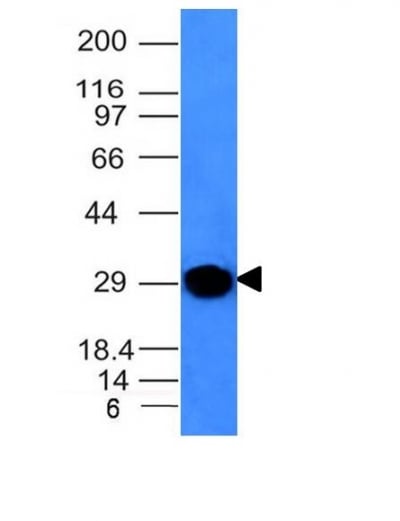
WB (Western Blot) (CSE1L monoclonal antibody (M05), clone 3F8 Western Blot analysis of CSE1L expression in K-562 (Cat # L009V1).)
IF (Immunofluorescence) (Immunofluorescence of monoclonal antibody to CSE1L on HeLa cell. [antibody concentration 10 ug/ml])
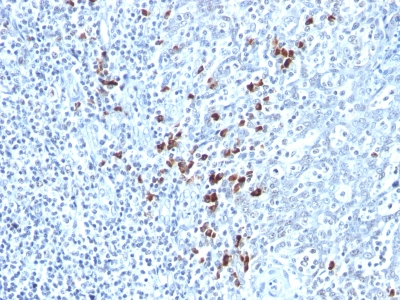
IHC (Immunohistochemistry) (Immunoperoxidase of monoclonal antibody to CSE1L on formalin-fixed paraffin-embedded human tonsil. [antibody concentration 3 ug/ml])
Application Data (Immunoperoxidase of monoclonal antibody to CSE1L on formalin-fixed paraffin-embedded human tonsil. [antibody concentration 3 ug/ml])
WB (Western Blot) (ZNF622 monoclonal antibody. Western Blot analysis of ZNF622 expression in Raw 264.7.)
WB (Western Blot) (ZNF622 monoclonal antibody. Western Blot analysis of ZNF622 expression in Hela NE.)
Application Data (Detection limit for recombinant GST tagged ZNF622 is ~0.03ng/ml as a capture antibody.)
IF (Immunofluorescence) (Immunofluorescence of monoclonal antibody to ZNF622 on HeLa cell. [antibody concentration 10ug/ml].)
WB (Western Blot) (Western Blot analysis of ZNF622 expression in transfected 293T cell line by ZNF622 monoclonal antibody. Lane 1: ZNF622 transfected lysate (54.3kD). Lane 2: Non-transfected lysate.)
WB (Western Blot) (ZNF622 monoclonal antibody. Western Blot analysis of ZNF622 expression in PC-12.)
WB (Western Blot) (Western Blot detection against Immunogen (37.11kD).)
Application Data (Detection limit for recombinant GST tagged FGR is ~0.3ng/ml as a capture antibody.)
IHC (Immunohistchemistry) (Immunoperoxidase of monoclonal antibody to FGR on formalin-fixed paraffin-embedded human spleen. [antibody concentration 3ug/ml.)
WB (Western Blot) (Western Blot analysis of FGR expression in transfected 293T cell line by FGR monoclonal antibody. Lane 1: FGR transfected lysate (59.5kD). Lane 2: Non-transfected lysate.)
WB (Western Blot) (FGR monoclonal antibody. Western Blot analysis of FGR expression in Raw 264.7.)
WB (Western Blot) (FGR monoclonal antibody. Western Blot analysis of FGR expression in PC-12.)
WB (Western Blot) (FGR monoclonal antibody. Western Blot analysis of FGR expression in HeLa.)
WB (Western Blot) (Western Blot detection against Immunogen (35.53kD).)
WB (Western Blot) (Western blot analysis of HNF4A over-expressed 293 cell line, cotransfected with HNF4A Validated Chimera RNAi (Lane 2) or non-transfected control (Lane 1). Blot probed with HNF4A monoclonal antibody GAPDH (36.1kD) used as specificity and loading control.)
Application Data (Detection limit for recombinant GST tagged HNF4A is ~1ng/ml as a capture antibody.)
IF (Immunofluorescence) (Immunofluorescence of monoclonal antibody to HNF4A on HeLa cell. [antibody concentration 10ug/ml])
WB (Western Blot) (Western Blot analysis of HNF4A expression in transfected 293T cell line by HNF4A monoclonal antibody. Lane 1: HNF4A transfected lysate (51.6kD). Lane 2: Non-transfected lysate.)
WB (Western Blot) (HNF4A monoclonal antibody Western Blot analysis of HNF4A expression in Jurkat.)
WB (Western Blot) (HNF4A monoclonal antibody Western Blot analysis of HNF4A expression in HepG2)
WB (Western Blot) (Western Blot detection against Immunogen (36.74kD).)
Monoclonal antibodies are specialized laboratory-produced proteins developed for binding to specific biological antigens or other molecular targets. Since they come from a single cell (or clone), they are especially consistent and accurate in the data they are involved in producing.
This type of antibody material has been shown to be a powerful tool in finding and subsequently destroying harmful cells in an organism, such as those found in cancers or various autoimmune diseases. This makes them excellent aids in medical testing and research, which is why they are so widely used.
AAA Biotech offers a comprehensive range of high-quality monoclonal antibodies that perform effectively in various laboratory tests, including (amongst others) ELISA, western blotting, immunohistochemistry, and flow cytometry. All of the products in our catalog are thoroughly quality tested to make sure that they are reliable and will consistently perform well in your research.
What Are The Uses of Monoclonal Antibodies
Monoclonal antibodies are used in many lab tests, including (amongst others) ELISA, western blotting, immunohistochemistry, and flow cytometry.
ELISA is a test that helps detect a specific substance/analyte in a sample. It uses antibodies (often monoclonal) bound to a solid surface (such as the well of a microplate) to “capture” the substance/analyte in the sample and immobilize it so that the detection antibody component can then bind to it and produce a signal, which can then be measured.
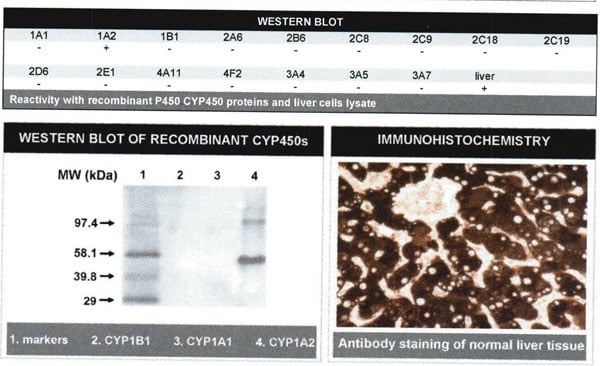
Western blotting identifies specific proteins in a sample. The sample is first separated on a gel, and then antibodies are applied that will typically bind to the target, which will all be localized to a single band in a lane.
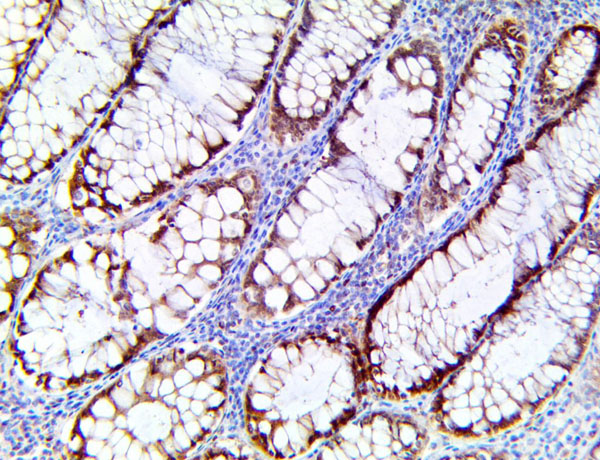
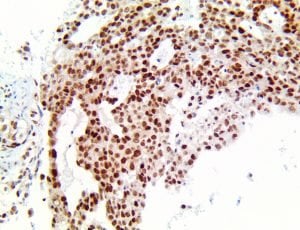
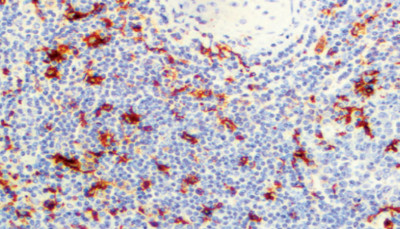
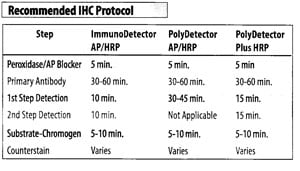
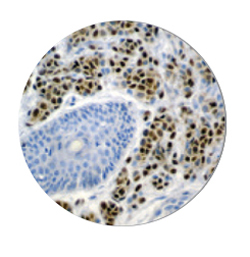
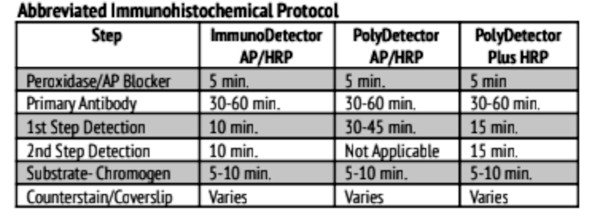
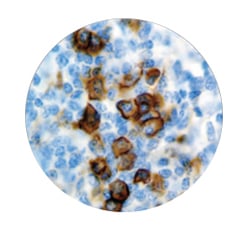
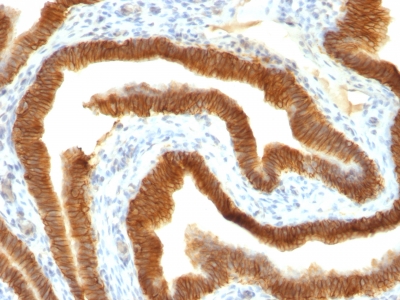
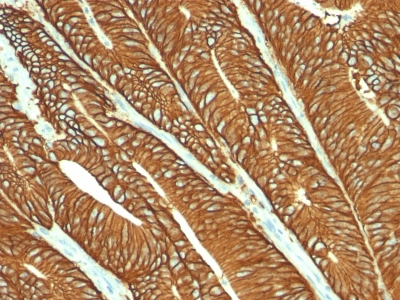
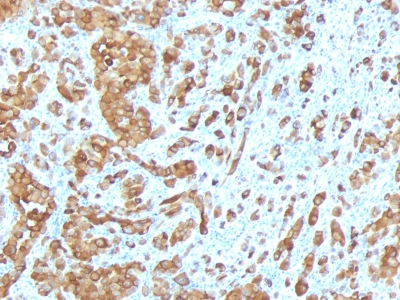
Immunohistochemistry helps locate specific proteins in cells or tissue samples using antibodies.
Flow cytometry looks at and sorts cells. It uses antibodies that are conjugated to reporter molecules called “fluorophores”, which, under special lights, emit light themselves, which can then be measured by a detector instrument.
How Monoclonal Antibodies Are Used as Medicine?
Please note that all of the products listed in AAA Biotech’s catalog are strictly for research-use only (RUO).
Monoclonal antibodies can also be used as therapeutic/medical treatments, particularly in the context of cancers. They are designed to find and bind to specific cells or proteins, helping the immune system recognize and attack the cancer. These treatments work in different ways, such as:
Radioimmunotherapy attaches a small amount of radioactive molecule to the antibody, so it delivers the radiation directly to the cancer cells that the antibody is specifically binding to.
Antibody-directed enzyme prodrug therapy uses antibodies that are specifically bound to special enzymes. These enzymes activate a harmless drug in the body and turn it into a cancer-killing drug only near the cancer cells—this helps avoid harming healthy cells.
Immunoliposomes are tiny “bubbles” filled with medicine/drug and coated with antibodies. They carry the drug straight to the cancer cells.
Why Buy Monoclonal Antibodies From Us?
At AAA Biotech, we provide high-performance monoclonal antibodies designed to support a wide range of research needs.
1. Validated for Versatile Applications
The antibodies in our catalog are extensively validated and compatible with multiple techniques, including (but not limited to) ELISA, flow cytometry (FC), immunocytochemistry (ICC), immunofluorescence (IF), immunohistochemistry (IHC), immunoprecipitation (IP), and western blotting (WB).
2. Wide Selection & Specialized Options
We offer antibodies for common and rare species, that are available in various conjugated forms, and also in recombinant formats. Essentially, there is almost anything one might need to meet their experimental model’s requirements.
3. High-Quality Proteins
Our proteins meet high purity standards—90% or more as confirmed by SDS-PAGE. Many are available with tags like His, Flag, GST, or MBP, and we also supply native and biologically active proteins for functional studies.
Frequently Asked Questions
1. Are your monoclonal antibodies validated for specific applications?
Yes, our antibodies are tested and validated for use in methods such as ELISA, western blot, IHC, flow cytometry, and more. Refer to specific product pages or datasheets for individual product information.
2. How do I choose the right monoclonal antibody for my application?
Review the product details directly for application validation, species reactivity, and target information. You may also contact our support team at any time for help.
3. How quickly can I receive my order?
Most orders are processed and shipped within 1–3 business days, depending on product availability and your shipping location.
Submit a Question
Please complete the form below and a representative will contact you as soon as possible.
Request more Information
Please complete the form below and a representative will contact you as soon as possible.
Request a Manual
Please complete the form below and a representative will contact you as soon as possible.
Request a Quote
Please complete the form below and a representative will contact you as soon as possible.