Get accurate results in your research with our Monoclonal Antibodies, which are specially made to target exactly what you require for your research, and will produce consistent, reliable performance in lab tests.
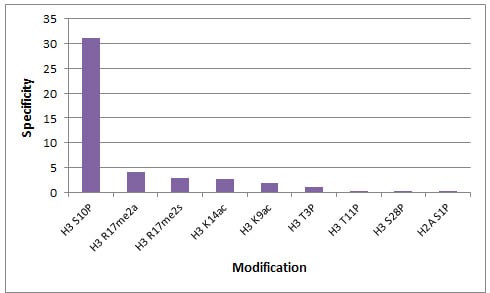
Application Data (Analysis of Protein Array containing more than 19,000 full-length human proteins using ERCC1 Mouse Monoclonal Antibody (ERCC1/2318). Z- and S- Score: The Z-score represents the strength of a signal that a monoclonal antibody (MAb) (in combination with a fluorescently-tagged anti-IgG secondary antibody) produces when binding to a particular protein on the HuProtTM array. Z-scores are described in units of standard deviations (SD's) above the mean value of all signals generated on that array. If targets on HuProtTM are arranged in descending order of the Z-score, the S-score is the difference (also in units of SD's) between the Z-score. S-score therefore represents the relative target specificity of a MAb to its intended target. A MAb is considered to specific to its intended target, if the MAb has an S-score of at least 2.5. For example, if a MAb binds to protein X with a Z-score of 43 and to protein Y with a Z-score of 14, then the S-score for the binding of that MAb to protein X is equal to 29.)
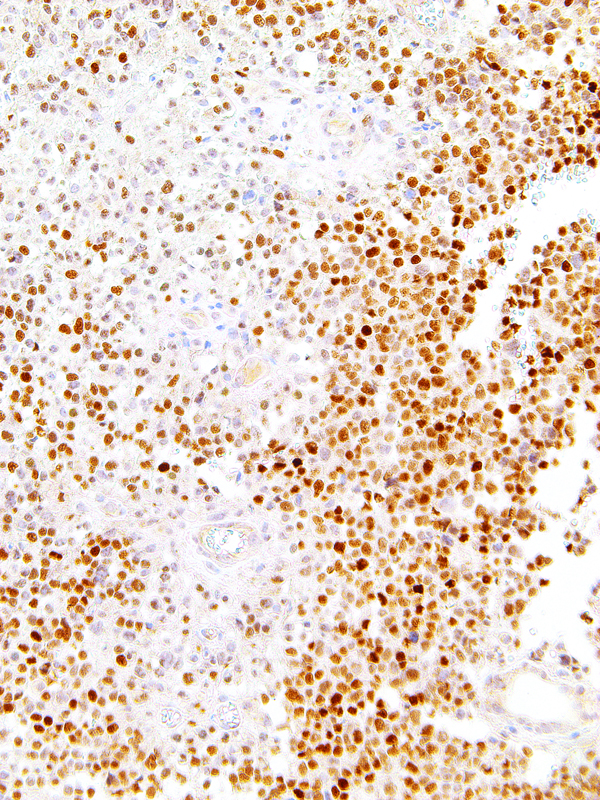
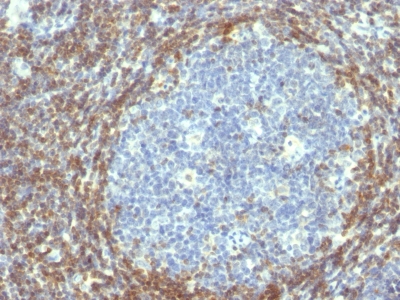
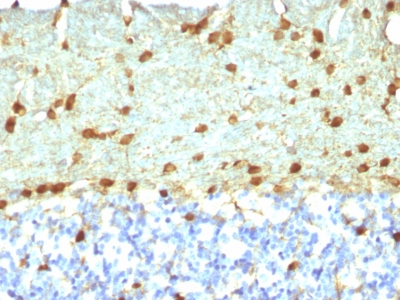
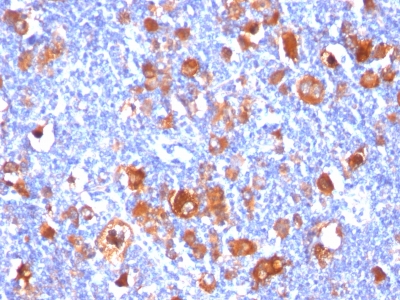
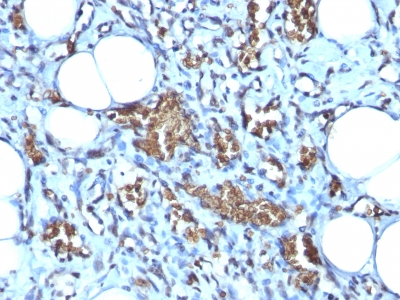
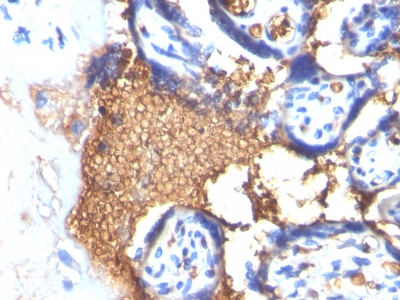
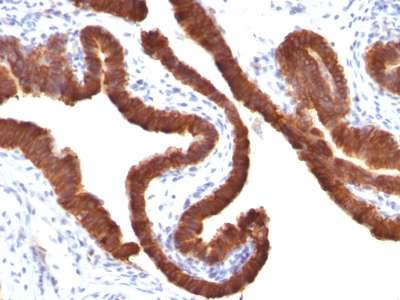
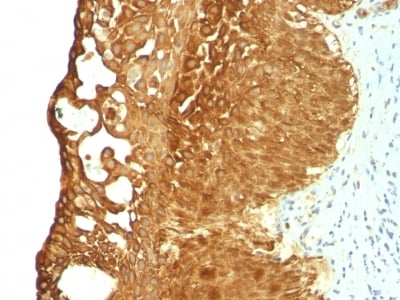
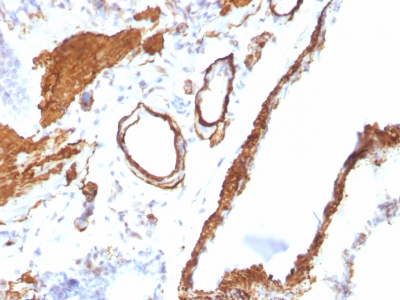
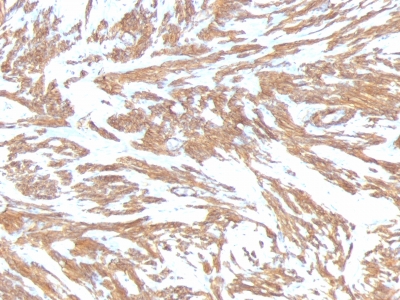
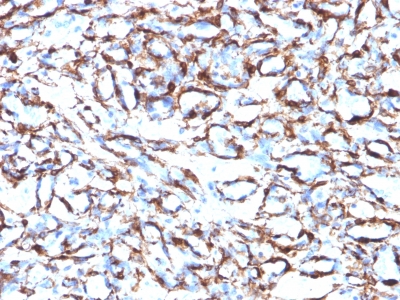
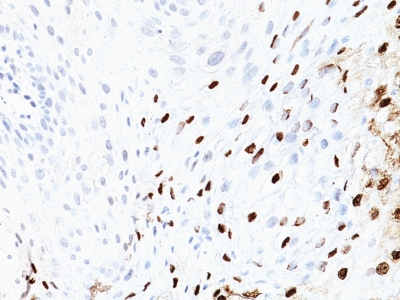
IHC (Immunohistochemistry) (Formalin-fixed, paraffin-embedded human Prostate Carcinoma stained with ERCC1 Mouse Monoclonal Antibody (ERCC1/2318).)
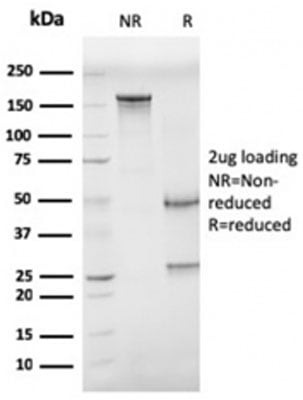
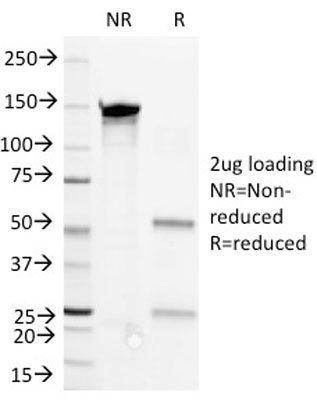
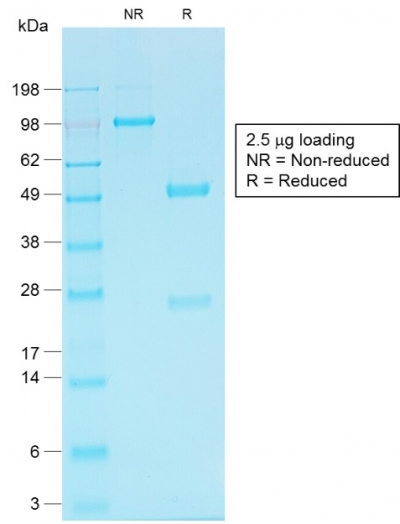
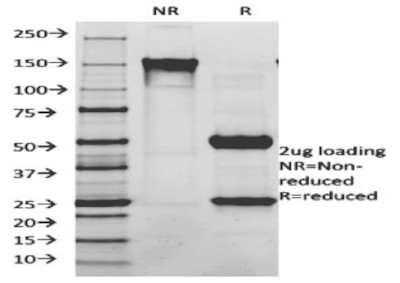
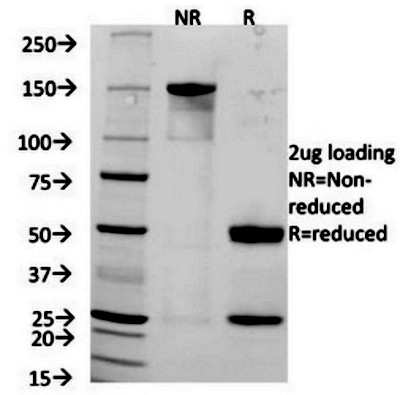
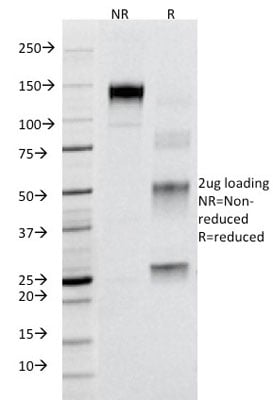
SDS-PAGE (SDS-PAGE Analysis Purified ERCC1 Mouse Monoclonal Antibody (ERCC1/2318). Confirmation of Purity and Integrity of Antibody.)
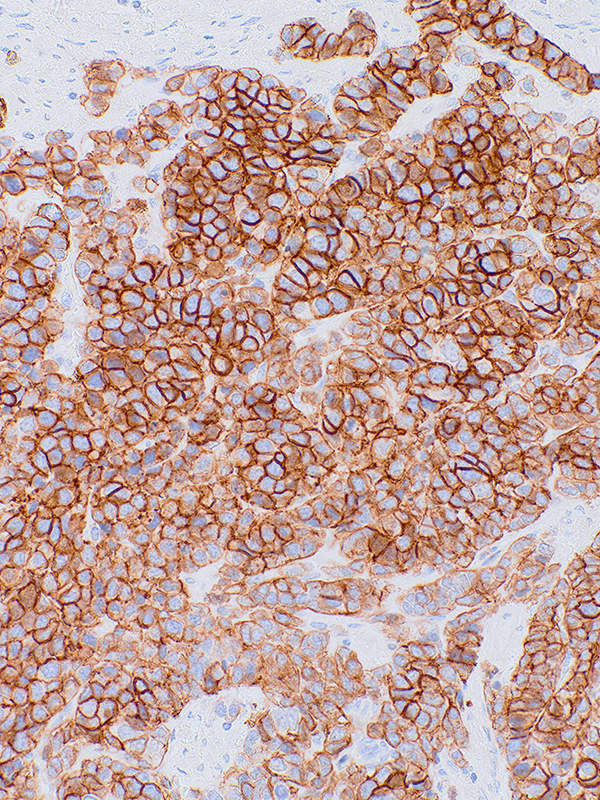
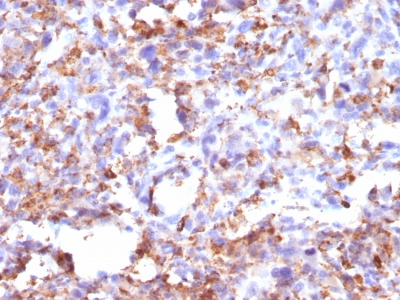
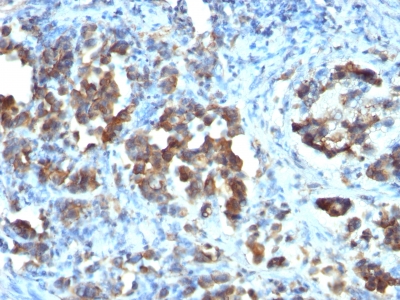
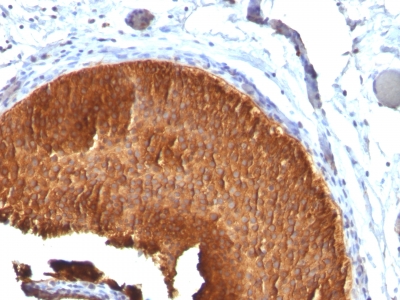
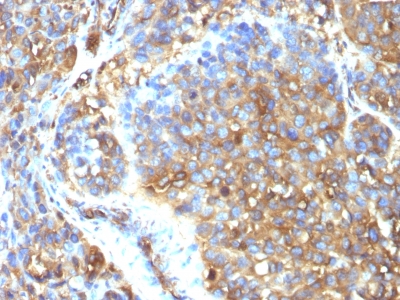
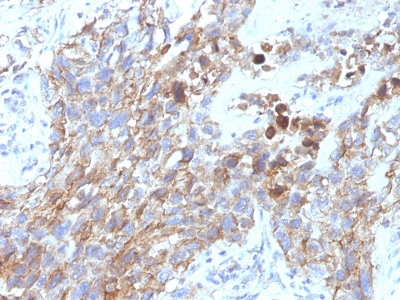
IHC (Immunohistochemistry) (Formalin-fixed, paraffin-embedded human Breast Carcinoma stained with ERCC1 Mouse Monoclonal Antibody (ERCC1/2318).)
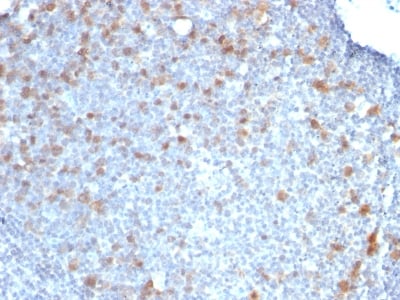
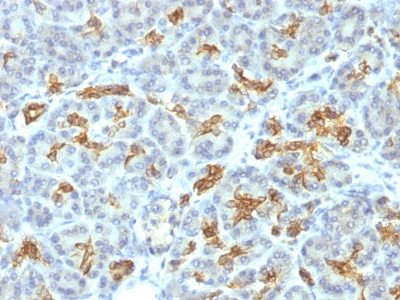
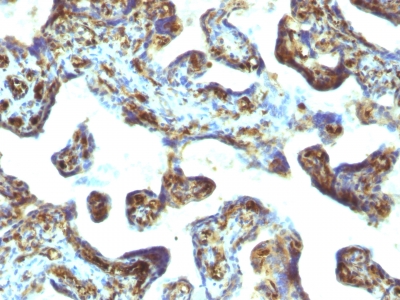
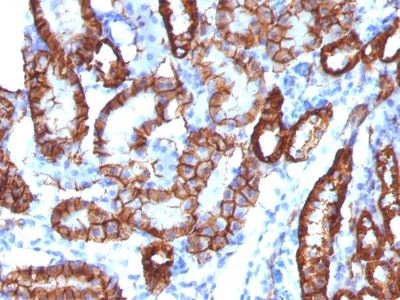
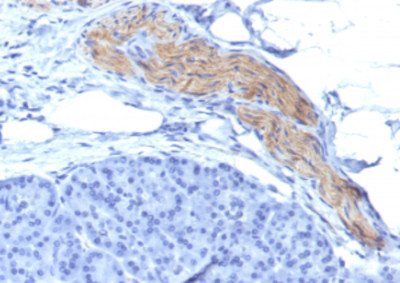
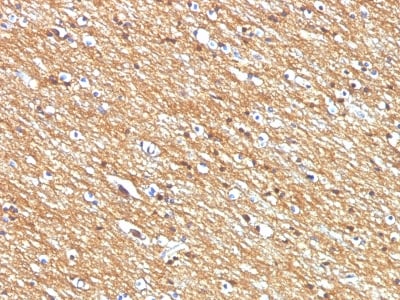
IHC (Immunohistochemistry) (Formalin-fixed, paraffin-embedded human Pancreas stained with ERCC1 Mouse Monoclonal Antibody (ERCC1/2318).)
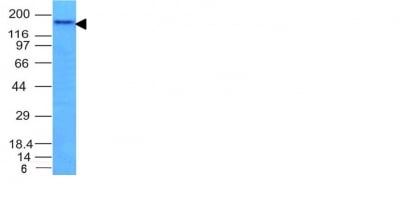
WB (Western Blot) (Western Blot detection against Immunogen (37.44kD).)
WB (Western Blot) (CCT7 monoclonal antibody Western Blot analysis of CCT7 expression in human pancreas.)
Application Data (Detection limit for recombinant GST tagged CCT7 is ~0.3ng/ml as a capture antibody.)
WB (Western Blot) (Western Blot analysis of CCT7 expression in transfected 293T cell line by CCT7 monoclonal antibody. Lane 1: CCT7 transfected lysate (59.4kD). Lane 2: Non-transfected lysate.)
WB (Western Blot) (CCT7 monoclonal antibody Western Blot analysis of CCT7 expression in K-562.)
WB (Western Blot) (CCT7 monoclonal antibody Western Blot analysis of CCT7 expression in Raw 264.7)
WB (Western Blot) (CCT7 monoclonal antibody Western Blot analysis of CCT7 expression in HL-60)
IF (Immunofluorescence) (Immunofluorescence of monoclonal antibody to RPL19 on HeLa cell. [antibody concentration 10ug/ml])
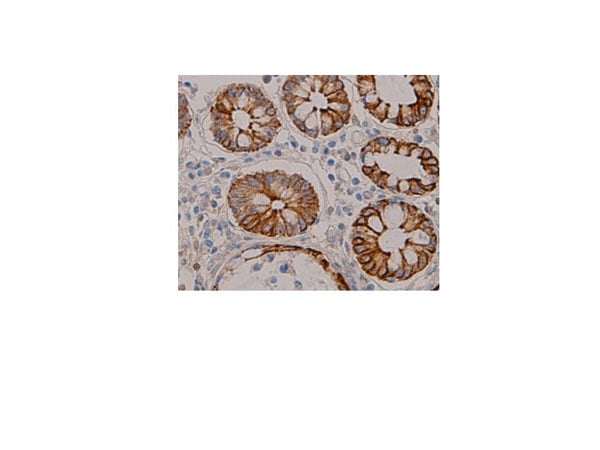
IHC (Immunohistchemistry) (Immunoperoxidase of monoclonal antibody to RPL19 on formalin-fixed paraffin-embedded human small Intestine tissue. [antibody concentration 1~10ug/ml])
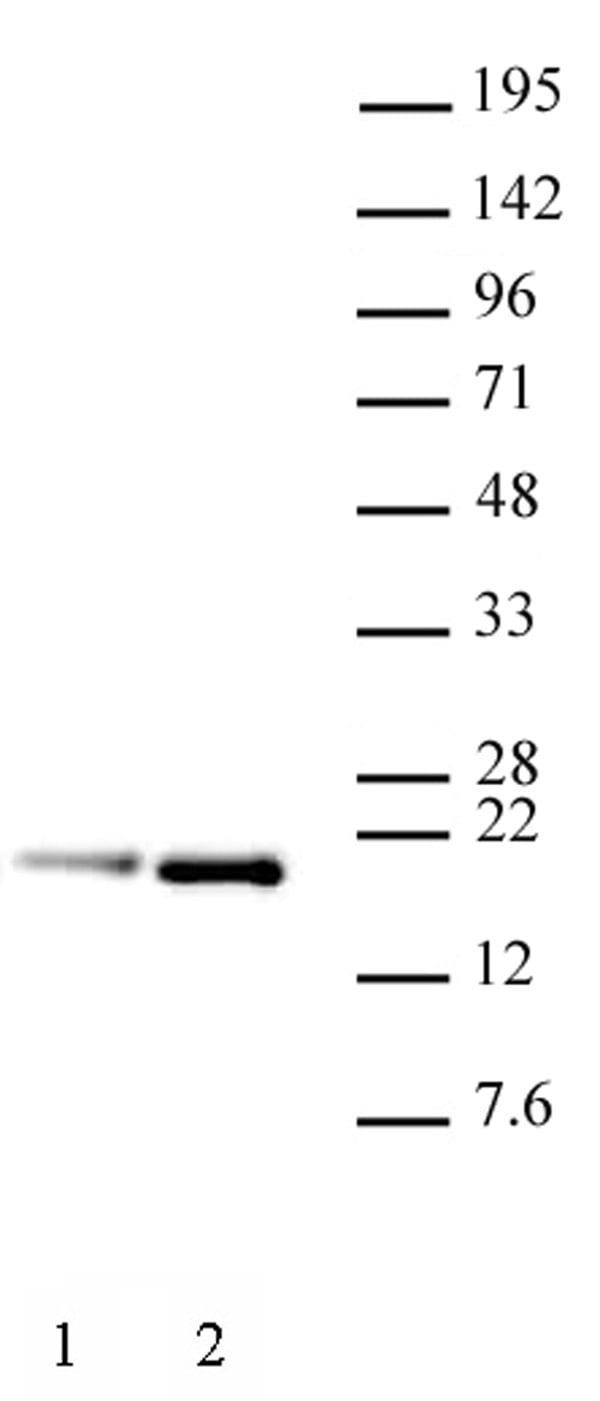
WB (Western Blot) (RPL19 monoclonal antibody. Western Blot analysis of RPL19 expression in NIH/3T3.)
WB (Western Blot) (RPL19 monoclonal antibody. Western Blot analysis of RPL19 expression in Jurkat.)
WB (Western Blot) (RPL19 monoclonal antibody. Western Blot analysis of RPL19 expression in Raw 264.7.)
WB (Western Blot) (RPL19 monoclonal antibody. Western Blot analysis of RPL19 expression in PC-12.)
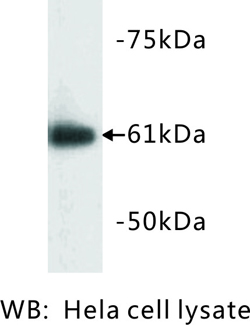
WB (Western Blot) (RPL19 monoclonal antibody. Western Blot analysis of RPL19 expression in HeLa.)
Application Data (Detection limit for recombinant GST tagged SP1 is ~0.1ng/ml as a capture antibody.)
IF (Immunofluorescence) (Immunofluorescence of monoclonal antibody to SP1 on HeLa cell. [antibody concentration 10ug/ml].)
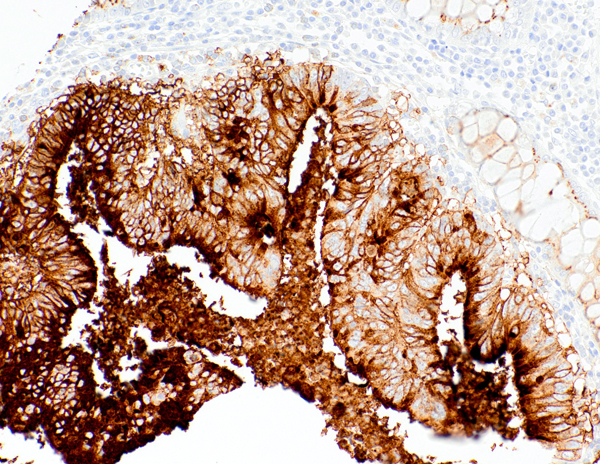
IHC (Immunohistochemistry) (Immunoperoxidase of monoclonal antibody to SP1 on formalin-fixed paraffin-embedded human colon. [antibody concentration 1ug/ml].)
IHC (Immunohistochemistry) (Immunoperoxidase of monoclonal antibody to SP1 on formalin-fixed paraffin-embedded human endometrium. [antibody concentration 1ug/ml].)
WB (Western Blot) (SP1 monoclonal antibody. Western Blot analysis of SP1 expression in NIH/3T3.)
WB (Western Blot) (SP1 monoclonal antibody, Western Blot analysis of SP1 expression in Hela NE.)
WB (Western Blot) (Western Blot detection against Immunogen (38.21kD).)
WB (Western Blot) (ASB9 monoclonal antibody, Western Blot analysis of ASB9 expression in HepG2.)
Application Data (Detection limit for recombinant GST tagged ASB9 is ~0.1ng/ml as a capture antibody.)
IP (Immunoprecipitation) (Immunoprecipitation of ASB9 transfected lysate using ASB9 monoclonal antibody and Protein A Magnetic Bead and immunoblotted with ASB9 rabbit polyclonal antibody.)
IHC (Immunohistochemistry) (Immunoperoxidase of monoclonal antibody to ASB9 on formalin-fixed paraffin-embedded human lymphoma tissue. [antibody concentration 3ug/ml])
WB (Western Blot) (Western Blot analysis of ASB9 expression in transfected 293T cell line by ASB9 monoclonal antibody. Lane 1: ASB9 transfected lysate (31.9kD). Lane 2: Non-transfected lysate.)
WB (Western Blot) (Western Blot detection against Immunogen (53.83kD).)
WB (Western Blot) (AGTRAP monoclonal antibody, Western Blot analysis of AGTRAP expression in Hela NE.)
Application Data (Detection limit for recombinant GST tagged AGTRAP is ~0.1ng/ml as a capture antibody.)
IHC (Immunohistochemistry) (Immunoperoxidase of monoclonal antibody to AGTRAP on formalin-fixed paraffin-embedded human prostate. [antibody concentration 0.8ug/ml].)
WB (Western Blot) (Western Blot analysis of AGTRAP expression in transfected 293T cell line by AGTRAP monoclonal antibody. Lane 1: AGTRAP transfected lysate (16.7kD). Lane 2: Non-transfected lysate.)
WB (Western Blot) (Western blot analysis of AGTRAP over-expressed 293 cell line, cotransfected with AGTRAP Validated Chimera RNAi (Lane 2) or non-transfected control (Lane 1). Blot probed with AGTRAP monoclonal antibody. GAPDH (36.1kD) used as specificity and loading control.)
WB (Western Blot) (Western Blot detection against Immunogen (31.83kD).)
FCM (Flow Cytometry) (FACS analysis of ES-2 cells stained with STIP1 monoclonal antibody clone 2E1 (Green) and non-stained ES-2 cells (Black) as negative control.)
FCM (Flow Cytometry) (FACS analysis of 293 cells stained with STIP1 monoclonal antibody clone 2E1 (Green) and non-stained 293 cells (Black) as negative control.)
FCM (Flow Cytometry) (FACS analysis of HeLa cells stained with STIP1 monoclonal antibody clone 2E1 (Green) and non-stained HeLa cells (Black) as negative control.)
Application Data (Detection limit for recombinant GST tagged RUNX1 is approximately 1ng/ml as a capture antibody.)
IF (Immunofluorescence) (Immunofluorescence of monoclonal antibody to RUNX1 on HeLa cell. [antibody concentration 40 ug/ml])
WB (Western Blot) (RUNX1 monoclonal antibody (M06), clone 2C10 Western Blot analysis of RUNX1 expression in Hela S3 NE.)
IHC (Immunohistochemistry) (Immunoperoxidase of monoclonal antibody to RUNX1 on formalin-fixed paraffin-embedded human stomach. [antibody concentration 1.5 ug/ml])
Application Data (Immunoperoxidase of monoclonal antibody to RUNX1 on formalin-fixed paraffin-embedded human stomach. [antibody concentration 1.5 ug/ml])
WB (Western Blot) (Western blot analysis of DUSP6 over-expressed 293 cell line, cotransfected with DUSP6 Validated Chimera RNAi (Lane 2) or non-transfected control (Lane 1). Blot probed with DUSP6 monoclonal antibody. GAPDH (36.1kD) used as specificity and loading control.)
Application Data (Detection limit for recombinant GST tagged DUSP6 is ~1ng/ml as a capture antibody.)
IF (Immunofluorescence) (Immunofluorescence of monoclonal antibody to DUSP6 on HeLa cell. [antibody concentration 10ug/ml.)
IHC (Immunohistochemistry) (Immunoperoxidase of monoclonal antibody to DUSP6 on formalin-fixed paraffin-embedded human pancreas. [antibody concentration 3ug/ml].)
WB (Western Blot) (Western Blot analysis of DUSP6 expression in transfected 293T cell line by DUSP6 monoclonal antibody. Lane 1: DUSP6 transfected lysate (42kD). Lane 2: Non-transfected lysate.)
WB (Western Blot) (Western Blot detection against Immunogen (67.65kD).)
Application Data (Overlay histogram showing SY5Y cells stained with AAA27008 (red line). The cells were fixed with 70% Ethylalcohol (18h) and then permeabilized with 0.3% Triton X-100 for 2 min. The cells were then incubated in 1x PBS /10% normal goat serum to block non-specific protein-protein interactions followed by the antibody (10ug/1x10^6cells) for 1 h at 4 degree C. The secondary antibody used was FITC goat anti-mouse IgG (H+L) at 1/200 dilution for 1 h at 4 degree C. Isotype control antibody (green line) was mouse IgG2b (10ug/1x10^6cells) used under the same conditions. Acquisition of >10, 000 events was performed.)
IF (Immunofluorescence) (Immunofluorescent analysis of U87 cells using AAA27008 at a dilution of 1:100 and Alexa Fluor 488-congugated AffiniPure Goat Anti-Mouse IgG(H+L))
IF (Immunofluorescence) (Immunofluorescent analysis of U251 cells using AAA27008 at a dilution of 1:100 and Alexa Fluor 488-congugated AffiniPure Goat Anti-Mouse IgG(H+L))
IF (Immunofluorescence) (Immunofluorescent analysis of SY5Y cells using AAA27008 at a dilution of 1:100 and Alexa Fluor 488-congugated AffiniPure Goat Anti-Mouse IgG(H+L))
IF (Immunofluorescence) (Immunofluorescent analysis of A549 cells using AAA27008 at a dilution of 1:100 and Alexa Fluor 488-congugated AffiniPure Goat Anti-Mouse IgG(H+L))
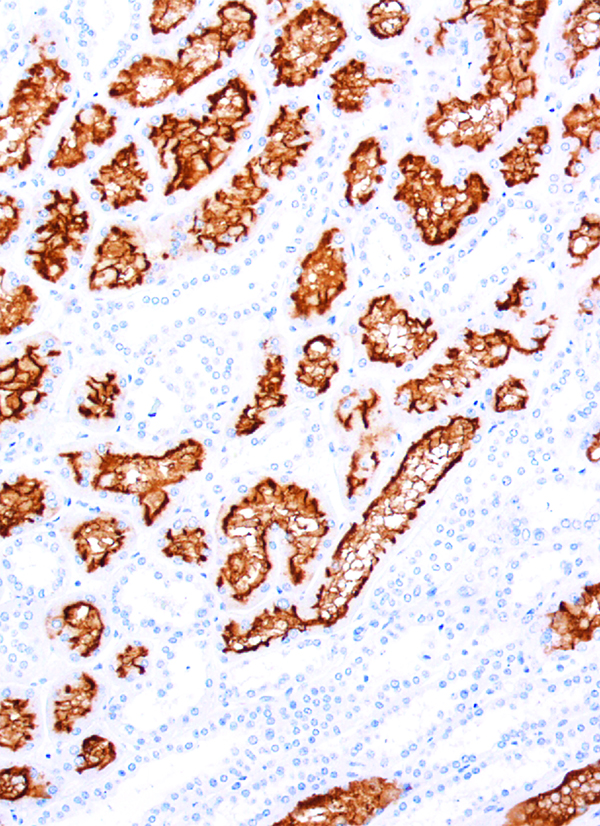
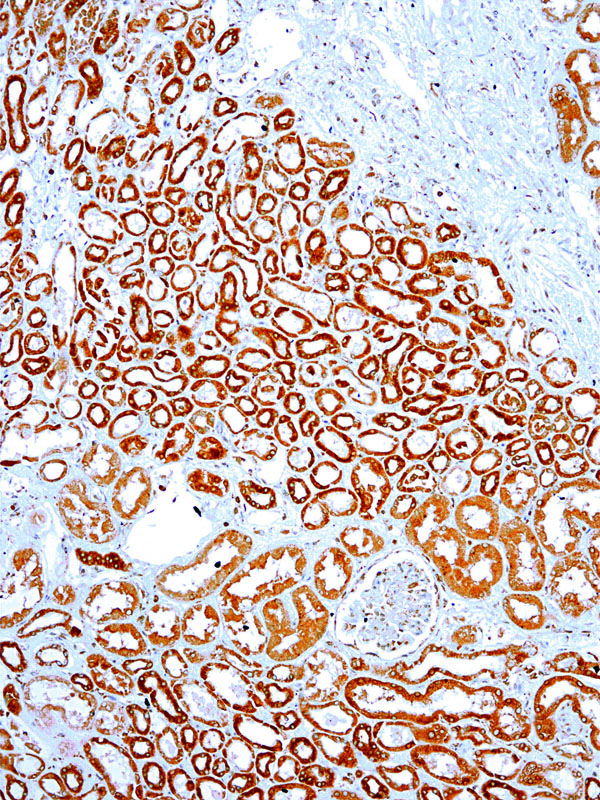
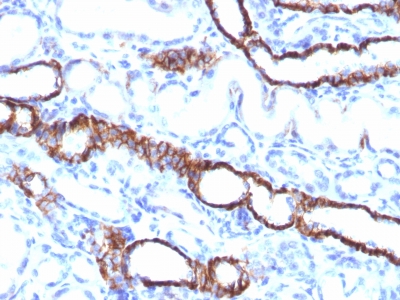
IHC (Immunohistochemistry) (Immunohistochemistry of paraffin-embedded human kidney tissue using AAA27008 at dilution of 1:100)
IHC (Immunohistochemistry) (Immunohistochemistry of paraffin-embedded human glioma using AAA27008 at dilution of 1:100)
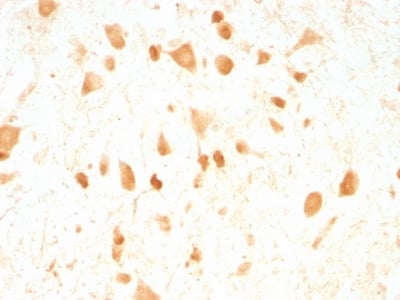
IHC (Immunohistochemistry) (Immunohistochemistry of paraffin-embedded human brain tissue using AAA27008 at dilution of 1:100)
WB (Western Blot) (Western BlotPositive WB detected in: Mouse brain tissue, Rat brain tissueAll lanes: GFAP antibody at 2.7ug/mlPredicted band size: 50, 51 kDaObserved band size: 50 kDa)
Application Data (Detection limit for recombinant GST tagged PGR is approximately 0.1ng/ml as a capture antibody.)
WB (Western Blot) (PGR monoclonal antibody (M04), clone 2C2 Western Blot analysis of PGR expression in A-431 (Cat # L015V1).)
IF (Immunofluorescence) (Immunofluorescence of monoclonal antibody to PGR on A-431 cell. [antibody concentration 10 ug/ml])
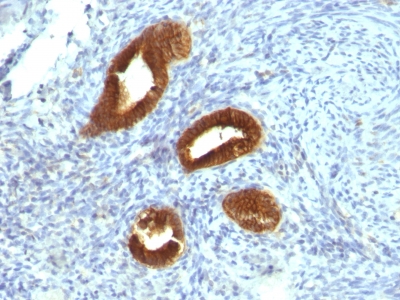
IHC (Immunohistochemistry) (Immunoperoxidase of monoclonal antibody to PGR on formalin-fixed paraffin-embedded human endometrium. [antibody concentration 1.5 ug/ml])
Application Data (Immunoperoxidase of monoclonal antibody to PGR on formalin-fixed paraffin-embedded human endometrium. [antibody concentration 1.5 ug/ml])
ICC (Immunocytochemistry) (ICC staining JAB1 in A431 cells (green). The nuclear counter stain is DAPI (blue). Cells were fixed in paraformaldehyde, permeabilised with 0.25% Triton X100/PBS.)
ICC (Immunocytochemistry) (ICC staining JAB1 in PC-3M cells (green). The nuclear counter stain is DAPI (blue). Cells were fixed in paraformaldehyde, permeabilised with 0.25% Triton X100/PBS.)
ICC (Immunocytochemistry) (ICC staining JAB1 in A549 cells (green). The nuclear counter stain is DAPI (blue). Cells were fixed in paraformaldehyde, permeabilised with 0.25% Triton X100/PBS.)
IHC (Immunohistochemistry) (Immunohistochemical analysis of paraffin-embedded rat brain tissue using anti-JAB1 antibody. Counter stained with hematoxylin.)
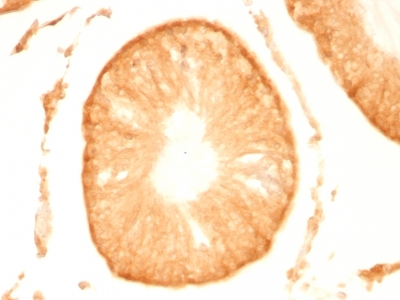
IHC (Immunohistochemistry) (Immunohistochemical analysis of paraffin-embedded mouse testis tissue using anti-JAB1 antibody. Counter stained with hematoxylin.)
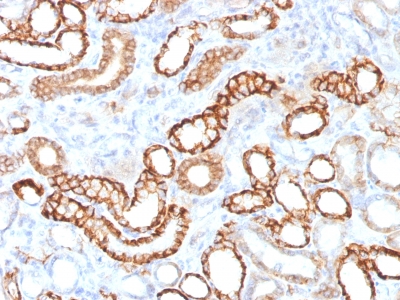
IHC (Immunohistochemistry) (Immunohistochemical analysis of paraffin-embedded human kidney tissue using anti-JAB1 antibody. Counter stained with hematoxylin.)
WB (Western Blot) (Western blot analysis of JAB1 on different lysate using anti-JAB1 antibody at 1/500 dilution. Positive control: Lane 1: Mouse testis tissue Lane 2: PC-3M Lane 3: A549)
FCM (Flow Cytometry) (Flow cytometric analysis of Jurkat cells with CD74 antibody at 1/50 dilution (red) compared with an unlabelled control (cells without incubation with primary antibody; black). Alexa Fluor 488-conjugated goat anti rabbit IgG was used as the secondary antibody.)
ICC (Immunocytochemistry) (ICC staining CD74 in 293T cells (red). The nuclear counter stain is DAPI (blue). Cells were fixed in paraformaldehyde, permeabilised with 0.25% Triton X100/PBS.)
ICC (Immunocytochemistry) (ICC staining CD74 in HepG2 cells (red). The nuclear counter stain is DAPI (blue). Cells were fixed in paraformaldehyde, permeabilised with 0.25% Triton X100/PBS.)
ICC (Immunocytochemistry) (ICC staining CD74 in Hela cells (red). The nuclear counter stain is DAPI (blue). Cells were fixed in paraformaldehyde, permeabilised with 0.25% Triton X100/PBS.)
IHC (Immunohistochemistry) (Immunohistochemical analysis of paraffin-embedded human tonsil tissue using anti-CD74 antibody. Counter stained with hematoxylin.)
IHC (Immunohistochemistry) (Immunohistochemical analysis of paraffin-embedded human spleen tissue using anti-CD74 antibody. Counter stained with hematoxylin.)
WB (Western Blot) (Western blot analysis of CD74 on Raji cells lysates using anti-CD74 antibody at 1/1, 000 dilution.)
FCM (Flow Cytometry) (Flow cytometric analysis of A549 cells with Glucose 6 phosphate isomerase antibody at 1/100 dilution (purple) compared with an unlabelled control (cells without incubation with primary antibody; yellow).Alexa Fluor 488-conjugated goat anti-rabbit IgG was used as the secondary antibody.)
ICC (Immunocytochemistry) (ICC staining Glucose 6 phosphate isomerase in LO2 cells (green). The nuclear counter stain is DAPI (blue). Cells were fixed in paraformaldehyde, permeabilised with 0.25% Triton X100/PBS.)
ICC (Immunocytochemistry) (ICC staining Glucose 6 phosphate isomerase in MCF-7 cells (green). The nuclear counter stain is DAPI (blue). Cells were fixed in paraformaldehyde, permeabilised with 0.25% Triton X100/PBS.)
IHC (Immunohistochemistry) (Immunohistochemical analysis of paraffin-embedded human colon tissue using anti-Glucose 6 phosphate isomerase antibody. Counter stained with hematoxylin.)
IHC (Immunohistochemistry) (Immunohistochemical analysis of paraffin-embedded human kidney tissue using anti-Glucose 6 phosphate isomerase antibody. Counter stained with hematoxylin.)
IHC (Immunohistochemistry) (Immunohistochemical analysis of paraffin-embedded human prostate tissue using anti-Glucose 6 phosphate isomerase antibody. Counter stained with hematoxylin.)
WB (Western Blot) (Western blot analysis of Glucose 6 phosphate isomerase on A549 and HepG2 cells lysates using anti-Glucose 6 phosphate isomerase antibody at 1/1, 000 dilution.)
FCM (Flow Cytometry) (Flow cytometric analysis of MCF-7 cells with Phospho-Erk1 (T202)+Erk2 (T185) antibody at 1/50 dilution (red) compared with an unlabelled control (cells without incubation with primary antibody; black). Alexa Fluor 488-conjugated goat anti rabbit IgG was used as secondary antibody)
ICC (Immunocytochemistry) (ICC staining Phospho-Erk1 (T202)+Erk2 (T185) in MCF-7 cells (green). The nuclear counter stain is DAPI (blue). Cells were fixed in paraformaldehyde, permeabilised with 0.25% Triton X100/PBS.)
ICC (Immunocytochemistry) (ICC staining Phospho-Erk1 (T202)+Erk2 (T185) in NIH/3T3 cells (green). The nuclear counter stain is DAPI (blue). Cells were fixed in paraformaldehyde, permeabilised with 0.25% Triton X100/PBS.)
ICC (Immunocytochemistry) (ICC staining Phospho-Erk1 (T202)+Erk2 (T185) in A549 cells (green). The nuclear counter stain is DAPI (blue). Cells were fixed in paraformaldehyde, permeabilised with 0.25% Triton X100/PBS.)
IHC (Immunohistochemistry) (Immunohistochemical analysis of paraffin-embedded human kidney tissue using anti-Phospho-Erk1 (T202)+Erk2 (T185) antibody. Counter stained with hematoxylin.)
IHC (Immunohistochemistry) (Immunohistochemical analysis of paraffin-embedded human lung cancer tissue using anti-Phospho-Erk1 (T202)+Erk2 (T185) antibody. Counter stained with hematoxylin.)
IF (Immunofluorescence) (Confocal immunofluorescent analysis of C2C12 cells, either LY294002-treated (left) or insulin-treated (right), using AAA14695 (green). Actin filaments have been labeled with DY554 phalloidin (red). Blue pseudocolor = DRAQ5™ (fluorescent DNA dye).)
FCM (Flow Cytometry) (Flow cytometric analysis of untreated Jurkat cells using AAA14695 (blue) compared to a nonspecific negative control antibody (red).)
IHC (Immunohistochemistry) (Immunohistochemical analysis using AAA14695 on SignalSlide™ Phospho-Akt (Ser473) IHC Controls (paraffin-embedded LNCaP cells, untreated (left) or LY294002-treated (right)).)
IHC (Immunohistochemistry) (Immunohistochemical analysis of paraffin-embedded human breast carcinoma using AAA14695 in the presence of control peptide (left) or Akt (pan) Blocking Peptide (right).)
WB (Western Blot) (Western blot analysis of extracts from NIH/3T3, C6 and COS cells using AAA14695.)
WB (Western Blot) (Western blot analysis of recombinant Akt1, Akt2, Akt3 and GST proteins using AAA14695 (upper) and GST (91G1) Rabbit mAb (lower).)
WB (Western Blot) (Western Blot analysis of VRK2 expression in transfected 293T cell line by VRK2 monoclonal antibody Lane 1: VRK2 transfected lysate (58.1kD). Lane 2: Non-transfected lysate.)
Application Data (Detection limit for recombinant GST tagged VRK2 is ~1ng/ml as a capture antibody.)
IF (Immunofluorescence) (Immunofluorescence of monoclonal antibody to VRK2 on HeLa cell. [antibody concentration 10ug/ml])
WB (Western Blot) (Western blot analysis of VRK2 over-expressed 293 cell line, cotransfected with VRK2 Validated Chimera RNAi (Lane 2) or non-transfected control (Lane 1). Blot probed with VRK2 monoclonal antibody. GAPDH (36.1kD) used as specificity and loading control.)
WB (Western Blot) (VRK2 monoclonal antibody, Western Blot analysis of VRK2 expression in K-562.)
WB (Western Blot) (VRK2 monoclonal antibody. Western Blot analysis of VRK2 expression in U-2 OS.)
WB (Western Blot) (NEK10 monoclonal antibody, Western Blot analysis of NEK10 expression in HeLa.)
WB (Western Blot) (Western Blot detection against Immunogen (36.01kD).)
Application Data (Detection limit for recombinant GST tagged NEK10 is ~0.03ng/ml as a capture antibody.)
IF (Immunofluorescence) (Immunofluorescence of monoclonal antibody to NEK10 on HeLa cell. [antibody concentration 10ug/ml].)
WB (Western Blot) (Western Blot analysis of NEK10 expression in transfected 293T cell line by NEK10 monoclonal antibody. Lane 1: NEK10 transfected lysate (53.1kD). Lane 2: Non-transfected lysate.)
WB (Western Blot) (NEK10 monoclonal antibody. Western Blot analysis of NEK10 expression in NIH/3T3.)
WB (Western Blot) (NEK10 monoclonal antibody. Western Blot analysis of NEK10 expression in Raw 264.7.)
Application Data (Detection limit for recombinant GST tagged CLIC1 is 1 ng/ml as a capture antibody.)
IF (Immunofluorescence) (Immunofluorescence of monoclonal antibody to CLIC1 on HeLa cell. [antibody concentration 10 ug/ml])
WB (Western Blot) (CLIC1 monoclonal antibody (M01), clone 2D4 Western Blot analysis of CLIC1 expression in HL-60 (Cat # L014V1).)
IHC (Immunohistochemistry) (Immunoperoxidase of monoclonal antibody to CLIC1 on formalin-fixed paraffin-embedded human colon tissue. [antibody concentration 3 ug/ml])
Application Data (Immunoperoxidase of monoclonal antibody to CLIC1 on formalin-fixed paraffin-embedded human colon tissue. [antibody concentration 3 ug/ml])
WB (Western Blot) (Western Blot analysis of TOMM22 expression in transfected 293T cell line by TOMM22 monoclonal antibody. Lane 1: TOMM22 transfected lysate (15.5kD). Lane 2: Non-transfected lysate.)
WB (Western Blot) (TOMM22 monoclonal antibody. Western Blot analysis of TOMM22 expression in PC-12.)
WB (Western Blot) (Western blot analysis of TOMM22 over-expressed 293 cell line, cotransfected with TOMM22 Validated Chimera RNAi (Lane 2) or non-transfected control (Lane 1). Blot probed with TOMM22 monoclonal antibody. GAPDH (36.1kD) used as specificity and loading control.)
Application Data (Detection limit for recombinant GST tagged TOMM22 is 0.1ng/ml as a capture antibody.)
IF (Immunofluorescence) (Immunofluorescence of monoclonal antibody to TOMM22 on HeLa cell. [antibody concentration 10ug/ml])
IHC (Immunohistochemistry) (Immunoperoxidase of monoclonal antibody to TOMM22 on formalin-fixed paraffin-embedded human small Intestine. [antibody concentration 3ug/ml].)
WB (Western Blot) (Western Blot detection against Immunogen (41.73kD).)
IHC (Immunohistchemistry) (Immunoperoxidase of monoclonal antibody to USF2 on formalin-fixed paraffin-embedded human esophagus. [antibody concentration 1 ug/ml])
IHC (Immunohistochemistry) (Immunoperoxidase of monoclonal antibody to USF2 on formalin-fixed paraffin-embedded human esophagus. [antibody concentration 1 ug/ml])
IF (Immunofluorescence) (Immunofluorescence of monoclonal antibody to USF2 on HeLa cell. [antibody concentration 10 ug/ml])
WB (Western Blot) (USF2 monoclonal antibody (M02), clone 5F2. Western Blot analysis of USF2 expression in different cell lines.)
WB (Western Blot) (USF2 monoclonal antibody (M02), clone 5F2. Western Blot analysis of USF2 expression in Hela S3 NE (Cat # L013V3).)
Application Data (Published customer imageSLAMF3 blockade in human hepatocytes is associated with lower susceptibility to HCV. (A) SLAMF3 was stained in primary human hepatocytes (PHHs) and cells from the Huh-7 human hepatoma cell line with a specific antibody (HLy9.1.25 clone; grey) and an isotype-matched control (empty). One of four independent experiments is shown. Huh-7 cells were transfected with scrambled control (sc) siRNA or three specific siRNAs (#1, #2 and #3) targeting SLAMF3, prior to infection with HCVcc; siRNA efficiency was checked by quantifying SLAMF3 mRNA (B) and the CD81 expression level (C) by flow cytometry analysis at 48 h post-transfection. Results are presented as the mean +/-SD (n = 3). Intracellular viral RNA was quantified at 72 h p.i. (D) and the infection was measured at 72 h p.i. by focus-forming units FFUs counting (E) (as inhibition percent; mean of three independent experiments; error bars: SD. **p)
Application Data (Published customer image: Effect of SLAMF3 expression on the organization of the actin cytoskeleton. Cells (Huh-7) were stained with phalloidin (rhodamine, red) and anti-SLAMF3 (FITC, green) and SLAMF3 positive (Huh-7-SLAMF3pos) and SLAMF3-negative (Huh-7-SLAMF3pos) cells were examined under the microscope. One representative of two independent experiments is shown.From: Marcq I, Nyga R, Cartier F, Amrathlal RS, Ossart C, et al. (2013) Identification of SLAMF3 (CD229) as an Inhibitor of Hepatocellular Carcinoma Cell Proliferation and Tumour Progression. PLoS ONE 8(12): e82918.)
Application Data (Published customer image: Expression of SLAM-R family by HHPHs and Huh-7 and HepG2 human HCC cell lines. SLAM-Rs were stained with specific antibodies against SLAMF1 (CD150), SLAMF2 (CD84), SLAMF4 (CD224) and SLAMF6 (NTBA) (grey) or with matched isotype controls (empty). One of four independent experiments is shown.From: Marcq I, Nyga R, Cartier F, Amrathlal RS, Ossart C, et al. (2013) Identification of SLAMF3 (CD229) as an Inhibitor of Hepatocellular Carcinoma Cell Proliferation and Tumour Progression. PLoS ONE 8(12): e82918.)
Application Data (Published customer image: Expression of SLAMF3 assessed by flow cytometry analysis after transfection with vector coding for SLAMF3 or an empty vector (Mock) in Huh-7 and HepG2 cells. SLAMF3 staining (in grey) is overlaid by negative control (in white). One of four independent experiments is shown. doi:10.1371/journal.pone.0082918.s002From: Marcq I, Nyga R, Cartier F, Amrathlal RS, Ossart C, et al. (2013) Identification of SLAMF3 (CD229) as an Inhibitor of Hepatocellular Carcinoma Cell Proliferation and Tumour Progression. PLoS ONE 8(12): e82918.)
Application Data (Published customer image: Restoration of SLAMF3 expression in HCC cells inhibits MAPK ERK1/2, JNK and mTOR pathways and induces caspase-dependent apoptosis.(A) SLAMF3 expression was confirmed by Western blot analysis in SLAMF3-over-expressing Huh-7 and mock cells at 48 h post-transfection. ERK1/2, JNK, p38, AKT and mTOR proteins were detected as controls. The activation levels of MAPK ERK1/2 (Thr 202/Tyr 204), JNK (Thr 183/Tyr 185), p38 (Thr 180/Tyr 183), PI3K (p85/p110 Thr 467/Tyr 199), AKT (Ser 473, Thr 308) and mTOR (Ser 2448, Ser 2481) are represented. One of three representative experiments is shown here. (B) The results of an active caspase assay based on cell-permeable fluorochrome inhibitor of caspases (FLICA). Caspase activity was evaluated in HCC cells (Huh-7 and HepG2 lines) at the indicated times after the ectopic introduction of SLAMF3 vector. Caspase activity is shown in the SLAMF3neg subpopulation (in white) and the SLAMF3pos (overlaid in grey) subpopulation from one representative of two independent experiments.From: Marcq I, Nyga R, Cartier F, Amrathlal RS, Ossart C, et al. (2013) Identification of SLAMF3 (CD229) as an Inhibitor of Hepatocellular Carcinoma Cell Proliferation and Tumour Progression. PLoS ONE 8(12): e82918.)
Application Data (Published customer image: SLAMF3 expression is repressed in tumour cells from ten resected HCC patients. (A) SLAMF3 mRNA expression was analysed in hepatocytes from resected HCC patients. Specific amplification of SLAMF3 mRNAs using PCR (representative patients #2, #7 and #12) and quantitative PCR in tumour tissues (T) and peritumoral tissues (pT) presented separately (B) and as median (**p)
Application Data (Published customer image SLAMF3 over-expression increases hepatocyte permissiveness to HCV. Huh-7 cells were transfected with empty vector pBud (mock) or human SLAMF3 (to yield Huh-7+ cells) and incubated with HCVcc. (A) SLAMF3 expression was analyzed by flow cytometry (HLy9.1.25 clone) and (B) visualized by confocal microscopy in one out of three experiment. Unshaded histograms show the isotype-matched control (Co) and shaded histograms show SLAMF3 expression). (C, D, E) Infection was assessed at 4 and 72 h p.i. as the number of FFUs and (F and G) by flow cytometry analysis; (C) intracellular E2 (stained red) were measured at 4 h and 72 h p.i. Green staining corresponds to the SLAMF3 expression. One of three representatives independent experiments is shown. (D) The HCV permissiveness of Huh-7 mock and Huh-7+ cells was evaluated in terms of the number of FFUs based on intracellular E2 viral protein staining and (E) fluorescent microscopy analysis (mean of five experiments; error bars: SD; *p)
Application Data (Staining of human peripheral blood lymphocytes with Mouse anti Human CD229 : RPE)
Application Data (Published customer image: Correlation between SLAMF3 expression and HCC cell proliferation.(A) Effects of the introduction of specific siRNAs on SLAMF3 expression in Huh-7 cells. Cells were transiently transfected with a scrambled siRNA (Sc) or one of two pre-designed anti-SLAMF3 siRNAs (referred to as #2 and # 3); SLAMF3 expression was measured by Western blot analysis (anti-SLAMF3, K12). One representative of two independent experiments is shown. (B) siRNA-treated Huh-7 cells were cultured and proliferation was assayed in a Trypan blue exclusion test after 48 h. Proliferation is presented as the mean number of viable cells +/- SD (n = 5; statistical significance: ***p)
Application Data (Staining of human peripheral blood lymphocytes with Mouse anti Human CD299: Azide Free)
IHC (Immunohistochemistry) (Immunohistochemistry of PD-L1 in human tonsil tissue with PD-L1 antibody at 5 μg/mL.)
IHC (Immunohistchemistry) (Immunohistochemistry of PD-L1 in human stomach carcinoma tissue with PD-L1 antibody at 5 μg/mL.)
IF (Immunofluorescence) (Immunofluorescence of PD-L1 in human tonsil tissue with PD-L1 antibody at 2 μg/mL.Red: PDL1 Antibody [2D6]Blue: DAPI staining)
IF (Immunofluorescence) (Immunofluorescence of PD-L1 in human stomach carcinoma tissue with PD-L1 antibody at 2 μg/mL.Red: PDL1 Antibody [2D6]Blue: DAPI staining)
IF (Immunofluorescence) (Immunofluorescence of PD-L1 in transfected HEK293 cells with PD-L1 antibody at 2 μg/mL.Red: PDL1 Antibody [2D6]Blue: DAPI staining)
ICC (Immunocytochemistry) (Immunocytochemistry of PD-L1 in transfected HEK293 cells with PD-L1 antibody at 1 μg/mL. Lower left: Immunocytochemistry in transfected HEK293 cells with control mouse IgG antibody at 1 μg/mL.)
WB (Western Blot) (Western blot analysis of PD-L1 in overexpressing HEK293 cells PD-L1 antibody at 0.25 and 0.5 μg/ml)
WB (Western Blot) (FLJ23356 monoclonal antibody. Western Blot analysis of FLJ23356 expression in HeLa.)
WB (Western Blot) (FLJ23356 monoclonal antibody. Western Blot analysis of FLJ23356 expression in HepG2.)
Application Data (Detection limit for recombinant GST tagged FLJ23356 is ~0.1ng/ml as a capture antibody.)
IF (Immunofluorescence) (Immunofluorescence of monoclonal antibody to FLJ23356 on HeLa cell. [antibody concentration 10ug/ml].)
WB (Western Blot) (Western Blot analysis of FLJ23356 expression in transfected 293T cell line by FLJ23356 monoclonal antibody.Lane 1: FLJ23356 transfected lysate (38.5kD).Lane 2: Non-transfected lysate.)
WB (Western Blot) (Western blot analysis of FLJ23356 over-expressed 293 cell line, cotransfected with FLJ23356 Validated Chimera RNAi (Lane 2) or non-transfected control (Lane 1). Blot probed with FLJ23356 monoclonal antibody. GAPDH (36.1kD) used as specificity and loading control.)
WB (Western Blot) (Western Blot detection against Immunogen (37.11kD).)
Application Data (Detection limit for recombinant GST tagged PGGT1B is ~1ng/ml as a capture antibody.)
IF (Immunofluorescence) (Immunofluorescence of monoclonal antibody to PGGT1B on HeLa cell. [antibody concentration 10ug/ml])
IHC (Immunohistochemistry) (Immunoperoxidase of monoclonal antibody to PGGT1B on formalin-fixed paraffin-embedded human kidney. [antibody concentration 1.2ug/ml])
WB (Western Blot) (PGGT1B monoclonal antibody Western Blot analysis of PGGT1B expression in PC-12.)
WB (Western Blot) (PGGT1B monoclonal antibody Western Blot analysis of PGGT1B expression in HeLa.)
WB (Western Blot) (Western Blot detection against Immunogen (37.29kD).)
PGGT1B (Geranylgeranyl Transferase Type-1 Subunit beta, Geranylgeranyl Transferase Type I Subunit beta, GGTase-I-beta, Type I Protein Geranyl-Geranyltransferase Subunit beta) APC
Reactivity
Human, Rat
Applications
Immunofluorescence, Immunohistochemistry, Western Blot
WB (Western Blot) (PRPF19 monoclonal antibody. Western Blot analysis of PRPF19 expression in NIH/3T3.)
Application Data (Detection limit for recombinant GST tagged PRPF19 is 0.3ng/ml as a capture antibody.)
WB (Western Blot) (Western Blot analysis of PRPF19 expression in transfected 293T cell line by PRPF19 monoclonal antibody. Lane 1: PRPF19 transfected lysate (55.2kD). Lane 2: Non-transfected lysate.)
WB (Western Blot) (PRPF19 monoclonal antibody. Western Blot analysis of PRPF19 expression in Hela NE.)
WB (Western Blot) (PRPF19 monoclonal antibody. Western Blot analysis of PRPF19 expression in PC-12.)
WB (Western Blot) (Western Blot detection against Immunogen (36.01kD).)
WB (Western Blot) (Western Blot analysis of IRF2 expression in transfected 293T cell line by IRF2 monoclonal antibody. Lane 1: IRF2 transfected lysate (39.4kD). Lane 2: Non-transfected lysate.)
Application Data (Detection limit for 128582 is ~0.1ng/ml as a capture antibody.)
IF (Immunofluorescence) (Immunofluorescence in HeLa cells using 128582 (10ug/ml).)
IHC (Immunohistochemistry) (Immunoperoxidase in formalin-fixed paraffin-embedded human leiomyosarcoma usign 128582 (3ug/ml).)
WB (Western Blot) (Western Blot analysis of IRF2 expression in Hela NE using 128582.)
WB (Western Blot) (Western Blot detection against Immunogen (36.74kD).)
Application Data (Detection limit for recombinant GST tagged HMGB2 is approximately 0.03ng/ml as a capture antibody.)
IF (Immunofluorescence) (Immunofluorescence of monoclonal antibody to HMGB2 on HeLa cell. [antibody concentration 10 ug/ml])
WB (Western Blot) (HMGB2 monoclonal antibody (M05), clone 3E5 Western Blot analysis of HMGB2 expression in Hela S3 NE (Cat # L013V3).)
IHC (Immunohistochemistry) (Immunoperoxidase of monoclonal antibody to HMGB2 on formalin-fixed paraffin-embedded human testis. [antibody concentration 3 ug/ml])
Application Data (Immunoperoxidase of monoclonal antibody to HMGB2 on formalin-fixed paraffin-embedded human testis. [antibody concentration 3 ug/ml])
FCM (Flow Cytometry) (Flow cytometric analysis of A431 cells with EGFR antibody at 1/50 dilution (red) compared with an unlabelled control (cells without incubation with primary antibody; black). Alexa Fluor 488-conjugated goat anti rabbit IgG was used as the secondary antibody.)
ICC (Immunocytochemistry) (ICC staining EGFR in SHG-44 cells (green). The nuclear counter stain is DAPI (blue). Cells were fixed in paraformaldehyde, permeabilised with 0.25% Triton X100/PBS.)
ICC (Immunocytochemistry) (ICC staining EGFR in A431 cells (green). The nuclear counter stain is DAPI (blue). Cells were fixed in paraformaldehyde, permeabilised with 0.25% Triton X100/PBS.)
ICC (Immunocytochemistry) (ICC staining EGFR in Hela cells (green). The nuclear counter stain is DAPI (blue). Cells were fixed in paraformaldehyde, permeabilised with 0.25% Triton X100/PBS.)
IHC (Immunohistochemistry) (Immunohistochemical analysis of paraffin-embedded human tonsil tissue using anti-EGFR antibody. Counter stained with hematoxylin.)
IHC (Immunohistochemistry) (Immunohistochemical analysis of paraffin-embedded mouse skin tissue using anti-EGFR antibody. Counter stained with hematoxylin.)
IHC (Immunohistochemistry) (Immunohistochemical analysis of paraffin-embedded mouse brain tissue using anti-EGFR antibody. Counter stained with hematoxylin.)
IHC (Immunohistochemistry) (Immunohistochemical analysis of paraffin-embedded human breast carcinoma tissue using anti-EGFR antibody. Counter stained with hematoxylin.)
WB (Western Blot) (Western blot analysis of EGFR on different lysates using anti-EGFR antibody at 1/1, 000 dilution. Positive control: Lane 1: Hela Lane 2: 293T Lane 3: Human skin)
FCM (Flow Cytometry) (Flow cytometric analysis of Hela cells with Notch 1 antibody at 1/50 dilution (blue) compared with an unlabelled control (cells without incubation with primary antibody; red). Alexa Fluor 488-conjugated goat anti rabbit IgG was used as the secondary antibody.)
ICC (Immunocytochemistry) (ICC staining Notch 1 in NIH/3T3 cells (green). The nuclear counter stain is DAPI (blue). Cells were fixed in paraformaldehyde, permeabilised with 0.25% Triton X100/PBS.)
ICC (Immunocytochemistry) (ICC staining Notch 1 in HepG2 cells (green). The nuclear counter stain is DAPI (blue). Cells were fixed in paraformaldehyde, permeabilised with 0.25% Triton X100/PBS.)
ICC (Immunocytochemistry) (ICC staining Notch 1 in Hela cells (green). The nuclear counter stain is DAPI (blue). Cells were fixed in paraformaldehyde, permeabilised with 0.25% Triton X100/PBS.)
IHC (Immunohistochemistry) (Immunohistochemical analysis of paraffin-embedded mouse lung tissue using anti-Notch 1 antibody. Counter stained with hematoxylin.)
IHC (Immunohistochemistry) (Immunohistochemical analysis of paraffin-embedded mouse spleen tissue using anti-Notch 1 antibody. Counter stained with hematoxylin.)
IHC (Immunohistochemistry) (Immunohistochemical analysis of paraffin-embedded human spleen tissue using anti-Notch 1 antibody. Counter stained with hematoxylin.)
IHC (Immunohistochemistry) (Immunohistochemical analysis of paraffin-embedded human lung tissue using anti-Notch 1 antibody. Counter stained with hematoxylin.)
WB (Western Blot) (Western blot analysis of Notch 1 on HepG2 cell lysates using anti-Notch 1 antibody at 1/1, 000 dilution.)
ICC (Immunocytochemistry) (ICC staining FOXO1A in NIH/3T3 cells (green). The nuclear counter stain is DAPI (blue). Cells were fixed in paraformaldehyde, permeabilised with 0.25% Triton X100/PBS.)
ICC (Immunocytochemistry) (ICC staining FOXO1A in MCF-7 cells (green). The nuclear counter stain is DAPI (blue). Cells were fixed in paraformaldehyde, permeabilised with 0.25% Triton X100/PBS.)
ICC (Immunocytochemistry) (ICC staining FOXO1A in Hela cells (green). The nuclear counter stain is DAPI (blue). Cells were fixed in paraformaldehyde, permeabilised with 0.25% Triton X100/PBS.)
IHC (Immunohistochemistry) (Immunohistochemical analysis of paraffin-embedded mouse heart tissue using anti-FOXO1A antibody. Counter stained with hematoxylin.)
IHC (Immunohistochemistry) (Immunohistochemical analysis of paraffin-embedded mouse brain tissue using anti-FOXO1A antibody. Counter stained with hematoxylin.)
IHC (Immunohistochemistry) (Immunohistochemical analysis of paraffin-embedded human breast carcinoma tissue using anti-FOXO1A antibody. Counter stained with hematoxylin.)
IHC (Immunohistochemistry) (Immunohistochemical analysis of paraffin-embedded human tonsil tissue using anti-FOXO1A antibody. Counter stained with hematoxylin.)
WB (Western Blot) (Western blot analysis of FOXO1A on different lysates using anti-FOXO1A antibody at 1/1, 000 dilution. Positive control: Lane 1: Hela Lane 2: NIH/3T3)
FCM (Flow Cytometry) (Flow cytometric analysis of HepG2 cells with Cytokeratin 16 antibody at 1/50 dilution (red) compared with an unlabelled control (cells without incubation with primary antibody; black). Alexa Fluor 488-conjugated goat anti rabbit IgG was used as the secondary antibody.)
ICC (Immunocytochemistry) (ICC staining Cytokeratin 16 in A431 cells (green). The nuclear counter stain is DAPI (blue). Cells were fixed in paraformaldehyde, permeabilised with 0.25% Triton X100/PBS.)
ICC (Immunocytochemistry) (ICC staining Cytokeratin 16 in HepG2 cells (green). The nuclear counter stain is DAPI (blue). Cells were fixed in paraformaldehyde, permeabilised with 0.25% Triton X100/PBS.)
ICC (Immunocytochemistry) (ICC staining Cytokeratin 16 in Hela cells (green). The nuclear counter stain is DAPI (blue). Cells were fixed in paraformaldehyde, permeabilised with 0.25% Triton X100/PBS.)
IHC (Immunohistochemistry) (Immunohistochemical analysis of paraffin-embedded human breast carcinoma tissue using anti-Cytokeratin 16 antibody. Counter stained with hematoxylin.)
IHC (Immunohistochemistry) (Immunohistochemical analysis of paraffin-embedded human lung cancer tissue using anti-Cytokeratin 16 antibody. Counter stained with hematoxylin.)
IHC (Immunohistochemistry) (Immunohistochemical analysis of paraffin-embedded human tonsil tissue using anti-Cytokeratin 16 antibody. Counter stained with hematoxylin.)
WB (Western Blot) (Western blot analysis of Cytokeratin 16 on human skin lysates using anti-Cytokeratin 16 antibody at 1/1, 000 dilution.)
IP (Immunoprecipitation) (Immunoprecipitation analysis of 300 ug extracts of HeLa cells using 3 ug Fatty Acid Synthase (FASN) antibody (AAA28473). Western blot was performed from the immunoprecipitate using Fatty Acid Synthase (FASN) antibody (AAA28473) at a dilution of 1:500.)
IF (Immunofluorescence) (Immunofluorescence analysis of HeLa cells using Fatty Acid Synthase (FASN) Rabbit mAb (AAA28473) at dilution of 1:100 (40x lens). Secondary antibody: Cy3-conjugated Goat anti-Rabbit IgG (H+L) (AS007) at 1:500 dilution. Blue: DAPI for nuclear staining.)
IF (Immunofluorescence) (Immunofluorescence analysis of NIH/3T3 cells using Fatty Acid Synthase (FASN) Rabbit mAb (AAA28473) at dilution of 1:100 (40x lens). Secondary antibody: Cy3-conjugated Goat anti-Rabbit IgG (H+L) (AS007) at 1:500 dilution. Blue: DAPI for nuclear staining.)
IHC (Immunohistochemistry) (Immunohistochemistry analysis of paraffin-embedded Rat fat tissue using Fatty Acid Synthase (FASN) Rabbit mAb (AAA28473) at a dilution of 1:2000 (40x lens). High pressure antigen retrieval performed with 0.01M Tris-EDTA Buffer (pH 9.0) prior to IHC staining.)
IHC (Immunohistochemistry) (Immunohistochemistry analysis of paraffin-embedded Mouse skin tissue using Fatty Acid Synthase (FASN) Rabbit mAb (AAA28473) at a dilution of 1:2000 (40x lens). High pressure antigen retrieval performed with 0.01M Tris-EDTA Buffer (pH 9.0) prior to IHC staining.)
IHC (Immunohistochemistry) (Immunohistochemistry analysis of paraffin-embedded Human lung cancer tissue using Fatty Acid Synthase (FASN) Rabbit mAb (AAA28473) at a dilution of 1:2000 (40x lens). High pressure antigen retrieval performed with 0.01M Tris-EDTA Buffer (pH 9.0) prior to IHC staining.)
IHC (Immunohistochemistry) (Immunohistochemistry analysis of paraffin-embedded Human breast cancer tissue using Fatty Acid Synthase (FASN) Rabbit mAb (AAA28473) at a dilution of 1:2000 (40x lens). High pressure antigen retrieval performed with 0.01M Tris-EDTA Buffer (pH 9.0) prior to IHC staining.)
WB (Western Blot) (Western blot analysis of various lysates using Fatty Acid Synthase (FASN) Rabbit mAb (AAA28473) at 1:1000 dilution.Secondary antibody: HRP-conjugated Goat anti-Rabbit IgG (H+L) (AS014) at 1:10000 dilution.Lysates/proteins: 25ug per lane.Blocking buffer: 3% nonfat dry milk in TBST.Detection: ECL Enhanced Kit (RM00021).Exposure time: 3min.)
Application Data (Wang. T.. Liang. L.. Zhao. C. et al. Elucidating direct kinase targets of compound Danshen dropping pills employing archived data and prediction models. Sci Rep 11. 9541 (2021).)
WB (Western Blot) (Western blot analysis of 1) Hela. 2) Rat BrianTissue. 3) Mouse Brain Tissue. diluted at 1:5000.)
ICC (Immunocytochemistry) (ICC staining BNIP3 in NIH-3T3 cells (green). The nuclear counter stain is DAPI (blue). Cells were fixed in paraformaldehyde, permeabilised with 0.25% Triton X100/PBS.)
ICC (Immunocytochemistry) (ICC staining BNIP3 in SH-SY5Y cells (green). The nuclear counter stain is DAPI (blue). Cells were fixed in paraformaldehyde, permeabilised with 0.25% Triton X100/PBS.)
ICC (Immunocytochemistry) (ICC staining BNIP3 in Hela cells (green). The nuclear counter stain is DAPI (blue). Cells were fixed in paraformaldehyde, permeabilised with 0.25% Triton X100/PBS.)
IHC (Immunohistochemistry) (Immunohistochemical analysis of paraffin-embedded human kidney tissue using anti-BNIP3 antibody. Counter stained with hematoxylin.)
IHC (Immunohistochemistry) (Immunohistochemical analysis of paraffin-embedded human colon cancer tissue using anti-BNIP3 antibody. Counter stained with hematoxylin.)
IHC (Immunohistochemistry) (Immunohistochemical analysis of paraffin-embedded mouse brain tissue using anti-BNIP3 antibody. Counter stained with hematoxylin.)
IHC (Immunohistochemistry) (Immunohistochemical analysis of paraffin-embedded human breast carcinoma tissue using anti-BNIP3 antibody. Counter stained with hematoxylin.)
WB (Western Blot) (Western blot analysis of BNIP3 on different cells lysates using anti- BNIP3 antibody at 1/500 dilution. Positive control�� Line 1: Human skeletal muscle Line 2: Mouse kidney)
ICC (Immunocytochemistry) (ICC staining TREX1 in SiHa cells (green). The nuclear counter stain is DAPI (blue). Cells were fixed in paraformaldehyde, permeabilised with 0.25% Triton X100/PBS.)
ICC (Immunocytochemistry) (ICC staining TREX1 in LOVO cells (green). The nuclear counter stain is DAPI (blue). Cells were fixed in paraformaldehyde, permeabilised with 0.25% Triton X100/PBS.)
ICC (Immunocytochemistry) (ICC staining TREX1 in Hela cells (green). The nuclear counter stain is DAPI (blue). Cells were fixed in paraformaldehyde, permeabilised with 0.25% Triton X100/PBS.)
IHC (Immunohistochemistry) (Immunohistochemical analysis of paraffin-embedded human prostate cancer tissue using anti-TREX1 antibody. Counter stained with hematoxylin.)
IHC (Immunohistochemistry) (Immunohistochemical analysis of paraffin-embedded human colon tissue using anti-TREX1 antibody. Counter stained with hematoxylin.)
WB (Western Blot) (Western blot analysis of TREX1 on different cell lysates using anti-TREX1 at 1/500 dilution. Positive control�� Line 1: A431 Line 2: SK-Br-3)
Western Blot, Immunocytochemistry, Immunofluorescence, Immunohistochemistry
Purity
ProA affinity purified
Pricing
WB (Western Blot) (Anti-NP rabbit monoclonal antibody at 1:2000 dilution. Sample: Reocombinant Protein 10 ng Lane 1: H1N1 (A/Brevig Mission/1/1918) NP Lane 2: H1N1 (A/Brisbane/02/2018) NP Lane 3: H1N1 (A/California/07/2009) NP Lane 4: H1N1 (A/Guangdong-Maonan/SWL1536/2019) NP Lane 5: H1N1 (A/Hawaii/70/2019) NP Lane 6: H1N1 (A/Michigan/45/2015) NP Lane 7: H1N1 (A/Puerto Rico/8/34/Mount Sinai) NP (I116M) Lane 8:H1N1 (A/Victoria/2570/2019)/(A/Wisconsin/588/2019) NP Lane 9: H2N2 (A/Ann Arbor/6/1960) NP Lane 10: H3N2 (A/Aichi/2/1968) NP Lane 11: H3N2 (A/Cambodia/e0826360/2020 (H3N2)-like NP Lane 12: H3N2 (A/Hong Kong/1/1968) NP Lane 13: H3N2 (A/Hong Kong/2671/2019) NP Lane 14: H3N2 (A/Hong Kong/45/2019) NP Lane 15: H3N2 (A/Hong Kong/4801/2014) NP Lane 16: H3N2 (A/Kansas/14/2017) NP Lane 17: H3N2 (A/Switzerland/9715293/2013) NP Lane 18: H7N9 (A/Anhui/1-BALF_RG6/2013) NP Lane 19: H7N9 (A/Shanghai/2/2013) NP Lane 20: Influenza B (B/Brisbane/60/2008) NP Lane 21: Influenza B (B/Colorado/06/2017) NP Lane 22: Influenza B (B/Florida/4/2006) NP Lane 23: Influenza B (B/Phuket/3073/2013) NP Lane 24: Influenza B (B/Washington/02/2019) NP Secondary Goat Anti-Rabbit IgG (H+L)/HRP at 1/10000 dilution Developed using the ECL technique. Performed under reducing conditions.)
Application Data (Published customer image: Leukocyte infiltration in COX-2-M/-M and COX-2+/+ mice. MPO enzymatic activity (panel A) was statistically similar in COX-2-M/-M and COX-2+/+ livers at 6 h and 24 h post-IRI. Ly-6G+ neutrophil (panel B) and granulocyte (panel C) infiltration were also comparable in COX-2-M/-M and COX-2+/+ livers after IRI. Mac-1+ (panel D) and CD68 (panel E) infiltrating macrophages were significantly reduced in COX-2-M/-M livers at 24 h post-reperfusion, but were statistically indistinguishable in COX-2-M/-M and COX-2+/+ livers at 6 h after IRI. No statistical differences in MMP-9 expression (panel F) could be demonstrated in livers of COX-2-M/-M and COX-2+/+ mice post-IRI. Representative immunostaining (panel G) of infiltrating Ly-6G+ (a,b,e,f) and Mac-1+ (c,d,g,h) leukocytes in livers of COX-2+/+ (a,c,e,g) and COX-2-M/-M (b,d,f,h) mice at 6 h (a to d) and 24 h (e to h) post IRI; (n = 5 -6/group; * indicates p)
Application Data (Published customer image: Impact of SOCS-1 deficiency on atherosclerotic plaque composition A. Atherosclerotic plaques from Socs-1-/- triple-KO (Socs-1-/-) mice showed an increased CD68 (red);iNOS (green) double-positive cell content. B. CD68 (red); CD206 (green) double-positive cells were hardly detected. C. Atherosclerotic plaques from Socs-1-/-triple-KO (Socs-1-/-) mice contained slightly more MOMA-2 (red); Ly-6C (green) double-positive cells after 4 weeks of HCD as well as D. a higher number of Ly-6G positive cells (scale bar A -C: 20 um, scale bar D:50 um). N = 5 -7 animals per group.From: Grothusen C, Schuett H, Hillmer A, Lumpe S, Grote K, et al. (2012) Role of Suppressor of Cytokine Signaling-1 In Murine Atherosclerosis. PLoS ONE 7(12): e51608.)
Application Data (Staining of mouse spleen cryosection with Rat anti Mouse CD68 followed by Goat anti Rat IgG:HRP showing staining of macrophages in the red pulp)
Application Data (Published customer image: Histology in 9V/9V/GCStg and 9V/null/GCStg mice. (A) The lung and liver sections from 9-wk old 9V/9V (row 1), 9V/9V/GCStg (row 2), 9V/null (row 3) and 9V/null/GCStg (row 4) were processed for H&E and CD68 antibody staining as indicated. Large and pale storage cells were observed in H&E stained lung and liver sections (arrows). The macrophages were indicated by anti-CD68 immunostaining (brown). Images were captured by Zeiss microscope with Spot Advance software. Scale bar was 40 um for all images. (B) The distribution and density of macrophages in 9V/null/GCStg lung and liver immunostained by anti-CD68 antibody (brown). Scale bar was 40 um for both images. (C) CD68 positive cells (CD68+) in 9V/9V/GCStg and 9V/null/GCStg lungs had significantly more CD68 stained macrophages than 9V/9V and 9V/null at 9 wks of age, respectively. The data present number of cells per image of total 5-15 images/mouse, 3 mice per genotype. Results with error bars are mean +/-S.E. The p values were from Student's t-test.From: Barnes S, Xu Y-H, Zhang W, Liou B, Setchell KDR, et al. (2014) Ubiquitous Transgene Expression of the Glucosylceramide-Synthesizing Enzyme Accelerates Glucosylceramide Accumulation and Storage Cells in a Gaucher Disease Mouse Model. PLoS ONE 9(12): e116023.)
Application Data (Published customer image: Phenotype of pancreatic macrophages. (A) Identification of macrophage subsets in pancreas of CX3CR1GFP/+ C56BL/6 mice. Pancreatic single cell suspensions were gated on FSC-A vs FSC-W and CD45+. Histograms show receptor expression profile of CX3CR1hiLYVE-1- (green line) and CX3CR1loLYVE-1+ (red line) macrophages. (B) Sorted CX3CR1loLYVE-1+ and CX3CR1hiLYVE-1- macrophages spun onto glass slides and stained with Wright's stain. 1000x magnification. (C) mRNA expression profile of chemokine receptors, chemokines and VEGFs in pancreatic macrophage subsets. mRNA levels examined by qRT-PCR in duplicate or triplicate. 6 -7 mice/group, data representative of 2 -4 separate experiments.From: Yin N, Zhang N, Lal G, Xu J, Yan M, et al. (2011) Lymphangiogenesis Is Required for Pancreatic Islet Inflammation and Diabetes. PLoS ONE 6(11): e28023.)
Application Data (Staining of mouse peritoneal macrophages with Rat anti Mouse CD68: Alexa Fluor 488 . following permeablisation with Leucoperm)
Application Data (Western Blot analysis of CD68 expression on J774 cells using Rat anti Mouse CD68 with Goat anti Rat IgG:HRP as a detection antibody)
Application Data (Immunoperoxidase staining of a mouse lymph node cryosection with Rat anti Mouse CD68 antibody, clone FA11 followed by Goat anti Rat IgG antibody . Medium power)
Application Data (Immunoperoxidase staining of a mouse lymph node cryosection with Rat anti Mouse CD68 antibody, clone FA11 followed by Goat anti Rat IgG antibody . Low power)
Application Data (Staining of permeabilised mouse peritoneal macrophages with Rat anti Mouse CD68:Alexa Fluor 647 . following permeablisation with Leucoperm)
WB (Western Blot) (Detection of mouse CDK1 by western blot. Samples: Whole cell lysate (50 ug) from BW5147.3 and F9 cells prepared using NETN lysis buffer. Antibody: Rabbit anti-CDK1 recombinant monoclonal antibody (AAA23826 lot 1) used at 1:1000. Secondary: HRP-conjugated goat anti-rabbit IgG . Detection: Chemiluminescence with an exposure time of 3 minutes. Lower Panel: Rabbit anti-Actin .)
WB (Western Blot) (Detection of human CDK1 by western blot. Samples: Whole cell lysate (50 ug) from HeLa, U2OS, K-562, HEK293T, A-549, Jurkat, MCF-7, and RKO cells prepared using NETN lysis buffer. Antibody: Rabbit anti-CDK1 recombinant monoclonal antibody (AAA23826 lot 1) used at 1:1000. Secondary: HRP-conjugated goat anti-rabbit IgG . Detection: Chemiluminescence with an exposure time of 30 seconds. Lower Panel: Rabbit anti-Actin .)
IP (Immunoprecipitation) (Detection of human CDK1 by western blot of immunoprecipitates. Samples: Whole cell lysate (1.0 mg per IP reaction; 20% of IP loaded) from HeLa cells prepared using NETN lysis buffer. Antibodies: Rabbit anti-CDK1 recombinant monoclonal antibody (AAA23826 lot 1) used for IP at 20 ul/mg lysate. CDK1 was also immunoprecipitated by rabbit anti-CDK1 antibodies . For blotting immunoprecipitated CDK1, AAA23826 was used at 1:1000. Detection: Chemiluminescence with an exposure time of 10 seconds.)
IHC (Immunohistochemistry) (Detection of human CDK1 in FFPE prostate carcinoma by IHC. Antibody: Rabbit anti-CDK1 recombinant monoclonal antibody (AAA23826 lot 1). Secondary: HRP-conjugated goat anti-rabbit IgG . Substrate: DAB.)
IHC (Immunohistochemistry) (Detection of human CDK1 in FFPE breast carcinoma by IHC. Antibody: Rabbit anti-CDK1 recombinant monoclonal antibody (AAA23826 lot 1). Secondary: HRP-conjugated goat anti-rabbit IgG . Substrate: DAB.)
ICC (Immunocytochemistry) (Detection of human CDK1 in FFPE MOLT4 cells by ICC. Antibody: Rabbit anti-CDK1 recombinant monoclonal antibody (AAA23826 lot 1). Secondary: HRP-conjugated goat anti-rabbit IgG . Substrate: DAB.)
FCM (Flow Cytometry) (Detection of human CDK1 (shaded) in Jurkat cells by flow cytometry. Antibody: Rabbit anti-CDK1 recombinant monoclonal (AAA23826 lot 1) or isotype control (unshaded). Secondary: DyLight 488-conjugated goat anti-rabbit IgG .)
Western Blot, Immunoprecipitation, Immunohistochemistry, Immunocytochemistry, Flow Cytometry
Purity
Purified
Pricing
What are Monoclonal Antibodies?
Monoclonal antibodies are specialized laboratory-produced proteins developed for binding to specific biological antigens or other molecular targets. Since they come from a single cell (or clone), they are especially consistent and accurate in the data they are involved in producing.
This type of antibody material has been shown to be a powerful tool in finding and subsequently destroying harmful cells in an organism, such as those found in cancers or various autoimmune diseases. This makes them excellent aids in medical testing and research, which is why they are so widely used.
AAA Biotech offers a comprehensive range of high-quality monoclonal antibodies that perform effectively in various laboratory tests, including (amongst others) ELISA, western blotting, immunohistochemistry, and flow cytometry. All of the products in our catalog are thoroughly quality tested to make sure that they are reliable and will consistently perform well in your research.
What Are The Uses of Monoclonal Antibodies
Monoclonal antibodies are used in many lab tests, including (amongst others) ELISA, western blotting, immunohistochemistry, and flow cytometry.
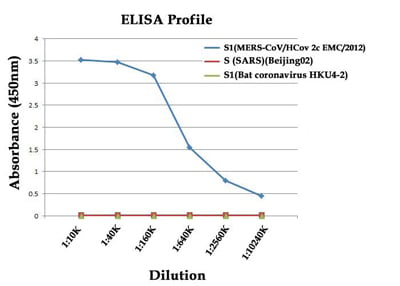
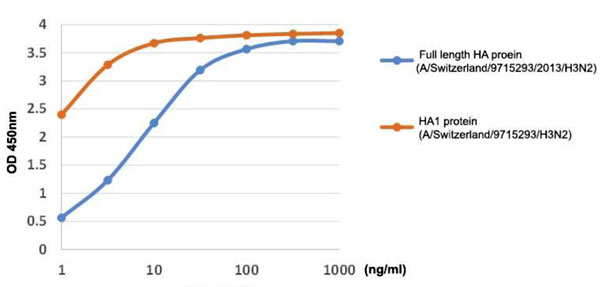
ELISA is a test that helps detect a specific substance/analyte in a sample. It uses antibodies (often monoclonal) bound to a solid surface (such as the well of a microplate) to “capture” the substance/analyte in the sample and immobilize it so that the detection antibody component can then bind to it and produce a signal, which can then be measured.
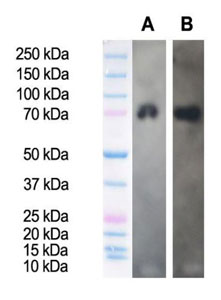
Western blotting identifies specific proteins in a sample. The sample is first separated on a gel, and then antibodies are applied that will typically bind to the target, which will all be localized to a single band in a lane.
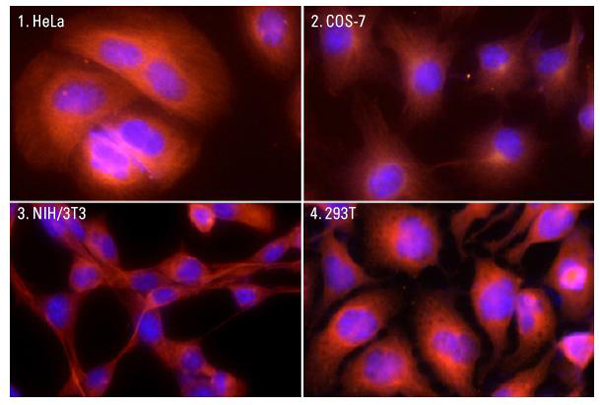
Immunohistochemistry helps locate specific proteins in cells or tissue samples using antibodies.
Flow cytometry looks at and sorts cells. It uses antibodies that are conjugated to reporter molecules called “fluorophores”, which, under special lights, emit light themselves, which can then be measured by a detector instrument.
How Monoclonal Antibodies Are Used as Medicine?
Please note that all of the products listed in AAA Biotech’s catalog are strictly for research-use only (RUO).
Monoclonal antibodies can also be used as therapeutic/medical treatments, particularly in the context of cancers. They are designed to find and bind to specific cells or proteins, helping the immune system recognize and attack the cancer. These treatments work in different ways, such as:
Radioimmunotherapy attaches a small amount of radioactive molecule to the antibody, so it delivers the radiation directly to the cancer cells that the antibody is specifically binding to.
Antibody-directed enzyme prodrug therapy uses antibodies that are specifically bound to special enzymes. These enzymes activate a harmless drug in the body and turn it into a cancer-killing drug only near the cancer cells—this helps avoid harming healthy cells.
Immunoliposomes are tiny “bubbles” filled with medicine/drug and coated with antibodies. They carry the drug straight to the cancer cells.
Why Buy Monoclonal Antibodies From Us?
At AAA Biotech, we provide high-performance monoclonal antibodies designed to support a wide range of research needs.
1. Validated for Versatile Applications
The antibodies in our catalog are extensively validated and compatible with multiple techniques, including (but not limited to) ELISA, flow cytometry (FC), immunocytochemistry (ICC), immunofluorescence (IF), immunohistochemistry (IHC), immunoprecipitation (IP), and western blotting (WB).
2. Wide Selection & Specialized Options
We offer antibodies for common and rare species, that are available in various conjugated forms, and also in recombinant formats. Essentially, there is almost anything one might need to meet their experimental model’s requirements.
3. High-Quality Proteins
Our proteins meet high purity standards—90% or more as confirmed by SDS-PAGE. Many are available with tags like His, Flag, GST, or MBP, and we also supply native and biologically active proteins for functional studies.
Frequently Asked Questions
1. Are your monoclonal antibodies validated for specific applications?
Yes, our antibodies are tested and validated for use in methods such as ELISA, western blot, IHC, flow cytometry, and more. Refer to specific product pages or datasheets for individual product information.
2. How do I choose the right monoclonal antibody for my application?
Review the product details directly for application validation, species reactivity, and target information. You may also contact our support team at any time for help.
3. How quickly can I receive my order?
Most orders are processed and shipped within 1–3 business days, depending on product availability and your shipping location.
Submit a Question
Please complete the form below and a representative will contact you as soon as possible.
Request more Information
Please complete the form below and a representative will contact you as soon as possible.
Request a Manual
Please complete the form below and a representative will contact you as soon as possible.
Request a Quote
Please complete the form below and a representative will contact you as soon as possible.