Get accurate results in your research with our Monoclonal Antibodies, which are specially made to target exactly what you require for your research, and will produce consistent, reliable performance in lab tests.
WB (Western Blot) (Western blot analysis of PCDH8 over-expressed 293 cell line, cotransfected with PCDH8 Validated Chimera RNAi (Lane 2) or non-transfected control (Lane 1). Blot probed with PCDH8 monoclonal antibody. GAPDH (36.1kD) used as specificity and loading control.)
Application Data (Detection limit for recombinant GST tagged PCDH8 is ~0.1ng/ml as a capture antibody.)
IHC (Immunohistochemistry) (Immunoperoxidase of monoclonal antibody to PCDH8 on formalin-fixed paraffin-embedded human tonsil. [antibody concentration 3ug/ml])
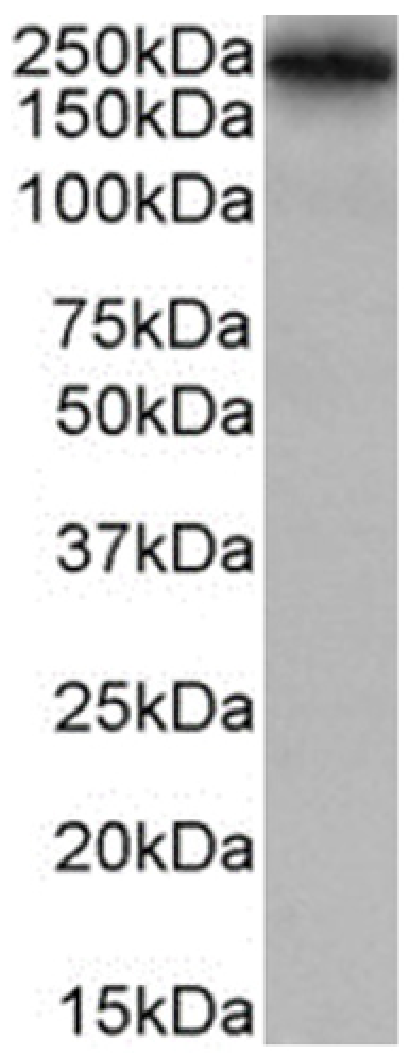
WB (Western Blot) (Western Blot analysis of PCDH8 expression in transfected 293T cell line by PCDH8 monoclonal antibody. Lane 1: PCDH8 transfected lysate (113kD). Lane 2: Non-transfected lysate.)
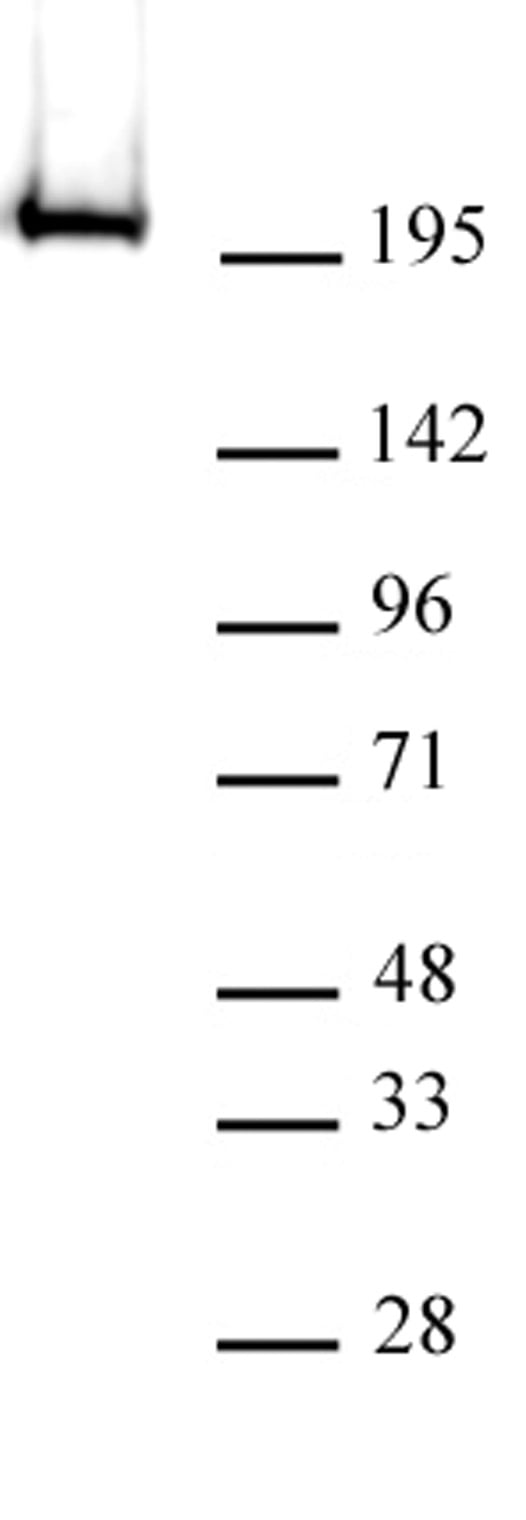
WB (Western Blot) (PCDH8 monoclonal antibody Western Blot analysis of PCDH8 expression in COLO 320 HSR.)
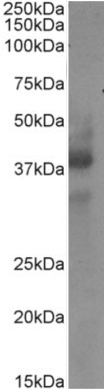
WB (Western Blot) (Western Blot detection against Immunogen (35.53kD).)
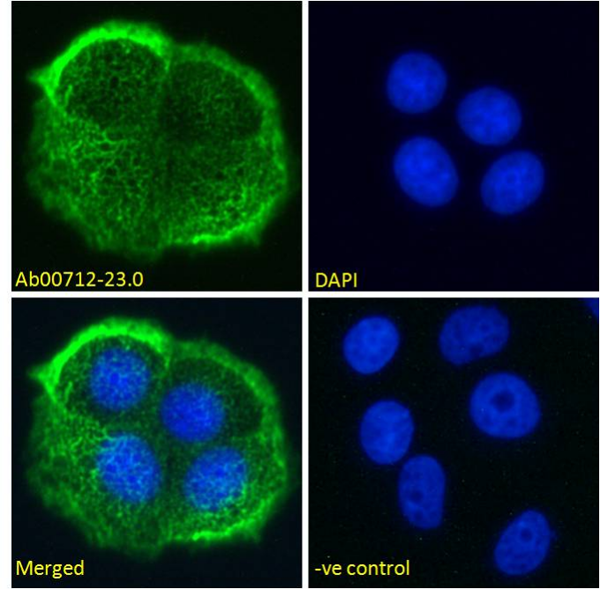
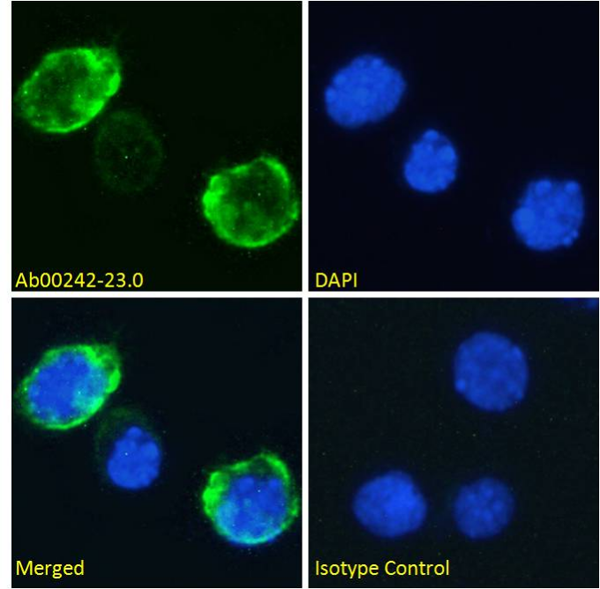
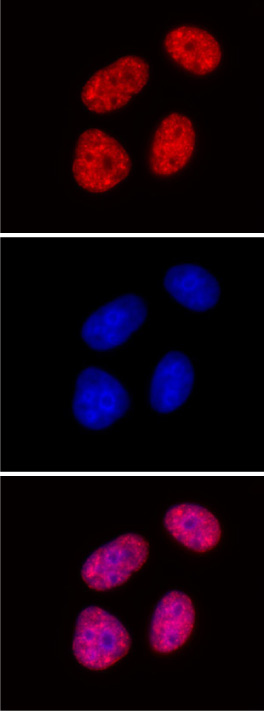
IF (Immunofluorescence) (Immunofluorescence of monoclonal antibody to RUNX2 on U-2 OS cell. [antibody concentration 10 ug/ml])
Application Data (Detection limit for recombinant GST tagged RUNX2 is approximately 10ng/ml as a capture antibody.)
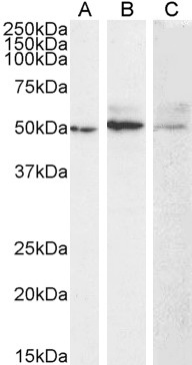
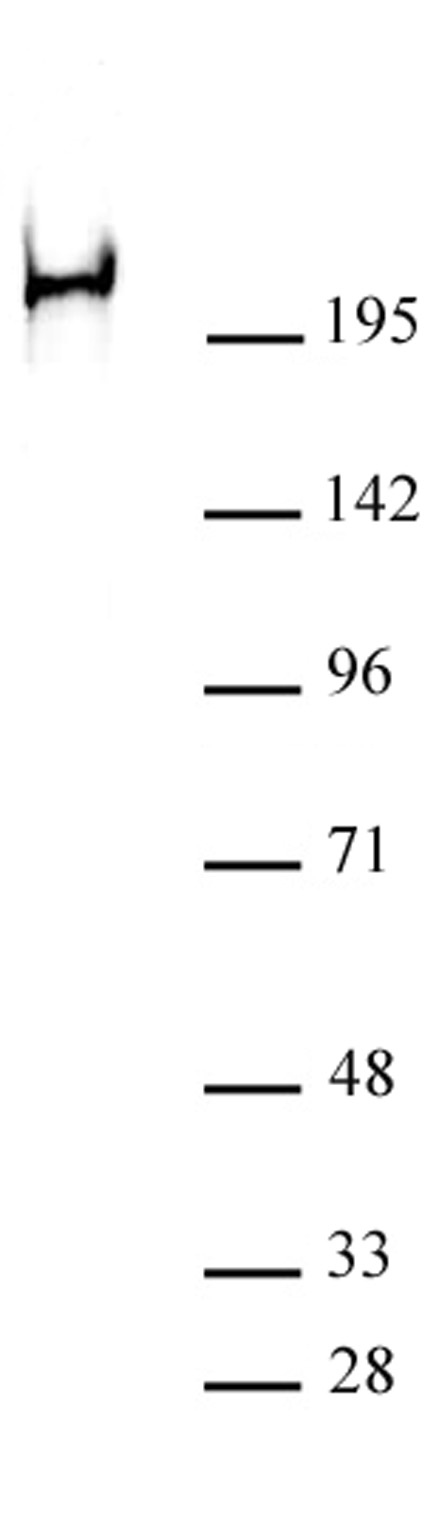
WB (Western Blot) (RUNX2 monoclonal antibody (M04), clone 4D5 Western Blot analysis of RUNX2 expression in PC-12 (Cat # L012V1).)
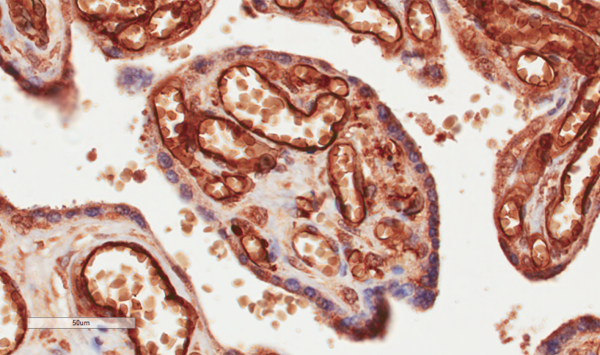
IHC (Immunohistochemistry) (Immunoperoxidase of monoclonal antibody to RUNX2 on formalin-fixed paraffin-embedded human placenta. [antibody concentration 3 ug/ml])
Application Data (Immunoperoxidase of monoclonal antibody to RUNX2 on formalin-fixed paraffin-embedded human placenta. [antibody concentration 3 ug/ml])
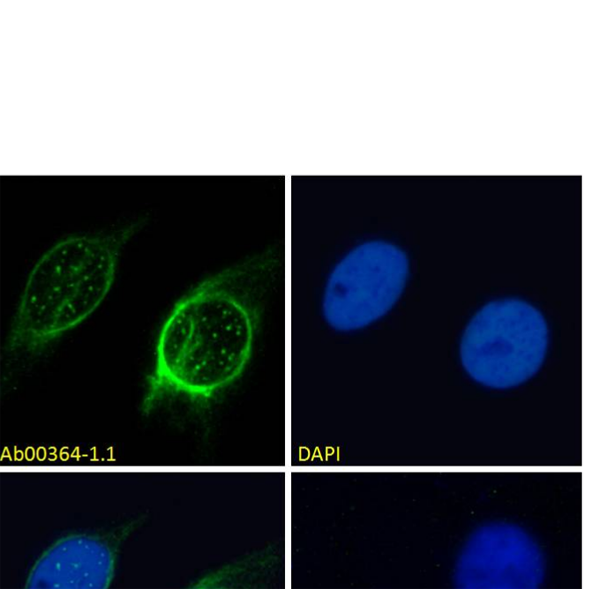
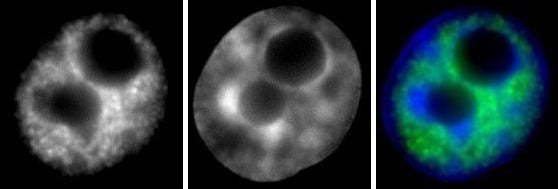
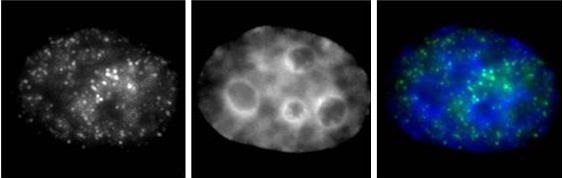
IF (Immunofluorescence) (Immunofluorescence of monoclonal antibody to LMNB1 on HeLa cell. [antibody concentration 10 ug/ml])
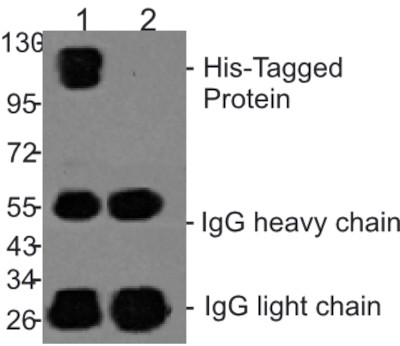
IP (Immunoprecipitation) (Immunoprecipitation of LMNB1 transfected lysate using anti-LMNB1 monoclonal antibody and Protein A Magnetic Bead (U0007), and immunoblotted with LMNB1 MaxPab rabbit polyclonal antibody.)
WB (Western Blot) (Western Blot analysis of LMNB1 expression in transfected 293T cell line by LMNB1 monoclonal antibody (M01), clone 4B10.Lane 1: LMNB1 transfected lysate (66.4 KDa).Lane 2: Non-transfected lysate.)
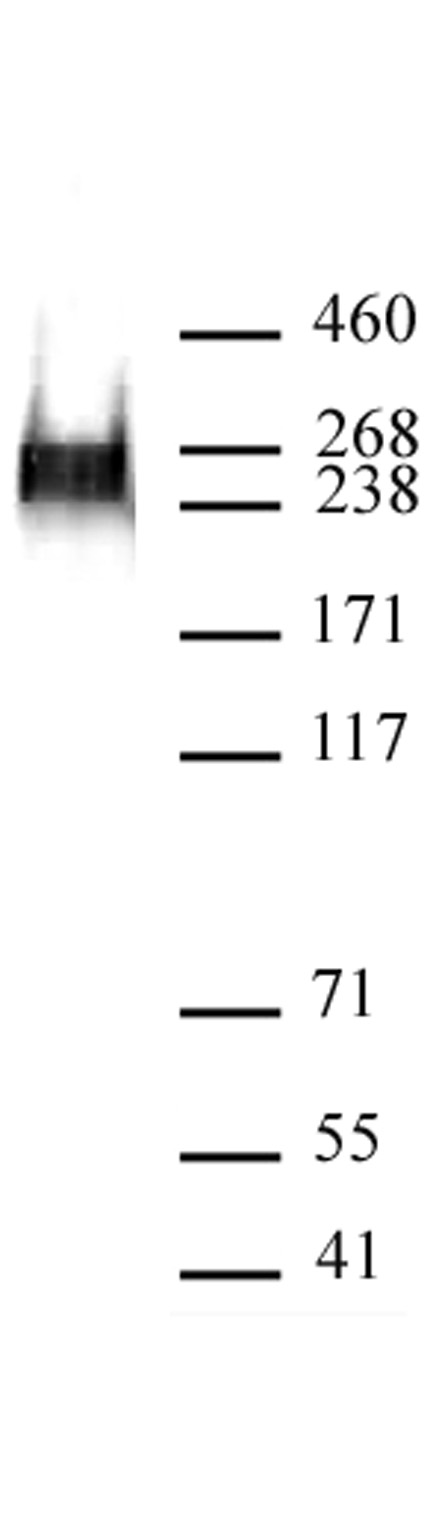
WB (Western Blot) (LMNB1 monoclonal antibody (M01), clone 4B10. Western Blot analysis of LMNB1 expression in Raw 264.7.)
WB (Western Blot) (LMNB1 monoclonal antibody (M01), clone 4B10. Western Blot analysis of LMNB1 expression in NIH/3T3.)
WB (Western Blot) (LMNB1 monoclonal antibody (M01), clone 4B10. Western Blot analysis of LMNB1 expression in Jurkat (Cat # L017V1).)
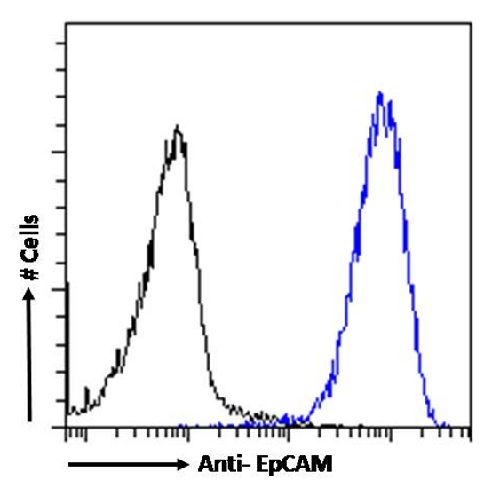
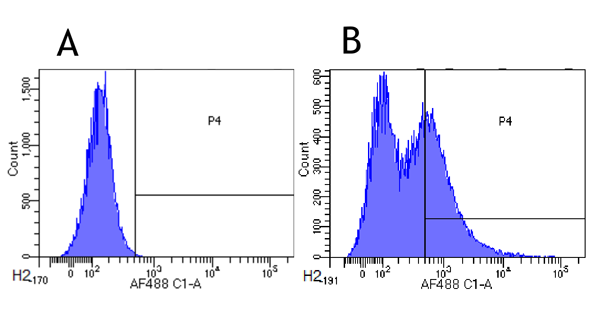
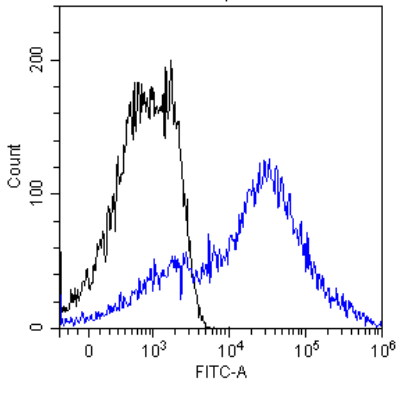
FCM (Flow Cytometry) (Figure 7. Flow Cytometry analysis of JK cells using anti-ERLIN2 antibody (AAA19715).Overlay histogram showing JK cells stained with AAA19715 (Blue line). The cells were blocked with 10% normal goat serum. And then incubated with mouse anti-ERLIN2 Antibody (AAA19715, 1 ug/1x10^6 cells) for 30 min at 20 degree C. DyLight488 conjugated goat anti-mouse IgG was used as secondary antibody for 30 minutes at 20 degree C. Isotype control antibody (Green line) was mouse IgG (1 ug/1x10^6) used under the same conditions. Unlabelled sample (Red line) was also used as a control.)
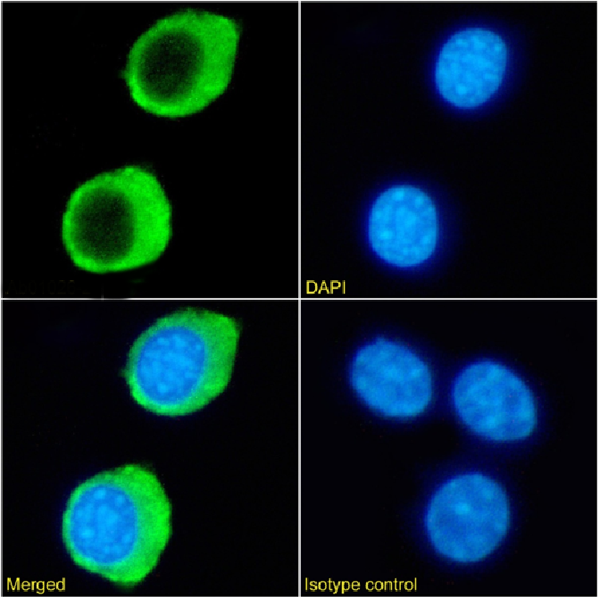
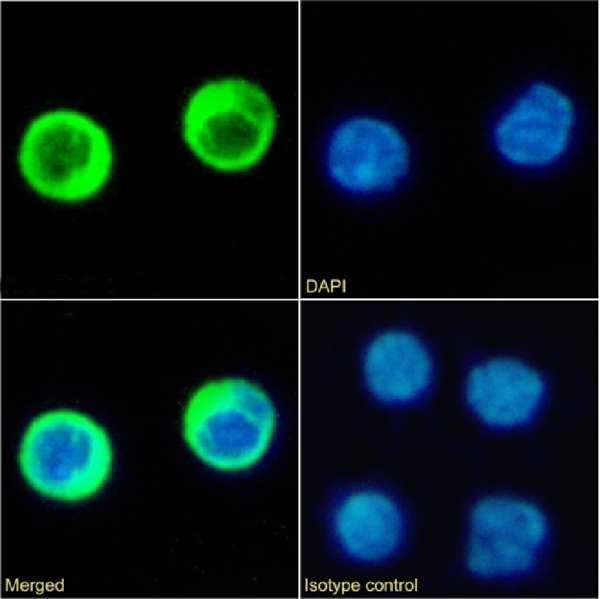
IF (Immunofluorescence) (Figure 6. IF analysis of ERLIN2 using anti-ERLIN2 antibody (AAA19715).ERLIN2 was detected in an immunocytochemical section of T47D cells. Enzyme antigen retrieval was performed using IHC enzyme antigen retrieval reagent (AR0022) for 15 mins. The cells were blocked with 10% goat serum. And then incubated with 5 ug/mL mouse anti-ERLIN2 Antibody (AAA19715) overnight at 4 degree C. Cy3 Conjugated Goat Anti-Mouse IgG (BA1031) was used as secondary antibody at 1:100 dilution and incubated for 30 minutes at 37 degree C. The section was counterstained with DAPI. Visualize using a fluorescence microscope and filter sets appropriate for the label used.)
IHC (Immunohistochemistry) (Figure 5. IHC analysis of ERLIN2 using anti-ERLIN2 antibody (AAA19715).ERLIN2 was detected in a paraffin-embedded section of human thyroiditis tissue. Heat mediated antigen retrieval was performed in EDTA buffer (pH 8.0, epitope retrieval solution). The tissue section was blocked with 10% goat serum. The tissue section was then incubated with 2 ug/ml mouse anti-ERLIN2 Antibody (AAA19715) overnight at 4 degree C. Peroxidase Conjugated Goat Anti-mouse IgG was used as secondary antibody and incubated for 30 minutes at 37 degree C. The tissue section was developed using HRP Conjugated Mouse IgG Super Vision Assay Kit with DAB as the chromogen.)
IHC (Immunohistochemistry) (Figure 4. IHC analysis of ERLIN2 using anti-ERLIN2 antibody (AAA19715).ERLIN2 was detected in a paraffin-embedded section of human squamous cell lung carcinoma tissue. Heat mediated antigen retrieval was performed in EDTA buffer (pH 8.0, epitope retrieval solution). The tissue section was blocked with 10% goat serum. The tissue section was then incubated with 2 ug/ml mouse anti-ERLIN2 Antibody (AAA19715) overnight at 4 degree C. Peroxidase Conjugated Goat Anti-mouse IgG was used as secondary antibody and incubated for 30 minutes at 37 degree C. The tissue section was developed using HRP Conjugated Mouse IgG Super Vision Assay Kit with DAB as the chromogen.)
IHC (Immunohistochemistry) (Figure 3. IHC analysis of ERLIN2 using anti-ERLIN2 antibody (AAA19715).ERLIN2 was detected in a paraffin-embedded section of human placenta tissue. Heat mediated antigen retrieval was performed in EDTA buffer (pH 8.0, epitope retrieval solution). The tissue section was blocked with 10% goat serum. The tissue section was then incubated with 2 ug/ml mouse anti-ERLIN2 Antibody (AAA19715) overnight at 4 degree C. Peroxidase Conjugated Goat Anti-mouse IgG was used as secondary antibody and incubated for 30 minutes at 37 degree C. The tissue section was developed using HRP Conjugated Mouse IgG Super Vision Assay Kit with DAB as the chromogen.)
IHC (Immunohistochemistry) (Figure 2. IHC analysis of ERLIN2 using anti-ERLIN2 antibody (AAA19715).ERLIN2 was detected in a paraffin-embedded section of human ovarian serous carcinoma tissue. Heat mediated antigen retrieval was performed in EDTA buffer (pH 8.0, epitope retrieval solution). The tissue section was blocked with 10% goat serum. The tissue section was then incubated with 2 ug/ml mouse anti-ERLIN2 Antibody (AAA19715) overnight at 4 degree C. Peroxidase Conjugated Goat Anti-mouse IgG was used as secondary antibody and incubated for 30 minutes at 37 degree C. The tissue section was developed using HRP Conjugated Mouse IgG Super Vision Assay Kit with DAB as the chromogen.)
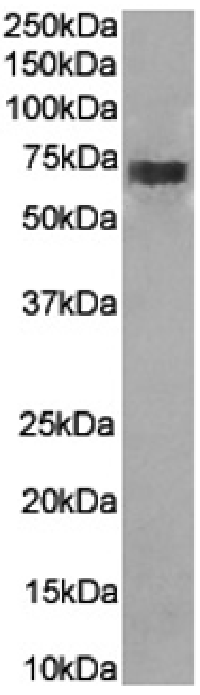
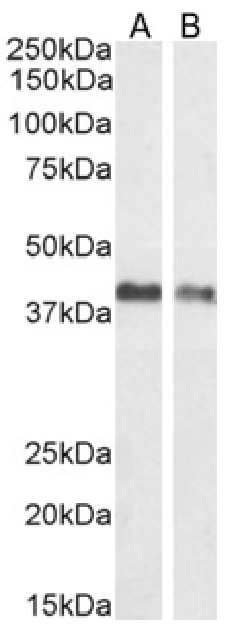
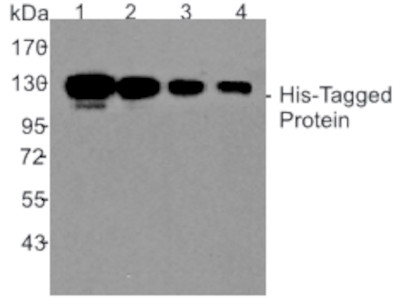
WB (Western Blot) (Figure 1. Western blot analysis of ERLIN2 using anti-ERLIN2 antibody (AAA19715).Electrophoresis was performed on a 5-20% SDS-PAGE gel at 70V (Stacking gel)/90V (Resolving gel) for 2-3 hours. The sample well of each lane was loaded with 30 ug of sample under reducing conditions.Lane 1: human HepG2 whole cell lysates,Lane 2: human T47D whole cell lysates,Lane 3: human HCCT tissue lysates,Lane 4: human HCCP tissue lysates.After electrophoresis, proteins were transferred to a nitrocellulose membrane at 150 mA for 50-90 minutes. Blocked the membrane with 5% non-fat milk/TBS for 1.5 hour at RT. The membrane was incubated with mouse anti-ERLIN2 antigen affinity purified monoclonal antibody (#AAA19715) at 0.5 ug/mL overnight at 4 degree C, then washed with TBS-0.1%Tween 3 times with 5 minutes each and probed with a goat anti-mouse IgG-HRP secondary antibody at a dilution of 1:10000 for 1.5 hour at RT. The signal is developed using an Enhanced Chemiluminescent detection (ECL) kit with Tanon 5200 system. A specific band was detected for ERLIN2 at approximately 43 kDa. The expected band size for ERLIN2 is at 38 kDa.)
Western Blot, Immunohistochemistry, Immunocytochemistry, Immunofluorescence, Flow Cytometry
Purity
Immunogen affinity purified.
Pricing
WB (Western Blot) (Western Blot analysis of TSC22D3 expression in transfected 293T cell line by TSC22D3 monoclonal antibody. Lane 1: TSC22D3 transfected lysate (22.2kD). Lane 2: Non-transfected lysate.)
WB (Western Blot) (Western blot analysis of ALPPL2 over-expressed 293 cell line, cotransfected with ALPPL2 Validated Chimera RNAi (Lane 2) or non-transfected control (Lane 1). Blot probed with ALPPL2 monoclonal antibody. GAPDH (36.1kD) used as specificity and loading control.)
IP (Immunoprecipitation) (Immunoprecipitation of ALPPL2 transfected lysate using ALPPL2 monoclonal antibody and Protein A Magnetic Bead and immunoblotted with ALPPL2 rabbit polyclonal antibody.)
IHC (Immunohistochemistry) (Immunoperoxidase of monoclonal antibody to ALPPL2 on formalin-fixed paraffin-embedded human placenta. [antibody concentration 3ug/ml].)
WB (Western Blot) (Western Blot analysis of ALPPL2 expression in transfected 293T cell line by ALPPL2 monoclonal antibody Lane 1: ALPPL2 transfected lysate (57.5kD). Lane 2: Non-transfected lysate.)
WB (Western Blot) (ALPPL2 monoclonal antibody Western Blot analysis of ALPPL2 expression in A-431.)
WB (Western Blot) (Western Blot detection against Immunogen (35.64kD).)
IHC (Immunohistchemistry) (Immunohistochemical analysis of paraffin-embedded mouse heart tissue using anti-SOD2 antibody. Counter stained with hematoxylin.)
IHC (Immunohistochemistry) (Immunohistochemical analysis of paraffin-embedded mouse colon tissue using anti-SOD2 antibody. Counter stained with hematoxylin.)
IHC (Immunohistochemistry) (Immunohistochemical analysis of paraffin-embedded mouse liver tissue using anti-SOD2 antibody. Counter stained with hematoxylin.)
IHC (Immunohistochemistry) (Immunohistochemical analysis of paraffin-embedded human kidney tissue using anti-SOD2 antibody. Counter stained with hematoxylin.)
IHC (Immunohistochemistry) (Immunohistochemical analysis of paraffin-embedded human liver tissue using anti-SOD2 antibody. Counter stained with hematoxylin.)
WB (Western Blot) (Western blot analysis of SOD2 on different lysates using anti-SOD2 antibody at 1/1, 000 dilution. Positive control: Lane 1: Mouse brain Lane 2: SH-SY-5Y Lane 3: Human heart)
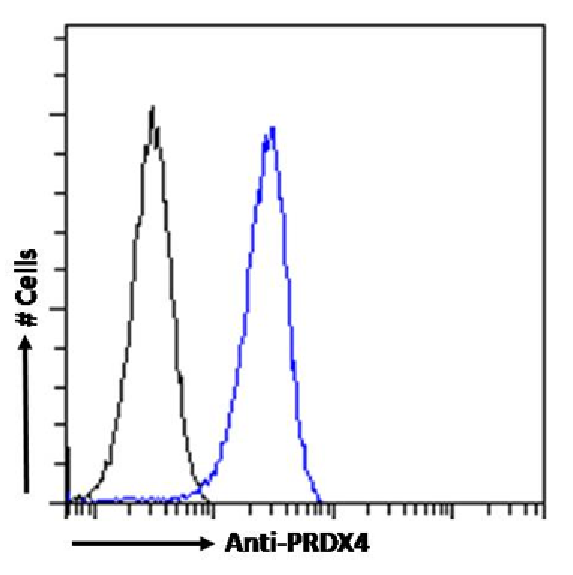
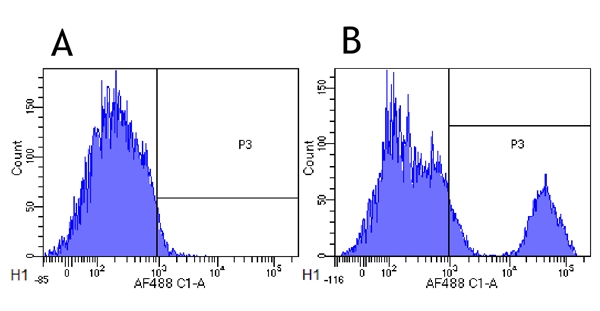
FCM (Flow Cytometry) (Flow cytometric analysis of Hela cells with ATF4 antibody at 1/50 dilution (red) compared with an unlabelled control (cells without incubation with primary antibody; black). Alexa Fluor 488-conjugated goat anti rabbit IgG was used as the secondary antibody.)
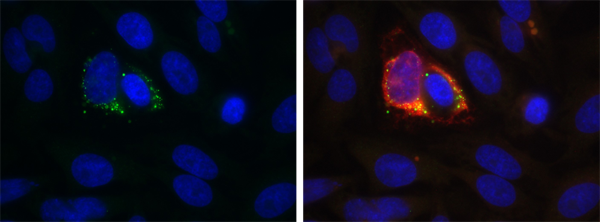
ICC (Immunocytochemistry) (ICC staining ATF4 in PC-12 cells (green). The nuclear counter stain is DAPI (blue). Cells were fixed in paraformaldehyde, permeabilised with 0.25% Triton X100/PBS.)
ICC (Immunocytochemistry) (ICC staining ATF4 in MCF-7 cells (green). The nuclear counter stain is DAPI (blue). Cells were fixed in paraformaldehyde, permeabilised with 0.25% Triton X100/PBS.)
ICC (Immunocytochemistry) (ICC staining ATF4 in N2A cells (green). The nuclear counter stain is DAPI (blue). Cells were fixed in paraformaldehyde, permeabilised with 0.25% Triton X100/PBS.)
IHC (Immunohistochemistry) (Immunohistochemical analysis of paraffin-embedded human breast carcinoma tissue using anti-ATF4 antibody. Counter stained with hematoxylin.)
WB (Western Blot) (Western blot analysis of ATF4 on different lysates using anti-ATF4 antibody at 1/1, 000 dilution. Positive control: Lane 1: Hela Lane 2: PC-12)
IP (Immunoprecipitation) (Figure 6. Immunoprecipitation analysis. Cellular overexpression lysates (made from HEK293F cells transfected with DYKDDDDK tagged human BCMA full length gene) were pre-incubated with 6 different rabbit DimAb clones and negative control IgG. The immunocomplexes were further pulled down by protein A beads, fractionated, and blotted with mouse anti-DYKDDDDK monoclonal antibody.)
ELISA (Figure 5. ELISA plate was coated with recombinant BCMA-hFc fusion protein (PME100001), followed by pre-blocking with huC11D5.3 antibody (Grey bar) or rabbit control IgG (Black bar), and then different rabbit DimAbs antibodies were added to check the competitive inhibition of huC11D5.3. DM3 clone exhibits the strongest inhibition (Red bar). This data indicated that DM3 bind to the same epitope as bb2121.)
Application Data (Figure 4. Affinity ranking of different DimAb clones by titration of rabbit DimAb antibody concentration onto K562-BCMA or NCI-H929 cells. Different concentrations of various anti-BCMA DimAb clones were incubated with K562-BCMA (A) or NCI-H929 cells (B) at 4 degree C. Bound rabbit IgG was detected in flow cytometry analysis. The Y-axis represents the mean fluorescence intensity (MFI) while the X-axis represents the concentration of IgG used.)
Application Data (Figure 3. Phylogenetic analysis of different Anti-BCMA DimAb clones. A) heavy chain and B) Light chain.)
FCM (Flow Cytometry) (Figure 2. A. Flow cytometry analysis with anti-BCMA (DM5) on NCI-H929 cells (Red histogram) or rabbit control antibody on NCI-H929 cells (Blue histogram). B. Flow cytometry data of serially titrated anti-BCMA (DM5) on NCI-H929 cells. The Y-axis represents the mean fluorescence intensity (MFI) while the X-axis represents the concentration of IgG used.)
FCM (Flow Cytometry) (Figure 1. A. Flow cytometry analysis with anti-BCMA (DM5) on K562-BCMA (Red histogram) (K562 cells stably transduced by human BCMA full length gene) and K562 (Negative control cell line) (Blue histogram). B. Flow cytometry data of serially titrated anti-BCMA (DM5). The Y-axis represents the mean fluorescence intensity (MFI) while the X-axis represents the concentration of IgG used.)
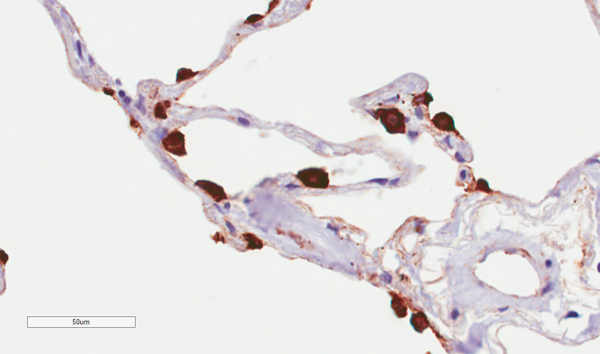
IHC (Immunohistchemistry) (Immunohistochemical analysis of paraffin-embedded Human stomach. 1. Antibody was diluted at 1:200(4 degree overnight). 2. High-pressure and temperature EDTA. pH8.0 was used for antigen retrieval. 3.Secondary antibody was diluted at 1:200(room temperature. 30min).)
IHC (Immunohistochemistry) (Immunohistochemical analysis of paraffin-embedded Human Liver Carcinoma Tissue using TTR Mouse mAb diluted at 1:200)
IHC (Immunohistochemistry) (Immunohistochemical analysis of paraffin-embedded Human colon. 1. Antibody was diluted at 1:200(4 degree overnight). 2. High-pressure and temperature EDTA. pH8.0 was used for antigen retrieval. 3.Secondary antibody was diluted at 1:200(room temperature. 30min).)
WB (Western Blot) (Western blot analysis of Human Serum using TTR Mouse mAb diluted at 1:2000)
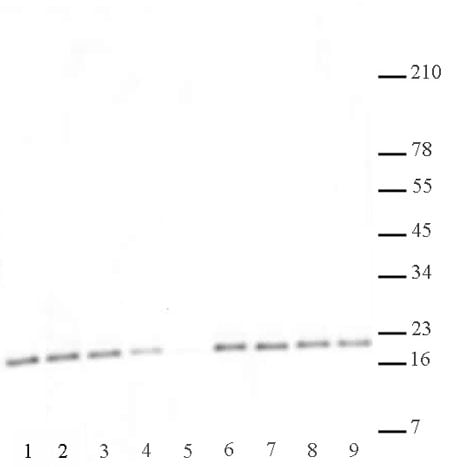
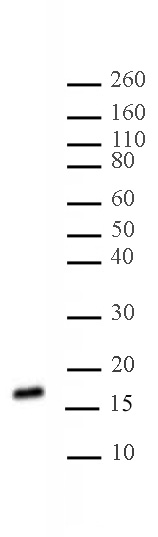
WB (Western Blot) (Western Blot analysis of FTL expression in transfected 293T cell line by FTL monoclonal antibody (M16), clone X1.Lane 1: FTL transfected lysate(20 KDa).Lane 2: Non-transfected lysate.)
WB (Western Blot) (Western blot analysis of FTL over-expressed 293 cell line, cotransfected with FTL Validated Chimera RNAi (Lane 2) or non-transfected control (Lane 1). Blot probed with FTL monoclonal antibody (M16), clone X1. GAPDH (36.1 kDa) used as specificity and loading control.)
Application Data (Detection limit for recombinant GST tagged FTL is approximately 0.03ng/ml as a capture antibody.)
WB (Western Blot) (FTL monoclonal antibody (M16), clone X1 Western Blot analysis of FTL expression in K-562.)
IF (Immunofluorescence) (Immunofluorescence of monoclonal antibody to FTL on HeLa cell. [antibody concentration 10 ug/ml])
ICC (Immunocytochemistry) (ICC staining STAT3 in HepG2 cells (green). The nuclear counter stain is DAPI (blue). Cells were fixed in paraformaldehyde, permeabilised with 0.25% Triton X100/PBS.)
ICC (Immunocytochemistry) (ICC staining STAT3 in A549 cells (green). The nuclear counter stain is DAPI (blue). Cells were fixed in paraformaldehyde, permeabilised with 0.25% Triton X100/PBS.)
ICC (Immunocytochemistry) (ICC staining STAT3 in Hela cells (green). The nuclear counter stain is DAPI (blue). Cells were fixed in paraformaldehyde, permeabilised with 0.25% Triton X100/PBS.)
IHC (Immunohistochemistry) (Immunohistochemical analysis of paraffin-embedded mouse brain tissue using anti-STAT3 antibody. Counter stained with hematoxylin.)
IHC (Immunohistochemistry) (Immunohistochemical analysis of paraffin-embedded human breast carcinoma tissue using anti-STAT3 antibody. Counter stained with hematoxylin.)
IHC (Immunohistochemistry) (Immunohistochemical analysis of paraffin-embedded mouse pancreas tissue using anti-STAT3 antibody. Counter stained with hematoxylin.)
IHC (Immunohistochemistry) (Immunohistochemical analysis of paraffin-embedded human gastric carcinoma tissue using anti-STAT3 antibody. Counter stained with hematoxylin.)
WB (Western Blot) (Western blot analysis of STAT3 on MCF-7 cells lysates using anti-STAT3 antibody at 1/1, 000 dilution.)
IF (Immunofluorescence) (Immunofluorescence analysis of NIH/3T3 cells using Recombinant GAPDH Monoclonal Antibody at dilution of 1:1000)
IF (Immunofluorescence) (Immunofluorescence analysis of U-2 OS cells using Recombinant GAPDH Monoclonal Antibody at dilution of 1:1000)
IHC (Immunohistchemistry) (Immunohistochemistry of paraffin-embedded mouse ovary using Recombinant GAPDH Monoclonal Antibody at dilution of 1:5000.)
IHC (Immunohistochemistry) (Immunohistochemistry of paraffin-embedded rat ovary using Recombinant GAPDH Monoclonal Antibody at dilution of 1:5000.)
IHC (Immunohistochemistry) (Immunohistochemistry of paraffin-embedded human colon cancer using Recombinant GAPDH Monoclonal Antibody at dilution of 1:5000.)
WB (Western Blot) (Western Blot with Recombinant GAPDH Monoclonal Antibody at dilution of 1:160000. Lane 1: C6 cell lysate, Lane 2: PC-12 cell lysate, Lane 3: Rat heart tissue lysate, Lane 4: Rat liver tissue lysate, Lane 5: Rat spleen tissue lysate, Lane 6: Rat brain tissue lysate, Lane 7:Rat stomach tissue lysate, Lane 8: Rat testis tissue lysate, Lane 9: Rat thymus tissue lysate, Lane 10: Rat skeletal muscle tissue lysate)
WB (Western Blot) (Western blot with Recombinant GAPDH Monoclonal Antibody at dilution of 1:160000. lane 1: mouse heart tissue lysate, lane 2: mouse liver tissue lysate, lane 3: mouse uterus tissue lysate, lane 4: mouse lung tissue lysate, lane 5: mouse kidney tissue lysate, lane 6: mouse brain tissue lysate, lane 7: mouse stomach tissue lysate)
WB (Western Blot) (Western Blot with Recombinant GAPDH Monoclonal Antibody at dilution of 1:160000. Lane 1: A431 cell lysate,Lane 2: Caco-2 cell lysate, Lane 3: Jurkat cell lysate, Lane 4: K562 cell lysate, Lane 5: HeLa cell lysate, Lane 6: PC-3 cell lysate, Lane 7: Ramos cell lysate, Lane 8: TF-1 cell lysate, Lane 9: U20-S cell lysate, Lane 10: HL-60 cell lysate, Lane 11: HT-29 cell lysate, Lane 12: Raji cell lysate, Lane 13: HepG2 cell lysate)
WB (Western Blot) (Detection of human Nectin-2/CD112 by western blot. Samples: Whole cell lysate (50 ug) from OVCAR-8, Jurkat, U2OS, GaMG, OVCAR-4, 786-O, A-549, and SK-MEL-28 cells prepared using NETN lysis buffer. Antibody: Rabbit anti-Nectin-2/CD112 recombinant monoclonal antibody (AAA23819 lot 1) used at 1:1000. Secondary: HRP-conjugated goat anti-rabbit IgG . Detection: Chemiluminescence with an exposure time of 30 seconds. Lower panel: Rabbit anti-GAPDH .)
IHC (Immunohistochemistry) (Detection of human Nectin-2/CD112 in FFPE hepatic carcinoma by IHC-IF. Antibody: Rabbit anti-Nectin-2/CD112 recombinant monoclonal antibody (AAA23819 lot 1). Secondary: HRP-conjugated goat anti-rabbit IgG . Substrate: Opal. Counterstain: DAPI.)
IHC (Immunohistochemistry) (Detection of human Nectin-2/CD112 by immunohistochemistry. Sample: FFPE section of human colon carcinoma. Antibody: Rabbit anti-Nectin-2/CD112 recombinant monoclonal antibody (AAA23819 lot 1) used at 1:200. Secondary: DyLight 594-conjugated goat anti-rabbit IgG . Counterstain: DAPI (blue).)
IHC (Immunohistochemistry) (Detection of human Nectin-2/CD112 by immunohistochemistry. Sample: FFPE section of breast carcinoma. Antibody: Rabbit anti-Nectin-2/CD112 recombinant monoclonal antibody (AAA23819 lot 1) used at 1:200. Secondary: HRP-conjugated goat anti-rabbit IgG . Substrate: DAB.)
IHC (Immunohistochemistry) (Detection of human Nectin-2/CD112 by immunohistochemistry. Sample: FFPE section of prostate carcinoma. Antibody: Rabbit anti-Nectin-2/CD112 recombinant monoclonal antibody (AAA23819 lot 1) used at 1:200. Secondary: HRP-conjugated goat anti-rabbit IgG . Substrate: DAB.)
ICC (Immunocytochemistry) (Detection of human Nectin-2/CD112 by immunocytochemistry. Sample: FFPE section of OVCAR-8 cells. Antibody: Rabbit anti-Nectin-2/CD112 recombinant monoclonal antibody (AAA23819 lot 1) used at 1:200. Secondary: HRP-conjugated goat anti-rabbit IgG . Substrate: DAB.)
WB (Western Blot) (Western Blot detection against Immunogen (37.44kD).)
WB (Western Blot) (CCT7 monoclonal antibody Western Blot analysis of CCT7 expression in human pancreas.)
Application Data (Detection limit for recombinant GST tagged CCT7 is ~0.3ng/ml as a capture antibody.)
WB (Western Blot) (Western Blot analysis of CCT7 expression in transfected 293T cell line by CCT7 monoclonal antibody. Lane 1: CCT7 transfected lysate (59.4kD). Lane 2: Non-transfected lysate.)
WB (Western Blot) (CCT7 monoclonal antibody Western Blot analysis of CCT7 expression in K-562.)
WB (Western Blot) (CCT7 monoclonal antibody Western Blot analysis of CCT7 expression in Raw 264.7)
WB (Western Blot) (CCT7 monoclonal antibody Western Blot analysis of CCT7 expression in HL-60)
WB (Western Blot) (LZTFL1 monoclonal antibody, Western Blot analysis of LZTFL1 expression in HeLa.)
Application Data (Detection limit for recombinant GST tagged LZTFL1 is ~0.1ng/ml as a capture antibody.)
IF (Immunofluorescence) (Immunofluorescence of monoDetection limit for recombinant GST tagged LZTFL1 is ~0.1ng/ml as a capture antibody.clonal antibody to LZTFL1 on HeLa cell. [antibody concentration 25ug/ml].)
IHC (Immunohistochemistry) (Immunoperoxidase of monoclonal antibody to LZTFL1 on formalin-fixed paraffin-embedded human colon. [antibody concentration 3ug/ml].)
WB (Western Blot) (Western Blot analysis of LZTFL1 expression in transfected 293T cell line by LZTFL1 monoclonal antibody. Lane 1: LZTFL1 transfected lysate (34.6kD). Lane 2: Non-transfected lysate.)
WB (Western Blot) (Western Blot detection against Immunogen (37.11kD).)
IF (Immunofluorescence) (Immunofluorescence of monoclonal antibody to NFKB1 on HeLa cell. [antibody concentration 10 ug/ml])
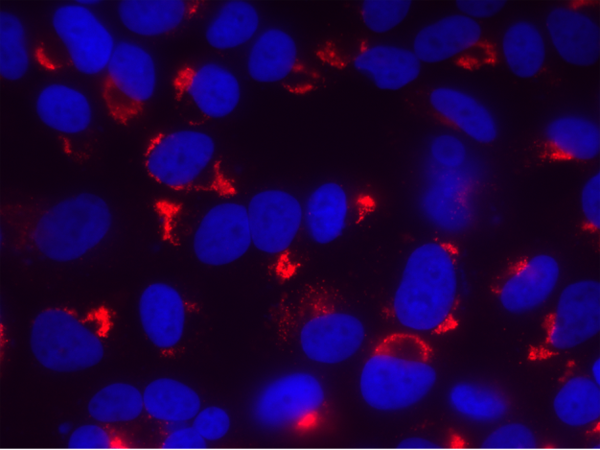
Application Data (Proximity Ligation Analysis of protein-protein interactions between HSP90AB1 and NFKB1 HeLa cells were stained with anti-HSP90AB1 rabbit purified polyclonal 1:1200 and anti-NFKB1 mouse monoclonal antibody 1:50. Each red dot represents the detection of protein-protein interaction complex, and nuclei were counterstained with DAPI (blue).)
Application Data (Detection limit for recombinant GST tagged NFKB1 is approximately 3ng/ml as a capture antibody.)
IHC (Immunohistochemistry) (Immunoperoxidase of monoclonal antibody to NFKB1 on formalin-fixed paraffin-embedded human colon. [antibody concentration 1.5 ug/ml])
WB (Western Blot) (Western Blot analysis of NFKB1 expression in transfected 293T cell line by NFKB1 monoclonal antibody (M02), clone 4A11.Lane 1: NFKB1 transfected lysate(105.4 KDa).Lane 2: Non-transfected lysate.)
WB (Western Blot) (NME2 monoclonal antibody (M06), clone 1D3. Western Blot analysis of NME2 expression in NIH/3T3 (Cat # L018V1).)
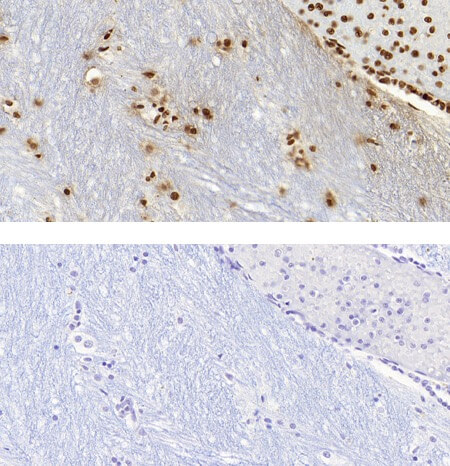
IHC (Immunohistochemistry) (Immunoperoxidase of monoclonal antibody to NME2 on formalin-fixed paraffin-embedded human testis. [antibody concentration 1.5 ug/ml])
IF (Immunofluorescence) (Immunofluorescence of monoclonal antibody to NME2 on HeLa cell. [antibody concentration 10 ug/ml])
WB (Western Blot) (NME2 monoclonal antibody (M06), clone 1D3 Western Blot analysis of NME2 expression in HeLa (Cat # L013V1).)
Application Data (Published customer image: Histological staining of control and HBOT wounds at post-wounding days 7 and 29. A -D) H&E staining. E -H) CD34 immunohistochemistry. I+J) CD68 immunohistochemistry.From: uk B, Tong M, Fijneman EMG, van Neck JW (2014) Hyperbaric Oxygen Therapy to Treat Diabetes Impaired Wound Healing in Rats. PLoS ONE 9(10): e108533.)
Application Data (Staining of rat peritoneal macrophages cells with Mouse anti Rat CD68:RPE . Permeabilised with Leucoperm (Fix & Perm))
Application Data (Immunofluorescence staining of rat lymph node cryosection with Mouse anti Rat CD68 antibody , red in A and Mouse anti Rat CD4 , green in B. C is the merged image with nuclei counter-stained blue using DAPI. Medium power)
Application Data (Published customer image: Immunohistochemical stains of ED1 and TRAIL in brain sections treated with AAV2/IL1. Immunohistochemistry for CD68 in the optic nerve. There is a cellular accumulation indicated by DAPI at the crushed sites of the optic nerve. Some of the cells are positively stained with CD68 suggesting that there is a recruitment of microglia/macrophages to the crushed sites. Bar = 100 um.From: Suzuki H, Oku H, Horie T, Morishita S, Tonari M, et al. (2014) Changes in Expression of Aquaporin-4 and Aquaporin-9 in Optic Nerve after Crushing in Rats. PLoS ONE 9(12): e114694.)
Application Data (Immunoperoxidase staining of rat lymph node cryosection with Mouse anti Rat CD68 antibody followed by horseradish peroxidase conjugated Goat anti Mouse IgG1 as a detection reagent. Low power)
Application Data (Published customer image: Western blotting of ED1 (Marker of activated microglia) and TRAIL (tumor necrosis factor-related apoptosis-inducing ligand). Brains were treated with PBS or rAAV2/IL12 and then implanted with tumor on the last day of Week 2 post viral vector injection. The brains were used for Western blotting analysis of the expression of ED1, 34 kDa, and TRAIL, 104 kDa, from microglial cells on the last day of week 1, 2, and 3 following tumor implantation. The brain slices for Western blotting analysis are shown at the bottom. All brains were harvested on the last day of week 1, week 2, and week 3 post tumor implantation. The scale bars indicate 2 mm in brain sections.From: The treatment of glioblastoma multiforme through activation of microglia and TRAIL induced by rAAV2-mediated IL-12 in a syngeneic rat model. Chiu TL, Wang MJ, Su CC. J Biomed Sci. 2012 Apr 22;19:45. doi: 10.1186/1423-0127-19-45.)
Application Data (Staining of rat peritoneal macrophages with Mouse anti Rat CD68: Alexa Fluor 647 following permeabilisation with Leucoperm)
Application Data (Published customer image: Immunohistochemistry of ED1 stain in brain sections treated with rAAV2/IL12 (A, B, C, D, n = 4), AAV2/GFP (E, F, n = 2), or PBS (G, H, n = 2), accompanied with tumor implantation; and that in the brain section treated with nothing (n = 1). Immunohistochemistry of brain sections was performed for ED1 on the last day of week 3 after tumor implantation. The brain sections were stained with hematoxylin for nuclei and ED1 for activated microglial cells. The 1st column shows the brain sections pictured before immunostaining; the 2nd column shows the brain sections pictured after staining; the 3rd to 6th columns show pictures taken at four quadrants (black squares in 2nd column) of the tumor adjacent to the normal tissue in the right hemisphere. ED1-positive cells show dark brown. The scale bars indicate 2 mm in 1st and 2nd columns and 100 um in 3rd-6th columns.From: Chiu TL, Wang MJ, Su CC. The treatment of glioblastoma multiforme through activation of microglia and TRAIL induced by rAAV2-mediated IL-12 in a syngeneic rat model. J Biomed Sci. 2012 Apr 22;19:45.)
Application Data (Immunofluorescence staining of rat lymph node cryosection with Mouse anti Rat CD68 antibody , red in A and Mouse anti Rat CD4 , green in B. C is the merged image with nuclei counter-stained blue using DAPI. High power)
Application Data (Immunofluorescence staining of rat lymph node cryosection with Mouse anti Rat CD68 antibody , red in A and Mouse anti Rat CD4 , green in B. C is the merged image with nuclei counter-stained blue using DAPI. Low power)
Application Data (Published customer image:Phycoerythrin conjugated Mouse anti Human CD83 antibody, clone HB15e used for the evaluation of CD83 expression on monocyte derived dendritic cells by flow cytometry.Phenotypic characterization of immunogenic and tolerogenic moDC populations by flow cytometry. Monocytes were negatively selected from PBMC using magnetic beads. Immature moDC were generated with IL-4 and GM-CSF for 6 days. 15d-PGJ2 (PGJ2 DC) and dexamethasone plus 1alpha,25-dihydroxyvitamin were added to generate tolerogenic moDC, respectively (PGJ2 DC and Dex/VD3 DC). To generate immunogenic moDC, immature moDC were stimulated for 24 h with LPS, polyI:C and a cytokine cocktail containing TNF-alpha, IL-1beta, IL-6 and PGE2, respectively. The phenotypes of the cells were analyzed by flow cytometry. Live cells were gated according to FSC/SSC. One representative experiment out of three is shown.From: Sprater F, Hovden A-O, Appel S (2012)Expression of ESE-3 Isoforms in Immunogenic and Tolerogenic Human Monocyte-Derived Dendritic Cells.PLoS ONE 7(11): e49577.)
Application Data (Immunofluorescence staining of a human tonsil cryosection with Mouse anti Human CD83 antibody, clone HB15e , red in A and Mouse anti Human CD21 antibody, clone LB21 , green in B. The merged image is in C with nuclei counterstained blue using DAPI. High power)
Application Data (Immunofluorescence staining of a human tonsil cryosection with Mouse anti Human CD83 antibody, clone HB15e , red in A and Mouse anti Human CD21 antibody, clone LB21 , green in B. The merged image is in C with nuclei counterstained blue using DAPI. Low power)
Application Data (Immunoperoxidase staining of a human tonsil cryosection with Mouse anti Human CD83 antibody, clone HB15e followed by the Histar detection system . High power)
Application Data (Immunoperoxidase staining of a human tonsil cryosection with Mouse anti Human CD83 antibody, clone HB15e followed by the Histar detection system . Medium power)
Application Data (Immunoperoxidase staining of a human tonsil cryosection with Mouse anti Human CD83 antibody, clone HB15e followed by the Histar detection system . Low power)
Application Data (Staining of KM-H2 cells with Mouse anti Human CD83)
Application Data (Staining of KM-H2 cell line with Mouse anti Human CD83:FITC)
WB (Western Blot) (Western blot analysis of CAMK4 over-expressed 293 cell line, cotransfected with CAMK4 Validated Chimera RNAi (Lane 2) or non-transfected control (Lane 1). Blot probed with CAMK4 monoclonal antibody. GAPDH (36.1kD) used as specificity and loading control.)
IF (Immunofluorescence) (Immunofluorescence of monoclonal antibody to CAMK4 on HeLa cell. [antibody concentration 10ug/ml].)
IHC (Immunohistochemistry) (Immunoperoxidase of monoclonal antibody to CAMK4 on formalin-fixed paraffin-embedded human tonsil tissue. [antibody concentration 5ug/ml].)
WB (Western Blot) (Western Blot analysis of CAMK4 expression in transfected 293T cell line by CAMK4 monoclonal antibody. Lane 1: CAMK4 transfected lysate (52.14kD). Lane 2: Non-transfected lysate.)
WB (Western Blot) (CAMK4 monoclonal antibody Western Blot analysis of CAMK4 expression in Jurkat.)
WB (Western Blot) (Western Blot detection against Immunogen (77.66kD).)
WB (Western Blot) (Western blot analysis of NFIC over-expressed 293 cell line, cotransfected with NFIC Validated Chimera RNAi (Lane 2) or non-transfected control (Lane 1). Blot probed with NFIC monoclonal antibody GAPDH (36.1kD) used as specificity and loading control.)
IF (Immunofluorescence) (Immunofluorescence of monoclonal antibody to NFIC on HeLa cell. [antibody concentration 10ug/ml])
IHC (Immunohistochemistry) (Immunoperoxidase of monoclonal antibody to NFIC on formalin-fixed paraffin-embedded human salivary gland. [antibody concentration 3ug/ml])
WB (Western Blot) (Western Blot analysis of NFIC expression in transfected 293T cell line by NFIC monoclonal antibody. Lane 1: NFIC transfected lysate (47.6kD). Lane 2: Non-transfected lysate.)
WB (Western Blot) (NFIC monoclonal antibody Western Blot analysis of NFIC expression in A-431.)
WB (Western Blot) (Western Blot detection against Immunogen (72.82kD).)
WB (Western Blot) (Western Blot detection against Immunogen (85.84kD).)
Application Data (Detection limit for recombinant GST tagged STIP1 is ~0.1ng/ml as a capture antibody.)
IP (Immunoprecipitation) (Immunoprecipitation of STIP1 transfected lysate using STIP1 monoclonal antibody and Protein A Magnetic Bead and immunoblotted with STIP1 rabbit polyclonal antibody.)
IF (Immunofluorescence) (Immunofluorescence of monoclonal antibody to STIP1 on HeLa cell. [antibody concentration 10ug/ml].)
IHC (Immunohistochemistry) (Immunoperoxidase of monoclonal antibody to STIP1 on formalin-fixed paraffin-embedded human testis. [antibody concentration 0.3ug/ml].)
WB (Western Blot) (Western Blot analysis of STIP1 expression in transfected 293T cell line by STIP1 monoclonal antibody Lane 1: STIP1 transfected lysate (62.6kD). Lane 2: Non-transfected lysate.)
Immunofluorescence, Immunohistochemistry, Immunoprecipitation, Western Blot
Purity
Purified by Protein A Affinity Chromatography.
Pricing
WB (Western Blot) (Anti-NP rabbit monoclonal antibody at 1:2000 dilution. Sample: Reocombinant Protein 10 ng Lane 1: H1N1 (A/Brevig Mission/1/1918) NP Lane 2: H1N1 (A/Brisbane/02/2018 NP Lane 3: H1N1 (A/California/07/2009) NP Lane 4: H1N1 (A/Guangdong-Maonan/SWL1536/2019) NP Lane 5: H1N1 (A/Hawaii/70/2019) NP Lane 6: H1N1 (A/Michigan/45/2015 NP Lane 7: H1N1 (A/Puerto Rico/8/34/Mount Sinai) NP (I116M) Lane 8:H1N1 (A/Victoria/2570/2019A/Wisconsin/588/2019 NP Lane 9: H2N2 (A/Ann Arbor/6/1960) NP Lane 10: H3N2 (A/Aichi/2/1968) NP Lane 11: H3N2 (A/Cambodia/e0826360/2020 (H3N2)-like NP Lane 12: H3N2 (A/Hong Kong/1/1968) NP Lane 13: H3N2 (A/Hong Kong/2671/2019) NP Lane 14: H3N2 (A/Hong Kong/45/2019) NP Lane 15: H3N2 (A/Hong Kong/4801/2014 NP Lane 16: H3N2 (A/Kansas/14/2017 NP Lane 17: H3N2 (A/Switzerland/9715293/2013) NP Lane 18: H7N9 (A/Anhui/1-BALF_RG6/2013) NP Lane 19: H7N9 (A/Shanghai/2/2013) NP Lane 20: Influenza B (B/Brisbane/60/2008 NP Lane 21: Influenza B (B/Colorado/06/2017 NP Lane 22: Influenza B (B/Florida/4/2006) NP Lane 23: Influenza B (B/Phuket/3073/2013) NP Lane 24: Influenza B (B/Washington/02/2019) NP Secondary Goat Anti-Rabbit IgG (H+L)/HRP at 1/10000 dilution Developed using the ECL technique. Performed under reducing conditions.)
IF (Immunofluorescence) (Immunofluorescence of monoclonal antibody to RUNX2 on U-2 OS cell. [antibody concentration 10 ug/ml])
Application Data (Detection limit for recombinant GST tagged RUNX2 is approximately 10ng/ml as a capture antibody.)
WB (Western Blot) (RUNX2 monoclonal antibody (M04), clone 4D5 Western Blot analysis of RUNX2 expression in PC-12 (Cat # L012V1).)
IHC (Immunohistochemistry) (Immunoperoxidase of monoclonal antibody to RUNX2 on formalin-fixed paraffin-embedded human placenta. [antibody concentration 3 ug/ml])
Application Data (Immunoperoxidase of monoclonal antibody to RUNX2 on formalin-fixed paraffin-embedded human placenta. [antibody concentration 3 ug/ml])
Application Data (Detection limit for recombinant GST tagged CDH11 is 3 ng/ml as a capture antibody.)
Application Data (Detection limit for recombinant GST tagged CDH11 is 1 ng/ml as a capture antibody.)
WB (Western Blot) (CDH11 monoclonal antibody (M05), clone 3C8. Western Blot analysis of CDH11 expression in human kidney.)
WB (Western Blot) (CDH11 monoclonal antibody (M05), clone 3C8. Western Blot analysis of CDH11 expression in MCF-7.)
Application Data (PC3-MM2 cells were stained with CDH11-FITC labeled monoclonal antibody (Green). The cell nucleus were counterstained with DAPI (Blue).)
IF (Immunofluorescence) (Immunofluorescence of monoclonal antibody to CDH11 on PC3-MM2 cell. [antibody concentration 10 ug/ml])
Application Data (Detection limit for recombinant GST tagged FOXA1 is approximately 0.03ng/ml as a capture antibody.)
WB (Western Blot) (FOXA1 monoclonal antibody (M02), clone 1B1 Western Blot analysis of FOXA1 expression in HepG2 (Cat # L019V1).)
IF (Immunofluorescence) (Immunofluorescence of monoclonal antibody to FOXA1 on HepG2 cell. [antibody concentration 10 ug/ml])
IHC (Immunohistochemistry) (Immunoperoxidase of monoclonal antibody to FOXA1 on formalin-fixed paraffin-embedded human salivary gland. [antibody concentration 3 ug/ml])
Application Data (Immunoperoxidase of monoclonal antibody to FOXA1 on formalin-fixed paraffin-embedded human salivary gland. [antibody concentration 3 ug/ml])
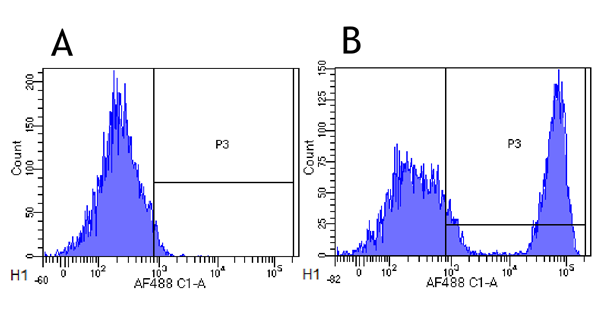
FCM (Flow Cytometry) (Flow cytometric analysis of Hela cells with JNK2 antibody at 1/50 dilution (red) compared with an unlabelled control (cells without incubation with primary antibody; black). Alexa Fluor 488-conjugated goat anti rabbit IgG was used as the secondary antibody.)
ICC (Immunocytochemistry) (ICC staining JNK2 in SHG-44 cells (green). The nuclear counter stain is DAPI (blue). Cells were fixed in paraformaldehyde, permeabilised with 0.25% Triton X100/PBS.)
ICC (Immunocytochemistry) (ICC staining JNK2 in MCF-7 cells (green). The nuclear counter stain is DAPI (blue). Cells were fixed in paraformaldehyde, permeabilised with 0.25% Triton X100/PBS.)
ICC (Immunocytochemistry) (ICC staining JNK2 in Hela cells (green). The nuclear counter stain is DAPI (blue). Cells were fixed in paraformaldehyde, permeabilised with 0.25% Triton X100/PBS.)
IHC (Immunohistochemistry) (Immunohistochemical analysis of paraffin-embedded mouse brain tissue using anti-JNK2 antibody. Counter stained with hematoxylin.)
WB (Western Blot) (Western blot analysis of JNK2 on SHG-44 cell lysates using anti-JNK2 antibody at 1/1, 000 dilution.)
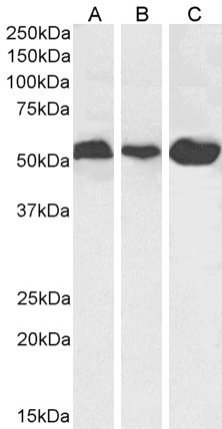
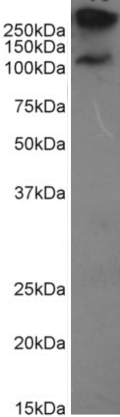
SDS-PAGE (A431 whole cell lysates were separated by 12% SDS-PAGE, and the membrane was blotted with anti-HMGB1(PTR2339)antibody. The HRP-conjugated Goat anti-M)
IHC (Immunohistchemistry) (Immunohistochemical analysis of paraffin-embedded human uterus tissue using anti-DNA Polymerase beta antibody. Counter stained with hematoxylin.)
IHC (Immunohistochemistry) (Immunohistochemical analysis of paraffin-embedded human stomach cancer tissue using anti-DNA Polymerase beta antibody. Counter stained with hematoxylin.)
IHC (Immunohistochemistry) (Immunohistochemical analysis of paraffin-embedded human breast cancer tissue using anti-DNA Polymerase beta antibody. Counter stained with hematoxylin.)
IHC (Immunohistochemistry) (Immunohistochemical analysis of paraffin-embedded rat lung tissue using anti-DNA Polymerase beta antibody. Counter stained with hematoxylin.)
WB (Western Blot) (Western blot analysis of DNA Polymerase beta on Zebrafish tissue lysates using anti-DNA Polymerase beta antibody at 1/200 dilution.)
WB (Western Blot) (Western blot analysis of DNA Polymerase beta on different cell lysate using anti-DNA Polymerase beta antibody at 1/1, 000 dilution. Positive control�� Lane1: PC-12 Lane2: NIH-3T3 Lane3: A431)
FCM (Flow Cytometry) (Flow cytometric analysis of LOVO cells with Matrin 3 antibody at 1/100 dilution (red) compared with an unlabelled control (cells without incubation with primary antibody; black). Alexa Fluor 488-conjugated goat anti-rabbit IgG was used as the secondary antibody.)
ICC (Immunocytochemistry) (ICC staining Matrin 3 in SH-SY-5Y cells (green). The nuclear counter stain is DAPI (blue). Cells were fixed in paraformaldehyde, permeabilised with 0.25% Triton X100/PBS.)
ICC (Immunocytochemistry) (ICC staining Matrin 3 in LOVO cells (green). The nuclear counter stain is DAPI (blue). Cells were fixed in paraformaldehyde, permeabilised with 0.25% Triton X100/PBS.)
ICC (Immunocytochemistry) (ICC staining Matrin 3 in Hela cells (green). The nuclear counter stain is DAPI (blue). Cells were fixed in paraformaldehyde, permeabilised with 0.25% Triton X100/PBS.)
IHC (Immunohistchemistry) (Immunohistochemical analysis of paraffin-embedded mouse testis tissue using anti-Matrin 3 antibody. Counter stained with hematoxylin.)
IHC (Immunohistochemistry) (Immunohistochemical analysis of paraffin-embedded human liver tissue using anti-Matrin 3 antibody. Counter stained with hematoxylin.)
IHC (Immunohistochemistry) (Immunohistochemical analysis of paraffin-embedded human lung cancer tissue using anti-Matrin 3 antibody. Counter stained with hematoxylin.)
IHC (Immunohistochemistry) (Immunohistochemical analysis of paraffin-embedded human tonsil tissue using anti-Matrin 3 antibody. Counter stained with hematoxylin.)
IHC (Immunohistochemistry) (Immunohistochemical analysis of paraffin-embedded rat brain tissue using anti-Matrin 3 antibody. Counter stained with hematoxylin.)
WB (Western Blot) (Western blot analysis of Matrin 3 on different lysates using anti-Matrin 3 antibody at 1/1, 000 dilution. Positive control: Lane 1: Daudi Lane 2: Mouse brain tissue)
FCM (Flow Cytometry) (Flow cytometric analysis of Hela cells with GSK3 beta antibody at 1/50 dilution (blue) compared with an unlabelled control (cells without incubation with primary antibody; red). Alexa Fluor 488-conjugated goat anti rabbit IgG was used as the secondary antibody.)
ICC (Immunocytochemistry) (ICC staining GSK3 beta in SKOV-3 cells (green). The nuclear counter stain is DAPI (blue). Cells were fixed in paraformaldehyde, permeabilised with 0.25% Triton X100/PBS.)
ICC (Immunocytochemistry) (ICC staining GSK3 beta in PC-3M cells (green). The nuclear counter stain is DAPI (blue). Cells were fixed in paraformaldehyde, permeabilised with 0.25% Triton X100/PBS.)
ICC (Immunocytochemistry) (ICC staining GSK3 beta in Hela cells (green). The nuclear counter stain is DAPI (blue). Cells were fixed in paraformaldehyde, permeabilised with 0.25% Triton X100/PBS.)
IHC (Immunohistochemistry) (Immunohistochemical analysis of paraffin-embedded mouse prostate tissue using anti-GSK3 beta antibody. Counter stained with hematoxylin.)
IHC (Immunohistochemistry) (Immunohistochemical analysis of paraffin-embedded mouse testis tissue using anti-GSK3 beta antibody. Counter stained with hematoxylin.)
IHC (Immunohistochemistry) (Immunohistochemical analysis of paraffin-embedded human breast carcinoma tissue using anti-GSK3 beta antibody. Counter stained with hematoxylin.)
IHC (Immunohistochemistry) (Immunohistochemical analysis of paraffin-embedded human breast tissue using anti-GSK3 beta antibody. Counter stained with hematoxylin.)
WB (Western Blot) (Western blot analysis of GSK3 beta on different lysates using anti-GSK3 beta antibody at 1/1, 000 dilution. Positive control: Lane 1: Hela Lane 2: 293 Lane 3: NIH/3T3 Lane 4: PC12)
FCM (Flow Cytometry) (Flow cytometric analysis of SH-SY-5Y cells with TrkA antibody at 1/50 dilution (red) compared with an unlabelled control (cells without incubation with primary antibody; black). Alexa Fluor 488-conjugated goat anti rabbit IgG was used as the secondary antibody.)
ICC (Immunocytochemistry) (ICC staining TrkA in SH-SY-5Y cells (green). The nuclear counter stain is DAPI (blue). Cells were fixed in paraformaldehyde, permeabilised with 0.25% Triton X100/PBS.)
ICC (Immunocytochemistry) (ICC staining TrkA in N2A cells (green). The nuclear counter stain is DAPI (blue). Cells were fixed in paraformaldehyde, permeabilised with 0.25% Triton X100/PBS.)
ICC (Immunocytochemistry) (ICC staining TrkA in Hela cells (green). The nuclear counter stain is DAPI (blue). Cells were fixed in paraformaldehyde, permeabilised with 0.25% Triton X100/PBS.)
IHC (Immunohistochemistry) (Immunohistochemical analysis of paraffin-embedded human tonsil tissue using anti-TrkA antibody. Counter stained with hematoxylin.)
IHC (Immunohistochemistry) (Immunohistochemical analysis of paraffin-embedded mouse kidney tissue using anti-TrkA antibody. Counter stained with hematoxylin.)
IHC (Immunohistochemistry) (Immunohistochemical analysis of paraffin-embedded mouse liver tissue using anti-TrkA antibody. Counter stained with hematoxylin.)
WB (Western Blot) (Western blot analysis of TrkA on different lysates using anti-TrkA antibody at 1/1, 000 dilution. Positive control: Lane 1: Mouse brain Lane 2: SH-SY-5Y)
FCM (Flow Cytometry) (Flow cytometric analysis of HepG2 cells with Annexin IV antibody at 1/100 dilution (purple) compared with an unlabelled control (cells without incubation with primary antibody; yellow). Alexa Fluor 488-conjugated goat anti-rabbit IgG was used as the secondary antibody.)
ICC (Immunocytochemistry) (ICC staining Annexin IV in SiHa cells (green). The nuclear counter stain is DAPI (blue). Cells were fixed in paraformaldehyde, permeabilised with 0.25% Triton X100/PBS.)
ICC (Immunocytochemistry) (ICC staining Annexin IV in HepG2 cells (green). The nuclear counter stain is DAPI (blue). Cells were fixed in paraformaldehyde, permeabilised with 0.25% Triton X100/PBS.)
ICC (Immunocytochemistry) (ICC staining Annexin IV in A549 cells (green). The nuclear counter stain is DAPI (blue). Cells were fixed in paraformaldehyde, permeabilised with 0.25% Triton X100/PBS.)
IHC (Immunohistochemistry) (Immunohistochemical analysis of paraffin-embedded human kidney tissue using anti-Annexin IV antibody. Counter stained with hematoxylin.)
IHC (Immunohistochemistry) (Immunohistochemical analysis of paraffin-embedded human colon cancer tissue using anti-Annexin IV antibody. Counter stained with hematoxylin.)
WB (Western Blot) (Western blot analysis of Annexin IV on human liver tissue lysate using anti-Annexin IV antibody at 1/2, 000 dilution.)
ICC (Immunocytochemistry) (ICC staining SET in MCF-7 cells (green). The nuclear counter stain is DAPI (blue). Cells were fixed in paraformaldehyde, permeabilised with 0.25% Triton X100/PBS.)
ICC (Immunocytochemistry) (ICC staining SET in LOVO cells (green). The nuclear counter stain is DAPI (blue). Cells were fixed in paraformaldehyde, permeabilised with 0.25% Triton X100/PBS.)
ICC (Immunocytochemistry) (ICC staining SET in Hela cells (green). The nuclear counter stain is DAPI (blue). Cells were fixed in paraformaldehyde, permeabilised with 0.25% Triton X100/PBS.)
IHC (Immunohistchemistry) (Immunohistochemical analysis of paraffin-embedded human kidney tissue using anti-SET antibody. Counter stained with hematoxylin.)
IHC (Immunohistochemistry) (Immunohistochemical analysis of paraffin-embedded human lung cancer tissue using anti-SET antibody. Counter stained with hematoxylin.)
IHC (Immunohistochemistry) (Immunohistochemical analysis of paraffin-embedded mouse fallopian tube tissue using anti-SET antibody. Counter stained with hematoxylin.)
IHC (Immunohistochemistry) (Immunohistochemical analysis of paraffin-embedded human tonsil tissue using anti-SET antibody. Counter stained with hematoxylin.)
IHC (Immunohistochemistry) (Immunohistochemical analysis of paraffin-embedded rat kidney tissue using anti-SET antibody. Counter stained with hematoxylin.)
WB (Western Blot) (Western blot analysis of SET on K562 cell lysates using anti-SET at 1/500 dilution.)
Western Blot, Immunocytochemistry, Immunofluorescence, Immunohistochemistry, Immunoprecipitation, Flow Cytometry
Purity
ProA affinity purified
Pricing
SDS-PAGE (Under non-reducing SDS-PAGE conditions, the anti 2019-nCov spike protein S2 domain mAb migrates as a 150kDa protein (Lane NR). Under DTT-reducing conditions it migrates as 50kDa and 25kDa polypeptides (Lane R).)
SDS-PAGE (Various whole cell lysates were separated by 10% SDS-PAGE, and the membrane was blotted with anti-CK14 (ABT047) antibody. The HRP-conjugated Goat anti-M)
Application Data (Staining of canine peripheral blood lymphocytes with Rat anti Canine CD4: Alexa Fluor 488)
Application Data (Published customer image: CD11b+CD14-MHCII- cells suppress T cell proliferation. Facs sorted CD11b+CD14-MHCII- cells isolated from a dog with osteosarcoma or healthy PBMCs were co-incubated with mitogen-stimulated CD4+ and CD8+ T cells isolated from a healthy dog for 72 hs. No stimulated cells were used as negative control. Proliferative responses were measured by 3H-thymidine incorporation from experiments performed in triplicate. CPM, counts per minute. Mean +/- SEM are shown.From: Goulart MR, Pluhar GE, Ohlfest JR (2012) Identification of Myeloid Derived Suppressor Cells in Dogs with Naturally Occurring Cancer. PLoS ONE 7(3): e33274.)
Application Data (Published customer image: Immunophenotypic profile of tumor infiltrating lymphocyte in canine mammary carcinomas. Analysis of tumor infiltrating T-cells, B-lymphocytes and T-cell subsets from MC-BMT or MC (A), further subcategorized according to the absence (-) or presence (+) of lymph node metastasis (-) (B). Lymphocyte populations and subsets were identified by flow cytometric immunostaining as described in Material and Methods. Data were expressed as percentage of positive cells within gated lymphocytes and CD4+/CD8+ T-cell ratio. Significant differences at p < 0.05 are highlighted by asterisk.From: Estrela-Lima et al. BMC Cancer 2010 10:256.)
Application Data (Published customer image: Survival rates of animals with canine mammary carcinoma. Kaplan-Meier survival curves for animals for All (MC-BMT and MC) animals categorized according to the relative percentage of CD4+ T-cells (33.3%) (A). Animals were submitted to quarterly follow-ups during twelve months and survival rates expressed in days between the surgical excisions of the end of follow-up as described in Methods. The survival curves were estimated with the Kaplan-Meier method followed by Log-rank test. Correlation analysis highlighted the significant association between the percentages of CD4+ T-cells and CD8+ T-cells with the animal survival in days (B).From: Estrela-Lima et al. BMC Cancer 2010 10:256.)
Application Data (Staining of canine peripheral blood lymphocytes with Rat anti Canine CD4: FITC)
Application Data (Staining of canine peripheral blood lymphocytes with Rat anti Canine CD4: APC)
Application Data (ELISA: Immobilize various types of SARS proteins at concentration of 2mg/ml on solid substrate, then react with SARS-CoV-2 Spike RBD Nanobody at concentration of 100mg/ml, 10mg/ml and 1mg/ml. It shows the SARS-CoV-2 Spike RBD Nanobody (AAA27051) is specific for SARS-CoV-2-S1-RBD protein, without any cross-reactivity with MERS-CoV, SARS-CoV, HCoV-OC43 or HCoV-229E.)
Application Data (SARS-CoV-2 Spike protein RBD His/Sumostar Tag captured on COOH chip binding to the SARS-CoV-2 Spike RBD Nanobody (AAA27051), increases the local refractive index (RI), leading to a red shift of the LSPR peak position. The higher concentrations of SARS-CoV-2 Spike RBD Nanobody, the larger the wavelength shift. The detected affinity constant of SARS-CoV-2 Spike protein RBD/SARS-CoV-2 Spike RBD Nanobody binding is 28.2nM.)
Application Data (SARS-CoV-2 Spike RBD Nanobody(AAA27051) competitively prevented SARS-CoV-2-S1-RBD from binding to ACE2-HRP conjugate . The inhibition efficacy of the SARS-CoV-2-S1-RBD/ACE2 binding was positively proportionally to the SARSCoV- 2 Spike RBD Nanobody concentrations. It showed that this SARS-CoV-2 Spike RBD Nanobody effectively inhibited the SARS-CoV-2-S1- RBD/ACE2 binding. And the IC50 of this SARSCoV- 2 Spike RBD Nanobody is 0.1074 g/ml.)
Application Data (SARS-CoV-2 Spike RBD Nanobody (AAA27051) competed with ACE2-HRP conjugate for binding to SARSCoV-2-S1-RBD . The binding signal of SARS-CoV-2-S1-RBD and ACE2-HRP conjugate was gradually reduced as the SARSCoV- 2 Spike RBD Nanobody concentrations increased. It indicated that this SARS-CoV-2 Spike RBD Nanobody effectively inhibited the SARS-CoV-2-S1-RBD/ACE2 binding. And the IC50 of this SARS-CoV-2 Spike RBD Nanobody is 1.296 nM.)
Application Data (GICA In the Colloidal Gold Immunochromatography Assay detection system, the background of antibody (AAA27051) is clean, the detection limit can be as low as 25ng/ml (1.75ng/0.07ml), and the sensitivity is very good.)
ELISA (The Binding Activity of SARS-CoV-2-S Antibody with SARS-CoV-2-S1-RBD Activity: Measured by its binding ability in a functional ELISA. Immobilized SARS-CoV-2-S1-RBD at 2 ug/ml can bind SARS-CoV-2-S Antibody, the EC50 is 0.8674 ng/ml.)
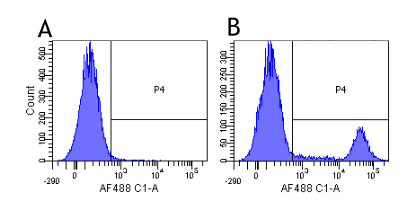
FCM (Flow Cytometry) (Flow cytometric analysis of K562 cells with CDC40 antibody at 1/50 dilution (red) compared with an unlabelled control (cells without incubation with primary antibody; black). Alexa Fluor 488-conjugated goat anti rabbit IgG was used as the secondary antibody.)
ICC (Immunocytochemistry) (ICC staining CDC40 in SHG-44 cells (green). The nuclear counter stain is DAPI (blue). Cells were fixed in paraformaldehyde, permeabilised with 0.25% Triton X100/PBS.)
ICC (Immunocytochemistry) (ICC staining CDC40 in HUVEC cells (green). The nuclear counter stain is DAPI (blue). Cells were fixed in paraformaldehyde, permeabilised with 0.25% Triton X100/PBS.)
ICC (Immunocytochemistry) (ICC staining CDC40 in Hela cells (green). The nuclear counter stain is DAPI (blue). Cells were fixed in paraformaldehyde, permeabilised with 0.25% Triton X100/PBS.)
IHC (Immunohistochemistry) (Immunohistochemical analysis of paraffin-embedded mouse brain tissue using anti-CDC40 antibody. Counter stained with hematoxylin.)
IHC (Immunohistochemistry) (Immunohistochemical analysis of paraffin-embedded mouse colon tissue using anti-CDC40 antibody. Counter stained with hematoxylin.)
IHC (Immunohistochemistry) (Immunohistochemical analysis of paraffin-embedded rat brain tissue using anti-CDC40 antibody. Counter stained with hematoxylin.)
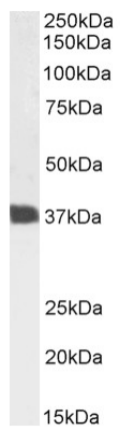
WB (Western Blot) (Western blot analysis of CDC40 on Hela cells lysates using anti-CDC40 antibody at 1/2, 000 dilution.)
IHC (Immunohistchemistry) (Immunohistochemistry analysis of paraffin-embedded Human breast cancer using Phospho-Smad3-S423/S425 Rabbit mAb (AAA28611) at dilution of 1:200 (40x lens). High pressure antigen retrieval performed with 0.01M Citrate Bufferr (pH 6.0) prior to IHC staining.)
IHC (Immunohistochemistry) (Immunohistochemistry analysis of paraffin-embedded Rat lung using Phospho-Smad3-S423/S425 Rabbit mAb (AAA28611) at dilution of 1:200 (40x lens). High pressure antigen retrieval performed with 0.01M Citrate Bufferr (pH 6.0) prior to IHC staining.)
IHC (Immunohistochemistry) (Immunohistochemistry analysis of paraffin-embedded Human colon carcinoma using Phospho-Smad3-S423/S425 Rabbit mAb (AAA28611) at dilution of 1:200 (40x lens). High pressure antigen retrieval performed with 0.01M Citrate Bufferr (pH 6.0) prior to IHC staining.)
IHC (Immunohistochemistry) (Immunohistochemistry analysis of paraffin-embedded Rat ovary using Phospho-Smad3-S423/S425 Rabbit mAb (AAA28611) at dilution of 1:200 (40x lens). High pressure antigen retrieval performed with 0.01M Citrate Bufferr (pH 6.0) prior to IHC staining.)
IHC (Immunohistochemistry) (Immunohistochemistry analysis of paraffin-embedded Mouse kidney using Phospho-Smad3-S423/S425 Rabbit mAb (AAA28611) at dilution of 1:200 (40x lens). High pressure antigen retrieval performed with 0.01M Citrate Bufferr (pH 6.0) prior to IHC staining.)
WB (Western Blot) (Western blot analysis of lysates from C6 cells, using Phospho-Smad3-S423/S425 Rabbit mAb (AAA28611) at 1:1000 dilution. C6 cells were treated by PMA/TPA (200 nM) at 37? for 10 minutes.Secondary antibody: HRP-conjugated Goat anti-Rabbit IgG (H+L) (AS014) at 1:10000 dilution.Lysates/proteins: 25ug per lane.Blocking buffer: 3% nonfat dry milk in TBST.Detection: ECL Basic Kit (RM00020).Exposure time: 60s.)
FCM (Flow Cytometry) (Flow cytometric analysis of SH-SY-5Y cells with HP1 alpha antibody at 1/50 dilution (blue) compared with an unlabelled control (cells without incubation with primary antibody; red). Alexa Fluor 488-conjugated goat anti rabbit IgG was used as the secondary antibody.)
ICC (Immunocytochemistry) (ICC staining HP1 alpha in MCF-7 cells (green). The nuclear counter stain is DAPI (blue). Cells were fixed in paraformaldehyde, permeabilised with 0.25% Triton X100/PBS.)
ICC (Immunocytochemistry) (ICC staining HP1 alpha in Hela cells (green). The nuclear counter stain is DAPI (blue). Cells were fixed in paraformaldehyde, permeabilised with 0.25% Triton X100/PBS.)
IHC (Immunohistochemistry) (Immunohistochemical analysis of paraffin-embedded mouse uterus tissue using anti-HP1 alpha antibody. Counter stained with hematoxylin.)
IHC (Immunohistochemistry) (Immunohistochemical analysis of paraffin-embedded human uterus tissue using anti-HP1 alpha antibody. Counter stained with hematoxylin.)
IHC (Immunohistochemistry) (Immunohistochemical analysis of paraffin-embedded human breast carcinoma tissue using anti-HP1 alpha antibody. Counter stained with hematoxylin.)
IHC (Immunohistochemistry) (Immunohistochemical analysis of paraffin-embedded human tonsil tissue using anti-HP1 alpha antibody. Counter stained with hematoxylin.)
WB (Western Blot) (Western blot analysis of HP1 alpha on different cell lysates using anti-HP1 alpha antibody at 1/1, 000 dilution. Positive control: Lane 1: MCF-7 Lane 2: Hela)
Western Blot, Immunocytochemistry, Immunofluorescence, Immunohistochemistry, Immunoprecipitation, Flow Cytometry
Purity
ProA affinity purified
Pricing
What are Monoclonal Antibodies?
Monoclonal antibodies are specialized laboratory-produced proteins developed for binding to specific biological antigens or other molecular targets. Since they come from a single cell (or clone), they are especially consistent and accurate in the data they are involved in producing.
This type of antibody material has been shown to be a powerful tool in finding and subsequently destroying harmful cells in an organism, such as those found in cancers or various autoimmune diseases. This makes them excellent aids in medical testing and research, which is why they are so widely used.
AAA Biotech offers a comprehensive range of high-quality monoclonal antibodies that perform effectively in various laboratory tests, including (amongst others) ELISA, western blotting, immunohistochemistry, and flow cytometry. All of the products in our catalog are thoroughly quality tested to make sure that they are reliable and will consistently perform well in your research.
What Are The Uses of Monoclonal Antibodies
Monoclonal antibodies are used in many lab tests, including (amongst others) ELISA, western blotting, immunohistochemistry, and flow cytometry.
ELISA is a test that helps detect a specific substance/analyte in a sample. It uses antibodies (often monoclonal) bound to a solid surface (such as the well of a microplate) to “capture” the substance/analyte in the sample and immobilize it so that the detection antibody component can then bind to it and produce a signal, which can then be measured.
Western blotting identifies specific proteins in a sample. The sample is first separated on a gel, and then antibodies are applied that will typically bind to the target, which will all be localized to a single band in a lane.
Immunohistochemistry helps locate specific proteins in cells or tissue samples using antibodies.
Flow cytometry looks at and sorts cells. It uses antibodies that are conjugated to reporter molecules called “fluorophores”, which, under special lights, emit light themselves, which can then be measured by a detector instrument.
How Monoclonal Antibodies Are Used as Medicine?
Please note that all of the products listed in AAA Biotech’s catalog are strictly for research-use only (RUO).
Monoclonal antibodies can also be used as therapeutic/medical treatments, particularly in the context of cancers. They are designed to find and bind to specific cells or proteins, helping the immune system recognize and attack the cancer. These treatments work in different ways, such as:
Radioimmunotherapy attaches a small amount of radioactive molecule to the antibody, so it delivers the radiation directly to the cancer cells that the antibody is specifically binding to.
Antibody-directed enzyme prodrug therapy uses antibodies that are specifically bound to special enzymes. These enzymes activate a harmless drug in the body and turn it into a cancer-killing drug only near the cancer cells—this helps avoid harming healthy cells.
Immunoliposomes are tiny “bubbles” filled with medicine/drug and coated with antibodies. They carry the drug straight to the cancer cells.
Why Buy Monoclonal Antibodies From Us?
At AAA Biotech, we provide high-performance monoclonal antibodies designed to support a wide range of research needs.
1. Validated for Versatile Applications
The antibodies in our catalog are extensively validated and compatible with multiple techniques, including (but not limited to) ELISA, flow cytometry (FC), immunocytochemistry (ICC), immunofluorescence (IF), immunohistochemistry (IHC), immunoprecipitation (IP), and western blotting (WB).
2. Wide Selection & Specialized Options
We offer antibodies for common and rare species, that are available in various conjugated forms, and also in recombinant formats. Essentially, there is almost anything one might need to meet their experimental model’s requirements.
3. High-Quality Proteins
Our proteins meet high purity standards—90% or more as confirmed by SDS-PAGE. Many are available with tags like His, Flag, GST, or MBP, and we also supply native and biologically active proteins for functional studies.
Frequently Asked Questions
1. Are your monoclonal antibodies validated for specific applications?
Yes, our antibodies are tested and validated for use in methods such as ELISA, western blot, IHC, flow cytometry, and more. Refer to specific product pages or datasheets for individual product information.
2. How do I choose the right monoclonal antibody for my application?
Review the product details directly for application validation, species reactivity, and target information. You may also contact our support team at any time for help.
3. How quickly can I receive my order?
Most orders are processed and shipped within 1–3 business days, depending on product availability and your shipping location.
Submit a Question
Please complete the form below and a representative will contact you as soon as possible.
Request more Information
Please complete the form below and a representative will contact you as soon as possible.
Request a Manual
Please complete the form below and a representative will contact you as soon as possible.
Request a Quote
Please complete the form below and a representative will contact you as soon as possible.