Get accurate results in your research with our Monoclonal Antibodies, which are specially made to target exactly what you require for your research, and will produce consistent, reliable performance in lab tests.
IP (Immunoprecipitation) (Immunoprecipitation of over-expressed DDDDK-tagged protein in HeLa cell incubated with DDDDK antibody. A mock served as negative control and over-expressed Hela cell lysate served as positive control.)
WB (Western Blot) (Western blot analysis of over-expressed DDDDK-tagged protein in 293T cell using DDDDK antibody at different dilution. Each lane was loaded with 2 ug cell lysate.)
IF (Immunofluorescence) (Immunofluorescence analysis of HeLa cells using BrdU antibody (Green) and TriMethyl-Histone H3-K27 antibody (Red). Blue: DAPI for nuclear staining.)
IHC (Immunohistochemistry) (Immunohistochemistry of paraffin-embedded mouse jejunum using BrdU antibody at dilution of 1:300 (40x lens).)
FCM/FACS (Flow Cytometry) (Flow-cytometry using anti-human MMP13 antibody.HeLa cells were stained with an irrelevant antibody (Blue Histogram) or an anti-human MMP13 antibody monoclonal antibody (Catalog # RHE45101 ,Green Histogram) at a concentration of 5 ?ug/ml for 30 mins at RT. After washing, bound antibody was detected using a FITC conjugated goat anti-mouse antibody (Catalog # PMB96441) and cells analysed on a NovoCyte Flow Cytometer.)
FCM/FACS (Flow Cytometry) (Flow-cytometry using anti-human MMP13 antibody.MDA-MB-231 cells were stained with an irrelevant antibody (Blue Histogram) or an anti-human MMP13 antibody monoclonal antibody (Catalog # RHE45101 ,Green Histogram) at a concentration of 5 ?ug/ml for 30 mins at RT. After washing, bound antibody was detected using a FITC conjugated goat anti-mouse antibody (Catalog # PMB96441) and cells analysed on a NovoCyte Flow Cytometer.)
Bioactivity (Detects Human MMP13 in indirect ELISAs.)
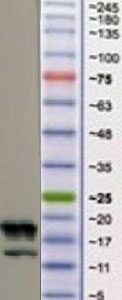
Application Data ((0.05ug/ml) staining in mouse liver(A) and (0.003ug/ml) staining in rat liver(B) tissue lysate (35ug protein in RIPA buffer). Primary incubation was 1 hour. Detected by chemiluminescence.)
FCM/FACS (Flow Cytometry) (Blue line: Flow cytometric analysis of paraformaldehyde fixed HepG2 cells, permeabilized with 0.5% Triton. Primary incubation 1hr (1:50-1:100 dilution) followed by Alexa Fluor 488 conjugated goat Anti-mouse IgG (1:1000 dilution). Black line: Anti-Fluorescein Isotype control)
IF (Immunofluorescence) (Immunofluorescence analysis of paraformaldehyde fixed HepG2 cells. Primary incubation 1hr (1:50-1:100 dilution) followed by Alexa Fluor 488 secondary antibody (1:1000 dilution), showing cytoplasmic staining. The nuclear stain is DAPI (blue). Isotype control: Anti-Fluorescein followed by Alexa Fluor 488 secondary antibody.)
Application Data ((0.03ug/ml) staining in human spleen(A), (0.01ug/ml) staining in human tonsil(B) tissue lysates and (0.003ug/ml) staining in human plasma(C) and (0.0003ug/ml) staining in human serum(D)(35ug protein in RIPA buffer). Primary incubation was 1 hour. Detected by chemiluminescence.)
FCM/FACS (Flow Cytometry) (Blue line: Flow cytometric analysis of human peripheral blood leukocytes. Primary incubation 1hr (1:25-1:50 dilution) followed by Alexa Fluor 488 conjugated goat Anti-mouse IgG (1:1000 dilution). Black line: Anti-Fluorescein Isotype control)
FCM/FACS (Flow Cytometry) (Overlay histogram showing Jurkat cells stained with (red line) at 1?50. The cells were fixed with 70% Ethylalcohol (18h) and then incubated in 10% normal goat serum to block non-specific protein-protein interactions followedby the antibody (1ug/1*106cells) for 1 h at 4?.The secondary antibody used was FITC-conjugated goat anti-rabbit IgG (H+L) at 1/200 dilution for 30min at 4?. Control antibody (green line) was Rabbit IgG (1ug/1*106cells) used under the same conditions. Acquisition of >10,000 events was performed.)
IF (Immunofluorescence) (Immunofluorescence staining of A549 Cells at 1?50, counter-stained with DAPI. The cells were fixed in 4% formaldehyde, permeated by 0.2% TritonX-100, and blocked in 10% normal Goat Serum. The cells were then incubated with the antibody overnight at 4 degree C. Nuclear DNA was labeled in blue with DAPI. The secondary antibody was FITC-conjugated AffiniPure Goat Anti-Rabbit IgG ?H+L?.)
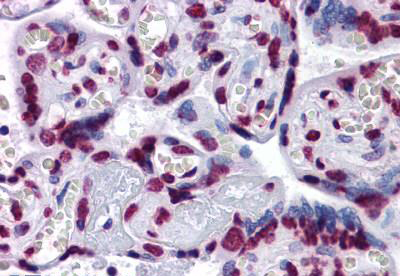
IHC (Immunohiostchemistry) (IHC image diluted at 1:100 and staining in paraffin-embedded human placenta tissue performed on a Leica BondTM system. After dewaxing and hydration, antigen retrieval was mediated by high pressure in a citrate buffer (pH 6.0). Section was blocked with 10% normal goat serum 30min at RT. Then primary antibody (1% BSA) was incubated at 4 degree C overnight. The primary is detected by a Goat anti-rabbit IgG polymer labeled by HRP and visualized using 0.05% DAB.)
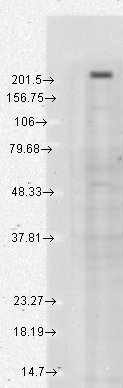
WB (Western Blot) (Western BlotPositive WB detected in: L02 whole cell lysate, Hela whole cell lysate, PC-3 whole cell lysate, A549 whole cell lysateAll lanes: EGFR antibody at 1:2000SecondaryGoat polyclonal to rabbit IgG at 1/50000 dilutionPredicted band size: 135, 45, 78, 70 kDaObserved band size: 165 kDa)
IF (Immunofluorescence) (Immunofluorescence staining of Hela Cells at 1?50, counter-stained with DAPI. The cells were fixed in 4% formaldehyde, permeated by 0.2% TritonX-100, and blocked in 10% normal Goat Serum. The cells were then incubated with the antibody overnight at 4 degree C. Nuclear DNA was labeled in blue with DAPI. The secondary antibody was FITC-conjugated AffiniPure Goat Anti-Rabbit IgG ?H+L?.)
WB (Western Blot) (Western BlotPositive WB detected in: Jurkat whole cell lysate, HepG2 whole cell lysate, Hela whole cell lysate, NIH/3T3 whole cell lysate, K562 whole cell lysate, 293 whole cell lysate, MCF-7 whole cell lysateAll lanes: PIK3CA antibody at 1:1500SecondaryGoat polyclonal to rabbit IgG at 1/50000 dilutionPredicted band size: 125 kDaObserved band size: 110 kDa)
IHC (Immunohiostchemistry) (IHC image diluted at 1:100 and staining in paraffin-embedded human tonsil tissue performed on a Leica BondTM system. After dewaxing and hydration, antigen retrieval was mediated by high pressure in a citrate buffer (pH 6.0). Section was blocked with 10% normal goat serum 30min at RT. Then primary antibody (1% BSA) was incubated at 4 degree C overnight. The primary is detected by a Goat anti-rabbit IgG polymer labeled by HRP and visualized using 0.05% DAB.)
WB (Western Blot) (Western BlotPositive WB detected in: MCF-7 whole cell lysateAll lanes: PD1 antibody at 1:2000SecondaryGoat polyclonal to rabbit IgG at 1/50000 dilutionPredicted band size: 32 KDaObserved band size: 32 kDa)
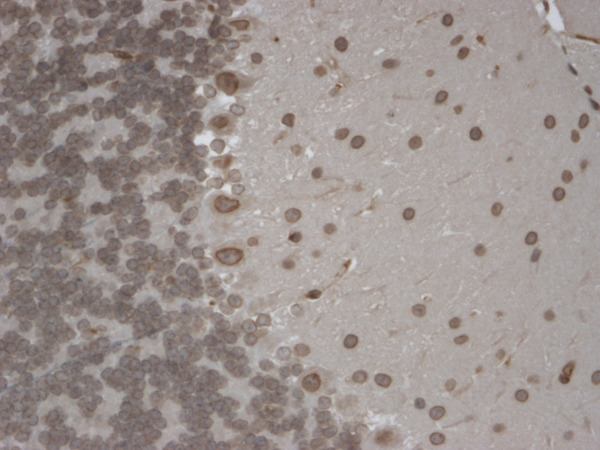
IHC (Immunohistochemisry) (Immunohistochemistry of Caveolin-1 in paraffin-embedded Human breast cancer tissue using Caveolin-1 Rabbit mAb at dilution 1/100)
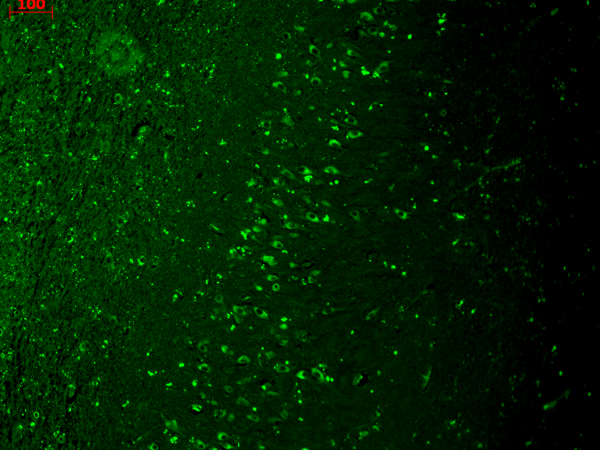
IF (Immunofluorescence) (Immunofluorescence of Caveolin-1 (green) in Hela using Caveolin-1 antibody at dilution 1/2, and DAPI(blue))
WB (Western Blot) (Western blot detection of Caveolin-1 in Hela cell lysates using Caveolin-1 Rabbit mAb(1:1000 diluted).Predicted band size:20kDa.Observed band size:20kDa.)
FCM/FACS (Flow Cytometry) (Flow cytometric analysis of Hela cells with Mad2L2 antibody at 1/100 dilution (red) compared with an unlabelled control (cells without incubation with primary antibody; black). Alexa Fluor 488-conjugated goat anti rabbit IgG was used as the secondary antibody.)
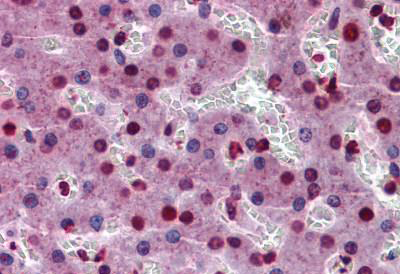
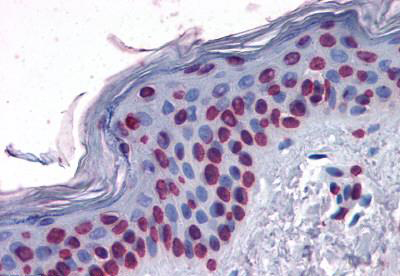
IHC (Immunohistochemistry) (Immunohistochemical analysis of paraffin-embedded human tonsil tissue using anti-Mad2L2 antibody. Counter stained with hematoxylin.)
IHC (Immunohistochemisry) (Immunohistochemical analysis of paraffin-embedded mouse colon tissue using anti-Mad2L2 antibody. Counter stained with hematoxylin.)
IHC (Immunohiostchemistry) (Immunohistochemical analysis of paraffin-embedded rat lung tissue using anti-Mad2L2 antibody. Counter stained with hematoxylin.)
WB (Western Blot) (Western blot analysis of Mad2L2 on SiHa cell using anti-Mad2L2 antibody at 1/500 dilution.)
ICC (Immunocytochemistry) (ICC staining Cathepsin B in HepG2 cells (red). Cells were fixed in paraformaldehyde, permeabilised with 0.25% Triton X100/PBS.)
WB (Western Blot) (Western blot analysis of Cathepsin B on SW480 cell lysate using anti-Cathepsin B antibody at 1/5, 000 dilution. )
The purified antibody is conjugated with fluorescein isothiocyanate (FITC) under optimum conditions. The conjugate is purified by size-exclusion chromatography.
Anti-ICAM-1 In Vivo Antibody - Ultra Low Endotoxin (15.2)
Gene Names
ICAM1; BB2; CD54; P3.58
Reactivity
Human, Mouse, Rat
Applications
Western Blot, Immunoprecipitation, Flow Cytometry, Immunohistochemistry
Purity
>98% by SDS-PAGE and HPLC This monoclonal antibody was purified using multi-step affinity chromatography methods such as Protein A or G depending on the species and isotype.
FCM/FACS (Flow Cytometry) (Flow cytometry surface staining pattern of human peripheral whole blood stained using anti-human CD99 (3B2/TA8) PE-Cy™7 antibody (4 ul reagent / 100 ul of peripheral whole blood).)
FCM/FACS (Flow Cytometry) (Separation of human CD99 positive lymphocytes (red-filled) from neutrophil granulocytes (black-dashed) in flow cytometry analysis (surface staining) of human peripheral whole blood stained using anti-human CD99 (3B2/TA8) PE-Cy™7 antibody (4 ul reagent / 100 ul of peripheral whole blood).)
IF (Immunofluorescence) (Immunofluorescent analysis of 293F cells transfected with HA-Tag fusion protein using anti-HA-Tag monoclonal antibody at dilution of 1:2000.)
WB (Western Blot) (Western blotting of HA-Tag fused recombinant protein with Anti-HA monoclonal antibody at dilution of 1:1000.)
IHC (Immunohiostchemistry) (Immunohistochemistry analysis of paraffin-embedded human gastric cancer (left) and normal gastric tissues (right) with DAB staining using Cerberus Monoclonal Antibody.)
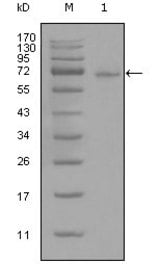
WB (Western Blot) (Western Blot analysis using Cerberus Monoclonal Antibody against CER1 (aa18-267)-hIgGFc transfected HEK293 cell lysate (1).)
IHC (Immunohiostchemistry) (Immunohistochemistry analysis of paraffin-embedded lung cancer (left) and ovary tumour tissues (right) with DAB staining using Cyclin B1 Monoclonal Antibody.)
WB (Western Blot) (Western Blot analysis using Cyclin B1 Monoclonal Antibody against HeLa (1). Jurkat (2). K562 (3) and PC-12 (4) cell lysate.)
FCM/FACS (Flow Cytometry) (Flow cytometric analysis of PACN-1 cells using Cytokeratin 15 Monoclonal Antibody (green) and negative control (purple).)
IF (Immunofluorescence) (Immunofluorescence analysis of HepG2(left) and PACN-1 (right) cells using Cytokeratin 15 Monoclonal Antibody (green). Red: Actin filaments have been labeled with DY-554 phalloidin. Blue: DRAQ5 fluorescent DNA dye.)
IHC (Immunohiostchemistry) (Immunohistochemistry analysis of paraffin-embedded human Tonsil tissues with AEC staining using Cytokeratin 15 Monoclonal Antibody.)
WB (Western Blot) (Western Blot analysis using Cytokeratin 15 Monoclonal Antibody against A431 cell lysate.)
IHC (Immunohiostchemistry) (Immunohistochemistry analysis of paraffin-embedded human lymph tissue (A). glioma tissue (B) and cerebellum tissue (C). showing membrane localization with DAB staining using Dynamin I Monoclonal Antibody.)
WB (Western Blot) (Western Blot analysis using Dynamin I Monoclonal Antibody against C6 (1). NIH/3T3 (2). SKN-SH (3). LN18 (4). SHSY5Y (5) cell lysate and rat brain tiisues lysate (6).)
IF (Immunofluorescence) (Immunofluorescence analysis of GC7901 cells using EPO Monoclonal Antibody (green). Blue: DRAQ5 fluorescent DNA dye. Red: Actin filaments have been labeled with Alexa Fluor-555 phalloidin.)
WB (Western Blot) (Western Blot analysis using EPO Monoclonal Antibody against HEK293 (1) and EPO-hIgGFc transfected HEK293 (2) cell lysate.)
IF (Immunofluorescence) (Confocal immunofluorescence analysis of Hela cells using Fer Monoclonal Antibody (green). Red: Actin filaments have been labeled with Alexa Fluor-555 phalloidin. Blue: DRAQ5 fluorescent DNA dye.)
IHC (Immunohiostchemistry) (Immunohistochemistry analysis of paraffin-embedded human kidney tissues with AEC staining using Fer Monoclonal Antibody.)
WB (Western Blot) (Western Blot analysis using Fer Monoclonal Antibody against NIH/3T3 (1). A549 (2) and SK-MEL-5 (3) cell lysate.)
IHC (Immunohiostchemistry) (Immunohistochemistry analysis of paraffin-embedded human colon cancer (A). gastric cancer (B) and rectal cancer (C) tissues with DAB staining using FoxA2 Monoclonal Antibody.)
WB (Western Blot) (Western Blot analysis using FoxA2 Monoclonal Antibody against A549 (1) cell lysate.)
IF (Immunofluorescence) (Immunofluorescence analysis of RAJI cells using CD1A Monoclonal Antibody (green). Blue: DRAQ5 fluorescent DNA dye.)
IHC (Immunohiostchemistry) (Immunohistochemistry analysis of paraffin-embedded cervical cancer tissues (left) and colon cancer tissues (right) with DAB staining using CD1A Monoclonal Antibody.)
WB (Western Blot) (Western Blot analysis using CD1A Monoclonal Antibody against K562 (1). RAJI (2). and MOLT4 (3) cell lysate.)
IF (Immunofluorescence) (Confocal immunofluorescence analysis of PC-12 cells using Trk A Monoclonal Antibody (green). showing membrane and cytoplasmic localization. Blue: DRAQ5 fluorescent DNA dye.)
WB (Western Blot) (Western Blot analysis using Trk A Monoclonal Antibody against extracellular domain of human Trk A (aa33-423).)
FCM/FACS (Flow Cytometry) (Flow cytometric analysis of Jurkat cells stained with Smad5 Monoclonal Antibody (red). followed by FITC-conjugated goat anti-mouse IgG. Black line histogram represents the isotype control. normal mouse IgG.)
IF (Immunofluorescence) (Immunofluorescence analysis of HeLa cells using Smad5 Monoclonal Antibody.)
WB (Western Blot) (Western Blot analysis using Smad5 Monoclonal Antibody against mouse testis lysate.)
ICC (Immunocytochemistry) (Immunocytochemistry staining of HeLa cells fixed with 4% Paraformaldehyde and using anti-TBL1X mouse mAb (dilution 1:100).)
WB (Western Blot) (Western blot detection of TBL1X in SW480 cell lysates using TBL1X mouse mAb (1:1000 diluted).Predicted band size:58KDa.Observed band size:58KDa.)
IP (Immunoprecipitation) (Immunoprecipitation analysis of Hela cell lysates using Dynactin 1 mouse mAb.)
WB (Western Blot) (Western blot detection of Dynactin 1 in K562.MCF7.293T and Hela cell lysates using Dynactin 1 mouse mAb (1:500 diluted).Predicted band size:150KDa.Observed band size: 150KDa.)
ICC (Immunocytochemistry) (Immunocytochemistry of HeLa cells using anti-Protein Phosphatase 4C mouse mAb diluted 1:200.)
IHC (Immunohiostchemistry) (IHC of paraffin-embedded human breast cancer using anti-Protein Phosphatase 4C mouse mAb diluted 1/500-1/1000.)
WB (Western Blot) (Western blot detection of Protein Phosphatase 4C in Hela and Jurkat cell lysates using Protein Phosphatase 4C mouse mAb (1:200 diluted).Predicted band size: 34KDa.Observed band size: 34KDa.)
FCM/FACS (Flow Cytometry) (Flow cytometric analysis of PC-2 cells using N-cadherin Monoclonal Antibody (green) and negative control (purple).)
IF (Immunofluorescence) (Immunofluorescence analysis of A431 cells using N-cadherin Monoclonal Antibody (green). Blue: DRAQ5 fluorescent DNA dye.)
IHC (Immunohiostchemistry) (Immunohistochemistry analysis of paraffin-embedded human lung cancer (A). colon cancer (B). ovarian cancer (C) and mammary cancer(D) with DAB staining using N-cadherin Monoclonal Antibody.)
WB (Western Blot) (Western Blot analysis using N-cadherin Monoclonal Antibody against A431 (1). NIH/3T3 (2). HeLa (3). C6 (4) and LNCap (5) cell lysate.)
FCM/FACS (Flow Cytometry) (Flow cytometric analysis of Jurkat cells using NM23-H1 Monoclonal Antibody (green) and negative control (purple).)
IF (Immunofluorescence) (Immunofluorescence analysis of Hela cells using NM23-H1 Monoclonal Antibody (green). Red: Actin filaments have been labeled with Alexa Fluor-555 phalloidin. Blue: DRAQ5 fluorescent DNA dye.)
IHC (Immunohiostchemistry) (Immunohistochemistry analysis of paraffin-embedded human Placenta tissues with AEC staining using NM23-H1 Monoclonal Antibody.)
WB (Western Blot) (Western Blot analysis using NM23-H1 Monoclonal Antibody against NME1-hIgGFc transfected HEK293 cell lysate.)
FCM/FACS (Flow Cytometry) (Flow cytometric analysis of NIH/3T3 cells using Rab 25 Monoclonal Antibody (green) and negative control (purple).)
IF (Immunofluorescence) (Immunofluorescence analysis of A549 cells using Rab 25 Monoclonal Antibody (green). Blue: DRAQ5 fluorescent DNA dye. Red: Actin filaments have been labeled with Alexa Fluor-555 phalloidin.)
IHC (Immunohiostchemistry) (Immunohistochemistry analysis of paraffin-embedded esophagus tissues (left) and human lung cancer (right) with DAB staining using Rab 25 Monoclonal Antibody.)
WB (Western Blot) (Western Blot analysis using Rab 25 Monoclonal Antibody against MCF-7 (1). T47D (2) and GC7901 (3) cell lysate.)
Flow Cytometry, Immunocytochemistry, Immunofluorescence, Immunohistochemistry, Western Blot
Purity
Affinity purification
Pricing
What are Monoclonal Antibodies?
Monoclonal antibodies are specialized laboratory-produced proteins developed for binding to specific biological antigens or other molecular targets. Since they come from a single cell (or clone), they are especially consistent and accurate in the data they are involved in producing.
This type of antibody material has been shown to be a powerful tool in finding and subsequently destroying harmful cells in an organism, such as those found in cancers or various autoimmune diseases. This makes them excellent aids in medical testing and research, which is why they are so widely used.
AAA Biotech offers a comprehensive range of high-quality monoclonal antibodies that perform effectively in various laboratory tests, including (amongst others) ELISA, western blotting, immunohistochemistry, and flow cytometry. All of the products in our catalog are thoroughly quality tested to make sure that they are reliable and will consistently perform well in your research.
What Are The Uses of Monoclonal Antibodies
Monoclonal antibodies are used in many lab tests, including (amongst others) ELISA, western blotting, immunohistochemistry, and flow cytometry.
ELISA is a test that helps detect a specific substance/analyte in a sample. It uses antibodies (often monoclonal) bound to a solid surface (such as the well of a microplate) to “capture” the substance/analyte in the sample and immobilize it so that the detection antibody component can then bind to it and produce a signal, which can then be measured.
Western blotting identifies specific proteins in a sample. The sample is first separated on a gel, and then antibodies are applied that will typically bind to the target, which will all be localized to a single band in a lane.
Immunohistochemistry helps locate specific proteins in cells or tissue samples using antibodies.
Flow cytometry looks at and sorts cells. It uses antibodies that are conjugated to reporter molecules called “fluorophores”, which, under special lights, emit light themselves, which can then be measured by a detector instrument.
How Monoclonal Antibodies Are Used as Medicine?
Please note that all of the products listed in AAA Biotech’s catalog are strictly for research-use only (RUO).
Monoclonal antibodies can also be used as therapeutic/medical treatments, particularly in the context of cancers. They are designed to find and bind to specific cells or proteins, helping the immune system recognize and attack the cancer. These treatments work in different ways, such as:
Radioimmunotherapy attaches a small amount of radioactive molecule to the antibody, so it delivers the radiation directly to the cancer cells that the antibody is specifically binding to.
Antibody-directed enzyme prodrug therapy uses antibodies that are specifically bound to special enzymes. These enzymes activate a harmless drug in the body and turn it into a cancer-killing drug only near the cancer cells—this helps avoid harming healthy cells.
Immunoliposomes are tiny “bubbles” filled with medicine/drug and coated with antibodies. They carry the drug straight to the cancer cells.
Why Buy Monoclonal Antibodies From Us?
At AAA Biotech, we provide high-performance monoclonal antibodies designed to support a wide range of research needs.
1. Validated for Versatile Applications
The antibodies in our catalog are extensively validated and compatible with multiple techniques, including (but not limited to) ELISA, flow cytometry (FC), immunocytochemistry (ICC), immunofluorescence (IF), immunohistochemistry (IHC), immunoprecipitation (IP), and western blotting (WB).
2. Wide Selection & Specialized Options
We offer antibodies for common and rare species, that are available in various conjugated forms, and also in recombinant formats. Essentially, there is almost anything one might need to meet their experimental model’s requirements.
3. High-Quality Proteins
Our proteins meet high purity standards—90% or more as confirmed by SDS-PAGE. Many are available with tags like His, Flag, GST, or MBP, and we also supply native and biologically active proteins for functional studies.
Frequently Asked Questions
1. Are your monoclonal antibodies validated for specific applications?
Yes, our antibodies are tested and validated for use in methods such as ELISA, western blot, IHC, flow cytometry, and more. Refer to specific product pages or datasheets for individual product information.
2. How do I choose the right monoclonal antibody for my application?
Review the product details directly for application validation, species reactivity, and target information. You may also contact our support team at any time for help.
3. How quickly can I receive my order?
Most orders are processed and shipped within 1–3 business days, depending on product availability and your shipping location.
Submit a Question
Please complete the form below and a representative will contact you as soon as possible.
Request more Information
Please complete the form below and a representative will contact you as soon as possible.
Request a Manual
Please complete the form below and a representative will contact you as soon as possible.
Request a Quote
Please complete the form below and a representative will contact you as soon as possible.