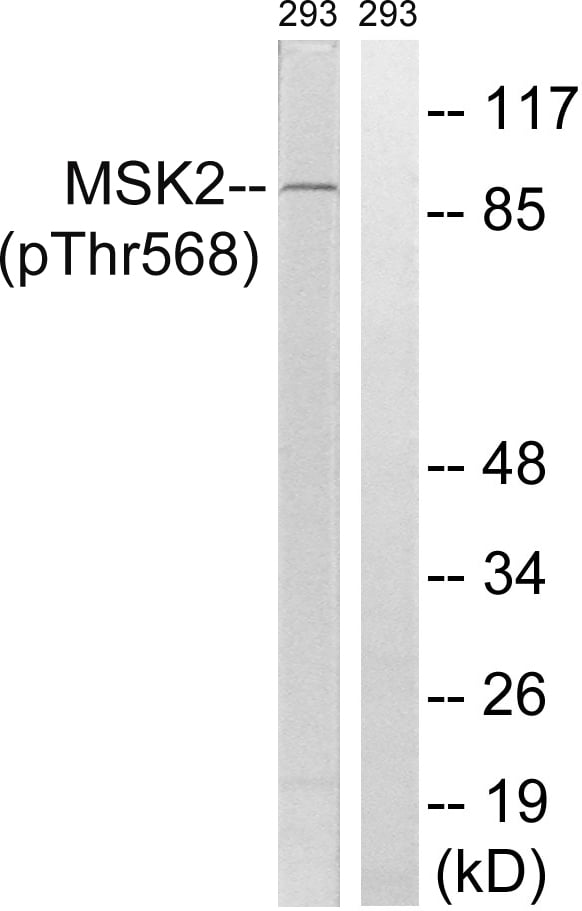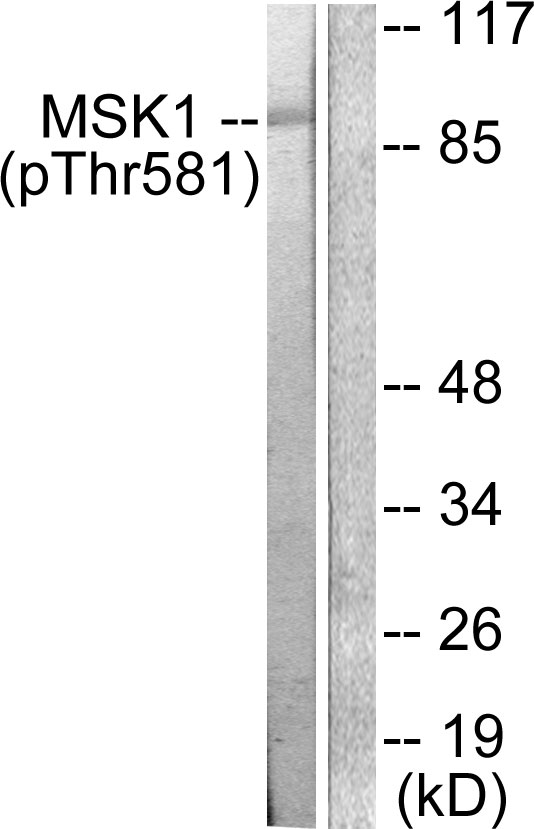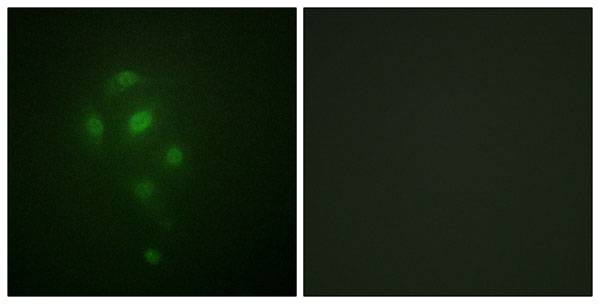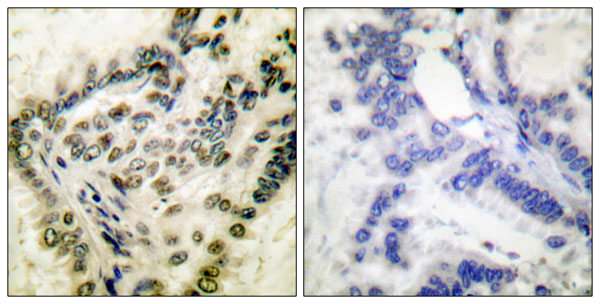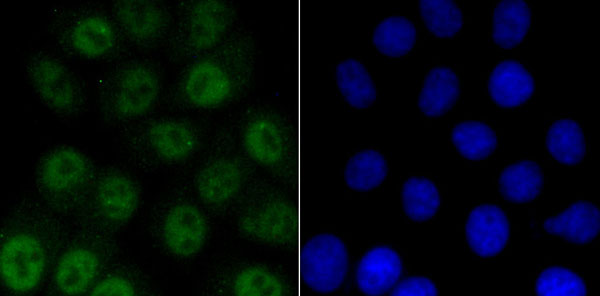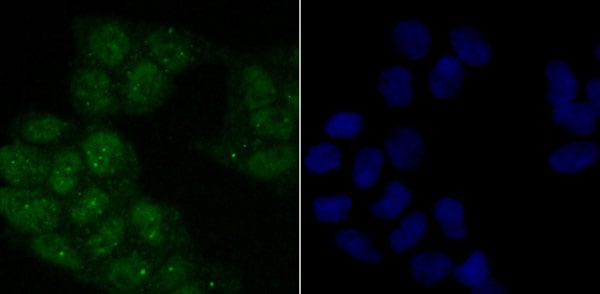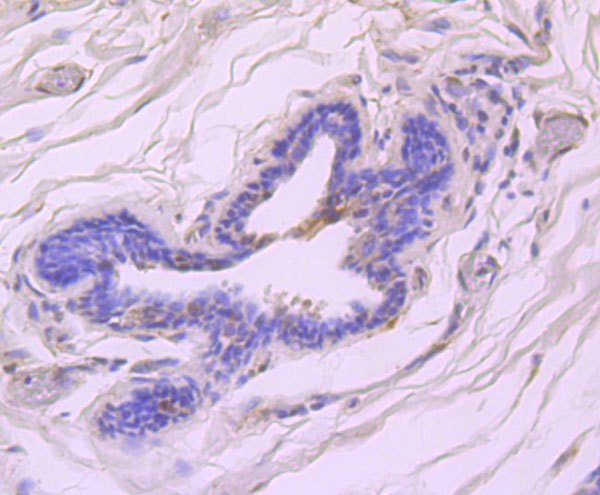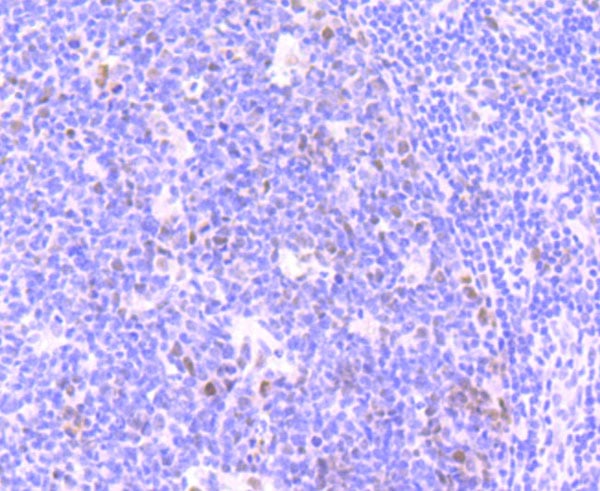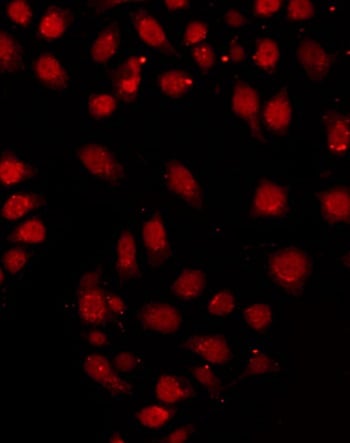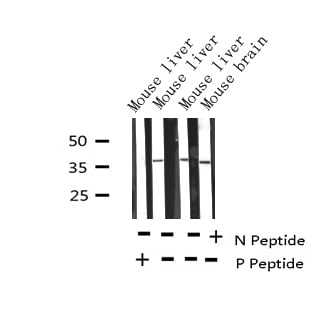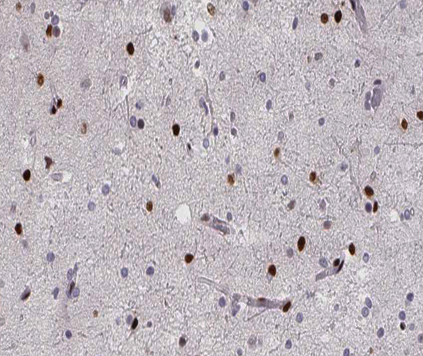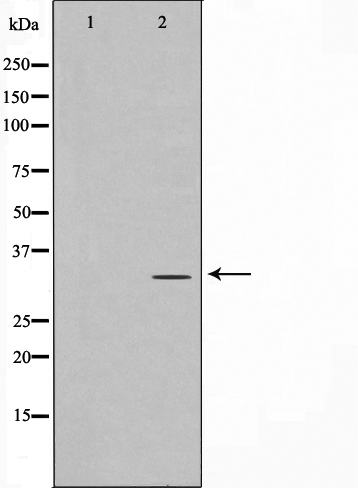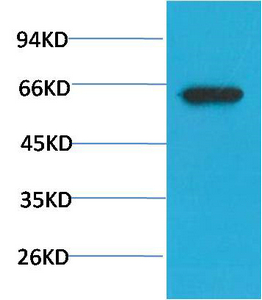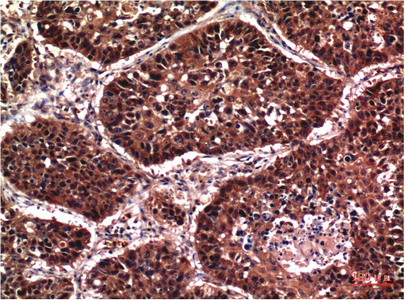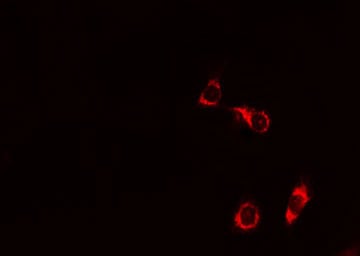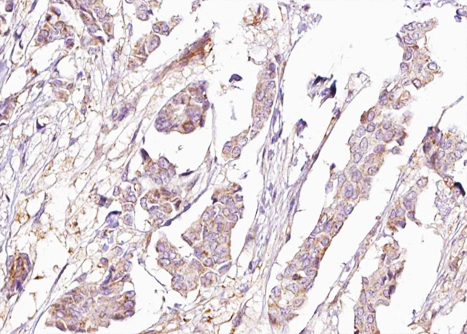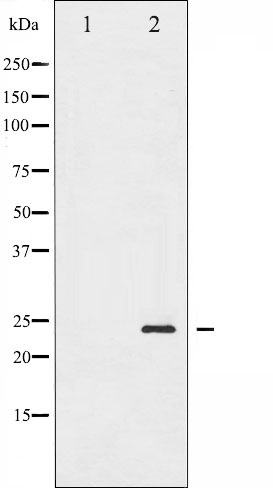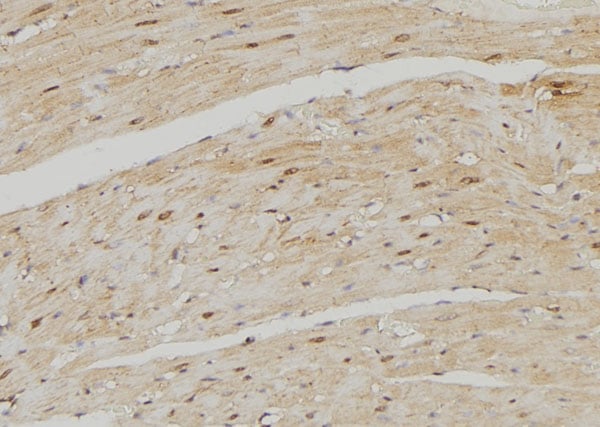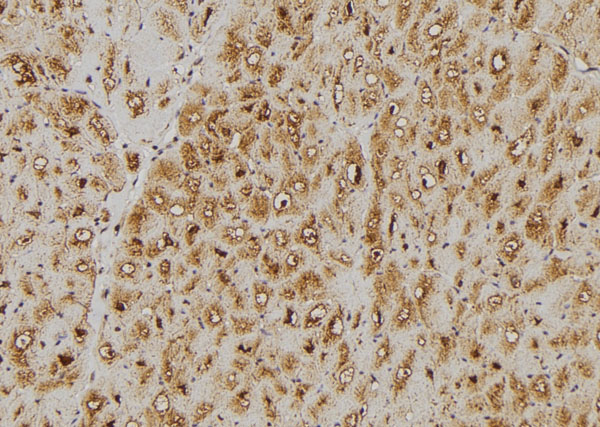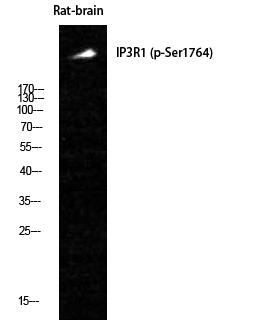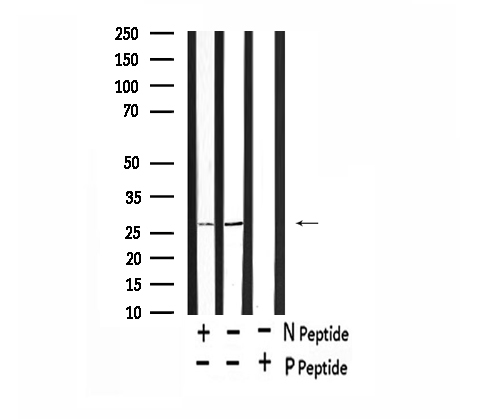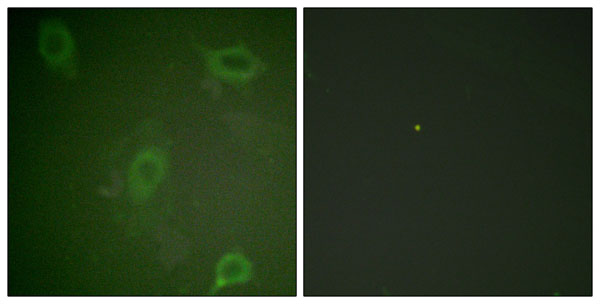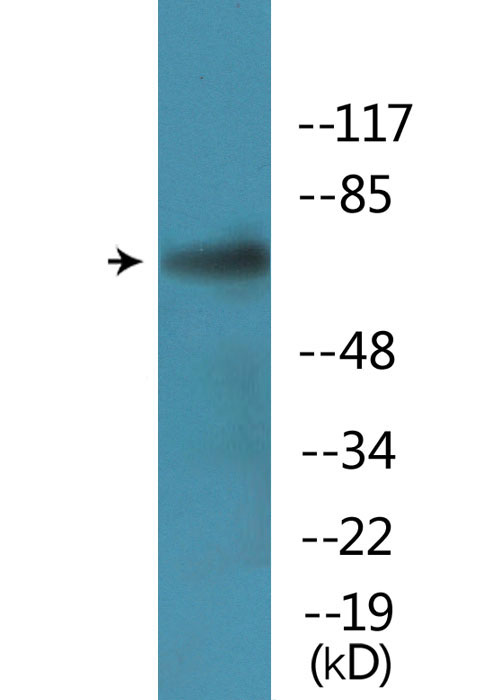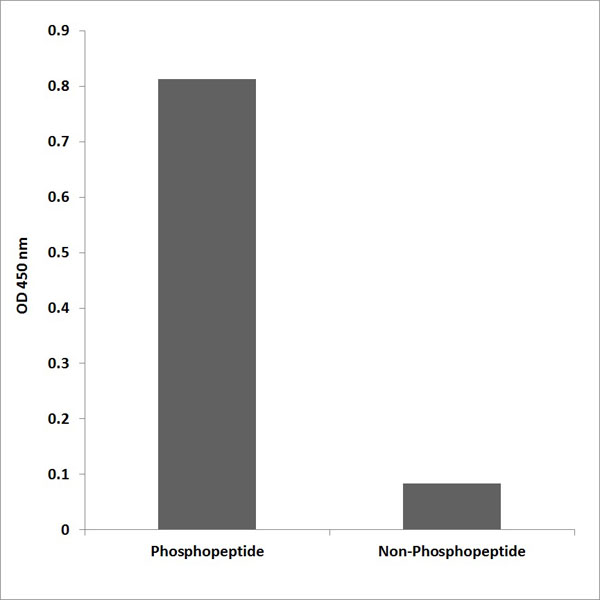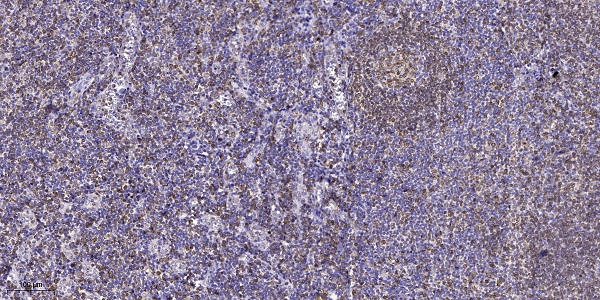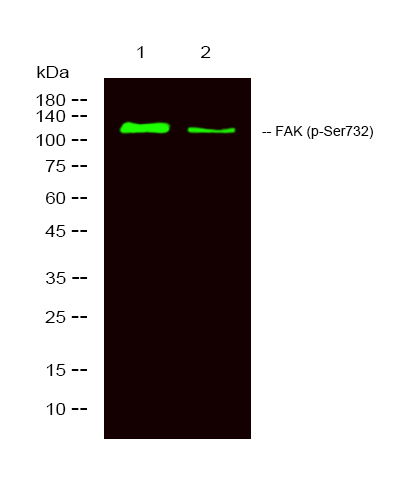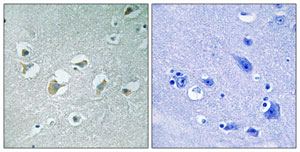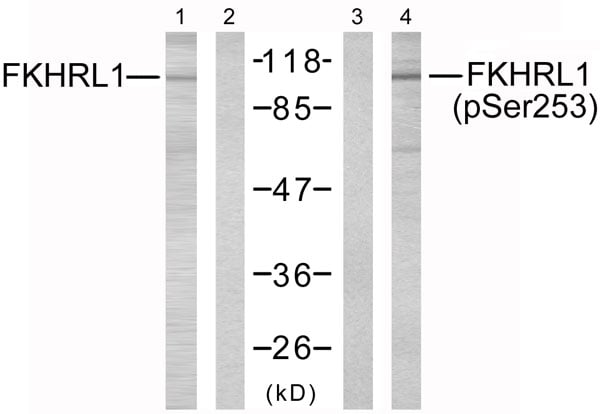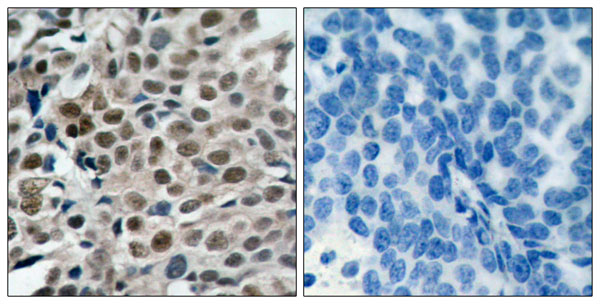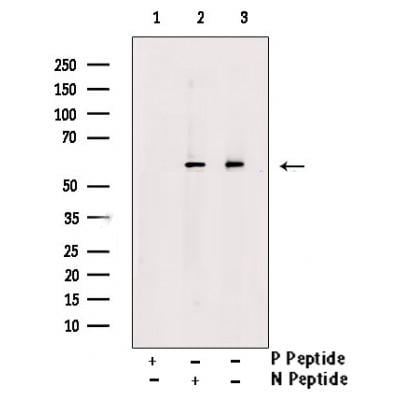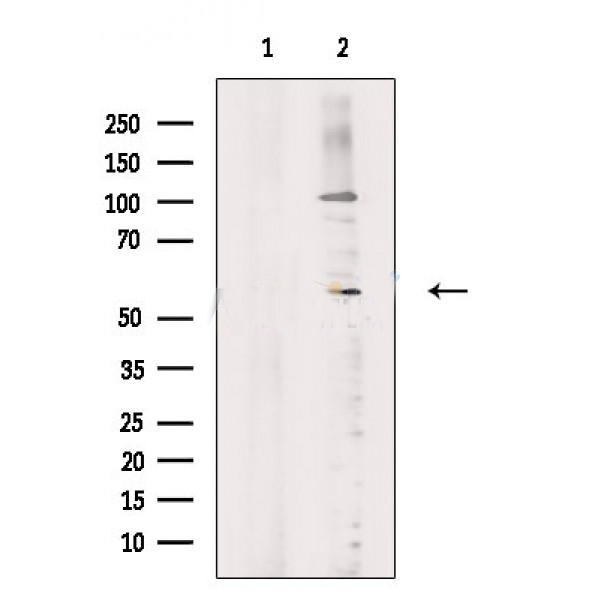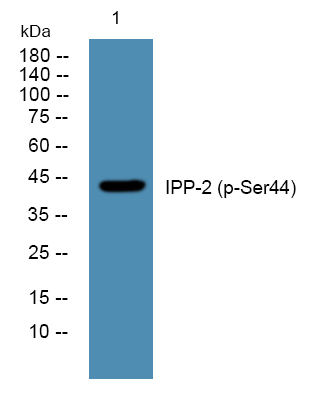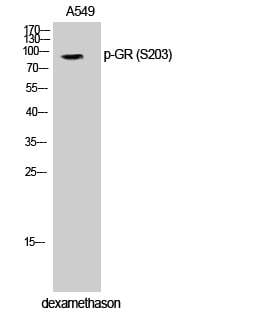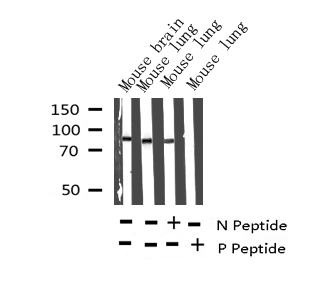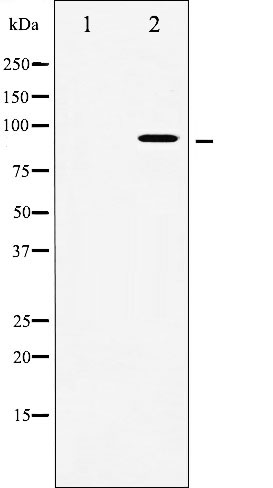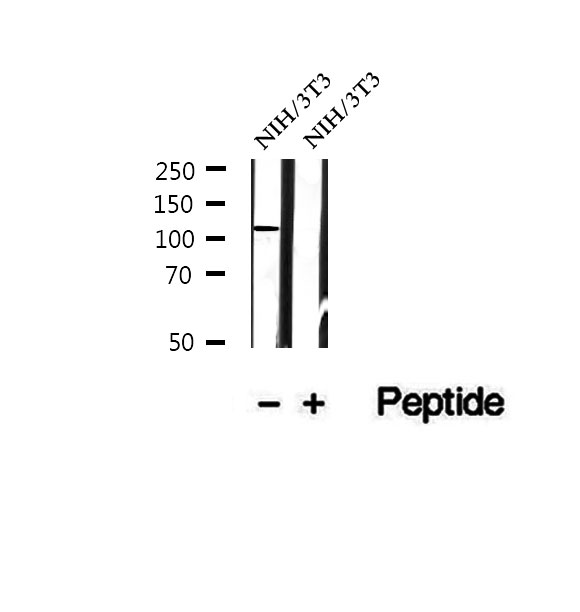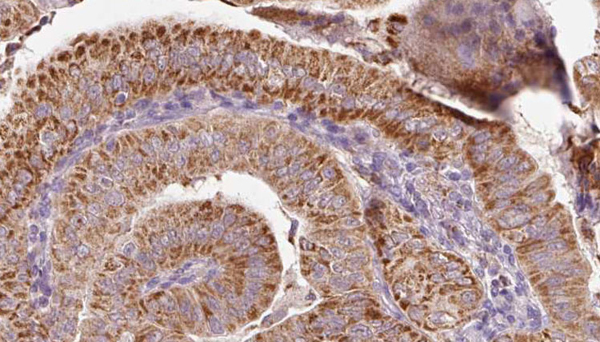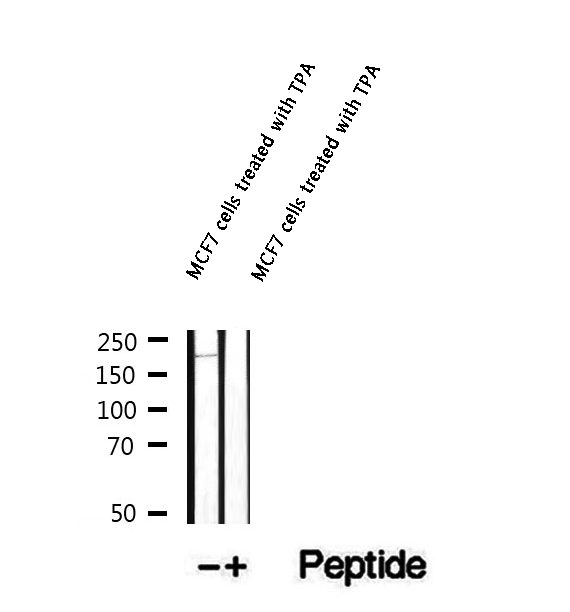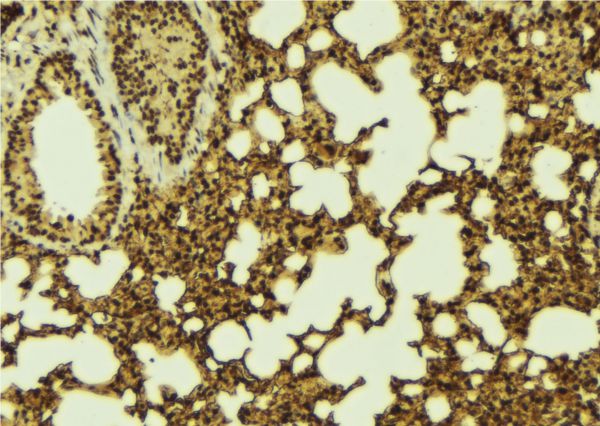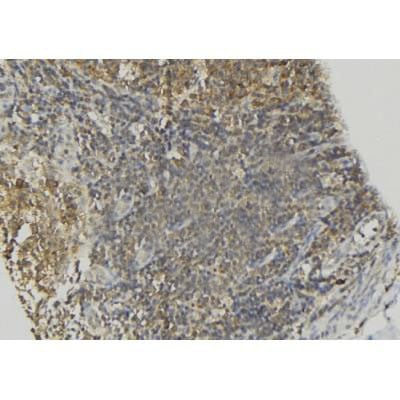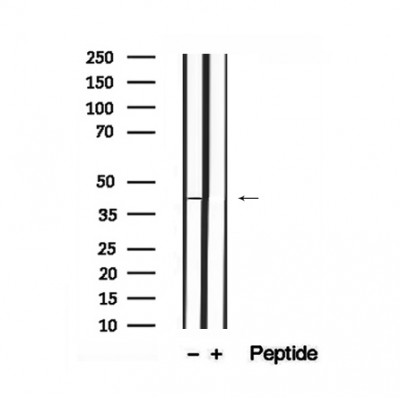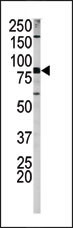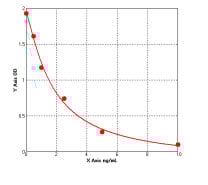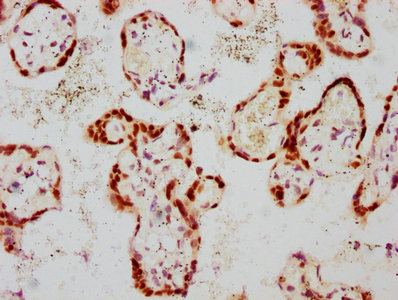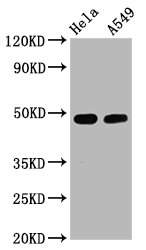
Phospho-specific antibodies’ typical purpose is to enable researchers to detect changes in proteins. They will exclusively bind to the amino acid sequence on a protein that has been phosphorylated (which is both a physical & chemical change) and do not bind to the same amino acid sequence on said protein if it lacks said phosphorylation. This aids in being able to clearly see and understand the data produced from this particular protein modification.
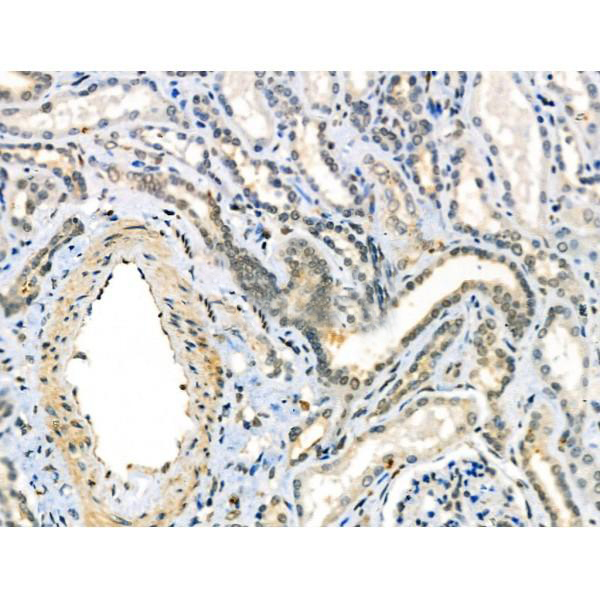
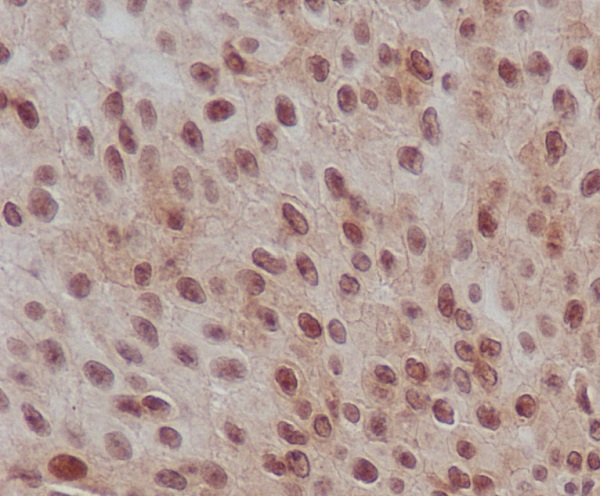
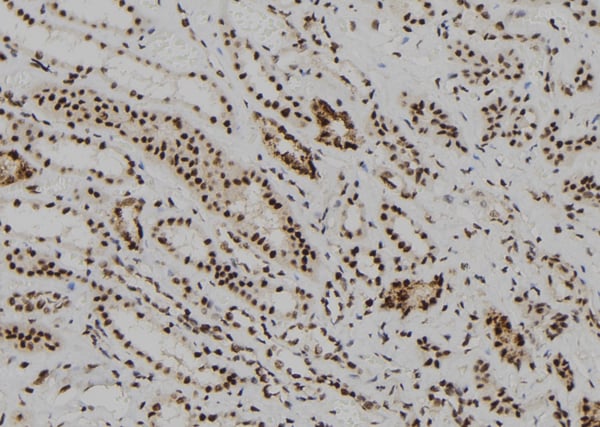
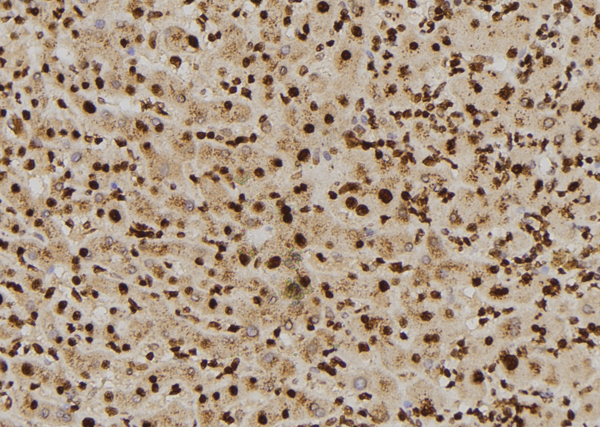
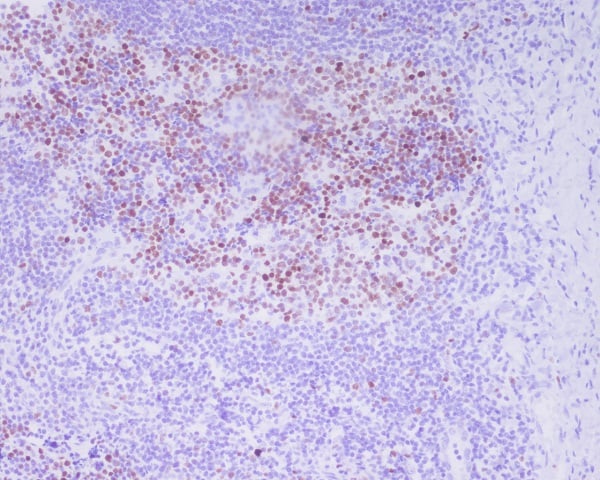
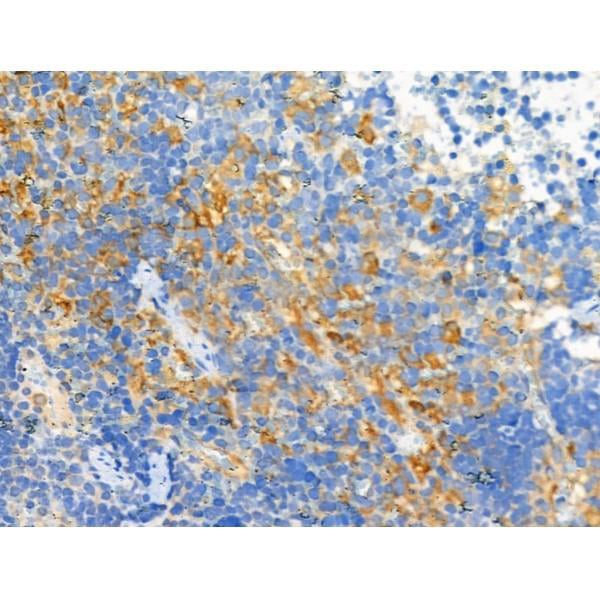
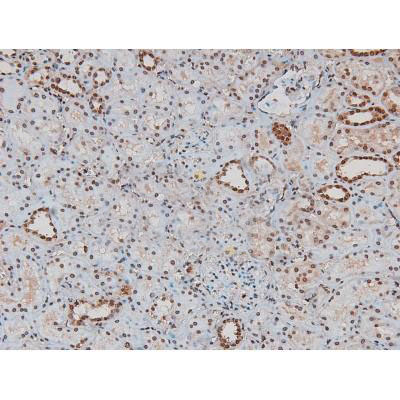
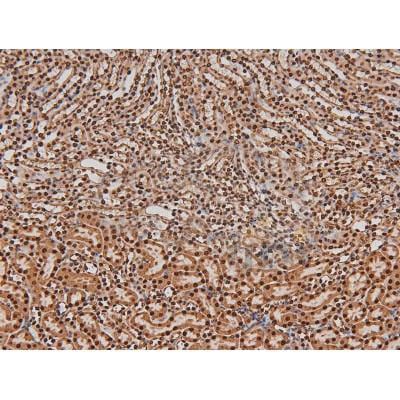
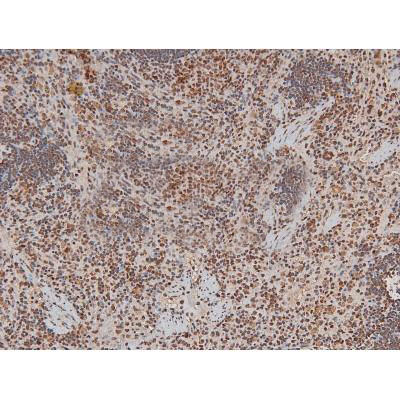
IHC (Immunohiostchemistry) (IHC analyses of human HCC samples were performed with the indicated antibodies in the presence or absence of a PCK1 pS90 blocking peptide.)
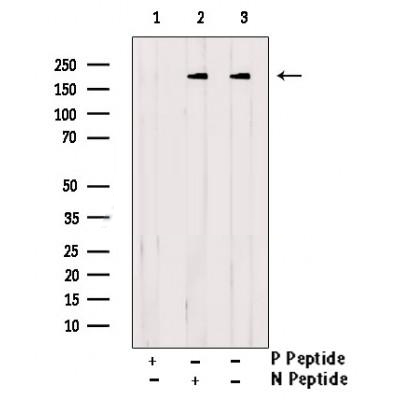
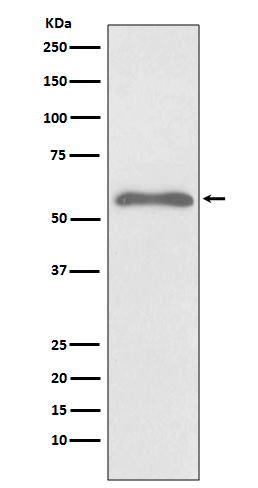
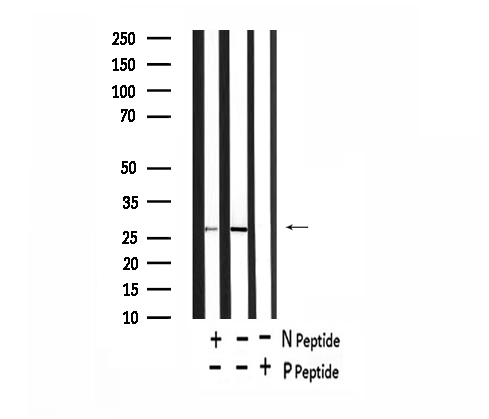
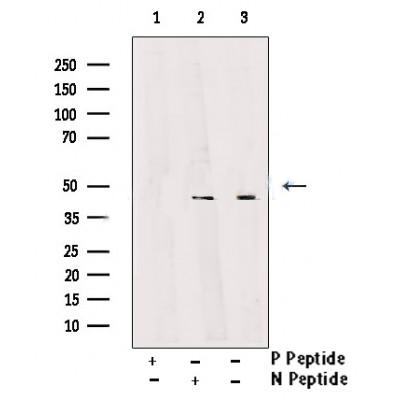
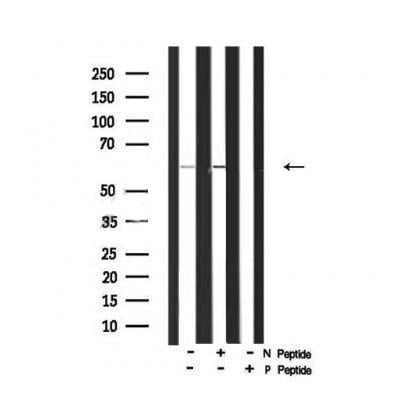
Application Data (Huh7 cells expressing DYKDDDDK-PCK1 were treated with or without IGF1 (100 ng/ml) for 1 h. Immunoprecipitation and immunoblotting analyses were performed with the indicated antibodies in the presence or absence of a PCK1 pS90 blocking peptide.)
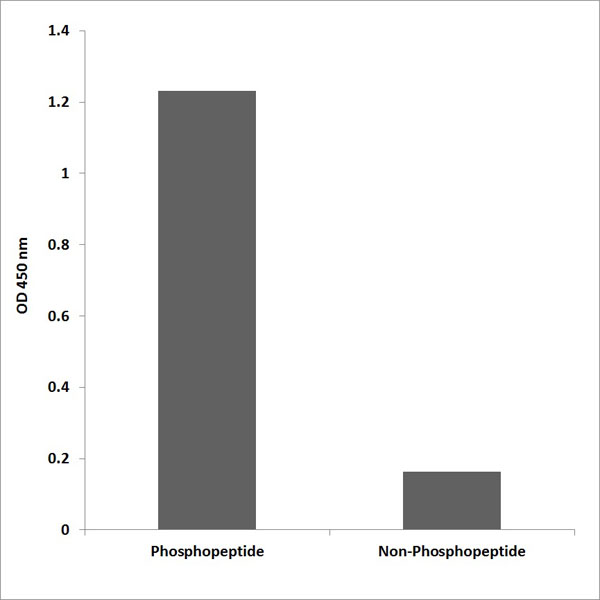
The antibody was affinity-purifiedfrom rabbitantiserum by affinity-chromatography using epitope-specific phosphopeptide.The antibody againstnon-phosphopeptidewas removed by chromatographyusing non-phosphopeptidecorresponding tothephosphorylationsite.
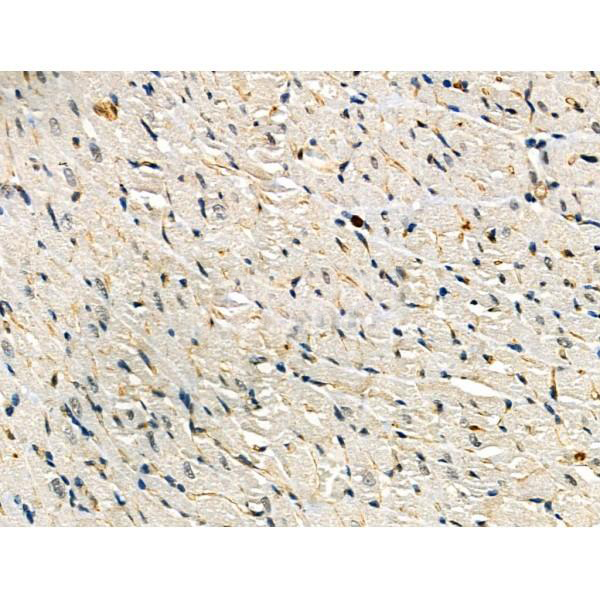
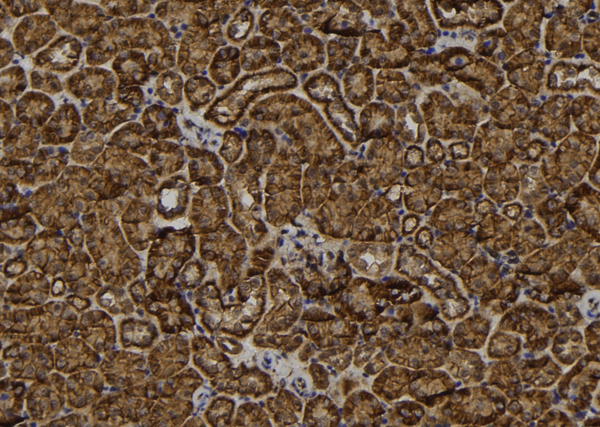
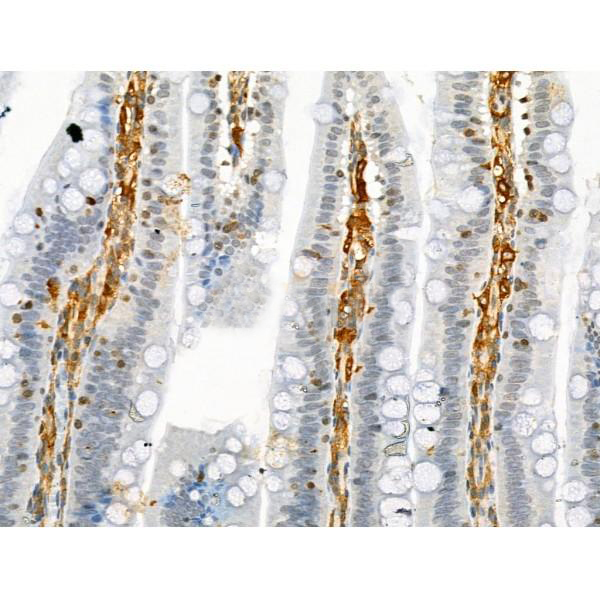
IHC (Immunohiostchemistry) (Immunohistochemical analysis of 5-Lipoxygenase (phospho-Ser272) staining in human skeletal muscle formalin fixed paraffin embedded tissue section. The section was then incubated with the antibody at room temperature and detected using an HRP conjugated compact polymer system. DAB was used as the chromogen. The section was then counterstained with haematoxylin and mounted with DPX.)
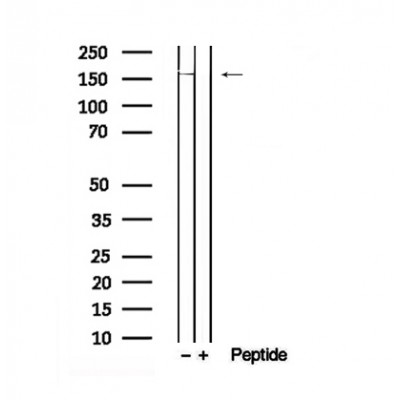
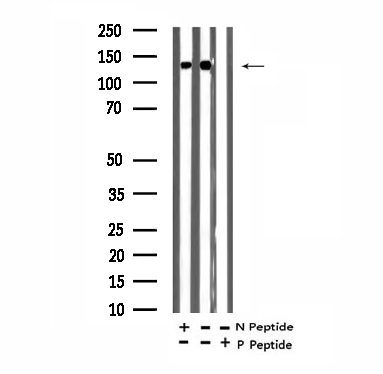
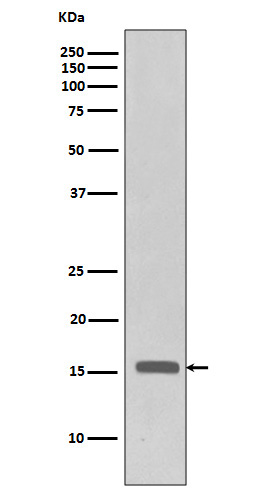
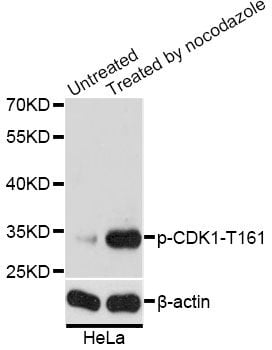
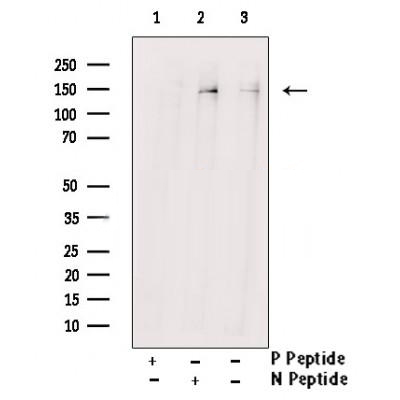
WB (Western Blot) (Western blot analysis of 5-Lipoxygenase (phospho-Ser272) expression in HuvEc whole cell lysates.)
IHC (Immunohiostchemistry) (Immunohistochemical analysis of Ah Receptor (phospho-Ser36) staining in human breast cancer formalin fixed paraffin embedded tissue section. The section was then incubated with the antibody at room temperature and detected using an HRP conjugated compact polymer system. DAB was used as the chromogen. The section was then counterstained with haematoxylin and mounted with DPX.)
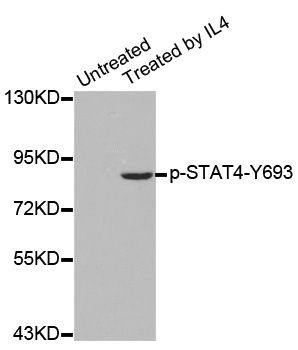
WB (Western Blot) (Western blot analysis of Ah Receptor (phospho-Ser36) expression in A431, HepG2, NIH3T3 whole cell lysates.)
IHC (Immunohiostchemistry) (Immunohistochemical analysis of PRKD1/2/3 (phospho-Ser738/Ser742) staining in human breast cancer formalin fixed paraffin embedded tissue section. The section was then incubated with the antibody at room temperature and detected using an HRP conjugated compact polymer system. DAB was used as the chromogen. The section was then counterstained with haematoxylin and mounted with DPX.)
WB (Western Blot) (Western blot analysis of PRKD1/2/3 (phospho-Ser738/S742) expression in HT29, rat astrocytes whole cell lysates.)
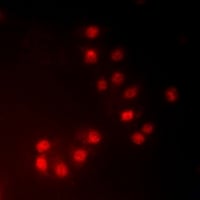
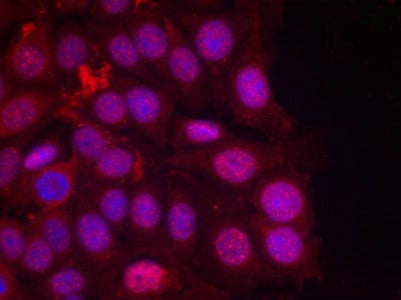
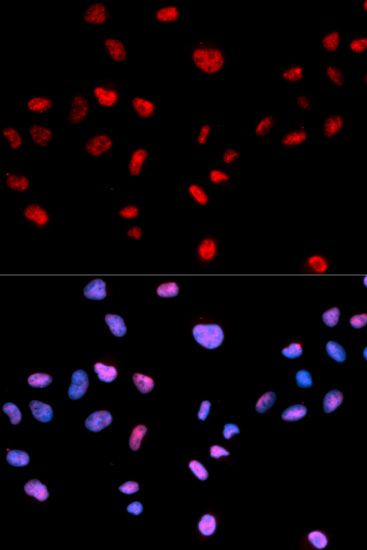
IF (Immunofluorescence) (Immunofluorescent analysis of HSP20 (phospho-Ser16) staining in HEK293T cells. Formalin-fixed cells were permeabilized with 0.1% Triton X-100 in TBS for 5-10 minutes and blocked with 3% BSA-PBS for 30 minutes at room temperature. Cells were probed with the primary antibody in 3% BSA-PBS and incubated overnight at 4 C in a hidified chamber. Cells were washed with PBST and incubated with a DyLight 594-conjugated secondary antibody (red) in PBS at room temperature in the dark. DAPI was used to stain the cell nuclei (blue).)
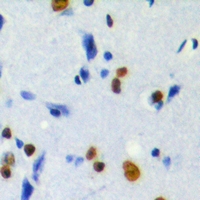
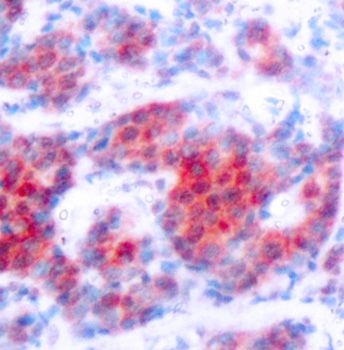
IHC (Immunohiostchemistry) (Immunohistochemical analysis of HSP20 (phospho-Ser16) staining in human breast cancer formalin fixed paraffin embedded tissue section. The section was then incubated with the antibody at room temperature and detected using an HRP conjugated compact polymer system. DAB was used as the chromogen. The section was then counterstained with haematoxylin and mounted with DPX.)
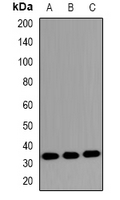
WB (Western Blot) (Western blot analysis of HSP20 (phospho-Ser16) expression in MCF7, HEK293, NIH3T3, H9C2 whole cell lysates.)
IF (Immunofluorescence) (Immunofluorescent analysis of ANAPC1 (phospho-Ser688) staining in HEK293T cells. Formalin-fixed cells were permeabilized with 0.1% Triton X-100 in TBS for 5-10 minutes and blocked with 3% BSA-PBS for 30 minutes at room temperature. Cells were probed with the primary antibody in 3% BSA-PBS and incubated overnight at 4 C in a hidified chamber. Cells were washed with PBST and incubated with a DyLight 594-conjugated secondary antibody (red) in PBS at room temperature in the dark. DAPI was used to stain the cell nuclei (blue).)
IHC (Immunohiostchemistry) (Immunohistochemical analysis of ANAPC1 (phospho-Ser688) staining in human breast cancer formalin fixed paraffin embedded tissue section. The section was then incubated with the antibody at room temperature and detected using an HRP conjugated compact polymer system. DAB was used as the chromogen. The section was then counterstained with haematoxylin and mounted with DPX.)
WB (Western Blot) (Western blot analysis of ANAPC1 (phospho-Ser688) expression in HEK293 LPS-treated whole cell lysates.)
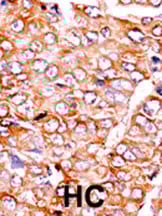
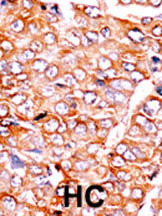
IHC (Immunohistochemistry) (Formalin-fixed and paraffin-embedded human cancer tissue reacted with the primary antibody, which was peroxidase-conjugated to the secondary antibody, followed by AEC staining. This data demonstrates the use of this antibody for immunohistochemistry; clinical relevance has not been evaluated. BC = breast carcinoma; HC = hepatocarcinoma.)
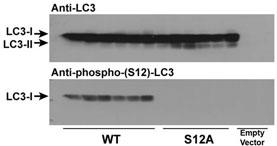
WB (Western Blot) (The anti-Phospho-CDC25A-T507 Pab is used in Western blot to detect Phospho-CDC25A-T507 in cells transfected with wild type or mutant T507 A of CDC25A. Data courtesy of Dr. Tiebang Kang of Washington University, St. Louis, MO.)
WB (Western Blot) (Western blot analysis of extracts from Hela cells, untreated or treated with calyculin A, using Phospho-Cdc25A Antibody (T507).)
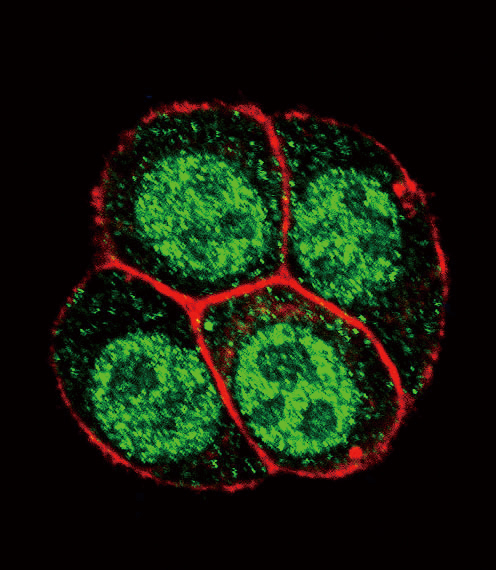
IF (Immunofluorescence) (Fluorescent image of HeLa cells stained with Phospho-CDC25A(T507) Antibody. AAA285545 was diluted at 1:25 dilution. An Alexa Fluor 488-conjugated goat anti-rabbit lgG at 1:400 dilution was used as the secondary antibody (green). Cytoplasmic actin was counterstained with Alexa Fluor 555 conjugated with Phalloidin (red).)
IHC (Immunohistochemisry) (Formalin-fixed and paraffin-embedded human cancer tissue reacted with the primary antibody, which was peroxidase-conjugated to the secondary antibody, followed by AEC staining. This data demonstrates the use of this antibody for immunohistochemistry; clinical relevance has not been evaluated. BC = breast carcinoma; HC = hepatocarcinoma.)
WB (Western Blot) (The anti-Phospho-CHK1-S317 Pab is used in Western blot for detection in, from left to right, Jurkat, A2058, Hela, and HL60 tissue lysates.)
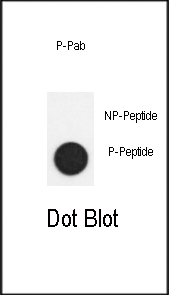
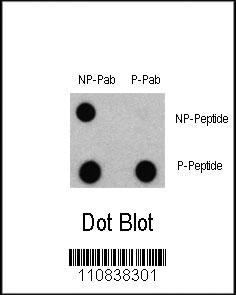
DB (Dot Blot) (Dot blot analysis of anti-Phospho-CHK1-S317 Antibody on nitrocellulose membrane. 50ng of Phospho-peptide or Non Phospho-peptide per dot were adsorbed. Antobodies working concentration was 0.5ug per ml.)
DB (Dot Blot) (Dot blot analysis of PDX1 Antibody (T11) Pab on nitrocellulose membrane. 50ng of Phospho-peptide or Non Phospho-peptide per dot were adsorbed. Antibody working concentrations are 0.5ug per ml.)
IF (Immunofluorescence) (Fluorescent confocal image of SY5Y cells stained with phospho-PDX1-T11 antibody. SY5Y cells were fixed with 4% PFA (20 min), permeabilized with Triton X-100 (0.2%, 30 min). Cells were then incubated with AAA287859 phospho-PDX1-T11 primary antibody (1:100, 2 h at room temperature). For secondary antibody, Alexa Fluor 488 conjugated donkey anti-rabbit antibody (green) was used (1:1000, 1h). Nuclei were counterstained with Hoechst 33342 (blue) (10 ug/ml, 5 min). Note the highly specific localization of the phospho-PDX1 immunosignal mainly to the nucleus.)
IHC (Immunohiostchemistry) (Formalin-fixed and paraffin-embedded human cancer tissue reacted with the primary antibody, which was peroxidase-conjugated to the secondary antibody, followed by AEC staining. This data demonstrates the use of this antibody for immunohistochemistry; clinical relevance has not been evaluated. BC = breast carcinoma; HC = hepatocarcinoma.)
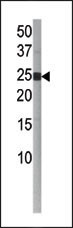
WB (Western Blot) (The anti-Phospho-Caspase 9-S196 Pab is used in Western blot to detect Phospho-Caspase 9-S196 in Y79 cell line lysates.)
Affinity-purified from rabbit antiserum by affinity-chromatography using epitope-specific phosphopeptide. The antibody against non-phosphopeptide was removed by chromatography using non-phosphopeptide corresponding to the phosphorylation site.
DB (Dot Blot) (Dot blot analysis of anti-hSMAD3-S208 Phospho-specific Pab on nitrocellulose membrane. 50ng of Phospho-peptide or Non Phospho-peptide per dot were adsorbed. Antibody working concentrations are 0.5ug per ml.)
IF (Immunofluorescence) (Confocal immunofluorescent analysis of Phospho-SMAD3-S208 Antibody with Hela cell followed by Alexa Fluor 488-conjugated goat anti-rabbit lgG (green). Actin filaments have been labeled with Alexa Fluor 555 phalloidin (red).)
IF (Immunofluorescence) (Fluorescent confocal image of HeLa cells stained with phospho-SMAD3-S208 antibody. HeLa cells were fixed with 4% PFA (20 min), permeabilized with Triton X-100 (0.2%, 30 min). Cells were then incubated with AAA289606 phospho-SMAD3-S208 primary antibody (1:200, 2 h at room temperature). For secondary antibody, Alexa Fluor 488 conjugated donkey anti-rabbit antibody (green) was used (1:1000, 1h). Cytoplasmic actin was counterstained with Alexa Fluor 555 (red) conjugated Phalloidin (5.25 uM, 25 min). Pictures were taken on a Biorevo microscope (BZ-900, Keyence).Note the highly specific localization of the phospho-SMAD3 mainly to the nucleus, supported by Human Protein Atlas Data (http://www.proteinatlas.org/ENSG00000166949).)
IHC (Immunohiostchemistry) (Immunohistochemical analysis of paraffin-embedded human colon cancer, using Phospho-eIF2 alpha (Ser51) Antibody.)
WB (Western Blot) (Western blot analysis of Phospho-eIF2 alpha (Ser51) expression in (1)HeLa cell lysates treated with Calyculin A;(2) Untreated HeLa cell lysates.)
The antibody was affinity-purified from rabbit antiserum by affinity-chromatography using epitope-specific immunogen.
Pricing
WB (Western Blot) (Western blot analysis of extracts from HuvEc cells and K562 cells treated with PMA using C-RAF (Phospho-Ser642) Antibody.The lane on the right is treated with the antigen-specific peptide.)
IF (Immunofluorescence) (Immunofluorescence staining of methanol-fixed Hela cells using cdc25C(Phospho-Ser216) Antibody.)
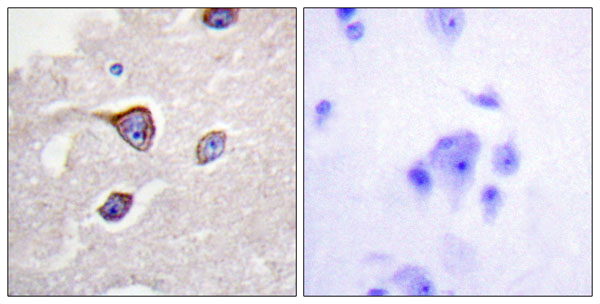
IHC (Immunohiostchemistry) (Immunohistochemical analysis of paraffin-embedded human breast carcinoma tissue using cdc25C(Phospho-Ser216) Antibody (left) or the same antibody preincubated with blocking peptide(right).)
WB (Western Blot) (Western blot analysis of extracts from 293 cells untreated or treated with serum using cdc25C(Phospho-Ser216) Antibody.)
Immunofluorescence, Immunohistochemistry, Western Blot
Purity
Antibodies were produced by immunizing rabbits with synthetic phosphopeptide and KLH conjugates. Antibodies were purified by affinity-chromatography using epitope-specific phosphopeptide. Non-phospho specific antibodies were removed by chromatogramphy usi
IHC (Immunohiostchemistry) (Immunohistochemical analysis of paraffin-embedded human breast carcinoma, using 4E-BP1 (phospho-Thr36) antibody ().)
WB (Western Blot) (Western blot analysis of extracts from MDA-MB-435 cells, untreated or EGF-treated (200 ng/ml, 30min), using 4E-BP1 (Ab-36) antibody (#21215, Lane 1 and 2) and 4E-BP1 (phospho-Thr36) antibody (, Lane 3 and 4).)
Antibodies were produced by immunizing rabbits with synthetic phosphopeptide and KLH conjugates. Antibodies were purified by affinity-chromatography using epitope-specific phosphopeptide. Non-phospho specific antibodies were removed by chromatogramphy usi
IF (Immunofluorescence) (Immunofluorescence staining of methanol-fixed Hela cells using GATA1(Phospho-Ser142) Antibody.)
IHC (Immunohiostchemistry) (Immunohistochemical analysis of paraffin-embedded human breast carcinoma tissue using GATA1(Phospho-Ser142) Antibody (left) or the same antibody preincubated with blocking peptide(right).)
WB (Western Blot) (Western blot analysis of extracts from HL60 cells untreated or treated with PMA using GATA1(Phospho-Ser142) Antibody.)
Immunofluorescence, Immunohistochemistry, Western Blot
Purity
Antibodies were produced by immunizing rabbits with synthetic phosphopeptide and KLH conjugates. Antibodies were purified by affinity-chromatography using epitope-specific phosphopeptide. Non-phospho specific antibodies were removed by chromatogramphy usi
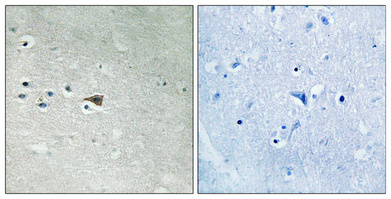
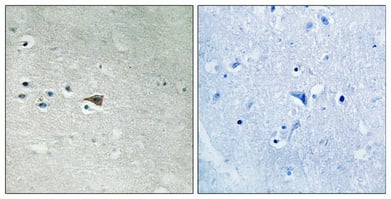
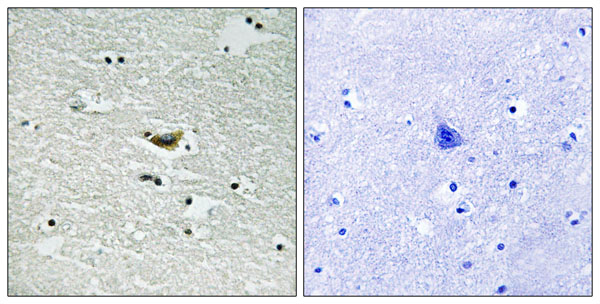
IHC (Immunohiostchemistry) (Immunohistochemical analysis of paraffin-embedded human brain tissue using p47 phox (Phospho-Ser345) antibody (left)or the same antibody preincubated with blocking peptide (right).)
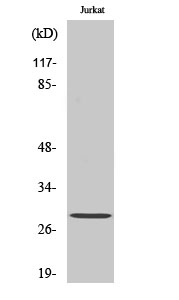
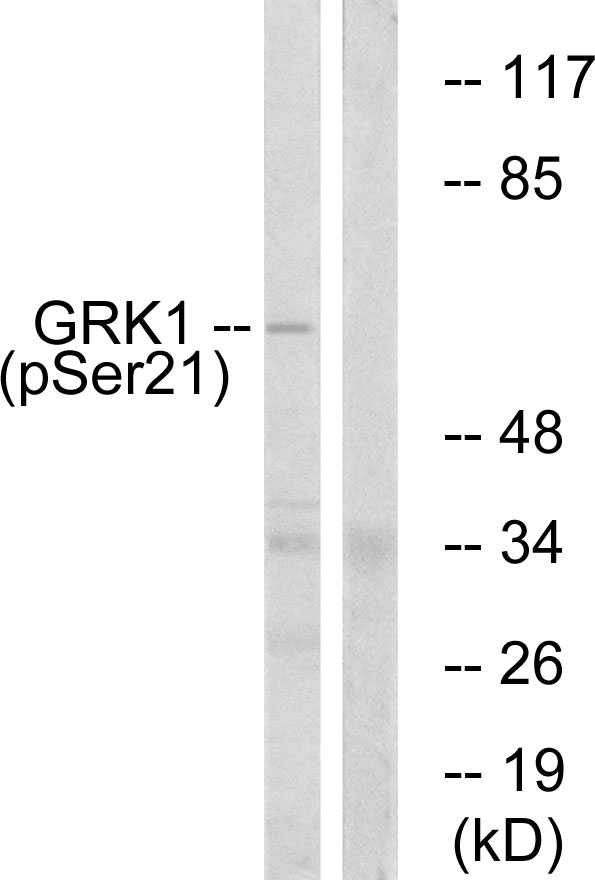
WB (Western Blot) (Western blot analysis of extracts from HepG2 cells treated with TNF using p47 phox (Phospho-Ser345) Antibody.The lane on the right is treated with the antigen-specific peptide.)
Antibodies were produced by immunizing rabbits with synthetic phosphopeptide and KLH conjugates. Antibodies were purified by affinity-chromatography using epitope-specific phosphopeptide. Non-phospho specific antibodies were removed by chromatogramphy usi
IHC (Immunohiostchemistry) (Immunohistochemical analysis of paraffin-embedded human breast carcinoma tissue, using p130 Cas (Phospho-Tyr410) antibody (left)or the same antibody preincubated with blocking peptide (right).)
WB (Western Blot) (Western blot analysis of extracts from K562 cells (Lane 2) and 3T3 cells (Lane 3), using P130 Cas(Phospho-Tyr410) Antibody. The lane on the left is treated with antigen-specific peptide.)
Antibodies were produced by immunizing rabbits with synthetic phosphopeptide and KLH conjugates. Antibodies were purified by affinity-chromatography using epitope-specific phosphopeptide. Non-phospho specific antibodies were removed by chromatogramphy usi
IHC (Immunohiostchemistry) (Immunohistochemical analysis of paraffin-embedded human breast carcinoma tissue using c-kit(Phospho-Tyr936) Antibody (left) or the same antibody preincubated with blocking peptide(right).)
WB (Western Blot) (Western blot analysis of extracts from C6 cell untreated or treated with serum usingc-kit(phospho-Tyr936) Antibody.)
Antibodies were produced by immunizing rabbits with synthetic phosphopeptide and KLH conjugates. Antibodies were purified by affinity-chromatography using epitope-specific phosphopeptide. Non-phospho specific antibodies were removed by chromatogramphy usi
WB (Western Blot) (Western blot analysis of extracts from 3T3 cells, treated with Anisomycin or calf intestinal phosphatase (CIP), using MKK3 (Phospho-Ser189) Antibody.)
IF (Immunofluorescence) (Immunofluorescence staining of methanol-fixed Hela cells using MKK3(Phospho-Ser189) Antibody.)
IHC (Immunohiostchemistry) (Immunohistochemical analysis of paraffin-embedded human breast carcinoma tissue using MKK3(Phospho-Ser189) Antibody (left) or the same antibody preincubated with blocking peptide(right).)
WB (Western Blot) (Western blot analysis of extracts from Hela cells untreated or treated with PMA using MKK3(Phospho-Ser189) Antibody.)
Immunofluorescence, Immunohistochemistry, Western Blot
Purity
Antibodies were produced by immunizing rabbits with synthetic phosphopeptide and KLH conjugates. Antibodies were purified by affinity-chromatography using epitope-specific phosphopeptide. Non-phospho specific antibodies were removed by chromatogramphy usi
IHC (Immunohiostchemistry) (Immunohistochemical analysis of paraffin-embedded human brain tissue using CRMP-2 (Phospho-Thr509) antibody (left)or the same antibody preincubated with blocking peptide (right).)
WB (Western Blot) (Western blot analysis of extracts from HT-29 cells treated with heat shock using CRMP-2 (Phospho-Thr509) Antibody.The lane on the right is treated with the antigen-specific peptide.)
Antibodies were produced by immunizing rabbits with synthetic phosphopeptide and KLH conjugates. Antibodies were purified by affinity-chromatography using epitope-specific phosphopeptide. Non-phospho specific antibodies were removed by chromatogramphy usi
IHC (Immunohiostchemistry) (Immunohistochemical analysis of paraffin-embedded human breast carcinoma tissue using c-Jun(Phospho-Ser243) Antibody (left) or the same antibody preincubated with blocking peptide(right).)
WB (Western Blot) (Western blot analysis of extracts from sorbitol-treated 293, Serum-treated C2C12 and UV-treated HepG2 cells using c-Jun(Phospho-Ser243) Antibody.)
Antibodies were produced by immunizing rabbits with synthetic phosphopeptide and KLH conjugates. Antibodies were purified by affinity-chromatography using epitope-specific phosphopeptide. Non-phospho specific antibodies were removed by chromatogramphy usi
IHC (Immunohiostchemistry) (Immunohistochemical analysis of paraffin-embedded human brain tissue using Retinoblastoma (Phospho-Ser608) antibody (left)or the same antibody preincubated with blocking peptide (right).)
WB (Western Blot) (Western blot analysis of extracts from JK cells (Lane 2), using Retinoblastoma (Phospho-Ser608) Antibody. The lane on the left is treated with antigen-specific peptide.)
Antibodies were produced by immunizing rabbits with synthetic phosphopeptide and KLH conjugates. Antibodies were purified by affinity-chromatography using epitope-specific phosphopeptide. Non-phospho specific antibodies were removed by chromatogramphy usi
WB (Western Blot) (Western blot analysis of extracts from HL60 cells, treated with TNFa or calf intestinal phosphatase (CIP), using P38 MAPK (Phospho-Thr180) Antibody.)
IHC (Immunohiostchemistry) (Immunohistochemical analysis of paraffin-embedded human breast carcinoma tissue using P38 MAPK(Phospho-Thr180) Antibody (left) or the same antibody preincubated with blocking peptide(right).)
WB (Western Blot) (Western blot analysis of extracts from HT29 cells untreated or treated with UV using P38 MAPK(Phospho-Thr180) Antibody.)
Antibodies were produced by immunizing rabbits with synthetic phosphopeptide and KLH conjugates. Antibodies were purified by affinity-chromatography using epitope-specific phosphopeptide. Non-phospho specific antibodies were removed by chromatogramphy usi
Pricing
WB (Western Blot) (Western blot analysis of extracts from Hela cells untreated or treated with UV using S6 Ribosomal Protein(Phospho-Ser235/236) Antibody.)
S6 Ribosomal Protein (Phospho-Ser235/236) Antibody
Gene Names
RPS6; S6
Reactivity
Human, Mouse, Rat
Applications
Western Blot
Purity
Antibodies were produced by immunizing rabbits with synthetic phosphopeptide and KLH conjugates. Antibodies were purified by affinity-chromatography using epitope-specific phosphopeptide. Non-phospho specific antibodies were removed by chromatogramphy usi
WB (Western Blot) (Western blot analysis of extracts from JK cells (Lane 2), using ALOX5 (Phospho-Ser523) Antibody. The lane on the left is treated with synthesized peptide.)
WB (Western Blot) (Western blot analysis of extracts from Jurkat cells, using ALOX5 (Phospho-Ser523) antibody. The lane on the right is treated with the synthesized peptide.)
Antibodies were produced by immunizing rabbits with synthetic phosphopeptide and KLH conjugates. Antibodies were purified by affinity-chromatography using epitope-specific phosphopeptide. Non-phospho specific antibodies were removed by chromatogramphy usi
IHC (Immunohiostchemistry) (Immunohistochemical analysis of paraffin-embedded human lung carcinoma tissue, using beta-catenin (phospho-Tyr333) Antibody.)
WB (Western Blot) (Western blot analysis of extracts from 293 cells untreated or treated with FSK using b-catenin(phospho-Tyr333) Antibody.)
Antibodies were produced by immunizing rabbits with synthetic phosphopeptide and KLH conjugates. Antibodies were purified by affinity-chromatography using epitope-specific phosphopeptide. Non-phospho specific antibodies were removed by chromatogramphy usi
IF (Immunofluorescence) (Immunofluorescence staining of methanol-fixed MCF cells using eIF4E(Phospho-Ser209) Antibody.)
IHC (Immunohiostchemistry) (Immunohistochemical analysis of paraffin-embedded human breast carcinoma tissue using eIF4E(Phospho-Ser209) Antibody (left) or the same antibody preincubated with blocking peptide(right).)
WB (Western Blot) (Western blot analysis of extracts from SK-BR-3 cells, untreated or insulin and EGF treated, and pretreated with U0126 cells, using eIF4E (Phospho-Ser209) Antibody.)
Immunofluorescence, Immunohistochemistry, Western Blot
Purity
Antibodies were produced by immunizing rabbits with synthetic phosphopeptide and KLH conjugates. Antibodies were purified by affinity-chromatography using epitope-specific phosphopeptide. Non-phospho specific antibodies were removed by chromatogramphy usi
IF (Immunofluorescence) (Immunofluorescence staining of methanol-fixed HeLa cells using hnRPD (Phospho-Ser83) Antibody.)
IHC (Immunohiostchemistry) (Immunohistochemical analysis of paraffin-embedded human lung carcinoma tissue using hnRPD (Phospho-Ser83) antibody (left)or the same antibody preincubated with blocking peptide (right).)
WB (Western Blot) (Western blot analysis of extracts from JK cells (Lane 2), using hnRPD (Phospho-Ser83) Antibody. The lane on the left is treated with antigen-specific peptide.)
Immunofluorescence, Immunohistochemistry, Western Blot
Purity
Antibodies were produced by immunizing rabbits with synthetic phosphopeptide and KLH conjugates. Antibodies were purified by affinity-chromatography using epitope-specific phosphopeptide. Non-phospho specific antibodies were removed by chromatogramphy usi
WB (Western Blot) (Western blot analysis of extracts from HepG2 cells, treated with Anisomycin or calf intestinal phosphatase (CIP), using Src (Phospho-Tyr529) Antibody.)
IF (Immunofluorescence) (Immunofluorescence staining of methanol-fixed Hela cells using Src(Phospho-Tyr529) Antibody.)
IHC (Immunohiostchemistry) (Immunohistochemical analysis of paraffin-embedded human breast carcinoma tissue using Src(Phospho-Tyr529) Antibody (left) or the same antibody preincubated with blocking peptide(right).)
WB (Western Blot) (Western blot analysis of extracts from HT29 cells untreated or treated with PMA using Src(Phospho-Tyr529) Antibody.)
Immunofluorescence, Immunohistochemistry, Western Blot
Purity
Antibodies were produced by immunizing rabbits with synthetic phosphopeptide and KLH conjugates. Antibodies were purified by affinity-chromatography using epitope-specific phosphopeptide. Non-phospho specific antibodies were removed by chromatogramphy usi
IF (Immunofluorescence) (Immunofluorescence staining of methanol-fixed Hela cells using CDK6(phospho-Tyr24) Antibody.)
IHC (Immunohiostchemistry) (Immunohistochemical analysis of paraffin-embedded human colon carcinoma tissue using CDK6(Phospho-Tyr24) Antibody (left) or the same antibody preincubated with blocking peptide(right).)
WB (Western Blot) (Western blot analysis of extracts from 293 cells untreated(lane 1) or treated with starvation(lane 2) using CDK6(phospho-Tyr24) Antibody.)
Immunofluorescence, Immunohistochemistry, Western Blot
Purity
Antibodies were produced by immunizing rabbits with synthetic phosphopeptide and KLH conjugates. Antibodies were purified by affinity-chromatography using epitope-specific phosphopeptide. Non-phospho specific antibodies were removed by chromatogramphy usi
IF (Immunofluorescence) (Immunofluorescence staining of methanol-fixed Hela cells using Androgen Receptor(Phospho-Ser213) Antibody.)
WB (Western Blot) (Western blot analysis of extracts from DU145 cells using Androgen Receptor(Phospho-Ser213) Antibody (Lane 2) and the same antibody preincubated with blocking peptide(Lane1).)
Antibodies were produced by immunizing rabbits with synthetic phosphopeptide and KLH conjugates. Antibodies were purified by affinity-chromatography using epitope-specific phosphopeptide. Non-phospho specific antibodies were removed by chromatogramphy usi
IF (Immunofluorescence) (Immunofluorescence staining of methanol-fixed A549 cells using ACK1 (Phospho-Tyr284) Antibody.)
IHC (Immunohiostchemistry) (Immunohistochemical analysis of paraffin-embedded human breast carcinoma tissue using ACK1 (Phospho-Tyr284) antibody (left)or the same antibody preincubated with blocking peptide (right).)
WB (Western Blot) (Western blot analysis of extracts from HepG2 cells treated with EGF using ACK1 (Phospho-Tyr284) Antibody.The lane on the right is treated with the antigen-specific peptide.)
Immunofluorescence, Immunohistochemistry, Western Blot
Purity
Antibodies were produced by immunizing rabbits with synthetic phosphopeptide and KLH conjugates. Antibodies were purified by affinity-chromatography using epitope-specific phosphopeptide. Non-phospho specific antibodies were removed by chromatogramphy usi
WB (Western Blot) (Western blot analysis of extracts from Hela cells, treated with EGF or calf intestinal phosphatase (CIP), using HER2 (Phospho-Tyr1221/Tyr1222) Antibody.)
IF (Immunofluorescence) (Immunofluorescence staining of methanol-fixed MCF cells using HER2(Phospho-Tyr1221/Tyr1222) Antibody.)
WB (Western Blot) (Western blot analysis of extracts from MDA cells untreated or treated with EGF using HER2(Phospho-Tyr1221/Tyr1222) Antibody.)
ERBB2; NEU; NGL; HER2; TKR1; CD340; HER-2; MLN 19; HER-2/neu
Reactivity
Human
Applications
Immunofluorescence, Western Blot
Purity
Antibodies were produced by immunizing rabbits with synthetic phosphopeptide and KLH conjugates. Antibodies were purified by affinity-chromatography using epitope-specific phosphopeptide. Non-phospho specific antibodies were removed by chromatogramphy usi
IHC (Immunohiostchemistry) (Immunohistochemical analysis of paraffin-embedded human breast carcinoma tissue using c-Jun(Phospho-Thr93) Antibody (left) or the same antibody preincubated with blocking peptide(right).)
WB (Western Blot) (Western blot analysis of extracts from Hela cells untreated or treated with PMA using c-Jun(Phospho-Thr93) Antibody.)
Antibodies were produced by immunizing rabbits with synthetic phosphopeptide and KLH conjugates. Antibodies were purified by affinity-chromatography using epitope-specific phosphopeptide. Non-phospho specific antibodies were removed by chromatogramphy usi
WB (Western Blot) (Western blot analysis of extracts from 293 cells, treated with insulin or calf intestinal phosphatase (CIP), using GSK3alpha (Phospho-Ser21) Antibody.)
IF (Immunofluorescence) (Immunofluorescence staining of methanol-fixed Hela cells showing cytoplasmic staining using GSK3a(Phospho-Ser21) Antibody.)
IHC (Immunohiostchemistry) (Immunohistochemical analysis of paraffin-embedded human breast carcinoma tissue using GSK3a(Phospho-Ser21) Antibody (left) or the same antibody preincubated with blocking peptide(right).)
WB (Western Blot) (Western blot analysis of extracts from 293 cells untreated(lane 1) or treated with serum(lane 2) using GSK3a(Phospho-Ser21) Antibody.)
Immunofluorescence, Immunohistochemistry, Western Blot
Purity
Antibodies were produced by immunizing rabbits with synthetic phosphopeptide and KLH conjugates. Antibodies were purified by affinity-chromatography using epitope-specific phosphopeptide. Non-phospho specific antibodies were removed by chromatogramphy usi
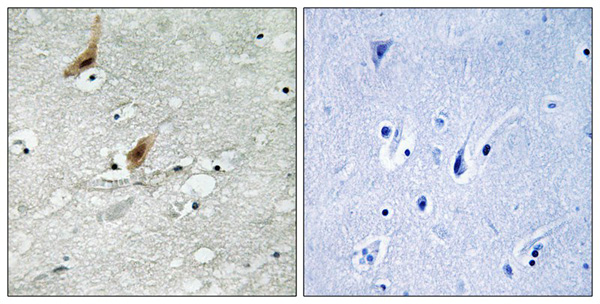
IHC (Immunohiostchemistry) (Immunohistochemistry analysis of paraffin-embedded human brain tissue using SRF (Phospho-Ser77) antibody. The picture on the right is treated with the synthesized peptide.)
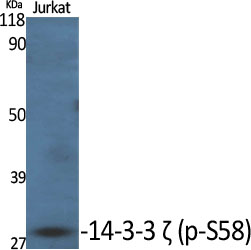
WB (Western Blot) (Western blot analysis of extracts from Jurkat cells, treated with PMA (125ng/ml, 30mins), using SRF (Phospho-Ser77) antibody. The lane on the right is treated with the synthesized peptide.)
Antibodies were produced by immunizing rabbits with synthetic phosphopeptide and KLH conjugates. Antibodies were purified by affinity-chromatography using epitope-specific phosphopeptide. Non-phospho specific antibodies were removed by chromatogramphy usi
Immunofluorescence, Immunohistochemistry, Western Blot
Purity
Antibodies were produced by immunizing rabbits with synthetic peptide and KLH conjugates. Antibodies were purified by affinity-chromatography using epitope-specific peptide.
IHC (Immunohiostchemistry) (Immunohistochemical analysis of paraffin-embedded human breast carcinoma tissue using EGFR(Phospho-Ser1070) Antibody (left) or the same antibody preincubated with blocking peptide(right).)
WB (Western Blot) (Western blot analysis of extracts from HUVEC cells untreated or treated with EGF using EGFR(Phospho-Ser1070) Antibody.)
Antibodies were produced by immunizing rabbits with synthetic phosphopeptide and KLH conjugates. Antibodies were purified by affinity-chromatography using epitope-specific phosphopeptide. Non-phospho specific antibodies were removed by chromatogramphy usi
IHC (Immunohiostchemistry) (Immunohistochemistry analysis of paraffin-embedded human brain tissue using RIPK2 (Phospho-Ser176) antibody. The picture on the right is treated with the synthesized peptide.)
WB (Western Blot) (Western blot analysis of extracts from 293 cells, treated with UV (15mins), using RIPK2 (Phospho-Ser176) antibody. The lane on the right is treated with the synthesized peptide.)
Antibodies were produced by immunizing rabbits with synthetic phosphopeptide and KLH conjugates. Antibodies were purified by affinity-chromatography using epitope-specific phosphopeptide. Non-phospho specific antibodies were removed by chromatogramphy usi
WB (Western Blot) (Western blot analysis of extracts from COS7 cells (Lane 2), using C-RAF (Phospho-Ser301) Antibody. The lane on the left is treated with synthesized peptide.)
WB (Western Blot) (Western blot analysis of extracts from HuvEc, using C-RAF (Phospho-Ser301) antibody. The lane on the right is treated with the synthesized peptide.)
Antibodies were produced by immunizing rabbits with synthetic phosphopeptide and KLH conjugates. Antibodies were purified by affinity-chromatography using epitope-specific phosphopeptide. Non-phospho specific antibodies were removed by chromatogramphy usi
Pricing
What Are Phospho Antibodies?
Protein phosphorylation is a process where a phosphate group is added to certain amino acid residues of a protein – usually serine (S), threonine (T), or tyrosine (Y) - by enzymes called kinases. This process is integral in controlling cellular signaling, cellular growth, and other biological functions.
Our catalog includes a wide range of phospho-specific antibodies that can accurately detect this important marker. They perform strongly in widely-used laboratory applications such as Western blot, flow cytometry, immunohistochemistry, and immunofluorescence microscopy. We value your trust in us and are committed to providing top-quality products and services. All of our antibodies are guaranteed to work for the applications and species indicated on our website & associated product pages.
What Are The Key Applications of Phospho Antibodies?
1. Western Blotting
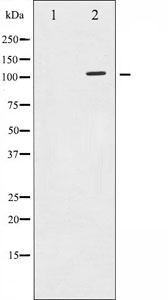
One of the first steps a researcher can take in utilizing these phospho-specific antibodies, is to check if the antibody works using a technique referred to as “Western blot”. For those unfamiliar, Western Blot aids in showing whether the protein that the antibody recognizes is appearing at the correct/expected size. These phospho-specific antibodies should also be able to detect changes in the target protein’s phosphorylation (on/off state) when cells are stimulated in certain ways.
2. Staining of Fixed Cells (Immunocytochemistry)
Another routine use of these phospho-specific antibodies, is to test if the antibody is able to demonstrate similar performance when used on fixed cells (intact cells that have been preserved) as it did in the Western blot tests. It is an important aspect in many cases to confirm that the antibody works in actual intact cell samples. Ideally, the method used for cellular fixation should be the same as what is used in pathology labs (like using 10% formalin). To check if the antibody works well in tissue sections (FFPE), researchers will often test it on fixed cells that are processed similar to tissue samples.
3. Specificity Tests Using Peptides
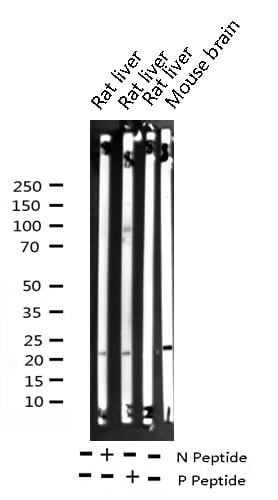
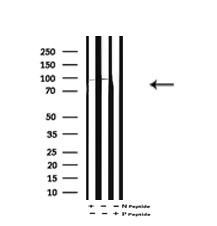
In order to make sure that the antibody is only binding to the right target:
Laboratory technicians will mix the antibody with phospho-peptides (short segments of the protein containing the phosphate group modification).
If the antibody signal disappears, it is confirmation that it is binding to the correct phosphorylated location.
A more robust test is to use both the phosphorylated and non-phosphorylated (dephosphorylated) versions of the protein. The antibody should react only with the phosphorylated one.
Another method sometimes utilized is to treat the sample with an enzyme, such as alkaline phosphatase, that specifically removes phosphate groups. If the antibody signal disappears after this, it also confirms specificity.
4. Genetic Confirmation
As a final step, scientists can genetically manipulate the nucleotide sequence and alter the target protein by removing the exact site where phosphorylation happens. If the antibody no longer appears to detect the modified protein, it is strong evidence supporting the antibody being specific for that phosphorylated site.
Why Buy Phospho Antibodies Through Us?
The production laboratory adheres to strict and consistent protocols prior to releasing any of these phospho-specific antibodies:
Standard methods and proper controls in all tests to ensure high quality.
These antibodies are tested and validated in different cell types and species.
High quality control criterion to ensure each batch is consistent, so you will obtain reliable results every time.
FAQ
1. What Are Phospho-Specific Antibodies?
Phospho-specific antibodies are made to detect proteins only when they have a phosphate group linked to a specific amino acid residue. This empowers scientists understand if a protein is "turned on" or active, based on its phosphorylation state.
2. How to Detect Phosphorylated Proteins in a Western Blot?
To find out if a protein is phosphorylated using Western blot:
Use a phospho-specific antibody that binds only to the phosphorylated form of the protein.
You can also use a “regular” antibody for the same amino acid sequence of the protein that the phospho-specific antibody is binding to (but in this case, this antibody will not bind if there is a phosphate group present) in order to compare how much of it is phosphorylated versus how much is non-phosphorylated (or “total” protein, if the “normal” antibody’s epitopes are non-phospho-site-specific).
3. How to Choose the Best Antibody?
Here are some simple tips to help you pick the right antibody:
Know your target
Match your sample characteristics
Confirm the intended use is appropriate
Check “host” and “type”
Check the “quality” of the presented data/images
Appraise whether the available validation meets your needs
Submit a Question
Please complete the form below and a representative will contact you as soon as possible.
Request more Information
Please complete the form below and a representative will contact you as soon as possible.
Request a Manual
Please complete the form below and a representative will contact you as soon as possible.
Request a Quote
Please complete the form below and a representative will contact you as soon as possible.