Get accurate results in your research with our Monoclonal Antibodies, which are specially made to target exactly what you require for your research, and will produce consistent, reliable performance in lab tests.
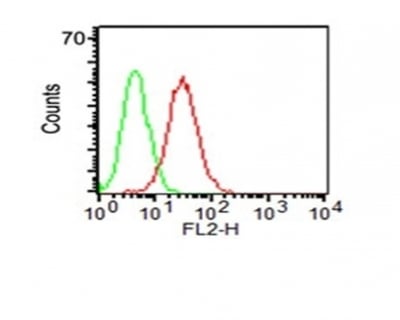
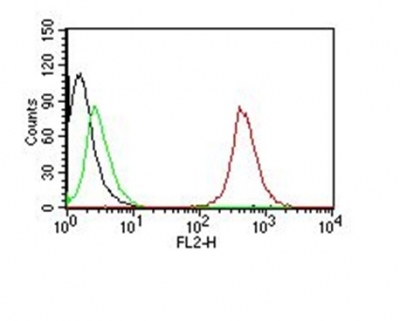
FCM (Flow Cytometry) (Flow cytometric analysis of Hela cells with SUMO-1 antibody at 1/50 dilution (blue) compared with an unlabelled control (cells without incubation with primary antibody; red). Alexa Fluor 488-conjugated goat anti rabbit IgG was used as the secondary antibody.)
ICC (Immunocytochemistry) (ICC staining SUMO-1 in MCF-7 cells (green). The nuclear counter stain is DAPI (blue). Cells were fixed in paraformaldehyde, permeabilised with 0.25% Triton X100/PBS.)
ICC (Immunocytochemistry) (ICC staining SUMO-1 in A549 cells (green). The nuclear counter stain is DAPI (blue). Cells were fixed in paraformaldehyde, permeabilised with 0.25% Triton X100/PBS.)
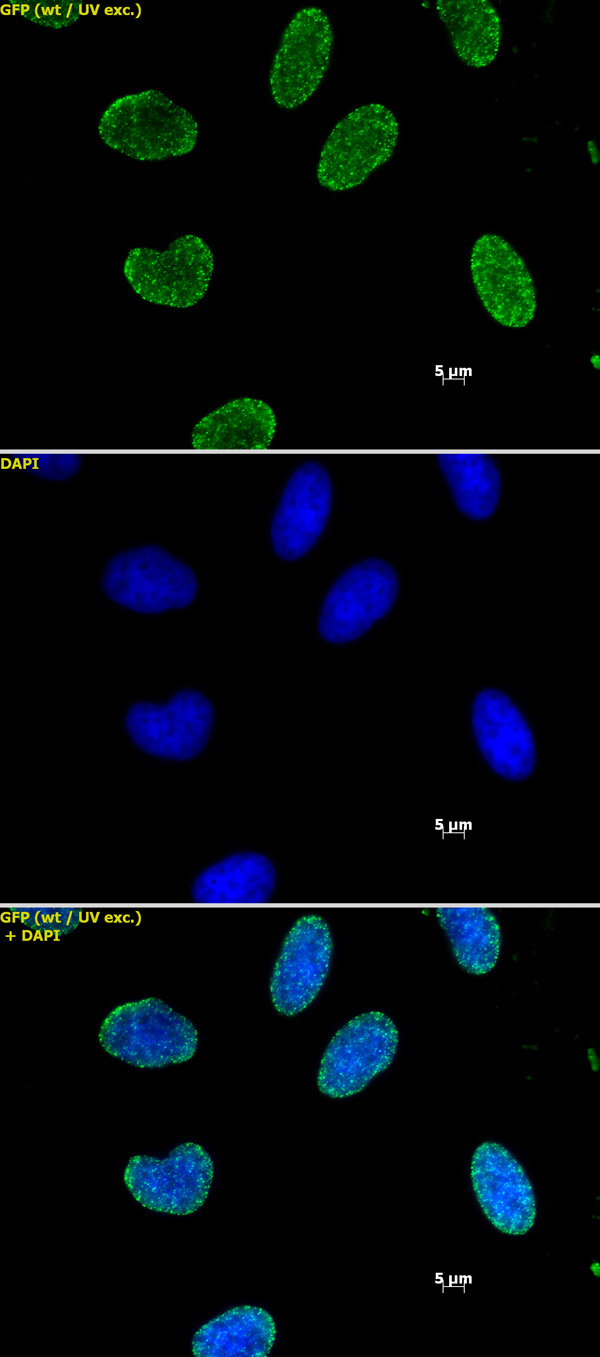
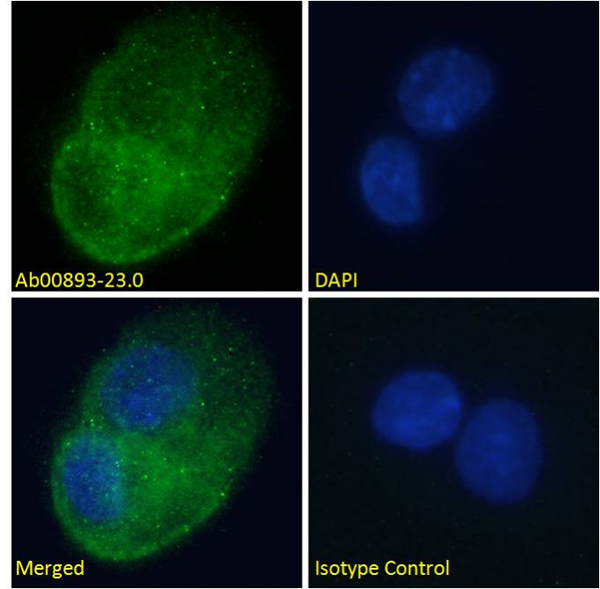
ICC (Immunocytochemistry) (ICC staining SUMO-1 in Hela cells (green). The nuclear counter stain is DAPI (blue). Cells were fixed in paraformaldehyde, permeabilised with 0.25% Triton X100/PBS.)
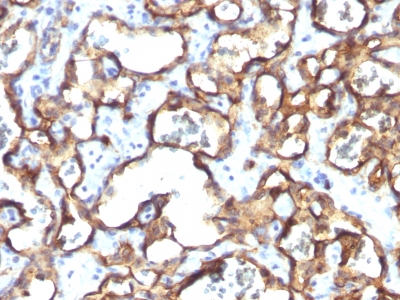
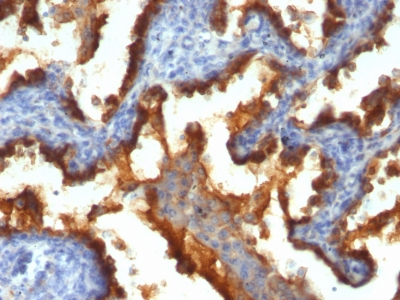
IHC (Immunohistchemistry) (Immunohistochemical analysis of paraffin-embedded mouse placenta tissue using anti-SUMO-1 antibody. Counter stained with hematoxylin.)
IHC (Immunohistochemistry) (Immunohistochemical analysis of paraffin-embedded mouse thyroid tissue using anti-SUMO-1 antibody. Counter stained with hematoxylin.)
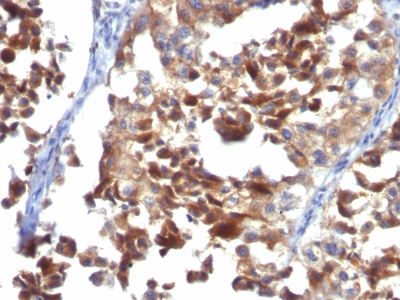
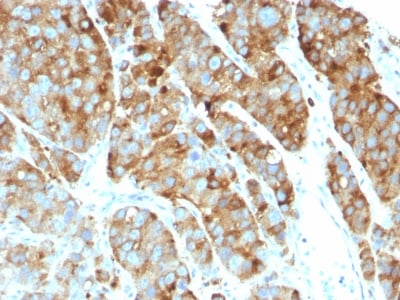
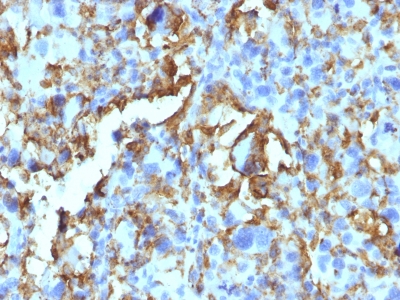
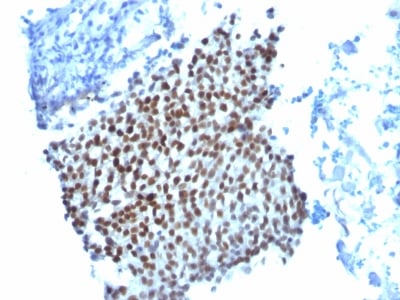
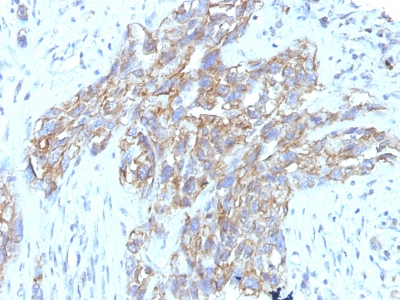
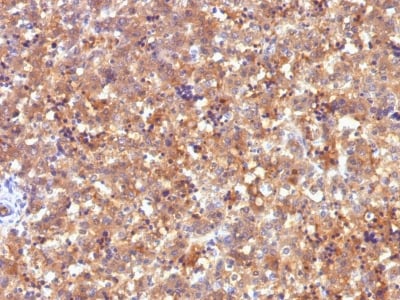
IHC (Immunohistochemistry) (Immunohistochemical analysis of paraffin-embedded human breast carcinoma tissue using anti-SUMO-1 antibody. Counter stained with hematoxylin.)
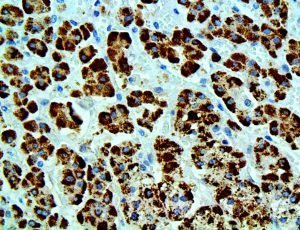
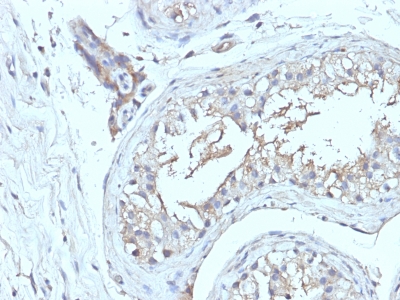
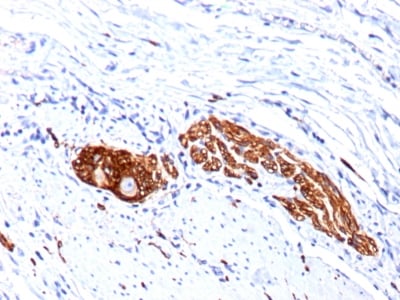
IHC (Immunohistochemistry) (Immunohistochemical analysis of paraffin-embedded human thyroid tissue using anti-SUMO-1 antibody. Counter stained with hematoxylin.)
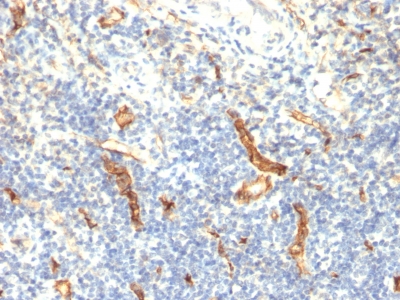
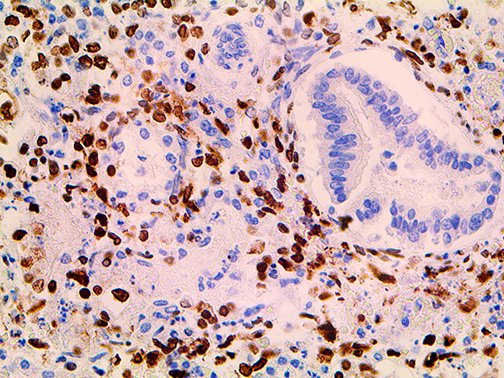
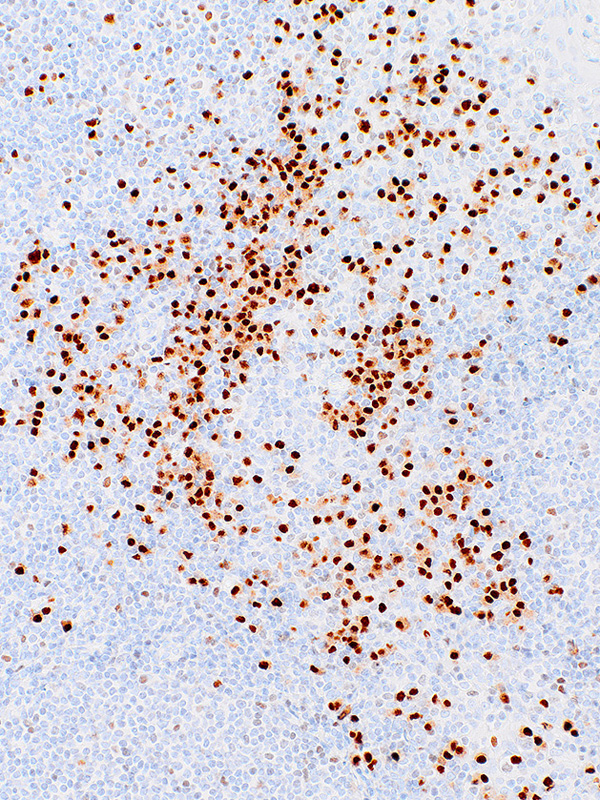
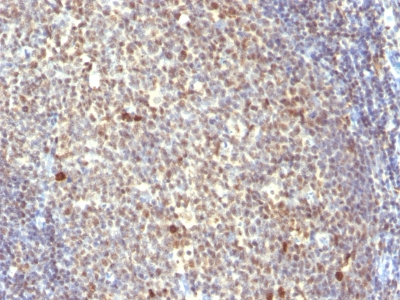
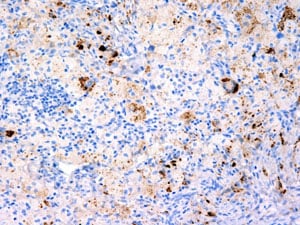
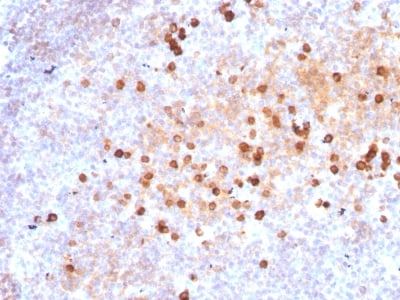
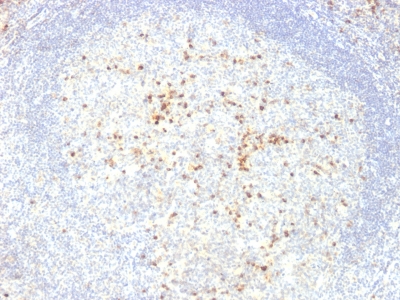
IHC (Immunohistochemistry) (Immunohistochemical analysis of paraffin-embedded human tonsil tissue using anti-SUMO-1 antibody. Counter stained with hematoxylin.)
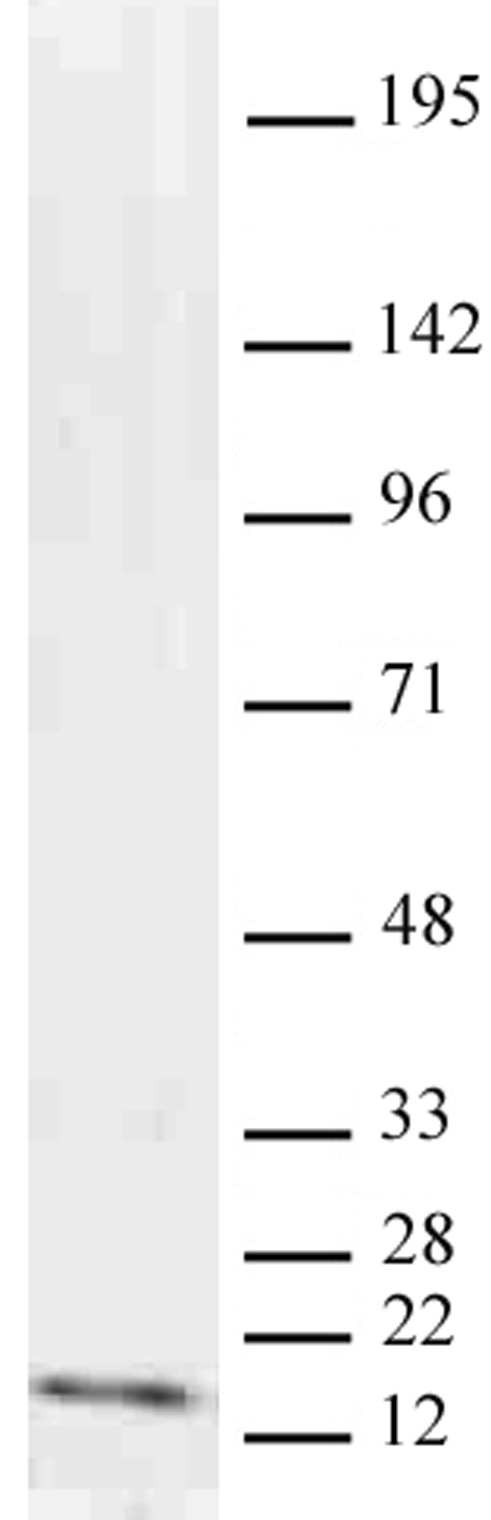
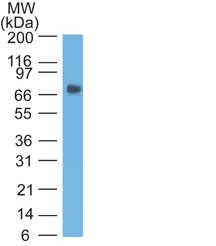
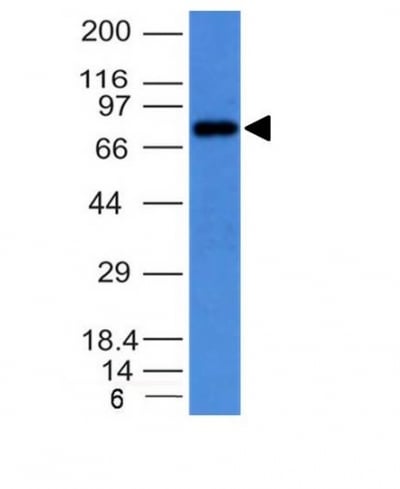
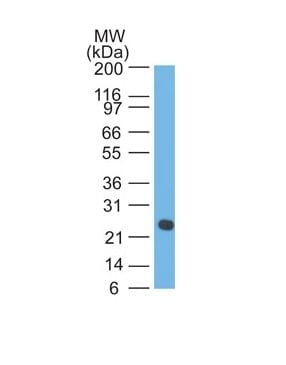
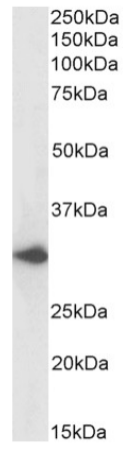
WB (Western Blot) (Western blot analysis of SUMO-1 on Hela cell lysates using anti-SUMO-1 antibody at 1/1, 000 dilution.)
FCM (Flow Cytometry) (Flow cytometric analysis of 293T cells with FKBP52 antibody at 1/100 dilution (purple) compared with an unlabelled control (cells without incubation with primary antibody; yellow). Alexa Fluor 488-conjugated goat anti-rabbit IgG was used as the secondary antibody.)
ICC (Immunocytochemistry) (ICC staining FKBP52 in MCF-7 cells (green). The nuclear counter stain is DAPI (blue). Cells were fixed in paraformaldehyde, permeabilised with 0.25% Triton X100/PBS.)
ICC (Immunocytochemistry) (ICC staining FKBP52 in 293T cells (green). The nuclear counter stain is DAPI (blue). Cells were fixed in paraformaldehyde, permeabilised with 0.25% Triton X100/PBS.)
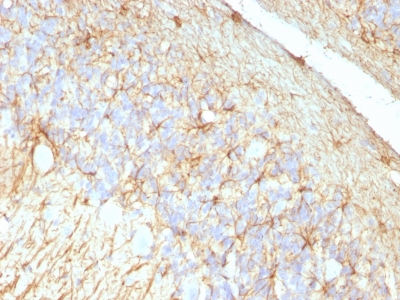
IHC (Immunohistochemistry) (Immunohistochemical analysis of paraffin-embedded mouse brain tissue using anti-FKBP52 antibody. Counter stained with hematoxylin.)
IHC (Immunohistochemistry) (Immunohistochemical analysis of paraffin-embedded human esophagus tissue using anti-FKBP52 antibody. Counter stained with hematoxylin.)
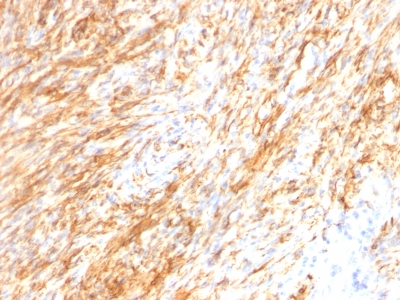
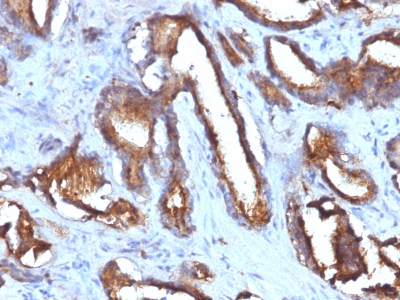
IHC (Immunohistochemistry) (Immunohistochemical analysis of paraffin-embedded human prostate cancer tissue using anti-FKBP52 antibody. Counter stained with hematoxylin.)
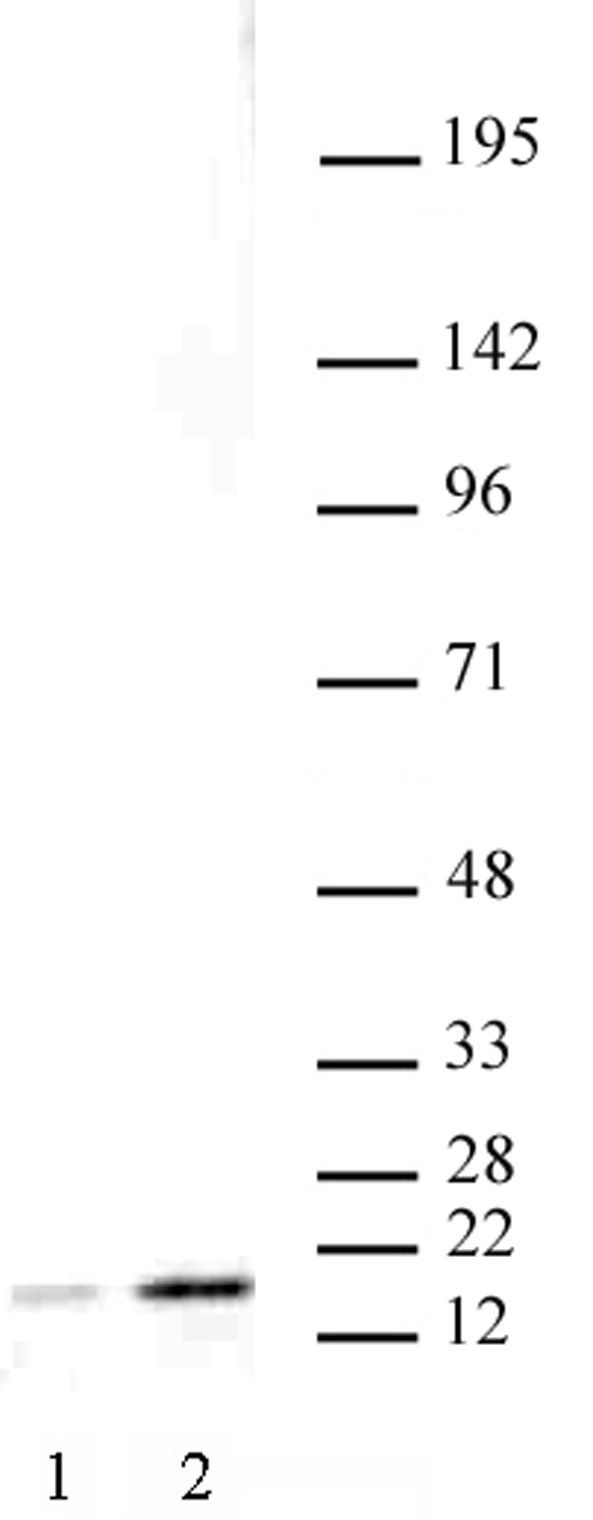
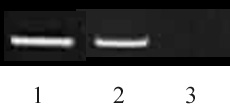
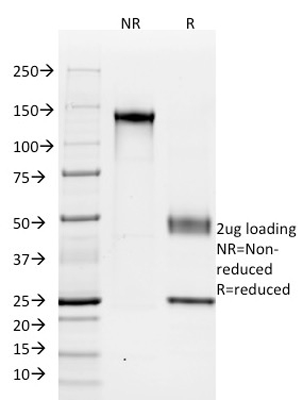
WB (Western Blot) (Western blot analysis of FKBP52 on 293 (1) and SK-Br-3 (2) cell lysate using anti-FKBP52 antibody at 1/2, 000 dilution.)
IP (Immunoprecipitation) (Immunoprecipitation analysis of 300 ug extracts of HeLa cells using 3 ug MCM3 antibody (AAA28459). Western blot was performed from the immunoprecipitate using MCM3 antibody (AAA28459) at a dilution of 1:1000.)
IF (Immunofluorescence) (Immunofluorescence analysis of NIH-3T3 cells using MCM3 Rabbit mAb (AAA28459) at dilution of 1:100 (40x lens). Secondary antibody: Cy3-conjugated Goat anti-Rabbit IgG (H+L) (AS007) at 1:500 dilution. Blue: DAPI for nuclear staining.)
IF (Immunofluorescence) (Immunofluorescence analysis of HeLa cells using MCM3 Rabbit mAb (AAA28459) at dilution of 1:100 (40x lens). Secondary antibody: Cy3-conjugated Goat anti-Rabbit IgG (H+L) (AS007) at 1:500 dilution. Blue: DAPI for nuclear staining.)
IHC (Immunohistochemistry) (Immunohistochemistry analysis of paraffin-embedded Rat spleen using MCM3 Rabbit mAb (AAA28459) at dilution of 1:100 (40x lens). Microwave antigen retrieval performed with 0.01M PBS Buffer (pH 7.2) prior to IHC staining.)
IHC (Immunohistochemistry) (Immunohistochemistry analysis of paraffin-embedded Human liver cancer using MCM3 Rabbit mAb (AAA28459) at dilution of 1:100 (40x lens). Microwave antigen retrieval performed with 0.01M PBS Buffer (pH 7.2) prior to IHC staining.)
WB (Western Blot) (Western blot analysis of lysates from Mouse spleen, using MCM3 Rabbit mAb (AAA28459) at 1?1000 dilution.Secondary antibody: HRP-conjugated Goat anti-Rabbit IgG (H+L) (AS014) at 1:10000 dilution.Lysates/proteins: 25ug per lane.Blocking buffer: 3% nonfat dry milk in TBST.Detection: ECL Enhanced Kit (RM00021).Exposure time: 3min.)
WB (Western Blot) (Western blot analysis of various lysates using MCM3 Rabbit mAb (AAA28459) at 1?1000 dilution.Secondary antibody: HRP-conjugated Goat anti-Rabbit IgG (H+L) (AS014) at 1:10000 dilution.Lysates/proteins: 25ug per lane.Blocking buffer: 3% nonfat dry milk in TBST.Detection: ECL Basic Kit (RM00020).Exposure time: 10s.)
FCM (Flow Cytometry) (Flow cytometric analysis of Hela cells with CLOCK antibody at 1/100 dilution (red) compared with an unlabelled control (cells without incubation with primary antibody; black).)
ICC (Immunocytochemistry) (ICC staining CLOCK in SHG-44 cells (green). The nuclear counter stain is DAPI (blue). Cells were fixed in paraformaldehyde, permeabilised with 0.25% Triton X100/PBS.)
ICC (Immunocytochemistry) (ICC staining CLOCK in Hela cells (green). The nuclear counter stain is DAPI (blue). Cells were fixed in paraformaldehyde, permeabilised with 0.25% Triton X100/PBS.)
IHC (Immunohistochemistry) (Immunohistochemical analysis of paraffin-embedded human kidney tissue using anti-CLOCK antibody. Counter stained with hematoxylin.)
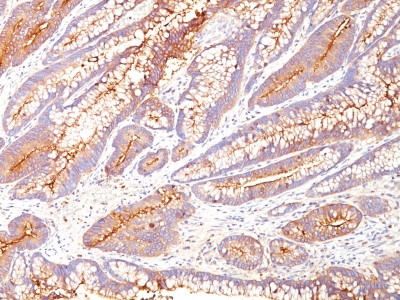
IHC (Immunohistochemistry) (Immunohistochemical analysis of paraffin-embedded human colon cancer tissue using anti-CLOCK antibody. Counter stained with hematoxylin.)
IHC (Immunohistochemistry) (Immunohistochemical analysis of paraffin-embedded 2 colon tissue using anti-CLOCK antibody. Counter stained with hematoxylin.)
IHC (Immunohistochemistry) (Immunohistochemical analysis of paraffin-embedded human fetal skeletal muscle tissue using anti-CLOCK antibody. Counter stained with hematoxylin.)
WB (Western Blot) (Western blot analysis of CLOCK on MCF-7 (1) and PC-12 (2) cell using anti-CLOCK antibody at 1/1, 000 dilution.)
FCM (Flow Cytometry) (Flow cytometric analysis of Hela cells with Cytokeratin 17 antibody at 1/50 dilution (blue) compared with an unlabelled control (cells without incubation with primary antibody; red). Alexa Fluor 488-conjugated goat anti rabbit IgG was used as the secondary antibody.)
ICC (Immunocytochemistry) (ICC staining Cytokeratin 17 in PC-3M cells (green). The nuclear counter stain is DAPI (blue). Cells were fixed in paraformaldehyde, permeabilised with 0.25% Triton X100/PBS.)
ICC (Immunocytochemistry) (ICC staining Cytokeratin 17 in Hela cells (green). The nuclear counter stain is DAPI (blue). Cells were fixed in paraformaldehyde, permeabilised with 0.25% Triton X100/PBS.)
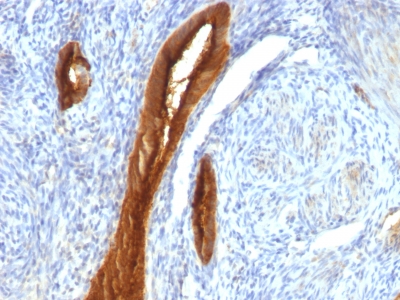
IHC (Immunohistochemistry) (Immunohistochemical analysis of paraffin-embedded mouse prostate tissue using anti-Cytokeratin 17 antibody. Counter stained with hematoxylin.)
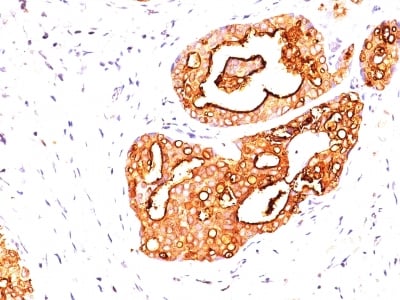
IHC (Immunohistochemistry) (Immunohistochemical analysis of paraffin-embedded human breast carcinoma tissue using anti-Cytokeratin 17 antibody. Counter stained with hematoxylin.)
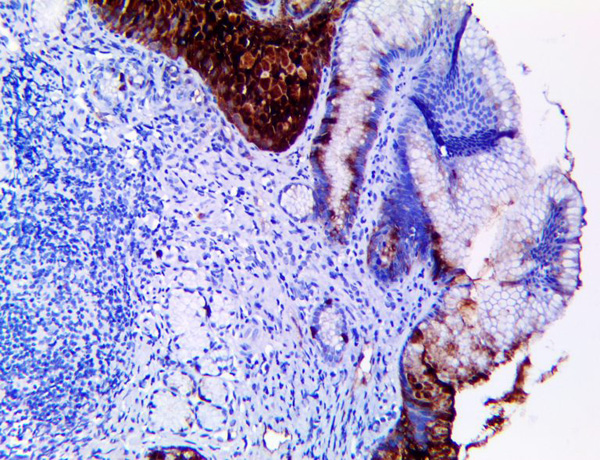
IHC (Immunohistochemistry) (Immunohistochemical analysis of paraffin-embedded human tonsil tissue using anti-Cytokeratin 17 antibody. Counter stained with hematoxylin.)
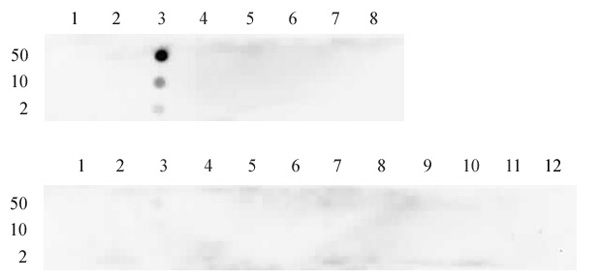
Application Data (Detection limit for recombinant GST tagged NR3C1 is ~0.1ng/ml as a capture antibody.)
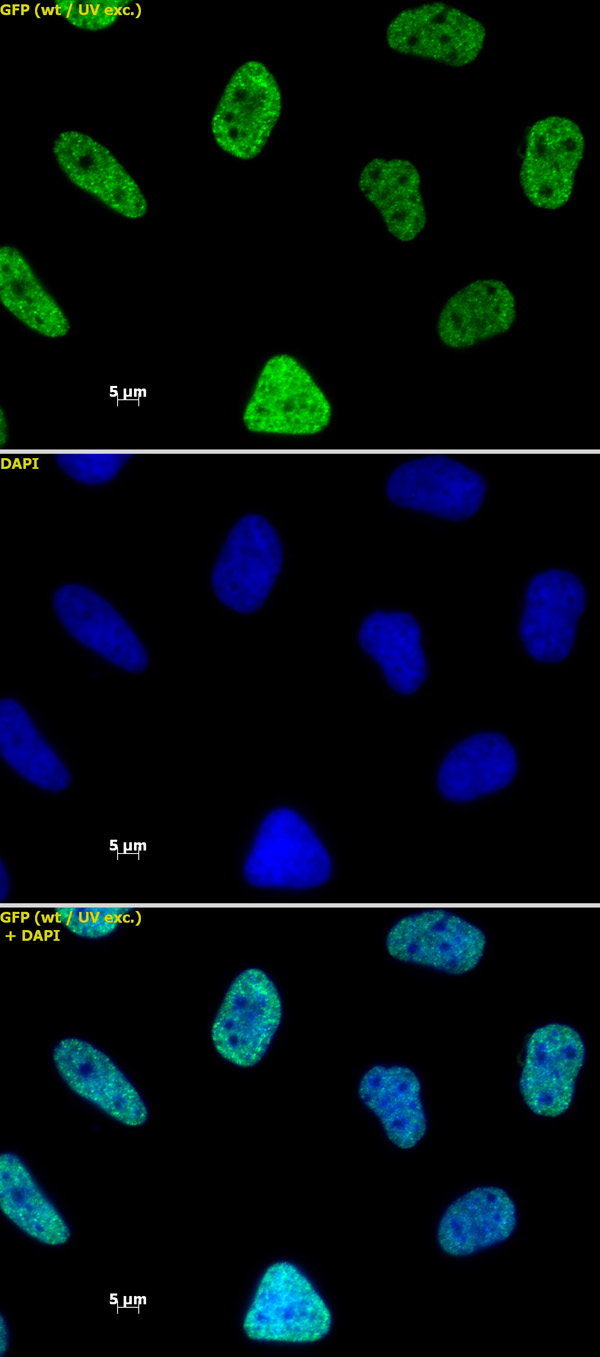
IF (Immunofluorescence) (Immunofluorescence of monoclonal antibody to NR3C1 on HeLa cell. [antibody concentration 10ug/ml].)
WB (Western Blot) (Western Blot analysis of NR3C1 expression in transfected 293T cell line by NR3C1 monoclonal antibody. Lane 1: NR3C1 transfected lysate (85.7kD). Lane 2: Non-transfected lysate.)
WB (Western Blot) (NR3C1 monoclonal antibody, Western Blot analysis of NR3C1 expression in HeLa NE.)
WB (Western Blot) (NR3C1 monoclonal antibody. Western Blot analysis of NR3C1 expression in HeLa.)
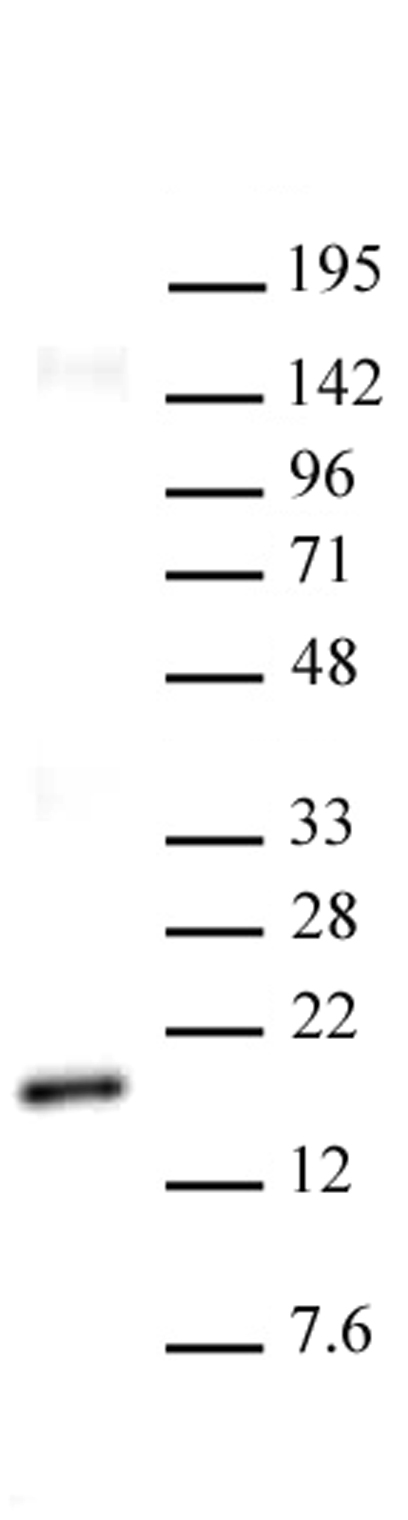
WB (Western Blot) (Western Blot detection against Immunogen (35.53kD).)
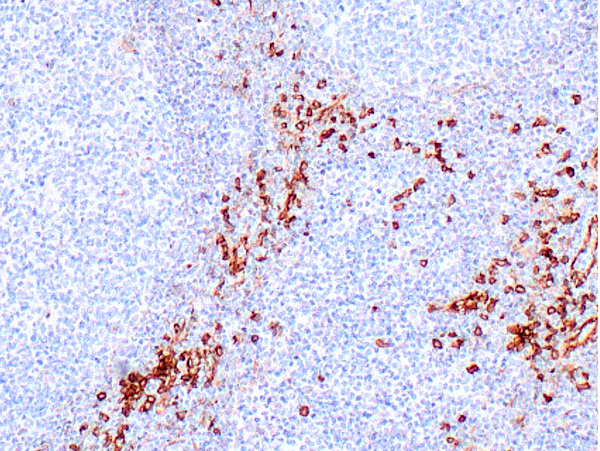
Application Data (Immunoperoxidase staining of mouse lymph node cryosection stained with Rat antii Mouse CD8alpha antibody, clone KT15 followed by horseradish peroxidase conjugatedGoat anti Rat IgG s a detection reagent. High power)
Application Data (Staining of mouse peripheral blood lymphocytes with Rat anti Mouse CD8 Alpha: Alexa Fluor 488)
Application Data (Staining of mouse spleen with Rat anti Mouse CD8 Alpha: FITC)
Application Data (Immunoperoxidase staining of mouse lymph node cryosection stained with Rat antii Mouse CD8alpha antibody, clone KT15 followed by horseradish peroxidase conjugatedGoat anti Rat IgG s a detection reagent. Medium power)
Application Data (Staining of mouse spleen cells with Rat anti Mouse CD8 Alpha: Biotin)
Application Data (Staining of mouse spleen with Rat anti Mouse CD8 Alpha: RPE - Alexa Fluor 647)
Application Data (Staining of mouse spleen cells with Rat anti Mouse CD8 Alpha:RPE)
Application Data (Staining of mouse spleen with Rat anti Mouse CD8 Alpha: RPE)
Application Data (Immunoperoxidase staining of mouse lymph node cryosection stained with Rat antii Mouse CD8alpha antibody, clone KT15 followed by horseradish peroxidase conjugatedGoat anti Rat IgG s a detection reagent. Low power)
Application Data (Staining of mouse spleen cells with Rat anti Mouse CD8)
WB (Western Blot) (BST2 monoclonal antibody (M15), clone 2E6. Western Blot analysis of BST2 expression in human placenta.)
WB (Western Blot) (BST2 monoclonal antibody (M15), clone 2E6. Western Blot analysis of BST2 expression in HeLa.)
IF (Immunofluorescence) (Immunofluorescence of monoclonal antibody to BST2 on HeLa cell. [antibody concentration 10 ug/ml])
IP (Immunoprecipitation) (Immunoprecipitation of BST2 transfected lysate using anti-BST2 monoclonal antibody and Protein A Magnetic Bead (U0007), and immunoblotted with BST2 MaxPab rabbit polyclonal antibody.)
Application Data (Detection limit for recombinant GST tagged BST2 is 0.1 ng/ml as a capture antibody.)
WB (Western Blot) (AKT2 monoclonal antibody (M06), clone X1. Western Blot analysis of AKT2 expression in PC-12.)
WB (Western Blot) (AKT2 monoclonal antibody (M06), clone X1. Western Blot analysis of AKT2 expression in NIH/3T3.)
IHC (Immunohistochemistry) (Immunoperoxidase of monoclonal antibody to AKT2 on formalin-fixed paraffin-embedded human small Intestine. [antibody concentration 3 ug/ml])
Application Data (Detection limit for recombinant GST tagged AKT2 is approximately 1ng/ml as a capture antibody.)
WB (Western Blot) (AKT2 monoclonal antibody (M06), clone X1 Western Blot analysis of AKT2 expression in Jurkat (Cat # L017V1).)
WB (Western Blot) (Detection of human ZEB1 by western blot. Samples: Whole cell lysate (10 ug) from Jurkat, HeLa, RKO, Hep-G2, and HEK293T cells prepared using NETN lysis buffer. Antibody: Rabbit anti-ZEB1 recombinant monoclonal antibody (AAA23870 lot 1) used at 1:1000. Secondary: HRP-conjugated goat anti-rabbit IgG . Detection: Chemiluminescence with an exposure time of 30 seconds. Lower Panel: Rabbit anti-COPB2 antibody .)
WB (Western Blot) (Detection of mouse ZEB1 by western blot. Samples: Whole cell lysate (10 ug) from NIH 3T3, CT26, and CH27 cells prepared using NETN lysis buffer. Antibody: Rabbit anti-ZEB1 recombinant monoclonal antibody (AAA23870 lot 1) used at 1:1000. Secondary: HRP-conjugated goat anti-rabbit IgG . Detection: Chemiluminescence with an exposure time of 3 minutes. Lower Panel: Rabbit anti-COPB2 antibody .)
IP (Immunoprecipitation) (Detection of human ZEB1 by western blot of immunoprecipitates. Samples: Whole cell lysate (1.0 mg per IP reaction; 5% of IP loaded) from 293T cells prepared using NETN lysis buffer. Antibodies: Rabbit anti-ZEB1 recombinant monoclonal antibody (AAA23870 lot 1) used for IP at 6 ul/mg lysate. ZEB1 was also immunoprecipitated by a second antibody against a different epitope of ZEB1 . For blotting immunoprecipitated ZEB1, AAA23870 was used at 1:1000. Detection: Chemiluminescence with an exposure time of 30 seconds.)
IHC (Immunohistchemistry) (Detection of human ZEB1 by immunohistochemistry. Sample: FFPE section of glioblastoma. Antibody: Rabbit anti-ZEB1 recombinant monoclonal antibody (AAA23870-1). Secondary: HRP-conjugated goat anti-rabbit IgG .)
IHC (Immunohistochemistry) (Detection of mouse ZEB1 by immunohistochemistry. Sample: FFPE section of mouse Renca tumor. Antibody: Rabbit anti-ZEB1 recombinant monoclonal antibody (AAA23870-1). Secondary: HRP-conjugated goat anti-rabbit IgG .)
ICC (Immunocytochemistry) (Detection of human ZEB1 by immunocytochemistry. Sample: FFPE section of RKO cells. Antibody: Rabbit anti-ZEB1 recombinant monoclonal antibody (AAA23870-1). Secondary: HRP-conjugated goat anti-rabbit IgG .)
ICC (Immunocytochemistry) (Detection of mouse ZEB1 by immunocytochemistry. Sample: FFPE section of ND7/23 cells. Antibody: Rabbit anti-ZEB1 recombinant monoclonal antibody (AAA23870-1). Secondary: HRP-conjugated goat anti-rabbit IgG .)
FCM (Flow Cytometry) (Detection of mouse Zeb1 (shaded) in EL4 cells by flow cytometry. Antibody: Rabbit anti-Zeb1 recombinant monoclonal (AAA23870) or isotype control (unshaded). Secondary: DyLight 650-conjugated goat anti-rabbit IgG .)
FCM (Flow Cytometry) (Detection of human Zeb1 (shaded) in Jurkat cells by flow cytometry. Antibody: Rabbit anti-Zeb1 recombinant monoclonal (AAA23870) or isotype control (unshaded). Secondary: DyLight 650-conjugated goat anti-rabbit IgG .)
WB (Western Blot) (Detection of human Neurofilament-L by western blot. Samples: Whole cell lysate (25 ug) from HEK293T, HeLa, SK-N-BE(2), Jurkat, and 786-O cells prepared using NETN lysis buffer. Antibody: Rabbit anti-Neurofilament-L recombinant monoclonal antibody (AAA23874 lot 1) used at 1:1000. Secondary: HRP-conjugated goat anti-rabbit IgG . Detection: Chemiluminescence with an exposure time of 10 seconds. Lower Panel: Rabbit anti-Actin recombinant monoclonal antibody .)
WB (Western Blot) (Detection of mouse and rat Neurofilament-L by western blot. Samples: Whole cell lysate (50 ug) from NIH 3T3, CT26, B35, TCMK-1, and BW5147.3 cells prepared using NETN lysis buffer. Antibody: Rabbit anti-Neurofilament-L recombinant monoclonal antibody (AAA23874 lot 1) used at 1:1000. Secondary: HRP-conjugated goat anti-rabbit IgG . Detection: Chemiluminescence with an exposure time of 3 seconds.)
IP (Immunoprecipitation) (Detection of human Neurofilament-L by western blot of immunoprecipitates. Samples: Whole cell lysate (1.0 mg per IP reaction; 20% of IP loaded) from 293T cells prepared using NETN lysis buffer. Antibodies: Rabbit anti-Neurofilament-L recombinant monoclonal antibody (AAA23874 lot 1) used for IP at 20 ul/mg lysate. Neurofilament-L was also immunoprecipitated by a second antibody against a different epitope of Neurofilament-L (BL-2033B-1C7). For blotting immunoprecipitated Neurofilament-L, AAA23874 was used at 1:1000. Detection: Chemiluminescence with an exposure time of 30 seconds.)
IHC (Immunohistochemistry) (Detection of human Neurofilament-L by immunohistochemistry. Sample: FFPE section of human medulla. Antibody: Rabbit anti-Neurofilament-L recombinant monoclonal antibody (AAA23874-1). Secondary: HRP-conjugated goat anti-rabbit IgG .)
IHC (Immunohistochemistry) (Detection of mouse Neurofilament-L by immunohistochemistry. Sample: FFPE section of mouse cerebellum. Antibody: Rabbit anti-Neurofilament-L recombinant monoclonal antibody (AAA23874-1). Secondary: HRP-conjugated goat anti-rabbit IgG .)
ICC (Immunocytochemistry) (Detection of rat Neurofilament-L by immunocytochemistry. Sample: FFPE section of B35 cells. Antibody: Rabbit anti-Neurofilament-L recombinant monoclonal antibody (AAA23874-1). Secondary: HRP-conjugated goat anti-rabbit IgG .)
ICC (Immunocytochemistry) (Detection of human Neurofilament-L by immunocytochemistry. Sample: FFPE section of SK-N-BE(2) cells. Antibody: Rabbit anti-Neurofilament-L recombinant monoclonal antibody (AAA23874-1). Secondary: HRP-conjugated goat anti-rabbit IgG .)
ICC (Immunocytochemistry) (ICC staining HnRNP U in SHSY-5Y cells (green). The nuclear counter stain is DAPI (blue). Cells were fixed in paraformaldehyde, permeabilised with 0.25% Triton X100/PBS.)
ICC (Immunocytochemistry) (ICC staining HnRNP U in HepG2 cells (green). The nuclear counter stain is DAPI (blue). Cells were fixed in paraformaldehyde, permeabilised with 0.25% Triton X100/PBS.)
ICC (Immunocytochemistry) (ICC staining HnRNP U in A431 cells (green). The nuclear counter stain is DAPI (blue). Cells were fixed in paraformaldehyde, permeabilised with 0.25% Triton X100/PBS.)
IHC (Immunohistchemistry) (Immunohistochemical analysis of paraffin-embedded mouse colon tissue using anti-HnRNP U antibody. Counter stained with hematoxylin.)
IHC (Immunohistochemistry) (Immunohistochemical analysis of paraffin-embedded human kidney tissue using anti-HnRNP U antibody. Counter stained with hematoxylin.)
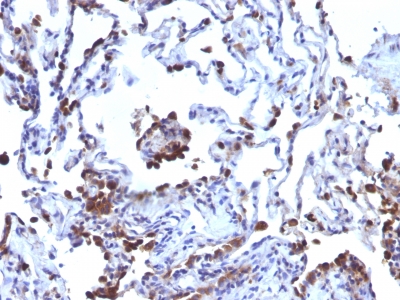
IHC (Immunohistochemistry) (Immunohistochemical analysis of paraffin-embedded human lung cancer tissue using anti-HnRNP U antibody. Counter stained with hematoxylin.)
IHC (Immunohistochemistry) (Immunohistochemical analysis of paraffin-embedded human tonsil tissue using anti-HnRNP U antibody. Counter stained with hematoxylin.)
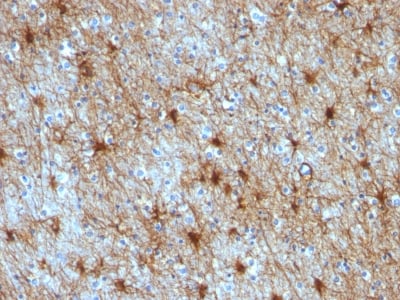
IHC (Immunohistochemistry) (Immunohistochemical analysis of paraffin-embedded rat brain tissue using anti-HnRNP U antibody. Counter stained with hematoxylin.)
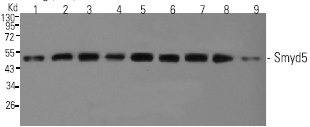
WB (Western Blot) (Western blot analysis of HnRNP U on different cell lysates using anti-HnRNP U at 1/500 dilution. Positive control�� Lane 1: NIH-3T3 Lane 2: SH-SY-5Y Lane 3: K562)
ICC (Immunocytochemistry) (ICC staining Caspase-8 in A549 cells (green). The nuclear counter stain is DAPI (blue). Cells were fixed in paraformaldehyde, permeabilised with 0.25% Triton X100/PBS.)
ICC (Immunocytochemistry) (ICC staining Caspase-8 in Hela cells (green). The nuclear counter stain is DAPI (blue). Cells were fixed in paraformaldehyde, permeabilised with 0.25% Triton X100/PBS.)
IHC (Immunohistochemistry) (Immunohistochemical analysis of paraffin-embedded human kidney tissue using anti-Caspase-8 antibody. Counter stained with hematoxylin.)
IHC (Immunohistochemistry) (Immunohistochemical analysis of paraffin-embedded human lung cancer tissue using anti-Caspase-8 antibody. Counter stained with hematoxylin.)
IHC (Immunohistochemistry) (Immunohistochemical analysis of paraffin-embedded human spleen tissue using anti-Caspase-8 antibody. Counter stained with hematoxylin.)
IHC (Immunohistochemistry) (Immunohistochemical analysis of paraffin-embedded human tonsil tissue using anti-Caspase-8 antibody. Counter stained with hematoxylin.)
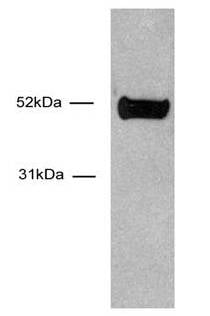
WB (Western Blot) (Western blot analysis of Caspase-8 on different lysates using anti-Caspase-8 antibody at 1/1, 000 dilution. Positive control: Lane 1: Jurkat Lane 2: Hela)
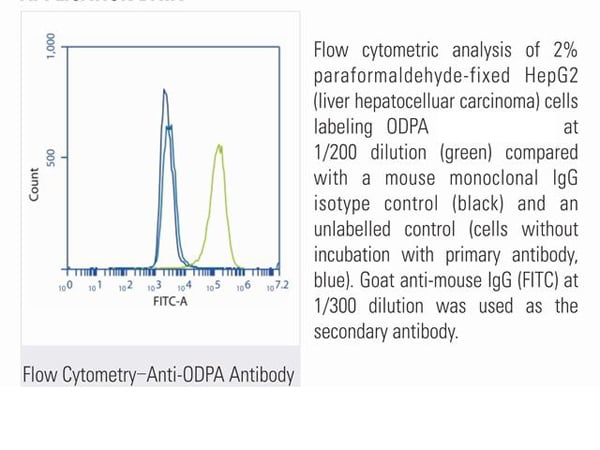
FCM (Flow Cytometry) (Overlay histogram showing HepG2 cells stained with AAA28061 (red line) at 1:100. The cells were fixed in 4% formaldehyde and permeated by 0.2% TritonX-100. Then 10% normal goat serum was Incubated to block non-specific protein-protein interactions followed by the antibody (1ug/1*106cells) for 1 h at 4 degree C. The secondary antibody used was FITC-conjugated Goat Anti-Mouse IgG(H+L) at 1/100 dilution for 30min at 4 degree C. Isotype control antibody (green line) was mouse IgG2b (1ug/1*106cells) used under the same conditions. Acquisition of >10,000 events was performed.)
FCM (Flow Cytometry) (Overlay histogram showing Hela cells stained with AAA28061 (red line) at 1:100. The cells were fixed in 4% formaldehyde and permeated by 0.2% TritonX-100. Then 10% normal goat serum was Incubated to block non-specific protein-protein interactions followed by the antibody (1ug/1*106cells) for 1 h at 4 degree C. The secondary antibody used was FITC-conjugated Goat Anti-Mouse IgG(H+L) at 1/100 dilution for 30min at 4 degree C. Isotype control antibody (green line) was mouse IgG2b (1ug/1*106cells) used under the same conditions. Acquisition of >10,000 events was performed.)
FCM (Flow Cytometry) (Overlay histogram showing A549 cells stained with AAA28061 (red line) at 1:100. The cells were fixed in 4% formaldehyde and permeated by 0.2% TritonX-100. Then 10% normal goat serum was Incubated to block non-specific protein-protein interactions followed by the antibody (1ug/1*106cells) for 1 h at 4 degree C. The secondary antibody used was FITC-conjugated Goat Anti-Mouse IgG(H+L) at 1/100 dilution for 30min at 4 degree C. Isotype control antibody (green line) was mouse IgG2b (1ug/1*106cells) used under the same conditions. Acquisition of >10,000 events was performed.)
IF (Immunofluorescence) (Immunofluorescence staining of MCF-7 cells with AAA28061 at 1:50, counter-stained with DAPI. The cells were fixed in 4% formaldehyde and blocked in 10% normal Goat Serum. The cells were then incubated with the antibody overnight at 4 degree C. Nuclear DNA was labeled in blue with DAPI. The secondary antibody was FITC-conjugated AffiniPure Goat Anti-Mouse IgG (H+L).)
IF (Immunofluorescence) (Immunofluorescence staining of Hela cells with AAA28061 at 1:50, counter-stained with DAPI. The cells were fixed in 4% formaldehyde and blocked in 10% normal Goat Serum. The cells were then incubated with the antibody overnight at 4 degree C. Nuclear DNA was labeled in blue with DAPI. The secondary antibody was FITC-conjugated AffiniPure Goat Anti-Mouse IgG (H+L).)
IF (Immunofluorescence) (Immunofluorescence staining of A549 cells with AAA28061 at 1:50, counter-stained with DAPI. The cells were fixed in 4% formaldehyde and blocked in 10% normal Goat Serum. The cells were then incubated with the antibody overnight at 4 degree C. Nuclear DNA was labeled in blue with DAPI. The secondary antibody was FITC-conjugated AffiniPure Goat Anti-Mouse IgG (H+L).)
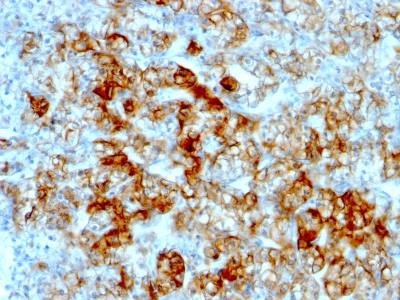
IHC (Immunohistochemistry) (IHC image of AAA28061 diluted at 1:500 and staining in paraffin-embedded human lung cancer tissue performed on a Leica BondTM system. After dewaxing and hydration, antigen retrieval was mediated by high pressure in a citrate buffer (pH 6.0). Section was blocked with 10% normal goat serum 30min at 37 degree C. Then primary antibody (1% BSA) was incubated at 4 degree C overnight. The primary is detected by a Goat anti-rabbit IgG labeled by HRP and visualized using 0.05% DAB.)
IHC (Immunohistochemistry) (IHC image of AAA28061 diluted at 1:500 and staining in paraffin-embedded human glioma tissue performed on a Leica BondTM system. After dewaxing and hydration, antigen retrieval was mediated by high pressure in a citrate buffer (pH 6.0). Section was blocked with 10% normal goat serum 30min at 37 degree C. Then primary antibody (1% BSA) was incubated at 4 degree C overnight. The primary is detected by a Goat anti-rabbit IgG labeled by HRP and visualized using 0.05% DAB.)
WB (Western Blot) (Western BlotPositive WB detected in: Raji whole cell lysateAll lanes CD63 antibody at 1:1000SecondaryGoat polyclonal to mouse IgG at 1/50000 dilutionPredicted band size: 30-120 KD KDaObserved band size: 30-120 KD KDaExposure time?1min)
WB (Western Blot) (Western BlotPositive WB detected in: A549 whole cell lysate, Hela whole cell lysate, HepG2 whole cell lysateAll lanes CD63 antibody at 1:1000SecondaryGoat polyclonal to mouse IgG at 1/50000 dilutionPredicted band size: 30-120 KD KDaObserved band size: 30-120 KD KDaExposure time?1min)
Application Data (Published Customer Image:Rat anti Mouse Gr-1 antibody, clone RB6-8C5 used for the identification of neutrophils by immunofluorescence.Image caption:S. typhimurium-Infected Macrophages Containing Phagocytosed Neutrophils and T Cells Confocal fluorescence microscopy of 50-mum-thick liver sections from 1-wk-infected Slc11a1 wild-type mice. (A-C) S.Typhimurium (O-antigen, arrows) are red, macrophages (F4-80 and MOMA-2) are blue, DNA (DAPI) is gray, phalloidin is green, and neutrophils (Gr-1/Ly-6G/RB6-8C5) are pink (arrowheads). (A) Collapsed image from a 40-mum Z-stack. Scale bar is 20 mum. (B and C) Sections from (A) that are 4 mum apart. The video from which (A-C) were derived (Video S2) is available online. (D-G) T cells within multinucleate macrophages.Macrophages (F4-80 and MOMA-2) are blue (D, G, and H), T cells (CD3zeta) are red (D, G, arrowheads), DAPI is gray (E, G), actin-bound phalloidin is green (F, G). (G) Is a composite of (D, E, and F). Scale bars are 16 mum. (H) An image from a different mouse stained and labeled as described for (D-G). Scale bar is 8 mum. A video showing a T cell inside of a macrophage is available online (Video S3).From: Nix RN, Altschuler SE, Henson PM, Detweiler CS (2007) Hemophagocytic Macrophages Harbor Salmonella enterica during Persistent Infection.PLoS Pathog 3(12): e193.)
Application Data (Published customer image:Rat anti Mouse Gr-1 antibody, clone RB6-8C5 used for the evaluation of Gr-1 expression on circulating monocytes from mouse blood by flow cytometry.Image caption:Effect of CD206+ M2 macrophage depletion on collagen deposition and cell infiltration within the infarct 2 weeks post MI in MAFIA mice. A. Representative Sirius Red staining on histological sections from MAFIA mice 2 weeks post MI. B. Quantification of collagen staining as a percentage of LV from MAFIA mice 2 weeks post MI (Scale bar: 1 mm, n = 6 animals per group, >=8 images per animal). C. Representative hematoxilin and eosin staining on 20x infarct or remote histological section from MAFIA mice 2 weeks post MI showing an increase in inflammatory infiltrates in animals treated with GW2580. D. Quantification of nuclei number per mm2 in MAFIA remote and infarct zone in MAFIA mice 2 weeks post MI. (n = 4-6 animals per group). E. Representative images of immunofluorescent staining of CD206+ M2 macrophages, Gr1+ M1 macrophages and Ly6G+ neutrophils within the infarct zone from MAFIA mice 2 weeks post MI. Quantification of Ly6G+ neutrophil, Gr1+ M1 macrophage and CD206+ M2 macrophage infiltration within the infarct zone from MAFIA mice 2 weeks post MI (n = 4 animals per group, 10 images/animal). * p)
Application Data (Published customer image:Rat anti Mouse Gr-1 antibody, clone RB6-8C5 used for the evaluation of Gr-1 expression on circulating monocytes from mouse blood by flow cytometry.Image caption:Depletion of the circulating monocyte and Gr1lo and F4/80hi populations following 1 week GW2580 treatment. A. Identification of total monocyte population in mouse blood using MAFIA-GFP. B Following one week of GW2580 treatment, no difference in total circulating monocytes was observed. FACS quantification of Gr1hi (M1) and Gr1lo (M2; C,D) and F4/80hi (E,F) in total monocytes following 1 week GW2580 treatment (n = 6 and n = 4 animals per group, respectively).From: Leblond A-L, Klinkert K, Martin K, Turner EC, Kumar AH, Browne T, et al. (2015) Systemic and Cardiac Depletion of M2 Macrophage through CSF-1R Signaling Inhibition Alters Cardiac Function Post Myocardial Infarction.PLoS ONE 10(9): e0137515.)
Application Data (Figure A : RPE conjugated Rat anti Mouse CD11b and Alexa Fluor 647 conjugated Rat IgG2b isotype control . Figure B. RPE conjugated Rat anti Mouse CD11b and Alexa Fluor 647 conjugated Rat anti Mouse Gr-1 . All experiments performed on murine bone marrow in the presence of Murine SeroBlock (BUF041A).)
Application Data (Figure A : Pacific Blue conjugated Rat anti Mouse CD11b and FITC conjugated Rat IgG2b isotype control . Figure B. Pacific Blue conjugated Rat anti Mouse CD11b and FITC conjugated Rat anti Mouse GR-1 . All experiments performed on red cell lysed mouse bone marrow gated on mononuclear cells in the presence of Mouse Seroblock (BUF041A). Data acquired on the ZE5 cell analyzer.)
Application Data (Figure A. Pacific Blue conjugated Rat anti Mouse CD11b and Alexa Fluor700 conjugated Rat IgG2b isotype control . Figure B. Pacific Blue conjugated Rat anti Mouse CD11b and Alexa Fluor700 conjugated Rat anti Mouse GR-1 . All experiments performed on red cell lysed mouse bone marrow gated on mononuclear cells in the presence of Mouse Seroblock (BUF041A). Data acquired on the ZE5 cell analyzer.)
Application Data (Figure A. RPE conjugated Rat anti Mouse CD11b and Pacific Blue conjugated Rat IgG2b isotype control . Figure B. RPE conjugated Rat anti Mouse CD11b and Pacific Blue conjugated Rat anti Mouse GR-1 . All experiments performed on red cell lysed mouse bone marrow gated on mononuclear cells in the presence of Mouse Seroblock (BUF041A). Data acquired on the ZE5 cell analyzer.)
WB (Western Blot) (Western Blot analysis of TUBB2A expression in transfected 293T cell line by TUBB2A monoclonal antibody. Lane 1: TUBB2A transfected lysate (49.9kD). Lane 2: Non-transfected lysate.)
WB (Western Blot) (TUBB2A monoclonal antibody. Western Blot analysis of TUBB2A expression in NIH/3T3.)
IHC (Immunohistochemistry) (Immunoperoxidase of monoclonal antibody to TUBB2A on formalin-fixed paraffin-embedded human spleen. [antibody concentration 1.5ug/ml])
WB (Western Blot) (TUBB2A monoclonal antibody. Western Blot analysis of TUBB2A expression in Jurkat.)
WB (Western Blot) (TUBB2A monoclonal antibody. Western Blot analysis of TUBB2A expression in Raw 264.7.)
WB (Western Blot) (TUBB2A monoclonal antibody. Western Blot analysis of TUBB2A expression in PC-12.)
WB (Western Blot) (Western Blot detection against Immunogen (74.47kD).)
IP (Immunoprecipitation) (Figure 6. Immunoprecipitation analysis. Cellular overexpression lysates (made from HEK293F cells transfected with DYKDDDDK tagged human BCMA full length gene) were pre-incubated with 6 different rabbit DimAb clones and negative control IgG. The immunocomplexes were further pulled down by protein A beads, fractionated, and blotted with mouse anti-DYKDDDDK monoclonal antibody.)
ELISA (Figure 5. ELISA plate was coated with recombinant BCMA-hFc fusion protein (PME100001), followed by pre-blocking with huC11D5.3 antibody (Grey bar) or rabbit control IgG (Black bar), and then different rabbit DimAbs antibodies were added to check the competitive inhibition of huC11D5.3. DM3 clone exhibits the strongest inhibition (Red bar). This data indicated that DM3 bind to the same epitope as bb2121.)
Application Data (Figure 4. Affinity ranking of different DimAb clones by titration of rabbit DimAb antibody concentration onto K562-BCMA or NCI-H929 cells. Different concentrations of various anti-BCMA DimAb clones were incubated with K562-BCMA (A) or NCI-H929 cells (B) at 4 degree C. Bound rabbit IgG was detected in flow cytometry analysis. The Y-axis represents the mean fluorescence intensity (MFI) while the X-axis represents the concentration of IgG used.)
Application Data (Figure 3. Phylogenetic analysis of different Anti-BCMA DimAb clones. A) heavy chain and B) Light chain.)
FCM (Flow Cytometry) (Figure 2. A. Flow cytometry analysis with anti-BCMA (DM2) on NCI-H929 cells (Red histogram) or rabbit control antibody on NCI-H929 cells (Blue histogram). B. Flow cytometry data of serially titrated anti-BCMA (DM2) on NCI-H929 cells. The Y-axis represents the mean fluorescence intensity (MFI) while the X-axis represents the concentration of IgG used.)
FCM (Flow Cytometry) (Figure 1. A. Flow cytometry analysis with anti-BCMA (DM2) on K562-BCMA (Red histogram) (K562 cells stably transduced by human BCMA full length gene) and K562 (Negative control cell line) (Blue histogram). B. Flow cytometry data of serially titrated anti-BCMA (DM2). The Y-axis represents the mean fluorescence intensity (MFI) while the X-axis represents the concentration of IgG used.)
FCM (Flow Cytometry) (Flow cytometric analysis of SH-SY-5Y cells with Fructose 6 Phosphate Kinase antibody at 1/100 dilution (red) compared with an unlabelled control (cells without incubation with primary antibody; black). Alexa Fluor 488-conjugated goat anti-rabbit IgG was used as the secondary antibody.)
ICC (Immunocytochemistry) (ICC staining Fructose 6 Phosphate Kinase in SH-SY-5Y cells (green). The nuclear counter stain is DAPI (blue). Cells were fixed in paraformaldehyde, permeabilised with 0.25% Triton X100/PBS.)
ICC (Immunocytochemistry) (ICC staining Fructose 6 Phosphate Kinase in PC-3M cells (green). The nuclear counter stain is DAPI (blue). Cells were fixed in paraformaldehyde, permeabilised with 0.25% Triton X100/PBS.)
ICC (Immunocytochemistry) (ICC staining Fructose 6 Phosphate Kinase in LOVO cells (green). The nuclear counter stain is DAPI (blue). Cells were fixed in paraformaldehyde, permeabilised with 0.25% Triton X100/PBS.)
IHC (Immunohistchemistry) (Immunohistochemical analysis of paraffin-embedded human kidney tissue using anti-Fructose 6 Phosphate Kinase antibody. Counter stained with hematoxylin.)
IHC (Immunohistochemistry) (Immunohistochemical analysis of paraffin-embedded human thyroid gland tissue using anti-Fructose 6 Phosphate Kinase antibody. Counter stained with hematoxylin.)
IHC (Immunohistochemistry) (Immunohistochemical analysis of paraffin-embedded mouse skeletal muscle tissue using anti-Fructose 6 Phosphate Kinase antibody. Counter stained with hematoxylin.)
IHC (Immunohistochemistry) (Immunohistochemical analysis of paraffin-embedded human liver cancer tissue using anti-Fructose 6 Phosphate Kinase antibody. Counter stained with hematoxylin.)
IHC (Immunohistochemistry) (Immunohistochemical analysis of paraffin-embedded rat brain tissue using anti-Fructose 6 Phosphate Kinase antibody. Counter stained with hematoxylin.)
WB (Western Blot) (Western blot analysis of Fructose 6 Phosphate Kinase on PC-3M cell lysate using anti-Fructose 6 Phosphate Kinase antibody at 1/500 dilution.)
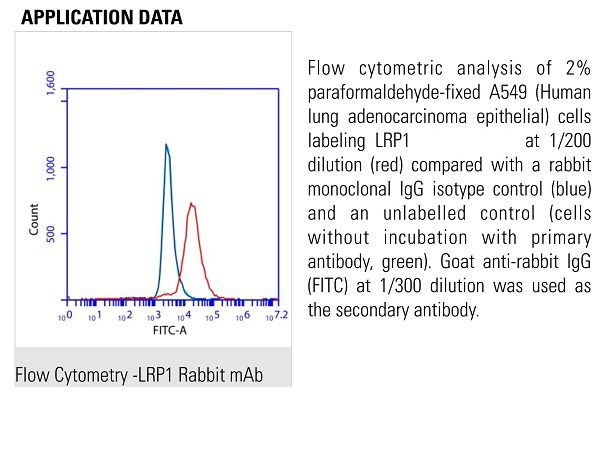
FCM (Flow Cytometry) (Flow cytometric analysis of THP-1 cells with RON antibody at 1/50 dilution (red) compared with an unlabelled control (cells without incubation with primary antibody; black). Alexa Fluor 488-conjugated goat anti rabbit IgG was used as the secondary antibody)
ICC (Immunocytochemistry) (ICC staining RON in A431 cells (green). The nuclear counter stain is DAPI (blue). Cells were fixed in paraformaldehyde, permeabilised with 0.25% Triton X100/PBS.)
ICC (Immunocytochemistry) (ICC staining RON in AGS cells (green). The nuclear counter stain is DAPI (blue). Cells were fixed in paraformaldehyde, permeabilised with 0.25% Triton X100/PBS.)
ICC (Immunocytochemistry) (ICC staining RON in A549 cells (green). The nuclear counter stain is DAPI (blue). Cells were fixed in paraformaldehyde, permeabilised with 0.25% Triton X100/PBS.)
IHC (Immunohistochemistry) (Immunohistochemical analysis of paraffin-embedded human breast carcinoma tissue using anti-RON antibody. Counter stained with hematoxylin.)
IHC (Immunohistochemistry) (Immunohistochemical analysis of paraffin-embedded human lung cancer tissue using anti-RON antibody. Counter stained with hematoxylin.)
IP (Immunoprecipitation) (Immunoprecipitation analysis of 300 ug extracts of HT-29 cells using 3 ug Galectin 3/LGALS3 antibody (AAA28450). Western blot was performed from the immunoprecipitate using Galectin 3/LGALS3 antibody (AAA28450) at a dilution of 1:1000.)
IHC (Immunohistochemistry) (Immunohistochemistry analysis of paraffin-embedded Rat spleen tissue using Galectin 3/LGALS3 Rabbit mAb (AAA28450) at a dilution of 1:500 (40x lens). High pressure antigen retrieval performed with 0.01M Tris-EDTA Buffer (pH 9.0) prior to IHC staining.)
IHC (Immunohistchemistry) (Immunohistochemistry analysis of paraffin-embedded Rat liver tissue using Galectin 3/LGALS3 Rabbit mAb (AAA28450) at a dilution of 1:500 (40x lens). High pressure antigen retrieval performed with 0.01M Tris-EDTA Buffer (pH 9.0) prior to IHC staining.)
IHC (Immunohistochemistry) (Immunohistochemistry analysis of paraffin-embedded Rat colon tissue using Galectin 3/LGALS3 Rabbit mAb (AAA28450) at a dilution of 1:500 (40x lens). High pressure antigen retrieval performed with 0.01M Tris-EDTA Buffer (pH 9.0) prior to IHC staining.)
IHC (Immunohistochemistry) (Immunohistochemistry analysis of paraffin-embedded Human tonsil tissue using Galectin 3/LGALS3 Rabbit mAb (AAA28450) at a dilution of 1:500 (40x lens). High pressure antigen retrieval performed with 0.01M Tris-EDTA Buffer (pH 9.0) prior to IHC staining.)
IHC (Immunohistochemistry) (Immunohistochemistry analysis of paraffin-embedded Human pancreas tissue using Galectin 3/LGALS3 Rabbit mAb (AAA28450) at a dilution of 1:500 (40x lens). High pressure antigen retrieval performed with 0.01M Tris-EDTA Buffer (pH 9.0) prior to IHC staining.)
IHC (Immunohistochemistry) (Immunohistochemistry analysis of paraffin-embedded Human colon tissue using Galectin 3/LGALS3 Rabbit mAb (AAA28450) at a dilution of 1:500 (40x lens). High pressure antigen retrieval performed with 0.01M Tris-EDTA Buffer (pH 9.0) prior to IHC staining.)
WB (Western Blot) (Western blot analysis of various lysates using Galectin 3/LGALS3 Rabbit mAb (AAA28450) at 1?1000 dilution.Secondary antibody: HRP-conjugated Goat anti-Rabbit IgG (H+L) (AS014) at 1:10000 dilution.Lysates/proteins: 25ug per lane.Blocking buffer: 3% nonfat dry milk in TBST.Detection: ECL Basic Kit (RM00020).Exposure time: 10s.)
IP (Immunoprecipitation) (Figure 6. Immunoprecipitation analysis. Cellular overexpression lysates (made from HEK293F cells transfected with DYKDDDDK tagged human BCMA full length gene) were pre-incubated with 6 different rabbit DimAb clones and negative control IgG. The immunocomplexes were further pulled down by protein A beads, fractionated, and blotted with mouse anti-DYKDDDDK monoclonal antibody.)
ELISA (Figure 5. ELISA plate was coated with recombinant BCMA-hFc fusion protein (PME100001), followed by pre-blocking with huC11D5.3 antibody (Grey bar) or rabbit control IgG (Black bar), and then different rabbit DimAbs antibodies were added to check the competitive inhibition of huC11D5.3. DM3 clone exhibits the strongest inhibition (Red bar). This data indicated that DM3 bind to the same epitope as bb2121.)
Application Data (Figure 4. Affinity ranking of different DimAb clones by titration of rabbit DimAb antibody concentration onto K562-BCMA or NCI-H929 cells. Different concentrations of various anti-BCMA DimAb clones were incubated with K562-BCMA (A) or NCI-H929 cells (B) at 4 degree C. Bound rabbit IgG was detected in flow cytometry analysis. The Y-axis represents the mean fluorescence intensity (MFI) while the X-axis represents the concentration of IgG used.)
Application Data (Figure 3. Phylogenetic analysis of different Anti-BCMA DimAb clones. A) heavy chain and B) Light chain.)
FCM (Flow Cytometry) (Figure 2. A. Flow cytometry analysis with anti-BCMA (DM6) on NCI-H929 cells (Red histogram) or rabbit control antibody on NCI-H929 cells (Blue histogram). B. Flow cytometry data of serially titrated anti-BCMA (DM6) on NCI-H929 cells. The Y-axis represents the mean fluorescence intensity (MFI) while the X-axis represents the concentration of IgG used.)
FCM (Flow Cytometry) (Figure 1. A. Flow cytometry analysis with anti-BCMA (DM6) on K562-BCMA (Red histogram) (K562 cells stably transduced by human BCMA full length gene) and K562 (Negative control cell line) (Blue histogram). B. Flow cytometry data of serially titrated anti-BCMA (DM6). The Y-axis represents the mean fluorescence intensity (MFI) while the X-axis represents the concentration of IgG used.)
FCM (Flow Cytometry) (Flow cytometric analysis of THP-1 cells with CD40L antibody at 1/50 dilution (red) compared with an unlabelled control (cells without incubation with primary antibody; black). Alexa Fluor 488-conjugated goat anti rabbit IgG was used as the secondary antibody.)
ICC (Immunocytochemistry) (ICC staining CD40L in NIH-3T3 cells (green). The nuclear counter stain is DAPI (blue). Cells were fixed in paraformaldehyde, permeabilised with 0.25% Triton X100/PBS.)
ICC (Immunocytochemistry) (ICC staining CD40L in MCF-7 cells (red). The nuclear counter stain is DAPI (blue). Cells were fixed in paraformaldehyde, permeabilised with 0.25% Triton X100/PBS.)
ICC (Immunocytochemistry) (ICC staining CD40L in Hela cells (red). The nuclear counter stain is DAPI (blue). Cells were fixed in paraformaldehyde, permeabilised with 0.25% Triton X100/PBS.)
IHC (Immunohistochemistry) (Immunohistochemical analysis of paraffin-embedded human spleen tissue using anti- CD40L antibody. Counter stained with hematoxylin.)
WB (Western Blot) (Western blot analysis of CD40L on different cells lysates using anti-CD40L antibody at 1/500 dilution. Positive control: Lane 1: Hela Lane 2: Mouse liver)
FCM (Flow Cytometry) (Flow cytometric analysis of Daudi cells with Methionine Aminopeptidase 2 antibody at 1/100 dilution (purple) compared with an unlabelled control (cells without incubation with primary antibody; yellow). Alexa Fluor 488-conjugated goat anti-rabbit IgG was used as the secondary antibody.)
ICC (Immunocytochemistry) (ICC staining Methionine Aminopeptidase 2 in SH-SY-5Y cells (green). The nuclear counter stain is DAPI (blue). Cells were fixed in paraformaldehyde, permeabilised with 0.25% Triton X100/PBS.)
ICC (Immunocytochemistry) (ICC staining Methionine Aminopeptidase 2 in PC-3M cells (green). The nuclear counter stain is DAPI (blue). Cells were fixed in paraformaldehyde, permeabilised with 0.25% Triton X100/PBS.)
ICC (Immunocytochemistry) (ICC staining Methionine Aminopeptidase 2 in LOVO cells (green). The nuclear counter stain is DAPI (blue). Cells were fixed in paraformaldehyde, permeabilised with 0.25% Triton X100/PBS.)
IHC (Immunohistchemistry) (Immunohistochemical analysis of paraffin-embedded mouse testis tissue using anti-Methionine Aminopeptidase 2 antibody. Counter stained with hematoxylin.)
IHC (Immunohistochemistry) (Immunohistochemical analysis of paraffin-embedded human kidney tissue using anti-Methionine Aminopeptidase 2 antibody. Counter stained with hematoxylin.)
IHC (Immunohistochemistry) (Immunohistochemical analysis of paraffin-embedded human prostate cancer tissue using anti-Methionine Aminopeptidase 2 antibody. Counter stained with hematoxylin.)
IHC (Immunohistochemistry) (Immunohistochemical analysis of paraffin-embedded human tonsil tissue using anti-Methionine Aminopeptidase 2 antibody. Counter stained with hematoxylin.)
IHC (Immunohistochemistry) (Immunohistochemical analysis of paraffin-embedded rat seminal vesicle tissue using anti-Methionine Aminopeptidase 2 antibody. Counter stained with hematoxylin.)
WB (Western Blot) (Western blot analysis of Methionine Aminopeptidase 2 on Hela cell using anti-Methionine Aminopeptidase 2 antibody at 1/1, 000 dilution. Positive control: Lane 1: Daudi Lane 2: K562 Lane 3: Mouse thymus Lane 4: Mouse kidney)
ICC (Immunocytochemistry) (ICC staining Cyclin A2 in RH-35 cells (green). The nuclear counter stain is DAPI (blue). Cells were fixed in paraformaldehyde, permeabilised with 0.25% Triton X100/PBS.)
ICC (Immunocytochemistry) (ICC staining Cyclin A2 in HepG2 cells (green). The nuclear counter stain is DAPI (blue). Cells were fixed in paraformaldehyde, permeabilised with 0.25% Triton X100/PBS.)
ICC (Immunocytochemistry) (ICC staining Cyclin A2 in Hela cells (green). The nuclear counter stain is DAPI (blue). Cells were fixed in paraformaldehyde, permeabilised with 0.25% Triton X100/PBS.)
IHC (Immunohistochemistry) (Immunohistochemical analysis of paraffin-embedded mouse colon tissue using anti-Cyclin A2 antibody. Counter stained with hematoxylin.)
IHC (Immunohistochemistry) (Immunohistochemical analysis of paraffin-embedded human tonsil tissue using anti-Cyclin A2 antibody. Counter stained with hematoxylin.)
IHC (Immunohistochemistry) (Immunohistochemical analysis of paraffin-embedded human breast carcinoma tissue using anti-Cyclin A2 antibody. Counter stained with hematoxylin.)
IHC (Immunohistochemistry) (Immunohistochemical analysis of paraffin-embedded human colon cancer tissue using anti-Cyclin A2 antibody. Counter stained with hematoxylin.)
WB (Western Blot) (Western blot analysis of Cyclin A2 on different lysates using anti-Cyclin A2 antibody at 1/1, 000 dilution. Positive control: Lane 1: PC12 Lane 2: NIH/3T3)
WB (Western Blot) (Western Blot detection against Immunogen (54.71kD).)
WB (Western Blot) (TARDBP monoclonal antibody Western Blot analysis of TARDBP expression in A-431.)
WB (Western Blot) (Western blot analysis of TARDBP over-expressed 293 cell line, cotransfected with TARDBP Validated Chimera RNAi (Lane 2) or non-transfected control (Lane 1). Blot probed with TARDBP monoclonal antibody. GAPDH (36.1kD) used as specificity and loading control.)
Application Data (Detection limit for recombinant GST tagged TARDBP is 0.3ng/ml as a capture antibody.)
IP (Immunoprecipitation) (Immunoprecipitation of TARDBP transfected lysate using TARDBP monoclonal antibody and Protein A Magnetic Bead, and immunoblotted with TARDBP rabbit polyclonal antibody.)
IF (Immunofluorescence) (Immunofluorescence of monoclonal antibody to TARDBP on HeLa cell. [antibody concentration 10ug/ml])
WB (Western Blot) (Western Blot analysis of TARDBP expression in transfected 293T cell line by TARDBP monoclonal antibody. Lane 1: TARDBP transfected lysate (44.7kD). Lane 2: Non-transfected lysate.)
WB (Western Blot) (TXNDC4 monoclonal antibody Western Blot analysis of TXNDC4 expression in K-562.)
WB (Western Blot) (TXNDC4 monoclonal antibody Western Blot analysis of TXNDC4 expression in A-431)
Application Data (Detection limit for recombinant GST tagged TXNDC4 is 1ng/ml as a capture antibody.)
IP (Immunoprecipitation) (Immunoprecipitation of TXNDC4 transfected lysate using TXNDC4 monoclonal antibody and Protein A Magnetic Bead, and immunoblotted with TXNDC4 rabbit polyclonal antibody.)
IHC (Immunohistochemistry) (Immunoperoxidase of monoclonal antibody to TXNDC4 on formalin-fixed paraffin-embedded human small Intestine. [antibody concentration 3ug/ml])
WB (Western Blot) (Western Blot analysis of TXNDC4 expression in transfected 293T cell line by TXNDC4 monoclonal antibody Lane 1: TXNDC4 transfected lysate (47kD). Lane 2: Non-transfected lysate.)
WB (Western Blot) (Western Blot detection against Immunogen (67.58kD).)
Thioredoxin Domain-containing Protein 4 (TXNDC4, Endoplasmic Reticulum Resident Protein 44, ER Protein 44, ERp44, KIAA0573, PDIA10, UNQ532/PRO1075) (PE)
Gene Names
ERP44; PDIA10; TXNDC4
Reactivity
Human
Applications
Immunohistochemistry, Immunoprecipitation, Western Blot
Application Data (Detection limit for recombinant GST tagged TP53 is approximately 1ng/ml as a capture antibody.)
WB (Western Blot) (TP53 monoclonal antibody (M01), clone 2C3 Western Blot analysis of TP53 expression in A-431.)
IF (Immunofluorescence) (Immunofluorescence of monoclonal antibody to TP53 on A-431 cell. [antibody concentration 10 ug/ml])
IHC (Immunohistochemistry) (Immunoperoxidase of monoclonal antibody to TP53 on formalin-fixed paraffin-embedded human salivary gland. [antibody concentration 3 ug/ml])
Application Data (Immunoperoxidase of monoclonal antibody to TP53 on formalin-fixed paraffin-embedded human salivary gland. [antibody concentration 3 ug/ml])
IF (Immunofluorescence) (Immunofluorescence analysis of HeLa cells using ARRB1 antibody.)
IF (Immunofluorescence) (Immunofluorescence analysis of A549 cells using ARRB1 antibody.)
IF (Immunofluorescence) (Immunofluorescence analysis of PC-12 cells using ARRB1 antibody.)
IHC (Immunohistchemistry) (Immunohistochemistry of paraffin-embedded mouse lung using ARRB1 antibody at dilution of 1:100 (40x lens).)
IHC (Immunohistochemistry) (Immunohistochemistry of paraffin-embedded human lung using ARRB1 antibody at dilution of 1:100 (40x lens).)
IHC (Immunohistochemistry) (Immunohistochemistry of paraffin-embedded human liver cancer using ARRB1 antibody at dilution of 1:100 (40x lens).)
IHC (Immunohistochemistry) (Immunohistochemistry of paraffin-embedded human mammary cancer using ARRB1 antibody at dilution of 1:100 (40x lens).)
IHC (Immunohistochemistry) (Immunohistochemistry of paraffin-embedded mouse brain using ARRB1 antibody at dilution of 1:100 (40x lens).)
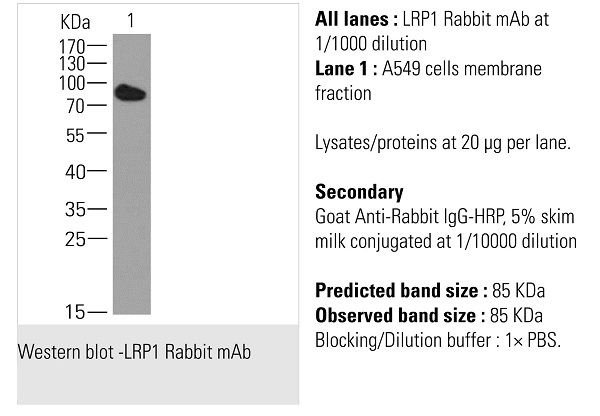
WB (Western Blot) (Western blot analysis of extracts of various cell lines, using ARRB1 antibody.Secondary antibody: HRP Goat Anti-Rabbit IgG (H+L) at 1:10000 dilution.Lysates/proteins: 25ug per lane.Blocking buffer: 3% nonfat dry milk in TBST.)
IHC (Immunohistochemistry) (Immunohistochemistry analysis of paraffin-embedded Rat testis tissue using Glucosylceramidase beta (GBA) Rabbit mAb (AAA28475) at a dilution of 1:400 (40x lens). High pressure antigen retrieval performed with 0.01M Tris-EDTA Buffer (pH 9.0) prior to IHC staining.)
IHC (Immunohistchemistry) (Immunohistochemistry analysis of paraffin-embedded Rat liver tissue using Glucosylceramidase beta (GBA) Rabbit mAb (AAA28475) at a dilution of 1:400 (40x lens). High pressure antigen retrieval performed with 0.01M Tris-EDTA Buffer (pH 9.0) prior to IHC staining.)
IHC (Immunohistochemistry) (Immunohistochemistry analysis of paraffin-embedded Rat brain tissue using Glucosylceramidase beta (GBA) Rabbit mAb (AAA28475) at a dilution of 1:400 (40x lens). High pressure antigen retrieval performed with 0.01M Tris-EDTA Buffer (pH 9.0) prior to IHC staining.)
IHC (Immunohistochemistry) (Immunohistochemistry analysis of paraffin-embedded Human thyroid cancer tissue using Glucosylceramidase beta (GBA) Rabbit mAb (AAA28475) at a dilution of 1:400 (40x lens). High pressure antigen retrieval performed with 0.01M Tris-EDTA Buffer (pH 9.0) prior to IHC staining.)
IHC (Immunohistchemistry) (Immunohistochemistry analysis of paraffin-embedded Human pancreas tissue using Glucosylceramidase beta (GBA) Rabbit mAb (AAA28475) at a dilution of 1:400 (40x lens). High pressure antigen retrieval performed with 0.01M Tris-EDTA Buffer (pH 9.0) prior to IHC staining.)
IHC (Immunohistochemistry) (Immunohistochemistry analysis of paraffin-embedded Human lung squamous carcinoma tissue using Glucosylceramidase beta (GBA) Rabbit mAb (AAA28475) at a dilution of 1:400 (40x lens). High pressure antigen retrieval performed with 0.01M Tris-EDTA Buffer (pH 9.0) prior to IHC staining.)
IHC (Immunohistochemistry) (Immunohistochemistry analysis of paraffin-embedded Human kidney tissue using Glucosylceramidase beta (GBA) Rabbit mAb (AAA28475) at a dilution of 1:400 (40x lens). High pressure antigen retrieval performed with 0.01M Tris-EDTA Buffer (pH 9.0) prior to IHC staining.)
IHC (Immunohistochemistry) (Immunohistochemistry analysis of paraffin-embedded Human breast cancer tissue using Glucosylceramidase beta (GBA) Rabbit mAb (AAA28475) at a dilution of 1:400 (40x lens). High pressure antigen retrieval performed with 0.01M Tris-EDTA Buffer (pH 9.0) prior to IHC staining.)
WB (Western Blot) (Western blot analysis of lysates from Rat brain, using Glucosylceramidase beta (GBA) Rabbit mAb (AAA28475) at 1:1000 dilution.Secondary antibody: HRP-conjugated Goat anti-Rabbit IgG (H+L) (AS014) at 1:10000 dilution.Lysates/proteins: 25ug per lane.Blocking buffer: 3% nonfat dry milk in TBST.Detection: ECL Basic Kit (RM00020).Exposure time: 3min.)
WB (Western Blot) (Western blot analysis of various lysates using Glucosylceramidase beta (GBA) Rabbit mAb (AAA28475) at 1:1000 dilution.Secondary antibody: HRP-conjugated Goat anti-Rabbit IgG (H+L) (AS014) at 1:10000 dilution.Lysates/proteins: 25ug per lane.Blocking buffer: 3% nonfat dry milk in TBST.Detection: ECL Basic Kit (RM00020).Exposure time: 10s.)
FCM (Flow Cytometry) (Flow cytometric analysis of N2A cells with EIF2C3 antibody at 1/50 dilution (red) compared with an unlabelled control (cells without incubation with primary antibody; black). Alexa Fluor 488-conjugated goat anti rabbit IgG was used as the secondary antibody.)
ICC (Immunocytochemistry) (ICC staining EIF2C3 in NCCIT cells (green). The nuclear counter stain is DAPI (blue). Cells were fixed in paraformaldehyde, permeabilised with 0.25% Triton X100/PBS.)
ICC (Immunocytochemistry) (ICC staining EIF2C3 in F9 cells (green). The nuclear counter stain is DAPI (blue). Cells were fixed in paraformaldehyde, permeabilised with 0.25% Triton X100/PBS.)
ICC (Immunocytochemistry) (ICC staining EIF2C3 in SHG-44 cells (green). The nuclear counter stain is DAPI (blue). Cells were fixed in paraformaldehyde, permeabilised with 0.25% Triton X100/PBS.)
ICC (Immunocytochemistry) (ICC staining EIF2C3 in N2A cells (green). The nuclear counter stain is DAPI (blue). Cells were fixed in paraformaldehyde, permeabilised with 0.25% Triton X100/PBS.)
IHC (Immunohistochemistry) (Immunohistochemical analysis of paraffin-embedded rat testis tissue using anti-EIF2C3 antibody. Counter stained with hematoxylin.)
IHC (Immunohistochemistry) (Immunohistochemical analysis of paraffin-embedded mouse brain tissue using anti-EIF2C3 antibody. Counter stained with hematoxylin.)
IHC (Immunohistochemistry) (Immunohistochemical analysis of paraffin-embedded rat brain tissue using anti-EIF2C3 antibody. Counter stained with hematoxylin.)
IHC (Immunohistochemistry) (Immunohistochemical analysis of paraffin-embedded rat spinal cord tissue using anti-EIF2C3 antibody. Counter stained with hematoxylin.)
Application Data (Detection limit for recombinant GST tagged HMGB1 is approximately 0.3ng/ml as a capture antibody.)
WB (Western Blot) (HMGB1 monoclonal antibody (M08), clone 2F6 Western Blot analysis of HMGB1 expression in Hela S3 NE.)
IF (Immunofluorescence) (Immunofluorescence of monoclonal antibody to HMGB1 on HeLa cell. [antibody concentration 10 ug/ml])
IHC (Immunohistochemistry) (Immunoperoxidase of monoclonal antibody to HMGB1 on formalin-fixed paraffin-embedded human placenta. [antibody concentration 3 ug/ml])
Application Data (Immunoperoxidase of monoclonal antibody to HMGB1 on formalin-fixed paraffin-embedded human placenta. [antibody concentration 3 ug/ml])
FCM (Flow Cytometry) (Flow cytometry analysis of TIM-3 overexpressing HEK293 cells using TIM-3 antibody and control mouse IgG antibody at 0.1 μg/ml. Blue: Untransfected HEK293 cells. Yellow: TIM-3 overexpressing HEK293 cells.)
IHC (Immunohistochemistry) (Immunohistochemistry of TIM-3 in human colon carcinoma tissue with TIM-3 antibody at 5 μg/mL.)
IF (Immunofluorescence) (Immunofluorescence of TIM-3 in human colon carcinoma tissue with TIM-3 antibody at 20 μg/mL.Green: TIM-3 Antibody [10C10]Blue: DAPI staining)
IF (Immunofluorescence) (Immunofluorescence of TIM-3 in transfected HEK293 cells with TIM-3 antibody at 10 μg/mL.Green: TIM-3 Antibody [10C10]Blue: DAPI staining)
ICC (Immunocytochemistry) (Immunocytochemistry of TIM-3 in transfected HEK293 cells with TIM-3 antibody at 1 μg/mL. Lower left: Immunocytochemistry in transfected HEK293 cells with control mouse IgG antibody at 1 μg/mL.)
WB (Western Blot) (Western blot analysis of TIM-3 in overexpressing HEK293 cells TIM-3 antibody at (A) 0.25, (B) 0.5, and (C) 1 μg/ml)
IHC (Immunohistchemistry) (Immunoperoxidase of monoclonal antibody to FOXA2 on formalin-fixed paraffin-embedded human pancreas. [antibody concentration 0.5 ug/ml])
IHC (Immunohistochemistry) (Immunoperoxidase of monoclonal antibody to FOXA2 on formalin-fixed paraffin-embedded human pancreas. [antibody concentration 0.5 ug/ml])
Application Data (Detection limit for recombinant GST tagged FOXA2 is approximately 0.3ng/ml as a capture antibody.)
IF (Immunofluorescence) (Immunofluorescence of monoclonal antibody to FOXA2 on HeLa cell. [antibody concentration 10 ug/ml])
WB (Western Blot) (FOXA2 monoclonal antibody (M12), clone 6C12 Western Blot analysis of FOXA2 expression in K-562 (Cat # L009V1).)
FCM (Flow Cytometry) (Flow cytometric analysis of NIH/3T3 cells with DUSP6 antibody at 1/50 dilution (blue) compared with an unlabelled control (cells without incubation with primary antibody; red). Alexa Fluor 488-conjugated goat anti rabbit IgG was used as the secondary antibody)
ICC (Immunocytochemistry) (ICC staining DUSP6 in NIH/3T3 cells (green). The nuclear counter stain is DAPI (blue). Cells were fixed in paraformaldehyde, permeabilised with 0.25% Triton X100/PBS.)
ICC (Immunocytochemistry) (ICC staining DUSP6 in PC-12 cells (green). The nuclear counter stain is DAPI (blue). Cells were fixed in paraformaldehyde, permeabilised with 0.25% Triton X100/PBS.)
ICC (Immunocytochemistry) (ICC staining DUSP6 in Hela cells (green). The nuclear counter stain is DAPI (blue). Cells were fixed in paraformaldehyde, permeabilised with 0.25% Triton X100/PBS.)
IHC (Immunohistochemistry) (Immunohistochemical analysis of paraffin-embedded mouse pancreas tissue using anti-DUSP6 antibody. Counter stained with hematoxylin.)
IHC (Immunohistochemistry) (Immunohistochemical analysis of paraffin-embedded mouse brain tissue using anti-DUSP6 antibody. Counter stained with hematoxylin.)
IHC (Immunohistochemistry) (Immunohistochemical analysis of paraffin-embedded human pancreas tissue using anti-DUSP6 antibody. Counter stained with hematoxylin.)
IHC (Immunohistochemistry) (Immunohistochemical analysis of paraffin-embedded human gastric carcinoma tissue using anti-DUSP6 antibody. Counter stained with hematoxylin.)
WB (Western Blot) (Western blot analysis of DUSP6 on mouse pancreas lysates using anti-DUSP6 antibody at 1/1, 000 dilution.)
FCM (Flow Cytometry) (Flow cytometric analysis of HepG2 cells with LXR alpha antibody at 1/100 dilution (red) compared with an unlabelled control (cells without incubation with primary antibody; black).)
ICC (Immunocytochemistry) (ICC staining LXR alpha in HepG2 cells (green). The nuclear counter stain is DAPI (blue). Cells were fixed in paraformaldehyde, permeabilised with 0.25% Triton X100/PBS.)
IHC (Immunohistochemistry) (Immunohistochemical analysis of paraffin-embedded human spleen tissue using anti-LXR alpha antibody. Counter stained with hematoxylin.)
IHC (Immunohistochemistry) (Immunohistochemical analysis of paraffin-embedded mouse testes tissue using anti-LXR alpha antibody. Counter stained with hematoxylin.)
IHC (Immunohistochemistry) (Immunohistochemical analysis of paraffin-embedded human placenta tissue using anti-LXR alpha antibody. Counter stained with hematoxylin.)
WB (Western Blot) (Western blot analysis of LXR alpha on mouse colon tissue lysate using anti-LXR alpha antibody at 1/1, 000 dilution.)
ICC (Immunocytochemistry) (ICC staining Caveolin-1 in NIH/3T3 cells (green). Cells were fixed in paraformaldehyde, permeabilised with 0.25% Triton X100/PBS.)
ICC (Immunocytochemistry) (ICC staining Caveolin-1 in MCF-7 cells (green). The nuclear counter stain is DAPI (blue). Cells were fixed in paraformaldehyde, permeabilised with 0.25% Triton X100/PBS.)
ICC (Immunocytochemistry) (ICC staining Caveolin-1 in A549 cells (green). The nuclear counter stain is DAPI (blue). Cells were fixed in paraformaldehyde, permeabilised with 0.25% Triton X100/PBS.)
IHC (Immunohistchemistry) (Immunohistochemical analysis of paraffin-embedded mouse heart tissue using anti-Caveolin-1 antibody. Counter stained with hematoxylin.)
IHC (Immunohistochemistry) (Immunohistochemical analysis of paraffin-embedded mouse liver tissue using anti-Caveolin-1 antibody. Counter stained with hematoxylin.)
IHC (Immunohistochemistry) (Immunohistochemical analysis of paraffin-embedded mouse lung tissue using anti-Caveolin-1 antibody. Counter stained with hematoxylin.)
IHC (Immunohistochemistry) (Immunohistochemical analysis of paraffin-embedded human liver tissue using anti-Caveolin-1 antibody. Counter stained with hematoxylin.)
IHC (Immunohistochemistry) (Immunohistochemical analysis of paraffin-embedded human lung tissue using anti-Caveolin-1 antibody. Counter stained with hematoxylin.)
WB (Western Blot) (Western blot analysis of Caveolin-1 on A431 cell lysates using anti-Caveolin-1 antibody at 1/1, 000 dilution.)
ELISA (Titration curve analysis of B7-H3 mAbs to detect recombinant B7-H3 in ELISA at decreasing concentrations.)
FCM (Flow Cytometry) (Flow cytometry analysis of B7-H3 in HEK293 cells using B7-H3 antibody at 1 μg/ml. Blue: untransfected HEK293 cells. Yellow: B7-H3 over expressing HEK293 cells.)
IHC (Immunohistochemistry) (Immunohistochemistry of B7-H3 in human colon carcinoma tissue using B7-H3 Antibody and control mouse IgG (corner box) at 2 μg/ml.)
IF (Immunofluorescence) (Immunofluorescence of B7-H3 in human colon carcinoma tissue cells using B7-H3 Antibody at 10 μg/ml.Green: B7-H3 Antibody [2A7]Blue: DAPI staining)
IF (Immunofluorescence) (Immunofluorescence of B7-H3 in HEK293 cells using B7-H3 Antibody at 5 μg/ml.Green: B7-H3 Antibody [2A7]Blue: DAPI staining)
ICC (Immunocytochemistry) (Immunocytochemistry of B7-H3 in HEK293 cells using B7-H3 antibody and control mouse IgG antibody (left corner box) at 1 μg/ml.)
WB (Western Blot) (Western blot analysis of B7-H3 in HEK293 cells using B7-H3 antibody at (A) 0.25 (B) 0.5 and (C) 1 μg/ml.)
Western Blot, Immunohistochemistry, Immunocytochemistry, Immunofluorescence, Flow Cytometry
Purity
Protein A purified
Pricing
What are Monoclonal Antibodies?
Monoclonal antibodies are specialized laboratory-produced proteins developed for binding to specific biological antigens or other molecular targets. Since they come from a single cell (or clone), they are especially consistent and accurate in the data they are involved in producing.
This type of antibody material has been shown to be a powerful tool in finding and subsequently destroying harmful cells in an organism, such as those found in cancers or various autoimmune diseases. This makes them excellent aids in medical testing and research, which is why they are so widely used.
AAA Biotech offers a comprehensive range of high-quality monoclonal antibodies that perform effectively in various laboratory tests, including (amongst others) ELISA, western blotting, immunohistochemistry, and flow cytometry. All of the products in our catalog are thoroughly quality tested to make sure that they are reliable and will consistently perform well in your research.
What Are The Uses of Monoclonal Antibodies
Monoclonal antibodies are used in many lab tests, including (amongst others) ELISA, western blotting, immunohistochemistry, and flow cytometry.
ELISA is a test that helps detect a specific substance/analyte in a sample. It uses antibodies (often monoclonal) bound to a solid surface (such as the well of a microplate) to “capture” the substance/analyte in the sample and immobilize it so that the detection antibody component can then bind to it and produce a signal, which can then be measured.
Western blotting identifies specific proteins in a sample. The sample is first separated on a gel, and then antibodies are applied that will typically bind to the target, which will all be localized to a single band in a lane.
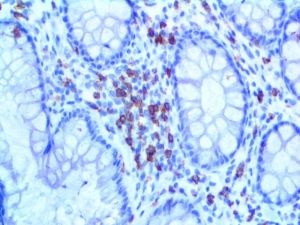
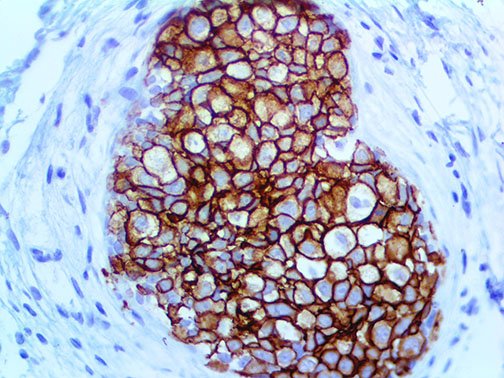
Immunohistochemistry helps locate specific proteins in cells or tissue samples using antibodies.
Flow cytometry looks at and sorts cells. It uses antibodies that are conjugated to reporter molecules called “fluorophores”, which, under special lights, emit light themselves, which can then be measured by a detector instrument.
How Monoclonal Antibodies Are Used as Medicine?
Please note that all of the products listed in AAA Biotech’s catalog are strictly for research-use only (RUO).
Monoclonal antibodies can also be used as therapeutic/medical treatments, particularly in the context of cancers. They are designed to find and bind to specific cells or proteins, helping the immune system recognize and attack the cancer. These treatments work in different ways, such as:
Radioimmunotherapy attaches a small amount of radioactive molecule to the antibody, so it delivers the radiation directly to the cancer cells that the antibody is specifically binding to.
Antibody-directed enzyme prodrug therapy uses antibodies that are specifically bound to special enzymes. These enzymes activate a harmless drug in the body and turn it into a cancer-killing drug only near the cancer cells—this helps avoid harming healthy cells.
Immunoliposomes are tiny “bubbles” filled with medicine/drug and coated with antibodies. They carry the drug straight to the cancer cells.
Why Buy Monoclonal Antibodies From Us?
At AAA Biotech, we provide high-performance monoclonal antibodies designed to support a wide range of research needs.
1. Validated for Versatile Applications
The antibodies in our catalog are extensively validated and compatible with multiple techniques, including (but not limited to) ELISA, flow cytometry (FC), immunocytochemistry (ICC), immunofluorescence (IF), immunohistochemistry (IHC), immunoprecipitation (IP), and western blotting (WB).
2. Wide Selection & Specialized Options
We offer antibodies for common and rare species, that are available in various conjugated forms, and also in recombinant formats. Essentially, there is almost anything one might need to meet their experimental model’s requirements.
3. High-Quality Proteins
Our proteins meet high purity standards—90% or more as confirmed by SDS-PAGE. Many are available with tags like His, Flag, GST, or MBP, and we also supply native and biologically active proteins for functional studies.
Frequently Asked Questions
1. Are your monoclonal antibodies validated for specific applications?
Yes, our antibodies are tested and validated for use in methods such as ELISA, western blot, IHC, flow cytometry, and more. Refer to specific product pages or datasheets for individual product information.
2. How do I choose the right monoclonal antibody for my application?
Review the product details directly for application validation, species reactivity, and target information. You may also contact our support team at any time for help.
3. How quickly can I receive my order?
Most orders are processed and shipped within 1–3 business days, depending on product availability and your shipping location.
Submit a Question
Please complete the form below and a representative will contact you as soon as possible.
Request more Information
Please complete the form below and a representative will contact you as soon as possible.
Request a Manual
Please complete the form below and a representative will contact you as soon as possible.
Request a Quote
Please complete the form below and a representative will contact you as soon as possible.