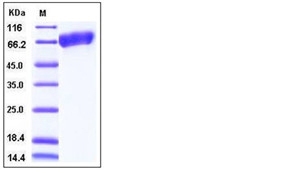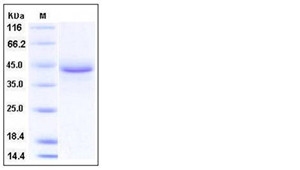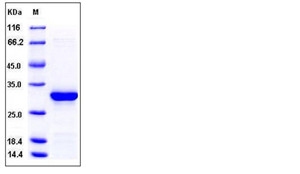
AAA Biotech provides a variety of high-quality recombinant and natural/native proteins that are proven to work in a wide range of experiments. Explore our products to find the active protein that best fits your needs or experimental model.
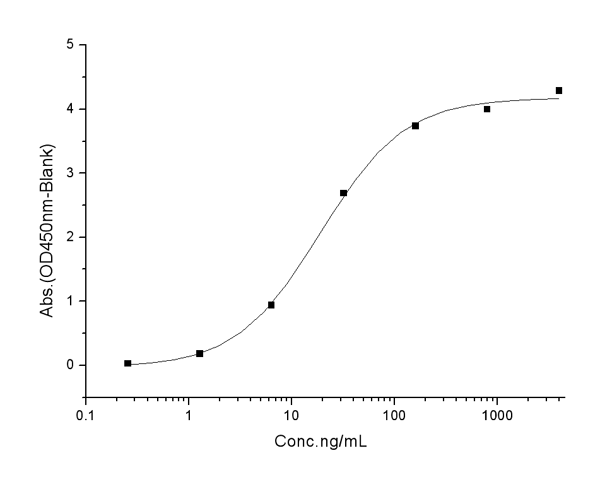
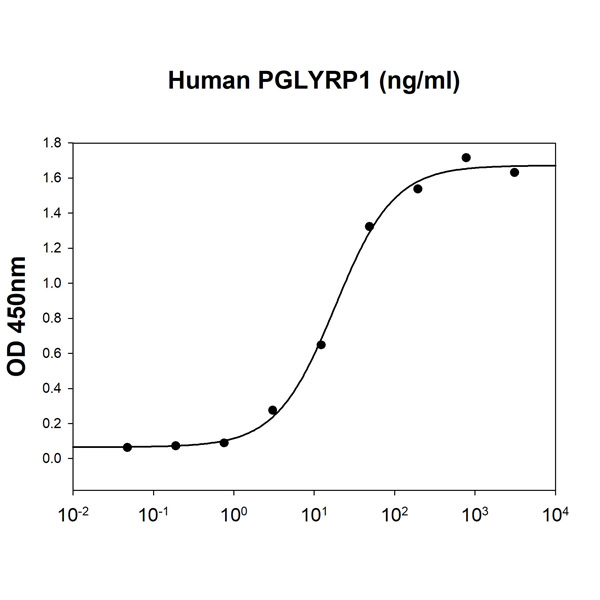
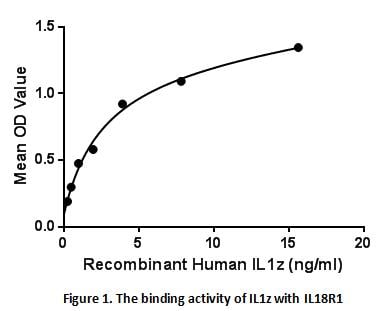
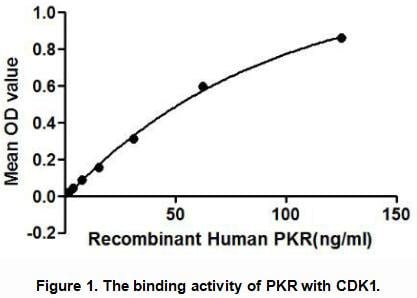
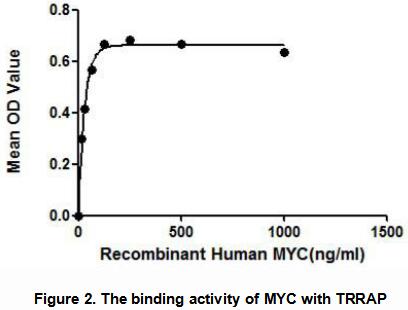
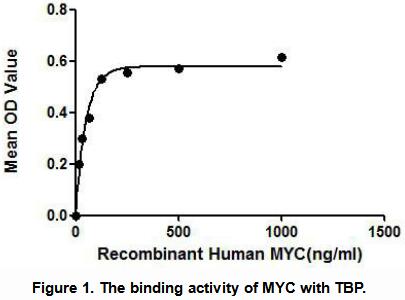
Bioactivity (Anti-Müllerian hormone (AMH), also named Müllerian inhibiting substance (MIS) belongs to a tissue-specific TGF-beta superfamily growth factor. It can be expressed by male sertoli cells and postnatal testis, and ovarian granulosa cells of females postpartum. AMH expression is critical to sex differentiation at a specific time during fetal development, it appears to be tightly regulated by SF1, GATA factors, DAX1 and FSH. AMH signals through a characteristic receptor consisting of a type I and a type II receptor serine/threonine kinase. Especially the type II receptor is unique and specific receptor for AMH. Besides, Mothers Against Decapentaplegic Homolog 9 (Smad9) has been identified as an interactor of AMH, thus a binding ELISA assay was conducted to detect the interaction of recombinant human AMH and recombinant human (Smad9) Briefly, AMH were diluted serially in PBS, with 0.01% BSA (pH 7.4). Duplicate samples of 100uL were then transferred to Smad9-coated microtiter wells and incubated for 2h at 37 degree C. Wells were washed with PBST and incubated for 1h with anti-AMH pAb, then aspirated and washed 3 times. After incubation with HRP labelled secondary antibody, wells were aspirated and washed 3 times. With the addition of substrate solution, wells were incubated 15-25 minutes at 37 degree C. Finally, add 50uL stop solution to the wells and read at 450nm immediately. The binding activity of of AMH and Smad9 was shown in Figure 1, and this effect was in a dose dependent manner.)
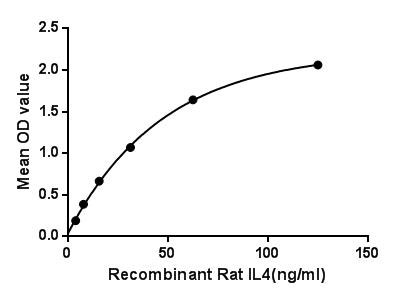
Activity (Arginase (Arg) is an enzyme that catalyzes the degradation of arginine to produce urea and omithine, which is crucial in the urea cycle. In most mammals, two isozymes of this enzyme exist; the first, Arginase I, functions in the urea cycle, and is located primarily in the cytoplasm of the liver. The second isozyme, Arginase II, has been implicated in the regulation of the arginine/ornithine concentrations in the cell. Besides, Estrogen Receptor Alpha (ERa) has been identified as an interactor of, thus a binding ELISA assay was conducted to detect the interaction of recombinant rat Arginase( Arg) and recombinant rat ERa. Briefly, Arg were diluted serially in PBS, with 0.01% BSA (pH 7.4). Duplicate samples of 100uL were then transferred to ERa-coated microtiter wells and incubated for 2h at 37 degree C. Wells were washed with PBST and incubated for 1h with anti-Arg pAb, then aspirated and washed 3 times. After incubation with HRP labelled secondary antibody, wells were aspirated and washed 3 times. With the addition of substrate solution, wells were incubated 15-25 minutes at 37 degree C. Finally, add 50uL stop solution to the wells and read at 450nm immediately. The binding activity of of Arg and ERa was shown in Figure 1, and this effect was in a dose dependent manner.)
Bioactivity (Interferon Beta (IFNb) is belongs to type I interferons (IFNs) family which a large subgroup of interferon proteins that help regulate the activity of the immune system. The IFNb proteins are produced in large quantities by fibroblasts. They have antiviral activity that is involved mainly in innate immune response. Two types of IFNb have been described, IFNb1 (IFNB1) and IFNb3 (IFNB3). IFNb1 is used as a treatment for multiple sclerosis as it reduces the relapse rate. Besides, Interferon Alpha/Beta Receptor 1 (IFNa/bR1) has been identified as an interactor of IFNb, thus a binding ELISA assay was conducted to detect the interaction of recombinant human IFNb and recombinant human IFNa/bR1. Briefly, IFNb were diluted serially in PBS, with 0.01% BSA (pH 7.4). Duplicate samples of 100uL were then transferred to EP300-coated microtiter wells and incubated for 2h at 37 degree C. Wells were washed with PBST and incubated for 1h with anti-IFNb pAb, then aspirated and washed 3 times. After incubation with HRP labelled secondary antibody, wells were aspirated and washed 3 times. With the addition of substrate solution, wells were incubated 15-25 minutes at 37 degree C. Finally, add 50uL stop solution to the wells and read at 450nm immediately. The binding activity of IFNb and IFNa/bR1 was shown in Figure 1, and this effect was in a dose dependent manner.)
Bioactivity (S100A11 is a member of the S100 calcium-binding protein family ,it contains two EF-hand calcium-binding motifs and shares 82% amino acid sequence identity with mouse and rat S100A11 . S100 proteins are localized in the cytoplasm and nucleus of a wide rang)
Bioactivity (GSTp (Glutathione S-transferase P) is an enzyme that plays an important role in detoxification by catalyzing the conjugation of many hydrophobic and electrophilic compounds with reduced glutathione. GSTP1 is identified as a CDK5 (Cyclin dependent kinase-5)
Bioactivity (Neurosecretory protein VGF is specifically expressed in a subpopulation of neuroendocrine cells, and is upregulated by nerve growth factor. Human VGF precursor is 615 amino acids (aa) in length. It contains an 22 aa signal sequence plus a 593 aa mature re)
Bioactivity (Pleiotrophin (PTN) is a 136 amino acid secreted heparin-binding cytokine that signals diverse functions, including lineage-specific differentiation of glial progenitor cells, neurite outgrowth, and angiogenesis. A considerable amount of research has been)
Bioactivity (Poliovirus receptor-related 3 (PVRL3), also known as nectin-3 and CD113, is a human protein of the immunoglobulin superfamily which forms part of adherens junctions. Nectins and Nectin-like molecules (Necl) are families of cellular adhesion molecules invo)
Bioactivity (Interleukin 8 (IL8 or chemokine (C-X-C motif) ligand 8, CXCL8) is a chemokine produced by macrophages and other cell types such as epithelial cells, airway smooth muscle cells and endothelial cells.Thus, chemotaxis assay used 24-well microchemotaxis syste)
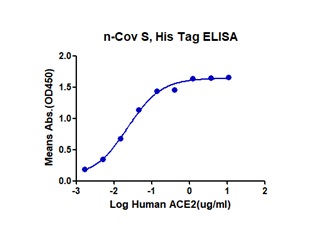
Application Data (Immobilized ACE2 Protein, Human, Recombinant (mFc Tag)(Cat:10108-H05H) at 2 ug/mL (100 uL/well) can bind SARS-CoV-2 (BA.4/BA.5) Spike S1 Protein (His Tag)(Cat:AAA258579), the EC50 is 30-90ng/mL.)
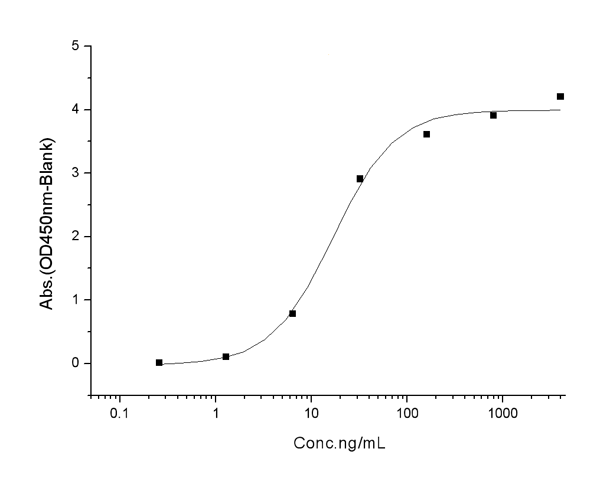
Application Data (Immobilized Recombinant Human/Cynomolgus VEGF/VEGFA/VEGF165 Protein(Cat:11066-HNAH) at 2 ug/mL (100 uL/well) can bind Recombinant Human Neuropilin-1 Protein (ECD, His Tag)(Cat:AAA258582), the EC50 is 6-18 ng/mL.)
Application Data (Immobilized Recombinant Human Osteoprotegerin/TNFRSF11B Protein (His Tag)(Cat: 10271-H08H) at 2 ug/mL (100 uL/well) can bind Recombinant Human RANKL Protein (ECD, rFc Tag)(Cat: AAA258585), the EC50 is 15-45 ng/mL.)
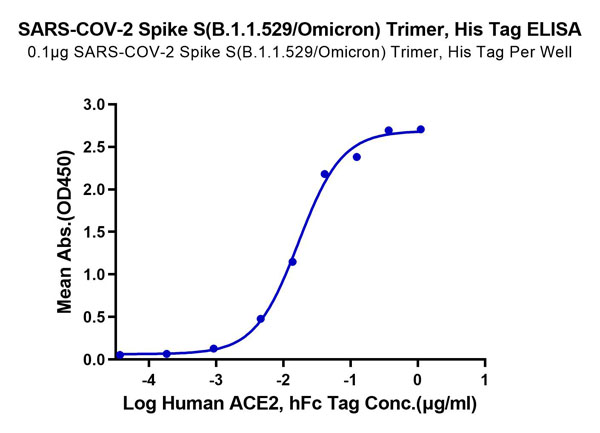
Application Data (Immobilized human ACE2 protein (Fc tag)(Cat: 10108-H05H) at 2 ug/mL (100 uL/well) can bind Recombinant SARS-CoV-2 BA.2.75.2(Omicron)Spike S1+S2 trimer Protein(ECD,His Tag)(Cat: AAA258590), the EC50 is 5-15 ng/mL.)
Application Data (Measured by its binding ability in a functional ELISA. Immobilized Mouse VEGF164 at 2 ug/ml (100 ul/well) can bind Mouse Neuropilin-1 mFc, the EC50 of Mouse Neuropilin-1 mFc is 4.0-20.0 ng/mL.)
Application Data (Immobilized Mouse Ephrin A2/EFNA2 His at 2 ug/ml (100 ul/well) can bind Mouse EphA4 hFc, the EC50 of Mouse EphA4 hFc is 60-200 ng/mL.)
Application Data (Measured by its binding ability in a functional ELISA. 1. Immobilized mouse EphA2 at 2 ug/ml (100 ul/well) can bind mouse EphrinA1 with a linear range of 0.16-20 ng/ml. 2. Immobilized mouse EphA2 at 2 ug/ml (100 ul/well) can bind human EphrinA1 with a linear range of 0.8-20 ng/ml.)
Application Data (Measured by its binding ability in a functional ELISA. Immobilized Mouse EPHA5 at 2 ug/ml (100 ul/well) can bind mouse EFNA4 with a linear ranger of 1.28-32 ng/ml.)
Application Data (Measured in a cell proliferation assay using Balb/3T3 mouse embryonic fibroblast cells.The ED50 for this effect is typically 0.5-2.5 ug/mL.)
Application Data (Measured by its binding ability in a functional ELISA. 1. Immobilized human DLL4 at 10 ug/mL (100 ul/well) can bind biotinylated mouse NOTCH1-his, The EC50 of biotinylated mouse NOTCH1-his is 40 ng/mL. 2. Immobilized mouse DLL4-his at 10 ug/mL (100 ul/well) can bind biotinylated mouse NOTCH1-his, The EC50of biotinylated mouse NOTCH1-his is 30 ng/mL.)
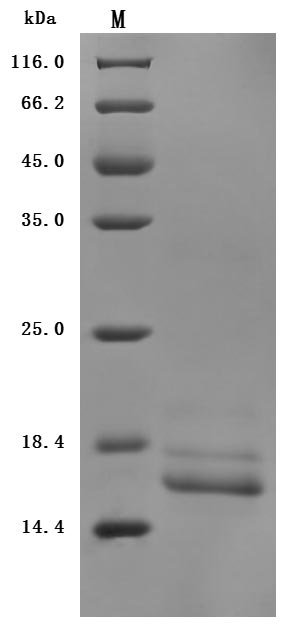
SDS-PAGE (SDS-PAGE of ~14 kDa Active Mouse Recombinant Alpha Synuclein Protein Aggregate. Lane 1: Molecular Weight Ladder (MW). Lane 2: Active Alpha Synuclein Protein Aggregate (2 ug).)
Application Data (Active alpha synuclein aggregate seeds the formation of new alpha Synuclein aggregates from the pool of active alpha Synuclein monomers. Thioflavin T is a fluorescent dye that binds to beta sheet-rich structures, such as those in alpha Synuclein aggregates. Upon binding, the emission spectrum of the dye experiences a red-shift, and increased fluorescence intensity. Thioflavin T emission curves show increased fluorescence (correlated to alpha Synuclein protein aggregation) over time when 10 nM of active alpha Synuclein aggregate is combined with 100 uM of active alpha Synuclein monomer, as compared to active alpha Synuclein aggregate and active alpha Synuclein monomer alone. Thioflavin T ex = 450 nm, em = 485 nm.)
Application Data (Thioflavin T is a fluorescent dye that binds to beta sheet-rich structures such as those in alpha synuclein fibrils. Upon binding, the emission spectrum of the dye experiences a red-shift and increased fluorescence intensity. Thioflavin T emission curves show a limited increase in fluorescence (correlated to alpha synuclein aggregation) over time in A53T alpha synuclein monomers (SPR-325). A much greater increase in fluorescence is seen when 100 uM monomer (SPR-325) is combined with 10 nM of fibrils (SPR-326) as the fibrils seed the formation of new fibrils from the pool of active monomers. Thioflavin T ex = 450 nm, em = 485 nm.)
SDS-PAGE (SDS-PAGE of ~14 kDa A53T Alpha Synuclein Monomer (SPR-325))
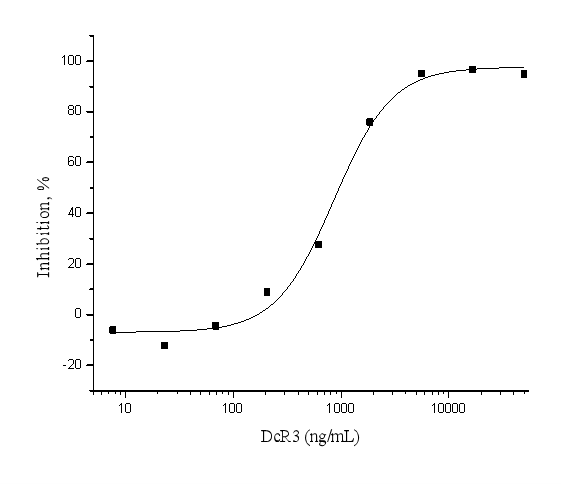
Application Data (Measured by its ability to inhibit VEGF-dependent proliferation of human umbilical vein endothelial cells (HUVEC) in the presence of 10 ng/mL rhVEGF165. The ED50 for this effect is 20-80 ng/mL.)
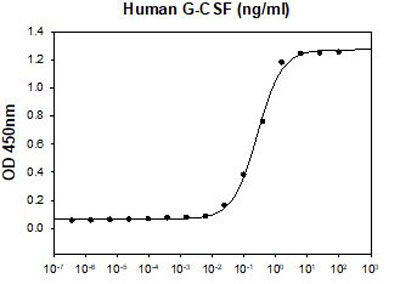
Application Data (Measured in a cell proliferation assay using BALB/c 3T3 mouse embryonic fibroblasts. The ED50 for this effect is typically 0.02-0.1 ng/ml.)
Application Data (Measured by its binding ability in a functional ELISA. Immobilized recombinant Human TNFRSF9-Fc-10041-H02H at 10 ug/ml (100 ul/well) can bind human S4-Fc3L3-TNFSF9/Biotin with a linear range of 1.28-20 ug/ml.)
Application Data (Measured by its binding ability in a functional ELISA. Immobilized human CD48 at 10 ug/ml (100 ul/well) can bind recombinant human 2B4 / CD244 with a linear range of 0.004-0.4 ug/ml.)
Application Data (Measured by its binding ability in a functional ELISA. Immobilized human 2B4 at 2 ug/ml (100 ul/well) can bind human CD48. The EC50 of human CD48 is 0.39 ug/ml.)
Application Data (Immobilized human TrKc-Fch at 10 ug/ml (100 ul/well) can bind biotinylated human NT3, The EC50 of biotinylated human NT3 is 23.4-54.6 ng/ml.)
Application Data (Immobilized human Trkc-His at 10 ug/ml (100 ul/well) can bind biotinylated human NT3, The EC50 of biotinylated human NT3 is 0.03-0.07 ug/ml.)
Application Data (Measured by its binding ability in a functional ELISA. Immobilized FGF2 Protein, Human at 2 ug/mL (100 uL/well) can bind Glypican 3 Protein, Human, Recombinant (495S/A, hFc Tag), the EC50 of Glypican 3 is 0.75-1.1 ug/mL.)
Application Data (Measured by its ability to inhibit the VEGF-dependent proliferation of human umbilical vein endothelial cells (HUVEC). (Conn, G. et al.,1990, Proc. Natl. Acad. Sci. USA 87:1323.) The ED50 for this effect is typically 10-40 ng/mL in the presence of 10 ng/mL human VEGF165.)
Application Data (Measured by the ability of the immobilized protein to enhance BMP2-induced alkaline phosphatase activity in C3H10T1/2 mouse embryonic fibroblast cells. The ED50 for this effect is typically 4-20 ug/mL in the presence of 500 ng/mL recombinant human BMP2.)
Application Data (Measured by its binding ability in a functional ELISA. Immobilized human BCL2-His at 10 ug/ml (100 ul/well) can bind biotinylated mouse BCL2L1-His, The EC50 of biotinylated mouse BCL2L1-His is 0.07-0.15 ug/ml.)
Application Data (Immobilized Human Leptin at 2 ug/mL (100 uL/well) can bind Human Leptin Receptor (His & hFc Tag), the EC50 of Human Leptin Receptor (His & hFc Tag) is 70-420 ng/mL.)
Application Data (Measured in a cell proliferation assay using Balb/c 3T3 mouse embryonic fibroblasts. The ED50 for this effect is typically 10-60 ng/mL.)
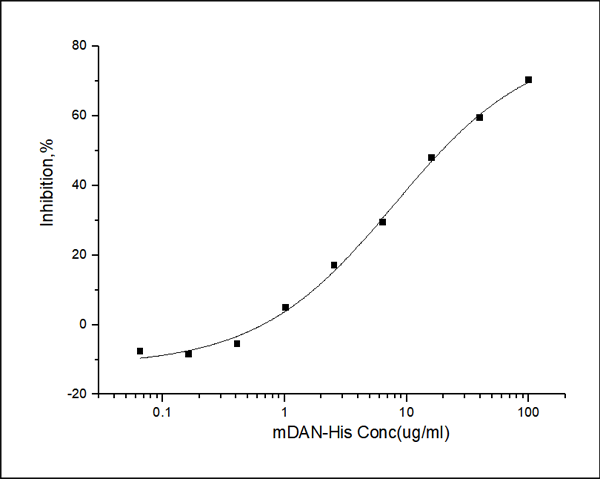
Application Data (Measured by its ability to inhibit BMP4-induced alkaline phosphatase production by MC3T3-E1 cells. The ED50 for this effect is typically 0.1-0.6 ug/mL in the presence of 50 ng/mL of hBMP4.)
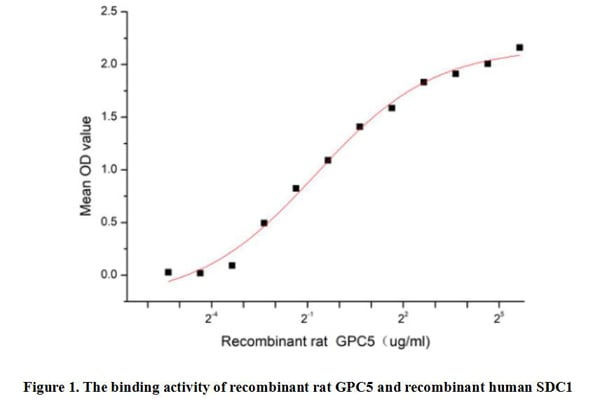
Application Data (Measured by its binding ability in a functional ELISA. Immobilized human PTN at 10 ug/ml (100 ul/well) can bind rat SDC1-Fc, The EC50 of rat SDC1-Fc is 0.35-0.81 ug/ml.)
Application Data (Measured by its binding ability in a functional ELISA. Immobilized human PD1-His at 10 ug/mL (100 uL/well) can bind human PDCD1LG2-Fc. The EC50 of PDCD1LG2-Fc is 0.05-0.12 ug/mL.)
Application Data (Measured by its binding ability in a functional ELISA. Immobilized mouse SIRPA-His at 10 ug/ml (100 ul/well) can bind human CD47-Fc, The EC50 of human CD47-Fc is 0.05-0.13 ug/ml.)
Application Data (Measured by its binding ability in a functional ELISA. Immobilized mouse PTN at 10 ug/ml (100 ul/well) can bind rat SDC1-Fc, The EC50 of rat SDC1-Fc is 0.4-1.1 ug/ml.)
Application Data (Measured by its binding ability in a functional ELISA. Immobilized mouse TEK-His at 10 ug/ml (100 ul/well) can bind human Ang2-Fc with a linear range of 6.25-200 ng/ml.)
Application Data (Measured by its binding ability in a functional ELISA. 1. Immobilized mouse EGFR-his at 10 ug/mL (100 ul/well) can bind human EGF-Fc, The EC50 of human EGF-Fc is 60-90 ng/mL. 2. Immobilized mouse EGFR-his at 10 ug/mL (100 ul/well) can bind mouse EGF-Fc, The EC50 of mouse EGF-Fc is 70-100 ng/mL.)
Application Data (Measured by its ability to inhibit NGF-induced proliferation of TF-1 human erythroleukemic cells. The ED50 for this effect is typically 0.2-1 ug/mL in the presence of 10 ng/mL of recombinant mouse NGF.)
Proteins are large molecules made up of long chains of amino acids.
They will typically fold into a very particular 3-dimensional shape/conformation, that is sometimes referred to as their “native” form, which allows them to work properly in the body. For the purposes of product categorization, AAA Biotech will typically refer to proteins purified from their original animal host as being “native” proteins (this is to signify their difference compared to their “recombinant” or “synthetic” protein counterparts).
If a protein successfully folds into the correct shape, it is will typically display high fidelity characteristics to its original protein in its original animal host, and be classified as an active protein, as it will be able to function “normally” in most enzymatic or binding capacities. If it loses this shape, due to factors such as heat or strong chemicals (such as detergents), it becomes inactive and is no longer able to perform its basic functions. All of the proteins in this category are made under strict quality control, and they are active, pure, low in contaminants, and stable.
Most are stored as freeze-dried powders and come without extra tags, so they’re very close to the actual natural/native form.
Key Applications of Active Proteins
1. Scientific Research
Aid in the study of how proteins function in the body
Aid in understanding various disease processes
2. Drug Development
Powerful tools to investigate how potential drugs interact with specific proteins
Ideal for identifying drug targets
3. Cell Culture
Are routinely utilized to support cell growth and function (e.g., using exogenous growth factors)
Can be used to promote cellular development into specific types (differentiation)
4. Diagnostics
Regularly utilized in tests to detect diseases or infections (e.g., COVID-19, cancer)
Note: All products are strictly for research-use only (RUO).
5. Therapeutics
Some active proteins are used directly as treatments (e.g., insulin, enzymes)
Note: All products are strictly for research-use only (RUO).
6. Vaccine Development
Used to create or test vaccines by mimicking parts of viruses or bacteria
7. Biochemical Assays
They can facilitate the characterization of enzyme activity, binding strength, or protein interactions in lab tests
Why Buy Active Proteins from AAA Biotech?
High biological activity – Verified to perform as expected or indicated on datasheet
Strict quality control – We are confident in our active proteins’ reliability and consistency
High purity & low endotoxin – Ideal for applications involving sensitive or precious samples/components
Freeze-dried for stability – Long shelf life and straightforward storage
Mostly tag-free – Closer to natural/native protein form
FAQ
1. What are active proteins used for in research?
Active proteins are used primarily in the study of how proteins function, in characterizing/discovering drug interactions, supporting cell growth, running biochemical assays, and in development of diagnostics or therapeutics.
2. How are AAA Biotech's active proteins validated?
AAA Biotech’s active proteins are validated through strict quality control and functional assays to ensure they are properly folded and active. “Active”, though, can be an ambiguous term, so if a specific “activity” or “binding” capability of a protein is of crucial interest to you, please inquire with us prior to purchase, and we will provide further details on how the “Active” modifier was determined to be applicable.
3. Are these proteins tested for biological activity?
Yes, all active proteins from AAA Biotech are tested to confirm they have the expected biological activity before being offered for use. Though, said “biological activity” can be either “enzymatic”, “binding”, or both.
Submit a Question
Please complete the form below and a representative will contact you as soon as possible.
Request more Information
Please complete the form below and a representative will contact you as soon as possible.
Request a Manual
Please complete the form below and a representative will contact you as soon as possible.
Request a Quote
Please complete the form below and a representative will contact you as soon as possible.