AAA Biotech provides a variety of high-quality recombinant and natural/native proteins that are proven to work in a wide range of experiments. Explore our products to find the active protein that best fits your needs or experimental model.
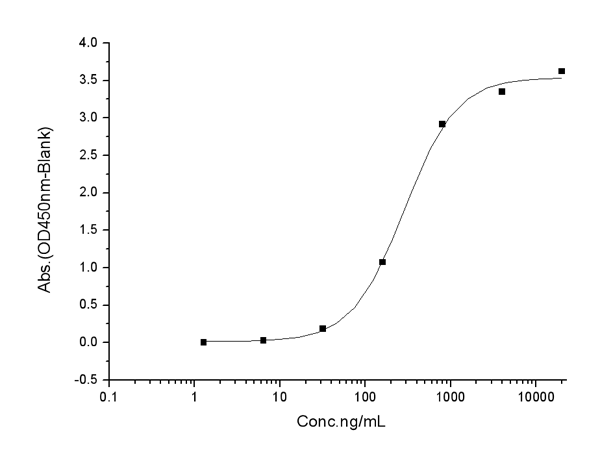
Application Data (Measured by its binding ability in a functional ELISA. Immobilized human PD1-His at 10 ug/mL (100 ul/well) can bind mouse PD-L2-Fc, The EC50 of mouse PD-L2-Fc is 0.95 ug/mL.)
Application Data (Measured by its binding ability in a functional ELISA. Immobilized human uPAR at 5 ug/ml (100 ul/well) can bind biotinylated human UPA with a linear ranger of 40-1000 ng/ml.)
Application Data (Measured in a cell proliferation assay using Balb/c 3T3 mouse embryonic fibroblasts. The ED50 for this effect is typically 5-15 ng/ml.)
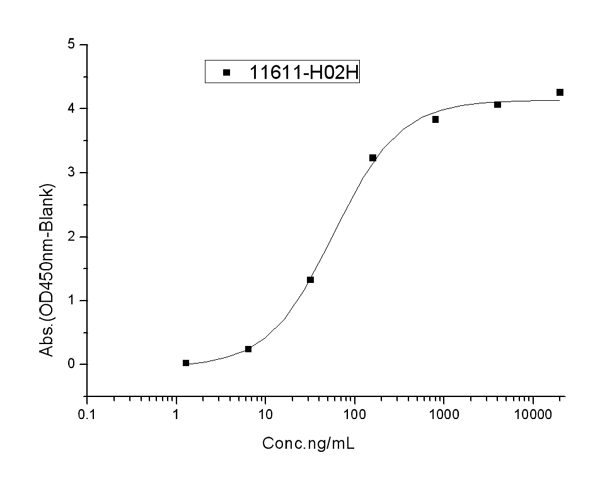
Application Data (Measured by its binding ability in a functional ELISA. Immobilized human CD47 at 2 ug/ml (100 ul/well) can bind human SIRPa(V8)-His, the EC50 of human SIRPa(V8)-His is 150-500 ng/mL.)
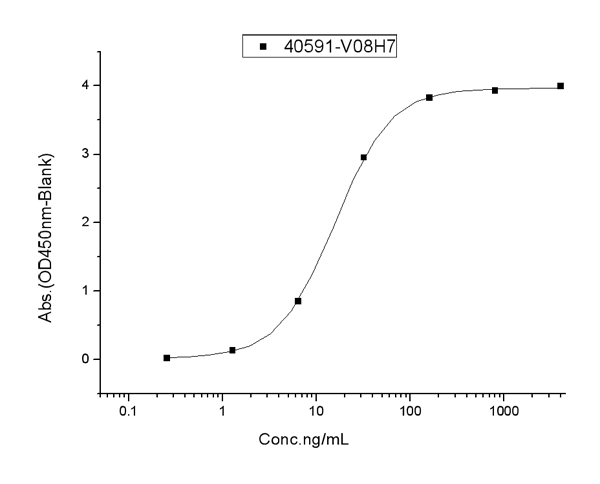
Application Data (Measured by its binding ability in a functional ELISA. Immobilized human ACE2 protein (Fc tag)(10108-H05H) at 2 ug/mL (100 uL/well) can bind SARS-CoV-2 (2019-nCoV) Spike RBD-His (K458R) Recombinant Protein (40592-V08H7), the EC50 of SARS-CoV-2 (2019-nCoV) Spike RBD-His (K458R) Recombinant Protein (40592-V08H7) is 20-50 ng/mL.)
Application Data (Measured by its binding ability in a functional ELISA. Immobilized TIGIT Protein, Human, Recombinant (ECD, His Tag) at 2 ug/ml (100 ul/well) can bind CD155/PVR Protein, Mouse, Recombinant (mFc Tag), the EC50 of CD155/PVR Protein, Mouse, Recombinant (mFc Tag) is 25-140 ng/mL.)
Application Data (Immobilized mouse CD155 (mFc Tag) at 2 ug/mL (100uL/well) can bind Mouse TIGIT-His, HPLC-verified (HPLC-50939-M08H), the EC50 of Mouse TIGIT-His, HPLC-verified (HPLC-50939-M08H) is 300-900 ng/mL.)
Activity (Myostatin (MSTN) also known as growth differentiation factor 8(GDF-8) is a member of the TGF beta protein family. Myostatin is aa secreted growth differentiation factor that produced and released by myocytes. This protein negatively regulates skeletal muscle cell proliferation and differentiation. Besides, Bone Morphogenetic Protein 1 (BMP1) has been identified as an interactor of MSTN, thus a binding ELISA assay was conducted to detect the interaction of recombinant human MSTN and recombinant human BMP1. Briefly, MSTN were diluted serially in PBS, with 0.01% BSA (pH 7.4). Duplicate samples of 100uL were then transferred to BMP1-coated microtiter wells and incubated for 2h at 37 degree C. Wells were washed with PBST and incubated for 1h with anti-MSTN pAb, then aspirated and washed 3 times. After incubation with HRP labelled secondary antibody, wells were aspirated and washed 3 times. With the addition of substrate solution, wells were incubated 15-25 minutes at 37 degree C. Finally, add 50uL stop solution to the wells and read at 450nm immediately. The binding activity of of MSTN and BMP1 was shown in Figure 1, and this effect was in a dose dependent manner.)
Application Data (The dose-effect curve of PRL was shown in Figure 2. It was obvious that PRL significantly promoted cell proliferation of MCF-7 cells. The ED50 for this effect is typically 3.709 to 8.973 ng/mL.Figure. The dose-effect curve of PRL on MCF-7 cells.)
Bioactivity (Signal transducer and activator of transcription 3 (STAT3) is a member of the STAT protein family. In response to cytokines and growth factors, STAT3 is phosphorylated by receptor-associated Janus kinases (JAK), form homo- or heterodimers, and translocate to the cell nucleus where they act as transcription activators. The protein can mediate the expression of a variety of genes in response to cell stimuli, and thus plays a key role in many cellular processes such as cell growth and apoptosis. STAT3 is essential for the differentiation of the TH17 helper T cells, which have been implicated in a variety of autoimmune diseases. Besides, Glucose 7 Phosphate Isomerase (GPI) has been identified as an interactor of STAT3, thus a binding ELISA assay was conducted to detect the interaction of recombinant bovine STAT3 and recombinant human GPI. Briefly, STAT3 were diluted serially in PBS, with 0.01% BSA (pH 7.4). Duplicate samples of 100L were then transferred to GPI-coated microtiter wells and incubated for 2h at 37. Wells were washed with PBST and incubated for 1h with anti-STAT3 pAb, then aspirated and washed 3 times. After incubation with HRP labelled secondary antibody, wells were aspirated and washed 3 times. With the addition of substrate solution, wells were incubated 15-25 minutes at 37. Finally, add 50uL stop solution to the wells and read at 450nm immediately. The binding activity of STAT3 and GPI was shown in Figure 1, and this effect was in a dose dependent manner.Figure. The binding activity of STAT3 with GPI.)
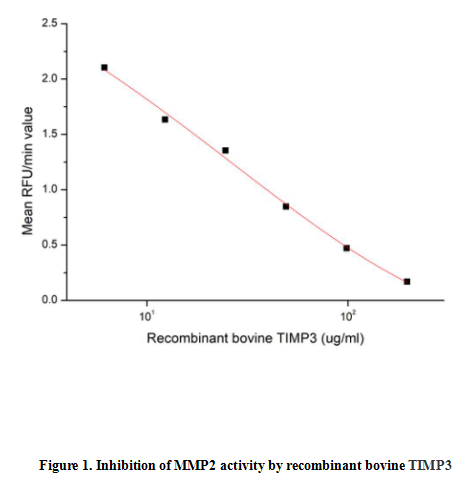
Application Data (Tissue Factor Pathway Inhibitor 2 (TFPI2) takes part in the regulation of plasmin-mediated matrix remodeling. Inhibits trypsin, plasmin, factor VIIa/tissue factor and weakly factor Xa. TFPI2 does not have any influence on thrombin. TFPI2 also can inhibit MMP activity, which can hydrolyze gelatin under certain conditions. Thus, the activity of TFPI2 can be measured by inhibit MMP-2 hydrolyze gelatin. Gelatin zymography is mainly used for the detection of the gelatinases, 2g/mL was denatured by SDS loading buffer, electrophoresed through sodium dodecylsulphate–polyacrylamide gel (SDS–PAGE; 8%gels) containing gelatin (1mg/mL) with nonreducing conditions. After renaturation, incubate with various concentrations of recombinant human TFPI2, then staining with coomassie brilliant blue G250, active MMP-2 would hydrolyze gelatin nearby, which was indicated by the white binds on the gel; if the activity of MMP-2 inhibit by TFPI2, there was none white binds on the gel. The result was shown in figure 1.As the figure1 shown, MMP-2 can be inhibited by recombinant human TFPI2 at least 5g/mL.)
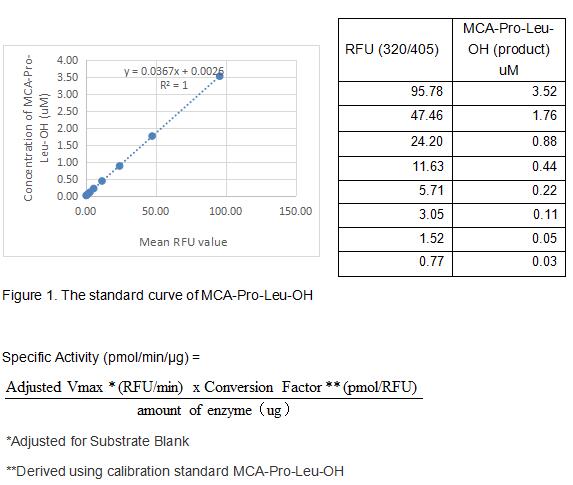
Bioactivity (Cathepsin S (CTSS) is a lysosomal cysteine protease of the papain family. It plays a major role in the processing of the MHC class IIassociated invariant chain. It has been implicated in the pathogenesis of several diseases such as Alzheimer's disease and degenerative disorders associated with the cells of the mononuclear phagocytic system. Mouse Cathepsin S is synthesized as a preproenzyme of 340 amino acid residues consisting a signal peptide (residues 117), a pro region (residues 18122), and the mature enzyme (residues 123340). Cathepsin S is less abundant in tissues than Cathepsins B, L and H. The activity of recombinant mouse CTSS is measured by its ability to cleave a fluorogenic peptide substrate Mca-Arg-Pro-Lys-Pro-Val-Glu-Nval-Trp-Arg-Lys(Dnp)-NH2 in the assay buffer 50 mM NaOAc, 5 mM DTT, 250 mM NaCl, pH 4.5. The rmCTSS is diluted to 50 ug/ml in assay buffer, then incubated at room temperature for 2h. The incubated rmCTSS is diluted to 5 ug/mL in assay buffer. Loading into a black well plate 50 uL of 5 ug/mL rmCTSS and start the reaction by adding 50 uL of 20 uM substrate, with a substrate blank containing 50 uL assay buffer, 50 uL substrate, and no rmCTSS. Then read at excitiation and emission wavelengths of 320 nm and 405 nm, respectively, in kinetic mode for 5 minutes. The specific activity of recombinant mouse CTSS is > 10 pmol/min/ug.)
Bioactivity (Microsomal human cytochrome P450 17A1 (CYP17A1, 17alpha-hydroxylase, 17,20-lyase) belongs to the cytochrome P450 super family, is expressed in the adrenals and gonads, with minor amounts in the brain, placenta, and heart. CYP17A1 enzyme operates at a key juncture of human steroidogenesis, controlling the levels of mineralocorticoids influencing blood pressure, glucocorticoids involved in immune and stress responses, and androgens and estrogens involved in development and homeostasis of reproductive tissues. Receptor Tyrosine Protein Kinase erbB-2 (ErbB2) has been identified as an interactor of CYP17A1, thus a functional binding ELISA assay was conducted to detect the interaction of recombinant human CYP17A1 and recombinant human ErbB2. Briefly, CYP17A1 was diluted serially in PBS with 0.01% BSA (pH 7.4). Duplicate samples of 100 ul were then transferred to ErbB2-coated microtiter wells and incubated for 1h at 37 degree C. Wells were washed with PBST and incubated for 1h with anti-CYP17A1 pAb, then aspirated and washed 3 times. After incubation with HRP labelled secondary antibody for 1h at 37 degree C, wells were aspirated and washed 5 times. With the addition of substrate solution, wells were incubated 15-25 minutes at 37 degree C. Finally, add 50 uL stop solution to the wells and read at 450/630 nm immediately. The binding activity of recombinant human CYP17A1 and recombinant human ErbB2 was shown in Figure 1, the EC50 for this effect is 0.03 ug/mL.)
Bioactivity (Retinol-binding protein 4 (RBP4) is the specific carrier for retinol (also known as vitamin A), and is responsible for the conversion of unstable and insoluble retinol in aqueous solution into stable and soluble complex in plasma through their tight interaction. As a member of the lipocalin superfamily, RBP4 containing a beta-barrel structure with a well-defined cavity is secreted from the liver, and in turn delivers retinol from the liver stores to the peripheral tissues. In plasma, the RBP4-retinol complex interacts with transthyretin (TTR), and this binding is crucial for preventing RBP4 excretion through the kidney glomeruli. RBP4 expressed from an ectopic source efficiently delivers retinol to the eyes, and its deficiency affects night vision largely. Recently, RBP4 as an adipokine, is found to be expressed in adipose tissue and correlated with obesity, insulin resistance (IR) and type 2 diabetes (T2DM). The activity of recombinant pig RBP4 was measured by its ability to bind all-trans retinoic acid. The binding of retinoic acid results in the quenching of Trp fluorescence in RBP4. RBP4 was diluted to 50 ug/ml in 50 mM Tris, 10 mM CaCl2, 150 mM NaCl, pH 7.5 (assay buffer) and the retinoic acid was diluted to 400, 200, 100, 30, 10, 3, 1 and 0.5 uM in 95% ethanol. Mixing 112.5 uL of 50 ug/mL rpRBP4 and 12.5 uL of retinoic acid serial dilutions in microtubes and a blank containing 112.5 uL of 50 ug/mL rpRBP4 and 12.5 uL of 95% ethanol, then incubate at room temperature for 30 minutes. Loading 100 ul of the reaction mixtures and blank and read at excitation and emission wavelengths of 280 nm and 340 nm (top read), respectively, in endpoint mode. The result was shown in figure 1, the 50% binding concentration (BC50) is >30 uM.)
Bioactivity (Poly ADP Ribose Glycohydrolase (PARG) is a primary hydrolase involved in the degradation of poly(ADP-ribose) (PAR). It possesses both endo-glycohydrolase and exo-glycohydrolase activity, with a preference for the latter by binding to the two most distal ADP-ribose residues within the PAR chain. These enzymatic actions produce either free PAR or mono ADP-ribose moieties, respectively. The liberated mono ADP-ribose is further metabolized into AMP and ribose 5'phosphate by enzymes such as the NUDIX family. PARG thus plays a crucial role in regulating PAR levels, which are involved in various cellular processes including DNA damage response, chromatin maintenance, and DNA replication.Besides,Activating Transcription Factor 6 (ATF6) has been identified as an interactor of PARG, thus a functional binding ELISA assay was conducted to detect the interaction of recombinant human PARG and recombinant human ATF6. Briefly, biotin-linked PARG were diluted serially in PBS, with 0.01% BSA (pH 7.4). Duplicate samples of 100?l were then transferred to ATF6-coated microtiter wells and incubated for 1h at 37 ? . Wells were washed with PBST 3 times and incubation with Streptavidin-HRP for 30min, then wells were aspirated and washed 5 times. With the addition of substrate solution, wells were incubated 15-25 minutes at 37C . Finally, add 50?l stop solution to the wells and read at 450nm immediately. The binding activity of PARG and ATF6 was shown in Figure 1, the EC50 for this effect is 0.28ug/mL.)
Bioactivity (Urokinase-type plasminogen activator receptor (uPAR) is a glycosylphosphatidylinositol (GPI)-anchored protein. Besides regulating proteolysis, uPAR could also activate many intracellular signaling pathways that promote cell motility, invasion, proliferation and survival through cooperating with transmembrane receptors. uPAR is overexpressed across a variety of tumors and is associated with cancer invasion and metastasis. ITGb1 has been identified as an interactor of uPAR, thus a functional binding ELISA assay was conducted to detect the interaction of recombinant human uPAR and recombinant human ITGb1. Briefly, uPAR was diluted serially in PBS with 0.01% BSA (pH 7.4). Duplicate samples of 100 ul were then transferred to ITGb1-coated microtiter wells and incubated for 1h at 37 degree C. Wells were washed with PBST and incubated for 1h with anti-uPAR pAb, then aspirated and washed 3 times. After incubation with HRP labelled secondary antibody for 1h at 37 degree C, wells were aspirated and washed 5 times. With the addition of substrate solution, wells were incubated 15-25 minutes at 37 degree C. Finally, add 50 uL stop solution to the wells and read at 450/630 nm immediately. The binding activity of recombinant human uPAR and recombinant human ITGb1 was shown in Figure 1, the EC50 for this effect is 0.165 ug/mL.)
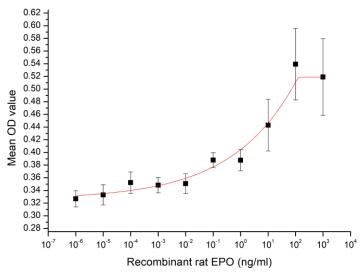
Bioactivity (Figure 2. Cell proliferation of TF-1 cells after stimulated with recombinant rat EPO.)
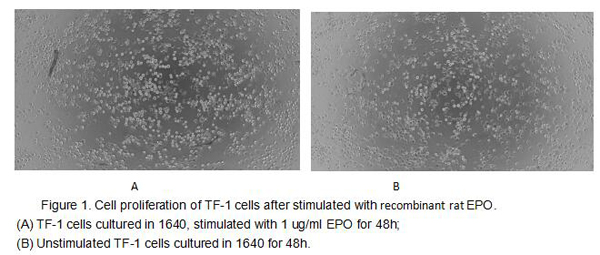
Bioactivity (Erythropoietin (EPO) is a growth factor produced in the kidneys that stimulates the production of red blood cells. It works by promoting the division and differentiation of committed erythroid progenitors in the bone marrow. Epo additionally plays a tissue protective role in ischemia by blocking apoptosis and inducing angiogenesis. To test the effect of EPO on cell proliferation, TF-1 cells were seeded into triplicate wells of 96-well plates at a density of 8,000 cells/well with 2% serum standard 1640 which contains various concentrations of recombinant rat EPO. After incubated for 48h, cells were observed by inverted microscope and cell proliferation was measured by Cell Counting Kit-8 (CCK-8). Briefly, 10 ul of CCK-8 solution was added to each well of the plate, then the absorbance at 450 nm was measured using a microplate reader after incubating the plate for 4 hours at 37 degree C. Proliferation of TF-1 cells after incubation with EPO for 48h observed by inverted microscope was shown in Figure 1. Cell viability was assessed by CCK-8 assay after incubation with recombinant rat EPO for 48h. The result was shown in Figure 2. It was obvious that EPO significantly increased cell viability of TF-1 cells. The ED50 is 3 ng/ml.)
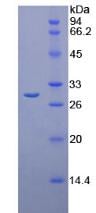
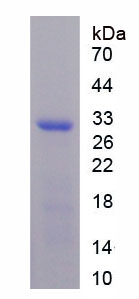
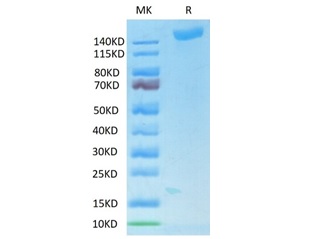
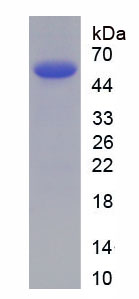
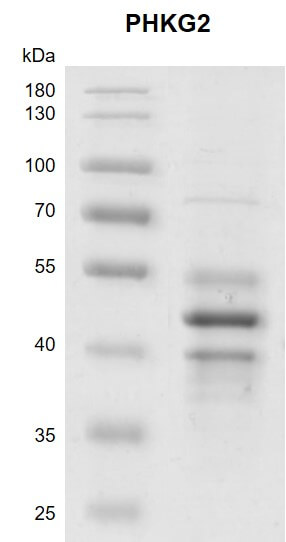
SDS-PAGE (Purity: SDS-PAGE image of PAD Cocktail Proteins. The five PAD isoform proteins from left to right are: PAD1, PAD4, PAD3, PAD6 and PAD2. The far-right lane contains PAD Cocktail.)
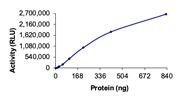
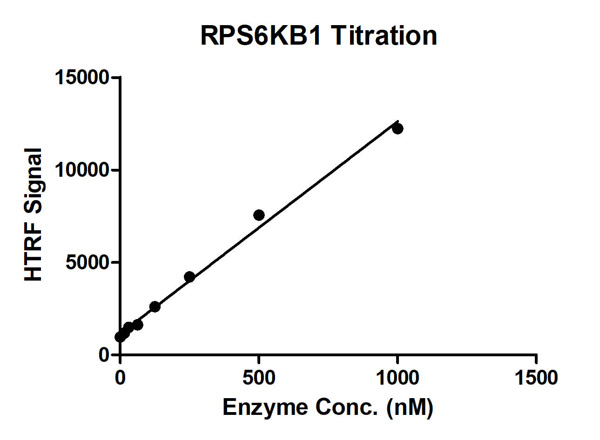
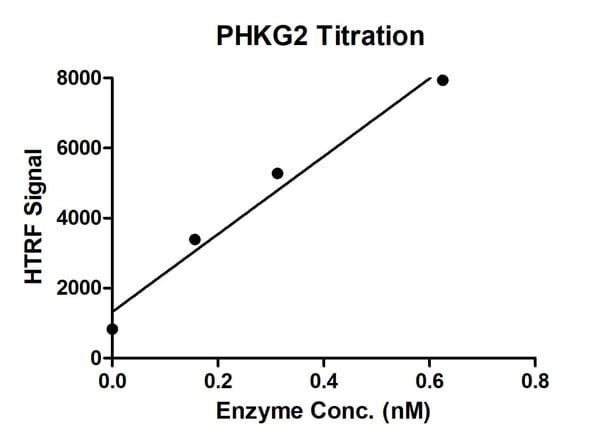
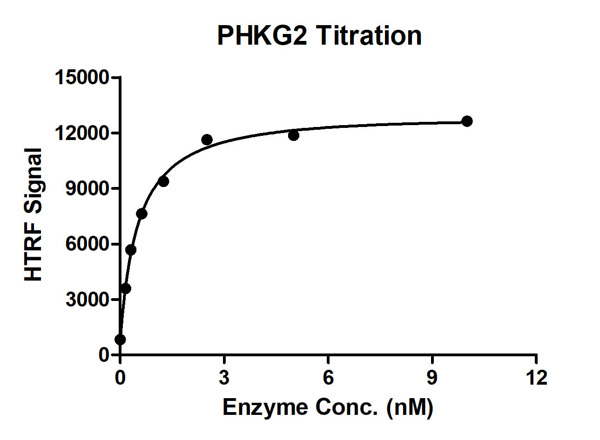
Activity (Specific Activity: Sample Activity Plot. For specific information on a given lot, see related technical data sheet.)
Application Data (RGS18-/- mice present a defective megakaryopoiesis.Lin- bone marrow cells (5×10⁴ cells/chamber) from 9/10-week-old WT and RGS18-/- mice (n?=?5 per group) were cultured in Mega-Cult-C media containing 50 ng/mL rhTPO, 10 ng/ml rmIL3, and 3 ng/ml rmIL6 in double-chamber slides at 37°C for 11 days.)
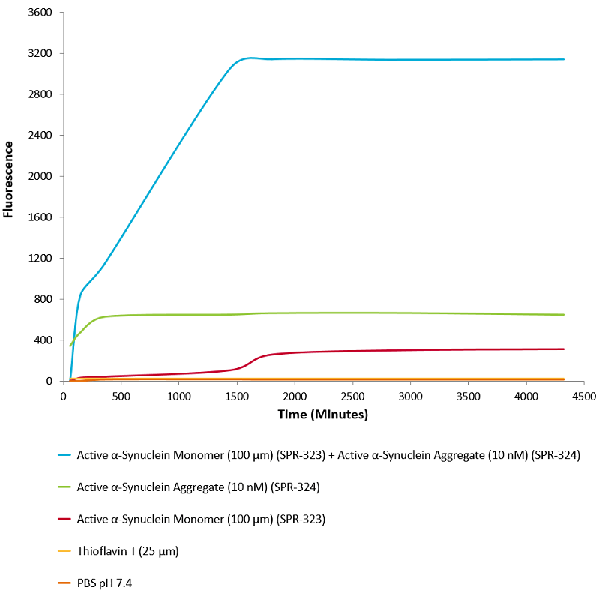
Application Data (Type 1 alpha synuclein preformed fibrils seed the formation of new alpha synuclein fibrils from the pool of alpha synuclein monomers . Thioflavin T is a fluorescent dye that binds to beta sheet-rich structures, such as those in alpha synuclein fibrils. Upon binding, the emission spectrum of the dye experiences a red-shift and increased fluorescence intensity. Thioflavin T emission curves show increased fluorescence (correlated to alpha synuclein protein aggregation) over time when 10 uM of Type 1 alpha synuclein preformed fibrils is combined with 100 uM of alpha synuclein monomer , as compared to when 10 uM of Type 2 alpha synuclein preformed fibrils is combined with 100 uM of alpha synuclein monomer or 100 uM of alpha Synuclein monomer . Thioflavin T ex = 450 nm, em = 485 nm.)
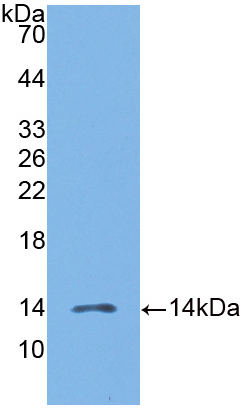
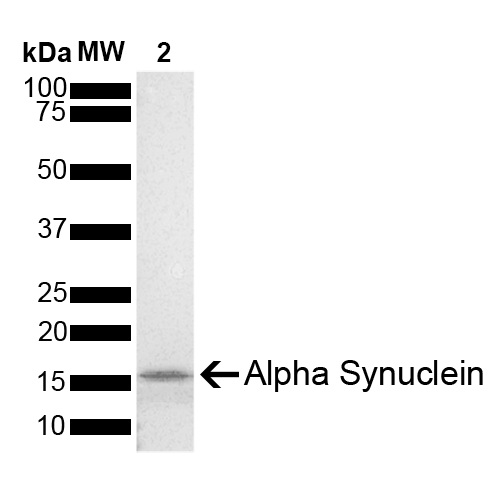
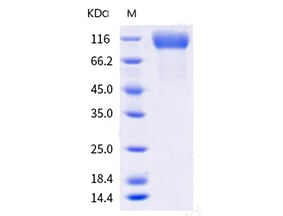
SDS-PAGE (SDS-PAGE of ~14 kDa Human Recombinant Alpha Synuclein Protein Monomer . Lane 1: Molecular Weight Ladder (MW). Lane 2: BSA (2.5 ug). Lane 3: BSA (5 ug). Lane 4: Alpha Synuclein Protein Monomer (2.5 ug) . Lane 5: Alpha Synuclein Protein Monomer (5 ug) .)
Application Data (FLT-1 Sandwich ELISA using recombinant human soluble FLT-1 as standard . Mouse anti-human FLT-1 #EWI was used as capture antibody, Biotinylated rabbit anti-human FLT-1 was used for detection)
Application Data (Fig. 2: Inhibition of the VEGF165 induced proliferation in HUVECs by soluble VEGFR-1/Flt-1. VEGF165 (10 ng/mL) was preincubated with increasing amounts of sVEGFR-1/Flt-1 for 1h and then added to the cells.)
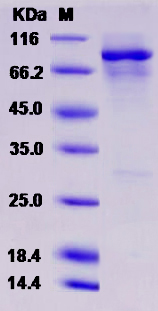
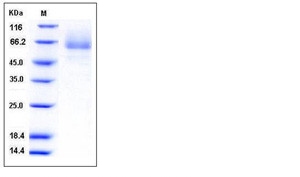
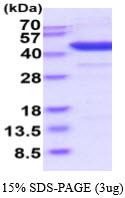
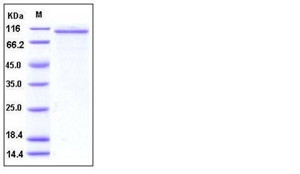
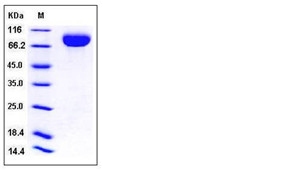
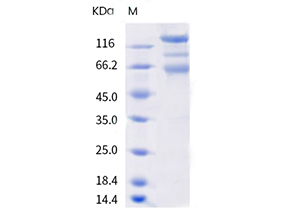
Application Data (Fig.1 SDS-PAGE analysis of recombinant human soluble VEGFR-1 produced in insect cells. Sample was loaded in 15% SDS-polyacrylamide gel under reducing condition and stained with Coomassie stain)
Proteins are large molecules made up of long chains of amino acids.
They will typically fold into a very particular 3-dimensional shape/conformation, that is sometimes referred to as their “native” form, which allows them to work properly in the body. For the purposes of product categorization, AAA Biotech will typically refer to proteins purified from their original animal host as being “native” proteins (this is to signify their difference compared to their “recombinant” or “synthetic” protein counterparts).
If a protein successfully folds into the correct shape, it is will typically display high fidelity characteristics to its original protein in its original animal host, and be classified as an active protein, as it will be able to function “normally” in most enzymatic or binding capacities. If it loses this shape, due to factors such as heat or strong chemicals (such as detergents), it becomes inactive and is no longer able to perform its basic functions. All of the proteins in this category are made under strict quality control, and they are active, pure, low in contaminants, and stable.
Most are stored as freeze-dried powders and come without extra tags, so they’re very close to the actual natural/native form.
Key Applications of Active Proteins
1. Scientific Research
Aid in the study of how proteins function in the body
Aid in understanding various disease processes
2. Drug Development
Powerful tools to investigate how potential drugs interact with specific proteins
Ideal for identifying drug targets
3. Cell Culture
Are routinely utilized to support cell growth and function (e.g., using exogenous growth factors)
Can be used to promote cellular development into specific types (differentiation)
4. Diagnostics
Regularly utilized in tests to detect diseases or infections (e.g., COVID-19, cancer)
Note: All products are strictly for research-use only (RUO).
5. Therapeutics
Some active proteins are used directly as treatments (e.g., insulin, enzymes)
Note: All products are strictly for research-use only (RUO).
6. Vaccine Development
Used to create or test vaccines by mimicking parts of viruses or bacteria
7. Biochemical Assays
They can facilitate the characterization of enzyme activity, binding strength, or protein interactions in lab tests
Why Buy Active Proteins from AAA Biotech?
High biological activity – Verified to perform as expected or indicated on datasheet
Strict quality control – We are confident in our active proteins’ reliability and consistency
High purity & low endotoxin – Ideal for applications involving sensitive or precious samples/components
Freeze-dried for stability – Long shelf life and straightforward storage
Mostly tag-free – Closer to natural/native protein form
FAQ
1. What are active proteins used for in research?
Active proteins are used primarily in the study of how proteins function, in characterizing/discovering drug interactions, supporting cell growth, running biochemical assays, and in development of diagnostics or therapeutics.
2. How are AAA Biotech's active proteins validated?
AAA Biotech’s active proteins are validated through strict quality control and functional assays to ensure they are properly folded and active. “Active”, though, can be an ambiguous term, so if a specific “activity” or “binding” capability of a protein is of crucial interest to you, please inquire with us prior to purchase, and we will provide further details on how the “Active” modifier was determined to be applicable.
3. Are these proteins tested for biological activity?
Yes, all active proteins from AAA Biotech are tested to confirm they have the expected biological activity before being offered for use. Though, said “biological activity” can be either “enzymatic”, “binding”, or both.
Submit a Question
Please complete the form below and a representative will contact you as soon as possible.
Request more Information
Please complete the form below and a representative will contact you as soon as possible.
Request a Manual
Please complete the form below and a representative will contact you as soon as possible.
Request a Quote
Please complete the form below and a representative will contact you as soon as possible.