AAA Biotech provides a variety of high-quality recombinant and natural/native proteins that are proven to work in a wide range of experiments. Explore our products to find the active protein that best fits your needs or experimental model.
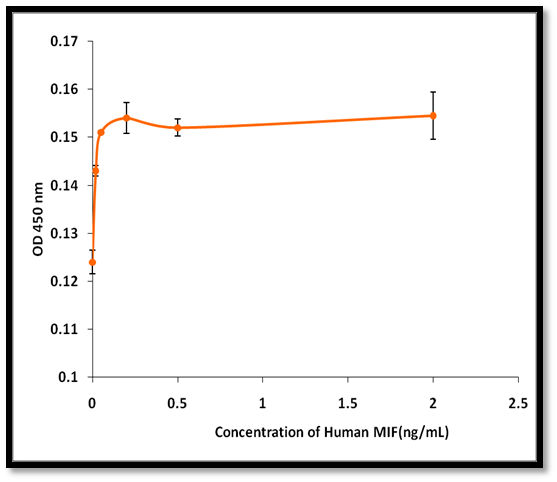
Application Data (VEGF-B167 BioLISA using recombinant human soluble Flt-1 for capturing and recombinant human VEGF-B167 as standard. A mouse anti-human VEGF-B antibody in combination with a goat anti-mouse Biotin-conjugated antibody was used for detection.)
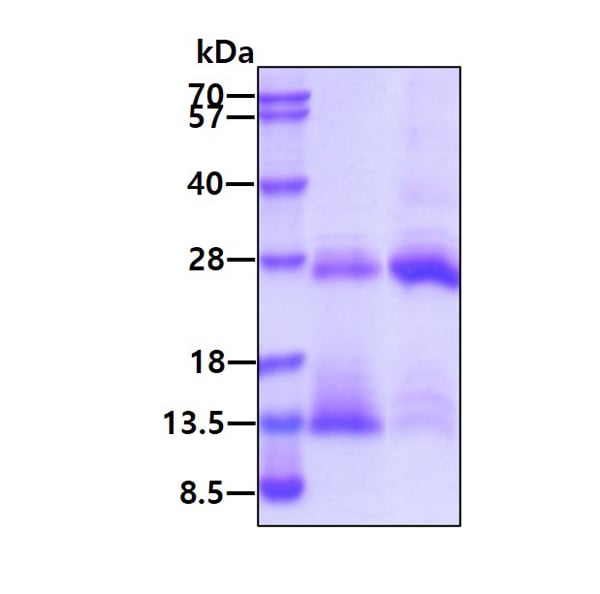
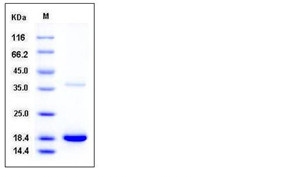
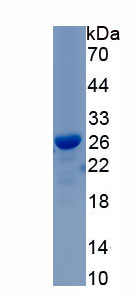
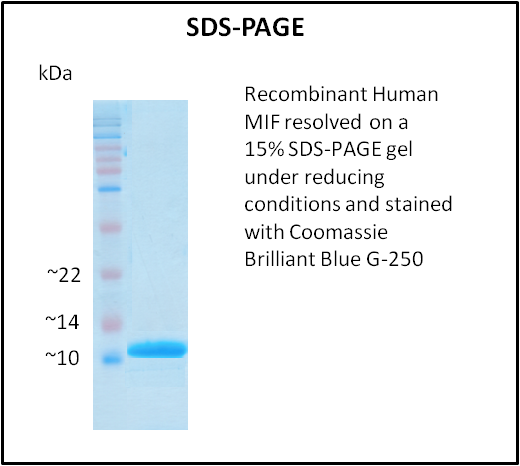
SDS-PAGE (SDS-PAGE analysis of recombinant human VEGF-B167 produced in E. coli. Samples were loaded under reducing and non-reducing conditions in 15% SDS-polyacrylamide gel and stained with Coomassie Blue.)
Bioactivity (HTRF Assay for Recombinant PDGFRB (557-1106 activity. 1 uM TK substrate was incubated with different concentrations of PDGFRB (557-1106) protein in 10 ul reaction system containing 1×Enzymatic Buffer, 5 mM MgCl2, 1 mM MnCl, 1 mM DTT, 5 nM SEB and 100 uM ATP for 1 hour. Then 10 ul detection reagents containing anti-TK antibody (1:2) and SA-XL665 (1:100) diluted with 1× Detection Buffer were added and incubated with the reactions for 30 min. All the operations and reactions were performed at room temperature.)
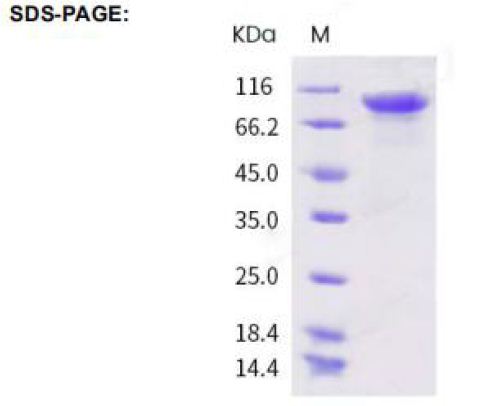
SDS-PAGE (Recombinant PDGFRB (557-1106) protein gel 10% SDS-PAGE gel with Coomassie blue staining MW: 63 kDa Purity: >50%)
Bioactivity (HTRF assay for DAPK3/ZIPK; activity 1 uM STK S1 substrate was incubated with different concentrations of DAPK3/ZIPK; protein in a 10 ul reaction system containing 1×Enzymatic Buffer, 10 mM MgCl2, 1 mM DTT and 100 uM ATP for 1 hour. The detection reagents were added and incubated with the reactions for 30 min. All the operations and reactions were performed at room temperature.)
Bioactivity (HTRF assay for BRD3 (BD1+BD2), Anti-His activity 3 uM histone peptide H4K5/8/12/16(ac4) was incubated with BRD3 (BD1+BD2) in reaction buffer including 50 mM HEPES-NaOH pH 7.4, 0.1% BSA for 1 hour at room temperature. Anti-His antibody was used to detect reaction products. All the operations and reactions were performed at room temperature. HTRF assay was used for detection.)
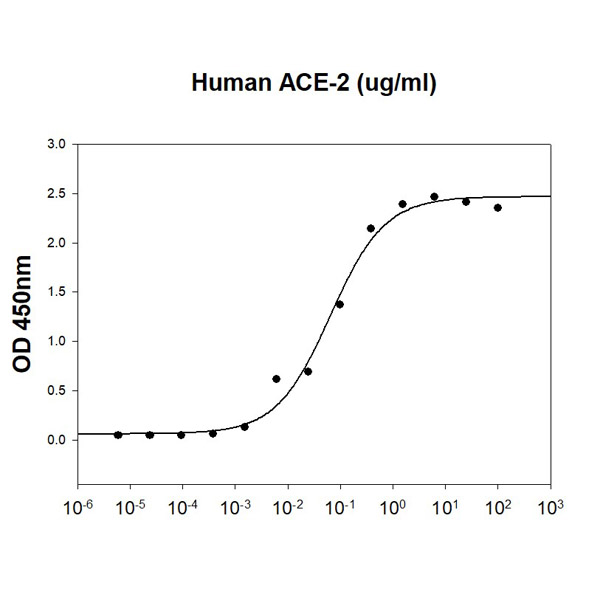
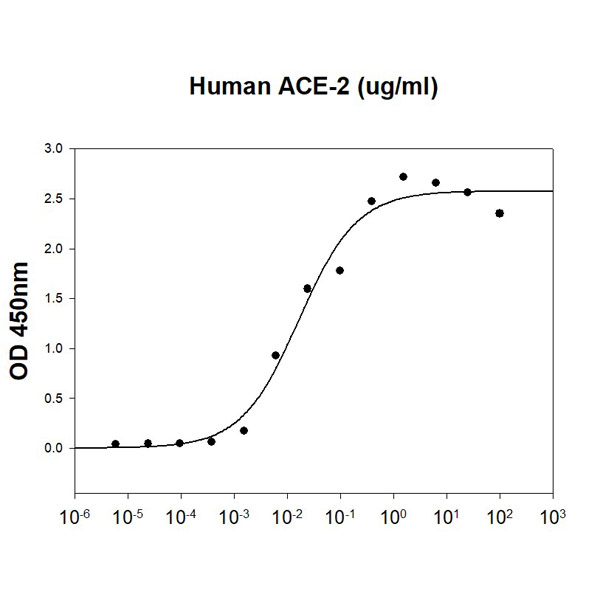
Bioactivity (Figure 2. Binding ability measured in a functional ELISA. 2019-nCoV spike protein RBD (K417N, E484K, N501Y) binds to immobilized human ACE2 (19-740) protein)
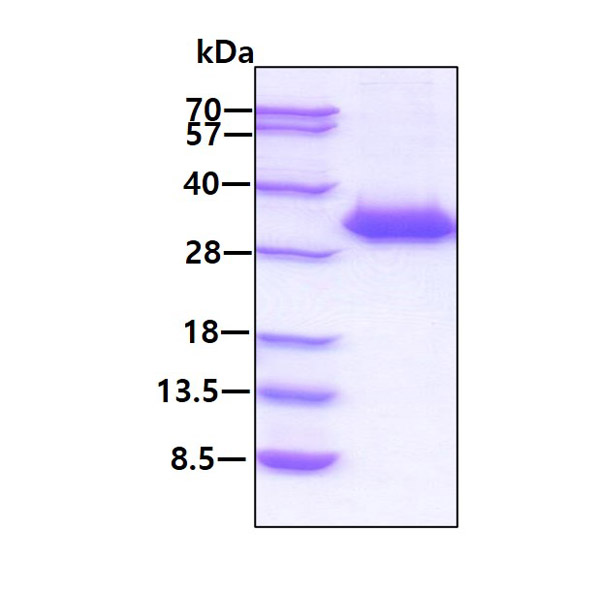
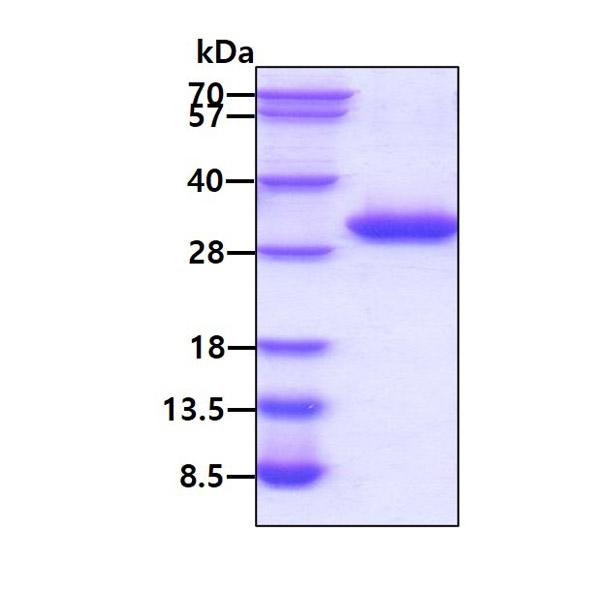
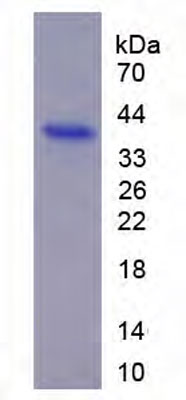
SDS-PAGE (Figure 1. SDS-PAGE gel imageThe purity of nCoV-RBD (K417N, E484K, N501Y) was determined to be >90% by densitometry, approx. MW 39 kDa.)
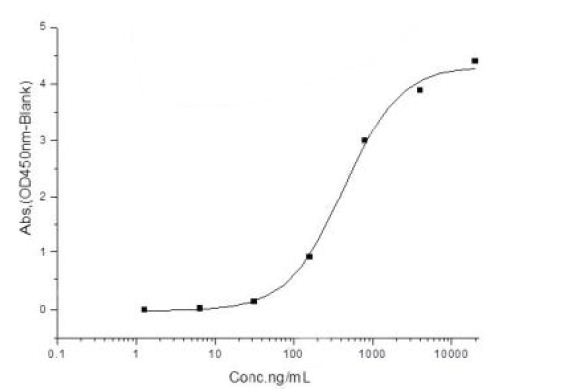
Application Data (Measured by its binding ability in a functional ELISA. Immobilized human NCR3 at 10 ug/mL (100 uL/well) can bind human B7-H6, the EC50 of human B7-H6 is 20-100 ng/mL.)
Application Data (Immobilized Human BAFF/BLyS hFc at 2 ug/mL (100 uL/well) can bind Human BAFFR/TNFRSF13C hFc & AVI, Biotinylated, the EC50 of Human BAFFR/TNFRSF13C hFc & AVI, Biotinylated is 40-200 ng/mL.)
Application Data (Measured by its binding ability in a functional ELISA. Immobilized human CD47-His at 2 ug/ml (100 ul/well) can bind human SIRPa(V2)-mFc, the EC50 of human SIRPa(V2)-mFc is 2-14 ng/mL.)
Application Data (1. Measured by its binding ability in a functional ELISA. Immobilized Spike Protein S1 (aa 1-725) at 10 ug/ml (100 ul/well) can bind biotinylated human DPP4. The EC50 of of biotinylated DPP4 is 0.6-1.39 ug/ml. 2. Measured by its binding ability in a functional ELISA. Immobilized Spike Protein S1 (aa 1-725) at 10 ug/ml (100 ul/well) can bind biotinylated Fc-DPP4. The EC50 of biotinylated Fc-DPP4 is 0.02-0.05 ug/ml.)
Application Data (Immobilized ACE2 Protein, Human, Recombinant (mFc Tag) at 2 ug/mL (100 uL/well) can bind SARS-CoV-2 (2019-nCoV) Spike S1+S2 (D80A, K417N, E484K, N501Y, D614G, A701V) Protein (ECD, His Tag) (ECD, His Tag), the EC50 of SARS-CoV-2 (2019-nCoV) Spike S1+S2 (D80A, K417N, E484K, N501Y, D614G, A701V) Protein (ECD, His Tag) (ECD, His Tag) is 100-700ng/mL.)
Application Data (Measured by its binding ability in a functional ELISA. 1. Immobilized mouse ErbB3-His at 10 ug/ml (100 ul/well) can bind biotinylated human NRG1 (isoform Beta1) with a linear range of 0.018-0.125 ug/ml. 2. Immobilized mouse ErbB3-His at 10 ug/ml (100 ul/well) can bind biotinylated human NRG1 (aa 2-246)-Fc with a linear range of 6.25-100 ng/ml.)
Application Data (Measured by its binding ability in a functional ELISA. Immobilized recombinant mouse CD200 at 1 ug/ml (100 ul/well) can bind mouse CD200R1/Fc with a linear range of 1.5-200 ng/ml.)
Application Data (Measured by its binding ability in a functional ELISA. Immobilized mouse DNAM1 at 2 ug/ml (100 ul/well) can bind mouse CD155 with a linear ranger of 6.4-160 ng/ml.)
Application Data (Measured by its binding ability in a functional ELISA. Immobilized Mouse CD40 His at 2 ug/ml (100 ul/well) can bind Mouse CD40 Ligand hFc, the EC50 of Mouse CD40 Ligand hFc is 60-300 ng/mL.)
Application Data (Measured by its binding ability in a functional ELISA. Immobilized Mouse Ephrin B2hFc at 2 ug/ml (100 ul/well) can bind Mouse EphB4 His, the EC50 of Mouse EphB4 His is 3.5-20 ng/mL.)
Bioactivity (Lysophosphatidic acid phosphatase type 6 (ACP6), is a 44-47 kDa monomeric member of the histidine acid phosphatase family of proteins. ACP6 is highly expressed in kidney, heart, small intestine, muscle, liver, prostate, testis, ovary and exists as two isoforms as a result of alternative splicing events. It plays a role in regulating lipid metabolism that hydrolyzes LPA to monoacylglycerol (MAG) and phosphate. Annexin V (ANXA5) binds to phospholipid bilayers, forming two-dimensional crystals that block the phospholipids from availability for coagulation enzyme reactions. A functional binding ELISA assay was conducted to detect the interaction of recombinant human ACP6 and recombinant mouse ANXA5. Briefly, ACP6 was diluted serially in PBS with 0.01% BSA (pH 7.4). Duplicate samples of 100 ul were then transferred to ANXA5-coated microtiter wells and incubated for 1h at 37 degree C. Wells were washed with PBST and incubated for 1h with anti-ACP6 pAb, then aspirated and washed 3 times. After incubation with HRP labelled secondary antibody for 1h at 37 degree C, wells were aspirated and washed 5 times. With the addition of substrate solution, wells were incubated 15-25 minutes at 37 degree C. Finally, add 50 uL stop solution to the wells and read at 450/630 nm immediately. The binding activity of recombinant human ACP6 and recombinant mouse ANXA5 was shown in Figure 1, the EC50 for this effect is 0.08 ug/mL.)
Bioactivity (Apolipoprotein A1 (APOA1) is the major protein component of HDL particles in plasma. It is a cofactor for lecithin cholesterolacyltransferase (LCAT) which is responsible for the formation of most plasma cholesteryl esters. ApoA1 was also isolated as a prostacyclin (PGI2) stabilizing factor, and thus may have an anticlotting effect. ApoA1 is often used as a biomarker for prediction of cardiovascular diseases. Besides, Plasminogen Activator, Urokinase (uPA) has been identified as an interactor of APOA1, thus a functional binding ELISA assay was conducted to detect the interaction of recombinant human APOA1 and recombinant human uPA. Briefly, biotin-linked APOA1 were diluted serially in PBS, with 0.01% BSA (pH 7.4). Duplicate samples of 100 ul were then transferred to uPA-coated microtiter wells and incubated for 1h at 37 degree C. Wells were washed with PBST 3 times and incubation with Streptavidin-HRP for 30min, then wells were aspirated and washed 5 times. With the addition of substrate solution, wells were incubated 15-25 minutes at 37 degree C. Finally, add 50 ul stop solution to the wells and read at 450/630 nm immediately. The binding activity of recombinant human uPA and recombinant human APOA1 was shown in Figure 1, the EC50 for this effect is 0.08 ug/mL.)
Bioactivity (Insulin-like growth factor 2 (IGF2) is one of three protein hormones that share structural similarity to insulin. It has growth-regulating, insulin-like and mitogenic activities. IGF2 exerts its effects by binding to the IGF-1 receptor and to the short isoform of the insulin receptor. IGF2 may also bind to the IGF2 receptor (also called the cation-independent mannose 6-phosphate receptor), which acts as a signalling antagonist; that is, to prevent IGF2 responses. Besides, Insulin Like Growth Factor Binding Protein 2 (IGFBP2) has been identified as an interactor of IGF2, thus a functional binding ELISA assay was conducted to detect the interaction of recombinant mouse IGF2 and recombinant mouse IGFBP2. Briefly, IGF2 were diluted serially in PBS, with 0.01% BSA (pH 7.4). Duplicate samples of 100 ul were then transferred to IGFBP2-coated microtiter wells and incubated for 2h at 37 degree C. Wells were washed with PBST and incubated for 1h with anti-IGF2 pAb, then aspirated and washed 3 times. After incubation with HRP labelled secondary antibody, wells were aspirated and washed 3 times. With the addition of substrate solution, wells were incubated 15-25 minutes at 37 degree C. Finally, add 50 uL stop solution to the wells and read at 450 nm immediately. The binding activity of recombinant mouse IGF2 and recombinant mouse IGFBP2 was shown in Figure 1, the EC50 for this effect is 0.009 ug/mL.)
Bioactivity (Oncostatin M (OSM) is an approximately 30 KDa secreted cytokine belonging to the Interleukin-6 family. Like other members of the IL-6 family such as IL-11, CNTF, and Cardiotrophin-1, OSM plays crucial roles in inflammation, neuroprotection, hematopoiesis, metabolism and development. To test the effect of OSM on cell proliferation, TF-1 cells were seeded into triplicate wells of 96-well plates at a density of 20,000 cells/well with various concentrations of recombinant human OSM. After incubated for 72 hours, cells were observed by inverted microscope and cell proliferation was measured by Cell Counting Kit-8(CCK-8). Briefly, 10 ul of CCK-8 solution was added to each well of the plate, then the absorbance at 450 nm was measured using a microplate reader after incubating the plate for 1-4 hours at 37 degree C. Proliferation of TF-1 cells after incubation with OSM for 72 hours observed by inverted microscope was shown in Figure 1. Cell viability was assessed by CCK-8 (Cell Counting Kit-8) assay after incubation with recombinant human OSM for 72 hours. The result was shown in Figure 2. It was obvious that recombinant human OSM significantly increased cell viability of TF-1 cells, the EC50 was 0.08 ng/ml.)
Bioactivity (Janus Kinase 1, also known as JAK1, is a member of the Janus kinase family, which plays a crucial role in various cellular processes, including signal transduction, immune response, and hematopoiesis. It is reported that the binding of JAK1 to IFNa2 plays an important role in immune response and antiviral defense. Thus a functional binding ELISA assay was conducted to detect the interaction of recombinant human JAK1 and recombinant mouse IFNa2. Briefly, JAK1 was diluted serially in PBS with 0.01% BSA (pH 7.4). Duplicate samples of 100 ul were then transferred to IFNa2-coated microtiter wells and incubated for 1h at 37 degree C. Wells were washed with PBST and incubated for 1h with anti-JAK1 pAb, then aspirated and washed 3 times. After incubation with HRP labelled secondary antibody for 1h at 37 degree C, wells were aspirated and washed 5 times. With the addition of substrate solution, wells were incubated 15-25 minutes at 37 degree C. Finally, add 50 uL stop solution to the wells and read at 450/630 nm immediately. The binding activity of recombinant human JAK1 and recombinant mouse IFNa2 was shown in Figure 1, the EC50 for this effect is 0.1 ug/mL.)
Proteins are large molecules made up of long chains of amino acids.
They will typically fold into a very particular 3-dimensional shape/conformation, that is sometimes referred to as their “native” form, which allows them to work properly in the body. For the purposes of product categorization, AAA Biotech will typically refer to proteins purified from their original animal host as being “native” proteins (this is to signify their difference compared to their “recombinant” or “synthetic” protein counterparts).
If a protein successfully folds into the correct shape, it is will typically display high fidelity characteristics to its original protein in its original animal host, and be classified as an active protein, as it will be able to function “normally” in most enzymatic or binding capacities. If it loses this shape, due to factors such as heat or strong chemicals (such as detergents), it becomes inactive and is no longer able to perform its basic functions. All of the proteins in this category are made under strict quality control, and they are active, pure, low in contaminants, and stable.
Most are stored as freeze-dried powders and come without extra tags, so they’re very close to the actual natural/native form.
Key Applications of Active Proteins
1. Scientific Research
Aid in the study of how proteins function in the body
Aid in understanding various disease processes
2. Drug Development
Powerful tools to investigate how potential drugs interact with specific proteins
Ideal for identifying drug targets
3. Cell Culture
Are routinely utilized to support cell growth and function (e.g., using exogenous growth factors)
Can be used to promote cellular development into specific types (differentiation)
4. Diagnostics
Regularly utilized in tests to detect diseases or infections (e.g., COVID-19, cancer)
Note: All products are strictly for research-use only (RUO).
5. Therapeutics
Some active proteins are used directly as treatments (e.g., insulin, enzymes)
Note: All products are strictly for research-use only (RUO).
6. Vaccine Development
Used to create or test vaccines by mimicking parts of viruses or bacteria
7. Biochemical Assays
They can facilitate the characterization of enzyme activity, binding strength, or protein interactions in lab tests
Why Buy Active Proteins from AAA Biotech?
High biological activity – Verified to perform as expected or indicated on datasheet
Strict quality control – We are confident in our active proteins’ reliability and consistency
High purity & low endotoxin – Ideal for applications involving sensitive or precious samples/components
Freeze-dried for stability – Long shelf life and straightforward storage
Mostly tag-free – Closer to natural/native protein form
FAQ
1. What are active proteins used for in research?
Active proteins are used primarily in the study of how proteins function, in characterizing/discovering drug interactions, supporting cell growth, running biochemical assays, and in development of diagnostics or therapeutics.
2. How are AAA Biotech's active proteins validated?
AAA Biotech’s active proteins are validated through strict quality control and functional assays to ensure they are properly folded and active. “Active”, though, can be an ambiguous term, so if a specific “activity” or “binding” capability of a protein is of crucial interest to you, please inquire with us prior to purchase, and we will provide further details on how the “Active” modifier was determined to be applicable.
3. Are these proteins tested for biological activity?
Yes, all active proteins from AAA Biotech are tested to confirm they have the expected biological activity before being offered for use. Though, said “biological activity” can be either “enzymatic”, “binding”, or both.
Submit a Question
Please complete the form below and a representative will contact you as soon as possible.
Request more Information
Please complete the form below and a representative will contact you as soon as possible.
Request a Manual
Please complete the form below and a representative will contact you as soon as possible.
Request a Quote
Please complete the form below and a representative will contact you as soon as possible.