AAA Biotech provides a variety of high-quality recombinant and natural/native proteins that are proven to work in a wide range of experiments. Explore our products to find the active protein that best fits your needs or experimental model.
Application Data (Measured by its binding ability in a functional ELISA. Immobilized recombinant human TTR-His can bind recombinant Canine RBP4-Fc with a linear range of 0.3-10.0 ug/ml.)
Application Data (Measured by its ability to neutralize Activin-mediated inhibition on MPC11 cell proliferation. The ED50 for this effect is typically 0.4-3 ug/mL in the presence of 10 ng/mL recombinant Activin A.)
Application Data (Measured by its ability to inhibit TRANCE-induced osteoclast differentiation of RAW 264.7 mouse monocyte/macrophage cells. The ED50 for this effect is 3-16ng/mL in the presence of 5 ng/mL of TRANCE.)
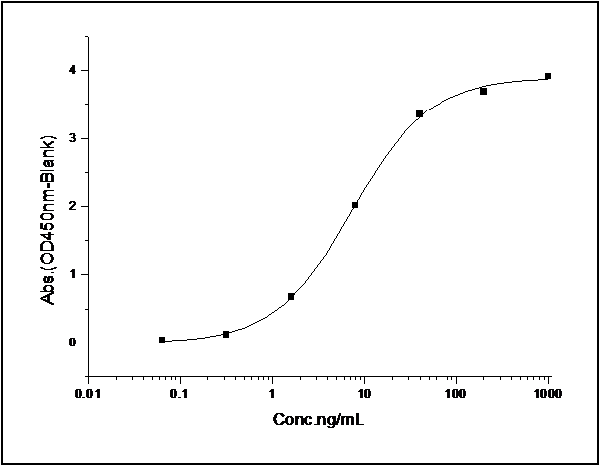
Application Data (Measured by its binding ability in a functional ELISA. Immobilized human CD47-His at 2 ug/ml (100 ul/well) can bind human SIRPa(V8)-mFc, the EC50 of human SIRPa(V8)-mFc is 2-14 ng/mL.)
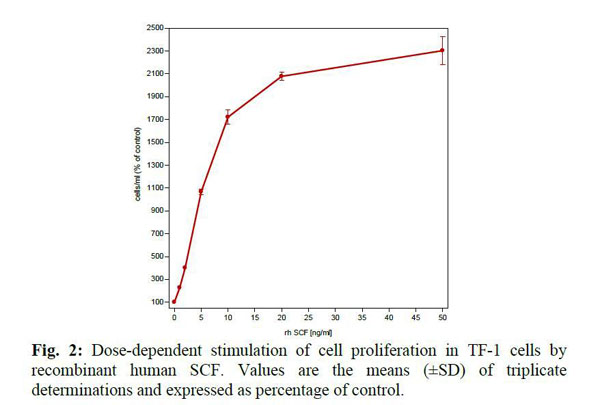
Bioactivity (Figure 2. Cell proliferation of TF-1 cells after stimulated with NGF.)
Bioactivity (Nerve growth factor (NGF) is a neurotrophic factor and neuropeptide primarily involved in the regulation of growth, maintenance, proliferation, and survival of certain target neurons. NGF is also involved in pathways besides those regulating the life cycle of neurons. a nerve growth factor(NGF)-dependent TF-1 subclone cell line suitable for determination of bioactivity of recombinant mouse NGF, then TF-1 cells were seeded into triplicate wells of 96-well plates at a density of 5,000 cells/well with 1% serum standard 1640 contain various concentrations of recombinant mouse NGF. After incubated for 72h, cells were observed by inverted microscope and cell proliferation was measured by Cell Counting Kit-8 (CCK-8). Briefly, 10ul of CCK-8 solution was added to each well of the plate, then the absorbance at 450nm was measured using a microplate reader after incubating the plate for 1-4 hours at 37?. Proliferation of TF-1 cells after incubation with TF-1 for 72h observed by inverted microscope was shown in Figure1. Cell viability was assessed by CCK-8 assay after incubation with recombinant NGF for 72h. The result was shown in Figure2. It was obvious that NGF significantly increased cell viability of TF-1 cells.)
Bioactivity (Angiotensin-converting enzyme 2 (ACE2), as a transmembrane protein, serves as the main entry point into cells for some coronaviruses, including HCoV-NL63, SARS-CoV , and SARS-CoV-2 . More specifically, the binding of the spike S1 protein of SARS-CoV and SARS-CoV-2 to the enzymatic domain of ACE2 on the surface of cells results in endocytosis and translocation of both the virusand the enzyme into endosomes located within cells. Besides, recent studies show that spike (S) proteins of 2019-nCoV and SARS-CoV may use the same host cell receptor called angiotensin-converting enzyme 2 (ACE2) for entering into host cells, thus a binding ELISA assay was conducted to detect the interaction of recombinant human ACE2 and recombinant Spike glycoprotein RBD. Briefly, biotin-linked ACE2 were diluted serially in PBS, with 0.01% BSA (pH 7.4). Duplicate samples of 100?l were then transferred to RBD-coated microtiter wells and incubated for 2h at 37?. Wells were washed with PBST 3 times and incubation with HRP conjugage for 30min, then wells were aspirated and washed 5 times. With the addition of substrate solution, wells were incubated 15-25 minutes at 37?. Finally, add 50ul stop solution to the wells and read at 450nm immediately. The binding activity of ACE2 and RBD was shown in Figure 1, and this effect was in a dose dependent manner.)
Bioactivity (Complement Component 3 (C3) is a vital component of the complement system that plays a central role in immune response and inflammation. C3 is a beta? globulin synthesized by the liver, whose structure consists of two polypeptide chains, alpha and beta, and is the most abundant complement component in serum. It's been identified that C3 can interact with Complement Factor B (CFB), thus a functional binding ELISA assay was conducted to detect the interaction of recombinant human C3 and recombinant mouse CFB. Briefly, CFB was diluted serially in PBS with 0.01% BSA (pH 7.4). Duplicate samples of 100 ul were then transferred to C3-coated microtiter wells and incubated for 1h at 37 degree C. Wells were washed with PBST and incubated for 1h with anti-CFB pAb, then aspirated and washed 3 times. After incubation with HRP labelled secondary antibody for 1h at 37 degree C, wells were aspirated and washed 5 times. With the addition of substrate solution, wells were incubated 15-25 minutes at 37 degree C. Finally, add 50 uL stop solution to the wells and read at 450/630 nm immediately. When Recombinant C3 is immobilized at 2 ug/mL (100 uL/well), the concentration of CFB that produces 50% optimal binding response is found to be approximately 5.96 ug/mL.)
Bioactivity (Retinol-binding protein 4 (RBP4) is the specific carrier for retinol (also known as vitamin A), and is responsible for the conversion of unstable and insoluble retinol in aqueous solution into stable and soluble complex in plasma through their tight interaction. As a member of the lipocalin superfamily, RBP4 containing a beta-barrel structure with a well-defined cavity is secreted from the liver, and in turn delivers retinol from the liver stores to the peripheral tissues. In plasma, the RBP4-retinol complex interacts with transthyretin (TTR), and this binding is crucial for preventing RBP4 excretion through the kidney glomeruli. RBP4 expressed from an ectopic source efficiently delivers retinol to the eyes, and its deficiency affects night vision largely. Recently, RBP4 as an adipokine, is found to be expressed in adipose tissue and correlated with obesity, insulin resistance (IR) and type 2 diabetes (T2DM). The activity of recombinant mouse RBP4 was measured by its ability to bind all-trans retinoic acid. The binding of retinoic acid results in the quenching of Trp fluorescence in RBP4. RBP4 was diluted to 50 ug/ml in 50 mM Tris, 10 mM CaCl2, 150 mM NaCl, pH 7.5 (assay buffer) and the retinoic acid was diluted to 800, 400, 200, 100, 30, 10, 3, 1, 0.5 and 0.1 uM in 95% ethanol. Mixing 112.5 uL of 50 ug/mL rmRBP4 and 12.5 uL of retinoic acid serial dilutions in microtubes and a blank containing 112.5 uL of 50 ug/mL rmRBP4 and 12.5 uL of 95% ethanol, then incubate at room temperature for 30 minutes. Loading 100 ul of the reaction mixtures and blank and read at excitation and emission wavelengths of 280 nm and 340 nm (top read), respectively, in endpoint mode. The result was shown in figure 1, the 50% binding concentration (BC50) is > 4.6 uM.)
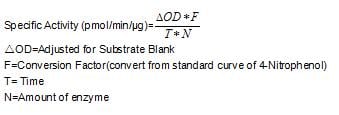
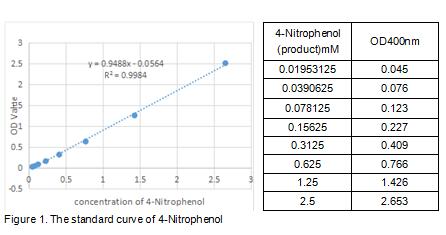
Bioactivity (Kallikrein 3, commonly known as prostate specific antigen (PSA), is a serine protease of the human tissue Kallikrein gene family. PSA is synthesized in the ductal and acinar epithelium of the prostate gland and secreted into the seminal plasma in high concentrations (0.5 - 2 g/L). A small portion of PSA "leaks" into the systemic circulation, the levels of which increase significantly (30-fold) from prostate cancer tissue than normal prostate tissue. PSA has become a well established tumor marker that aids the identification, staging, and follow up of prostate cancer. The activity of recombinant human KLK3 is measured by its ability to cleave a colorimetric peptide substrate Suc-Arg-Pro-Tyr-pNa in the assay buffer 50 mM Tris, 1 M NaCl, pH 8.0. The rhKLK3 is diluted to 200 ug/ml in activation buffer 50 mM Tris, 10 mM CaCl2, 150 mM NaCl, 0.05% Brij-35, pH 7.5, then activated with a final concentration of 1 ug/ml Thermolysin at 37 degree C for 5min. Adding a final concentration of 10 mM 1,10 Phenanthroline to stop the activation. The activated rhKLK3 is diluted to 50 ug/mL in assay buffer. Loading into a clear well plate 50 uL of 50 ug/mL rhKLK3 and start the reaction by adding 50 uL of 2 mM substrate, with a substrate blank containing 50 uL assay buffer, 50 uL substrate, and no rhKLK3. Then read at 405 nm in kinetic mode for 5 minutes. The specific activity of recombinant human KLK3 is > 400 pmol/min/ug.)
Bioactivity (Annexin V (ANXA5) is a multifunctional protein that is highly expressed on the apical surfaces of syncytiotrophoblasts, and plays an important role in haemostatic regulations, maintaining blood fluidity of the placenta. Lower ANXA5 levels have been observed in M2/ANXA5 haplotype carrying chorion. The association found between the maternal carriage of the M2/ANXA5 haplotype and an elevated risk of IUGR and/or PE supports the hypothesis that carrier status of this haplotype and the consequently reduced placental ANXA5 expression might be responsible, at least partially, for the onset of these gestational vascular complications. Annexin V is a calcium-dependent phospholipid binding protein that can be used to bind Phosphatidylserine (PS) during an early apoptosis event where the PS becomes exposed at the cell surface. Jurkat cells were treated with 10 uM camptothecin for 4h, 2*105 cells which were resuspended in binding buffer were stained with 5 ug recombinant human Annexin V-GFP and 10 ul Propidium iodide (PI) for 20min in dark room temperature. The flow cytometry was used to detect the early apoptotic and late apoptotic of camptothecin-treated Jurkat cells (Figure 1), the combination of Annexin V-GFP and propidium iodide allows for the distinction between early apoptotic cells (Annexin V-FITC positive and propidium iodide negative), late apoptotic and/or necrotic cells (Annexin V-FITC and propidium iodide positive), and viable cells (unstained). Thus, the recombinant human Annexin V-GFP can bind Phosphatidylserine (PS) at early apoptosis of Jurkat.)
Bioactivity (Fas ligand (FasL) is a 40 kDa type II membrane protein belonging to the TNF family. In the new TNF super family nomenclature, FasL is referred to as TNFSF6. The specific receptor for FasL is Fas (CD95, Apo-1), a 45 kDa type I transmembrane protein that is a member of the TNF receptor family. FasL is predominantly expressed on activated T cells and NK cells, while Fas is expressed on various types of cells. The Fas/FasL system plays a crucial role in modulating immune response by inducing cell apoptosis to maintain homeostasis, self-tolerance of lymphocytes, and immune privilege. FasL was reported to be a potent chemoattractant for neutrophils, suggesting a novel proinflammatory function of this molecule. A functional ELISA assay was conducted to detect the interaction of recombinant human FASL and recombinant human FAS. Briefly, FASL was diluted serially in PBS with 0.01% BSA (pH 7.4). Duplicate samples of 100 ul were then transferred to FAS-coated microtiter wells and incubated for 1h at 37 degree C. Wells were washed with PBST and incubated for 1h with anti-FASL pAb, then aspirated and washed 3 times. After incubation with HRP labelled secondary antibody for 1h at 37 degree C, wells were aspirated and washed 5 times. With the addition of substrate solution, wells were incubated 15-25 minutes at 37 degree C. Finally, add 50 uL stop solution to the wells and read at 450/630nm immediately. The binding activity of recombinant human FASL and recombinant human FAS was shown in Figure 1, the EC50 for this effect is 0.044 ug/mL.)
Bioactivity (Figure 2. The chemotactic effect of ENA-78 on THP-1 cells)
Bioactivity (Epithelial Neutrophil Activating Peptide 78 (ENA-78) is a member of the CXC subfamily of chemokines. Full-length ENA-78 is 114 amino acids (aa) in length with a predicted molecular weight of 12 kDa. ENA-78 is expressed by many immune cells, such as macrop)
Bioactivity (CD40, also known as Tumor Necrosis Factor Receptor Superfamily, Member 5 (TNFRSF5), is a 45-50 kDa type I transmembrane glycoprotein member of the TNF receptor superfamily. Mature human CD40 consists of a 173 amino acid (aa) extracellular domain, a transm)
Bioactivity (Programmed Cell Death Protein 1 Ligand 1 (PDCD1LG1) also known as cluster of differentiation 274 (CD274) or B7 homolog 1 (B7-H1) is a 40kDa type 1 transmembrane protein that has been speculated to play a major role in suppressing the immune system during particular events such as pregnancy, tissue allografts, autoimmune disease and other disease states such as hepatitis. Besides, Programmed Cell Death Protein 1 (PDCD1) has been identified as an interactor of PDCD1LG1, thus a binding ELISA assay was conducted to detect the interaction of recombinant human PDCD1LG1 and recombinant human PDCD1. Briefly, PDCD1LG1 were diluted serially in PBS, with 0.01% BSA (pH 7.4). Duplicate samples of 100uL were then transferred to PDCD1-coated microtiter wells and incubated for 2h at 37. Wells were washed with PBST and incubated for 1h with anti-PDCD1LG1 pAb, then aspirated and washed 3 times. After incubation with HRP labelled secondary antibody, wells were aspirated and washed 3 times. With the addition of substrate solution, wells were incubated 15-25 minutes at 37. Finally, add 50uL stop solution to the wells and read at 450nm immediately. The binding activity of PDCD1LG1 and PDCD1 was shown in Figure 1, and this effect was in a dose dependent manner.Figure. The binding activity of PDCD1LG1 with PDCD1.)
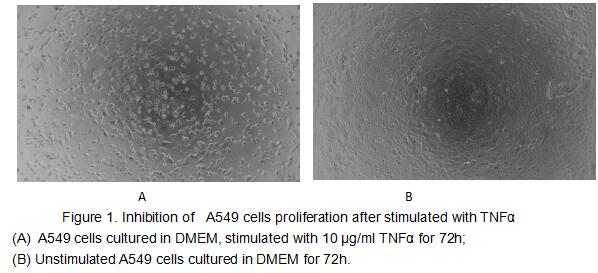
Application Data (MANF (Mesencephalic astrocyte-derived neurotrophic factor) is a prosurvival protein that protects the cells when applied intracellularly in vitro or extracellularly in vivo. Recently, MANF has also been proven to inhibit cell proliferation and ER stress-induced cell death and also affects cell size and morphology under certain conditions. Thus the bioactivity of human recombinant MANF were detected using U87-MG. Briefly, U87-MG cells were seeded into triplicate wells of 96-well plates at a density of 2,000 cells/well and allowed to attach overnight, then the medium was replaced with serum-free standard DMEM prior to the addition of various concentrations of MANF. After incubated for 48h, cells were observed by inverted microscope and were shown in Figure 1. It was obvious that MANF inhibited cell proliferation of U87-MG and affected cell size and morphology. (A)U7-MG cells cultured in DMEM, stimulated with 0.01ng/mL MANF for 48h; (B)Unstimulated U87-MG cells cultured in DMEM for 48h.Figure 1. Inhibition of U87-MG cell proliferation after stimulated with MANF.)
Bioactivity (Figure. The binding activity of PSA with PDIA3.Puromycin Sensitive Aminopeptidase (PSA) also known as cytosol alanyl aminopeptidase or alanine aminopeptidase (AAP) is used as a biomarker to detect damage to the kidneys, and that may be used to help idenfity certain kidney disorders. It is found at high levels in the urine when there are kidney problems. PSA has been proposed to function in a variety of processes, including metabolism of neuropeptidase, regulation of the cell cycle, and hydrolysis of proteasomal products to amino acids. Besides, Protein Disulfide Isomerase A3 (PDIA3) has been identified as an interactor of PSA, thus a binding ELISA assay was conducted to detect the interaction of recombinant human PSA and recombinant human PDIA3. Briefly, PSA were diluted serially in PBS, with 0.01% BSA (pH 7.4). Duplicate samples of 100uL were then transferred to PDIA3-coated microtiter wells and incubated for 2h at 37. Wells were washed with PBST and incubated for 1h with anti-PSA pAb, then aspirated and washed 3 times. After incubation with HRP labelled secondary antibody, wells were aspirated and washed 3 times. With the addition of substrate solution, wells were incubated 15-25 minutes at 37. Finally, add 50uL stop solution to the wells and read at 450nm immediately. The binding activity of PSA and PDIA3 was shown in Figure 1, and this effect was in a dose dependent manner.)
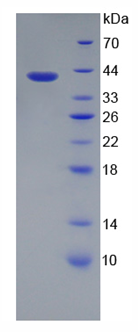
SDS_PAGE (Figure 3. SDS-PAGESample: Active recombinant ANXA1, Mouse)
Application Data (Figure 2. Gene Sequencing (extract))
Bioactivity (Annexin A1 (ANXA1), also known as lipocortin I, belongs to the annexin family of Ca2+- dependent phospholipid-binding proteins that have a molecular weight of approximately 35,000 to 40,000 and are preferentially located on the cytosolic face of the plasma membrane. Annexin A1 protein has an apparent relative molecular mass of 40kDa with phospholipase A2 inhibitory activity. Besides, S100 Calcium Binding Protein A11 (S100A11) has been identified as an interactor of ANXA1, thus a binding ELISA assay was conducted to detect the interaction of recombinant mouse ANXA1 and recombinant mouse S100A11. Briefly, ANXA1 were diluted serially in PBS, with 0.01% BSA (pH 7.4). Duplicate samples of 100uL were then transferred to S100A11-coated microtiter wells and incubated for 2h at 37 degrees. Wells were washed with PBST and incubated for 1h with anti-ANXA1 pAb, then aspirated and washed 3 times. After incubation with HRP labelled secondary antibody, wells were aspirated and washed 3 times. With the addition of substrate solution, wells were incubated 15-25 minutes at 37 degrees. Finally, add 50uL stop solution to the wells and read at 450nm immediately. The binding activity of ANXA1 and S100A11 was shown in Figure 1, and this effect was in a dose dependent manner.)
Bioactivity (Klotho (KL) is a transmembrane protein that, in addition to other effects, provides some control over the sensitivity of the organism to insulin and appears to be involved in aging. The Klotho protein is a novel -glucuronidase capable of hydrolyzing steroid -glucuronides. Genetic variants in KLOTHO have been associated with human aging, and Klotho protein has been shown to be a circulating factor detectable in serum that declines with age. The binding of certain fibroblast growth factors (FGFs) viz., FGF19, FGF20, and FGF23, to their fibroblast growth factor receptors, is promoted via their interactions as co-receptors with -Klotho. Besides, Fibroblast Growth Factor 23 (FGF23) has been identified as an interactor of KL, thus a binding ELISA assay was conducted to detect the interaction of recombinant rat KL and recombinant rat FGF23. Briefly, KL were diluted serially in PBS, with 0.01% BSA (pH 7.4). Duplicate samples of 100L were then transferred to FGF23-coated microtiter wells and incubated for 2h at 37. Wells were washed with PBST and incubated for 1h with anti-KL pAb, then aspirated and washed 3 times. After incubation with HRP labelled secondary antibody, wells were aspirated and washed 3 times. With the addition of substrate solution, wells were incubated 15-25 minutes at 37. Finally, add 50uL stop solution to the wells and read at 450nm immediately. The binding activity of KL and FGF23 was shown in Figure 1, and this effect was in a dose dependent manner.Figure. The binding activity of KL with FGF23.)
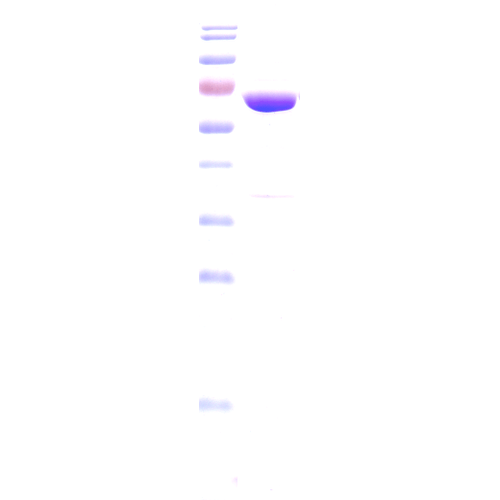
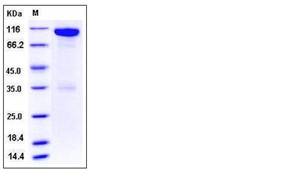
SDS-PAGE (The recombinant SARS-CoV-2 Spike S1 Protein (YP_009724390.1) (Val16-Arg685) with C-terminal His-tag consists of 681 amino acids. Its predicted molecular mass of 77 kDa. The apparent molecular mass of S1 in SDS-PAGE is around 120 kDa, probably due to glycosylation.)
Bioactivity (HTRF assay for NEK7 activity 1 uM STK S3 substrate was incubated with different concentrations of NEK7 protein in a 10 ul reaction system containing 1×Enzymatic Buffer, 5 mM MgCl2, 1 mM DTT, 100 uM ATP for 1 hour. The 10 ul detection reagents containing anti-STK antibody (1:2) and SA-XL665 (1:100) diluted with 1× Detection Buffer were added and incubated with the reactions for 30 min. All the operations and reactions were performed at room temperature. HTRF assay was used for detection.)
Bioactivity (HTRF assay for TSSK2 activity 1 uM STK S1 substrate was incubated with different concentrations of TSSK2 protein in a 10 ul reaction system containing 1×Enzymatic Buffer, 10 mM MgCl2, 1 mM DTT, and 100 uM ATP for 1 hour. The 10 ul detection reagents containing anti-STK antibody (1:2) and SA-XL665 (1:100) diluted with 1× Detection Buffer were added and incubated with the reactions for 30 min. All the operations and reactions were performed at room temperature. HTRF assay was used for detection.)
Bioactivity (HTRF assay for MST2 activity 1 uM STK S3 substrate was incubated with different concentrations of MST2 protein in a 10 ul reaction system containing 1×Enzymatic Buffer, 10 mM MgCl2, 1 mM DTT, and 100 uM ATP for 1 hour. The 10 ul detection reagents containing anti-STK antibody (1:2) and SA-XL665 (1:100) diluted with 1× Detection Buffer were added and incubated with the reactions for 30 min. All the operations and reactions were performed at room temperature. HTRF assay was used for detection.)
Bioactivity (HTRF Assay for Recombinant PAK4 activity. 1 uM STK S2 substrate was incubated with different concentrations of PAK4 protein in 10 ul reaction system containing 1×Enzymatic Buffer, 5 mM MgCl2, 1 mM DTT and 100 uM ATP for 1 hour. The 10 ul detection reagents containing anti-STK antibody (1:2) and SA-XL665 (1:100) diluted with 1× Detection Buffer were added and incubated with the reactions for 30 min. All the operations and reactions were performed at room temperature. HTRF assay was used for detection.)
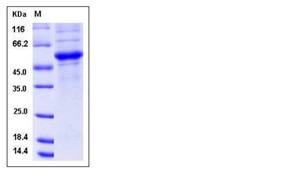
SDS-PAGE (Recombinant PAK4 protein gel 10% SDS-PAGE gel with Coomassie blue staining MW: 65.3 kDa Purity: >90%)
Bioactivity (HTRF assay for PRKCH; activity 1 uM STK S1 substrate was incubated with different concentrations of PRKCH; protein in a 10 ul reaction system containing 1×Enzymatic Buffer, 10 mM MgCl2, 1 mM DTT and 100 uM ATP for 1 hour. The detection reagents were added and incubated with the reactions for 30 min. All the operations and reactions were performed at room temperature.)
Bioactivity (HTRF Assay for Recombinant PDGFRA (550-1089) activity. 1 uM TK substrate was incubated with different concentrations of PDGFRA (550-1089) protein in 10 ul reaction system containing 1×Enzymatic Buffer, 5 mM MgCl2, 1 mM DTT, 5 nM SEB and 100 uM ATP for 1 hour. The 10 ul detection reagents containing anti-STK antibody (1:2) and SA-XL665 (1:100) diluted with 1× Detection Buffer were added and incubated with the reactions for 30 min. All the operations and reactions were performed at room temperature. HTRF assay was used for detection.)
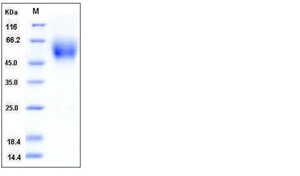
SDS-PAGE (Recombinant PDGFRA (550-1089) protein gel 10% SDS-PAGE gel with Coomassie blue staining MW: 62.8 kDa Purity: >85%)
Bioactivity (ADP-Glo assay for SMARCA4 (658-1328) activity (Data from ICE Bioscience Inc.) 100 uM ATP and 10 nM DNA was incubated with different concentrations of SMARCA4 (658-1328) protein in a 10 ul reaction system containing 20 mM HEPES pH 7.5,10 mM MgCl2, 50 mM NaCl, 0.1%Tween-20, 1 mM DTT for 1 hour, 10 ul ADP-Glo Reagent was added to the products and incubated for 1 hour. Then 20 ul Kinase Detection Reagent incubated for 1 hour. All the operations and reactions were performed at RT. Luminescence measurement is collected by BMG.)
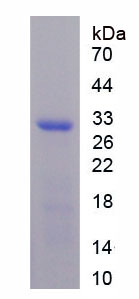
Greater than 98.0% as determined by: (a) Analysis by reducing and non-reducing SDS-PAGE Silver Stained gel. (b) Gel filtration chromatography under non-denaturing conditions.
Carbonic anhydrase 1, 1-261 aa, Human, His tag, E Coli (Bioactivity Validated)
Gene Names
CA1; CAB; CA-I; Car1; HEL-S-11
Applications
SDS-PAGE, Enzyme Activity
Purity
> 95% by SDS-PAGE
Pricing
What Are Active Proteins?
Proteins are large molecules made up of long chains of amino acids.
They will typically fold into a very particular 3-dimensional shape/conformation, that is sometimes referred to as their “native” form, which allows them to work properly in the body. For the purposes of product categorization, AAA Biotech will typically refer to proteins purified from their original animal host as being “native” proteins (this is to signify their difference compared to their “recombinant” or “synthetic” protein counterparts).
If a protein successfully folds into the correct shape, it is will typically display high fidelity characteristics to its original protein in its original animal host, and be classified as an active protein, as it will be able to function “normally” in most enzymatic or binding capacities. If it loses this shape, due to factors such as heat or strong chemicals (such as detergents), it becomes inactive and is no longer able to perform its basic functions. All of the proteins in this category are made under strict quality control, and they are active, pure, low in contaminants, and stable.
Most are stored as freeze-dried powders and come without extra tags, so they’re very close to the actual natural/native form.
Key Applications of Active Proteins
1. Scientific Research
Aid in the study of how proteins function in the body
Aid in understanding various disease processes
2. Drug Development
Powerful tools to investigate how potential drugs interact with specific proteins
Ideal for identifying drug targets
3. Cell Culture
Are routinely utilized to support cell growth and function (e.g., using exogenous growth factors)
Can be used to promote cellular development into specific types (differentiation)
4. Diagnostics
Regularly utilized in tests to detect diseases or infections (e.g., COVID-19, cancer)
Note: All products are strictly for research-use only (RUO).
5. Therapeutics
Some active proteins are used directly as treatments (e.g., insulin, enzymes)
Note: All products are strictly for research-use only (RUO).
6. Vaccine Development
Used to create or test vaccines by mimicking parts of viruses or bacteria
7. Biochemical Assays
They can facilitate the characterization of enzyme activity, binding strength, or protein interactions in lab tests
Why Buy Active Proteins from AAA Biotech?
High biological activity – Verified to perform as expected or indicated on datasheet
Strict quality control – We are confident in our active proteins’ reliability and consistency
High purity & low endotoxin – Ideal for applications involving sensitive or precious samples/components
Freeze-dried for stability – Long shelf life and straightforward storage
Mostly tag-free – Closer to natural/native protein form
FAQ
1. What are active proteins used for in research?
Active proteins are used primarily in the study of how proteins function, in characterizing/discovering drug interactions, supporting cell growth, running biochemical assays, and in development of diagnostics or therapeutics.
2. How are AAA Biotech's active proteins validated?
AAA Biotech’s active proteins are validated through strict quality control and functional assays to ensure they are properly folded and active. “Active”, though, can be an ambiguous term, so if a specific “activity” or “binding” capability of a protein is of crucial interest to you, please inquire with us prior to purchase, and we will provide further details on how the “Active” modifier was determined to be applicable.
3. Are these proteins tested for biological activity?
Yes, all active proteins from AAA Biotech are tested to confirm they have the expected biological activity before being offered for use. Though, said “biological activity” can be either “enzymatic”, “binding”, or both.
Submit a Question
Please complete the form below and a representative will contact you as soon as possible.
Request more Information
Please complete the form below and a representative will contact you as soon as possible.
Request a Manual
Please complete the form below and a representative will contact you as soon as possible.
Request a Quote
Please complete the form below and a representative will contact you as soon as possible.