AAA Biotech provides a variety of high-quality recombinant and natural/native proteins that are proven to work in a wide range of experiments. Explore our products to find the active protein that best fits your needs or experimental model.
Bioactivity (The galectins constitute a large family of carbohydrate-binding proteins with specificity for N-acetyl-lactosamine-containing glycoproteins. At least 14 mammalian galectins, which share structural similarities in their carbohydrate recognition domains (CRD), have been identified. The galectins have been classified into the prototype galectins (-1, -2, -5, -7, -10, -11, -13, -14), which contain one CRD and exist either as a monomer or a noncovalent homodimer; the chimera galectins (Galectin-3) containing one CRD linked to a nonlectin domain; and the tandem-repeat galectins (-4, -6, -8, -9, -12) consisting of two CRDs joined by a linker peptide. Galectin-7 may also be involved in cell-cell and cell-matrix interactions and exogenous galectin has been found to accelerate the re-epithelialization of woundsIt can agglutinate red blood.In this case, we chose rabbit erythrocyte (RaE) to assay its ability of agglutination. A general procedure for hemagglutination assay (or haemagglutination assay; HA) is as follows, two-fold dilute the recombinant Ra GAL7 with 0.9% sodium chloride injection, add 50uL a serial dilution of GAL7 to each well of a U or V-bottom shaped 96-well microtiter plate. The final well serves as a negative control with no GAL7, replace with 50uL 0.9% sodium chloride injection. Then add 50uL 1% rabbit erythrocyte to each well and mixed gently. The plate is incubated for 3 hours at room temperature. The results are shown in Figure 1. It was obvious that the minimal effective concentration of GAL7 is 25 ug/mL.)
Bioactivity (TLR2 is a member of TLR family which is type I transmembrane proteins with a large number of extracellular leucine-rich repeats (LRRs) and a cytoplasmic Toll/IL-1 receptor (TIR) domain. Human TLR2 is synthesized as a 784 amino acid precursor that contains)
Bioactivity (Epithelial Neutrophil Activating Peptide 78 (ENA-78) is a member of the CXC subfamily of chemokines. Full-length ENA-78 is 114 amino acids (aa) in length with a predicted molecular weight of 12 kDa. ENA-78 is expressed by many immune cells, such as macrop)
Bioactivity (Acid phosphatase locus 1 (ACP1) is a low molecular weight protein tyrosine phosphatase that has been shown to be an important regulator of insulin receptor signaling. The activity assay of recombinant mouse ACP1 was measured by its ability to cleave a peptide substrate, 4-Nitrophenyl phosphate disodium (PNPP). The reaction was performed in 50 mM NaOAc, pH 5.0 (assay buffer), initiated by addition 50 ul of 3 ug/ml ACP1 (diluted by assay buffer) to 50 uL of 2 mM substrate. Incubated at room temperature for 5 minutes in the dark and add 100 ul of 0.2 M NaOH to stop the reaction. Read at a wavelength of 405 nm (top read), the specific activity of recombinant mouse ACP1 is >32000 pmol/min/ug.)
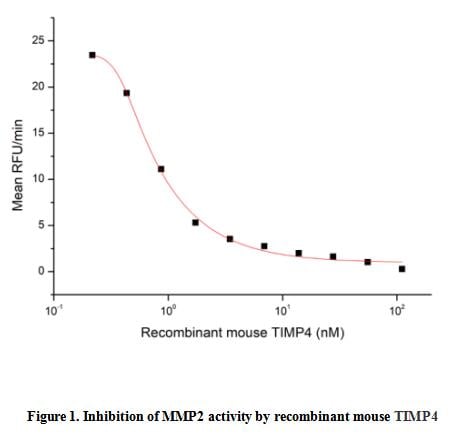
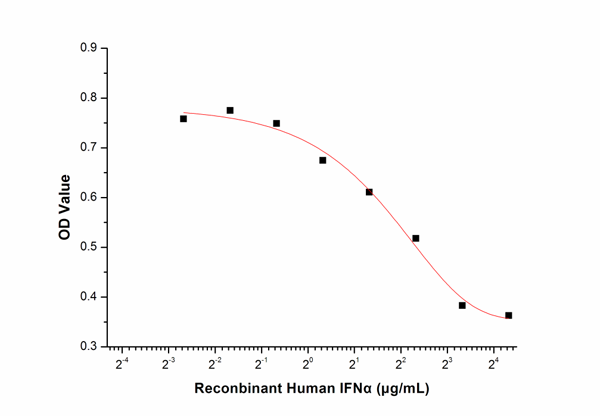
Bioactivity (Human TFPI, also known as lipoprotein-associated coagulation inhibitor (LACI) and extrinsic pathway inhibitor (EPI), is a physiological inhibitor of extrinsic pathway of coagulation and has biological functions of anticoagulation and anti-inflammation. It is a secreted protein with a N-terminal acidic region, three Kunitz (K) domains separated with by two linker regions, and a C-terminal basic region. The activity of recombinant human TFPI was measured by its ability to inhibit trypsin cleavage of a fluorogenic peptide substrate Mca-RPKPVE-Nval-WRK(Dnp)-NH2 in the assay buffer 50 mM Tris, 10 mM CaCl2, 150 mM NaCl, 0.05% (w/v) Brij-35, pH 7.5. Trypsin was diluted to 50 ug/ml in the assay buffer and 20 ul different concentrations of recombinant human TFPI (MW: 61.9 KD) was incubated with 20 ul diluted trypsin at 37 degree C for 15 minutes. Loading 50 uL of the incubated mixtures which were diluted five-fold in assay buffer into empty wells of a plate, and start the reaction by adding 50 uL of 20 uM substrate. Include a substrate blank containing 50 uL of assay buffer and 50 uL of 20 uM substrate. Then read at excitiation and emission wavelengths of 320 nm and 405 nm, respectively, in kinetic mode for 5 minutes. The result was shown in Figure 1 and it was obvious that recombinant human TFPI significantly decreased trypsin activity. The inhibition IC50 was )
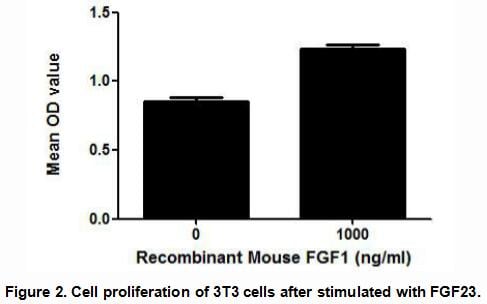
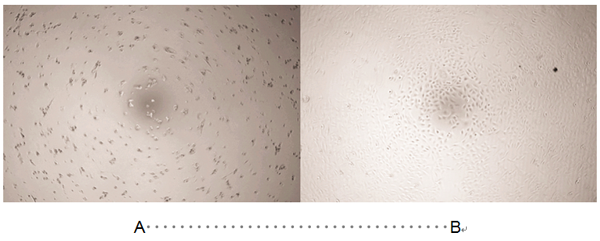
Bioactivity (Figure 2. Inhibition of A549 cells proliferation after stimulated with TNFalpha.)
Bioactivity (Tumor necrosis factor (TNF, tumor necrosis factor alpha, TNFalpha, cachexin, or cachectin) is a cell signaling protein (cytokine) involved in systemic inflammation and is one of the cytokines that make up the acute phase reaction. The primary role of TNF)
Application Data (TcREG inhibit osteoclast activity in an antigen- and contact-independent manner by secreted cytokines.Cells were re-fed with medium containing M-CSF and RANKL every 2 to 3 days.)
Application Data (Pro-resorptive cytokine expression and osteoclastogenesis in the synovial fluid of patients with gouty arthritis.PBMCs, SFMCs, and T cell-depleted SFMCs (3 × 10⁵ cells/well) were cultured for 10 days in the presence of macrophage colony-stimulating factor (M-CSF; 30 ng/ml) at the different RANKL concentrations and then were stained for tartrate-resistant acid phosphatase .)
Application Data
Application Data (PLC?2 is required for in vitro osteoclast development.(a) Representative TRAP-stained images of wild-type and PLC?2?/? bone marrow cells cultured in the presence of the indicated concentrations of recombinant murine M-CSF and RANKL for 4 days.)
Application Data (Lung-derived prominin-1.Exposure of prominin-1+ cells to M-CSF for 7 days resulted in formation of E.coli phagocytising F4/80-positive cells .)
Application Data (Validation of the array expression pattern by quantitative RT-PCR.The mRNA levels of CCL2/MCP-1 , CCL5/RANTES , ICAM-1 , VCAM-1 , E-selectin , and P-selectin were determined by quantitative real-time PCR, and values were normalized to 18S rRNA as reference gene.)
Application Data (Binding and in vitro activity of murine 18V4F hybridoma antibody.Chemotaxis inhibition by 18V4F hybridoma antibody of CCR5-transfected Ba/F3 cells to 5 ng/mL of CCL3, CCL4, and CCL5.)
Application Data (Binding and in vitro activity of murine 18V4F hybridoma antibody.)
Application Data (Ccr1 ligands are induced after Candida infection and are chemotactic for kidney neutrophils ex vivo.)
Application Data (CCL5-induced tumor-promoting properties in CRC cells.Proliferation of the CT26 and HT29 cells was assessed in response to a 5-day treatment with base medium alone (BSA, open bars), with serum-enriched medium (FBS, hatched bars) or with the indicated concentrations of recombinant CCL5 (filled bars), in the presence or in the absence of TAK-779 or anti-CCL5 antibodies (at the indicated concentrations).)
Application Data (Expression and function of the CXCR4 receptor in MET-depleted cell.(b) Western blot analysis of AKT and MAPK activation in shMET RH30 cells showed a decrease in the phosphorylation of these kinases following stimulation with human HGF (20?ng/ml) and SDF-1 (10?ng/ml and 100?ng/ml).)
Application Data (The expression of the ?lobe A and 3A mutant fails to restore motility and polarity in BW5147?–?– cells.BW5147?–?– cells stably expressing WT or mutant DOCK2 (V1538A, ?lobe A, or 3A) were stimulated in suspension with CXCL12, and stained with phalloidin and DAPI.)
Application Data (WHIM mutation CXCR4R334X increases CXCL12-induced calcium flux response, but allows homologous desensitization: analysis of transfected cells.)
Bioactivity (HTRF assay for RPS6KA1/RSK1 activity 1 uM STK S1 substrate was incubated with different concentrations of RPS6KA1/RSK1 protein in 10 ul reaction system containing 1×Enzymatic Buffer, 5 mM MgCl2, 1 mM DTT, and 100 uM ATP for 1 hour. The detection reagents were added and incubated with the reactions for 30 min. All operations and reactions were performed at room temperature, and HTRF assay was used to detect the enzymatic activity.)
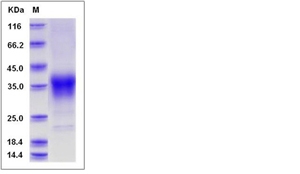
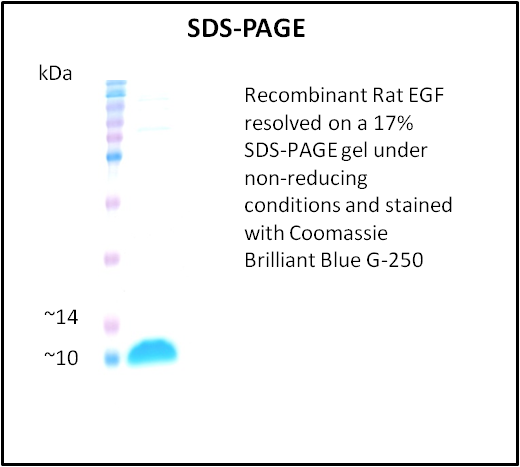
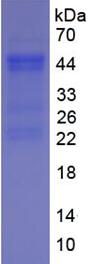
SDS-PAGE (Recombinant RPS6KA1/RSK1 protein gel 10% SDS-PAGE Coomassie staining MW: 84 kDa Purity: >= 90%)
Bioactivity (HTRF Assay for Recombinant PHKG2 activity. 1 uM STK S1 substrate was incubated with different concentrations of PHKG2 protein in 10 ul reaction system containing 1×Enzymatic Buffer, 10 mM MgCl2, 1 mM DTT and 100 uM ATP for 1 hour. The 10 ul detection reagents containing anti-STK antibody (1:2) and SA-XL665 (1:100) diluted with 1× Detection Buffer were added and incubated with the reactions for 30 min. All the operations and reactions were performed at room temperature. HTRF assay was used for detection.)
SDS-PAGE (Recombinant PHKG2 protein gel 10% SDS-PAGE gel with Coomassie blue staining MW: 47.7 kDa Purity: >70%)
Bioactivity (HTRF Assay for Recombinant BRD2 (BD1+BD2) activity. 3 uM histone peptide H4K5/8/12/16(ac4) was incubated with BRD2 (BD1+BD2) in reaction buffer including 50 mM HEPES-NaOH pH 7.0, 0.1% BSA for 1 hour at room temperature. Anti-His antibody was used to detect reaction products.)
Greater than 98.0% as determined by: (a) Analysis by reducing and non-reducing SDS-PAGE gel. (b) Gel-filtration chromatography under non denaturing conditions.
Rat super leptin antagonist (mutant D23/L39A/D40A/F41A)
Purity
The purity of super rat leptin antagonist is greater than 98.0% as determined by: (a) Gel filtration analysis. (b) Analysis by reducing and non-reducing SDS-PAGE gel.
What Are Active Proteins?
Proteins are large molecules made up of long chains of amino acids.
They will typically fold into a very particular 3-dimensional shape/conformation, that is sometimes referred to as their “native” form, which allows them to work properly in the body. For the purposes of product categorization, AAA Biotech will typically refer to proteins purified from their original animal host as being “native” proteins (this is to signify their difference compared to their “recombinant” or “synthetic” protein counterparts).
If a protein successfully folds into the correct shape, it is will typically display high fidelity characteristics to its original protein in its original animal host, and be classified as an active protein, as it will be able to function “normally” in most enzymatic or binding capacities. If it loses this shape, due to factors such as heat or strong chemicals (such as detergents), it becomes inactive and is no longer able to perform its basic functions. All of the proteins in this category are made under strict quality control, and they are active, pure, low in contaminants, and stable.
Most are stored as freeze-dried powders and come without extra tags, so they’re very close to the actual natural/native form.
Key Applications of Active Proteins
1. Scientific Research
Aid in the study of how proteins function in the body
Aid in understanding various disease processes
2. Drug Development
Powerful tools to investigate how potential drugs interact with specific proteins
Ideal for identifying drug targets
3. Cell Culture
Are routinely utilized to support cell growth and function (e.g., using exogenous growth factors)
Can be used to promote cellular development into specific types (differentiation)
4. Diagnostics
Regularly utilized in tests to detect diseases or infections (e.g., COVID-19, cancer)
Note: All products are strictly for research-use only (RUO).
5. Therapeutics
Some active proteins are used directly as treatments (e.g., insulin, enzymes)
Note: All products are strictly for research-use only (RUO).
6. Vaccine Development
Used to create or test vaccines by mimicking parts of viruses or bacteria
7. Biochemical Assays
They can facilitate the characterization of enzyme activity, binding strength, or protein interactions in lab tests
Why Buy Active Proteins from AAA Biotech?
High biological activity – Verified to perform as expected or indicated on datasheet
Strict quality control – We are confident in our active proteins’ reliability and consistency
High purity & low endotoxin – Ideal for applications involving sensitive or precious samples/components
Freeze-dried for stability – Long shelf life and straightforward storage
Mostly tag-free – Closer to natural/native protein form
FAQ
1. What are active proteins used for in research?
Active proteins are used primarily in the study of how proteins function, in characterizing/discovering drug interactions, supporting cell growth, running biochemical assays, and in development of diagnostics or therapeutics.
2. How are AAA Biotech's active proteins validated?
AAA Biotech’s active proteins are validated through strict quality control and functional assays to ensure they are properly folded and active. “Active”, though, can be an ambiguous term, so if a specific “activity” or “binding” capability of a protein is of crucial interest to you, please inquire with us prior to purchase, and we will provide further details on how the “Active” modifier was determined to be applicable.
3. Are these proteins tested for biological activity?
Yes, all active proteins from AAA Biotech are tested to confirm they have the expected biological activity before being offered for use. Though, said “biological activity” can be either “enzymatic”, “binding”, or both.
Submit a Question
Please complete the form below and a representative will contact you as soon as possible.
Request more Information
Please complete the form below and a representative will contact you as soon as possible.
Request a Manual
Please complete the form below and a representative will contact you as soon as possible.
Request a Quote
Please complete the form below and a representative will contact you as soon as possible.