AAA Biotech provides a variety of high-quality recombinant and natural/native proteins that are proven to work in a wide range of experiments. Explore our products to find the active protein that best fits your needs or experimental model.
Application Data (Binding and in vitro activity of murine 18V4F hybridoma antibody.Directly coated chemokines were used here for direct comparisons, however in other experiments CCL3 showed a significantly enhanced signal when biotinylated and coated on streptavidin plates.)
Application Data (Ccr1 ligands are induced after Candida infection and are chemotactic for kidney neutrophils ex vivo.)
Tyrosinase Activity (Formation of dopachrome-MBTH adduct monitoring at 484nm in a 96-well half area microwell plate with a range of enzyme loads. Maximum signal plateau was reached rapidly at 37 degree C, preventing an accurate time-dependent measurement.)
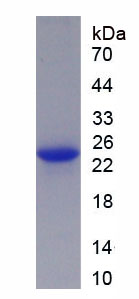
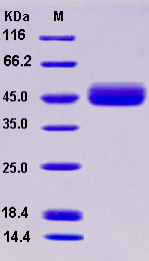
SDS-PAGE (Lane 1: MW Marker, Lane 2: 2 ug Tyrosinase.)
Application Data (Measured by its binding ability in a functional ELISA. Immobilized human APOH-his at 2 ug/mL (100 ul/well) can bind biotinylated mouse LDLR-his, The EC50 of biotinylated mouse LDLR-his is 26 ng/mL.)
Application Data (Measured by its binding ability in a functional ELISA. Immobilized human APOH-his at 2 ug/mL (100 ul/well) can bind biotinylated human LDLR-his, The EC50 of biotinylated human LDLR-his is 0.35 ug/mL.)
Application Data (Measured by its binding ability in a functional ELISA. Immobilized human TDGF1 at 2 ug/ml (100 ul/well) can bind human ALK-4 with a linear range of 0.032-4 ug/ml.)
Application Data (Measured by its ability to inhibit BMP9 induced alkaline phosphatase production by MC3T3E1 mouse chondrogenic cells. David, L. et al. (2007) Blood 109:1953. The ED50 for this effect is typically 50-200 ng/mL in the presence of 2 ng/mL of recombiant human BMP9.)
Application Data (Measured by its ability to neutralize Activin-mediated inhibition on MPC11 cell proliferation. The ED50 for this effect is typically 0.3-2 ug/mL in the presence of 10 ng/mL recombinant Activin A.)
Application Data (Measured by its ability to neutralize Activin-mediated inhibition on MPC11 cell proliferation. The ED50 for this effect is typically 0.2-1 ug/mL in the presence of 10 ng/mL recombinant Activin A.)
Application Data (Measured by its binding ability in a functional ELISA. Immobilized Mouse Angiopoietin-2-His at 2 ug/ml (100 ul/well) can bind mouse TEK-Fc, the EC50 of mouse TEK-Fc is 350-900 ng/mL.)
Application Data (Measured by its ability to neutralize Activin-mediated inhibition on MPC11 cell proliferation. The ED50 for this effect is typically 0.6-3 ug/mL in the presence of 10 ng/ml Recombinant Human Activin A.)
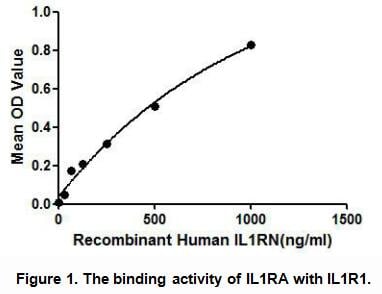
Bioactivity (Activating transcription factor 3 (ATF3) is a stress-induced transcription factor that plays vital roles in modulating metabolism, immunity and oncogenesis. ATF3 acts as a hub of the cellular adaptive-response network. Multiple extracellular signals, such as endoplasmic reticulum (ER) stress, cytokines, chemokines, and LPS, are connected to ATF3 induction. Proto-oncogene c-Fos can bind to ATF3 to regulate signal transduction, cell proliferation and differentiation. Thus a functional ELISA assay was conducted to detect the interaction of recombinant mouse ATF3 and recombinant human FOS. Briefly, ATF3 was diluted serially in PBS with 0.01% BSA (pH 7.4). Duplicate samples of 100 ul were then transferred to FOS-coated microtiter wells and incubated for 1h at 37 degree C. Wells were washed with PBST and incubated for 1h with anti-ATF3 pAb, then aspirated and washed 3 times. After incubation with HRP labelled secondary antibody for 1h at 37 degree C, wells were aspirated and washed 5 times. With the addition of substrate solution, wells were incubated 15-25 minutes at 37 degree C. Finally, add 50 uL stop solution to the wells and read at 450/630nm immediately. The binding activity of recombinant mouse ATF3 and recombinant human FOS was shown in Figure 1, the EC50 for this effect is 0.13 ug/mL.)
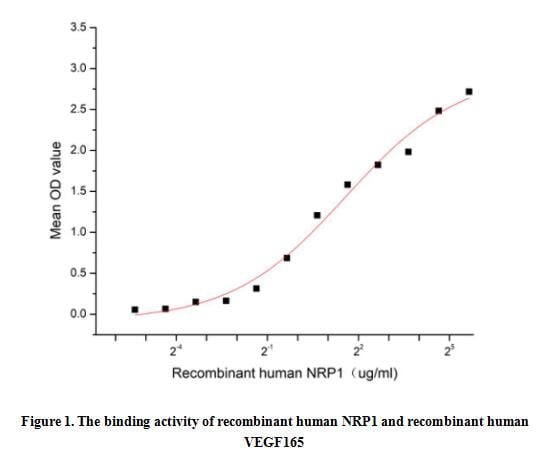
Bioactivity (The Semaphorin 3A(SEMA3A) which belongs to the semaphorin family can function as either a chemorepulsive agent, inhibiting axonal outgrowth, or as a chemoattractive agent, stimulating the growth of apical dendrites. In both cases, the protein is vital for normal neuronal pattern development. Semaphorin 3A is secreted protein containing a Sema domain, an immunoglobulin C2-like domain and a basic domain near the carboxyl tail. It can be secreted by neurons and surrounding tissue to guide migrating cells and axons in the developing nervous system. Besides, Neuropilin 1 (NRP1) has been identified as an interactor of SEMA3A, thus a functional binding ELISA assay was conducted to detect the interaction of recombinant rat SEMA3A and recombinant human NRP1. Briefly, SEMA3A were diluted serially in PBS, with 0.01% BSA (pH 7.4). Duplicate samples of 100 ul were then transferred to NRP1-coated microtiter wells and incubated for 2h at 37 degree C. Wells were washed with PBST and incubated for 1h with anti-SEMA3A pAb, then aspirated and washed 3 times. After incubation with HRP labelled secondary antibody, wells were aspirated and washed 3 times. With the addition of substrate solution, wells were incubated 15-25 minutes at 37 degree C. Finally, add 50 ul stop solution to the wells and read at 450 nm immediately. The binding activity of recombinant rat SEMA3A and recombinant human NRP1 was shown in Figure 1, the EC50 for this effect is 1.22 ug/mL.)
Bioactivity (Apolipoprotein C1 (APOC1), also known as Apo-CI; ApoC-I; apo-CIB; apoC-IB, is the smallest size apolipoprotein of all apolipoprotein C family (Mr = 6.6 kDa) and located at position 19q13.32. APOC1 is primarily expressed in the liver and activated when monocytes differentiate into macrophages. It plays important roles in the innate immune response as effector of glucocorticoid-mediated responses and regulator of the inflammatory process. It has anti-inflammatory activity and also can promote the differentiation of T-cells into Th1 cells and negatively regulates differentiation into Th2 cells. Besides, Apolipoprotein C3 (APOC3) has been identified as an interactor of APOC1, thus a functional binding ELISA assay was conducted to detect the interaction of recombinant human APOC1 and recombinant mouse APOC3. Briefly, APOC1 was diluted serially in PBS with 0.01% BSA (pH 7.4). Duplicate samples of 100 ul were then transferred to APOC3-coated microtiter wells and incubated for 1h at 37 degree C. Wells were washed with PBST and incubated for 1h with anti-APOC1 pAb, then aspirated and washed 3 times. After incubation with HRP labelled secondary antibody for 1h at 37 degree C, wells were aspirated and washed 5 times. With the addition of substrate solution, wells were incubated 15-25 minutes at 37 degree C. Finally, add 50 uL stop solution to the wells and read at 450/630 nm immediately. The binding activity of recombinant human APOC1 and recombinant mouse APOC3 was shown in Figure 1, the EC50 for this effect is 2.19 ug/mL.)
Bioactivity (Figure 2. Cell proliferation of M-NFS-60 cells after stimulated with G-CSF.)
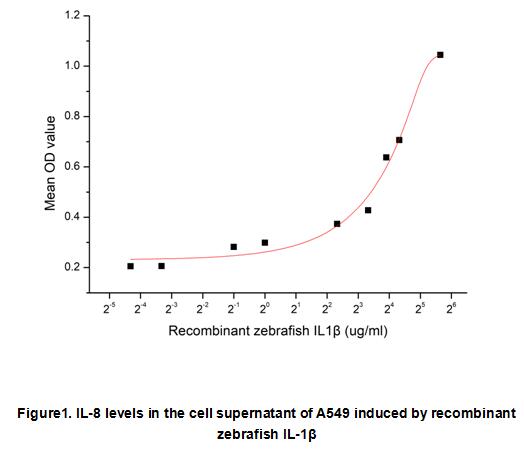
Bioactivity (G-CSF is a pleiotropic cytokine best known for its specific effects on the proliferation, differentiation, and activation of hematopoietic cells of the neutrophilic granulocyte lineage. It is produced mainly by monocytes and macrophages upon activation by endotoxin, TNF-alpha and IFN-gamma. In addition, various carcinoma cell lines and myeloblastic leukemia cells can express G-CSF constitutively. In vitro, G-CSF stimulates growth, differentiation and functions of cells from the neutrophil lineage. Consistent with its in vitro functions, G-CSF has been found to play important roles in defense against infection, in inflammation and repair, and in the maintenance of steady state hematopoiesis. The activity of G-CSF is usually measured by a cell proliferation assay using M-NFS60 mouse myelogenous leukemia lymphoblast cells. M-NFS60 cells were seeded into triplicate wells of 96-well plates at a density of 8,000 cells/well with 2% serum standard 1640 which contains various concentrations of recombinant pig G-CSF. After incubated for 4 days, cells were observed by inverted microscope and cell proliferation was measured by Cell Counting Kit-8 (CCK-8). Briefly, 10 ul of CCK-8 solution was added to each well of the plate, then the absorbance at 450 nm was measured using a microplate reader after incubating the plate for 2-4 hours at 37 degree C. Proliferation of M-NFS-60 cells after incubation with G-CSF for 4 days observed by inverted microscope was shown in Figure 1. Cell viability was assessed by CCK-8 (Cell Counting Kit-8) assay after incubation with recombinant pig G-CSF for 4 days. The result was shown in Figure 2. It was obvious that G-CSF significantly increased cell viability of M-NFS-60 cells. The EC50 is 1 ug/ml)
Bioactivity (Catalase (CAT) is an antioxidant enzyme present in all aerobic organisms. It is known to catalyze H2O2 into water and oxygen in an energy-efficient manner in the cells exposed to environmental stress. As we know, H2O2 and (NH4)2MoO4 can produce a stable y)
Bioactivity (Fibroblast growth factor 17(FGF17) is a member of the fibroblast growth factorfamily. FGF family members possess broad mitogenicand cell survival activities and are involved in a varietyof biological processes, including embryonicdevelopment cell growth,)
Bioactivity (Fibroblast growth factor 15 is a protein in mouse encoded by the Fgf15 gene. It is a member of the fibroblast growth factor (FGF) family but, like FGF19, FGF21 and FGF23, has endocrine functions. FGF15 subsequently acts on a cell surface receptor complex)
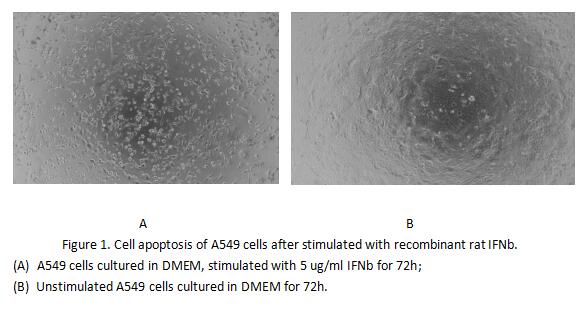
Application Data (Transforming growth factor beta (TGF-) is a multifunctional cytokine belonging to the transforming growth factor superfamily. The TGF- superfamily includes endogenous growth inhibiting proteins; an increase in expression of TGF- often correlates with the malignancy of many cancers and a defect in the cellular growth inhibition response to TGF-. Its immunosuppressive functions then come to dominate, contributing to oncogenesis. To test the effect of TGF- on inhibit HGF-dependent proliferation, HepG2 cells were seeded into triplicate wells of 96-well plates at a density of 2,000 cells/well and allowed to attach, replaced with serum-free overnight, then the medium was replaced with 2% serum standard DMEM including 1ng/mL HGF prior to the addition of various concentrations of recombinant human TGF-. After incubated for 96h, cells were observed by inverted microscope and cell proliferation was measured by Cell Counting Kit-8 (CCK-8). Briefly, 10uL of CCK-8 solution was added to each well of the plate, then the absorbance at 450nm was measured using a microplate reader after incubating the plate for 1-4 hours at 37. The inhibitory effect of TGF- on HGF-dependent proliferation of HepG2 cells observed by inverted microscope was shown in Figure 2. Cell viability was assessed by CCK-8 assay after incubation with recombinant TGF- for 96h. The result was shown in Figure 3. It was obvious that TGF- significantly decreased cell viability of HepG2 cells. (A) HepG2 cells cultured in DMEM, stimulated with 1ug/mL TGF- for 96h; (B) Unstimulated HepG2 cells cultured in DMEM for 96h.Figure.The inhibitory effect of TGF- on cell proliferation of HepG2 cells.)
Bioactivity (HTRF assay for Recombinant MRCKb/CDC42BPB (1-473) protein activity 1 uM STK S3 substrate was incubated with different concentrations of MRCKb/CDC42BPB (1-473) protein in a 10 ul reaction system containing 5 mM MgCl2, 1 mM DTT and 100 uM ATP for 1 hour. Then 10 ul detection reagents containing anti-STK antibody (1:2) GST and SA-XL665 mixture (each 1:100 diluted with 1X Detection Buffer were added and incubated with the reactions for 30 min. All the operations and reactions were performed at room temperature. HTRF assay was used for detection.)
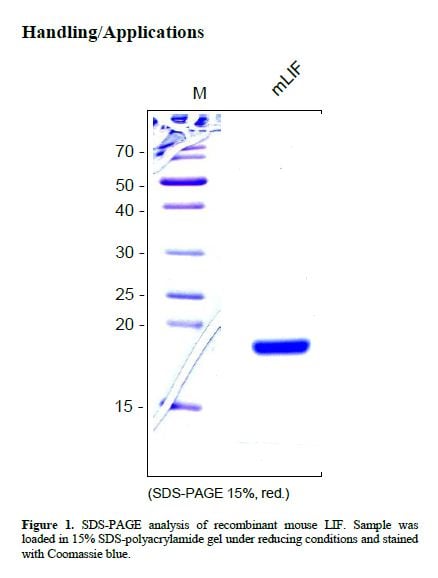
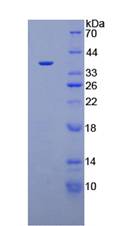
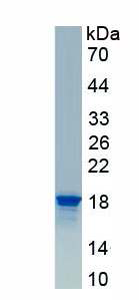
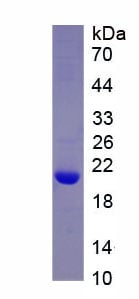
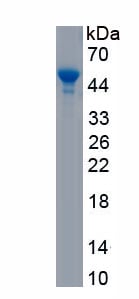
SDS-PAGE (Recombinant MRCKb/CDC42BPB(1-473), protein gel 10% SDS-PAGE Coomassie staining MW: 55.9 kDa Purity: >95%)
Bioactivity (HTRF assay for RPS6KB1 activity 1 uM STK S3 substrate was incubated with different concentrations of RPS6KB1 protein in a 10 ul reaction system containing 1×Enzymatic Buffer, 2 mM MgCl2, 1 mM DTT, and 100 uM ATP for 1 hour. The 10 ul detection reagents containing anti-STK antibody (1:2) and SA-XL665 (1:100) diluted with 1× Detection Buffer were added and incubated with the reactions for 30 min. All the operations and reactions were performed at room temperature. HTRF assay was used for detection.)
Bioactivity (ADP-Glo assay for SMARCA (636-1131) activity (Data from ICEB Bioscience Inc.) 100 uM ATP and 10 nM DNA was incubated with different concentrations of SMARCA2 (636-1131) protein in a 10 ul reaction system containing 20 mM HEPES pH 7.5,10 mM MgCl2, 50 mM NaCl, 0.1%Tween-20, 1 mM DTT for 1 hour, 10 ul ADP-Glo Reagent was added to the products and incubated for 1 hour.Then 20 ul Kinase Detection Reagent incubated for 1 hour. All the operations and reactions were performed at RT. Luminescence measurement is collected by BMG.)
Bioactivity (HTRF for MRCKa/CDC42BPA (1-473) activity 1 uM STK S3 substrate was incubated with different concentrations of MRCKa/CDC42BPA (1-473) protein in 10 ul reaction system containing 1×Enzymatic Buffer, 5 mM MgCl2, 1 mM DTT and 100 uM ATP for 1 hour. Then 10 ul detection reagents containing anti-STK antibody (1:2) and SA-XL665 (1:100) diluted with 1× Detection Buffer were added and incubated with the reactions for 30 min. All the operations and reactions were performed at room temperature. HTRF assay was used for detection.)
Greater than 97.0% as determined by SDS-PAGE and HPLC analyses.
Pricing
What Are Active Proteins?
Proteins are large molecules made up of long chains of amino acids.
They will typically fold into a very particular 3-dimensional shape/conformation, that is sometimes referred to as their “native” form, which allows them to work properly in the body. For the purposes of product categorization, AAA Biotech will typically refer to proteins purified from their original animal host as being “native” proteins (this is to signify their difference compared to their “recombinant” or “synthetic” protein counterparts).
If a protein successfully folds into the correct shape, it is will typically display high fidelity characteristics to its original protein in its original animal host, and be classified as an active protein, as it will be able to function “normally” in most enzymatic or binding capacities. If it loses this shape, due to factors such as heat or strong chemicals (such as detergents), it becomes inactive and is no longer able to perform its basic functions. All of the proteins in this category are made under strict quality control, and they are active, pure, low in contaminants, and stable.
Most are stored as freeze-dried powders and come without extra tags, so they’re very close to the actual natural/native form.
Key Applications of Active Proteins
1. Scientific Research
Aid in the study of how proteins function in the body
Aid in understanding various disease processes
2. Drug Development
Powerful tools to investigate how potential drugs interact with specific proteins
Ideal for identifying drug targets
3. Cell Culture
Are routinely utilized to support cell growth and function (e.g., using exogenous growth factors)
Can be used to promote cellular development into specific types (differentiation)
4. Diagnostics
Regularly utilized in tests to detect diseases or infections (e.g., COVID-19, cancer)
Note: All products are strictly for research-use only (RUO).
5. Therapeutics
Some active proteins are used directly as treatments (e.g., insulin, enzymes)
Note: All products are strictly for research-use only (RUO).
6. Vaccine Development
Used to create or test vaccines by mimicking parts of viruses or bacteria
7. Biochemical Assays
They can facilitate the characterization of enzyme activity, binding strength, or protein interactions in lab tests
Why Buy Active Proteins from AAA Biotech?
High biological activity – Verified to perform as expected or indicated on datasheet
Strict quality control – We are confident in our active proteins’ reliability and consistency
High purity & low endotoxin – Ideal for applications involving sensitive or precious samples/components
Freeze-dried for stability – Long shelf life and straightforward storage
Mostly tag-free – Closer to natural/native protein form
FAQ
1. What are active proteins used for in research?
Active proteins are used primarily in the study of how proteins function, in characterizing/discovering drug interactions, supporting cell growth, running biochemical assays, and in development of diagnostics or therapeutics.
2. How are AAA Biotech's active proteins validated?
AAA Biotech’s active proteins are validated through strict quality control and functional assays to ensure they are properly folded and active. “Active”, though, can be an ambiguous term, so if a specific “activity” or “binding” capability of a protein is of crucial interest to you, please inquire with us prior to purchase, and we will provide further details on how the “Active” modifier was determined to be applicable.
3. Are these proteins tested for biological activity?
Yes, all active proteins from AAA Biotech are tested to confirm they have the expected biological activity before being offered for use. Though, said “biological activity” can be either “enzymatic”, “binding”, or both.
Submit a Question
Please complete the form below and a representative will contact you as soon as possible.
Request more Information
Please complete the form below and a representative will contact you as soon as possible.
Request a Manual
Please complete the form below and a representative will contact you as soon as possible.
Request a Quote
Please complete the form below and a representative will contact you as soon as possible.