AAA Biotech provides a variety of high-quality recombinant and natural/native proteins that are proven to work in a wide range of experiments. Explore our products to find the active protein that best fits your needs or experimental model.
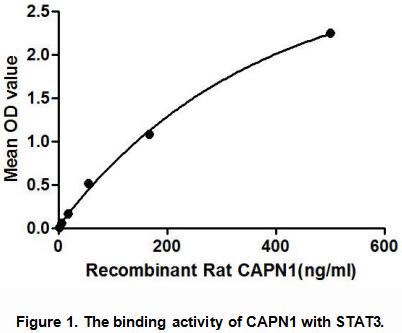
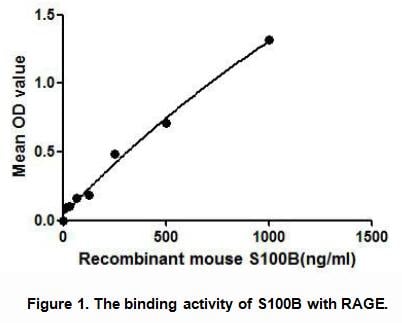
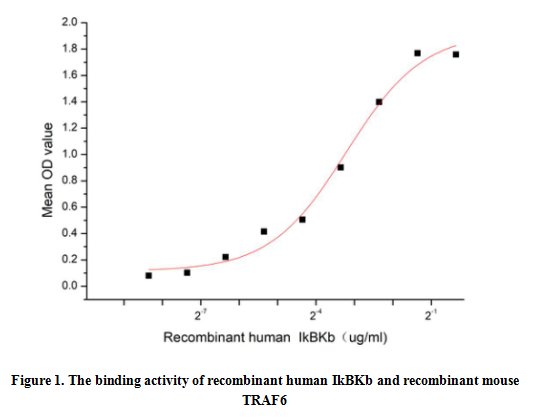
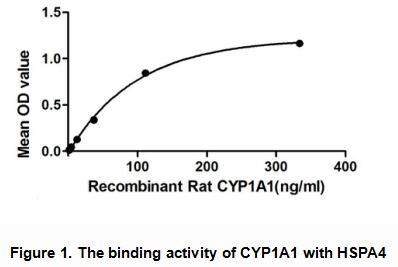
Bioactivity (Figure. The binding activity of TGF-1 with LTBP1.Transforming growth factor beta 1 or TGF-1 is a polypeptide member of the transforming growth factor beta superfamily of cytokines. It is a secreted protein that performs many cellular functions, including the control of cell growth, cell proliferation, cell differentiation and apoptosis. TGF-1 plays an important role in controlling the immune system, and shows different activities on different types of cell, or cells at different developmental stages. Besides, Latent Transforming Growth Factor Beta Binding Protein 1 (LTBP1) has been identified as an interactor of TGF-1, thus a binding ELISA assay was conducted to detect the interaction of recombinant pig TGF-1 and recombinant pig LTBP1. Briefly, TGF-1 were diluted serially in PBS, with 0.01% BSA (pH 7.4). Duplicate samples of 100L were then transferred to LTBP1-coated microtiter wells and incubated for 2h at 37. Wells were washed with PBST and incubated for 1h with anti-TGF-1 pAb, then aspirated and washed 3 times. After incubation with HRP labelled secondary antibody, wells were aspirated and washed 3 times. With the addition of substrate solution, wells were incubated 15-25 minutes at 37. Finally, add 50uL stop solution to the wells and read at 450nm immediately. The binding activity of TGF-1 and LTBP1 was shown in Figure 1, and this effect was in a dose dependent manner.)
Bioactivity (Tissue Inhibitors Of Metalloproteinase 4 (TIMP4) is an enzyme that in humans is encoded by the TIMP4 gene. This gene belongs to the tissue inhibitor of metalloproteinases gene family. The proteins encoded by this gene family are inhibitors of the matrix metalloproteinases, a group of peptidases involved in degradation of the extracellular matrix. The secreted, netrin domain-containing protein encoded by this gene is involved in regulation of platelet aggregation and recruitment and may play role in hormonal regulation and endometrial tissue remodeling. Besides, Matrix Metalloproteinase 2 (MMP2) has been identified as an interactor of TIMP4, thus a binding ELISA assay was conducted to detect the interaction of recombinant human TIMP4 and recombinant human MMP2. Briefly, TIMP4 were diluted serially in PBS, with 0.01% BSA (pH 7.4). Duplicate samples of 100L were then transferred to MMP2-coated microtiter wells and incubated for 2h at 37. Wells were washed with PBST and incubated for 1h with anti-TIMP4 pAb, then aspirated and washed 3 times. After incubation with HRP labelled secondary antibody, wells were aspirated and washed 3 times. With the addition of substrate solution, wells were incubated 15-25 minutes at 37. Finally, add 50uL stop solution to the wells and read at 450nm immediately. The binding activity of TIMP4 and MMP2 was shown in Figure 1, and this effect was in a dose dependent manner.)
Bioactivity (Figure. The binding activity of FGF19 with FGFR1.Fibroblast Growth Factor 19 (FGF19) is a member of the fibroblast growth factor (FGF) family. FGF19 has important roles as a hormone produced in the ileum in response to bile acid absorption, regulates new bile acid synthesis, acting through the FGFR4/Klotho- receptor complexes in the liver to inhibit CYP7A1. FGF19 also has metabolic effects, affecting glucose and lipid metabolism. Besides, Fibroblast Growth Factor Receptor 1 (FGFR1) has been identified as an interactor of FGF19, thus a binding ELISA assay was conducted to detect the interaction of recombinant human FGF19 and recombinant human FGFR1. Briefly, FGF19 were diluted serially in PBS, with 0.01% BSA (pH 7.4). Duplicate samples of 100uL were then transferred to FGFR1-coated microtiter wells and incubated for 2h at 37. Wells were washed with PBST and incubated for 1h with anti-FGF19 pAb, then aspirated and washed 3 times. After incubation with HRP labelled secondary antibody, wells were aspirated and washed 3 times. With the addition of substrate solution, wells were incubated 15-25 minutes at 37. Finally, add 50uL stop solution to the wells and read at 450nm immediately. The binding activity of FGF19 and FGFR1 was shown in Figure 1, and this effect was in a dose dependent manner.)
Bioactivity (Figure. The binding activity of PTEN with TP53.Phosphatase and tensin homolog (PTEN) is a protein is widely expressed throughout the body. PTEN protein acts as a phosphatase to dephosphorylate phosphatidylinositol (3,4,5)-trisphosphate (PtdIns (3,4,5)P3 or PIP3). PTEN specifically catalyses the dephosphorylation of the 3’ phosphate of the inositol ring in PIP3, resulting in the biphosphate product PIP2 (PtdIns (4,5) P2). PTEN also has weak protein phosphatase activity, but this activity is also crucial for its role as a tumor suppressor. PTENs protein phosphatase activity may be involved in the regulation of the cell cycle, preventing cells from growing and dividing too rapidly. Besides, Tumor Protein p53 (TP53) has been identified as an interactor of PTEN, thus a binding ELISA assay was conducted to detect the interaction of recombinant human PTEN and recombinant human TP53. Briefly, PTEN were diluted serially in PBS, with 0.01% BSA (pH 7.4). Duplicate samples of 100L were then transferred to TP53-coated microtiter wells and incubated for 2h at 37. Wells were washed with PBST and incubated for 1h with anti-PTEN pAb, then aspirated and washed 3 times. After incubation with HRP labelled secondary antibody, wells were aspirated and washed 3 times. With the addition of substrate solution, wells were incubated 15-25 minutes at 37. Finally, add 50uL stop solution to the wells and read at 450nm immediately. The binding activity of PTEN and TP53 was shown in Figure 1, and this effect was in a dose dependent manner.)
Bioactivity (Figure. The binding activity of PRKG2 with HSP90aA1.Protein Kinase, cGMP Dependent Type II (PRKG2) belong to cGMP-dependent protein kinase or Protein Kinase G (PKG) which is a serine/threonine-specific protein kinase that is activated by cGMP. Two PKG genes, coding for PKG type I (PKG-I) and type II (PKG-II), have been identified in mammals. The PKG-I and PKG-II are homodimers of two identical subunits (~75kDa and ~85kDa, respectively) and share common structural features. PKG phosphorylates a number of biologically important targets and is implicated in the regulation of smooth muscle relaxation, platelet function, sperm metabolism, cell division, and nucleic acid synthesis. Besides, Heat Shock Protein 90kDa Alpha A1 (HSP90aA1) has been identified as an interactor of PRKG2, thus a binding ELISA assay was conducted to detect the interaction of recombinant human PRKG2 and recombinant human HSP90aA1. Briefly, PRKG2 were diluted serially in PBS, with 0.01% BSA (pH 7.4). Duplicate samples of 100uL were then transferred to HSP90aA1-coated microtiter wells and incubated for 2h at 37. Wells were washed with PBST and incubated for 1h with anti-PRKG2 pAb, then aspirated and washed 3 times. After incubation with HRP labelled secondary antibody, wells were aspirated and washed 3 times. With the addition of substrate solution, wells were incubated 15-25 minutes at 37. Finally, add 50uL stop solution to the wells and read at 450nm immediately. The binding activity of PRKG2 and HSP90aA1 was shown in Figure 1, and this effect was in a dose dependent manner.)
Bioactivity (Fibronectin (FN) is a high-molecular weight (~440kDa) glycoprotein of the extracellular matrix that binds to membrane-spanning receptor proteins called integrins. Fibronectins bind cell surfaces and various compounds including collagen, fibrin, heparin, DNA, and actin. Fibronectin has numerous functions. For example, it involved in cell adhesion, cell motility, opsonization, wound healing, maintenance of cell shape, and so on. Besides, Decorin (DCN) has been identified as an interactor of FN, thus a binding ELISA assay was conducted to detect the interaction of recombinant mouse FN and recombinant mouse DCN. Briefly, FN were diluted serially in PBS, with 0.01% BSA (pH 7.4). Duplicate samples of 100L were then transferred to DCN-coated microtiter wells and incubated for 2h at 37. Wells were washed with PBST and incubated for 1h with anti-FN pAb, then aspirated and washed 3 times. After incubation with HRP labelled secondary antibody, wells were aspirated and washed 3 times. With the addition of substrate solution, wells were incubated 15-25 minutes at 37. Finally, add 50uL stop solution to the wells and read at 450nm immediately. The binding activity of FN and DCN was shown in Figure 1, and this effect was in a dose dependent manner.Figure. The binding activity of FN with DCN.)
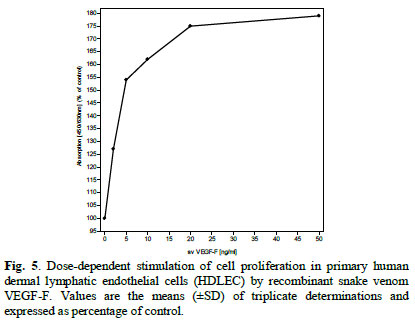
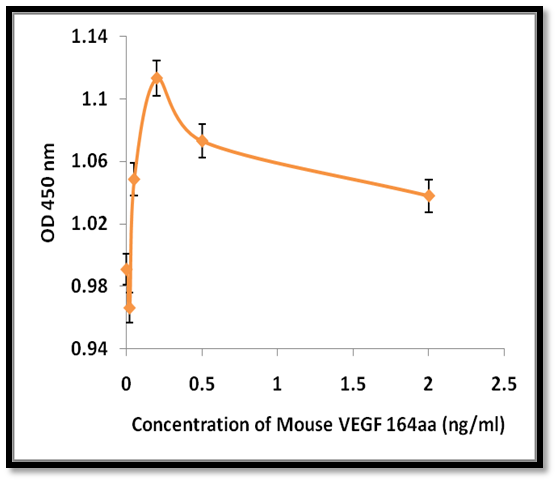
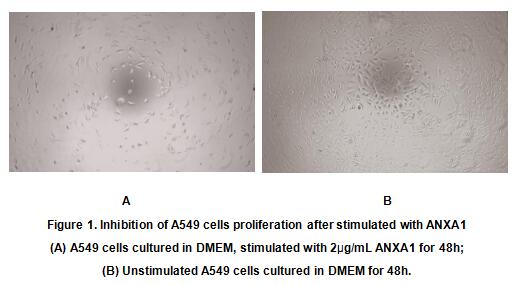
Activity (Vascular endothelial growth factor A (VEGF-A), a glycosylated mitogen, is known to be a vascular permeability factor and an endothelial cell growth factor secreted by the smooth muscle and endothelial cells. It has been reported that VEGF-A induces vascular permeability and growth, promotes monocyte/macrophage migration, and inhibits cell apoptosis and so on. To test the effect of VEGF-A on cell proliferation of ECV304 endothelium cell line, cells were seeded into triplicate wells of 96-well plates at a density of 2,000 cells/well and allowed to attach overnight, then the medium was replaced with serum-free standard DMEM prior to the addition of various concentrations of VEGFA. After incubated for 72h, cells were observed by inverted microscope and cell proliferation was measured by Cell Counting Kit-8 (CCK-8). Briefly, 10uL of CCK-8 solution was added to each well of the plate, then measure the absorbance at 450nm using a microplate reader after incubating the plate for 1-4 hours at 37oC .Cell proliferation of ECV304 cells after incubation with VEGFA for 72h observed by inverted microscope was shown in Figure 1.)
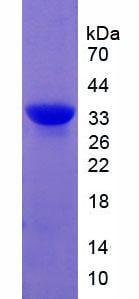
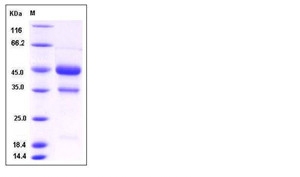
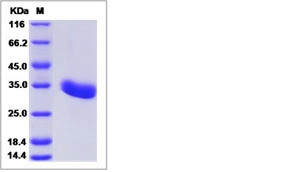
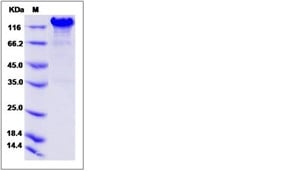
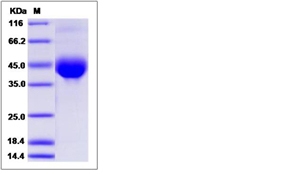
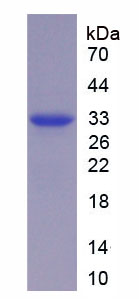
Purity Data (The purity of CD147 (22-205) was determined to be >90% by densitometry. Approx. MW 30-36 kDa.)
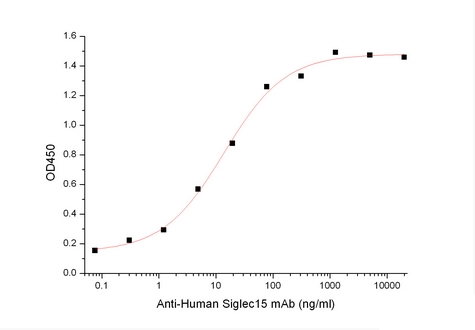
Specific Activity (Binding ability measured in a functional ELISA. CD147 (22-205) protein (His tag) can bind to immobilized 2019-nCoV spike protein RBD (Fc-tag) .)
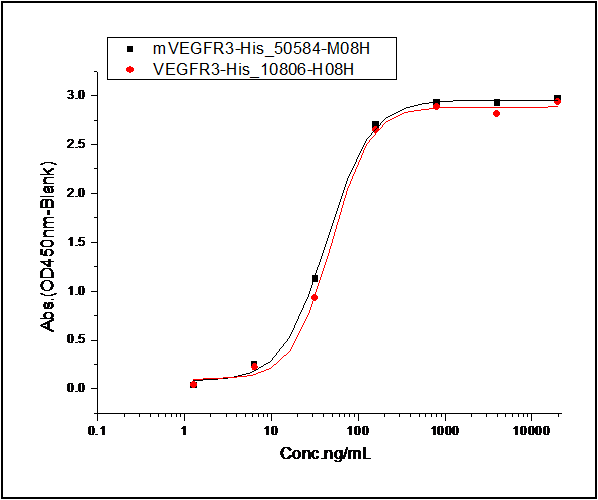
ELISA (SARS COV2 RBD B.1.1.529/omicron ACE functional binding ELISA assay. COV2 RBD (coating at 0.1ug-well) binding with Human ACE2-Fc .The linear range was found to be 100 ng/ml)
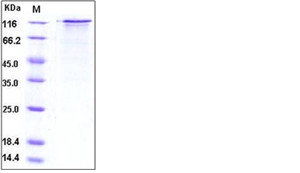
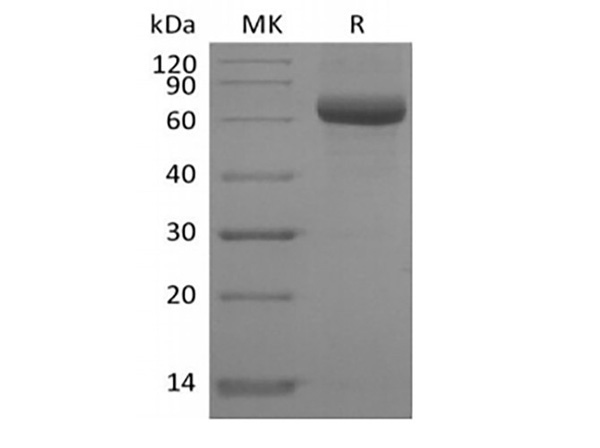
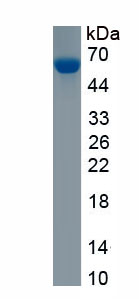
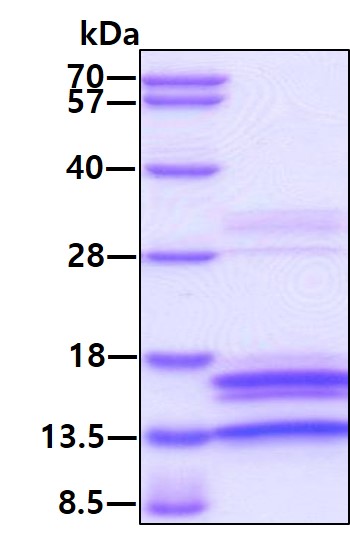
SDS-PAGE (RBD variant B.1.1.529 omicron protein PAGE. 1ug loaded Tris-Bis PAGE under reducing condition. The purity is greater than 90%.)
Application Data (TGF-? is a negative regulator of NK cell generation CD11cdnR and wild-type mice were injected (i.p.)Four days later, mice were sacrificed and HSC-enriched bone marrow cells were cultured in the presence of IL-7, SCF, and Flt3L.)
Application Data (IL-7 mediated growth and survival is dose dependent in vitro.CD8 T cells were enriched from C57Bl6/J donors and cultured with a range of IL-7 concentrations.)
Application Data (T cells co-express CD200 and CD200R following TCR activation.C. Naïve LN cells were stimulated with anti-CD3 (1 ug/ml) + anti-CD28 (2 ug/ml) either transiently on Ab-coated wells for the first 2d then removed to fresh media (blue lines) or chronically with Ab-coated aAPC present throughout the culture (red lines) in Th1 (top row), Th2 (middle row) or non-polarising (IL-7, bottom row) conditions.)
SDS-PAGE (Coomassie-stained SDS-PAGE showing a timecourse of α1-antitrypsin (3ug) cleavage after incubation at 37°C with or without MMP-11 catalytic domain. Lanes are as follows: 1. Marker; 2. 1.5 ug α1-antitrypsin (0 hours); 3. 50 ng MMP-11, (0 hours); 4. 1 ug MMP-11, (0 hours); 5. 1.5 ug α1-antitrypsin incubated with 50 ng MMP-11 (0 hours); 6. 1.5 ug α1-antitrypsin incubated with 50 ng MMP-11 (3 hours); 7. 1.5 ug α1-antitrypsin incubated with 50 ng MMP-11 (8 hours); 8. 1.5 ug α1-antitrypsin incubated with 50 ng MMP-11 (24 hours); 9. 1.5 ug α1-antitrypsin incubated with 1 ug MMP-11 (0 hours); 10. 1.5 yg α1-antitrypsin incubated with 1 ug MMP-11 (24 hours); 11. 1.5 ug α1-antitrypsin (24 hours); 12. Marker.)
SDS-PAGE (SDS-PAGE analysis: Lane 1: MW marker, Lane 2: 1ug TRAIL (soluble) (human), (recombinant) (His-tag) (Prod. No. BML-SE721).)
WB (Western Blot) (Western Blot Analysis: Lane 1: MW marker, Lane 2: 50 ng of TRAIL (soluble) (human), (recombinant) (His-tag) probed with Anti-6X His tag® antibody.)
Application Data (Inhibition of FGF10-induced proliferation of 4MBr-5 cells by recombinant human soluble FGFR-2(IIIb)/Fc. sFGFR-2(IIIc)/Fc which do not bind FGF10 show no effect.)
Application Data (Functional ELISA with recombinant human sFGFR-2(IIIb)/Fc Chimera. Recombinant human FGF-10 was coated at 2ug/ml and sFGFR2(IIIb)/Fc and sFGFR2(IIIc)/Fc were added [1ug/ml each]. FGF-10 binds only to FGFR2(IIIb) and not to FGFR2(IIIc).)
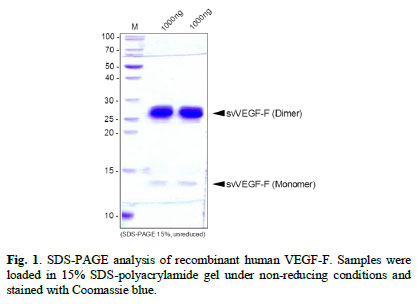
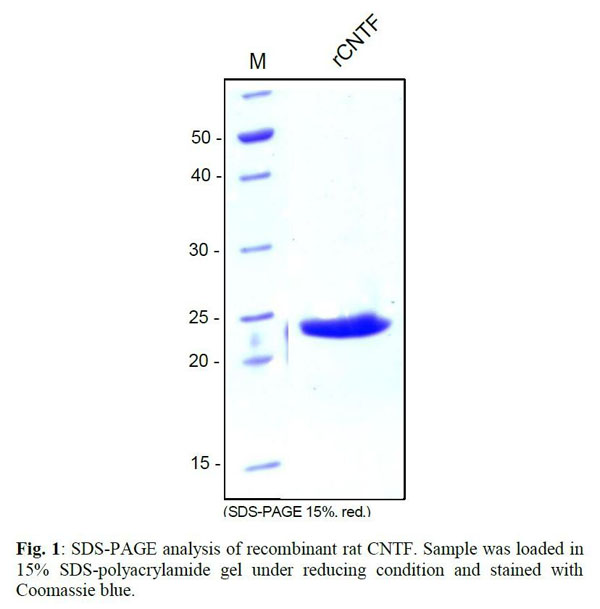
SDS-PAGE (SDS-PAGE analysis of recombinant human soluble FGFR-2(IIIb)/Fc produced in insect cells. Sample was loaded in 10% SDS-polyacrylamide gel under reducing condition and stained with Coomassie blue.)
Proteins are large molecules made up of long chains of amino acids.
They will typically fold into a very particular 3-dimensional shape/conformation, that is sometimes referred to as their “native” form, which allows them to work properly in the body. For the purposes of product categorization, AAA Biotech will typically refer to proteins purified from their original animal host as being “native” proteins (this is to signify their difference compared to their “recombinant” or “synthetic” protein counterparts).
If a protein successfully folds into the correct shape, it is will typically display high fidelity characteristics to its original protein in its original animal host, and be classified as an active protein, as it will be able to function “normally” in most enzymatic or binding capacities. If it loses this shape, due to factors such as heat or strong chemicals (such as detergents), it becomes inactive and is no longer able to perform its basic functions. All of the proteins in this category are made under strict quality control, and they are active, pure, low in contaminants, and stable.
Most are stored as freeze-dried powders and come without extra tags, so they’re very close to the actual natural/native form.
Key Applications of Active Proteins
1. Scientific Research
Aid in the study of how proteins function in the body
Aid in understanding various disease processes
2. Drug Development
Powerful tools to investigate how potential drugs interact with specific proteins
Ideal for identifying drug targets
3. Cell Culture
Are routinely utilized to support cell growth and function (e.g., using exogenous growth factors)
Can be used to promote cellular development into specific types (differentiation)
4. Diagnostics
Regularly utilized in tests to detect diseases or infections (e.g., COVID-19, cancer)
Note: All products are strictly for research-use only (RUO).
5. Therapeutics
Some active proteins are used directly as treatments (e.g., insulin, enzymes)
Note: All products are strictly for research-use only (RUO).
6. Vaccine Development
Used to create or test vaccines by mimicking parts of viruses or bacteria
7. Biochemical Assays
They can facilitate the characterization of enzyme activity, binding strength, or protein interactions in lab tests
Why Buy Active Proteins from AAA Biotech?
High biological activity – Verified to perform as expected or indicated on datasheet
Strict quality control – We are confident in our active proteins’ reliability and consistency
High purity & low endotoxin – Ideal for applications involving sensitive or precious samples/components
Freeze-dried for stability – Long shelf life and straightforward storage
Mostly tag-free – Closer to natural/native protein form
FAQ
1. What are active proteins used for in research?
Active proteins are used primarily in the study of how proteins function, in characterizing/discovering drug interactions, supporting cell growth, running biochemical assays, and in development of diagnostics or therapeutics.
2. How are AAA Biotech's active proteins validated?
AAA Biotech’s active proteins are validated through strict quality control and functional assays to ensure they are properly folded and active. “Active”, though, can be an ambiguous term, so if a specific “activity” or “binding” capability of a protein is of crucial interest to you, please inquire with us prior to purchase, and we will provide further details on how the “Active” modifier was determined to be applicable.
3. Are these proteins tested for biological activity?
Yes, all active proteins from AAA Biotech are tested to confirm they have the expected biological activity before being offered for use. Though, said “biological activity” can be either “enzymatic”, “binding”, or both.
Submit a Question
Please complete the form below and a representative will contact you as soon as possible.
Request more Information
Please complete the form below and a representative will contact you as soon as possible.
Request a Manual
Please complete the form below and a representative will contact you as soon as possible.
Request a Quote
Please complete the form below and a representative will contact you as soon as possible.