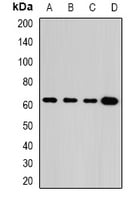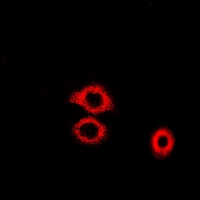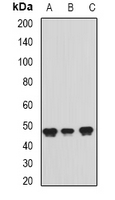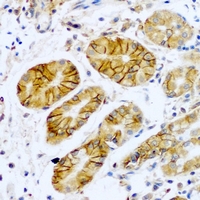
At AAA Biotech, we provide a broad range of purified polyclonal antibodies (pAbs) that are able to all be browsed online through our website. Due to their high specificity and strong binding affinity, these antibodies are ideal for wide swathes of research and experimental applications.
Our polyclonal antibodies can easily support your work, whether you use them for Western Blotting, Immunocytochemistry (with or without Immunofluorescence used in conjunction), Immunohistochemistry, Immunoprecipitation, and ELISA tests. We highly encourage you to browse our range of pAbs and choose the one that best suits your experimental model.
WB (Western Blot) (Western blot analysis of Mouse brain lysate, using STXBP1 Antibody. The lane on the left is treated with the antigen-specific peptide.)
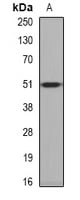
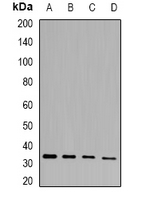
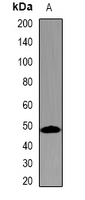
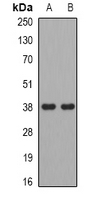
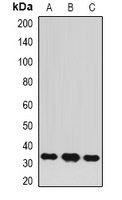
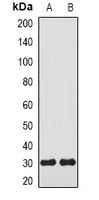
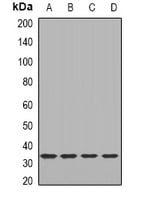
WB (Western Blot) (Western blot analysis of extracts from mouse brain, using STXBP1 Antibody.)
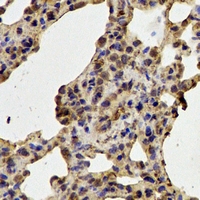
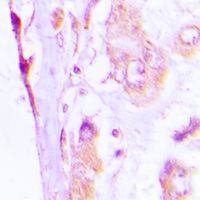
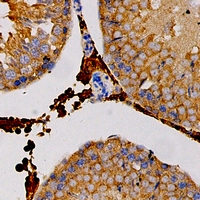
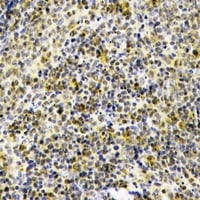
IHC (Immunohistochemistry) (AAA327037 at 1/100 staining Mouse brain tissue by IHC-P. The sample was formaldehyde fixed and a heat mediated antigen retrieval step in citrate buffer was performed. The sample was then blocked and incubated with the antibody for 1.5 hours at 22 degree C. An HRP conjugated goat anti-rabbit antibody was used as the secondary.)
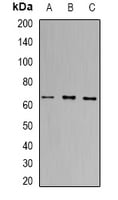
WB (Western Blot) (Western blot analysis of extracts of HeLa, using NQO2 antibody. The lane on the left is treated with the antigen-specific peptide.)
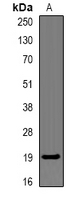
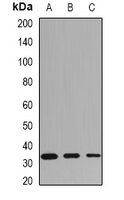
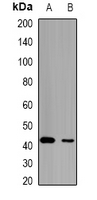
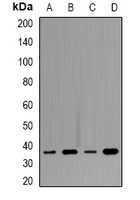
WB (Western Blot) (Western blot analysis of extracts from mouse brain, using NQO2 Antibody.)
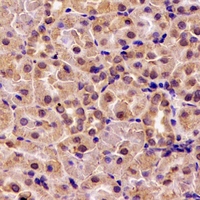
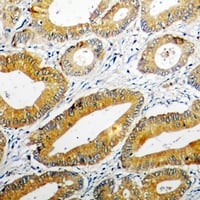
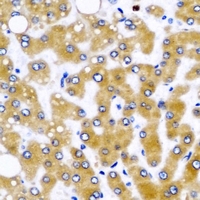
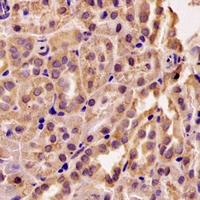
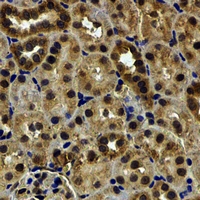
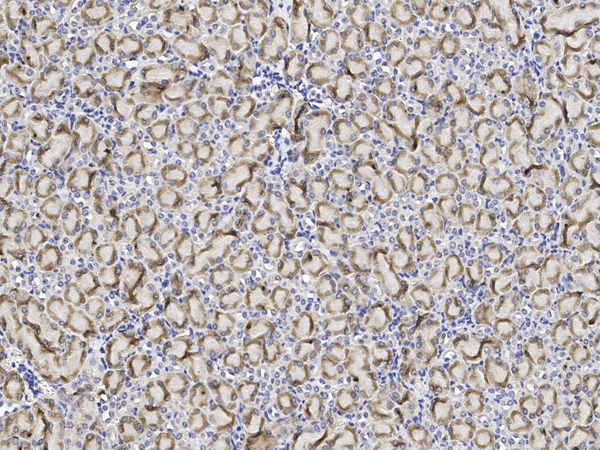
IHC (Immunohistochemistry) (AAA327043 at 1/100 staining Rat liver tissue by IHC-P. The sample was formaldehyde fixed and a heat mediated antigen retrieval step in citrate buffer was performed. The sample was then blocked and incubated with the antibody for 1.5 hours at 22 degree C. An HRP conjugated goat anti-rabbit antibody was used as the secondary.)
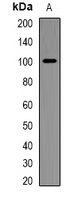
WB (Western Blot) (Western blot analysis of Mouse liver tissue lysates, using CBR1 Antibody. The lane on the left is treated with the antigen-specific peptide.)
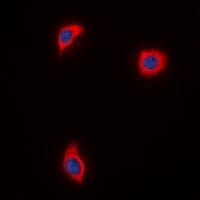
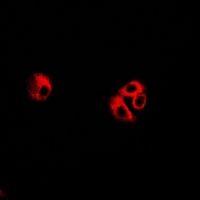
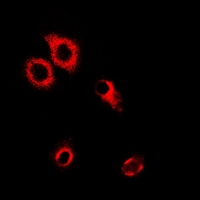
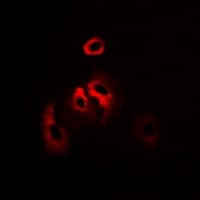
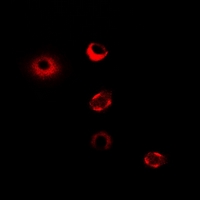
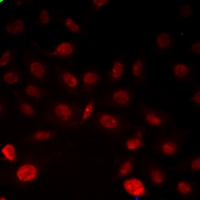
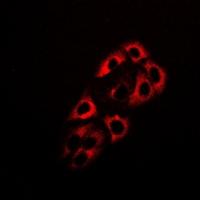
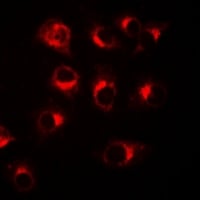
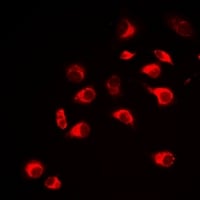
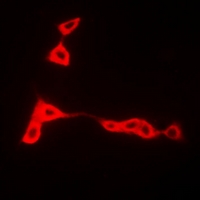
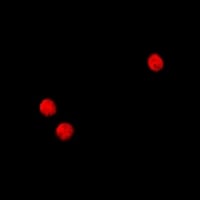
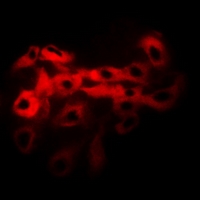
IF (Immunofluorescence) (AAA327047 staining HeLa cells by IF/ICC. The sample were fixed with PFA and permeabilized in 0.1% Triton X-100, then blocked in 10% serum for 45 minutes at 25 degree C. The primary antibody was diluted at 1/200 and incubated with the sample for 1 hour at 37 degree C. An Alexa Fluor 594 conjugated goat anti-rabbit IgG (H+L) antibody, diluted at 1/600, was used as secondary antibody.)
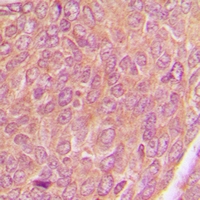
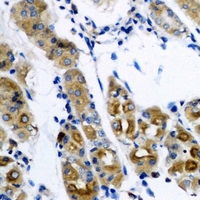
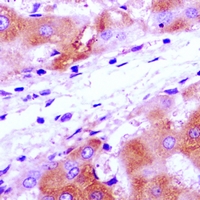
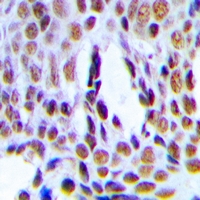
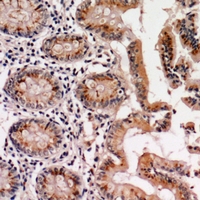
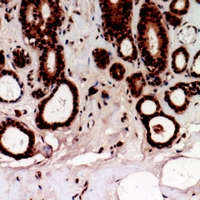
IHC (Immunohiostchemistry) (AAA327047 at 1/100 staining Human prostate tissue by IHC-P. The sample was formaldehyde fixed and a heat mediated antigen retrieval step in citrate buffer was performed. The sample was then blocked and incubated with the antibody for 1.5 hours at 22 degree C. An HRP conjugated goat anti-rabbit antibody was used as the secondary.)
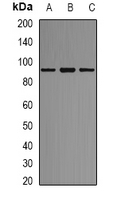
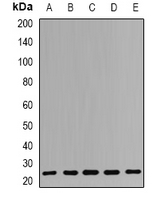
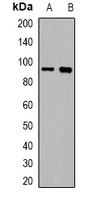
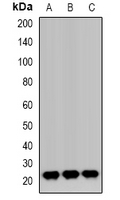
WB (Western Blot) (Western blot analysis of extracts from mouse kidney, using CBR1 Antibody.)
WB (Western Blot) (Western blot analysis of Mouse liver tissue lysates, using GDI1 Antibody. The lane on the left is treated with the antigen-specific peptide.)
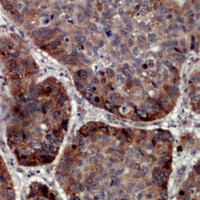
IHC (Immunohistochemistry) (AAA327053 at 1/100 staining Human brain cancer tissue by IHC-P. The sample was formaldehyde fixed and a heat mediated antigen retrieval step in citrate buffer was performed. The sample was then blocked and incubated with the antibody for 1.5 hours at 22 degree C. An HRP conjugated goat anti-rabbit antibody was used as the secondary.)
WB (Western Blot) (Western blot analysis of Hela whole cell lysates, using LBR Antibody. The lane on the left is treated with the antigen-specific peptide.)
IHC (Immunohistochemistry) (AAA327057 at 1/100 staining Mouse heart tissue by IHC-P. The sample was formaldehyde fixed and a heat mediated antigen retrieval step in citrate buffer was performed. The sample was then blocked and incubated with the antibody for 1.5 hours at 22 degree C. An HRP conjugated goat anti-rabbit antibody was used as the secondary.)
WB (Western Blot) (Western blot analysis of lovo cell lysate, using S100A11 Antibody. The lane on the left is treated with the antigen-specific peptide.)
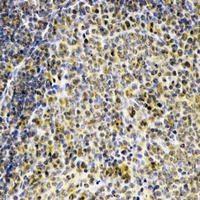
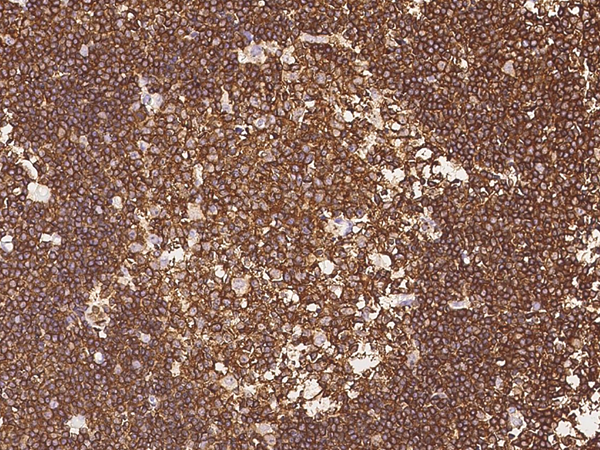
IHC (Immunohistochemistry) (AAA327069 at 1/100 staining Mouse spleen tissue by IHC-P. The sample was formaldehyde fixed and a heat mediated antigen retrieval step in citrate buffer was performed. The sample was then blocked and incubated with the antibody for 1.5 hours at 22 degree C. An HRP conjugated goat anti-rabbit antibody was used as the secondary.)
IHC (Immunohiostchemistry) (AAA327070 at 1/100 staining Human Melanoma tissue by IHC-P. The sample was formaldehyde fixed and a heat mediated antigen retrieval step in citrate buffer was performed. The sample was then blocked and incubated with the antibody for 1.5 hours at 22 degree C. An HRP conjugated goat anti-rabbit antibody was used as the secondary.)
WB (Western Blot) (Western blot analysis of Jurkat cell lysate, using SEMG1 Antibody. The lane on the left is treated with the antigen-specific peptide.)
IF (Immunofluorescence) (AAA327074 staining Hela cells by IF/ICC. The samples were fixed with PFA and permeabilized in 0.1% Triton X-100,then blocked in 10% serum for 45 minutes at 25°C. Samples were then incubated with primary Ab(AAA327074 1:200) and mouse anti-beta tubulin Ab for 1 hour at 37°C. An AlexaFluor594 conjugated goat anti-rabbit IgG(H+L) Ab(Red)and an AlexaFluor488 conjugated goat anti-mouse IgG(H+L)Ab(Green) were used as the secondary antibody.)
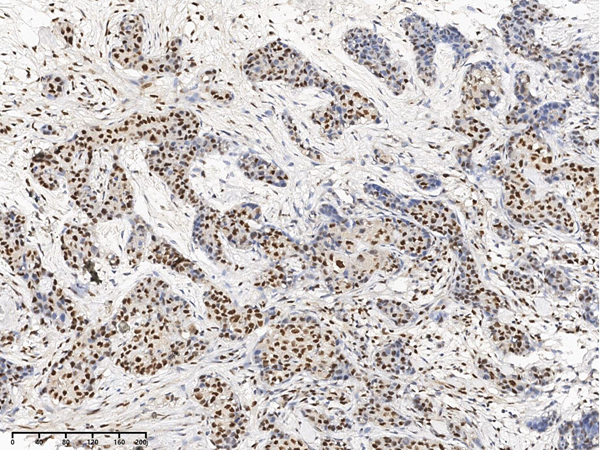
IHC (Immunohiostchemistry) (AAA327074 at 1/100 staining Human pancreatic cancer and adjacent nomal tissues by IHC-P. The sample was formaldehyde fixed and a heat mediated antigen retrieval step in citrate buffer was performed. The sample was then blocked and incubated with the primary antibody at 4°C overnight. An HRP conjugated anti-Rabbit antibody was used as the secondary antibody.)
WB (Western Blot) (Western blot analysis of extracts of Mouse liver, using UBD antibody. The lane on the left is treated with the antigen-specific peptide.)
IHC (Immunohistochemisry) (AAA327077 at 1/100 staining Mouse muscle tissue by IHC-P. The sample was formaldehyde fixed and a heat mediated antigen retrieval step in citrate buffer was performed. The sample was then blocked and incubated with the antibody for 1.5 hours at 22 degree C. An HRP conjugated goat anti-rabbit antibody was used as the secondary.)
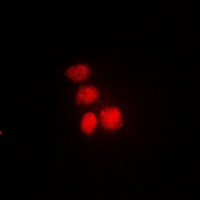
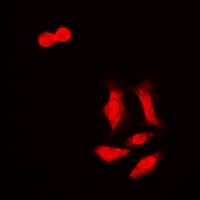
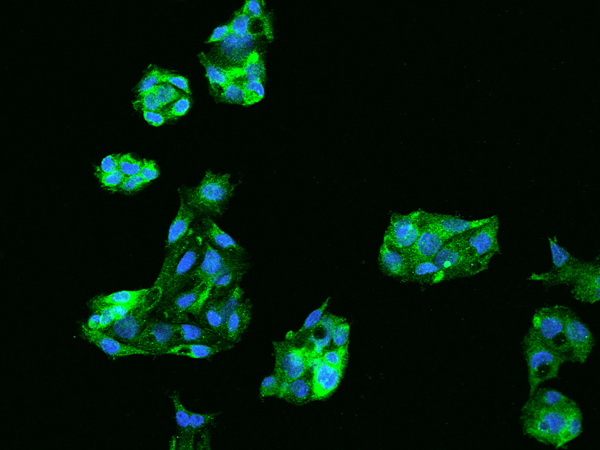
IF (Immunofluorescence) (F7376 staining HEPG2 cells by ICC/IF. Cells were fixed with PFA and permeabilized in 0.1% saponin prior to blocking in 10% serum for 45 minutes at 37 degree C. The primary antibody was diluted 1/200 and incubated with the sample for 1 hour at 37 degree C. A Alexa Fluor 594 conjugated goat polyclonal to rabbit IgG (H+L), diluted 1/600 was used as secondary antibody.)
WB (Western Blot) (Western blot analysis of extracts of hela, using Dnmt1 antibody. The lane on the left is treated with the antigen-specific peptide.)
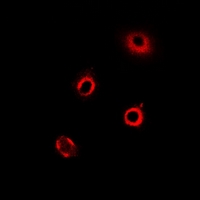
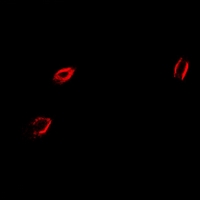
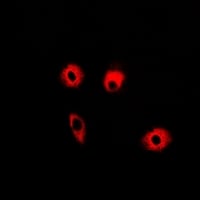
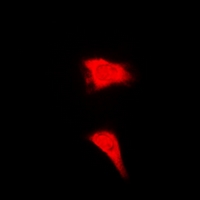
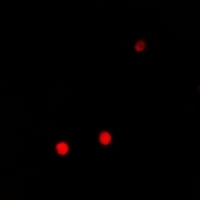
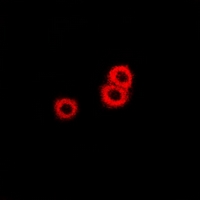
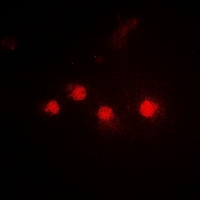
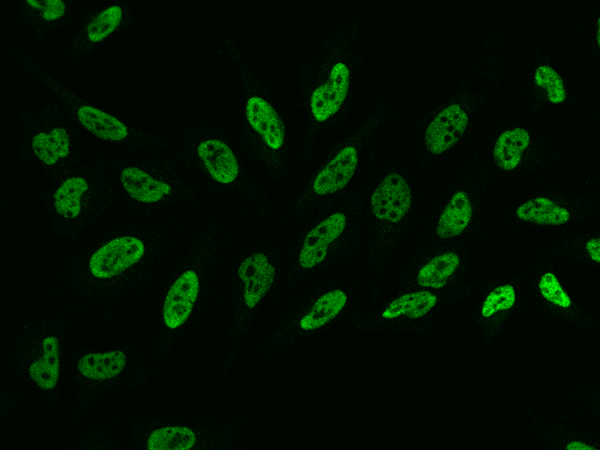
IF (Immunofluorescence) (AAA324115 staining 293 cells by IF/ICC. The sample were fixed with PFA and permeabilized in 0.1% Triton X-100, then blocked in 10% serum for 45 minutes at 25 degree C. The primary antibody was diluted at 1/200 and incubated with the sample for 1 hour at 37 degree C. An Alexa Fluor 594 conjugated goat anti-rabbit IgG (H+L) antibody, diluted at 1/600, was used as secondary antibody.)
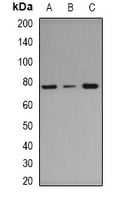
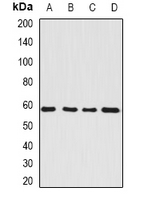
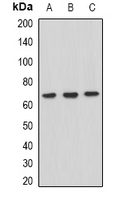
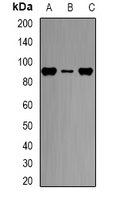
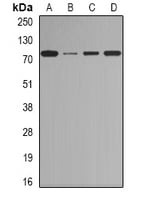
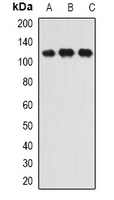
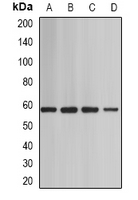
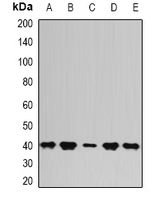
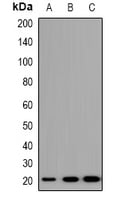
WB (Western Blot) (Western blot analysis of extracts from COLO cells using AN30A antibody.)
WB (Western Blot) (Western blot analysis of extracts of HT29 cells treated with nocodazole, using Phospho-Myt1 (Ser83) Antibody.)
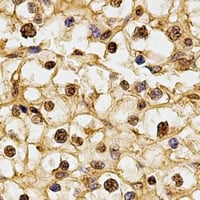
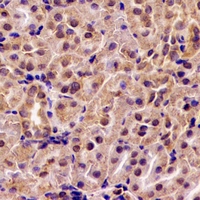
IHC (Immunohistochemistry) (AAA321353 at 1/100 staining Human thyroid cancer tissue by IHC-P. The sample was formaldehyde fixed and a heat mediated antigen retrieval step in citrate buffer was performed. The sample was then blocked and incubated with the antibody for 1.5 hours at 22 degree C. An HRP conjugated goat anti-rabbit antibody was used as the secondary.)
Purified from rabbit antiserum by affinity-chromatography using phospho peptide. The antibody against non-phospho peptide was removed by chromatography using corresponding non-phospho peptide.
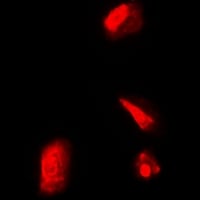
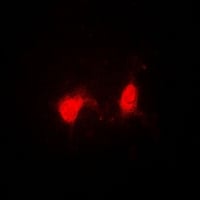
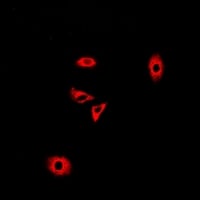
IF (Immunofluorescence) (AAA322476 staining COLO205 by IF/ICC. The sample were fixed with PFA and permeabilized in 0.1% Triton X-100, then blocked in 10% serum for 45 minutes at 25 degree C. The primary antibody was diluted at 1/200 and incubated with the sample for 1 hour at 37 degree C. An Alexa Fluor 594 conjugated goat anti-rabbit IgG (H+L) Ab, diluted at 1/600, was used as the secondary antibody.)
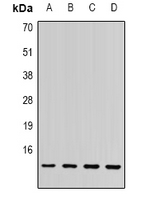
WB (Western Blot) (Western blot analysis of ApoOL using K562 whole cell lysates)
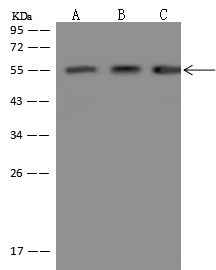
WB (Western Blot) (Western blot analysis of lysates from U2OS cells, primary antibody was diluted at 1:1000, 4 degree over night)
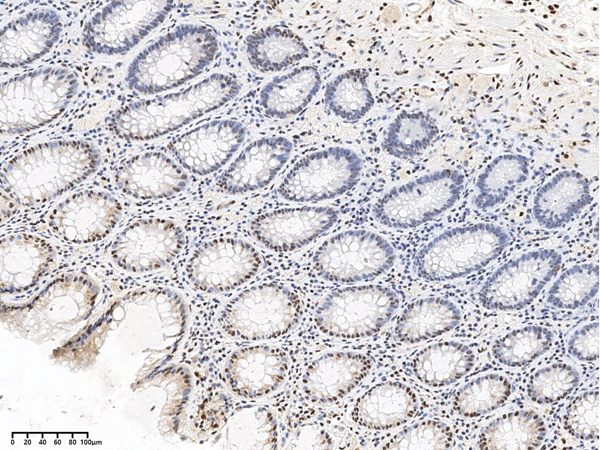
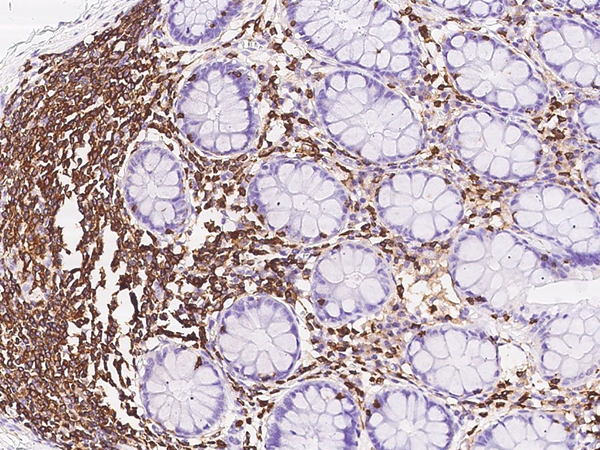
IHC (Immunohistochemistry) (Immunohistochemical analysis of paraffin-embedded human uterus. 1, Antibody was diluted at 1:200(4 degree overnight). 2, Tris-EDTA,pH9.0 was used for antigen retrieval. 3,Secondary antibody was diluted at 1:200(room temperature, 45min).)
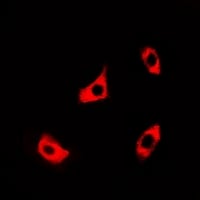
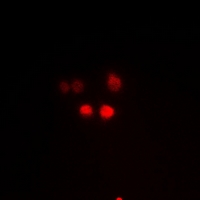
IF (Immunofluorescence) (AAA322711 staining HuvEc by IF/ICC. The sample were fixed with PFA and permeabilized in 0.1% Triton X-100, then blocked in 10% serum for 45 minutes at 25 degree C. The primary antibody was diluted at 1/200 and incubated with the sample for 1 hour at 37 degree C. An Alexa Fluor 594 conjugated goat anti-rabbit IgG (H+L) Ab, diluted at 1/600, was used as the secondary antibody.)
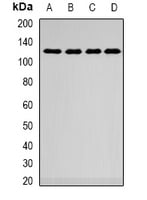
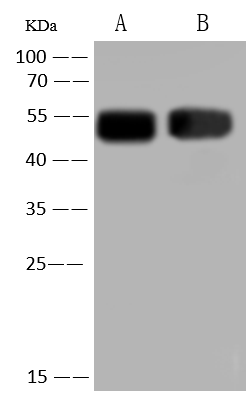
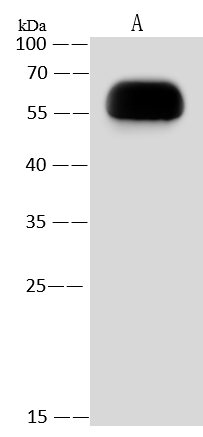
WB (Western Blot) (Western blot analysis of TCF2 using 293 whole cell lysates)
SDS-PAGE (Gel: 8%SDS-PAGE, Lysate: 40 ug, Lane: 231 cells, Primary antibody: AAA240066(MCMBP Antibody) at dilution 1/600, Secondary antibody: Goat anti rabbit IgG at 1/8000 dilution, Exposure time: 1 minute)
IHC (Immunohistochemistry) (The image on the left is immunohistochemistry of paraffin-embedded Human liver cancer tissue using AAA240066(MCMBP Antibody) at dilution 1/40, on the right is treated with synthetic peptide. (Original magnification: ×200))
SDS-PAGE (Gel: 8%SDS-PAGE, Lysate: 40 ug, Lane: Mouse heart tissue, Primary antibody: AAA240871(BMP6 Antibody) at dilution 1/500, Secondary antibody: Goat anti rabbit IgG at 1/8000 dilution, Exposure time: 10 seconds)
IHC (Immunohiostchemistry) (The image on the left is immunohistochemistry of paraffin-embedded Human prostate cancer tissue using AAA240871(BMP6 Antibody) at dilution 1/50, on the right is treated with synthetic peptide. (Original magnification: ×200))
IHC (Immunohistochemistry) (The image on the left is immunohistochemistry of paraffin-embedded Human breast cancer tissue using AAA240871(BMP6 Antibody) at dilution 1/50, on the right is treated with synthetic peptide. (Original magnification: ×200))
IHC (Immunohiostchemistry) (Immunohistochemical analysis of paraffin-embedded human breast carcinoma tissue using HSP27(Ab-82) Antibody(left) or the same antibody preincubated with blocking peptide(right).)
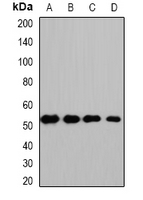
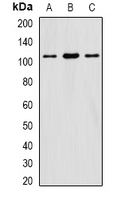
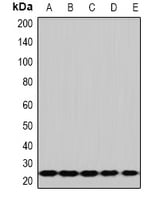
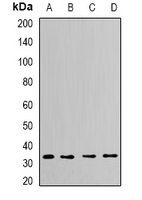
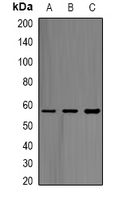
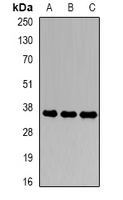
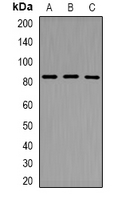
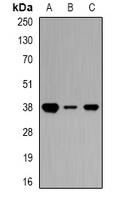
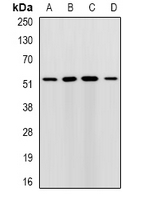
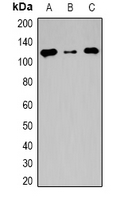
WB (Western Blot) (Western blot analysis of extracts from K562 and Hela cells using HSP27(Ab-82) Antibody.)
Antibodies were produced by immunizing rabbits with synthetic peptide and KLH conjugates. Antibodies were Purified by affinity-chromatography using epitope-specific peptide.
WB (Western Blot) (Western blot analysis of extracts from 293 cells, treated with UV+serum or calf intestinal phosphatase (CIP), using Histone H2A.X (Phospho-Ser139) Antibody.)
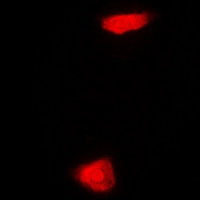
IF (Immunofluorescence) (Immunofluorescence staining of methanol-fixed Hela cells using Histone H2A.X(Phospho-Ser139) Antibody.)
WB (Western Blot) (Western blot analysis of extracts from HT29 cells untreated(lane 1) or treated with UV(lane 2) using Histone H2A.X(Phospho-Ser139) Antibody.)
Antibodies were produced by immunizing rabbits with synthetic phosphopeptide and KLH conjugates. Antibodies were purified by affinity-chromatography using epitope-specific phosphopeptide. Non-phospho specific antibodies were removed by chromatography usin
IF (Immunofluorescence) (Immunofluorescence analysis of U-2 OS cells using PPP2R5D Polyclonal Antibody at dilution of 1:100. Blue: DAPI for nuclear staining.)
IF (Immunofluorescence) (Immunofluorescence analysis of L929 cells using PPP2R5D Polyclonal Antibody at dilution of 1:100. Blue: DAPI for nuclear staining.)
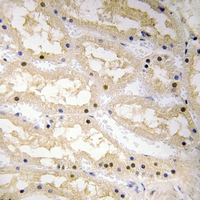
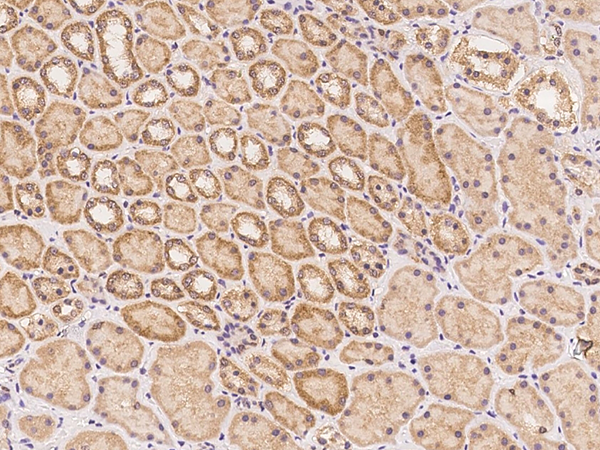
IHC (Immunohistochemisry) (Immunohistochemistry of paraffin-embedded Mouse kidney using PPP2R5D Polyclonal Antibody at dilution of 1:100 (40x lens).)
IHC (Immunohiostchemistry) (Immunohistochemistry of paraffin-embedded Human thyroid cancer using PPP2R5D Polyclonal Antibody at dilution of 1:100 (40x lens).)
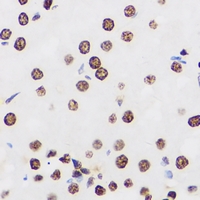
IHC (Immunohistochemistry) (Immunohistochemistry of paraffin-embedded Rat brain using PPP2R5D Polyclonal Antibody at dilution of 1:100 (40x lens).)
Polyclonal antibodies are antibodies that come from multiple B cell clones of a host animal. The typical hosts used for the majority of polyclonal antibody production are rabbits, goats, sheep, and donkeys. These polyclonal antibodies, once having identified their target, will bind to different epitopes located at different regions or sequences on the same protein/antigen. As a result, they are ideal at locating and binding to the target, even if the target is in very low concentrations (due to many different antibodies being able to bind to the same target molecule, which allows for significant amplification of a downstream signal).
Polyclonal antibodies are typically produced by injecting an antigen into a host animal, which causes the animal’s immune system to attack the foreign antigen by mass generating antibodies against it. After a period of time, serum is collected from the animal and purified using physicochemical fractionation, class-specific affinity purification, and/or antigen-affinity purification.
Key Uses of Polyclonal Antibodies
Western Blotting: This method is used to find specific proteins in biological samples after separating them by size.
Immunohistochemistry: IHC helps visualize the location of proteins in tissue sections using various staining techniques.
ELISA: (Enzyme-Linked Immunosorbent Assay) is typically used to identify specific protein quantities in a sample. ELISAs can be either “Quantitative” or “Qualitative”.
Flow Cytometry: technique that identifies and measures the specific protein on the surface or inside the cells in a fluid suspension.
Immunoprecipitation: IP isolates and studies a specific protein from a complex mixture using antibodies.
Why Buy Polyclonal Antibodies from AAA Biotech?
1. Ideal for Various Applications
Our antibodies are generally going to be validated for use in multiple types of assays, including ELISA, Western Blotting, Immunohistochemistry, Immunoprecipitation, amongst others. They are ideal for a wide range of research applications.
2. Rigorous Quality Control
All of the antibodies in our catalog undergo strict quality testing to ensure specificity, sensitivity, and consistent performance. We are confident in the ability of our antibodies to provide you with accurate results.
3. Wide Assortment of Antibodies
Antibodies in are catalog can be found for both common and exotic species, and these antibodies are also available in both conjugated and recombinant forms to suit many diverse experimental needs.
4. Highly Purified
Our antibodies are available in purified forms with over 85% purity, as confirmed by SDS-PAGE. They are also available with tags such as His, Flag, GST, or MBP. We cater to customers worldwide.
FAQ
1. How are polyclonal antibodies produced?
Traditionally, polyclonal antibodies are produced by injecting an antigen into a host animal (such as a rabbit or goat), which then triggers an immune response from the host animal. The animal’s B cells produce antibodies that will recognize different parts of the injected antigen. These antibodies are then collected from the animal’s blood and purified for use.
2. How do polyclonal antibodies differ from monoclonal antibodies?
Polyclonal antibodies are a mix of antibodies that bind to different locations (epitopes) of the same antigen, while monoclonal antibodies are identical and bind to just one specific epitope. This makes polyclonal antibodies more versatile and better at detecting proteins that may be present in low quantities or in altered/modified forms.
3. How should I store polyclonal antibodies?
Polyclonal antibodies should be stored at 4°C for short-term use (up to a few weeks) and at -20°C or -80°C for long-term storage. Avoid repeated freeze-thaw cycles by dividing them into small aliquots. Always check the datasheet for specific storage instructions.
Submit a Question
Please complete the form below and a representative will contact you as soon as possible.
Request more Information
Please complete the form below and a representative will contact you as soon as possible.
Request a Manual
Please complete the form below and a representative will contact you as soon as possible.
Request a Quote
Please complete the form below and a representative will contact you as soon as possible.