Get accurate results in your research with our Monoclonal Antibodies, which are specially made to target exactly what you require for your research, and will produce consistent, reliable performance in lab tests.
Application Data (Detection limit for recombinant GST tagged PTBP1 is ~0.1ng/ml as a capture antibody.)
IP (Immunoprecipitation) (Immunoprecipitation of PTBP1 transfected lysate using PTBP1 monoclonal antibody and Protein A Magnetic Bead, and immunoblotted with PTBP1 rabbit polyclonal antibody.)
IF (Immunofluorescence) (Immunofluorescence of monoclonal antibody to PTBP1 on HeLa cell. [antibody concentration 10ug/ml])
IHC (Immunohistochemistry) (Immunoperoxidase of monoclonal antibody to PTBP1 on formalin-fixed paraffin-embedded human kidney. [antibody concentration 3ug/ml])
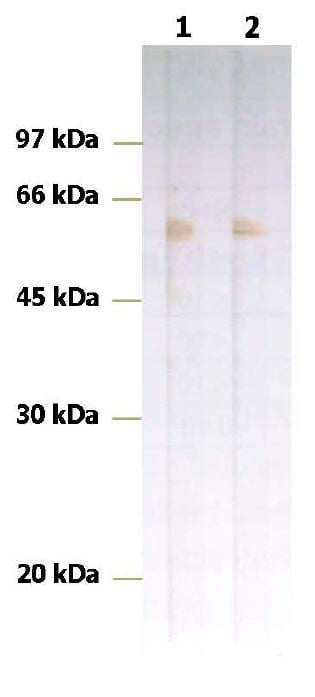
WB (Western Blot) (Western Blot analysis of PTBP1 expression in transfected 293T cell line by PTBP1 monoclonal antibody, Lane 1: PTBP1 transfected lysate (59.6kD). Lane 2: Non-transfected lysate.)
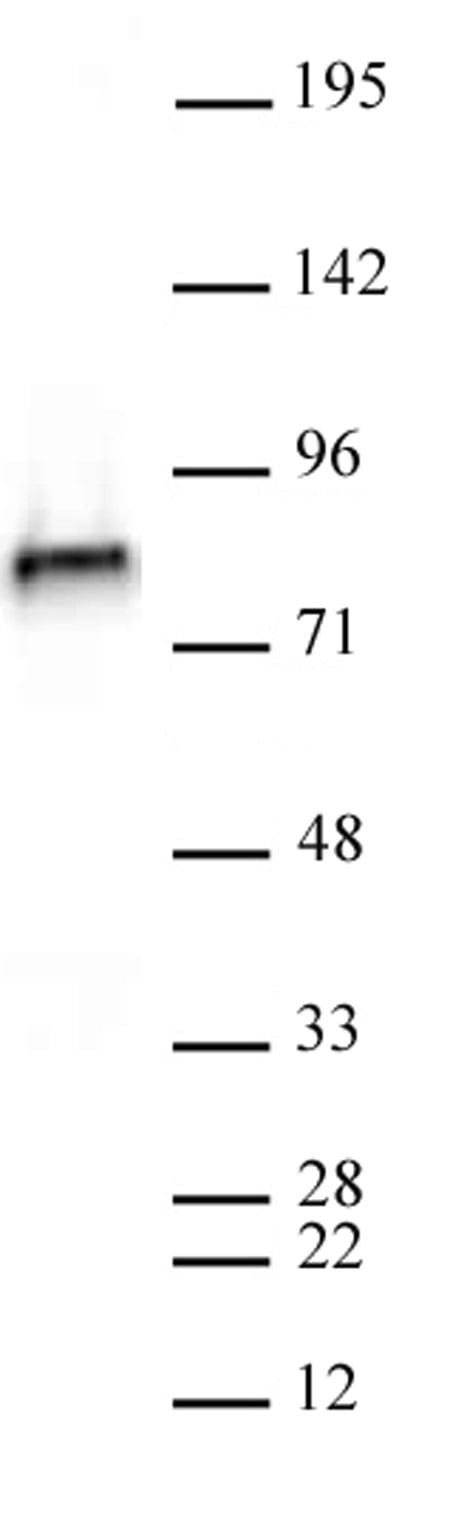
WB (Western Blot) (PTBP1 monoclonal antibody, Western Blot analysis of PTBP1 expression in A-431.)
PTBP1 (Polypyrimidine Tract-binding Protein 1, PTB, Heterogeneous Nuclear Ribonucleoprotein I, hnRNP I, 57kD RNA-binding Protein PPTB-1, MGC10830, MGC8461) APC
Application Data (Detection limit for recombinant GST tagged MPG is ~0.03ng/ml as a capture antibody.)
IF (Immunofluorescence) (Immunofluorescence of monoclonal antibody to MPG on HeLa cell. [antibody concentration 40ug/ml])
IHC (Immunohistochemistry) (Immunoperoxidase of monoclonal antibody to MPG on formalin-fixed paraffin-embedded human kidney. [antibody concentration 3ug/ml])
WB (Western Blot) (Western Blot analysis of MPG expression in transfected 293T cell line by MPG monoclonal antibody. Lane 1: MPG transfected lysate (32.2kD). Lane 2: Non-transfected lysate.)
WB (Western Blot) (MPG monoclonal antibody Western Blot analysis of MPG expression in Hela NE.)
WB (Western Blot) (Western Blot detection against Immunogen (35.53kD).)
WB (Western Blot) (AKT2 monoclonal antibody (M06), clone X1. Western Blot analysis of AKT2 expression in PC-12.)
WB (Western Blot) (AKT2 monoclonal antibody (M06), clone X1. Western Blot analysis of AKT2 expression in NIH/3T3.)
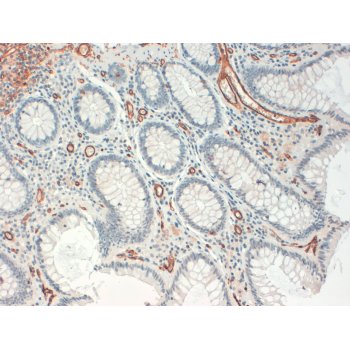
IHC (Immunohistochemistry) (Immunoperoxidase of monoclonal antibody to AKT2 on formalin-fixed paraffin-embedded human small Intestine. [antibody concentration 3 ug/ml])
Application Data (Detection limit for recombinant GST tagged AKT2 is approximately 1ng/ml as a capture antibody.)
WB (Western Blot) (AKT2 monoclonal antibody (M06), clone X1 Western Blot analysis of AKT2 expression in Jurkat (Cat # L017V1).)
IF (Immunofluorescence) (Immunofluorescence of monoclonal antibody to POU5F1 on HeLa cell. [antibody concentration 10 ug/ml])
Application Data (A-549 cells were stained with POU5F1-FITC labeled monoclonal antibody (Green). The cell nucleus were counterstained with DAPI (Blue).)
IF (Immunofluorescence) (Immunofluorescence of monoclonal antibody to POU5F1 on A-549 cell. [antibody concentration 10 ug/ml])
WB (Western Blot) (Western Blot analysis of POU5F1 expression in transfected 293T cell line by POU5F1 monoclonal antibody (M05), clone 1B11.Lane 1: POU5F1 transfected lysate(18.3 KDa).Lane 2: Non-transfected lysate.)
WB (Western Blot) (POU5F1 monoclonal antibody (M05), clone 1B11 Western Blot analysis of POU5F1 expression in HepG2.)
SDS-PAGE (Raji whole cell lysates were separated by 10% SDS-PAGE, and the membrane was blotted with anti-CD79a(ABT-CD79a) antibody. The HRP-conjugated Goat anti-M)
ICC (Immunocytochemistry) (ICC staining p53DINP1 in HUVEC cells (green). The nuclear counter stain is DAPI (blue). Cells were fixed in paraformaldehyde, permeabilised with 0.25% Triton X100/PBS.)
ICC (Immunocytochemistry) (ICC staining p53DINP1 in HepG2 cells (green). The nuclear counter stain is DAPI (blue). Cells were fixed in paraformaldehyde, permeabilised with 0.25% Triton X100/PBS.)
IHC (Immunohistochemistry) (Immunohistochemical analysis of paraffin-embedded human pancreas tissue using anti-p53DINP1 antibody. Counter stained with hematoxylin.)
IHC (Immunohistochemistry) (Immunohistochemical analysis of paraffin-embedded human kidney tissue using anti-p53DINP1 antibody. Counter stained with hematoxylin.)
IHC (Immunohistochemistry) (Immunohistochemical analysis of paraffin-embedded huamn liver cancer tissue using anti-p53DINP1 antibody. Counter stained with hematoxylin.)
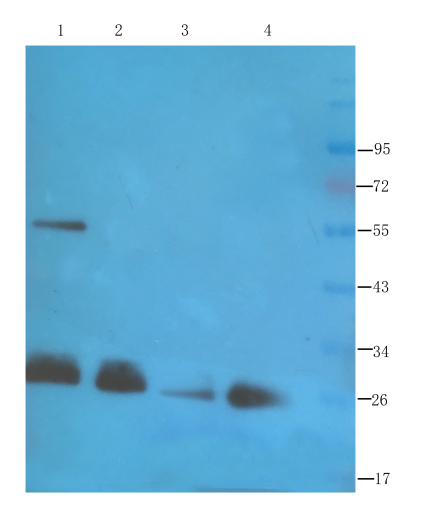
WB (Western Blot) (Western blot analysis of p53DINP1 on different cell lysates using anti-p53DINP1 at 1/500 dilution. Positive control�� Line 1: SH-SY-5Y Line 2: HepG2 Line 3: Mouse stomach Line 3: Human stomach)
ICC (Immunocytochemistry) (ICC staining Calbindin in 293T cells (red). The nuclear counter stain is DAPI (blue). Cells were fixed in paraformaldehyde, permeabilised with 0.25% Triton X100/PBS.)
ICC (Immunocytochemistry) (ICC staining Calbindin in PC-12 cells (red). The nuclear counter stain is DAPI (blue). Cells were fixed in paraformaldehyde, permeabilised with 0.25% Triton X100/PBS.)
IHC (Immunohistochemistry) (Immunohistochemical analysis of paraffin-embedded mouse kidney tissue using anti-Calbindin antibody. Counter stained with hematoxylin.)
IHC (Immunohistochemistry) (Immunohistochemical analysis of paraffin-embedded mouse brain tissue using anti-Calbindin antibody. Counter stained with hematoxylin.)
IHC (Immunohistochemistry) (Immunohistochemical analysis of paraffin-embedded human kidney tissue using anti-Calbindin antibody. Counter stained with hematoxylin.)
IHC (Immunohistochemistry) (Immunohistochemical analysis of paraffin-embedded rat brain tissue using anti-Calbindin antibody. Counter stained with hematoxylin.)
WB (Western Blot) (Western blot analysis of Calbindin on different lysates using anti-Calbindin antibody at 1/1, 000 dilution. Positive control: Lane 1: Rat brain Lane 2: Mouse kidney)
WB (Western Blot) (Detection of human BRD7 by western blot. Samples: Whole cell lysate (25 ug) from HeLa, HEK293T, Jurkat, Hep-G2, and LNCaP cells prepared using NETN lysis buffer. Antibody: Rabbit anti-BRD7 recombinant monoclonal antibody (AAA23872 lot 1) used at 1:1000. Secondary: HRP-conjugated goat anti-rabbit IgG . Detection: Chemiluminescence with an exposure time of 30 seconds. Lower Panel: Rabbit anti-Actin recombinant monoclonal antibody .)
IP (Immunoprecipitation) (Detection of human BRD7 by western blot of immunoprecipitates. Samples: Whole cell lysate (1.0 mg per IP reaction; 10% of IP loaded) from HeLa cells prepared using NETN lysis buffer. Antibodies: Rabbit anti-BRD7 recombinant monoclonal antibody (AAA23872 lot 1) used for IP at 12 ul/mg lysate. BRD7 was also immunoprecipitated by a second antibody against a different epitope of BRD7 . For blotting immunoprecipitated BRD7, AAA23872 was used at 1:1000. Detection: Chemiluminescence with an exposure time of 30 seconds.)
IHC (Immunohistochemistry) (Detection of human BRD7 by immunohistochemistry. Sample: FFPE section of human testis. Antibody: Rabbit anti-BRD7 recombinant monoclonal antibody (AAA23872-1). Secondary: HRP-conjugated goat anti-rabbit IgG .)
IHC (Immunohistochemistry) (Detection of human BRD7 by immunohistochemistry. Sample: FFPE section of prostate carcinoma. Antibody: Rabbit anti-BRD7 recombinant monoclonal antibody (AAA23872-1). Secondary: HRP-conjugated goat anti-rabbit IgG .)
ICC (Immunocytochemistry) (Detection of human BRD7 by immunocytochemistry. Sample: FFPE section of RKO cells. Antibody: Rabbit anti-BRD7 recombinant monoclonal antibody (AAA23872-1). Secondary: HRP-conjugated goat anti-rabbit IgG .)
FCM (Flow Cytometry) (Detection of human BRD7 (shaded) in HeLa cells by flow cytometry. Antibody: Rabbit anti-BRD7 recombinant monoclonal antibody (AAA23872) or isotype control (unshaded). Secondary: DyLight 650-conjugated goat anti-rabbit IgG .)
WB (Western Blot) (Detection of mouse CD8-alpha by western blot. Samples: Whole cell lysate (50 ug) from NIH 3T3, CT26, mouse thymus, TCMK-1, and BW5147.3 cells prepared using NETN lysis buffer. Antibody: Rabbit anti-CD8-alpha recombinant monoclonal antibody (AAA23850 lot 1) used at 1:1000. Secondary: HRP-conjugated goat anti-rabbit IgG . Detection: Chemiluminescence with an exposure time of 3 seconds. Lower Panel: Rabbit anti-Actin recombinant monoclonal antibody .)
WB (Western Blot) (Detection of mouse CD8-alpha by western blot. Samples: Whole cell lysate (50 ug) from HEK293f and HEK293f over-expressing mouse CD8a cells prepared using NETN lysis buffer. Antibody: Rabbit anti-CD8-alpha recombinant monoclonal antibody (AAA23850 lot 1) used at 1:1000. Secondary: HRP-conjugated goat anti-rabbit IgG . Detection: Chemiluminescence with an exposure time of 1 second. Lower Panel: Rabbit anti-Actin recombinant monoclonal antibody .)
IP (Immunoprecipitation) (Detection of mouse CD8-alpha by western blot of immunoprecipitates. Samples: Whole cell lysate (1.0 mg per IP reaction; 20% of IP loaded) from mouse thymus prepared using NETN lysis buffer. Antibodies: Rabbit anti-CD8-alpha recombinant monoclonal antibody (AAA23850 lot 1) used for IP at 12 ul/mg lysate. CD8-alpha was also immunoprecipitated by a second antibody against a different epitope of CD8-alpha (Antibody 2). For blotting immunoprecipitated CD8-alpha, AAA23850 was used at 1:1000. Detection: Chemiluminescence with an exposure time of 10 seconds.)
IHC (Immunohistochemistry) (Detection of mouse CD8 alpha in FFPE mouse lung by IHC. Antibody: Rabbit anti-CD8 alpha recombinant monoclonal antibody (AAA23850 lot 1). Secondary: HRP-conjugated goat anti-rabbit IgG . Substrate: DAB.)
IHC (Immunohistochemistry) (Detection of mouse CD8 alpha in FFPE mouse spleen by IHC. Antibody: Rabbit anti-CD8 alpha recombinant monoclonal antibody (AAA23850 lot 1). Secondary: HRP-conjugated goat anti-rabbit IgG . Substrate: DAB.)
IHC (Immunohistochemistry) (Detection of mouse CD8 alpha in FFPE mouse small intestine by IHC. Antibody: Rabbit anti-CD8 alpha recombinant monoclonal antibody (AAA23850 lot 1). Secondary: HRP-conjugated goat anti-rabbit IgG . Substrate: DAB.)
WB (Western Blot) (Western Blot analysis of NQO1 expression in transfected 293T cell line by NQO1 monoclonal antibody. Lane 1: NQO1 transfected lysate (30.9kD). Lane 2: Non-transfected lysate.)
WB (Western Blot) (Western Blot analysis of NQO1 expression in HepG2.)
WB (Western Blot) (Western blot analysis of NQO1 over-expressed 293 cell line, cotransfected with NQO1 Validated Chimera RNAi (Lane 2) or non-transfected control (Lane 1). Blot probed with NQO1 monoclonal antibody. GAPDH (36.1kD) used as specificity and loading control.)
Application Data (Detection limit for recombinant GST tagged NQO1 is ~0.3ng/ml as a capture antibody)
IP (Immunoprecipitation) (Immunoprecipitation of NQO1 transfected lysate using NQO1 monoclonal antibody and Protein A Magnetic Bead, and immunoblotted with NQO1 rabbit polyclonal antibody.)
IF (Immunofluorescence) (Immunofluorescence of monoclonal antibody to NQO1 on HepG2 cell. [antibody concentration 10ug/ml])
WB (Western Blot) (Western Blot detection against Immunogen (55.88kD).)
Application Data (Detection limit for recombinant GST tagged PEPD is ~0.1ng/ml as a capture antibody.)
IP (Immunoprecipitation) (Immunoprecipitation of PEPD transfected lysate using PEPD monoclonal antibody and Protein A Magnetic Bead, and immunoblotted with PEPD rabbit polyclonal antibody.)
IF (Immunofluorescence) (Immunofluorescence of monoclonal antibody to PEPD on HepG2 cell. [antibody concentration 10ug/ml])
WB (Western Blot) (Western Blot analysis of PEPD expression in transfected 293T cell line by PEPD monoclonal antibody. Lane 1: PEPD transfected lysate (Predicted MW: 54.6kD). Lane 2: Non-transfected lysate)
WB (Western Blot) (PEPD monoclonal antibody Western Blot analysis of PEPD expression in HepG2.)
WB (Western Blot) (Western Blot detection against Immunogen (79.97kD).)
IF (Immunofluorescence) (Immunofluorescence of monoclonal antibody to TOMM20 on HeLa cell. [antibody concentration 10ug/ml])
Application Data (Detection limit for recombinant GST tagged TOMM20 is ~0.1ng/ml as a capture antibody.)
IHC (Immunohistochemistry) (Immunoperoxidase on formalin-fixed paraffin-embedded human small Intestine using 1346004 (3ug/ml).)
WB (Western Blot) (Western Blot analysis in transfected 293T cell line using 134604. Lane 1: 134604 transfected lysate (16.3kD). Lane 2: Non-transfected lysate.)
WB (Western Blot) (Western Blot analysis in NIH/3T3 using 134604.)
WB (Western Blot) (Western Blot analysis of in PC-12 using 134604.)
WB (Western Blot) (Western Blot analysis in HeLa using 134604.)
WB (Western Blot) (Western blot analysis of HNF4A over-expressed 293 cell line, cotransfected with HNF4A Validated Chimera RNAi (Lane 2) or non-transfected control (Lane 1). Blot probed with HNF4A monoclonal antibody GAPDH (36.1kD) used as specificity and loading control.)
Application Data (Detection limit for recombinant GST tagged HNF4A is ~1ng/ml as a capture antibody.)
IF (Immunofluorescence) (Immunofluorescence of monoclonal antibody to HNF4A on HeLa cell. [antibody concentration 10ug/ml])
WB (Western Blot) (Western Blot analysis of HNF4A expression in transfected 293T cell line by HNF4A monoclonal antibody. Lane 1: HNF4A transfected lysate (51.6kD). Lane 2: Non-transfected lysate.)
WB (Western Blot) (HNF4A monoclonal antibody Western Blot analysis of HNF4A expression in Jurkat.)
WB (Western Blot) (HNF4A monoclonal antibody Western Blot analysis of HNF4A expression in HepG2)
WB (Western Blot) (Western Blot detection against Immunogen (36.74kD).)
WB (Western Blot) (HSPA1L monoclonal antibody Western Blot analysis of HSPA1L expression in PC-12.)
Application Data (Proximity Ligation Analysis (PLA) of protein-protein interactions between MAP3K7 and HSPA1L HeLa cells were stained with MAP3K7 rabbit purified polyclonal 1:1200 and HSPA1L mouse monoclonal antibody 1:50. Signals were detected 30 Detection Kit 613 (red), and nuclei were counterstained with DAPI (blue). Each red dot represents the detection of protein-protein interaction complex.)
Application Data (Detection limit for recombinant GST tagged HSPA1L is ~0.1ng/ml as a capture antibody.)
IHC (Immunohistochemistry) (Immunoperoxidase of monoclonal antibody to HSPA1L on formalin-fixed paraffin-embedded human testis. [antibody concentration 3ug/ml])
WB (Western Blot) (HSPA1L monoclonal antibody Western Blot analysis of HSPA1L expression in HeLa.)
WB (Western Blot) (Western Blot detection against Immunogen (34.65kD).)
IHC (Immunohistchemistry) (Immunoperoxidase of monoclonal antibody to GABPA on formalin-fixed paraffin-embedded human stomach. [antibody concentration 3 ug/ml])
IHC (Immunohistochemistry) (Immunoperoxidase of monoclonal antibody to GABPA on formalin-fixed paraffin-embedded human stomach. [antibody concentration 3 ug/ml])
Application Data (Detection limit for recombinant GST tagged GABPA is approximately 3ng/ml as a capture antibody.)
IF (Immunofluorescence) (Immunofluorescence of monoclonal antibody to GABPA on HeLa cell. [antibody concentration 10 ug/ml])
WB (Western Blot) (GABPA monoclonal antibody (M07), clone 5C8 Western Blot analysis of GABPA expression in Hela S3 NE (Cat # L013V3).)
ICC (Immunocytochemistry) (ICC staining SDHA in NIH-3T3 cells (red). The nuclear counter stain is DAPI (blue). Cells were fixed in paraformaldehyde, permeabilised with 0.25% Triton X100/PBS.)
ICC (Immunocytochemistry) (ICC staining SDHA in HepG2 cells (red). The nuclear counter stain is DAPI (blue). Cells were fixed in paraformaldehyde, permeabilised with 0.25% Triton X100/PBS.)
ICC (Immunocytochemistry) (ICC staining SDHA in MCF-7 cells (red). The nuclear counter stain is DAPI (blue). Cells were fixed in paraformaldehyde, permeabilised with 0.25% Triton X100/PBS.)
IHC (Immunohistochemistry) (Immunohistochemical analysis of paraffin-embedded mouse colon tissue using anti-SDHA antibody. Counter stained with hematoxylin.)
IHC (Immunohistchemistry) (Immunohistochemical analysis of paraffin-embedded mouse skeletal muscle tissue using anti-SDHA antibody. Counter stained with hematoxylin.)
IHC (Immunohistochemistry) (Immunohistochemical analysis of paraffin-embedded mouse testis tissue using anti-SDHA antibody. Counter stained with hematoxylin.)
IHC (Immunohistochemistry) (Immunohistochemical analysis of paraffin-embedded human kidney tissue using anti-SDHA antibody. Counter stained with hematoxylin.)
IHC (Immunohistochemistry) (Immunohistochemical analysis of paraffin-embedded human liver tissue using anti-SDHA antibody. Counter stained with hematoxylin.)
IHC (Immunohistochemistry) (Immunohistochemical analysis of paraffin-embedded zebrafish tissue using anti-SDHA antibody. Counter stained with hematoxylin.)
WB (Western Blot) (Western blot analysis of SDHA on Jurkat cells lysates using anti-SDHA antibody at 1/500 dilution.)
WB (Western Blot) (AKT2 monoclonal antibody (M06), clone X1. Western Blot analysis of AKT2 expression in PC-12.)
WB (Western Blot) (AKT2 monoclonal antibody (M06), clone X1. Western Blot analysis of AKT2 expression in NIH/3T3.)
IHC (Immunohistochemistry) (Immunoperoxidase of monoclonal antibody to AKT2 on formalin-fixed paraffin-embedded human small Intestine. [antibody concentration 3 ug/ml])
Application Data (Detection limit for recombinant GST tagged AKT2 is approximately 1ng/ml as a capture antibody.)
WB (Western Blot) (AKT2 monoclonal antibody (M06), clone X1 Western Blot analysis of AKT2 expression in Jurkat (Cat # L017V1).)
ICC (Immunocytochemistry) (ICC staining Scavenging Receptor SR-BI in PC-12 cells (green). The nuclear counter stain is DAPI (blue). Cells were fixed in paraformaldehyde, permeabilised with 0.25% Triton X100/PBS.)
ICC (Immunocytochemistry) (ICC staining Scavenging Receptor SR-BI in CRC cells (green). The nuclear counter stain is DAPI (blue). Cells were fixed in paraformaldehyde, permeabilised with 0.25% Triton X100/PBS.)
IHC (Immunohistochemistry) (Immunohistochemical analysis of paraffin-embedded mouse liver tissue using anti-Scavenging Receptor SR-BI antibody. Counter stained with hematoxylin.)
IHC (Immunohistochemistry) (Immunohistochemical analysis of paraffin-embedded human spleen tissue using anti-Scavenging Receptor SR-BI antibody. Counter stained with hematoxylin.)
IHC (Immunohistochemistry) (Immunohistochemical analysis of paraffin-embedded human liver tissue using anti-Scavenging Receptor SR-BI antibody. Counter stained with hematoxylin.)
WB (Western Blot) (Western blot analysis of Scavenging Receptor SR-BI on different lysates using anti-Scavenging Receptor SR-BI antibody at 1/1, 000 dilution. Positive control: Lane 1: Human liver Lane 2: Mouse liver)
FCM (Flow Cytometry) (Flow cytometric analysis of Hela cells with Calreticulin antibody at 1/50 dilution (red) compared with an unlabelled control (cells without incubation with primary antibody; black). Alexa Fluor 488-conjugated goat anti rabbit IgG was used as the secondary antibody)
ICC (Immunocytochemistry) (ICC staining Calreticulin in L6 cells (green). The nuclear counter stain is DAPI (blue). Cells were fixed in paraformaldehyde, permeabilised with 0.25% Triton X100/PBS.)
ICC (Immunocytochemistry) (ICC staining Calreticulin in NIH/3T3 cells (green). The nuclear counter stain is DAPI (blue). Cells were fixed in paraformaldehyde, permeabilised with 0.25% Triton X100/PBS.)
ICC (Immunocytochemistry) (ICC staining Calreticulin in MCF-7 cells (green). The nuclear counter stain is DAPI (blue). Cells were fixed in paraformaldehyde, permeabilised with 0.25% Triton X100/PBS.)
ICC (Immunocytochemistry) (ICC staining Calreticulin in Hela cells (green). The nuclear counter stain is DAPI (blue). Cells were fixed in paraformaldehyde, permeabilised with 0.25% Triton X100/PBS.)
IHC (Immunohistochemistry) (Immunohistochemical analysis of paraffin-embedded mouse brain tissue using anti-Calreticulin antibody. Counter stained with hematoxylin.)
IHC (Immunohistochemistry) (Immunohistochemical analysis of paraffin-embedded human kidney tissue using anti-Calreticulin antibody. Counter stained with hematoxylin.)
IHC (Immunohistochemistry) (Immunohistochemical analysis of paraffin-embedded human liver cancer tissue using anti-Calreticulin antibody. Counter stained with hematoxylin.)
IHC (Immunohistochemistry) (Immunohistochemical analysis of paraffin-embedded human liver tissue using anti-Calreticulin antibody. Counter stained with hematoxylin.)
WB (Western Blot) (Western blot analysis of Calreticulin on different lysates using anti-Calreticulin antibody at 1/1, 000 dilution. Positive control: Lane 1: SH-SY-5Y Lane 2: HL-60)
WB (Western Blot) (AKT2 monoclonal antibody (M06), clone X1. Western Blot analysis of AKT2 expression in PC-12.)
WB (Western Blot) (AKT2 monoclonal antibody (M06), clone X1. Western Blot analysis of AKT2 expression in NIH/3T3.)
IHC (Immunohistochemistry) (Immunoperoxidase of monoclonal antibody to AKT2 on formalin-fixed paraffin-embedded human small Intestine. [antibody concentration 3 ug/ml])
Application Data (Detection limit for recombinant GST tagged AKT2 is approximately 1ng/ml as a capture antibody.)
WB (Western Blot) (AKT2 monoclonal antibody (M06), clone X1 Western Blot analysis of AKT2 expression in Jurkat (Cat # L017V1).)
WB (Western Blot) (HSPA1B monoclonal antibody (M05), clone 2D11. Western Blot analysis of HSPA1B expression in PC-12.)
WB (Western Blot) (HSPA1B monoclonal antibody (M05), clone 2D11. Western Blot analysis of HSPA1B expression in NIH/3T3.)
IHC (Immunohistochemistry) (Immunoperoxidase of monoclonal antibody to HSPA1B on formalin-fixed paraffin-embedded human esophagus. [antibody concentration 3 ug/ml])
Application Data (Detection limit for recombinant GST tagged HSPA1B is approximately 0.03ng/ml as a capture antibody.)
WB (Western Blot) (HSPA1B monoclonal antibody (M05), clone 2D11 Western Blot analysis of HSPA1B expression in Hela S3 NE.)
WB (Western Blot) (FLJ20097 monoclonal antibody, Western Blot analysis of FLJ20097 expression in HeLa.)
IF (Immunofluorescence) (Immunofluorescence of monoclonal antibody to FLJ20097 on HeLa cell. [antibody concentration 10ug/ml].)
IHC (Immunohistochemistry) (Immunoperoxidase of monoclonal antibody to FLJ20097 on formalin-fixed paraffin-embedded human testis. [antibody concentration 3ug/ml].)
WB (Western Blot) (FLJ20097 monoclonal antibody. Western Blot analysis of FLJ20097 expression in NIH/3T3.)
WB (Western Blot) (FLJ20097 monoclonal antibody. Western Blot analysis of FLJ20097 expression in human pancreas.)
WB (Western Blot) (Western Blot detection against Immunogen (37.44kD).)
WB (Western Blot) (Western Blot analysis of B2M expression in transfected 293T cell line by B2M monoclonal antibody. Lane 1: B2M transfected lysate (13.7kD). Lane 2: Non-transfected lysate.)
WB (Western Blot) (B2M monoclonal antibody, Western Blot analysis of B2M expression in U-2 OS.)
Application Data (Proximity Ligation Analysis (PLA) of protein-protein interactions between CALR and B2M. HeLa cells were stained with CALR rabbit purified polyclonal 1:1200 and B2M mouse monoclonal antibody 1:50. Signals were detected by 30 Detection Kit 613 (red), and nuclei were counterstained with DAPI (blue). Each red dot represents the detection of protein-protein interaction complex.)
Application Data (Detection limit for recombinant GST tagged B2M is ~0.03ng/ml as a capture antibody.)
IF (Immunofluorescence) (Immunofluorescence of monoclonal antibody to B2M on HeLa cell. [antibody concentration 10ug/ml].)
IHC (Immunohistochemistry) (Immunoperoxidase of monoclonal antibody to B2M on formalin-fixed paraffin-embedded human esophagus. [antibody concentration 3ug/ml].)
WB (Western Blot) (Western blot analysis of B2M over-expressed 293 cell line, cotransfected with B2M Validated Chimera RNAi (Lane 2) or non-transfected control (Lane 1). Blot probed with B2M monoclonal antibody. GAPDH (36.1kD) used as specificity and loading control.)
IHC (Immunohistchemistry) (Immunoperoxidase of monoclonal antibody to GABPA on formalin-fixed paraffin-embedded human stomach. [antibody concentration 3 ug/ml])
IHC (Immunohistochemistry) (Immunoperoxidase of monoclonal antibody to GABPA on formalin-fixed paraffin-embedded human stomach. [antibody concentration 3 ug/ml])
Application Data (Detection limit for recombinant GST tagged GABPA is approximately 3ng/ml as a capture antibody.)
IF (Immunofluorescence) (Immunofluorescence of monoclonal antibody to GABPA on HeLa cell. [antibody concentration 10 ug/ml])
WB (Western Blot) (GABPA monoclonal antibody (M07), clone 5C8 Western Blot analysis of GABPA expression in Hela S3 NE (Cat # L013V3).)
Application Data (Staining of mouse spleen with Hamster anti Mouse CD81: Alexa Fluor 488)
Application Data (Published customer image: Blockade of the mevalonate pathway increases CD9 and CD81. (A) RAW264.7 cells were untreated (-) or treated for 48 h with 50 ng/ml TSA (+) in the absence (-) or presence of 50 uM theophylline or 0.5 uM fluvastatin (Fluv) (+). The cells were lysed, and levels of CD9 and CD81 were examined by immunoblotting. Anti-actin blots show that comparable amounts of protein were loaded in each lane. (B) The mevalonate pathway and inhibitors. n-BP, nitrogenous bisphosphonate. (C) RAW264.7 cells were cultured for 24 h in the presence of indicated concentrations of fluvastatin, simvastatin (Simv), zoledronate (Zol), or risedronate (Ris). Levels of CD9 and CD81 were examined by immunoblotting. (D) RAW264.7 cells were cultured for 24 h in the absence (V, vehicle alone) or presence of mevalonate (Mev), farnesyl pyrophosphate (FPP), squalene (Squ), or geranylgeranyl pyrophosphate (GGPP). Although the actin level in the GGPP lane appears to be lower, an equal amount of protein was loaded. (E) RAW264.7 cells were cultured for 24 h in the absence (V) or presence of fluvastatin, zoledronate, farnesyl transferase inhibitor (FTI), or geranylgeranyl transferase inhibitor (GGTI). (F) RAW264.7 cells were untreated (-) or treated with fluvastatin (+) in the absence (V) or presence of mevalonate, FPP, squalene, or GGPP. (G) RAW264.7 cells were untreated (-) or treated with zoledronate (+) in the absence (V) or presence of mevalonate, FPP, squalene, or GGPP. (H) RAW264.7 cells were untreated (-) or treated with fluvastatin (+) in the absence (V) or presence of mevalonate, FPP, squalene, or GGPP and stimulated for 15 min with 0.1 ug/ml LPS (+). The cells were lysed, and levels of I?Ba were examined by immunoblotting. (I) RAW264.7 cells were cultured for 24 h in the indicated concentrations of HA1077. Levels of CD9 and CD81 were examined by immunoblotting.From: Jin Y, Tachibana I, Takeda Y, He P, Kang S, et al. (2013) Statins Decrease Lung Inflammation in Mice by Upregulating Tetraspanin CD9 in Macrophages. PLoS ONE 8(9): e73706.)
Application Data (Published customer image: Screening of a drug library for agents that upregulate CD9 or CD81 in RAW264.7 macrophages. (A) RAW264.7 cells were cultured for 24 h in the absence (V, vehicle alone) and presence of each drug (10 uM). The cells were lysed, and levels of CD9 and CD81 were examined by immunoblotting. Blots of results with fluvastatin (Fluv) and simvastatin (Simv) are shown. Anti-actin blots show that comparable amounts of protein were loaded in each lane. (B) After testing 1,165 drugs, levels of CD9 and CD81 relative to actin were quantified by densitometry. Fold changes of the expression levels compared with vehicle alone were calculated and plotted. Drugs that increased the level of either CD9 or CD81 more than 1.5-fold compared with vehicle alone were regarded as positive. Correlation between fold changes in CD9 and CD81 levels was analyzed using Pearson's correlation coefficient. (C) RAW264.7 cells were cultured in the absence (V) or presence of multiple statins (10 uM) and levels of CD9 and CD81 were examined by immunoblotting. The statins are arranged in order of decreasing lipophilicity. Ceri, cerivastatin; Simv, simvastatin; Fluv, fluvastatin; Ator, atorvastatin; Rosu, rosuvastatin; Prav, pravastatin. (D) RAW264.7 cells were cultured in the absence (shaded histograms) or presence (10 uM) of fluvastatin (open red histograms) and simvastatin (open blue histograms). Surface levels of CD9, CD63, CD81, and the integrin beta1 subunit were analyzed by flow cytometry.From: Jin Y, Tachibana I, Takeda Y, He P, Kang S, et al. (2013) Statins Decrease Lung Inflammation in Mice by Upregulating Tetraspanin CD9 in Macrophages. PLoS ONE 8(9): e73706.)
Application Data (Published customer image: Density fractionation of EVs. The figure shows sucrose gradients of EVs preparations from MLP29 (A) and RH (B). Aliquots of these fractions were used for RNA extraction and protein extraction; the most abundant transcripts were found in the fractions containing typical exosomal markers (Tsg101 or Aip1). RH preparations showed more diversity, with vesicle populations fractionating at different densities.From: Royo F, Schlangen K, Palomo L, Gonzalez E, Conde-Vancells J, et al. (2013) Transcriptome of Extracellular Vesicles Released by Hepatocytes. PLoS ONE 8(7): e68693.)
Application Data (Published customer image: The anti-inflammatory effects of statins are CD9-dependent. (A) BMDMs from WT mice were cultured for 24 h in the absence (-) or presence of 3 uM fluvastatin (Fluv) (+), and unstimulated (-) or stimulated for 24 h with 1 ug/ml LPS (+). The cells were lysed, and levels of CD9 and CD81 were examined by immunoblotting. Anti-actin blots show that comparable amounts of protein were loaded in each lane. (B) BMDMs from WT and CD9 KO mice were cultured in the absence or presence of the indicated concentrations of fluvastatin, and stimulated for 18 h with 10 ug/ml LPS (+). Activities of MMP-9 in culture supernatants were analyzed by gelatin zymography. (C) BMDMs from WT and CD9 KO mice were cultured in the absence (vehicle) or presence of 10 uM fluvastatin or simvastatin (Simv), and unstimulated (-) or stimulated for 18 h with 1 ug/ml LPS (+). Concentrations of TNF-a in culture supernatants were measured by ELISA. Each bar represents the mean +/- SEM. ?P < 0.05; ? ? P < 0.01.From: Jin Y, Tachibana I, Takeda Y, He P, Kang S, et al. (2013) Statins Decrease Lung Inflammation in Mice by Upregulating Tetraspanin CD9 in Macrophages. PLoS ONE 8(9): e73706.)
Application Data (Published customer image: Statins transfer CD14 from lipid rafts into CD9-enriched microdomains. (A) RAW264.7 cells were stimulated with 0.1 ug/ml LPS and, after the indicated times, the cells were lysed and protein levels were examined by immunoblotting. Anti-actin blots show that comparable amounts of protein were loaded in each lane. (B) RAW264.7 cells were untreated (-) or cultured for 24 h in the absence (-) or presence of 5 uM fluvastatin (Fluv) or simvastatin (Simv) (+) and stimulated for 2 h with 1 ug/ml LPS (+). Proteins in whole-cell lysate (WCL) and CD14 protein in immunoprecipitates (IP) with anti-TLR4 Ab were immunoblotted (IB). (C) RAW264.7 cells were treated as in B. Lysates of untreated (C, control) cultures or LPS-stimulated cultures in the absence (L) or presence of fluvastatin (FL) or simvastatin (SL) were fractionated by sucrose density gradients, and protein distributions were visualized by immunoblotting. The intensities of blots were quantified by densitometry, and percentages of density units of light membrane (LM) fractions are displayed to the right of the blots. Data shown are from one representative of three similar experiments. (D) Immunoblots of CD9 and CD81 proteins in whole-cell lysates and in immunoprecipitates with control IgG or anti-CD14 mAb. (E) Immunoblots of CD9 and CD81 proteins in whole-cell lysates and in immunoprecipitates with control IgG or anti-CD14 mAb from pooled LM fractions (4 and 5) and dense (D) fractions (9 and 10). In the presence of statins, more CD14/CD9 complexes were formed in dense fractions (arrowheads).From: Jin Y, Tachibana I, Takeda Y, He P, Kang S, et al. (2013) Statins Decrease Lung Inflammation in Mice by Upregulating Tetraspanin CD9 in Macrophages. PLoS ONE 8(9): e73706.)
Application Data (Published customer image: Fluvastatin and simvastatin increase CD9 and CD81 levels in RAW264.7 cells.(A) RAW264.7 cells were cultured for 24 h in the absence or presence of increasing concentrations of fluvastatin (Fluv) or simvastatin (Simv). The cells were lysed, and levels of CD9, CD63, and CD81 were examined by immunoblotting. Anti-actin blots show that comparable amounts of protein were loaded in each lane. (B) RAW264.7 cells were untreated (-) or cultured in the absence or presence of increasing concentrations of fluvastatin or simvastatin and stimulated for 24 h with 0.1 ug/ml LPS (+). Levels of CD9, CD63, and CD81 were examined by immunoblotting. Note that LPS downregulates CD9 and CD81 in the absence of statins (arrowheads). (C) RAW264.7 cells were cultured in the absence (-) or presence of 3 uM fluvastatin (+), and unstimulated (-) or stimulated for 24 h with 1 ug/ml LPS (+). mRNA levels of CD9 and CD81 were examined by reverse transcription PCR. GAPDH is an internal loading control. (D) RAW264.7 cells were cultured in the absence or presence of fluvastatin, and unstimulated or stimulated with LPS. Control (Cont) was an untreated culture. mRNA levels of CD9 and CD81 were examined by real-time PCR. Data shown are from one representative of three similar experiments. (E) Human monocytic THP-1 cells were treated for 4 h with 1 ug/ml phorbol 12-myristate 13-acetate, allowed to attach to a plate, and then cultured in the absence or presence of increasing concentrations of simvastatin. Levels of CD9, CD63, and CD81 were examined by immunoblotting. (F) Mouse 3T3 fibroblasts were cultured in the absence or presence of increasing concentrations of simvastatin. Levels of CD9, CD63, and CD81 were examined by immunoblotting.From: Jin Y, Tachibana I, Takeda Y, He P, Kang S, et al. (2013) Statins Decrease Lung Inflammation in Mice by Upregulating Tetraspanin CD9 in Macrophages. PLoS ONE 8(9): e73706.)
Application Data (Staining of mouse spleen cells with Hamster anti Mouse CD81:FITC)
Application Data (Staining of mouse spleen with Hamster anti Mouse CD81: Alexa Fluor 647)
Immunohistochemistry, Flow Cytometry, Immunoprecipitation, Western Blot
Pricing
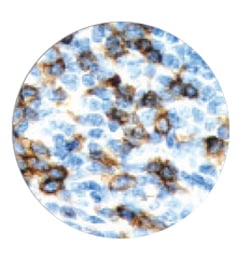
IHC (Immunohistochemistry) (Formalin-fixed, paraffin-embedded human Colon Carcinoma stained with Blood Group Antigen H Type 2 Monoclonal Antibody (19-OLE))
Application Data (Immunoperoxidase staining of rat lymph node cryosection with Mouse anti Rat CD25 followed by horseradish peroxidase conjugated Goat anti Mouse IgG1 as a detection reagent. High power)
Application Data (Immunofluorescence staining of rat lymph node cryosection with Mouse anti Rat CD25 antibody , red in A and Mouse anti Rat CD8 , green in B. C is the merged image with nuclei counterstained blue using DAPI. Medium power)
Application Data (Published customer image: Analysis of graft-infiltrating T cells. Activated CD25+ T cells and CD4+ and CD8+ T cell subsets were stained at the time points of corneal allograft rejection and calculated within the graft. A, C, and E show representative histological staining for CD25, CD4, and CD8 in grafts of treated and control animals, respectively. CD25+ (B) and CD4+ (D) cells infiltrated to a statistically significantly stronger extent in 3.2.3-treated animals when compared to control treated animals (*p)
Application Data (Staining of rat spleen cells with Mouse anti Rat CD25: FITC)
Application Data (Published clone specific image: The percentage of Ly49s3+ NK cells increases in the spleen and decreases in the bone marrow following L. monocytogenes infection. A) Mononuclear leukocytes were harvested from spleen, blood, and bone marrow from uninfected and infected animals 24 and 48 hrs p.i. Cells were stained with antibodies to NKR-P1A, CD3, and Ly49s3. NK cells were gated as NKR-P1A+CD3- cells, and the percentage of Ly49s3+ NK cells was analysed by flow cytometry. The data represent the mean +/- SEM from three independent experiments, with 2 animals at each time point. Data were analyzed with the one-way ANOVA with Tukey's multiple comparisons test. B) The activation status of NK cells from uninfected (filled histogram) or infected animals 24 (grey line) and 48 hrs p.i. (black line) was tested by flow cytometry. An antibody towards the activation marker CD25 was employed.From: Shegarfi H, Naper C, Rolstad B, Inngjerdingen M (2010) Listeria monocytogenes Infection Affects a Subset of Ly49-Expressing NK Cells in the Rat. PLoS ONE 5(12): e15579.)
Application Data (Staining of stimulated rat spleen cells with Mouse anti Rat CD25:FITC)
Application Data (Immunoperoxidase staining of rat lymph node cryosection with Mouse anti Rat CD25 followed by horseradish peroxidase conjugated Goat anti Mouse IgG1 as a detection reagent. Medium power)
Application Data (Immunofluorescence staining of rat lymph node cryosection with Mouse anti Rat CD25 antibody , red in A and Mouse anti Rat CD8 , green in B. C is the merged image with nuclei counterstained blue using DAPI. High power)
Application Data (Immunofluorescence staining of rat lymph node cryosection with Mouse anti Rat CD25 antibody , red in A and Mouse anti Rat CD8 , green in B. C is the merged image with nuclei counterstained blue using DAPI. Low power)
Application Data (Staining of Con A activated rat spleen cells with Mouse anti Rat CD25: Biotin)
WB (Western Blot) (Detection of mouse F4/80 by western blot. Samples: Whole cell lysate (5 ug) from RAW 264.7, NIH 3T3, Ba/F3, CH27, and TCMK-1 cells prepared using NETN lysis buffer. Antibody: Rabbit anti-F4/80 recombinant monoclonal antibody (AAA23866 lot 1) used at 1:1000. Secondary: HRP-conjugated goat anti-rabbit IgG . Detection: Chemiluminescence with an exposure time of 3 seconds. Lower Panel: Rabbit anti-COPB2 antibody .)
IP (Immunoprecipitation) (Detection of mouse F4/80 by western blot of immunoprecipitates. Samples: Whole cell lysate (1.0 mg per IP reaction; 5% of IP loaded) from RAW 264.7 cells prepared using NETN lysis buffer. Antibodies: Rabbit anti-F4/80 recombinant monoclonal antibody (AAA23866 lot 1) used for IP at 6 ul/mg lysate. F4/80 was also immunoprecipitated by a second antibody against a different epitope of F4/80 (BL-2189A-1B8). For blotting immunoprecipitated F4/80, AAA23866 was used at 1:1000. Detection: Chemiluminescence with an exposure time of 3 seconds.)
IHC (Immunohistochemistry) (Detection of mouse F4/80 by immunohistochemistry. Sample: FFPE section of mouse gut. Antibody: Rabbit anti-F4/80 recombinant monoclonal antibody (AAA23866 lot 1). Secondary: HRP-conjugated goat anti-rabbit IgG .)
IHC (Immunohistochemistry) (Detection of mouse F4/80 by immunohistochemistry. Sample: FFPE section of mouse spleen. Antibody: Rabbit anti-F4/80 recombinant monoclonal antibody (AAA23866 lot 1). Secondary: HRP-conjugated goat anti-rabbit IgG .)
IHC (Immunohistochemistry) (Detection of mouse F4/80 by immunohistochemistry. Sample: FFPE section of mouse liver. Antibody: Rabbit anti-F4/80 recombinant monoclonal antibody (AAA23866 lot 1). Secondary: HRP-conjugated goat anti-rabbit IgG .)
ICC (Immunocytochemistry) (Detection of mouse F4/80 by immunocytochemistry. Sample: FFPE section of RAW 264.7 cells. Antibody: Rabbit anti-F4/80 recombinant monoclonal antibody (AAA23866 lot 1). Secondary: HRP-conjugated goat anti-rabbit IgG .)
ICC (Immunocytochemistry) (Detection of mouse F4/80 by immunocytochemistry. Sample: FFPE section of J774A1 cells. Antibody: Rabbit anti-F4/80 recombinant monoclonal antibody (AAA23866 lot 1). Secondary: HRP-conjugated goat anti-rabbit IgG .)
IF (Immunofluorescence) (Immunofluorescence analysis of C6 cells using beta actin Monoclonal Antibody at dilution of 1:200.)
IF (Immunofluorescence) (Immunofluorescence analysis of NIH/3T3 cells using beta actin Monoclonal Antibody at dilution of 1:200.)
IF (Immunofluorescence) (Immunofluorescence analysis of HeLa cells using beta actin Monoclonal Antibody at dilution of 1:200.)
IF (Immunofluorescence) (Immunofluorescence analysis of U-2 OS cells using beta actin Monoclonal Antibody at dilution of 1:200.)
IHC (Immunohistochemistry) (Immunohistochemistry of paraffin-embedded Human Lung cancer using beta actin Monoclonal Antibody at dilution of 1:1000.)
IHC (Immunohistochemistry) (Immunohistochemistry of paraffin-embedded Human Stomach cancer using beta actin Monoclonal Antibody at dilution of 1:1000.)
WB (Western Blot) (Western blot with Anti beta actin Monoclonal Antibody at dilution of 1:3000. Lane 1: Raji cell lysate, Lane 2: Jurkat cell lysate, Lane 3: THP-1 cell lysate, Lane 4: Mouse spleen tissue lysate, Lane 5: Rat spleen tissue lysate, Lane 6: Raw264.7 cell lysate, Lane 7: C6 cell lysate.)
Application Data (Detection limit for recombinant GST tagged PAK1 is ~0.1ng/ml as a capture antibody.)
IP (Immunoprecipitation) (Immunoprecipitation of PAK1 transfected lysate using anti-PAK1 monoclonal antibody and Protein A Magnetic Bead, and immunoblotted with PAK1 monoclonal antibody.)
IF (Immunofluorescence) (Immunofluorescence of monoclonal antibody to PAK1 on HeLa cell. [antibody concentration 35ug/ml])
IHC (Immunohistochemistry) (Immunoperoxidase of monoclonal antibody to PAK1 on formalin-fixed paraffin-embedded human stomach. [antibody concentration 3ug/ml])
WB (Western Blot) (Western Blot analysis of PAK1 expression in transfected 293T cell line by PAK1 monoclonal antibody. Lane 1: PAK1 transfected lysate (Predicted MW: 49.6kD). Lane 2: Non-transfected lysate.)
WB (Western Blot) (PAK1 monoclonal antibody Western Blot analysis of PAK1 expression in HeLa NE.)
WB (Western Blot) (Western Blot detection against Immunogen (35.53kD).)
WB (Western Blot) (Western Blot detection against Immunogen (36.89kD).)
Application Data (Detection limit for recombinant GST tagged RICTOR is ~0.03ng/ml as a capture antibody.)
IP (Immunoprecipitation) (Immunoprecipitation of RICTOR transfected lysate using RICTOR monoclonal antibody and Protein A Magnetic Bead, and immunoblotted with RICTOR rabbit polyclonal antibody)
IHC (Immunohistochemistry) (Immunoperoxidase of monoclonal antibody to RICTOR on formalin-fixed paraffin-embedded human small Intestine. [antibody concentration 3ug/ml].)
WB (Western Blot) (Western Blot analysis of RICTOR expression in transfected 293T cell line by RICTOR monoclonal antibody. Lane 1: RICTOR transfected lysate (29.8kD). Lane 2: Non-transfected lysate.)
WB (Western Blot) (RICTOR monoclonal antibody Western Blot analysis of RICTOR expression in Hela NE.)
WB (Western Blot) (Western Blot analysis of TUBA1 expression in transfected 293T cell line by TUBA1 monoclonal antibody. Lane 1: TUBA1 transfected lysate (49.9kD). Lane 2: Non-transfected lysate.)
WB (Western Blot) (TUBA1 monoclonal antibody. Western Blot analysis of TUBA1 expression in HeLa.)
WB (Western Blot) (Western blot analysis of TUBA1 over-expressed 293 cell line, cotransfected with TUBA1 Validated Chimera RNAi (Lane 2) or non-transfected control (Lane 1). Blot probed with TUBA1 monoclonal antibody GAPDH (36.1kD) used as specificity and loading control.)
IF (Immunofluorescence) (Immunofluorescence of monoclonal antibody to TUBA1 on HeLa cell. [antibody concentration 10ug/ml])
IHC (Immunohistochemistry) (Immunoperoxidase of monoclonal antibody to TUBA1 on formalin-fixed paraffin-embedded human testis. [antibody concentration 3ug/ml])
WB (Western Blot) (TUBA1 monoclonal antibody. Western Blot analysis of TUBA1 expression in different Cell lines and Human Tissue.)
WB (Western Blot) (Western Blot detection against Immunogen (75.02kD).)
WB (Western Blot) (SMAD4 monoclonal antibody. Western Blot analysis of SMAD4 expression in IMR-32.)
WB (Western Blot) (Western Blot detection against Immunogen (86.46kD).)
Application Data (Proximity Ligation Analysis (PLA) of protein-protein interactions between CDKN1A and SMAD4 HeLa cells were stained with CDKN1A rabbit purified polyclonal 1:1200 and SMAD4 mouse monoclonal antibody 1:50. Signals were detected 30 Detection Kit 613 (red), and nuclei were counterstained with DAPI (blue). Each red dot represents the detection of protein-protein interaction complex.)
Application Data (Detection limit for recombinant GST tagged SMAD4 is ~3ng/ml as a capture antibody.)
IF (Immunofluorescence) (Immunofluorescence of monoclonal antibody to SMAD4 on HeLa cell. [antibody concentration 10ug/ml])
WB (Western Blot) (SMAD4 monoclonal antibody Western Blot analysis of SMAD4 expression in Hela NE.)
Application Data (Figure 6: Immunofluorescence staining of a 1 month old zebrafish embryo)
Application Data (Figure 5: Immunofluorescence staining of the developing neural tube in a 2 days old zebrafish embryo. Left panel: DAPI-staining of cell nuclei, providing an overview of the tissue section used for immunostaining)
Application Data (Figure 4: Immunohistochemistry on paraffin section of human colon)
Application Data (Figure 3: MUB1900L2: Frozen section of swine colon immunostained with RV202-HRP (1:200))
Application Data (Figure 2: MUB1900L1: Frozen section of swine colon immunostained with RV202-FITC (1:200))
Application Data (Figure 1: MUB1900P: Immunohistochemistry on frozen section of swine colon showing positive staining in connective tissue cells and no reactivity in epithelial cells)
Application Data (Formalin fixed, paraffin embedded human breast cancer biopsy stained with Mouse anti Human CD44 antibody followed by HRP-polymer detection and DAB substrate development (high power) following antigen retrieval using citrate buffer at pH6.2)
Application Data (Staining of human peripheral blood lymphocytes with Mouse anti Human CD44:FITC)
Application Data (Staining of human peripheral blood lymphocytes with Mouse anti Human CD44:Azide free)
Application Data (Staining of human peripheral blood lymphocytes with Mouse anti Human CD44:RPE)
Application Data (Staining of human peripheral blood granulocytes with Mouse anti Human CD44:Alexa Fluor 647)
Application Data (Staining of human peripheral blood lymphocytes with Mouse anti Human CD44:Biotin)
Application Data (Formalin fixed, paraffin embedded human breast cancer biopsy stained with Mouse anti Human CD44 antibody followed by HRP-polymer detection and DAB substrate development (low power) following antigen retrieval using citrate buffer at pH6.2)
Application Data (Detection limit for recombinant GST tagged MAPK3 is ~0.1ng/ml as a capture antibody.)
IP (Immunoprecipitation) (Immunoprecipitation of MAPK3 transfected lysate using MAPK3 monoclonal antibody and Protein A Magnetic Bead, and immunoblotted with MAPK3 monoclonal antibody)
IF (Immunofluorescence) (Immunofluorescence of monoclonal antibody to MAPK3 on HeLa cell. [antibody concentration 25ug/ml])
IHC (Immunohistochemistry) (Immunoperoxidase of monoclonal antibody to MAPK3 on formalin-fixed paraffin-embedded human placenta. [antibody concentration 3ug/ml])
WB (Western Blot) (Western Blot analysis of MAPK3 expression in transfected 293T cell line by MAPK3 monoclonal antibody. Lane 1: MAPK3 transfected lysate (43.1kD). Lane 2: Non-transfected lysate.)
WB (Western Blot) (MAPK3 monoclonal antibody Western Blot analysis of MAPK3 expression in A-431.)
WB (Western Blot) (Western Blot detection against Immunogen (36.63kD).)
Application Data (Detection limit for recombinant GST tagged MCM2 is ~0.1ng/ml as a capture antibody.)
IP (Immunoprecipitation) (Immunoprecipitation of MCM2 transfected lysate using MCM2 monoclonal antibody and Protein A Magnetic Bead, and immunoblotted with MCM2 rabbit polyclonal antibody.)
IF (Immunofluorescence) (Immunofluorescence of monoclonal antibody to MCM2 on HeLa cell. [antibody concentration 10ug/ml])
WB (Western Blot) (Western Blot analysis of MCM2 expression in transfected 293T cell line by MCM2 monoclonal antibody. Lane 1: MCM2 transfected lysate (101.9kD). Lane 2: Non-transfected lysate.)
WB (Western Blot) (MCM2 monoclonal antibody Western Blot analysis of MCM2 expression in HeLa NE.)
Application Data (Detection limit for recombinant GST tagged FGR is ~0.3ng/ml as a capture antibody.)
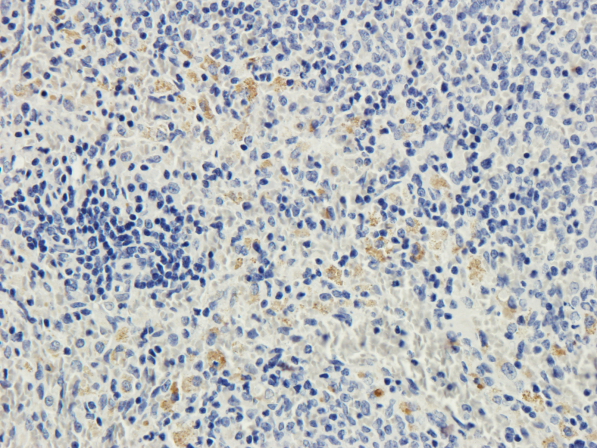
IHC (Immunohistchemistry) (Immunoperoxidase of monoclonal antibody to FGR on formalin-fixed paraffin-embedded human spleen. [antibody concentration 3ug/ml.)
WB (Western Blot) (Western Blot analysis of FGR expression in transfected 293T cell line by FGR monoclonal antibody. Lane 1: FGR transfected lysate (59.5kD). Lane 2: Non-transfected lysate.)
WB (Western Blot) (FGR monoclonal antibody. Western Blot analysis of FGR expression in Raw 264.7.)
WB (Western Blot) (FGR monoclonal antibody. Western Blot analysis of FGR expression in PC-12.)
WB (Western Blot) (FGR monoclonal antibody. Western Blot analysis of FGR expression in HeLa.)
WB (Western Blot) (Western Blot detection against Immunogen (35.53kD).)
Application Data (Detection limit for recombinant GST tagged UBTF is approximately 1ng/ml as a capture antibody.)
IHC (Immunohistochemistry) (Immunoperoxidase of monoclonal antibody to UBTF on formalin-fixed paraffin-embedded human placenta. [antibody concentration 3 ug/ml])
WB (Western Blot) (UBTF monoclonal antibody (M04), clone 2D8 Western Blot analysis of UBTF expression in HepG2.)
IF (Immunofluorescence) (Immunofluorescence of monoclonal antibody to UBTF on HepG2 cell. [antibody concentration 10 ug/ml])
WB (Western Blot) (Western Blot analysis of VRK2 expression in transfected 293T cell line by VRK2 monoclonal antibody Lane 1: VRK2 transfected lysate (58.1kD). Lane 2: Non-transfected lysate.)
Application Data (Detection limit for recombinant GST tagged VRK2 is ~1ng/ml as a capture antibody.)
IF (Immunofluorescence) (Immunofluorescence of monoclonal antibody to VRK2 on HeLa cell. [antibody concentration 10ug/ml])
WB (Western Blot) (Western blot analysis of VRK2 over-expressed 293 cell line, cotransfected with VRK2 Validated Chimera RNAi (Lane 2) or non-transfected control (Lane 1). Blot probed with VRK2 monoclonal antibody. GAPDH (36.1kD) used as specificity and loading control.)
WB (Western Blot) (VRK2 monoclonal antibody, Western Blot analysis of VRK2 expression in K-562.)
WB (Western Blot) (VRK2 monoclonal antibody. Western Blot analysis of VRK2 expression in U-2 OS.)
Monoclonal antibodies are specialized laboratory-produced proteins developed for binding to specific biological antigens or other molecular targets. Since they come from a single cell (or clone), they are especially consistent and accurate in the data they are involved in producing.
This type of antibody material has been shown to be a powerful tool in finding and subsequently destroying harmful cells in an organism, such as those found in cancers or various autoimmune diseases. This makes them excellent aids in medical testing and research, which is why they are so widely used.
AAA Biotech offers a comprehensive range of high-quality monoclonal antibodies that perform effectively in various laboratory tests, including (amongst others) ELISA, western blotting, immunohistochemistry, and flow cytometry. All of the products in our catalog are thoroughly quality tested to make sure that they are reliable and will consistently perform well in your research.
What Are The Uses of Monoclonal Antibodies
Monoclonal antibodies are used in many lab tests, including (amongst others) ELISA, western blotting, immunohistochemistry, and flow cytometry.
ELISA is a test that helps detect a specific substance/analyte in a sample. It uses antibodies (often monoclonal) bound to a solid surface (such as the well of a microplate) to “capture” the substance/analyte in the sample and immobilize it so that the detection antibody component can then bind to it and produce a signal, which can then be measured.
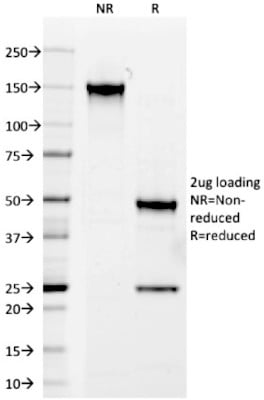
Western blotting identifies specific proteins in a sample. The sample is first separated on a gel, and then antibodies are applied that will typically bind to the target, which will all be localized to a single band in a lane.
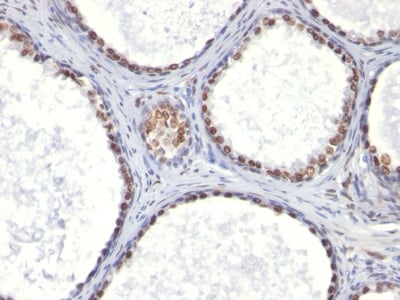
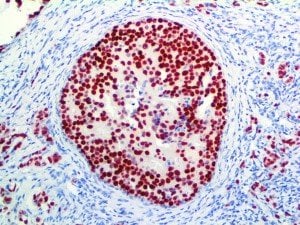
Immunohistochemistry helps locate specific proteins in cells or tissue samples using antibodies.
Flow cytometry looks at and sorts cells. It uses antibodies that are conjugated to reporter molecules called “fluorophores”, which, under special lights, emit light themselves, which can then be measured by a detector instrument.
How Monoclonal Antibodies Are Used as Medicine?
Please note that all of the products listed in AAA Biotech’s catalog are strictly for research-use only (RUO).
Monoclonal antibodies can also be used as therapeutic/medical treatments, particularly in the context of cancers. They are designed to find and bind to specific cells or proteins, helping the immune system recognize and attack the cancer. These treatments work in different ways, such as:
Radioimmunotherapy attaches a small amount of radioactive molecule to the antibody, so it delivers the radiation directly to the cancer cells that the antibody is specifically binding to.
Antibody-directed enzyme prodrug therapy uses antibodies that are specifically bound to special enzymes. These enzymes activate a harmless drug in the body and turn it into a cancer-killing drug only near the cancer cells—this helps avoid harming healthy cells.
Immunoliposomes are tiny “bubbles” filled with medicine/drug and coated with antibodies. They carry the drug straight to the cancer cells.
Why Buy Monoclonal Antibodies From Us?
At AAA Biotech, we provide high-performance monoclonal antibodies designed to support a wide range of research needs.
1. Validated for Versatile Applications
The antibodies in our catalog are extensively validated and compatible with multiple techniques, including (but not limited to) ELISA, flow cytometry (FC), immunocytochemistry (ICC), immunofluorescence (IF), immunohistochemistry (IHC), immunoprecipitation (IP), and western blotting (WB).
2. Wide Selection & Specialized Options
We offer antibodies for common and rare species, that are available in various conjugated forms, and also in recombinant formats. Essentially, there is almost anything one might need to meet their experimental model’s requirements.
3. High-Quality Proteins
Our proteins meet high purity standards—90% or more as confirmed by SDS-PAGE. Many are available with tags like His, Flag, GST, or MBP, and we also supply native and biologically active proteins for functional studies.
Frequently Asked Questions
1. Are your monoclonal antibodies validated for specific applications?
Yes, our antibodies are tested and validated for use in methods such as ELISA, western blot, IHC, flow cytometry, and more. Refer to specific product pages or datasheets for individual product information.
2. How do I choose the right monoclonal antibody for my application?
Review the product details directly for application validation, species reactivity, and target information. You may also contact our support team at any time for help.
3. How quickly can I receive my order?
Most orders are processed and shipped within 1–3 business days, depending on product availability and your shipping location.
Submit a Question
Please complete the form below and a representative will contact you as soon as possible.
Request more Information
Please complete the form below and a representative will contact you as soon as possible.
Request a Manual
Please complete the form below and a representative will contact you as soon as possible.
Request a Quote
Please complete the form below and a representative will contact you as soon as possible.