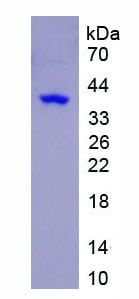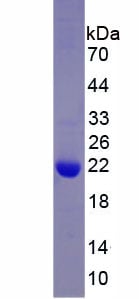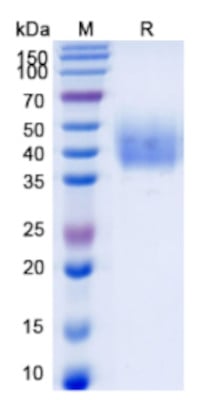
At AAA Biotech, we offer a comprehensive selection of high-quality recombinant proteins for use in a wide range of research areas, including immunology, neuroscience, stem cell research, cancer research and more. No matter whether you need recombinant proteins for cell expansion, polarization, differentiation, or cell processing applications, we have got you covered.
Our recombinant proteins undergo rigorous quality testing. So, you can rely on AAA Biotech for high-quality recombinant proteins to support your research. Explore our catalog to find the right protein for your research needs.
DB (Dot Blot) (Dot Blot analysis for recombinant TET3 (824-1795) protein. 250 ng of 30 base oligonucleotide (contains a 5mCpG) was incubated with 0 ug, 312.5 and 625 ng TET3 protein, respectively, in buffer containing 50 mM HEPES pH 7.9, 50 ?M Fe(NH4)2(SO4)2, 1 mM ascorbate, 100 uM alpha-ketoglutarate, 200 uM ATP, 1 mM TCEP at room temperature for 1 hour. Sample was concentrated to 5 ul, then 1 ul sample was spotted onto positively charged nylon membrane. 5-hmC antibody was used to detect the generation of products.)
SDS-PAGE (Recombinant TET3 (824-1795) protein gel. Recombinant TET3 (824-1795) protein was run on an 8% SDS-PAGE gel and stained with Coomassie blue.)
Application Data (Recombinant JARID1B / KDM5B protein activity assay. 1 ?M H3K4me3 peptide was incubated with different concentrations of JARID1B / KDM5B protein in 10 ?l reaction system, then 10 ?l anti-H3K4me2 antibody and SA-XL665 mixture (each 1:100 dilution in HTRF Detection Buffer) was added to each reaction system and incubated for 30 min. All the operations and reactions were performed at room temperature. HTRF assay was used for detection.)
SDS-PAGE (Recombinant JARID1B / KDM5B protein gel. JARID1B / KDM5B protein was run on an 8% SDS-PAGE gel and stained with Coomassie blue. MW: 179.9 kDa Purity: > 70%)
Application Data (HTRF Assay for Recombinant BRD1 (556-688) activity. 3.3 uM histone peptide H4K5/8/12/16 (4Ac) was incubated with BRD1 (556-688) protein in reaction buffer including 50 mM HEPES-NaOH pH 7.0, 0.1% BSA for 1 hour at room temperature. Anti-DYKDDDDK antibody was used to detect reaction products.)
SDS-PAGE (Recombinant BRD1 (556-688) protein gel. BRD1 (556-688) protein was run on an SDS-PAGE gel and stained with Coomassie Blue.)
SDS-PAGE (NSD2 (MMSET) activity assay. 2 ug recombinant nucleosomes were incubated with NSD2 in 30 ul reaction system for 3 hr. at room temp. Reaction products were run on a 12.5% SDS-PAGE gel and detected with H3K36me2 antibody. NSD2 only was used as negative control. Results show that nucleosomes are better than octamers as substrates for NSD2. )
SDS-PAGE (Recombinant NSD2 (MMSET) protein gel. NSD2 (MMSET) protein was run on a 8% SDS-PAGE gel and stained with Coomassie blue. MW: 154 kDa Purity: > 75%)
Application Data (JMJD2C / KDM4C activity assay.1 uM H3K9me3 peptide was incubated with different concentrations of JMJD2C / KDM4C protein in 10 ul reaction system containing 50 mM HEPES-NaOH pH 7.5, 1 mM TCEP, 50 uM 2-OG, 50 uM Ascorbate, 25 uM (NH4)2Fe(SO4)2·6H2O for 1 hour, then 10 ul H3K9me2 antibody and SA-XL665 mixture (1:100 dilution in HTRF Detection Buffer) was added to each reaction system and incubated for 30 min. All the operations and reactions were performed at room temperature. HTRF assay was used for detection.)
SDS-PAGE (Recombinant JMJD2C / KDM4C protein gel. JMJD2C / KDM4C protein was run on an 8% SDS-PAGE gel and stained with Coomassie Blue. MW: 126.1 kDa Purity: > 90%)
Application Data (HTRF assay for UTX / KDM6A activity 3 uM H3K27me3 peptide was incubated with different concentrations of UTX / KDM6A protein in a 10 ul reaction system containing 50 mM HEPES-NaOH pH 7.5, 1 mM TCEP, 50 uM 2-OG, 50 uM Ascorbate and 25 uM (NH4)2Fe(SO4)2·6H2O for 1 hr, then 10 ul of H3K27me2 antibody and SA-XL665 mixture (each 1:100 dilution in HTRF Detection Buffer) was added to each reaction system and incubated for 30 min. All the operations and reactions were performed at room temperature. HTRF assay was used for detection.)
SDS-PAGE (Recombinant UTX / KDM6A protein gel. UTX / KDM6A protein was run on a 10% SDS-PAGE gel and stained with Coomassie blue. MW: 158.8 kDa Purity: >70%)
WB (Western Blot) (Histone Methyltransferase (HMT) Assay comparing Recombinant Polynucleosomes (H3.3) and histone octamers as substrates. 2 ug Recombinant Polynucleosomes (H3.3) were incubated with 0 ug , 0.25 ug, 0.5 ug and 1 ug NSD2-SET in reaction buffer for 3 hours at room temperature, respectively. Western Blot was used to detect the generation of reaction products (H3K36me2). NSD2-SET only and polynucleosomes only were used as negative control. The Western Blot result shows that polynucleosomes are more suitable substrate for NSD2 than histone octamers.)
Application Data (Recombinant Polynucleosomes (H3.3) protein DNA Gel-shift assay Polynucleosomes (H3.3) and free plasmid DNA were run on 1% agarose gel and stained with ethidium bromide. Intact polynucleosomes migrate much higher than free DNA, thus the DNA resolves at a higher molecular weight when nucleosome-bound.)
SDS-PAGE (Recombinant Polynucleosomes (H3.3) protein gel. Recombinant Polynucleosomes (H3.3) were run on a 12% SDS-PAGE gel and stained with Coomassie Blue.)
Application Data (NSD1-SET activity assay using Recombinant Nucleosomes as substrates. Recombinant Nucleosomes were used as substrates in an assay measuring the methyltransferase activity of NSD1-SET. Activity was detected by fluorography.)
SDS-PAGE (Recombinant NSD1-SET protein gel. Recombinant NSD1-SET run on an SDS-PAGE gel and stained with Coomassie blue.)
Application Data (Recombinant SETD7 protein activity assay. 2 ug Calf Thymus Octamers was incubated with 0.5 ug SETD7 protein in reaction buffer containing radioactive 3H-SAM for 2 hour at room temperature. Activity was detected by fluorography.)
Application Data (Recombinant SETD7 protein HTRF activity assay. 1 ?M H3K4me0 (1-21aa) peptide was incubated with SETD7 in reaction buffer for 2 hour at room temperature. SETD7 enzyme was used in a HTRF assay to determine enzyme linearity. Methylated peptide (H3K4me1) was measured using H3K4me1-specific antibody.)
SDS-PAGE (Recombinant SETD7 protein gel. SETD7 protein was run on an 8% SDS-PAGE gel and stained with Coomassie blue.)
Application Data (HTRF assay for SIRT1 (193-741) activity1 ?M H3K9ac (1-21aa.) peptide was incubated with different concentrations of SIRT1 (193-741) protein in 10 ?l reaction system containing 25 mM Tris-HCl pH 8.0, 137 mM NaCl, 2.7 mM KCl, 1 mM MgCl2, 0.1 mg/ml BSA and 50 ?M NAD+ for 30 min at room temperature, then 10 ?l anti-H3K9me0 antibody and SA-XL665 mixture (1:100 dilution in HTRF Detection Buffer) was added to each reaction system and incubated for 30 min at room temperature. HTRF assay was used for detection. Fluorenscence intensity at 620 nm and 665 nm were measured respectively. The final HTRF signal was obtained by formula: HTRF signal = F665/F620*10000.)
SDS-PAGE (Recombinant SIRT1 (193-741)12.5% SDS-PAGE with Coomassie Blue staining.MW: 101.5 kDaPurity: >80%)
Recombinant SIRT1 (193-741) protein that includes amino acids 193-741 of human SIRT1 protein (accession number NM_012238.4) was expressed in E Coli and contains an N-terminal GST-Tag with a molecular weight of 101.5 kDa.The purity ofThe protein is > 80% b
Application Data (HDAC6 (H230A) Protein activity assay. 3 uM H3K9ac (1-21) peptides was incubated with different concentrations of HDAC6 (H230A) protein in reaction buffer for 30 minutes at 37 degree C followed by developing for 30 minutes at room temperature. Reaction product was detected by Anti-H3K9me0-Eu antibody. HTRF assay was used for activity detection.)
SDS-PAGE (Recombinant HDAC6 (H230A) protein gel HDAC6 (H230A) protein was run on an 8% SDS-PAGE gel and stained with Coomassie Blue.)
WB (Western Blot) (Western Blot analysis for Recombinant Histone H3K79me3 (MLA) Recombinant Histone H3K27me3 (MLA) (Lane 1) and Histone H3.1 (Lane 2) were detected with H3K79me2me3 antibody . Histones stained by coomassie blue below were as loading control.)
SDS-PAGE (Recombinant Histone H3K79me3 (MLA) gel. Histone H3K79me3 (MLA) was run on a 12.5% SDS- PAGE gel and stained with Coomassie Blue. MW: 15.3 kDa Purity: > 90%)
DB (Dot Blot) (Dot blot for Recombinant ALKBH5 protein activity. 3 uM m6A ssDNA oligos (sequence: 5’-GTTGCCTGTTCGTGTTGG/m6A/CTTGCCTGT-3’) were incubated with different concentrations of ALKBH5 proteins in a 30 ul reaction system including 50 mM HEPES-NaOH pH 7.5, 100 uM 2-oxoglutarate, 100 uM ascorbate, 50 ?M (NH4)2Fe(SO4)2·6H2O and 1 mM TCEP for 2 hours at room temperature. Then each reaction was concentrated to a final volume of 10 ul. 1 ul of each reaction was spotted onto a positively charged nylon membrane and products were detected by Dot blot assay with m6A antibody .)
SDS-PAGE (Recombinant ALKBH5 protein gel Recombinant ALKBH5 was run on a 10% SDS-PAGE gel stained with Coomassie Blue. MW: 45.5 kDa Purity: > 90%)
Application Data (Recombinant IDH1 (R131C) protein activity assay 10 uM NADPH and 1 uM a-KG were incubated with 100 nM IDH1 (R132C) protein in 200 ul reaction system containing 50 mM Tris-HCl pH 7.4, 150 mM NaCl, 10 mM MgCl2 and 0.03% BSA (room temperature). Depletion of NADPH was monitored continuously at Abs 340 nm for 20 min.)
SDS-PAGE (Recombinant IDH1 (R132C) protein gel 10% SDS-PAGE Coomassie staining MW: 47.7 kDa Purity: > 90% )
Application Data (10 uM NADPH and 1 uM α-KG were incubated with 100 nM IDH1 (R132H) protein in 200 ul reaction system containing 50 mM Tris-HCl pH 7.4, 150 mM NaCl, 10 mM MgCl2 and 0.03% BSA (room temperature). Depletion of NADPH was monitored continuously at Abs 340 nm for 45 min.)
Application Data (Recombinant IDH2 protein activity. 200 uM DL-isocitric acid trisodium and 200 uM NADP+ were incubated with IDH2 protein in reaction buffer including 50 mM Tris-HCl pH 7.4, 100 mM MgCl2 for 10 minutes at room temperature. The generation of product NADPH was monitored by measuring absorbance at 340 nm.)
SDS-PAGE (Recombinant IDH2 protein, SDS-PAGE gel. Recombinant IDH2 protein was run on a 12.5% SDS-PAGE gel and stained with Coomassie Blue. MW: 51.7 kDa Purity: > 95%)
Application Data (Recombinant IDH2 (R172K) protein activity assay 10 uM NADPH and 1 uM a-KG were incubated with 100 nM IDH2 (R172K) protein in 200 ul reaction system (50 mM Tris-HCl pH 7.4, 150 mM NaCl. 10 mM MgCl2 and 0.03% BSA, room temp). Depletion of NADPH was monitored continuously at Abs 340 nm for 20 min.)
SDS-PAGE (Recombinant IDH2 (R172K) protein gel 12.5% SDS-PAGE Coomassie staining MW: 51.7 kDa Purity: > 85% )
Application Data (HTRF assay for Recombinant PDK1 protein, GST-Tag 1 uM STK S3 substrate was incubated with different concentrations of PDK1 protein in 10 ul reaction system containing 1×Enzymatic Buffer, 2 mM MgCl2, 1 mM DTT and 100 uM ATP for 1 hour. The detection reagents were added and incubated with the reactions for 1 hr. All the operations and reactions were performed at room temperature, and HTRF KinASE STK assay was used to detect the enzymatic activity.)
WB (Western Blot) (Recombinant KAT6B / MORF (718-1008) protein activity assay 0.5 ug Histone H3.1 was incubated with 0 ug (-), 0.1 ug (+), 0.2 ug (++), 0.4 ug (+++) KAT6B / MORF (718-1008) protein in a 20 ul reaction system containing 50 mM Tris-HCl pH 8.6, 2 mM MgCl2, 1 mM TCEP, 0.02% Triton X-100 and 20 uM Acetyl-CoA for 2 hr at RT. Reaction products were detected by Western blot using H3ac (pan-acetyl) antibody .)
SDS-PAGE (Recombinant KAT6B / MORF (718-1008) protein gel 10% SDS-PAGE gel with Coomassie blue staining MW: 35.7 kDa Purity: > 93%)
Application Data (MTase-Glo Assay for Recombinant SETD6 protein methyltransferase activity 1 uM substrate peptide and 1 uM SAM were incubated with different concentrations of recombinant SETD6 protein in an 8 ul reaction system containing 50 mM Tris-HCl pH 8.6, 0.02% Triton X-100, 2 mM MgCl2, 1 mM TCEP for 1 hr. 5×MTase-Glo Reagent was added to the products and incubated for 30 min. Then MTase-Glo Detection was added and luminescence was read after another 30 min incubation. SAH standard curve (0-1 uM) was performed following the same protocol)
SDS-PAGE (Recombinant SETD6 protein gel 10% SDS-PAGE with Coomassie staining. MW: 52.1 kDa Purity: >90%)
SDS-PAGE (Streptavidin pull down assay for Recombinant Mononucleosomes H3.3 (R8C) - biotin 24 ug biotinylated mononucleosomes were incubated with 10 ul streptavidin beads for 1 hr at 4 degree C. Streptavidin beads were washed 3 times with 1 ml binding buffer. Then the beads were added 60 ul 2×SDS loading buffer and boiled for 10 min at 95 degree C. 2.4 ul samples were loaded and run on a 12.5% SDS-PAGE gel and stained by Commassie blue. The SDS-PAGE gel result showed that almost all of biotinylated mononucleosomes were pulled down by streptavidin beads.)
SDS-PAGE (Recombinant Mononucleosomes H3.3 (R8C) - biotin, protein gel 12.5% SDS-PAGE gel with Coomassie blue staining MW: 108 kDa Purity: >92%)
Application Data (Recombinant Mononucleosomes H3.3 (R8C) - biotin, DNA gel Recombinant Mononucleosomes H3.3 (R8C), biotin, were run on a 2 agarose gel and stained with ethidium bromide. Lane 1: DNA marker. Lane 2: Free 601 DNA which was used for assembly of nucleosome. Lane 3: Intact mononucleosomes H3.3 (R8C), biotin. Intact mononucleosomes H3.3 (R8C) migrated much higher than free 601 DNA. The agarose gel shows that almost all of 601 DNA wrapped histone octamers to form nucleosomes.)
Application Data (HTRF for IGF2BP2 activity 1 uM ACTB zipcode ssDNA (1212-1313) was incubated with different concentrations of IGF2BP2 protein in a 10 ul reaction system containing 50 mM HEPES-NaOH pH 7.5, 0.1% BSA for 1 hour, then 10 ul anti-DYKDDDDK antibody and SA-XL665 mixture (1:100 dilution in the same buffer) was added to each reaction system and incubated for 30 min. All the operations and reactions were performed at room temperature. HTRF assay was used for detection.)
Application Data (HTRF for IGF2BP2 activity 1 uM ACTB zipcode ssDNA (1212-1313) was incubated with different concentrations of IGF2BP2 protein in a 10 ul reaction system containing 50 mM HEPES-NaOH pH 7.5, 0.1% BSA for 1 hour, then 10 ul anti-DYKDDDDK antibody and SA-XL665 mixture (1:100 dilution in the same buffer) was added to each reaction system and incubated for 30 min. All the operations and reactions were performed at room temperature. HTRF assay was used for detection. .)
SDS-PAGE (Recombinant IGF2BP2 protein gel 10% SDS-PAGE with Coomassie blue staining MW: 67.4 kDa Purity: >88%)
Application Data (HTRF assay for SETD1A-SET Complex activity 1 uM H3 (1-21) was incubated with different concentrations of SETD1A-SET Complex in a 10 ul reaction system containing 50 mM Tris-HCl pH 8.6, 0.02% Triton X-100, 2 mM MgCl2, 1 mM TCEP and 100 uM SAM for 2 hour, then 10 ul H3K4me2 antibody and SA-XL665 mixture (1:100 dilution in the same buffer) was added to each reaction system and incubated for 30 min. All the operations and reactions were performed at room temperature. HTRF assay was used for detection)
SDS-PAGE (Recombinant SETD1A-SET Complex 10% SDS-PAGE with Coomassie blue staining MW of SETD1A-SET: 35.2 kDa WDR5 of 36.6 kDa RBBP5 of 59.2 kDa ASH2L of 68.7 kDa Purity: >95%)
WB (Western Blot) (Western blot analysis in order to detect streptavidin /biotin reaction. The incubation was performed with HRP conjugated streptavidin (1:2500))
SDS-PAGE (Figure 1. SDS-PAGE analysis (15%) of 7 ?l of recombinant gG1. Purity is > 95% as determined by gel electrophoresis.)
Application Data (The purity of AMPK was determined to be >85% by densitometry.A1 approx. MW 68-75kDaB1 approx. MW 38kDaG1 approx. MW 40kDa)
Application Data (The specific activity of AMPK was determined to be 124 nmol/min/mg as per activity assay protocol and was equivalent to 745 nmol/min/mg as per radiometric assay.)
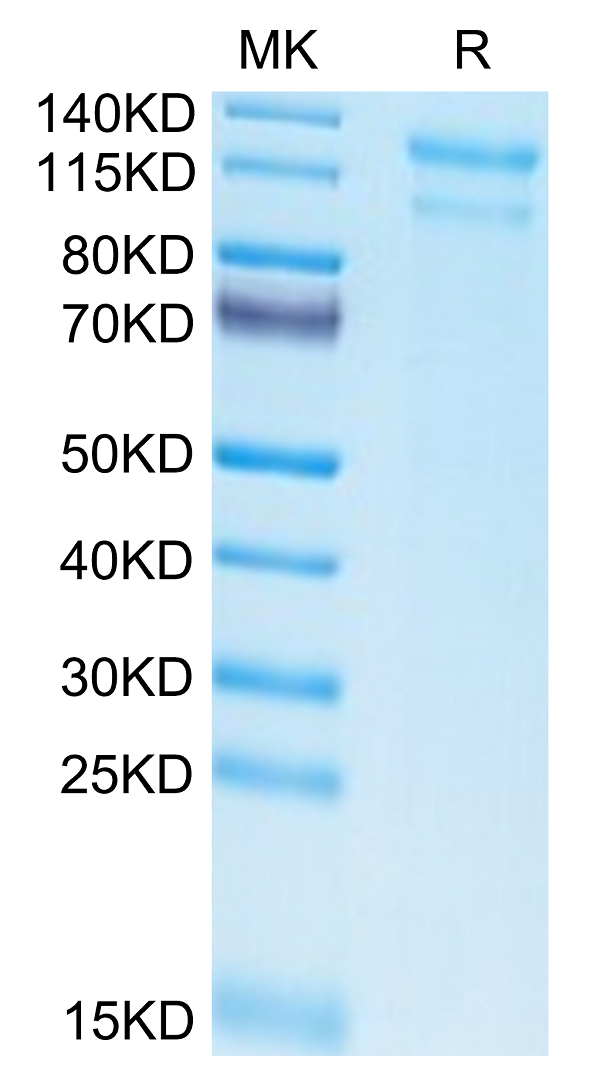
Purity Data (The purity of Dog ACE2 (18-739) Protein was determined to be >90% by densitometry. approx. MW 150kDa)
Specific Activity (Binding ability measured in a functional ELISA. Unlike human ACE2. Dog ACE2 (18-739) Protein (AAA73166) does not bind well to immoblized 2019-n-Cov Spike protein RBD .)
Recombinant proteins are purified laboratory reagents produced through genetic engineering. A specific gene of interest is inserted into a host organism, such as mammalian, bacterial, yeast, or insect cells, which then expresses the protein in a controlled environment.
The recombinant process utilized to generate the recombinant proteins in our catalog provides precise control over sequence modifications, expression levels, and large-scale production tailored to experimental needs. These recombinants are widely used in research to investigate protein-protein interactions, enzyme activities, receptor-ligand binding, and cellular responses. Additionally, recombinant proteins serve as standards or controls in immunostaining assays and support cell growth and differentiation in culture systems, particularly in immunology, oncology, and structural biology studies.
Common Applications of Recombinant Proteins
Studying protein-protein and protein-DNA interactions
Functional assays to study biological pathways
Standard curves in ELISA and other quantitative assays
Use as antigens for antibody production
Development and screening of therapeutic drugs
Biomarker discovery and validation
Cell signaling and immune response studies
Vaccine research and development
Key Features of AAA Biotech’s Recombinant Proteins
High Purity: Most proteins are purified to ≥95% using affinity chromatography and other validated techniques.
Biological Activity: If functional activity is tested and confirmed for a given protein, it will be noted directly on the product page.
Multiple Expression Systems: Available in E. coli, HEK293, CHO, yeast, and insect cells to match your assay requirements.
Custom Tags Available: His-tag, GST, FLAG, and Fc fusion options for easy purification and detection.
Wide Range of Targets: Cytokines, growth factors, enzymes, receptors, signaling proteins, and more.
Validated Consistency: Lot-to-lot consistency ensured through rigorous QC protocols.
Flexible Quantities: Available in various pack sizes to suit different experimental needs.
Ready-to-Use Format: Lyophilized or liquid formulations that are easy to reconstitute and use.
Why Buy Recombinant Proteins from AAA Biotech?
At AAA Biotech, we are committed to supporting the research community with recombinant proteins that offer exceptional performance and reliability. Our proteins are produced using industry-standard methods and are validated to meet the needs of academic, pharmaceutical, and biotechnology laboratories.
With competitive pricing, global shipping, and dedicated technical support, AAA Biotech makes it simple and convenient to source the high-quality recombinant proteins your work depends on.
FAQ
1. How are AAA Biotech recombinant proteins validated?
Each batch undergoes stringent quality control checks, including SDS-PAGE analysis, endotoxin testing (for select products), and activity assaying (for select products). Certificates of Analysis are provided with every product.
2. Are your proteins suitable for therapeutic development or only research?
AAA Biotech recombinant proteins are strictly for research-use only and are not intended for diagnostic or therapeutic purposes in humans or animals.
3. What types of expression systems do you use for recombinant protein production?
The production labs use a variety of expression platforms, including bacterial (E. coli), yeast, insect (baculovirus), and mammalian (HEK293, CHO) systems. The expression system used depends on the complexity and intended function/use of the protein.
Submit a Question
Please complete the form below and a representative will contact you as soon as possible.
Request more Information
Please complete the form below and a representative will contact you as soon as possible.
Request a Manual
Please complete the form below and a representative will contact you as soon as possible.
Request a Quote
Please complete the form below and a representative will contact you as soon as possible.