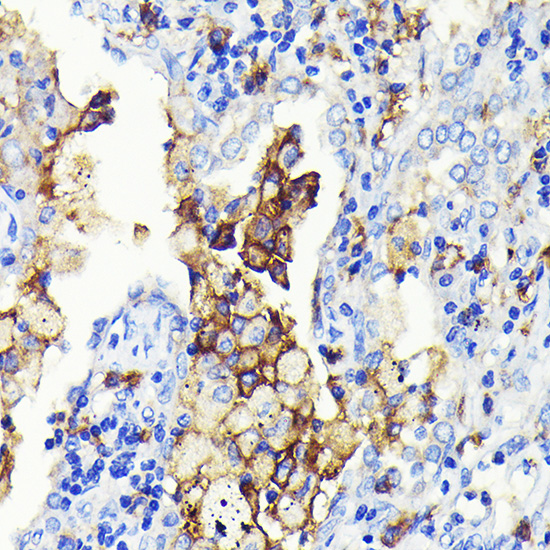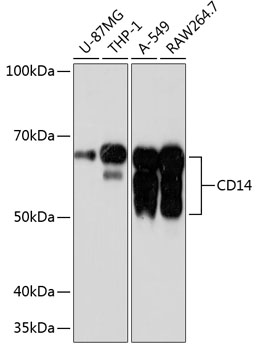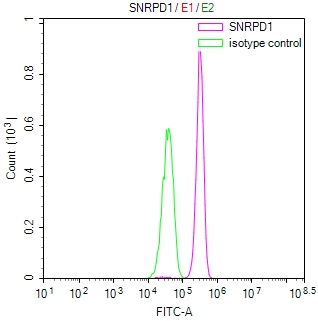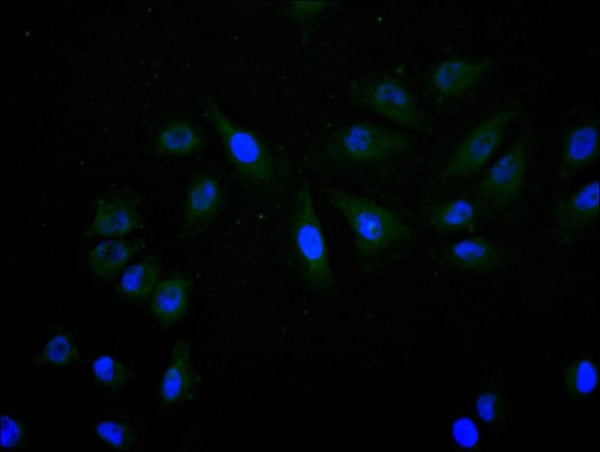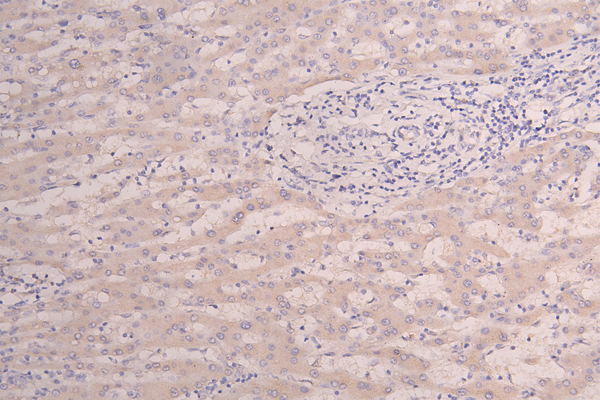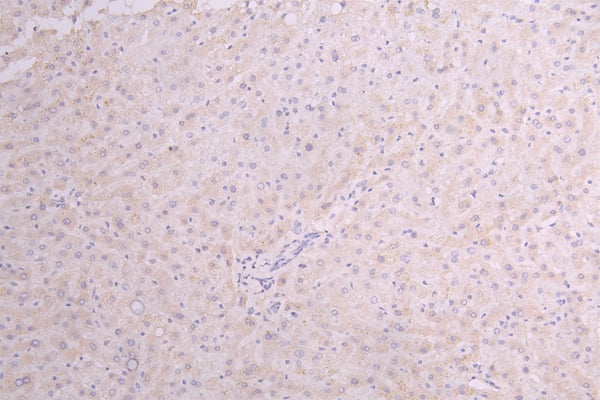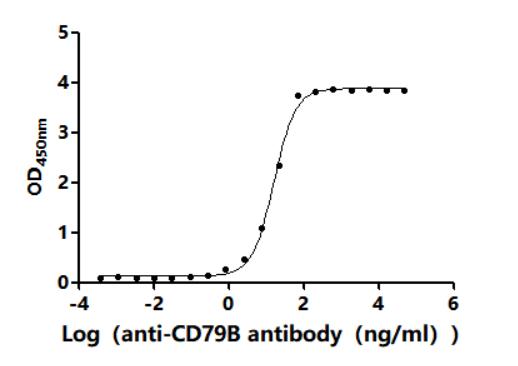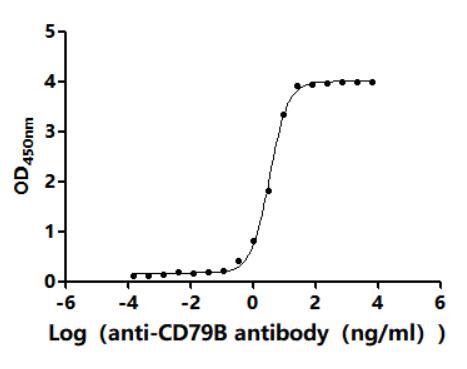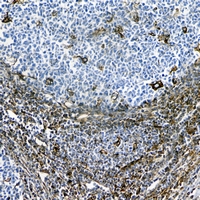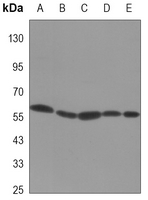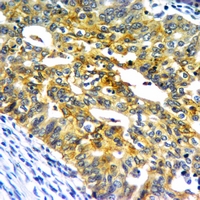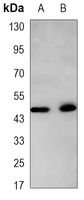
Get accurate results in your research with our Monoclonal Antibodies, which are specially made to target exactly what you require for your research, and will produce consistent, reliable performance in lab tests.
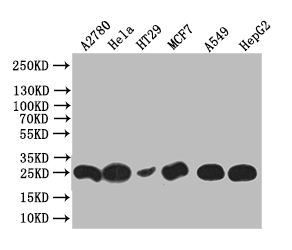
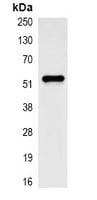
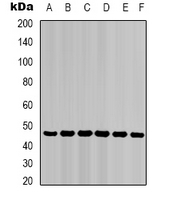
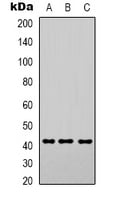
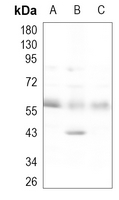
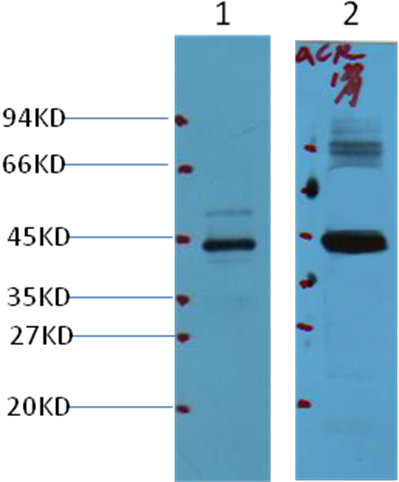
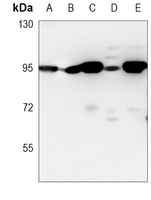
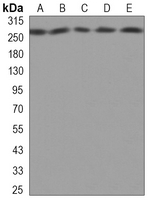
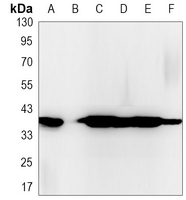
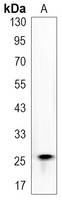
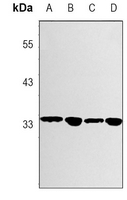
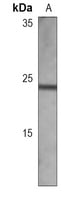
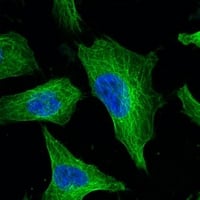
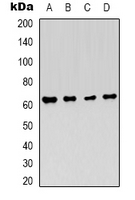
SDS-PAGE (Whole cell lysates were separated by 10% SDS-PAGE, and the membrane was blotted with anti-CK8/18(ABT053/CK18)antibody. The HRP-conjugated Goat anti-M)
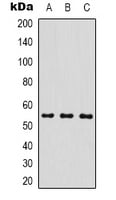
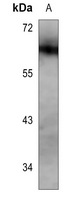
WB (Western Blot) (DDX56 monoclonal antibody. Western Blot analysis of DDX56 expression in PC-12.)
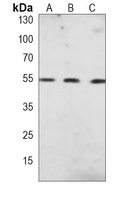
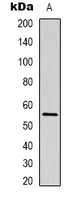
WB (Western Blot) (DDX56 monoclonal antibody, Western Blot analysis of DDX56 expression in HeLa.)
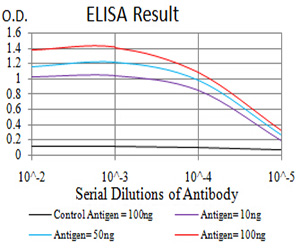
Application Data (Detection limit for recombinant GST tagged DDX56 is ~0.1ng/ml as a capture antibody.)
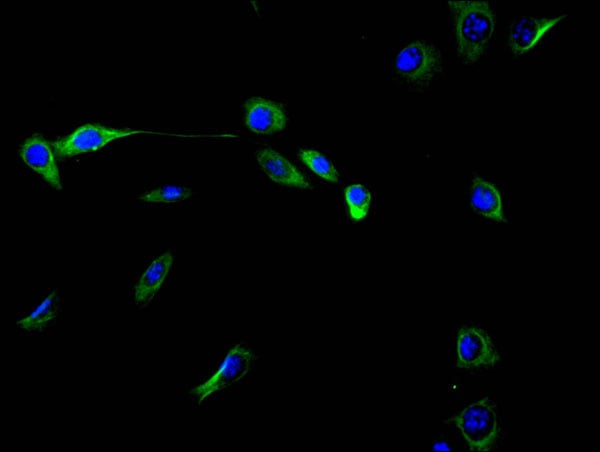
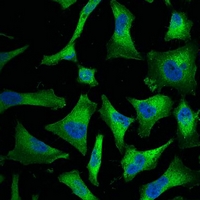
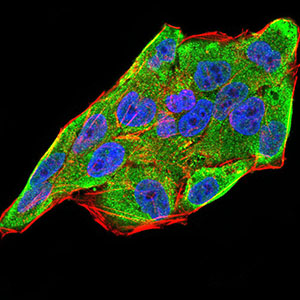
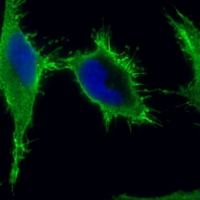
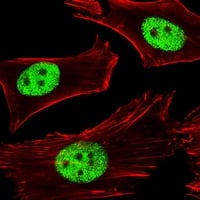
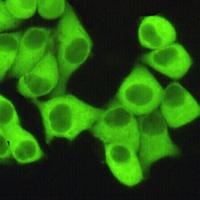
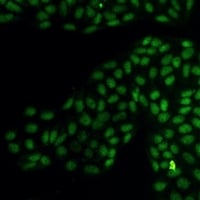
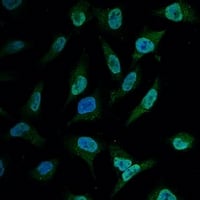
IF (Immunofluorescence) (Immunofluorescence of monoclonal antibody to DDX56 on HeLa cell. [antibody concentration 10ug/ml].)
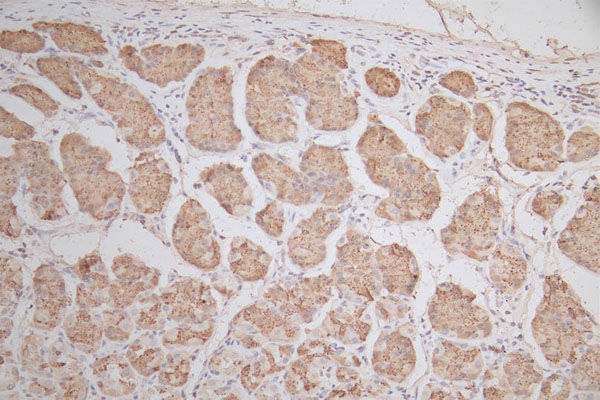
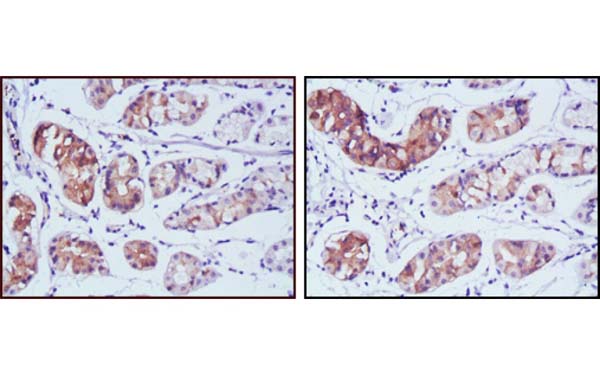
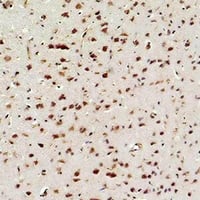
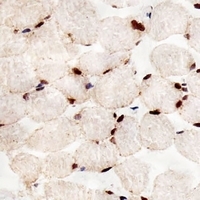
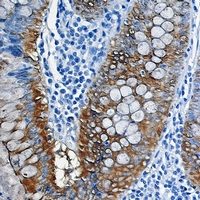
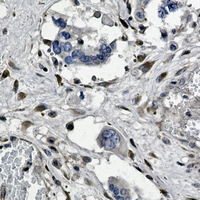
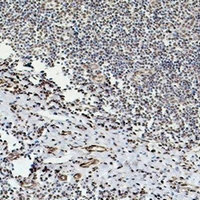
IHC (Immunohistochemistry) (Immunoperoxidase of monoclonal antibody to DDX56 on formalin-fixed paraffin-embedded human liver. [antibody concentration 3ug/ml].)
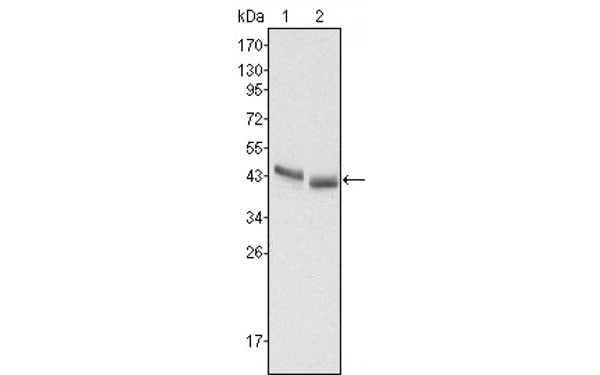
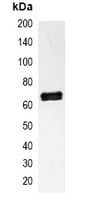
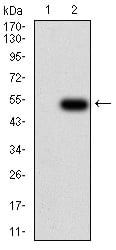
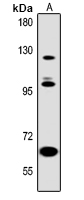
WB (Western Blot) (Western Blot analysis of DDX56 expression in transfected 293T cell line by DDX56 monoclonal antibody. Lane 1: DDX56 transfected lysate (62kD). Lane 2: Non-transfected lysate.)
WB (Western Blot) (Western Blot detection against Immunogen (36.89kD).)
WB (Western Blot) (Detection of human GATA3 by western blot. Samples: Whole cell lysate (10 ug) from HEK293T, Hep-G2, Jurkat, RKO, K-562, MCF-7, and HeLa cells prepared using NETN lysis buffer. Antibody: Rabbit anti-GATA3 recombinant monoclonal antibody (AAA23839 lot 1) used at 1:1000. Secondary: HRP-conjugated goat anti-rabbit IgG . Detection: Chemiluminescence with an exposure time of 30 seconds.)
WB (Western Blot) (Detection of mouse GATA3 by western blot. Samples: Whole cell lysate (50 ug) from BW5147.3, mIMCD-3, A20, NIH 3T3, CT26, EL4, RenCa, CH27, C2C12, and TCMK-1 cells prepared using NETN lysis buffer. Antibody: Rabbit anti-GATA3 recombinant monoclonal antibody (AAA23839 lot 1) used at 1:1000. Secondary: HRP-conjugated goat anti-rabbit IgG . Detection: Chemiluminescence with an exposure time of 3 minutes.)
IP (Immunoprecipitation) (Detection of human GATA3 by western blot of immunoprecipitates. Samples: Whole cell lysate (1.0 mg per IP reaction; 20% of IP loaded) from MCF-7 cells prepared using NETN lysis buffer. Antibodies: Rabbit anti-GATA3 recombinant monoclonal antibody (AAA23839 lot 1) used for IP at 6 ul per reaction. GATA3 was also immunoprecipitated by rabbit anti-GATA3 antibody BL1707B-1C7. For blotting immunoprecipitated GATA3, AAA23839 was used at 1:1000. Detection: Chemiluminescence with an exposure time of 3 seconds.)
IP (Immunoprecipitation) (Detection of human GATA3 by western blot of immunoprecipitates. Samples: Whole cell lysate (1.0 mg per IP reaction; 20% of IP loaded) from Jurkat cells prepared using NETN lysis buffer. Antibodies: Rabbit anti-GATA3 recombinant monoclonal antibody (AAA23839 lot 1) used for IP at 6 ul per reaction. GATA3 was also immunoprecipitated by rabbit anti-GATA3 antibody BL1707B-1C7. For blotting immunoprecipitated GATA3, AAA23839 was used at 1:1000. Detection: Chemiluminescence with an exposure time of 30 seconds.)
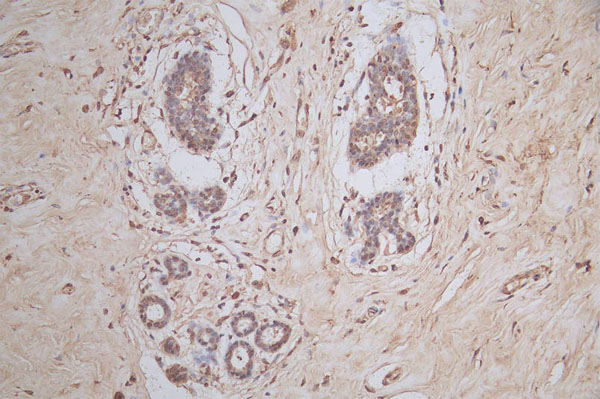
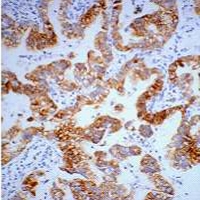
IHC (Immunohistochemistry) (Detection of human GATA3 in FFPE breast carcinoma by immunohistochemistry. Antibody: Rabbit anti-GATA3 recombinant monoclonal antibody (AAA23839 Lot1). Secondary: HRP-conjugated goat anti-rabbit IgG . Substrate: DAB.)
ICC (Immunocytochemistry) (Detection of human GATA3 in FFPE MCF-7 cells by immunocytochemistry. Antibody: Rabbit anti-GATA3 recombinant monoclonal antibody (AAA23839 Lot 1). Secondary: HRP-conjugated goat anti-rabbit IgG . Substrate: DAB.)
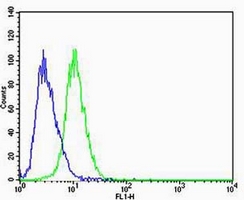
FCM (Flow Cytometry) (Detection of human GATA3 (shaded) in Jurkat cells by flow cytometry. Antibody: Rabbit anti-GATA3 recombinant monoclonal antibody (AAA23839 lot 1) or isotype control (unshaded). Secondary: DyLight 488-conjugated goat anti-rabbit IgG .)
WB (Western Blot) (Western blot analysis of NDUFS4 over-expressed 293 cell line, cotransfected with NDUFS4 Validated Chimera RNAi (Lane 2) or non-transfected control (Lane 1). Blot probed with NDUFS4 monoclonal antibody. GAPDH (36.1kD) used as specificity and loading control.)
Application Data (Detection limit for recombinant GST tagged NDUFS4 is ~0.3ng/ml as a capture antibody.)
IHC (Immunohistochemistry) (Immunoperoxidase of monoclonal antibody to NDUFS4 on formalin-fixed paraffin-embedded human colon. [antibody concentration 1ug/ml])
WB (Western Blot) (Western Blot analysis of NDUFS4 expression in transfected 293T cell line by NDUFS4 monoclonal antibody. Lane 1: NDUFS4 transfected lysate (20.1kD). Lane 2: Non-transfected lysate.)
WB (Western Blot) (NDUFS4 monoclonal antibody Western Blot analysis of NDUFS4 expression in A-431.)
WB (Western Blot) (Western Blot detection against Immunogen (37.84kD).)
WB (Western Blot) (Western blot analysis of OCRL over-expressed 293 cell line, cotransfected with OCRL Validated Chimera RNAi (Lane 2) or non-transfected control (Lane 1). Blot probed with OCRL monoclonal antibody GAPDH (36.1kD) used as specificity and loading control.)
Application Data (Detection limit for recombinant GST tagged OCRL is ~0.1ng/ml as a capture antibody.)
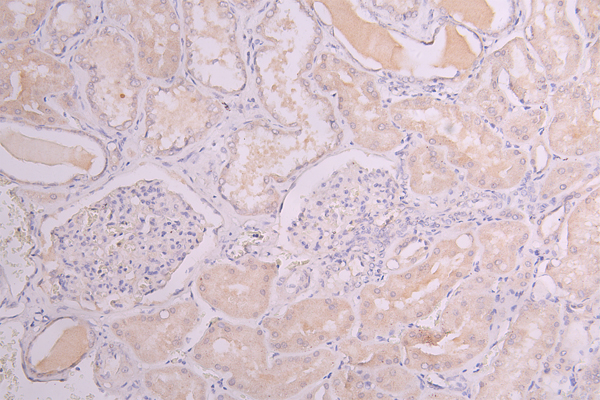
IHC (Immunohistochemistry) (Immunoperoxidase of monoclonal antibody to OCRL on formalin-fixed paraffin-embedded human kidney. [antibody concentration 3ug/ml])
WB (Western Blot) (Western Blot analysis of OCRL expression in transfected 293T cell line by OCRL monoclonal antibody Lane 1: OCRL transfected lysate (103.2kD). Lane 2: Non-transfected lysate.)
WB (Western Blot) (OCRL monoclonal antibody Western Blot analysis of OCRL expression in Hela NE.)
WB (Western Blot) (Western Blot detection against Immunogen (36.08kD).)
WB (Western Blot) (Western Blot detection against Immunogen (37kD).)
Application Data (Detection limit for recombinant GST tagged GMNN is ~0.03ng/ml as a capture antibody.)
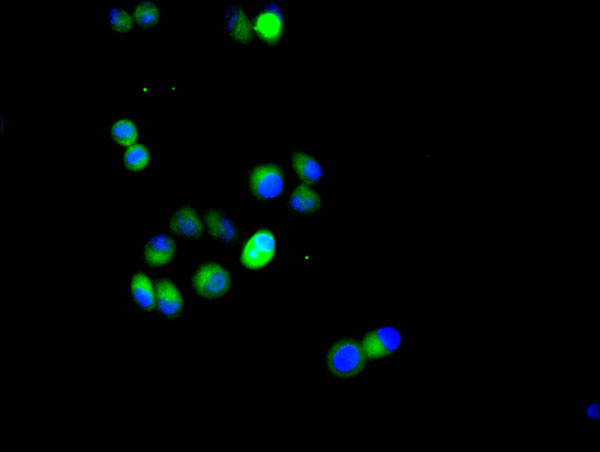
IF (Immunofluorescence) (Immunofluorescence of monoclonal antibody to GMNN on HeLa cell. [antibody concentration 10ug/ml].)
IHC (Immunohistochemistry) (Immunoperoxidase of monoclonal antibody to GMNN on formalin-fixed paraffin-embedded human placenta. [antibody concentration 1ug/ml].)
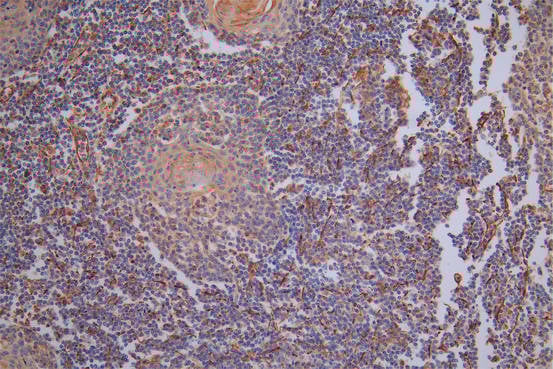
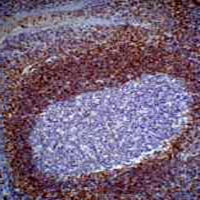
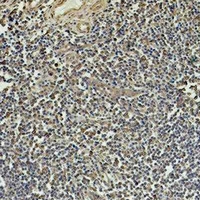
IHC (Immunohistochemistry) (Immunoperoxidase of monoclonal antibody to GMNN on formalin-fixed paraffin-embedded human lymph node. [antibody concentration 3ug/ml].)
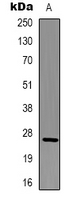
WB (Western Blot) (Western Blot analysis of GMNN expression in transfected 293T cell line by GMNN monoclonal antibody. Lane 1: GMNN transfected lysate (23.6kD). Lane 2: Non-transfected lysate.)
Application Data (Detection limit for recombinant GST tagged NDUFA9 is ~0.1ng/ml as a capture antibody.)
IF (Immunofluorescence) (Immunofluorescence of monoclonal antibody to NDUFA9 on NIH/3T3 cell. [antibody concentration 10ug/ml])
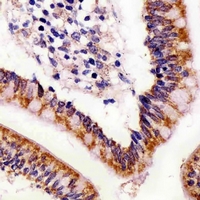
IHC (Immunohistochemistry) (Immunoperoxidase of monoclonal antibody to NDUFA9 on formalin-fixed paraffin-embedded human small Intestine. [antibody concentration 0.8ug/ml])
WB (Western Blot) (NDUFA9 monoclonal antibody Western Blot analysis of NDUFA9 expression in NIH/3T3.)
WB (Western Blot) (NDUFA9 monoclonal antibody. Western Blot analysis of NDUFA9 expression in Raw 264.7.)
WB (Western Blot) (NDUFA9 monoclonal antibody Western Blot analysis of NDUFA9 expression in PC-12.)
WB (Western Blot) (Western Blot detection against Immunogen (33.99kD).)
WB (Western Blot) (Western blot analysis of RAD51C over-expressed 293 cell line, cotransfected with RAD51C Validated Chimera RNAi (Lane 2) or non-transfected control (Lane 1). Blot probed with RAD51C monoclonal antibody. GAPDH (36.1kD) used as specificity and loading control.)
Application Data (Detection limit for recombinant GST tagged RAD51C is ~0.1ng/ml as a capture antibody.)
IF (Immunofluorescence) (Immunofluorescence of monoclonal antibody to RAD51C on HeLa cell. [antibody concentration 10ug/ml])
WB (Western Blot) (Western Blot analysis of RAD51C expression in transfected 293T cell line by RAD51C monoclonal antibody. Lane 1: RAD51C transfected lysate (42.2kD). Lane 2: Non-transfected lysate.)
WB (Western Blot) (RAD51C monoclonal antibody. Western Blot analysis of RAD51C expression in 293.)
WB (Western Blot) (RAD51C monoclonal antibody, Western Blot analysis of RAD51C expression in HeLa.)
IP (Immunoprecipitation) (Immunoprecipitation of TRIM24 transfected lysate using TRIM24 monoclonal antibody and Protein A Magnetic Bead and immunoblotted with TRIM24 rabbit polyclonal antibody.)
IF (Immunofluorescence) (Immunofluorescence of monoclonal antibody to TRIM24 on HeLa cell. [antibody concentration 10ug/ml.)
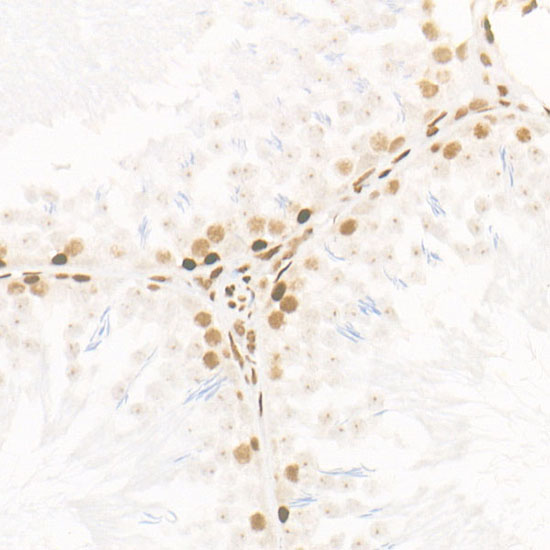
IHC (Immunohistochemistry) (Immunoperoxidase of monoclonal antibody to TRIM24 on formalin-fixed paraffin-embedded human testis. [antibody concentration 6ug/ml].)
WB (Western Blot) (Western Blot analysis of TRIM24 expression in transfected 293T cell line by TRIM24 monoclonal antibody Lane 1: TRIM24 transfected lysate (116.8kD). Lane 2: Non-transfected lysate.)
WB (Western Blot) (TRIM24 monoclonal antibody Western Blot analysis of TRIM24 expression in Hela NE.)
WB (Western Blot) (TRIM24 monoclonal antibody Western Blot analysis of TRIM24 expression in IMR-32.)
WB (Western Blot) (CLK3 monoclonal antibody. Western Blot analysis of CLK3 expression in Hela NE.)
WB (Western Blot) (Western blot analysis of CLK3 over-expressed 293 cell line, cotransfected with CLK3 Validated Chimera RNAi (Lane 2) or non-transfected control (Lane 1). Blot probed with CLK3 monoclonal antibody. GAPDH (36.1kD) used as specificity and loading control.)
IF (Immunofluorescence) (Immunofluorescence of monoclonal antibody to CLK3 on HeLa cell. [antibody concentration 8ug/ml].)
IHC (Immunohistochemistry) (Immunoperoxidase of monoclonal antibody to CLK3 on formalin-fixed paraffin-embedded human placenta. [antibody concentration 0.5ug/ml].)
WB (Western Blot) (Western Blot analysis of CLK3 expression in transfected 293T cell line by CLK3 monoclonal antibody. Lane 1: CLK3 transfected lysate (58.6kD). Lane 2: Non-transfected lysate.)
WB (Western Blot) (Western Blot detection against Immunogen (36.74kD).)
FCM (Flow Cytometry) (Dual staining of pig peripheral blood lymphocytes with Mouse anti Pig CD335 detected with Goat anti Mouse IgG (H/L):FITC (STAR117F), and Mouse anti Pig wCD8a:RPE)
Application Data (Published investigator image: Mouse anti Pig CD335 antibody, clone VIV-KM1 used for the identification of NK cells in influenza infected pigs by flow cytometry.Image caption: NK cell numbers in the blood of influenza infected pigs. Blood was taken from influenza A virus infected (n = 12) and control pigs (n = 9) on day 0-3 pi in a second experiment. (A) Isolated PBMCs were analysed by flow cytometry and live CD3- lymphocytes were gated as NKp46- or NKp46+ NK cells according to CD8a and NKp46 expression. Plots are taken from a representative control animal. Absolute numbers of (B) NKp46+ NK cells in PBMC were analysed by flow cytometry in control (left) and infected animals (right). (C) Results for the NKp46+ cells in the two groups were compared on each sampling day. (D) NKp46- NK cells in PBMC in control (left) and infected animals (right). (E) NKp46- NK cells were compared for the two groups. Each line in (B) and (D) represents one animal. **p=0.01.From: Forberg H, Hauge AG, Valheim M, Garcon F, Nunez A, et al. (2014) Early Responses of Natural Killer Cells in Pigs Experimentally Infected with 2009 Pandemic H1N1 Influenza A Virus.PLoS ONE 9(6): e100619.)
Application Data (Published investigator image: Mouse anti Pig CD335 antibody, clone VIV-KM1 used for the identification of NK cells in influenza infected pigs by immunofluorescence.Image caption:Staining for apoptosis in the lungs. Lung tissue sections from animals infected with influenza A virus (n = 12) were stained with immunofluorescence markers against (A) NKp46(green), (B) influenza A NP(red) and (C) the apoptosis marker caspase-3(blue). (D) Overlay displaying simultaneously influenza A virus NP+ and caspase-3+ cells as purple (arrows). Representative of virus infected bronchiole at day 1 pi. Immunofluorescence staining, 400x.From: Forberg H, Hauge AG, Valheim M, Garcon F, Nunez A, et al. (2014) Early Responses of Natural Killer Cells in Pigs Experimentally Infected with 2009 Pandemic H1N1 Influenza A Virus.PLoS ONE 9(6): e100619.)
Application Data (Published investigator image: Mouse anti Pig CD335 antibody, clone VIV-KM1 used for the identification of NK cells in influenza infected pigs by immunofluorescence.Image caption:NKp46+ cells in the lungs of influenza virus infected pigs.Lung tissue sections from pigs infected with influenza A virus and control pigs were stained with immunofluorescence markers for cytokeratin (blue), NKp46 (green) and influenza A virus NP (red). NKp46+ cells were counted in areas were influenza A virus NP was (A) detected and (B) not detected. Representative pictures taken from the same animal on day 1 pi are shown. Arrows point at NKp46+ cells. Immunofluorescence staining, 200x. (C) Plot shows number of NKp46+ cells per 0,1 mm2 in sections (n = 24 per animal) from control animals (n = 6) and in areas with and without virus in infected animals (n = 4 per day) calculated as described in Material and Methods. Groups with different letters differ significantly (p=0.05). (D) NKp46+ cells in the lumen of a bronchus (BL). Arrows point at the epithelial lining. Representative picture of luminal exudate, taken from an infected animal on day 2 pi. Insert shows NKp46+ and influenza A virus NP+ cell in the lung tissue of an infected animal on day 1 pi. Immunofluorescence staining, 400x.From: Forberg H, Hauge AG, Valheim M, Garcon F, Nunez A, et al. (2014) Early Responses of Natural Killer Cells in Pigs Experimentally Infected with 2009 Pandemic H1N1 Influenza A Virus.PLoS ONE 9(6): e100619.)
Application Data (Published investigator image: Mouse anti Pig CD335 antibody, clone VIV-KM1 used for the identification of NK cells in influenza infected pigs by flow cytometry.Image caption: Percentages of NK cells and expression of NKp46 and CD25 in lung tissue. Mononuclear cells were isolated from lung tissue of pigs infected with influenza A virus (n = 12) and control animals (n = 6) during the first 3 days pi and analysed by flow cytometry. (A) Live CD3- lymphocytes were gated as described in Fig 2. NK cells were gated according to CD8a and NKp46 expression and defined as NKp46-, NKp46int or NKp46high cells. Plot shown is from a representative control animal. (B) Proportions of NKp46- (green), NKp46int (blue) and NKp46high (purple) NK cells in individual animals, shown as percentages of gated cells in lymphocytes. (C) Percentages of NKp46- (left), NKp46int (middle) and NKp46high (right) NK cells among lymphocytes. (D) Median fluorescence intensity (MFI) in the NKp46- gate (left), the NKp46+ gate (middle) and in the NKp46high gate (right) are shown. (E) CD25+ cells were gated in the NKp46- and NKp46int NK cells (left) and in the NKp46high NK cells (right). Plots shown are from a representative control animal. (F) The percentages of CD25+ cells in each gate were calculated in control animals (green), infected animals from day 1 (purple), day 2 (blue) and day 3 (pink) pi. *p=0,05, **p=0.01.From: Forberg H, Hauge AG, Valheim M, Garcon F, Nunez A, et al. (2014) Early Responses of Natural Killer Cells in Pigs Experimentally Infected with 2009 Pandemic H1N1 Influenza A Virus.PLoS ONE 9(6): e100619.)
Application Data (Published investigator image: Mouse anti Pig CD335 antibody, clone VIV-KM1 used for the identification of NK cells in influenza infected pigs by immunofluorescence.Image caption:Counting of NKp46+ cells. Numbers of NKp46+ cells per area were counted in lung tissue sections from control animals and influenza A virus infected animals as described in Material and Methods. Representative picture of area with virus from infected animal. Immunofluorescence staining, 200x.From: Forberg H, Hauge AG, Valheim M, Garcon F, Nunez A, et al. (2014) Early Responses of Natural Killer Cells in Pigs Experimentally Infected with 2009 Pandemic H1N1 Influenza A Virus.PLoS ONE 9(6): e100619.)
Application Data (Published investigator image: Mouse anti Pig CD335 antibody, clone VIV-KM1 used for the evaluation of CD335 expression on porcine cells by flow cytometry.Image caption:Splenic NKp46high NK cells produced the highest levels of IFN-?. (A + B) Intracellular cytokine staining for IFN-? production in NKp46-defined NK cells within PBMC (upper graphs) and splenocytes (lower graphs) by four-colour FCM after 24 h in vitro stimulation with rhIL-2, rpIL-12 and rpIL-18 or medium. CD3- lymphocytes were gated (not shown) and NKp46/CD8a defined total NK cells were further subgated for IFN-? production. IFN-? producing NK cells were gated according to NKp46 expression levels (CD8a+NKp46-: blue, CD8a+NKp46+: green, CD8adim/-NKp46high: red). (A) Numbers indicate the percentage of IFN-?+ NK cells within respective gates. Results are representative for experiments with four different animals. (B) Percentage of IFN-?+ cells (left graph) and mean fluorescence intensity of IFN-?+ cells (right graph) within the different NK-cell subsets in blood and spleen of four animals are shown. (C) Supernatants of cytokine stimulated FACS-sorted CD3-CD8a+NKp46- and CD3-CD8a+NKp46+ NK cells from blood and CD3-CD8a+NKp46-, CD3-CD8a+NKp46+ and CD3-CD8adim/-NKp46high NK cells from spleen were tested for IFN-? production in ELISA following 24 h in vitro stimulation with rhIL-2, rpIL-12 and rpIL-18. Data on the left are from one representative animal and displayed as the mean of duplicates +/- SD. IFN-? production in experiments with four animals analysed is shown on the right. Mean values are represented by a black bar. (B + C) Significant differences between the subsets in blood or spleen are indicated (* = p < 0.05, ** = p < 0.01).From: Mair KH, Mllebner A, Essler SE, Duvigneau JC, Storset AK, Saalmller A, Gerner W. Porcine CD8adim/-NKp46high NK cells are in a highly activated state. Vet Res. 2013 Mar 1;44:13.)
Application Data (Published investigator image: Mouse anti Pig CD335 antibody, clone VIV-KM1 used for the evaluation of CD335 expression on porcine cells by flow cytometry.Image caption:Varying expression of NKp46, CD8a, CD16 and CD27 on NK-cell subsets in blood and spleen. (A) Following five-colour staining, PBMC and splenocytes were gated on CD3- cells and further subgated according to their NKp46/CD8a expression pattern in NKp46- and NKp46+ NK cells in blood (upper graph) and NKp46-, NKp46+ and NKp46high NK cells in spleen (lower graph). (B) 14 healthy 6 -7 month old pigs were investigated for NKp46 and CD8a expression levels in the NKp46-defined NK-cell subsets. Box-plots show the mean fluorescence intensity of the two markers. (C) NK-cell subsets defined in (A) were further analysed for their expression of the surface markers CD16 and CD27. Histograms show the expression of the two markers within the respective NKp46-defined subsets (CD8a+NKp46-: blue histograms, CD8a+NKp46+: green histograms, CD8adim/-NKp46high: red histograms) in blood (upper graphs) and spleen (lower graphs) according to the corresponding isotype control (grey histrograms with dotted lines). Box-plots show the mean fluorescence intensity of CD16 and CD27 of the NKp46-defined NK-cell subsets in blood and spleen of 14 healthy 6 -7 month old pigs. (B + C) Significant differences between the subsets in blood or spleen are indicated (* = p < 0.05, ** = p < 0.01, *** = p < 0.001).From: Mair KH, Mllebner A, Essler SE, Duvigneau JC, Storset AK, Saalmller A, Gerner W. Porcine CD8adim/-NKp46high NK cells are in a highly activated state. Vet Res. 2013 Mar 1;44:13.)
Application Data (Dual staining of pig peripheral blood lymphocytes with Mouse anti Pig CD335:Alexa Fluor488 and Mouse anti Pig wCD8a:RPE)
Application Data (Dual staining of pig peripheral blood lymphocytes with Mouse anti Pig CD335:APC and Mouse anti Pig wCD8a:RPE)
IP (Immunoprecipitation) (Immunoprecipitation(IP) of CRYAB by using monoclonal anti-CRYAB antibodies (Negative control: IP without adding anti-CRYAB antibody.). For each experiment, 500ul of DDK tagged CRYAB overexpression lysates (at 1:5 dilution with HEK293T lysate), 2 ug of anti-CRYAB antibody and 20ul (0.1 mg) of goat anti-mouse conjugated magnetic beads were mixed and incubated overnight. After extensive wash to remove any non-specific binding, the immuno-precipitated products were analyzed with rabbit anti-DDK polyclonal antibody.)
WB (Western Blot) (HEK293T cells were transfected with the pCMV6-ENTRY control (Left lane) or pCMV6-ENTRY CRYAB (Right lane) cDNA for 48 hrs and lysed. Equivalent amounts of cell lysates (5 ug per lane) were separated by SDS-PAGE and immunoblotted with anti-CRYAB.)
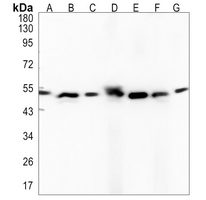
WB (Western Blot) (Western blot of extracts (35 ug) from 9 different cell lines by using anti-CRYAB monoclonal antibody.)
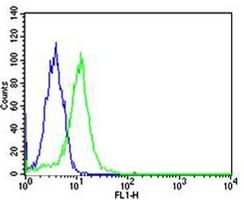
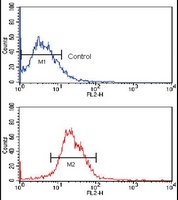
FCM (Flow Cytometry) (HEK293T cells transfected with either overexpress plasmid (Red) or empty vector control plasmid (Blue) were immunostained by anti-CRYAB antibody, and then analyzed by flow cytometry.)
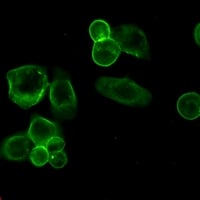
IF (Immunofluorescence) (Immunofluorescent staining of HT29 cells using anti-CRYAB mouse monoclonal antibody.)
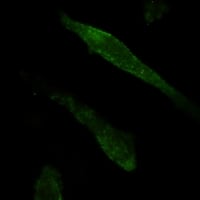
IF (Immunofluorescence) (Anti-CRYAB mouse monoclonal antibody immunofluorescent staining of COS7 cells transiently transfected by pCMV6-ENTRY CRYAB.)
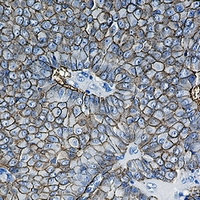
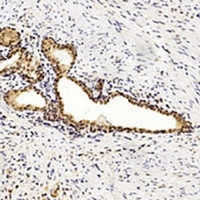
IHC (Immunohistochemistry) (IHC of paraffin-embedded Carcinoma of thyroid tissue using anti-CRYAB mouse monoclonal antibody. (Dilution 1:50).)
IHC (Immunohistochemistry) (Anti-CRYAB / Alpha B Crystallin antibody IHC staining of human heart. Immunohistochemistry of formalin-fixed, paraffin-embedded tissue after heat-induced antigen retrieval. Antibody concentration 10 ug/ml.)
WB (Western Blot) (Western blot analysis of NDUFS4 over-expressed 293 cell line, cotransfected with NDUFS4 Validated Chimera RNAi (Lane 2) or non-transfected control (Lane 1). Blot probed with NDUFS4 monoclonal antibody. GAPDH (36.1kD) used as specificity and loading control.)
Application Data (Detection limit for recombinant GST tagged NDUFS4 is ~0.3ng/ml as a capture antibody.)
IHC (Immunohistochemistry) (Immunoperoxidase of monoclonal antibody to NDUFS4 on formalin-fixed paraffin-embedded human colon. [antibody concentration 1ug/ml])
WB (Western Blot) (Western Blot analysis of NDUFS4 expression in transfected 293T cell line by NDUFS4 monoclonal antibody. Lane 1: NDUFS4 transfected lysate (20.1kD). Lane 2: Non-transfected lysate.)
WB (Western Blot) (NDUFS4 monoclonal antibody Western Blot analysis of NDUFS4 expression in A-431.)
WB (Western Blot) (Western Blot detection against Immunogen (37.84kD).)
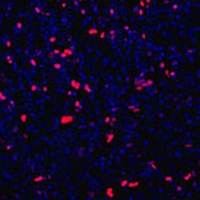
Application Data (Proximity Ligation Analysis (PLA) of protein-protein interactions between BAD and MAPK8 Mahlavu cells were stained with BAD rabbit purified polyclonal 1:1200 and anti-MAPK8 mouse monoclonal antibody 1:50. Signals were detected 30 Detection Kit 613 (red), and nuclei were counterstained with DAPI (blue). Each red dot represents the detection of protein-protein interaction complex.)
Application Data (Proximity Ligation Analysis (PLA) of protein-protein interactions between PXN and MAPK8 Huh7 cells were stained with PXN rabbit purified polyclonal 1:1200 and MAPK8 mouse monoclonal antibody 1:50. Signals were detected 30 Detection Kit 613 (red), and nuclei were counterstained with DAPI (blue). Each red dot represents the detection of protein-protein interaction complex.)
Application Data (Proximity Ligation Analysis (PLA) of protein-protein interactions between CRK and MAPK8 HeLa cells were stained with CRK rabbit purified polyclonal 1:1200 and MAPK8 mouse monoclonal antibody 1:50. Signals were detected 30 Detection Kit 613 (red), and nuclei were counterstained with DAPI (blue). Each red dot represents the detection of protein-protein interaction complex.)
WB (Western Blot) (Western blot analysis of MAPK8 over-expressed 293 cell line, cotransfected with MAPK8 Validated Chimera RNAi (Lane 2) or non-transfected control (Lane 1). Blot probed with MAPK8 monoclonal antibody. GAPDH (36.1kD) used as specificity and loading control.)
Application Data (Detection limit for recombinant GST tagged MAPK8 is 1ng/ml as a capture antibody.)
WB (Western Blot) (Western Blot analysis of MAPK8 expression in transfected 293T cell line by MAPK8 monoclonal antibody. Lane 1: MAPK8 transfected lysate (48.3kD). Lane 2: Non-transfected lysate.)
Application Data (Proximity Ligation Analysis of protein-protein interactions between CDC6 and MCM7. Huh7 cells were stained with anti-CDC6 rabbit purified polyclonal 1:600 and anti-MCM7 mouse monoclonal antibody 1:100. Each red dot represents the detection of protein-protein interaction complex, and nuclei were counterstained with DAPI (blue).)
Application Data (Proximity Ligation Analysis of protein-protein interactions between CDK7 and MCM7 HeLa cells were stained with anti-CDK7 rabbit purified polyclonal 1:1200 and anti-MCM7 mouse monoclonal antibody 1:50. Each red dot represents the detection of protein-protein interaction complex, and nuclei were counterstained with DAPI (blue).)
Application Data (Detection limit for recombinant GST tagged MCM7 is ~0.1ng/ml as a capture antibody.)
IF (Immunofluorescence) (Immunofluorescence of monoclonal antibody to MCM7 on HeLa cell. [antibody concentration 10ug/ml])
IHC (Immunohistochemistry) (Immunoperoxidase of monoclonal antibody to MCM7 on formalin-fixed paraffin-embedded human ovary, clear cell carcinoma. [antibody concentration 3ug/ml])
WB (Western Blot) (MCM7 monoclonal antibody Western Blot analysis of MCM7 expression in Hela NE.)
WB (Western Blot) (Western Blot detection against Immunogen (68.53kD).)
WB (Western Blot) (TUBB2A monoclonal antibody (M04), clone 3B2. Western Blot analysis of TUBB2A expression in NIH/3T3.)
WB (Western Blot) (TUBB2A monoclonal antibody (M04), clone 3B2. Western Blot analysis of TUBB2A expression in Jurkat.)
IHC (Immunohistochemistry) (Immunoperoxidase of monoclonal antibody to TUBB2A on formalin-fixed paraffin-embedded human colon. [antibody concentration 1.5 ug/ml])
IF (Immunofluorescence) (Immunofluorescence of monoclonal antibody to TUBB2A on HeLa cell. [antibody concentration 10 ug/ml])
FCM (Flow Cytometry) (Flow cytometric analysis of Hela cells with Apg7 antibody at 1/50 dilution (red) compared with an unlabelled control (cells without incubation with primary antibody; black). Alexa Fluor 488-conjugated goat anti rabbit IgG was used as the secondary antibody.)
ICC (Immunocytochemistry) (ICC staining Apg7 in HepG2 cells (green). The nuclear counter stain is DAPI (blue). Cells were fixed in paraformaldehyde, permeabilised with 0.25% Triton X100/PBS.)
ICC (Immunocytochemistry) (ICC staining Apg7 in Hela cells (green). The nuclear counter stain is DAPI (blue). Cells were fixed in paraformaldehyde, permeabilised with 0.25% Triton X100/PBS.)
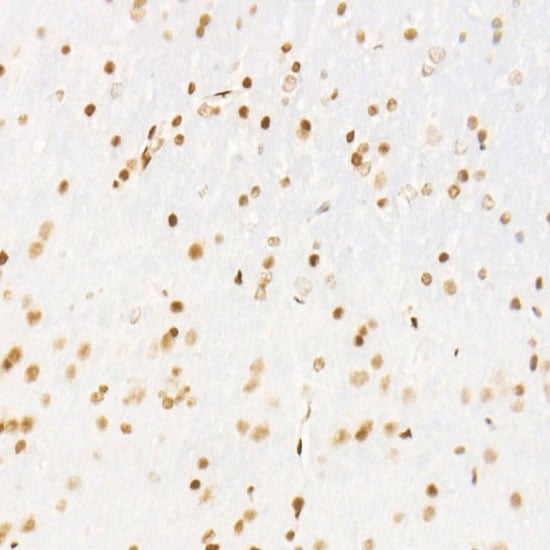
IHC (Immunohistochemistry) (Immunohistochemical analysis of paraffin-embedded mouse brain tissue using anti-Apg7 antibody. Counter stained with hematoxylin.)
IHC (Immunohistochemistry) (Immunohistochemical analysis of paraffin-embedded human kidney tissue using anti-Apg7 antibody. Counter stained with hematoxylin.)
IHC (Immunohistochemistry) (Immunohistochemical analysis of paraffin-embedded human spleen tissue using anti-Apg7 antibody. Counter stained with hematoxylin.)
IHC (Immunohistochemistry) (Immunohistochemical analysis of paraffin-embedded human tonsil tissue using anti-Apg7 antibody. Counter stained with hematoxylin.)
WB (Western Blot) (Western blot analysis of Apg7 on Jurkat cells lysates using anti-Apg7 antibody at 1/1, 000 dilution.)
FCM (Flow Cytometry) (Flow cytometric analysis of MCF-7 cells with PIST antibody at 1/100 dilution (purple) compared with an unlabelled control (cells without incubation with primary antibody; yellow). Alexa Fluor 488-conjugated goat anti-rabbit IgG was used as the secondary antibody.)
ICC (Immunocytochemistry) (ICC staining PIST in SKOV-3 cells (green). The nuclear counter stain is DAPI (blue). Cells were fixed in paraformaldehyde, permeabilised with 0.25% Triton X100/PBS.)
ICC (Immunocytochemistry) (ICC staining PIST in MCF-7 cells (green). The nuclear counter stain is DAPI (blue). Cells were fixed in paraformaldehyde, permeabilised with 0.25% Triton X100/PBS.)
ICC (Immunocytochemistry) (ICC staining PIST in HepG2 cells (green). The nuclear counter stain is DAPI (blue). Cells were fixed in paraformaldehyde, permeabilised with 0.25% Triton X100/PBS.)
IHC (Immunohistochemistry) (Immunohistochemical analysis of paraffin-embedded mouse brain tissue using anti-PIST antibody. Counter stained with hematoxylin.)
IHC (Immunohistochemistry) (Immunohistochemical analysis of paraffin-embedded human kidney tissue using anti-PIST antibody. Counter stained with hematoxylin.)
IHC (Immunohistochemistry) (Immunohistochemical analysis of paraffin-embedded human colon tissue using anti-PIST antibody. Counter stained with hematoxylin.)
IHC (Immunohistochemistry) (Immunohistochemical analysis of paraffin-embedded human liver cancer tissue using anti-PIST antibody. Counter stained with hematoxylin.)
WB (Western Blot) (Western blot analysis of PIST on SiHa cell using anti-PIST antibody at 1/1, 000 dilution.)
ICC (Immunocytochemistry) (ICC staining ATPB in A431 cells (red). The nuclear counter stain is DAPI (blue). Cells were fixed in paraformaldehyde, permeabilised with 0.25% Triton X100/PBS.)
ICC (Immunocytochemistry) (ICC staining ATPB in 293T cells (red). The nuclear counter stain is DAPI (blue). Cells were fixed in paraformaldehyde, permeabilised with 0.25% Triton X100/PBS.)
IHC (Immunohistochemistry) (Immunohistochemical analysis of paraffin-embedded mouse brain tissue using anti-ATPB antibody. Counter stained with hematoxylin.)
IHC (Immunohistochemistry) (Immunohistochemical analysis of paraffin-embedded mouse liver tissue using anti-ATPB antibody. Counter stained with hematoxylin.)
IHC (Immunohistchemistry) (Immunohistochemical analysis of paraffin-embedded huaman uterus tissue using anti-ATPB antibody. Counter stained with hematoxylin.)
IHC (Immunohistochemistry) (Immunohistochemical analysis of paraffin-embedded human kidney tissue using anti-ATPB antibody. Counter stained with hematoxylin.)
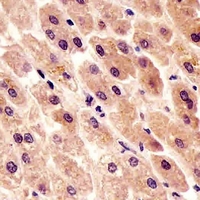
IHC (Immunohistochemistry) (Immunohistochemical analysis of paraffin-embedded human liver tissue using anti-ATPB antibody. Counter stained with hematoxylin.)
IHC (Immunohistochemistry) (Immunohistochemical analysis of paraffin-embedded mouse heart tissue using anti-ATPB antibody. Counter stained with hematoxylin.)
WB (Western Blot) (Western blot analysis of ATPB on Zebrafish cells lysates using anti-ATPB antibody at 1/500 dilution.)
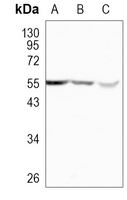
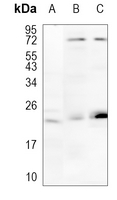
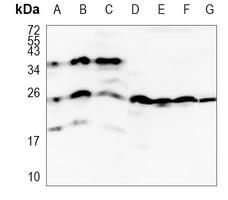
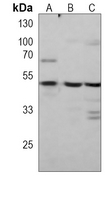
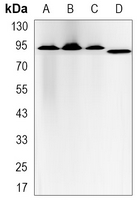
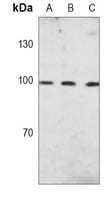
WB (Western Blot) (Western blot analysis of ATPB on different cells lysates using anti-ATPB antibody at 1/500 dilution. Positive control: Line1: Hela Line2: HepG2 Line3: 293T)
Application Data (Staining of human peripheral blood granulocytes with Mouse anti Human CD11b:Biotin)
Application Data (Staining of human peripheral blood granulocytes with Mouse anti Human CD11b:RPE)
Application Data (Staining of human peripheral blood granulocytes with Mouse anti Human CD11b:Azide Free)
Application Data (Immunoperoxidase staining of human tonsil cryosection with Mouse anti Human CD11b antibody, clone ICRF44 followed by the Histar detection system . Low power)
Application Data (Immunoperoxidase staining of human spleen cryosection with Mouse anti Human CD11b antibody, clone ICRF44 followed by the Histar detection system . High power)
Application Data (Immunoperoxidase staining of human spleen cryosection with Mouse anti Human CD11b antibody, clone ICRF44 followed by the Histar detection system . Low power)
Application Data (Staining of human peripheral blood granulocytes with Mouse anti Human CD11b:Alexa Fluor 647)
Application Data (Immunofluorescence staining of human tonsil cryosection with Mouse anti Human CD11b antibody, clone ICRF44 , red in A and Mousse anti Human CD21 , green in B. C is the merged image with nuclei counterstained blue using DAPI. Low power)
Application Data (Immunofluorescence staining of human tonsil cryosection with Mouse anti Human CD11b antibody, clone ICRF44 , red in A and Mousse anti Human CD21 , green in B. C is the merged image with nuclei counterstained blue using DAPI. medium power)
Application Data (Staining of human peripheral blood granulocytes with Mouse anti Human CD11b:FITC)
WB (Western Blot) (Western blot analysis of CRKL over-expressed 293 cell line, cotransfected with CRKL Validated Chimera RNAi (Lane 2) or non-transfected control (Lane 1). Blot probed with CRKL monoclonal antibody. GAPDH (36.1kD) used as specificity and loading control.)
WB (Western Blot) (Western Blot analysis of CRKL expression in transfected 293T cell line by CRKL monoclonal antibody. Lane 1: CRKL transfected lysate (33.8kD). Lane 2: Non-transfected lysate.)
Application Data (Proximity Ligation Analysis (PLA) of protein-protein interactions between PTK2 and CRKL. Huh7 cells were stained with PTK2 rabbit purified polyclonal 1:600 and CRKL mouse monoclonal antibody 1:100. Signals were detected by 30 Detection Kit 613 (red), and nuclei were counterstained with DAPI (blue). Each red dot represents the detection of protein-protein interaction complex)
Application Data (Proximity Ligation Analysis (PLA) of protein-protein interactions between GAB1 and CRKL. HeLa cells were stained with GAB1 rabbit purified polyclonal 1:1200 and CRKL mouse monoclonal antibody 1:50. Signals were detected by 30 Detection Kit 613 (red), and nuclei were counterstained with DAPI (blue). Each red dot represents the detection of protein-protein interaction complex.)
Application Data (Detection limit for recombinant GST tagged CRKL is ~0.3ng/ml as a capture antibody.)
IF (Immunofluorescence) (Immunofluorescence of monoclonal antibody to CRKL on HeLa cell. [antibody concentration 10ug/ml].)
WB (Western Blot) (Western Blot detection against Immunogen (36.74kD).)
Application Data (Proximity Ligation Analysis (PLA) of protein-protein interactions between FGA and F2. HeLa cells were stained with FGA rabbit purified polyclonal 1:1200 and F2 mouse monoclonal antibody 1:50. Signals were detected by 30 Detection Kit 613 (red), and nuclei were counterstained with DAPI (blue). Each red dot represents the detection of protein-protein interaction complex.)
WB (Western Blot) (Western blot analysis of F2 over-expressed 293 cell line, cotransfected with F2 Validated Chimera RNAi (Lane 2) or non-transfected control (Lane 1). Blot probed with F2 monoclonal antibody. GAPDH (36.1kD) used as specificity and loading control.)
Application Data (Detection limit for recombinant GST tagged F2 is ~1ng/ml as a capture antibody.)
IP (Immunoprecipitation) (Immunoprecipitation of F2 transfected lysate using F2 monoclonal antibody and Protein A Magnetic Bead and immunoblotted with F2 rabbit polyclonal antibody.)
WB (Western Blot) (Western Blot analysis of F2 expression in transfected 293T cell line by F2 monoclonal antibody. Lane 1: F2 transfected lysate (70kD). Lane 2: Non-transfected lysate.)
WB (Western Blot) (Western Blot detection against Immunogen (36.74kD).)
Application Data (Detection limit for recombinant GST tagged TYK2 is approximately 1ng/ml as a capture antibody.)
WB (Western Blot) (TYK2 monoclonal antibody (M03), clone 6H1 Western Blot analysis of TYK2 expression in Hela S3 NE (Cat # L013V3).)
IHC (Immunohistochemistry) (Immunoperoxidase of monoclonal antibody to TYK2 on formalin-fixed paraffin-embedded human lymphoma. [antibody concentration 3 ug/ml])
IHC (Immunohistochemistry) (Immunoperoxidase of monoclonal antibody to TYK2 on formalin-fixed paraffin-embedded human small Intestine. [antibody concentration 3 ug/ml])
Application Data (Immunoperoxidase of monoclonal antibody to TYK2 on formalin-fixed paraffin-embedded human small Intestine. [antibody concentration 3 ug/ml])
IHC (Immunohistochemistry) (Immunohistochemical analysis of paraffin-embedded mouse hippocampus tissue using anti-MEF2A antibody. Counter stained with hematoxylin.)
IHC (Immunohistchemistry) (Immunohistochemical analysis of paraffin-embedded mouse spleen tissue using anti-MEF2A antibody. Counter stained with hematoxylin.)
IHC (Immunohistochemistry) (Immunohistochemical analysis of paraffin-embedded mouse cerebral cortex tissue using anti-MEF2A antibody. Counter stained with hematoxylin.)
IHC (Immunohistochemistry) (Immunohistochemical analysis of paraffin-embedded mouse colon tissue using anti-MEF2A antibody. Counter stained with hematoxylin.)
IHC (Immunohistochemistry) (Immunohistochemical analysis of paraffin-embedded human spleen tissue using anti-MEF2A antibody. Counter stained with hematoxylin.)
IHC (Immunohistochemistry) (Immunohistochemical analysis of paraffin-embedded human tonsil tissue using anti-MEF2A antibody. Counter stained with hematoxylin.)
WB (Western Blot) (Western blot analysis of MEF2A on rat spleen tissue lysate using anti-MEF2A antibody at 1/1, 000 dilution.)
ICC (Immunocytochemistry) (ICC staining CD46 in HUVEC cells (green). The nuclear counter stain is DAPI (blue). Cells were fixed in paraformaldehyde, permeabilised with 0.25% Triton X100/PBS.)
ICC (Immunocytochemistry) (ICC staining CD46 in PC-3M cells (green). The nuclear counter stain is DAPI (blue). Cells were fixed in paraformaldehyde, permeabilised with 0.25% Triton X100/PBS.)
IHC (Immunohistochemistry) (Immunohistochemical analysis of paraffin-embedded rat kidney tissue using anti-CD46 antibody. Counter stained with hematoxylin.)
IHC (Immunohistochemistry) (Immunohistochemical analysis of paraffin-embedded human placenta tissue using anti-CD46 antibody. Counter stained with hematoxylin.)
IHC (Immunohistochemistry) (Immunohistochemical analysis of paraffin-embedded human breast tissue using anti-CD46 antibody. Counter stained with hematoxylin.)
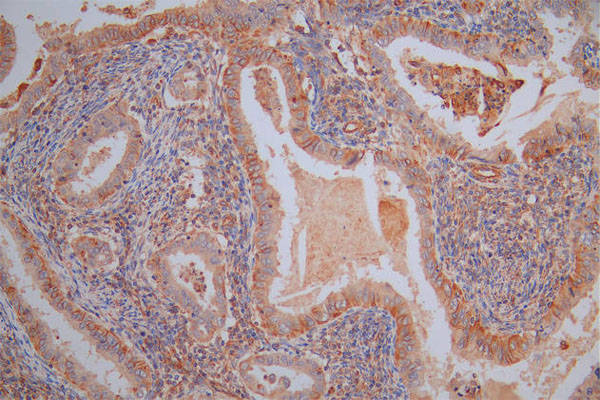
IHC (Immunohistochemistry) (Immunohistochemical analysis of paraffin-embedded human colon cancer tissue using anti-CD46 antibody. Counter stained with hematoxylin.)
WB (Western Blot) (Western blot analysis of CD46 on Siha and PC-3M cell lysates using anti-CD46 antibody at 1/1, 000 dilution.)
WB (Western Blot) (Western Blot analysis of NDUFV2 expression in transfected 293T cell line by NDUFV2 monoclonal antibody. Lane 1: NDUFV2 transfected lysate (Predicted MW: 27.4kD). Lane 2: Non-transfected lysate.)
WB (Western Blot) (NDUFV2 monoclonal antibody Western Blot analysis of NDUFV2 expression in K-562.)
WB (Western Blot) (NDUFV2 monoclonal antibody Western Blot analysis of NDUFV2 expression in NIH/3T3.)
WB (Western Blot) (NDUFV2 monoclonal antibody Western Blot analysis of NDUFV2 expression in Raw 264.7.)
WB (Western Blot) (NDUFV2 monoclonal antibody Western Blot analysis of NDUFV2 expression in PC-12.)
WB (Western Blot) (Western Blot detection against Immunogen (36.74kD).)
WB (Western Blot) (Western blot analysis of PGM3 over-expressed 293 cell line, cotransfected with PGM3 Validated Chimera RNAi (Lane 2) or non-transfected control (Lane 1). Blot probed with PGM3 monoclonal antibody. GAPDH (36.1kD) used as specificity and loading control.)
Application Data (Detection limit for recombinant GST tagged PGM3 is ~3ng/ml as a capture antibody.)
IP (Immunoprecipitation) (Immunoprecipitation of PGM3 transfected lysate using PGM3 monoclonal antibody and Protein A Magnetic Bead, and immunoblotted with PGM3 rabbit polyclonal antibody.)
IHC (Immunohistochemistry) (Immunoperoxidase of monoclonal antibody to PGM3 on formalin-fixed paraffin-embedded human colon tissue. [antibody concentration 2ug/ml])
WB (Western Blot) (Western Blot analysis of PGM3 expression in transfected 293T cell line by PGM3 monoclonal antibody. Lane 1: PGM3 transfected lysate (59.9kD). Lane 2: Non-transfected lysate.)
WB (Western Blot) (PGM3 monoclonal antibody Western Blot analysis of PGM3 expression in HeLa.)
WB (Western Blot) (Western Blot detection against Immunogen (85.36kD).)
WB (Western Blot) (C22orf18 monoclonal antibody, Western Blot analysis of C22orf18 expression in K-562.)
Application Data (Detection limit for recombinant GST tagged C22orf18 is ~0.03ng/ml as a capture antibody.)
IP (Immunoprecipitation) (Immunoprecipitation of CENPM transfected lysate using CENPM monoclonal antibody and Protein A Magnetic Bead and immunoblotted with CENPM rabbit polyclonal antibody.)
IF (Immunofluorescence) (Immunofluorescence of monoclonal antibody to MGC861 on HeLa cell. [antibody concentration 10ug/ml].)
WB (Western Blot) (Western Blot analysis of CENPM expression in transfected 293T cell line by C22orf18 monoclonal antibody. Lane 1: CENPM transfected lysate (19.7kD). Lane 2: Non-transfected lysate.)
WB (Western Blot) (Western Blot detection against Immunogen (45.91kD).)
CENPM (C22orf18, ICEN39, PANE1, Centromere Protein M, Interphase Centromere Complex Protein 39, Proliferation-associated Nuclear Element Protein 1, MGC861, PANE1, BK250D10.2) (PE)
Gene Names
CENPM; PANE1; CENP-M; C22orf18
Reactivity
Human
Applications
Immunofluorescence, Immunoprecipitation, Western Blot
WB (Western Blot) (HSPA1B monoclonal antibody (M05), clone 2D11. Western Blot analysis of HSPA1B expression in PC-12.)
WB (Western Blot) (HSPA1B monoclonal antibody (M05), clone 2D11. Western Blot analysis of HSPA1B expression in NIH/3T3.)
IHC (Immunohistochemistry) (Immunoperoxidase of monoclonal antibody to HSPA1B on formalin-fixed paraffin-embedded human esophagus. [antibody concentration 3 ug/ml])
Application Data (Detection limit for recombinant GST tagged HSPA1B is approximately 0.03ng/ml as a capture antibody.)
WB (Western Blot) (HSPA1B monoclonal antibody (M05), clone 2D11 Western Blot analysis of HSPA1B expression in Hela S3 NE (Cat # L013V3).)
IHC (Immunohistchemistry) (Immunoperoxidase of monoclonal antibody to UBTF on formalin-fixed paraffin-embedded human placenta. [antibody concentration 0.5 ug/ml])
IHC (Immunohistochemistry) (Immunoperoxidase of monoclonal antibody to UBTF on formalin-fixed paraffin-embedded human placenta. [antibody concentration 0.5 ug/ml])
Application Data (Detection limit for recombinant GST tagged UBTF is approximately 1ng/ml as a capture antibody.)
WB (Western Blot) (UBTF monoclonal antibody (M03), clone 1A2 Western Blot analysis of UBTF expression in HepG2 (Cat # L019V1).)
IF (Immunofluorescence) (Immunofluorescence of monoclonal antibody to UBTF on HepG2 cell. [antibody concentration 10 ug/ml])
Application Data (Detection limit for recombinant GST tagged CLIC1 is 1 ng/ml as a capture antibody.)
IF (Immunofluorescence) (Immunofluorescence of monoclonal antibody to CLIC1 on HeLa cell. [antibody concentration 10 ug/ml])
WB (Western Blot) (CLIC1 monoclonal antibody (M01), clone 2D4 Western Blot analysis of CLIC1 expression in HL-60 (Cat # L014V1).)
IHC (Immunohistochemistry) (Immunoperoxidase of monoclonal antibody to CLIC1 on formalin-fixed paraffin-embedded human colon tissue. [antibody concentration 3 ug/ml])
Application Data (Immunoperoxidase of monoclonal antibody to CLIC1 on formalin-fixed paraffin-embedded human colon tissue. [antibody concentration 3 ug/ml])
WB (Western Blot) (DAAM1 monoclonal antibody Western Blot analysis of DAAM1 expression in A-431.)
Application Data (Proximity Ligation Analysis (PLA) of protein-protein interactions between RHOA and DAAM1 HeLa cells were stained with RHOA rabbit purified polyclonal 1:1200 and DAAM1 mouse monoclonal antibody 1:50. Signals were detected 30 Detection Kit 613 (red), and nuclei were counterstained with DAPI (blue). Each red dot represents the detection of protein-protein interaction complex.)
Application Data (Detection limit for recombinant GST tagged DAAM1 is ~1ng/ml as a capture antibody.)
WB (Western Blot) (Western Blot analysis of DAAM1 expression in transfected 293T cell line by DAAM1 monoclonal antibody. Lane 1: DAAM1 transfected lysate (122.3kD). Lane 2: Non-transfected lysate.)
WB (Western Blot) (DAAM1 monoclonal antibody Western Blot analysis of DAAM1 expression in PC-12.)
WB (Western Blot) (Western Blot detection against Immunogen (38.21kD).)
WB (Western Blot) (IL20 monoclonal antibody, Western Blot analysis of IL20 expression in K-562.)
Application Data (Detection limit for recombinant GST tagged IL20 is ~0.3ng/ml as a capture antibody.)
IP (Immunoprecipitation) (Immunoprecipitation of IL20 transfected lysate using IL20 monoclonal antibody and Protein A Magnetic Bead, and immunoblotted with IL20 rabbit polyclonal antibody.)
WB (Western Blot) (Western Blot analysis of IL20 expression in transfected 293T cell line by IL20 monoclonal antibody Lane 1: IL20 transfected lysate (20.1kD). Lane 2: Non-transfected lysate.)
WB (Western Blot) (IL20 monoclonal antibody. Western Blot analysis of IL20 expression in A-431.)
WB (Western Blot) (Western Blot detection against Immunogen (38.21kD).)
FCM (Flow Cytometry) (Flow cytometric analysis of Hela cells with SHP1 antibody at 1/50 dilution (blue) compared with an unlabelled control (cells without incubation with primary antibody; red). Alexa Fluor 488-conjugated goat anti rabbit IgG was used as the secondary antibody.)
ICC (Immunocytochemistry) (ICC staining SHP1 in HepG2 cells (green). The nuclear counter stain is DAPI (blue). Cells were fixed in paraformaldehyde, permeabilised with 0.25% Triton X100/PBS.)
ICC (Immunocytochemistry) (ICC staining SHP1 in Hela cells (green). The nuclear counter stain is DAPI (blue). Cells were fixed in paraformaldehyde, permeabilised with 0.25% Triton X100/PBS.)
IHC (Immunohistochemistry) (Immunohistochemical analysis of paraffin-embedded mouse spleen tissue using anti-SHP1 antibody. Counter stained with hematoxylin.)
IHC (Immunohistchemistry) (Immunohistochemical analysis of paraffin-embedded mouse brain tissue using anti-SHP1 antibody. Counter stained with hematoxylin.)
IHC (Immunohistochemistry) (Immunohistochemical analysis of paraffin-embedded mouse liver tissue using anti-SHP1 antibody. Counter stained with hematoxylin.)
IHC (Immunohistochemistry) (Immunohistochemical analysis of paraffin-embedded human tonsil tissue using anti-SHP1 antibody. Counter stained with hematoxylin.)
IHC (Immunohistochemistry) (Immunohistochemical analysis of paraffin-embedded rat spleen tissue using anti-SHP1 antibody. Counter stained with hematoxylin.)
IHC (Immunohistochemistry) (Immunohistochemical analysis of paraffin-embedded rat brain tissue using anti-SHP1 antibody. Counter stained with hematoxylin.)
WB (Western Blot) (Western blot analysis of SHP1 on Raji cell lysates using anti-SHP1 antibody at 1/500 dilution.)
FCM (Flow Cytometry) (Flow cytometric analysis of Hela cells with E2F1 antibody at 1/50 dilution (red) compared with an unlabelled control (cells without incubation with primary antibody; black). Alexa Fluor 488-conjugated goat anti rabbit IgG was used as the secondary antibody.)
ICC (Immunocytochemistry) (ICC staining E2F1 in HepG2 cells (green). The nuclear counter stain is DAPI (blue). Cells were fixed in paraformaldehyde, permeabilised with 0.25% Triton X100/PBS.)
ICC (Immunocytochemistry) (ICC staining E2F1 in MCF-7 cells (green). The nuclear counter stain is DAPI (blue). Cells were fixed in paraformaldehyde, permeabilised with 0.25% Triton X100/PBS.)
ICC (Immunocytochemistry) (ICC staining E2F1 in Hela cells (green). The nuclear counter stain is DAPI (blue). Cells were fixed in paraformaldehyde, permeabilised with 0.25% Triton X100/PBS.)
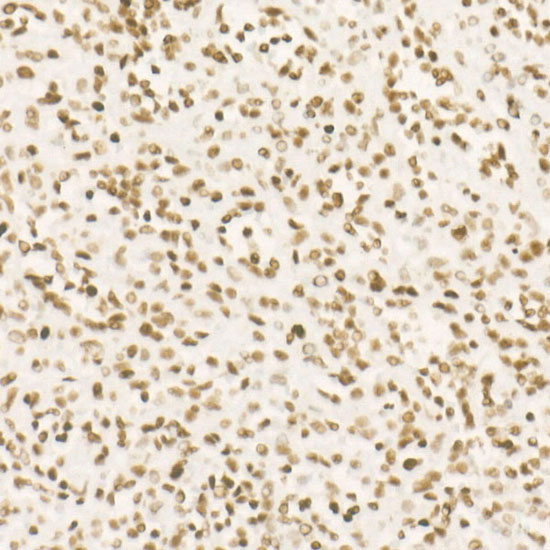
IHC (Immunohistochemistry) (Immunohistochemical analysis of paraffin-embedded human breast carcinoma tissue using anti-E2F1 antibody. Counter stained with hematoxylin.)
IHC (Immunohistochemistry) (Immunohistochemical analysis of paraffin-embedded mouse pancreas tissue using anti-E2F1 antibody. Counter stained with hematoxylin.)
WB (Western Blot) (Western blot analysis of E2F1 on HepG2 cells lysates using anti-E2F1 antibody at 1/1, 000 dilution.)
FCM (Flow Cytometry) (Flow cytometric analysis of Hela cells with GOLPH2 antibody at 1/100 dilution (red) compared with an unlabelled control (cells without incubation with primary antibody; black).)
ICC (Immunocytochemistry) (ICC staining GOLPH2 in A549 cells (green). The nuclear counter stain is DAPI (blue). Cells were fixed in paraformaldehyde, permeabilised with 0.25% Triton X100/PBS.)
ICC (Immunocytochemistry) (ICC staining GOLPH2 in Hela cells (green). The nuclear counter stain is DAPI (blue). Cells were fixed in paraformaldehyde, permeabilised with 0.25% Triton X100/PBS.)
ICC (Immunocytochemistry) (ICC staining GOLPH2 in 293T cells (green). The nuclear counter stain is DAPI (blue). Cells were fixed in paraformaldehyde, permeabilised with 0.25% Triton X100/PBS.)
IHC (Immunohistochemistry) (Immunohistochemical analysis of paraffin-embedded human prostate tissue using anti-GOLPH2 antibody. Counter stained with hematoxylin.)
IHC (Immunohistochemistry) (Immunohistochemical analysis of paraffin-embedded mouse small intestine tissue using anti-GOLPH2 antibody. Counter stained with hematoxylin.)
WB (Western Blot) (Western blot analysis of GOLPH2 on SH-SY5Y cell lysate using anti-GOLPH2 antibody at 1/1, 000 dilution.)
ICC (Immunocytochemistry) (ICC staining CD19 in 293T cells (red). The nuclear counter stain is DAPI (blue). Cells were fixed in paraformaldehyde, permeabilised with 0.25% Triton X100/PBS.)
ICC (Immunocytochemistry) (ICC staining CD19 in PC-3M cells (red). The nuclear counter stain is DAPI (blue). Cells were fixed in paraformaldehyde, permeabilised with 0.25% Triton X100/PBS.)
ICC (Immunocytochemistry) (ICC staining CD19 in Hela cells (red). The nuclear counter stain is DAPI (blue). Cells were fixed in paraformaldehyde, permeabilised with 0.25% Triton X100/PBS.)
IHC (Immunohistochemistry) (Immunohistochemical analysis of paraffin-embedded human tonsil tissue using anti-CD19 antibody. Counter stained with hematoxylin.)
IHC (Immunohistochemistry) (Immunohistochemical analysis of paraffin-embedded human spleen tissue using anti-CD19 antibody. Counter stained with hematoxylin.)
WB (Western Blot) (Western blot analysis of CD19 on Raji cells lysates using anti-CD19 antibody at 1/1, 000 dilution.)
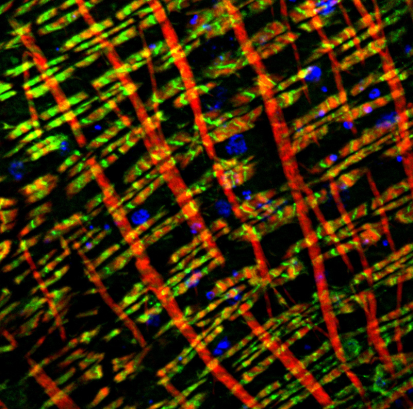
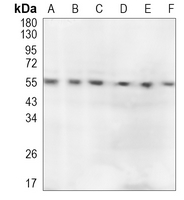
SDS-PAGE (Mouse muscle whole cell lysates were separated by 10% SDS-PAGE, and the membrane was blotted with anti-Desmin(ABT168) antibody. The HRP-conjugated Goat anti-M)
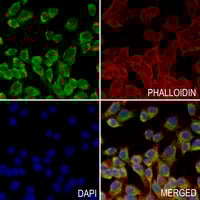
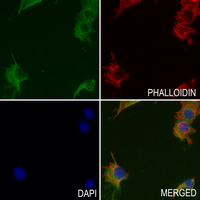
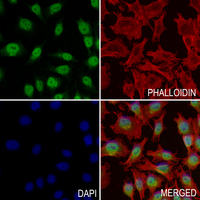
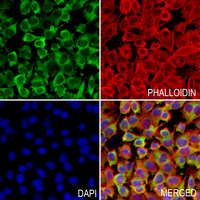
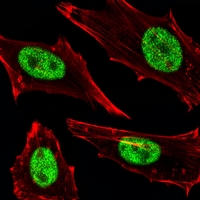
IF (Immunofluorescence) (Immunofluorescence analysis of Hela cell. 1.Calnexin Polyclonal Antibody(green) was diluted at 1:200(4 degree overnight). (red) was diluted at 1:200(4 degree overnight). 2. Goat Anti Rabbit Alexa Fluor 488 was diluted at 1:1000(room temperature. 50min). Goat Anti Mouse Alexa Fluor 594 was diluted at 1:1000(room temperature. 50min).)
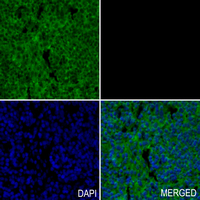
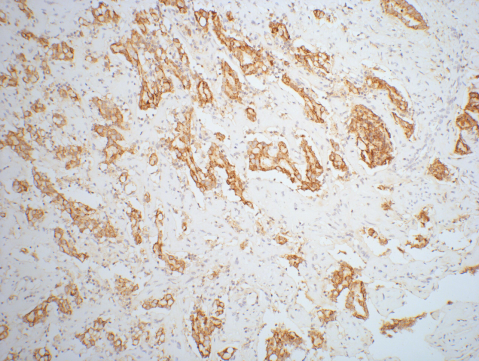
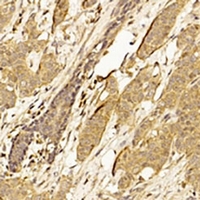
IHC (Immunohistochemistry) (Immunohistochemical analysis of paraffin-embedded Human-stomach tissue. 1.CHOP Mouse Monoclonal Antibody(2B1) was diluted at 1:200(4 degree C.overnight). 2. Sodium citrate pH 6.0 was used for antibody retrieval(>98 degree C.20min). 3.Secondary antibody was diluted at 1:200(room temperature. 30min). Negative control was used by secondary antibody only.)
IHC (Immunohistochemistry) (Immunohistochemical analysis of paraffin-embedded Human Stomach Carcinoma Tissue using CHOP Mouse mAb diluted at 1:200.)
IHC (Immunohistochemistry) (Immunohistochemical analysis of paraffin-embedded Human Pancreas Carcinoma Tissue using CHOP Mouse mAb diluted at 1:200.)
Application Data (Chen. Yong. et al. "Overexpression of long non?coding RNA NORAD promotes invasion and migration in malignant melanoma via regulating the MIR?205?EGLN2 pathway." Cancer medicine (2019).)
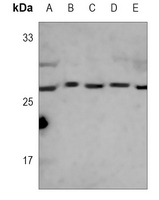
WB (Western Blot) (Western blot analysis of Mouse Liver Tissue Lysate using CHOP Mouse mAb diluted at 1:2000.)
Application Data (Published customer image Infiltration of GFP+ BM-cells in infarct and peri-infarct regions. (A-B) Dot plots of viable macrophages/granulocytes (CD11b+CD45high, top right quadrants) and microglia (CD11b+CD45dim, bottom right quadrants) in cortex from BM-chimeric unmanipulated mice and mice exposed to pMCAO. (C) Bar graph showing mean numbers of CD11b+CD45dim microglia and CD11b+CD45high macrophages/granulocytes in BM-chimeric mice 24 hours after pMCAO, subdivided based on expression of GFP (n = 5). Approximately 92% of of the CD45high population were GFP+. (D) Estimation and comparison of mean numbers of CD11b+CD45dim microglia in non-chimeric (n = 10) versus BM-chimeric mice (n = 5) 24 hours after of pMCAO shows significantly fewer CD11b+CD45dim microglial cells in irradiated mice. (E) Overview, showing distribution of infiltrating GFP+ BM-derived cells into infarct (IF) and peri-infarct (P-IF) regions 24 hours after pMCAO. (E-G) By 24 hours, GFP+ single cells (F) and vessel-associated aggregates of GFP+ cells (arrows in G) were observed in infarct and peri-infarct regions. Some of the vessel-associated cells were round, leukocyte-like cells (arrows) while others were elongated cells lining the vasculature (arrow heads in G and in insert). (H) Bar graph showing mean numbers of single GFP+ cells and vessel-associated aggregates of GFP+ cells in ipsi- and contralateral cortex 24 hours after surgery (n = 10). (I-P) Immunohistochemical staining of CD45.1 (I, K), CD45.2 (J, L), IgG2a (M, O) and CD45 (N, P) in ischemic tissue in BM-chimeric (I, J, M, N) and non-chimeric mice (K, L, O, P) 24 hours after pMCAO. N.D, none detected. Scale bars: 200 um (A), 10 um (B, C). 50 um (I-P) *P < 0.05, **P < 0.01, and ***P < 0.001.From: Clausen BH, Lambertsen KL, Babcock AA, Holm TH, Dagnaes-Hansen F, Finsen B. Interleukin-1beta and tumor necrosis factor-alpha are expressed by different subsets of microglia and macrophages after ischemic stroke in mice. J Neuroinflammation. 2008 Oct 23;5:46.)
Application Data (Staining of mouse bone marrow with Rat anti Mouse CD11b)
Application Data (Immunoperoxidase staining o mouse lymph node cryosection with Rat anti Mouse CD11b antibody, clone 5C6 followed by horseradish peroxidase conjugated Goat anti Rat IgG as a detection reagent. Low power)
Application Data (Published customer image: Activation of adult primary microglial cells in wild-type and IL-1 KO mice. (A) Primary microglial cells were obtained from young adult wild-type mice. The cells stain with the microglial marker CD11b, but not with the neuronal and astroglial markers, NeuN and GFAP, respectively. A few cells are stained with the oligodendroglial cell marker, MBP. NC (inset) is the primary antibody-free negative control. The microglial cells (n = 3 each group) were stimulated for 24 hours in the presence of the vehicle alone, or supplemented with IFN? or IL-4 in the presence or absence of IL-1beta. Total NO (NOx; B), TNFa (C), arginase specific activity (Arg-1 spe. act.; D) and IGF-1 (E) were determined from the media or cell suspensions. (B) NOx levels increase upon exposure of the cells to IL-1beta and in a synergistic manner upon co-treatment of cells with IL-1beta and IFN?, but not when the cotreatment is with IL-4. (C) TNFa levels increase upon exposure of the cells to IFN?, and further upon co-treatment with IL-1beta. Surprisingly, the co-treatment of the cells with IL-4 and IL-1beta induced the highest TNFa level among the experimental treatments used. (D) Arg1-specific activity increased significantly upon exposure to IL-4 and further increased when IL-4 and IL-1beta were employed together. (E) IGF-1 levels decreased with exposure of the cells to IFN? and increased in response to IL-4. The response was partially inhibited by cotreatment of the cells with IL-1beta. Data are expressed as mean +/- SD (n = 3). *: P < 0.05, **: P < 0.01, ***: P < 0.001 compared with the vehicle-treated group in each genotype (one-way ANOVA followed by Dunnett post-hoc test). ANOVA, analysis of variance; IGF-1, insulin-like growth factor.From: Sato A, Ohtaki H, Tsumuraya T, Song D, Ohara K, Asano M, Iwakura Y, Atsumi T, Shioda S. Interleukin-1 participates in the classical and alternative activation of microglia/macrophages after spinal cord injury. J Neuroinflammation. 2012 Apr 7;9:65. doi: 10.1186/1742-2094-9-65.)
Application Data (Staining of mouse peritoneal macrophages with Rat anti Mouse CD11b:FITC)
Application Data (Immunoperoxidase staining of mouse lymph node cryosection with Rat anti Mouse CD11b antibody, clone 5C6 followed by horseradish peroxidase conjugated Goat anti Rat IgG as a detection reagent. high power)
Application Data (Published customer image BM-derived GFP+ single cells and vessel-associated cells express CD11b. Fluorescence microscopy for GFP combined with immunofluorescence detection of (A) CD11b, (B) vWF and (C) CD31, 24 hours after pMCAO. (A) Fluorescence detection of GFP and CD11b showed that most GFP+ cells co-expressed CD11b (yellow cells, indicated by arrows), and intermingled with CD11b+ host cells. Note also that a few GFP+ cells did not co-express CD11b (arrow head). Insert shows high magnification of GFP+ cells, some of which co-express CD11b, aggregated around a vessel. (B, C) Fluorescence detection of GFP and the endothelial cell markers vWF (B) and CD31 (C). Inserts show higher magnification of sections of the same vessels. Although there are indications that single vWF+ cells co-express GFP (arrows in B), this could not be reproduced using staining for CD31, and the majority of vWF+ and CD31+ cells showed no co-expression of GFP. Instead, GFP remained confined to round and elongated cells located in the juxtavascular space (insert in C). CD11b+ cells were visualized using Alexa Fluor 568-conjugated goat anti-rat IgG, vWF+ and CD31+ cells using Alexa Fluor 546-conjugated goat anti-rabbit IgG and Alexa Fluor 594-conjugated goat anti-rat IgG, respectively. Scale bars: 20 um (A-C)..From: Clausen BH, Lambertsen KL, Babcock AA, Holm TH, Dagnaes-Hansen F, Finsen B. Interleukin-1beta and tumor necrosis factor-alpha are expressed by different subsets of microglia and macrophages after ischemic stroke in mice. J Neuroinflammation. 2008 Oct 23;5:46.)
Application Data (Immunofluorescence staining of mouse lymph node cryosection with Rat anti Mouse CD11b, clone 5C6 , green in A and Rat anti Mouse CD8, clone YTS105.18 , red in B. C is the merged image with nuclei counterstained blue using DAPI. High power)
Application Data (Immunofluorescence staining of mouse lymph node cryosection with Rat anti Mouse CD11b, clone 5C6 , green in A and Rat anti Mouse CD8, clone YTS105.18 , red in B. C is the merged image with nuclei counterstained blue using DAPI. Low power)
Application Data (Detection limit for recombinant GST tagged PEPD is ~0.1ng/ml as a capture antibody.)
IP (Immunoprecipitation) (Immunoprecipitation of PEPD transfected lysate using PEPD monoclonal antibody and Protein A Magnetic Bead, and immunoblotted with PEPD rabbit polyclonal antibody.)
IF (Immunofluorescence) (Immunofluorescence of monoclonal antibody to PEPD on HepG2 cell. [antibody concentration 10ug/ml])
WB (Western Blot) (Western Blot analysis of PEPD expression in transfected 293T cell line by PEPD monoclonal antibody.Lane 1: PEPD transfected lysate (Predicted MW: 54.6kD).Lane 2: Non-transfected lysate)
WB (Western Blot) (PEPD monoclonal antibody Western Blot analysis of PEPD expression in HepG2.)
WB (Western Blot) (Western Blot detection against Immunogen (79.97kD).)
Western Blot, Immunoprecipitation, Immunofluorescence
Purity
Affinity Purified Purified by Protein A affinity chromatography.
Pricing
What are Monoclonal Antibodies?
Monoclonal antibodies are specialized laboratory-produced proteins developed for binding to specific biological antigens or other molecular targets. Since they come from a single cell (or clone), they are especially consistent and accurate in the data they are involved in producing.
This type of antibody material has been shown to be a powerful tool in finding and subsequently destroying harmful cells in an organism, such as those found in cancers or various autoimmune diseases. This makes them excellent aids in medical testing and research, which is why they are so widely used.
AAA Biotech offers a comprehensive range of high-quality monoclonal antibodies that perform effectively in various laboratory tests, including (amongst others) ELISA, western blotting, immunohistochemistry, and flow cytometry. All of the products in our catalog are thoroughly quality tested to make sure that they are reliable and will consistently perform well in your research.
What Are The Uses of Monoclonal Antibodies
Monoclonal antibodies are used in many lab tests, including (amongst others) ELISA, western blotting, immunohistochemistry, and flow cytometry.
ELISA is a test that helps detect a specific substance/analyte in a sample. It uses antibodies (often monoclonal) bound to a solid surface (such as the well of a microplate) to “capture” the substance/analyte in the sample and immobilize it so that the detection antibody component can then bind to it and produce a signal, which can then be measured.
Western blotting identifies specific proteins in a sample. The sample is first separated on a gel, and then antibodies are applied that will typically bind to the target, which will all be localized to a single band in a lane.
Immunohistochemistry helps locate specific proteins in cells or tissue samples using antibodies.
Flow cytometry looks at and sorts cells. It uses antibodies that are conjugated to reporter molecules called “fluorophores”, which, under special lights, emit light themselves, which can then be measured by a detector instrument.
How Monoclonal Antibodies Are Used as Medicine?
Please note that all of the products listed in AAA Biotech’s catalog are strictly for research-use only (RUO).
Monoclonal antibodies can also be used as therapeutic/medical treatments, particularly in the context of cancers. They are designed to find and bind to specific cells or proteins, helping the immune system recognize and attack the cancer. These treatments work in different ways, such as:
Radioimmunotherapy attaches a small amount of radioactive molecule to the antibody, so it delivers the radiation directly to the cancer cells that the antibody is specifically binding to.
Antibody-directed enzyme prodrug therapy uses antibodies that are specifically bound to special enzymes. These enzymes activate a harmless drug in the body and turn it into a cancer-killing drug only near the cancer cells—this helps avoid harming healthy cells.
Immunoliposomes are tiny “bubbles” filled with medicine/drug and coated with antibodies. They carry the drug straight to the cancer cells.
Why Buy Monoclonal Antibodies From Us?
At AAA Biotech, we provide high-performance monoclonal antibodies designed to support a wide range of research needs.
1. Validated for Versatile Applications
The antibodies in our catalog are extensively validated and compatible with multiple techniques, including (but not limited to) ELISA, flow cytometry (FC), immunocytochemistry (ICC), immunofluorescence (IF), immunohistochemistry (IHC), immunoprecipitation (IP), and western blotting (WB).
2. Wide Selection & Specialized Options
We offer antibodies for common and rare species, that are available in various conjugated forms, and also in recombinant formats. Essentially, there is almost anything one might need to meet their experimental model’s requirements.
3. High-Quality Proteins
Our proteins meet high purity standards—90% or more as confirmed by SDS-PAGE. Many are available with tags like His, Flag, GST, or MBP, and we also supply native and biologically active proteins for functional studies.
Frequently Asked Questions
1. Are your monoclonal antibodies validated for specific applications?
Yes, our antibodies are tested and validated for use in methods such as ELISA, western blot, IHC, flow cytometry, and more. Refer to specific product pages or datasheets for individual product information.
2. How do I choose the right monoclonal antibody for my application?
Review the product details directly for application validation, species reactivity, and target information. You may also contact our support team at any time for help.
3. How quickly can I receive my order?
Most orders are processed and shipped within 1–3 business days, depending on product availability and your shipping location.
Submit a Question
Please complete the form below and a representative will contact you as soon as possible.
Request more Information
Please complete the form below and a representative will contact you as soon as possible.
Request a Manual
Please complete the form below and a representative will contact you as soon as possible.
Request a Quote
Please complete the form below and a representative will contact you as soon as possible.