
 IHC (Immunohistochemistry)
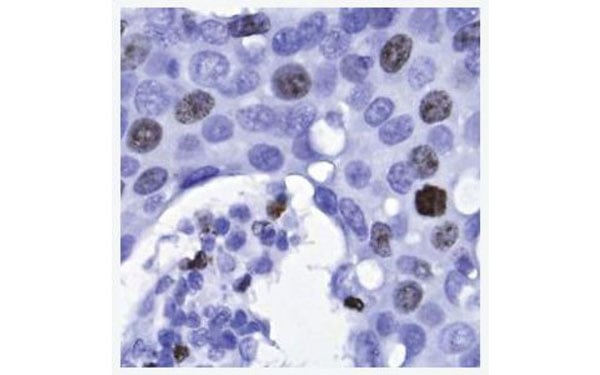
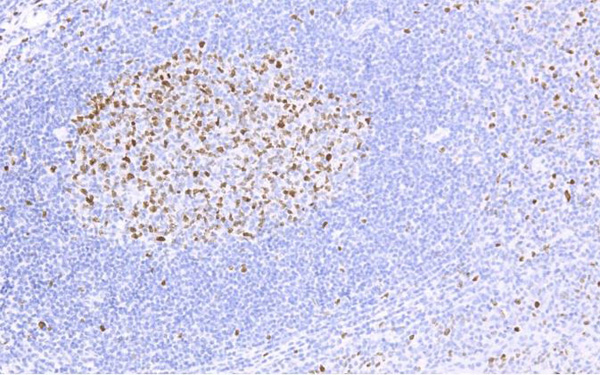
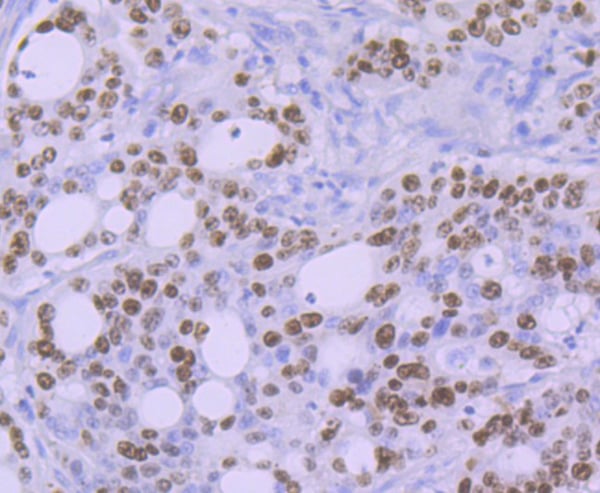
(Figure 1: Immunohistochemical analysis of paraffin-embedded human lymph node (A), esophagus (B), lung cancer (C), rectum cancer (D), showing nuclear localization using KI67 mouse mAb with DAB staining.)
IHC (Immunohistochemistry)
(Figure 1: Immunohistochemical analysis of paraffin-embedded human lymph node (A), esophagus (B), lung cancer (C), rectum cancer (D), showing nuclear localization using KI67 mouse mAb with DAB staining.)
Mouse anti-Human KI67 Monoclonal Antibody | anti-KI67 antibody
KI67 Antibody
Gene Names
MKI67; KIA; MIB-; MIB-1; PPP1R105
Reactivity
Human
Applications
ELISA, Immunohistochemistry
Purity
Affinity-Chromatography
Synonyms
KI67, Antibody; KI67 Antibody; Antigen identified by monoclonal antibody Ki 67; Antigen identified by monoclonal antibody Ki-67; Antigen KI-67; Antigen KI67; Antigen Ki67; KI67_HUMAN; KIA; Marker of proliferation Ki-67; MIB 1; MIB; MKI67; PPP1R105; Proliferation marker protein Ki-67; Proliferation related Ki 67 antigen; Protein phosphatase 1 regulatory subunit 105; RP11-380J17.2; anti-KI67 antibody
Host
Mouse
Reactivity
Human
Clonality
Monoclonal
Isotype
IgG1
Purity/Purification
Affinity-Chromatography
Form/Format
Phosphate buffered saline (without Mg2+ and Ca2+), pH 7.4, 150mM NaCl, 0.02% sodium azide and 50% glycerol.
Concentration
~1mg/ml (varies by lot)
Sequence Length
2896
Applicable Applications for anti-KI67 antibody
ELISA, IHC (Immunohistochemistry)
Immunogen
Purified recombinant fragment of human KI67 expressed in E. Coli
Preparation and Storage
Store at -20 degrees C. Stable for 12 months from date of receipt.
IHC (Immunohistochemistry)
(Figure 1: Immunohistochemical analysis of paraffin-embedded human lymph node (A), esophagus (B), lung cancer (C), rectum cancer (D), showing nuclear localization using KI67 mouse mAb with DAB staining.)
IHC (Immunohistochemistry)
(Figure 1: Immunohistochemical analysis of paraffin-embedded human lymph node (A), esophagus (B), lung cancer (C), rectum cancer (D), showing nuclear localization using KI67 mouse mAb with DAB staining.)
Related Product Information for anti-KI67 antibody
Description: Ki67, also known as MKI67, it is the prototypic cell cycle related nuclear protein, expressed by proliferating cells in all phases of the active cell cycle (G1, S, G2 and M phase). It is absent in resting (G0) cells. Ki67 antibodies are useful in establishing the cell growing fraction in neoplasms (immunohistochemically quantified by determining the number of Ki67 positive cells among the total number of resting cells = Ki67 index). In neoplastic tissues the prognostic value is comparable to the tritiated thymidine labelling index. The correlation between low Ki67 index and histologically low grade tumours is strong. Ki67 is routinely used as a neuronal marker of cell cycling and proliferation.
Function: Required to maintain individual mitotic chromosomes dispersed in the cytoplasm following nuclear envelope disassembly (PubMed:27362226). Associates with the surface of the mitotic chromosome, the perichromosomal layer, and covers a substantial fraction of the chromosome surface (PubMed:27362226). Prevents chromosomes from collapsing into a single chromatin mass by forming a steric and electrostatic charge barrier: the protein has a high net electrical charge and acts as a surfactant, dispersing chromosomes and enabling independent chromosome motility (PubMed:27362226). Binds DNA, with a preference for supercoiled DNA and AT-rich DNA (PubMed:10878551). Does not contribute to the internal structure of mitotic chromosomes (By similarity). May play a role in chromatin organization (PubMed:24867636). It is however unclear whether it plays a direct role in chromatin organization or whether it is an indirect consequence of its function in maintaining mitotic chromosomes dispersed (Probable).
Subunit Structure: Interacts with KIF15 (PubMed:10878014). Interacts (via the FHA domain) with NIFK (PubMed:11342549, PubMed:14659764, PubMed:16244663). Interacts with PPP1CC (PubMed:24867636). Part of a complex composed at least of ASCL2, EMSY, HCFC1, HSPA8, CCAR2, MATR3, MKI67, RBBP5, TUBB2A, WDR5 and ZNF335; this complex may have a histone H3-specific methyltransferase activity (PubMed:19131338, PubMed:23178126).
Post-translational Modifications: Phosphorylated. Hyperphosphorylated in mitosis (PubMed:10502411, PubMed:10653604). Hyperphosphorylated form does not bind DNA.
Function: Required to maintain individual mitotic chromosomes dispersed in the cytoplasm following nuclear envelope disassembly (PubMed:27362226). Associates with the surface of the mitotic chromosome, the perichromosomal layer, and covers a substantial fraction of the chromosome surface (PubMed:27362226). Prevents chromosomes from collapsing into a single chromatin mass by forming a steric and electrostatic charge barrier: the protein has a high net electrical charge and acts as a surfactant, dispersing chromosomes and enabling independent chromosome motility (PubMed:27362226). Binds DNA, with a preference for supercoiled DNA and AT-rich DNA (PubMed:10878551). Does not contribute to the internal structure of mitotic chromosomes (By similarity). May play a role in chromatin organization (PubMed:24867636). It is however unclear whether it plays a direct role in chromatin organization or whether it is an indirect consequence of its function in maintaining mitotic chromosomes dispersed (Probable).
Subunit Structure: Interacts with KIF15 (PubMed:10878014). Interacts (via the FHA domain) with NIFK (PubMed:11342549, PubMed:14659764, PubMed:16244663). Interacts with PPP1CC (PubMed:24867636). Part of a complex composed at least of ASCL2, EMSY, HCFC1, HSPA8, CCAR2, MATR3, MKI67, RBBP5, TUBB2A, WDR5 and ZNF335; this complex may have a histone H3-specific methyltransferase activity (PubMed:19131338, PubMed:23178126).
Post-translational Modifications: Phosphorylated. Hyperphosphorylated in mitosis (PubMed:10502411, PubMed:10653604). Hyperphosphorylated form does not bind DNA.
NCBI and Uniprot Product Information
NCBI GI #
NCBI GeneID
NCBI Accession #
NCBI GenBank Nucleotide #
Molecular Weight
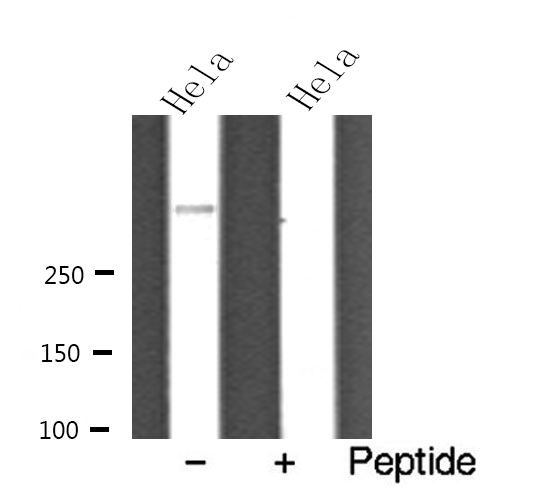
Observed: 358 kDa
Predicted: 359 kDa
Predicted: 359 kDa
NCBI Official Full Name
proliferation marker protein Ki-67 isoform 2
NCBI Official Synonym Full Names
marker of proliferation Ki-67
NCBI Official Symbol
MKI67
NCBI Official Synonym Symbols
KIA; MIB-; MIB-1; PPP1R105
NCBI Protein Information
proliferation marker protein Ki-67
UniProt Protein Name
Proliferation marker protein Ki-67
UniProt Gene Name
MKI67
UniProt Synonym Gene Names
Antigen KI-67Curated; Antigen Ki67Curated
Customer Reviews
Loading reviews...
Share Your Experience
Similar Products



Product Notes
The KI67 mki67 (Catalog #AAA322665) is an Antibody produced from Mouse and is intended for research purposes only. The product is available for immediate purchase. The KI67 Antibody reacts with Human and may cross-react with other species as described in the data sheet. AAA Biotech's KI67 can be used in a range of immunoassay formats including, but not limited to, ELISA, IHC (Immunohistochemistry). Researchers should empirically determine the suitability of the KI67 mki67 for an application not listed in the data sheet. Researchers commonly develop new applications and it is an integral, important part of the investigative research process. It is sometimes possible for the material contained within the vial of "KI67, Monoclonal Antibody" to become dispersed throughout the inside of the vial, particularly around the seal of said vial, during shipment and storage. We always suggest centrifuging these vials to consolidate all of the liquid away from the lid and to the bottom of the vial prior to opening. Please be advised that certain products may require dry ice for shipping and that, if this is the case, an additional dry ice fee may also be required.Precautions
All products in the AAA Biotech catalog are strictly for research-use only, and are absolutely not suitable for use in any sort of medical, therapeutic, prophylactic, in-vivo, or diagnostic capacity. By purchasing a product from AAA Biotech, you are explicitly certifying that said products will be properly tested and used in line with industry standard. AAA Biotech and its authorized distribution partners reserve the right to refuse to fulfill any order if we have any indication that a purchaser may be intending to use a product outside of our accepted criteria.Disclaimer
Though we do strive to guarantee the information represented in this datasheet, AAA Biotech cannot be held responsible for any oversights or imprecisions. AAA Biotech reserves the right to adjust any aspect of this datasheet at any time and without notice. It is the responsibility of the customer to inform AAA Biotech of any product performance issues observed or experienced within 30 days of receipt of said product. To see additional details on this or any of our other policies, please see our Terms & Conditions page.Item has been added to Shopping Cart
If you are ready to order, navigate to Shopping Cart and get ready to checkout.